What is interpreting? 
“Interpreting consists of presenting in the 
target language the exact meaning of what 
is uttered in the source language either 
simultaneously or consecutively, preserving 
the tone of the speaker” (Mahmoodzadeh , 
1991, p.232).
What is interpreting? 
• Interpreting work bridges the 
“cultural and conceptual gaps” 
between the participants in an 
event (Jones, 1998, p.4)
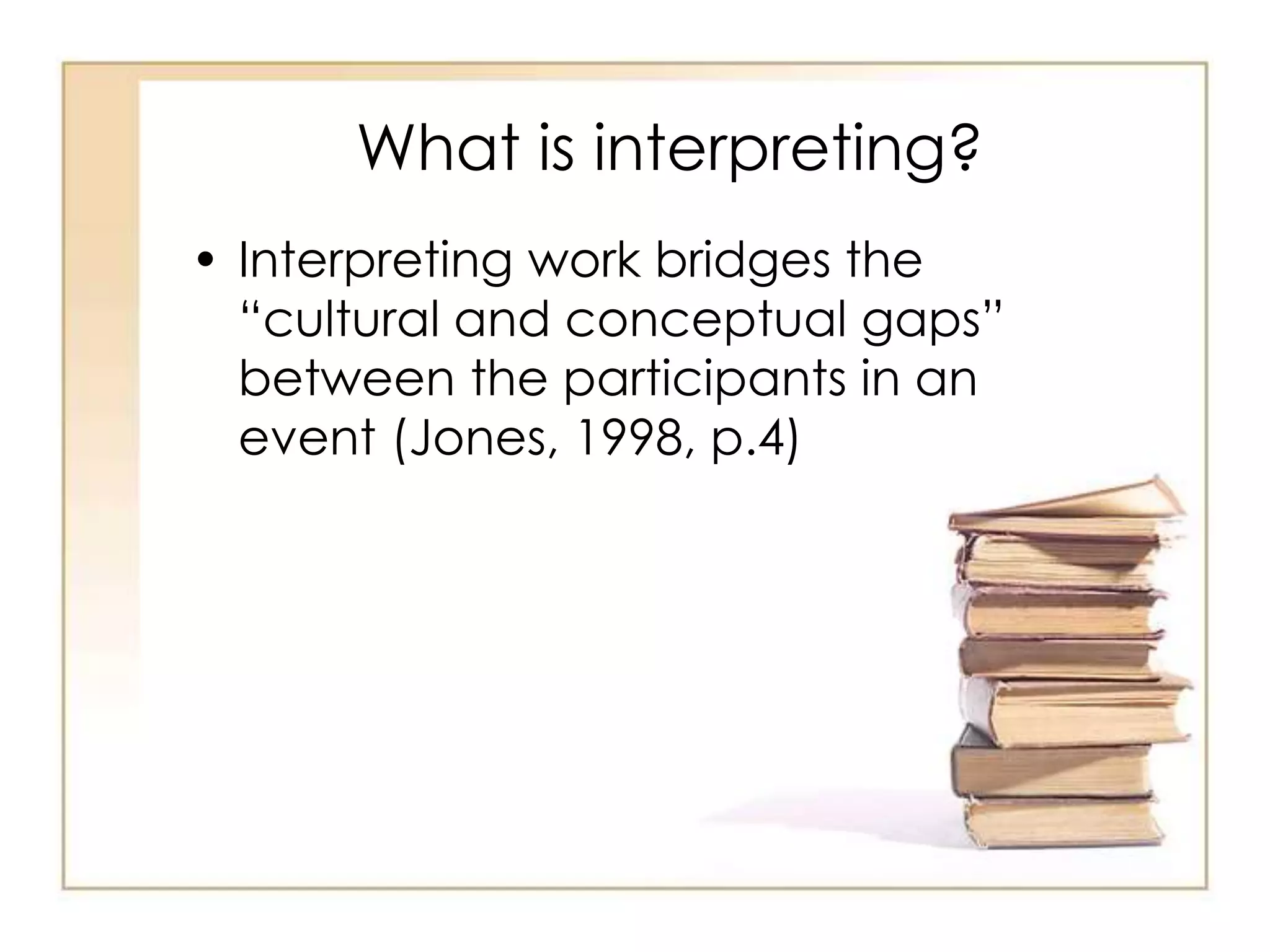
Communication 
No language 
barrier  Mutual 
understanding
HOW DOES INTERPRETATION DIFFER 
FROM TRANSLATION? 
• A translator studies written 
material in one language and 
renders it, also in written from, 
into another language. 
• An interpreter listens to a spoken 
message and reproduces it in 
oral form in another language.
HOW DOES INTERPRETATION DIFFER 
FROM TRANSLATION? 
• Translators can rely on resources such 
as bilingual and monolingual 
dictionaries, thesauri, encyclopedias, 
or research with background materials. 
• Interpreters have no access to 
these resources in the course of 
interpreting .
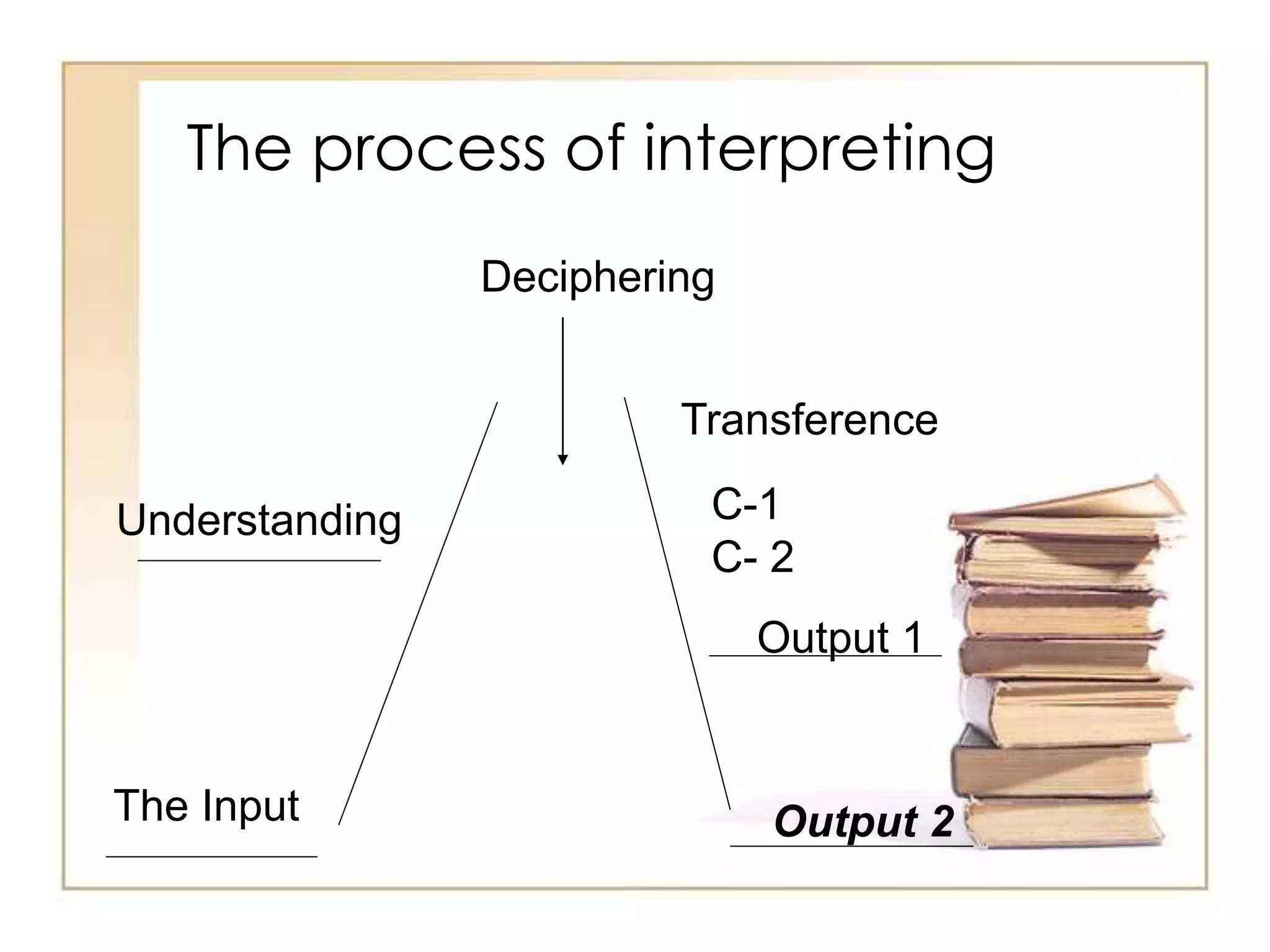
The process of interpreting 
Understanding 
The Input 
Deciphering 
Transference 
C-1 
C- 2 
Output 1 
Output 2
Consecutive interpretation 
• The interpreter listens to a speech in 
one language, takes notes, and then 
renders it into another language. 
• The time lapse between the speech 
and its rendering varies greatly. It 
usually lasts from anywhere between 
one to fifteen minutes. In some special 
occasions, the time lapse may be up 
to half or one hour.
Simultaneous interpreting 
• In simultaneous interpreting, the 
interpreter sits in a sound-proof booth 
renders the speech into another 
language while listening to it. 
• This mode of interpreting is used for 
meetings with large numbers of 
participants. 
• Specialized equipment such as 
headphones, earphones, 
microphones, amplifiers are required.
Whispering interpretation 
• This can be done as either 
consecutive or simultaneous 
interpreting. The only difference is that 
the interpreter does not interpret for 
the whole audience in the meeting. 
• The interpreter sits next to or between 
those participants who need the 
interpretation and whispers the 
interpretation to them or interprets 
their messages.
Levels at which interpreters are 
accredited 
• Level 1: language aide 
• Level 2: para-professional 
interpreter 
• Level 3: interpreter 
• Level 4: conference 
interpreter 
• Level 5: senior conference 
interpreter 
(NAATI)
??????????????????????????????? 
"Interpreting is easy. You just have to 
know all the words."
Criteria for a GOOD interpreter 
• Linguistic and cultural 
knowledge 
• Background knowledge 
• Language and interpreting 
skills
Codes of ethics 
• Before the assignment 
- be well-prepared 
- improve one’s linguistic 
competence 
- be a clear speaker 
- train memory 
- have integrity & dignity
Codes of ethics 
• During the assignment 
- Be strictly punctual 
- Introduce yourself 
- Be impartial 
- Be careful (speaking style) 
- Take notes 
- Listen actively &
Codes of ethics 
• After the assignment 
- self-criticism 
- self-evaluation

Lecture1

  • 2.
    What is interpreting? “Interpreting consists of presenting in the target language the exact meaning of what is uttered in the source language either simultaneously or consecutively, preserving the tone of the speaker” (Mahmoodzadeh , 1991, p.232).
  • 3.
    What is interpreting? • Interpreting work bridges the “cultural and conceptual gaps” between the participants in an event (Jones, 1998, p.4)
  • 4.
    Communication No language barrier  Mutual understanding
  • 5.
    HOW DOES INTERPRETATIONDIFFER FROM TRANSLATION? • A translator studies written material in one language and renders it, also in written from, into another language. • An interpreter listens to a spoken message and reproduces it in oral form in another language.
  • 6.
    HOW DOES INTERPRETATIONDIFFER FROM TRANSLATION? • Translators can rely on resources such as bilingual and monolingual dictionaries, thesauri, encyclopedias, or research with background materials. • Interpreters have no access to these resources in the course of interpreting .
  • 7.
    The process ofinterpreting Understanding The Input Deciphering Transference C-1 C- 2 Output 1 Output 2
  • 8.
    Consecutive interpretation •The interpreter listens to a speech in one language, takes notes, and then renders it into another language. • The time lapse between the speech and its rendering varies greatly. It usually lasts from anywhere between one to fifteen minutes. In some special occasions, the time lapse may be up to half or one hour.
  • 9.
    Simultaneous interpreting •In simultaneous interpreting, the interpreter sits in a sound-proof booth renders the speech into another language while listening to it. • This mode of interpreting is used for meetings with large numbers of participants. • Specialized equipment such as headphones, earphones, microphones, amplifiers are required.
  • 10.
    Whispering interpretation •This can be done as either consecutive or simultaneous interpreting. The only difference is that the interpreter does not interpret for the whole audience in the meeting. • The interpreter sits next to or between those participants who need the interpretation and whispers the interpretation to them or interprets their messages.
  • 11.
    Levels at whichinterpreters are accredited • Level 1: language aide • Level 2: para-professional interpreter • Level 3: interpreter • Level 4: conference interpreter • Level 5: senior conference interpreter (NAATI)
  • 12.
    ??????????????????????????????? "Interpreting iseasy. You just have to know all the words."
  • 13.
    Criteria for aGOOD interpreter • Linguistic and cultural knowledge • Background knowledge • Language and interpreting skills
  • 14.
    Codes of ethics • Before the assignment - be well-prepared - improve one’s linguistic competence - be a clear speaker - train memory - have integrity & dignity
  • 15.
    Codes of ethics • During the assignment - Be strictly punctual - Introduce yourself - Be impartial - Be careful (speaking style) - Take notes - Listen actively &
  • 16.
    Codes of ethics • After the assignment - self-criticism - self-evaluation