Downloaded 141 times
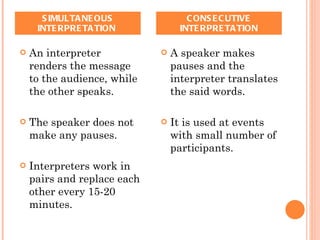
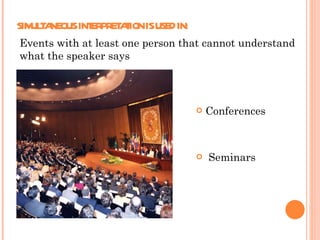
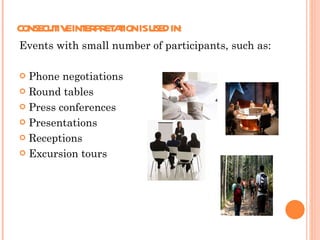

Simultaneous interpretation involves interpreting a speaker's message to the audience simultaneously without pauses, while consecutive interpretation involves interpreting after the speaker makes pauses. Simultaneous interpretation is used for conferences, seminars, and events with participants who don't understand the speaker, while consecutive interpretation is used for events with small numbers of participants like phone negotiations, round tables, and press conferences. To be an effective simultaneous or consecutive interpreter requires analyzing meaning, public speaking skills, quick problem-solving, excellent memory, strong concentration, topic knowledge, and creativity.


