ORAL HYPOGLYCEMIC
AGENTES
DIABETE MANAGEMENT
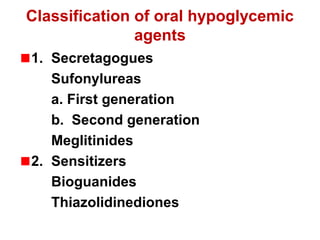
Classification of oral hypoglycemic
agents
1. Secretagogues
Sufonylureas
a. First generation
b. Second generation
Meglitinides
2. Sensitizers
Bioguanides
Thiazolidinediones
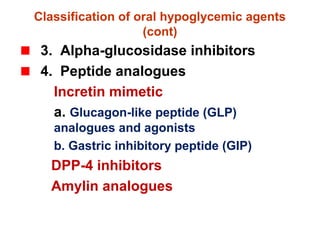
Classification of oral hypoglycemic agents
(cont)
3. Alpha-glucosidase inhibitors
4. Peptide analogues
Incretin mimetic
a. Glucagon-like peptide (GLP)
analogues and agonists
b. Gastric inhibitory peptide (GIP)
DPP-4 inhibitors
Amylin analogues
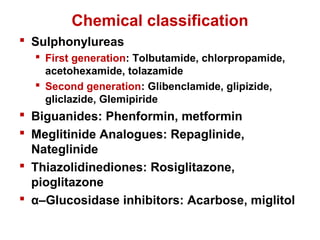
Chemical classification
 Sulphonylureas
 First generation: Tolbutamide, chlorpropamide,
acetohexamide, tolazamide
 Second generation: Glibenclamide, glipizide,
gliclazide, Glemipiride
 Biguanides: Phenformin, metformin
 Meglitinide Analogues: Repaglinide,
Nateglinide
 Thiazolidinediones: Rosiglitazone,
pioglitazone
 α–Glucosidase inhibitors: Acarbose, miglitol
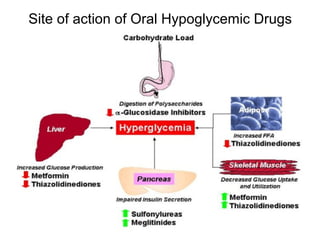
Site of action of Oral Hypoglycemic Drugs
Mechanism of action of Sulfonylureas
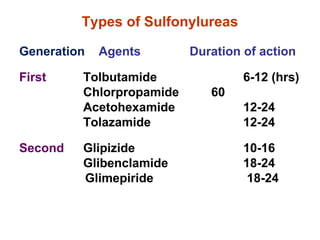
Types of Sulfonylureas
Generation Agents Duration of action
First Tolbutamide 6-12 (hrs)
Chlorpropamide 60
Acetohexamide 12-24
Tolazamide 12-24
Second Glipizide 10-16
Glibenclamide 18-24
Glimepiride 18-24
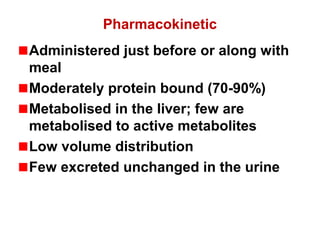
Pharmacokinetic
Administered just before or along with
meal
Moderately protein bound (70-90%)
Metabolised in the liver; few are
metabolised to active metabolites
Low volume distribution
Few excreted unchanged in the urine
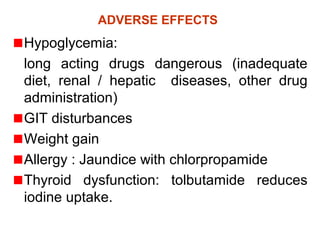
ADVERSE EFFECTS
Hypoglycemia:
long acting drugs dangerous (inadequate
diet, renal / hepatic diseases, other drug
administration)
GIT disturbances
Weight gain
Allergy : Jaundice with chlorpropamide
Thyroid dysfunction: tolbutamide reduces
iodine uptake.
DRUG INTERACTION
Antabuse like effect with alcohol
(especially with chlorpramide).
Enhancement
Highly protein binding drugs (salicylates)
increase the concentration.
Enzyme inhibitors (cimetidine,
chloramphenicol) increase the duration
of action.
DRUG INTERACTION
Inhibition
Enzyme inducers decrease the duration
of action.
Chronic alcoholism: hyperglycaemia.
Acute alcohol intake:
hypoglycaemia.
Corticosteroids, loop & thiazide diuretics,
oral contraceptives decrease insulin and
antagonise indirectly.
β-adrenergic drugs mask hypoglycemia.
MEGLITINIDE (GLINIDE)
 Secretion enhancer (insulin secretagogue)
 Mechanism similar to sulfonylureas but binding
may be at different site or receptor
 Rapid onset (should be taken immediately with
food or just before food)
 Metabolised in liver (caution: in liver dysfunction)
 Suitable to control postprandial hyperglycemia
uncontrollable with diet and exercise
 Substitute for sulfonylurea in case of allergy
 Repaglinide 0.25-0.4 mg, Nateglinide: 60-120 mg
Metformin (biguanides)
Mechanism
 Increase uptake and utilization of glucose
by skeletal muscle, which reduces the
insulin resistance
 Inhibition of hepatic and renal
gluconeogenesis, which decreases
hepatic glucose output predominantly
 Slow down the intestinal absorption of
glucose
Metformin (biguanides)
Mechanism
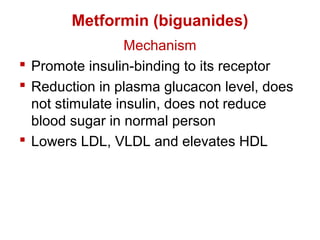
 Promote insulin-binding to its receptor
 Reduction in plasma glucacon level, does
not stimulate insulin, does not reduce
blood sugar in normal person
 Lowers LDL, VLDL and elevates HDL
Biguides (Metformin)
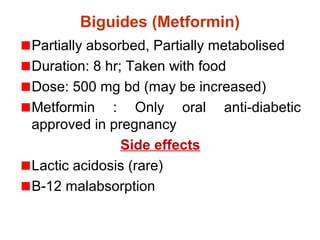
Partially absorbed, Partially metabolised
Duration: 8 hr; Taken with food
Dose: 500 mg bd (may be increased)
Metformin : Only oral anti-diabetic
approved in pregnancy
Side effects
Lactic acidosis (rare)
B-12 malabsorption
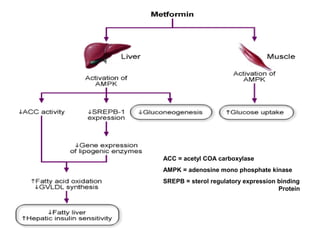
ACC = acetyl COA carboxylase
AMPK = adenosine mono phosphate kinase
SREPB = sterol regulatory expression binding
Protein
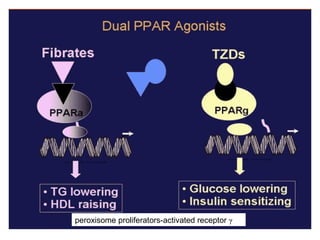
peroxisome proliferators-activated receptor γ
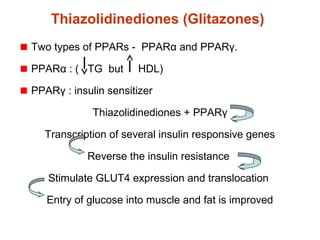
Thiazolidinediones (Glitazones)
Two types of PPARs - PPARα and PPARγ.
PPARα : ( TG but HDL)
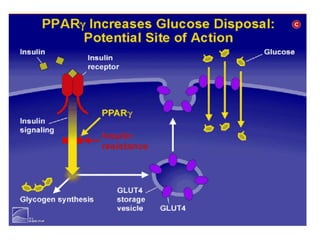
PPARγ : insulin sensitizer
Thiazolidinediones + PPARγ
Transcription of several insulin responsive genes
Reverse the insulin resistance
Stimulate GLUT4 expression and translocation
Entry of glucose into muscle and fat is improved
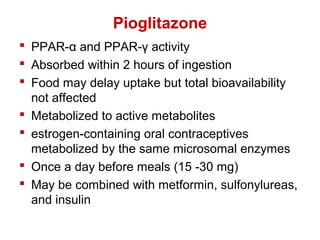
Pioglitazone
 PPAR-α and PPAR-γ activity
 Absorbed within 2 hours of ingestion
 Food may delay uptake but total bioavailability
not affected
 Metabolized to active metabolites
 estrogen-containing oral contraceptives
metabolized by the same microsomal enzymes
 Once a day before meals (15 -30 mg)
 May be combined with metformin, sulfonylureas,
and insulin
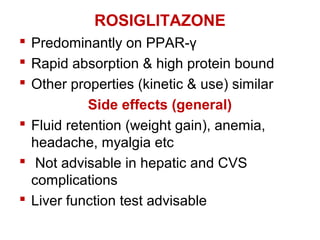
ROSIGLITAZONE
 Predominantly on PPAR-γ
 Rapid absorption & high protein bound
 Other properties (kinetic & use) similar
Side effects (general)
 Fluid retention (weight gain), anemia,
headache, myalgia etc
 Not advisable in hepatic and CVS
complications
 Liver function test advisable
α-GLUCOSIDASES
 Starch, oligosaccharides and di-saccharides
monosaccharides for absorption
 Pancreatic α-amylase :sucrose, maltose,
glycoamylose, and dextrose
 α –glucosidases (intestinal brush ): lactose
 Acarbose & Miglitol cometitive inhibitor of α –
glucosidases and Pancreatic α-amylase (less)
 Miglitol: 6 times more potent against α-amylase
 postprandial digestion and absorption of starch
and disaccharides
α-GLUCOSIDASES
 Dose 25-100 mg (acarbose/miglitol) is taken at the
beginning of each meal.
 Minimally absorbed
 Produces flatulence, abdominal discomfort and
loose stool.
PEPTIDE ANALOGUES
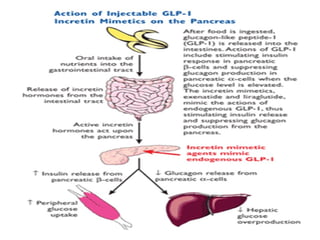
Incretin Mimetics
 Incretins are insulin secretagogues
 GLP-1(Glucagon like peptide-1)liraglutide
 GIP (Gastric inhibitory peptide)
 Bind to GLP (incretin) receptors and increase
insulin release
 Exenatide: GLP-1 agonist is resistance to
degradation by DPP-4 and extends its half-life
 weight loss and gastrointestinal side effects
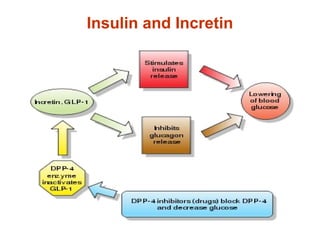
Dipeptidyl peptidase-4
 Dipeptidyl peptidase-4 degrades GLP-1
 Vildagliptin, sitagliptin, saxagliptin,
linagliptin : DPP-4 inhibitors
 prevents the action of DPP-4
 weight neutral and increased risk for
infection and headache
Insulin and Incretin
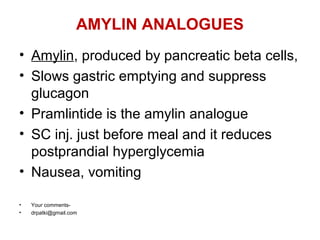
AMYLIN ANALOGUES
• Amylin, produced by pancreatic beta cells,
• Slows gastric emptying and suppress
glucagon
• Pramlintide is the amylin analogue
• SC inj. just before meal and it reduces
postprandial hyperglycemia
• Nausea, vomiting
• Your comments-
• drpatki@gmail.com

Pp oral hypoglycemic agents

  • 1.
  • 2.
    Classification of oralhypoglycemic agents 1. Secretagogues Sufonylureas a. First generation b. Second generation Meglitinides 2. Sensitizers Bioguanides Thiazolidinediones
  • 3.
    Classification of oralhypoglycemic agents (cont) 3. Alpha-glucosidase inhibitors 4. Peptide analogues Incretin mimetic a. Glucagon-like peptide (GLP) analogues and agonists b. Gastric inhibitory peptide (GIP) DPP-4 inhibitors Amylin analogues
  • 4.
    Chemical classification  Sulphonylureas First generation: Tolbutamide, chlorpropamide, acetohexamide, tolazamide  Second generation: Glibenclamide, glipizide, gliclazide, Glemipiride  Biguanides: Phenformin, metformin  Meglitinide Analogues: Repaglinide, Nateglinide  Thiazolidinediones: Rosiglitazone, pioglitazone  α–Glucosidase inhibitors: Acarbose, miglitol
  • 5.
    Site of actionof Oral Hypoglycemic Drugs
  • 6.
    Mechanism of actionof Sulfonylureas
  • 7.
    Types of Sulfonylureas GenerationAgents Duration of action First Tolbutamide 6-12 (hrs) Chlorpropamide 60 Acetohexamide 12-24 Tolazamide 12-24 Second Glipizide 10-16 Glibenclamide 18-24 Glimepiride 18-24
  • 8.
    Pharmacokinetic Administered just beforeor along with meal Moderately protein bound (70-90%) Metabolised in the liver; few are metabolised to active metabolites Low volume distribution Few excreted unchanged in the urine
  • 9.
    ADVERSE EFFECTS Hypoglycemia: long actingdrugs dangerous (inadequate diet, renal / hepatic diseases, other drug administration) GIT disturbances Weight gain Allergy : Jaundice with chlorpropamide Thyroid dysfunction: tolbutamide reduces iodine uptake.
  • 10.
    DRUG INTERACTION Antabuse likeeffect with alcohol (especially with chlorpramide). Enhancement Highly protein binding drugs (salicylates) increase the concentration. Enzyme inhibitors (cimetidine, chloramphenicol) increase the duration of action.
  • 11.
    DRUG INTERACTION Inhibition Enzyme inducersdecrease the duration of action. Chronic alcoholism: hyperglycaemia. Acute alcohol intake: hypoglycaemia. Corticosteroids, loop & thiazide diuretics, oral contraceptives decrease insulin and antagonise indirectly. β-adrenergic drugs mask hypoglycemia.
  • 12.
    MEGLITINIDE (GLINIDE)  Secretionenhancer (insulin secretagogue)  Mechanism similar to sulfonylureas but binding may be at different site or receptor  Rapid onset (should be taken immediately with food or just before food)  Metabolised in liver (caution: in liver dysfunction)  Suitable to control postprandial hyperglycemia uncontrollable with diet and exercise  Substitute for sulfonylurea in case of allergy  Repaglinide 0.25-0.4 mg, Nateglinide: 60-120 mg
  • 13.
    Metformin (biguanides) Mechanism  Increaseuptake and utilization of glucose by skeletal muscle, which reduces the insulin resistance  Inhibition of hepatic and renal gluconeogenesis, which decreases hepatic glucose output predominantly  Slow down the intestinal absorption of glucose
  • 14.
    Metformin (biguanides) Mechanism  Promoteinsulin-binding to its receptor  Reduction in plasma glucacon level, does not stimulate insulin, does not reduce blood sugar in normal person  Lowers LDL, VLDL and elevates HDL
  • 15.
    Biguides (Metformin) Partially absorbed,Partially metabolised Duration: 8 hr; Taken with food Dose: 500 mg bd (may be increased) Metformin : Only oral anti-diabetic approved in pregnancy Side effects Lactic acidosis (rare) B-12 malabsorption
  • 16.
    ACC = acetylCOA carboxylase AMPK = adenosine mono phosphate kinase SREPB = sterol regulatory expression binding Protein
  • 17.
  • 18.
    Thiazolidinediones (Glitazones) Two typesof PPARs - PPARα and PPARγ. PPARα : ( TG but HDL) PPARγ : insulin sensitizer Thiazolidinediones + PPARγ Transcription of several insulin responsive genes Reverse the insulin resistance Stimulate GLUT4 expression and translocation Entry of glucose into muscle and fat is improved
  • 20.
    Pioglitazone  PPAR-α andPPAR-γ activity  Absorbed within 2 hours of ingestion  Food may delay uptake but total bioavailability not affected  Metabolized to active metabolites  estrogen-containing oral contraceptives metabolized by the same microsomal enzymes  Once a day before meals (15 -30 mg)  May be combined with metformin, sulfonylureas, and insulin
  • 21.
    ROSIGLITAZONE  Predominantly onPPAR-γ  Rapid absorption & high protein bound  Other properties (kinetic & use) similar Side effects (general)  Fluid retention (weight gain), anemia, headache, myalgia etc  Not advisable in hepatic and CVS complications  Liver function test advisable
  • 22.
    α-GLUCOSIDASES  Starch, oligosaccharidesand di-saccharides monosaccharides for absorption  Pancreatic α-amylase :sucrose, maltose, glycoamylose, and dextrose  α –glucosidases (intestinal brush ): lactose  Acarbose & Miglitol cometitive inhibitor of α – glucosidases and Pancreatic α-amylase (less)  Miglitol: 6 times more potent against α-amylase  postprandial digestion and absorption of starch and disaccharides
  • 23.
    α-GLUCOSIDASES  Dose 25-100mg (acarbose/miglitol) is taken at the beginning of each meal.  Minimally absorbed  Produces flatulence, abdominal discomfort and loose stool.
  • 24.
    PEPTIDE ANALOGUES Incretin Mimetics Incretins are insulin secretagogues  GLP-1(Glucagon like peptide-1)liraglutide  GIP (Gastric inhibitory peptide)  Bind to GLP (incretin) receptors and increase insulin release  Exenatide: GLP-1 agonist is resistance to degradation by DPP-4 and extends its half-life  weight loss and gastrointestinal side effects
  • 25.
    Dipeptidyl peptidase-4  Dipeptidylpeptidase-4 degrades GLP-1  Vildagliptin, sitagliptin, saxagliptin, linagliptin : DPP-4 inhibitors  prevents the action of DPP-4  weight neutral and increased risk for infection and headache
  • 27.
  • 28.
    AMYLIN ANALOGUES • Amylin,produced by pancreatic beta cells, • Slows gastric emptying and suppress glucagon • Pramlintide is the amylin analogue • SC inj. just before meal and it reduces postprandial hyperglycemia • Nausea, vomiting • Your comments- • drpatki@gmail.com