ACE
inhibitors
Dr. Lokendra Sharma
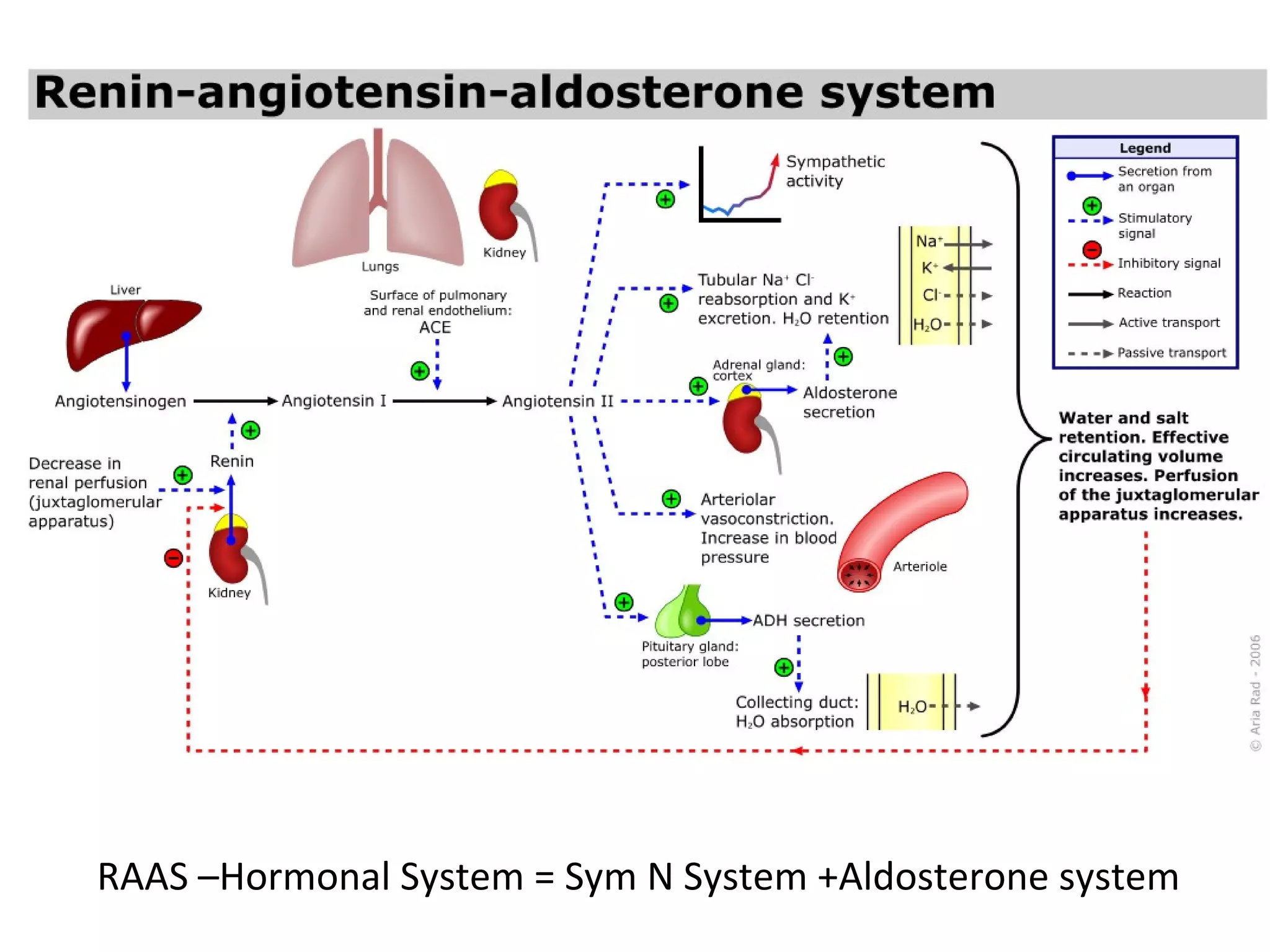
RAAS –Hormonal System = Sym N System +Aldosterone system
RAAS
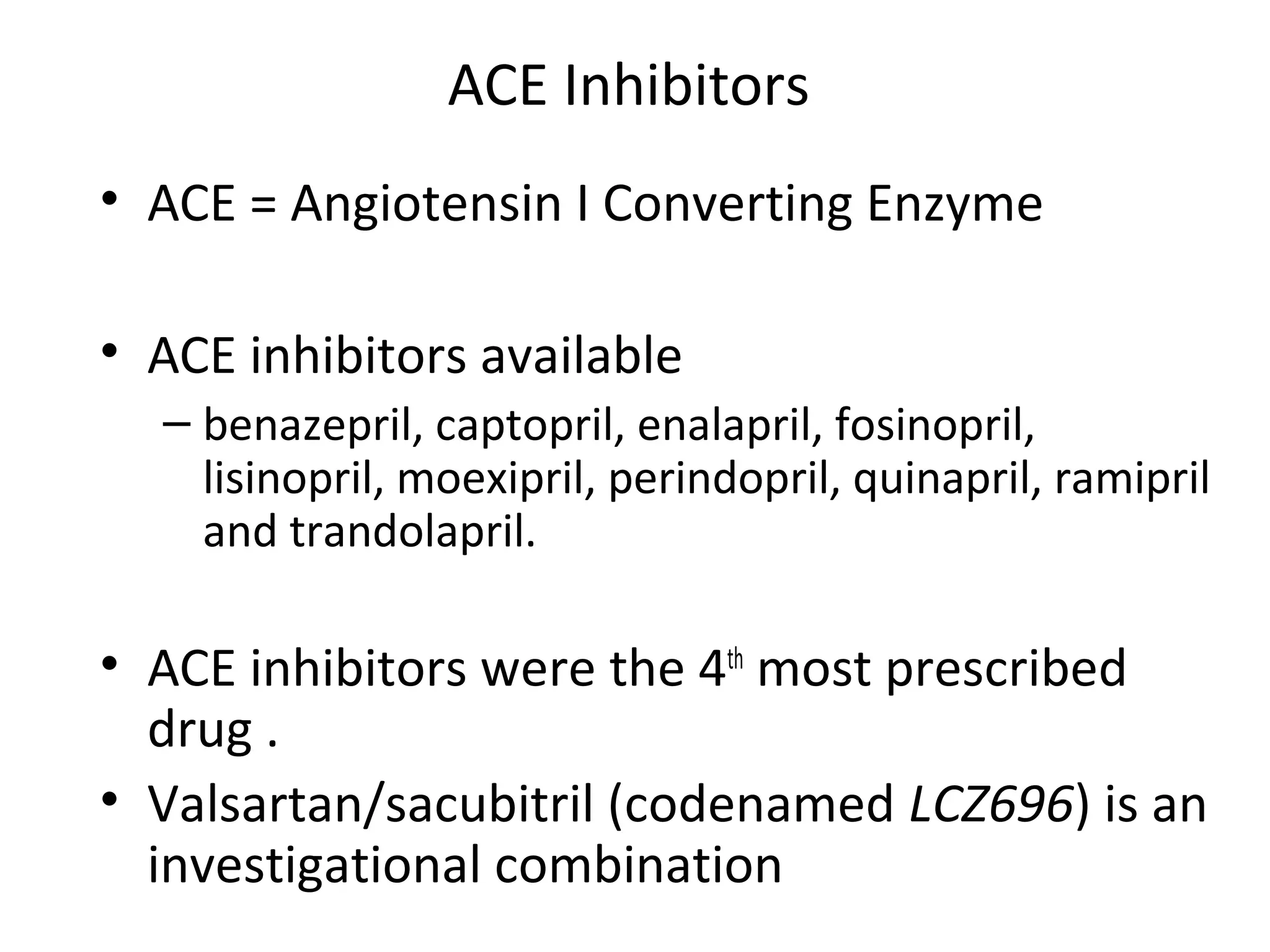
ACE Inhibitors
• ACE = Angiotensin I Converting Enzyme
• ACE inhibitors available
– benazepril, captopril, enalapril, fosinopril,
lisinopril, moexipril, perindopril, quinapril, ramipril
and trandolapril.
• ACE inhibitors were the 4th
most prescribed
drug .
• Valsartan/sacubitril (codenamed LCZ696) is an
investigational combination
Comparative pharmacokinetic properties
of some commonly used ACE inhibitors
Ï Drug *Bioavail PPC (h) ** Elim. T ½
(h)
Route of
Elim.
Dose range
& Frquency
Captopril 75 1-2 2 Renal 25-100 mg,
BD
Enalapril 60 4-5 10 Renal 2.5-40mg,
OD
Lisinopril 30 5-8 12 Renal
(unchanged)
5-40 mg, OD
Prindopril 30 5-6 24 Renal 2-16 mg
Ramipril 60 4-6 8-40 Renal 1.25-10 mg,
OD
Fosinopril 30 3-5 12 Hepatic/Ren
al
10-80 mg
OD
Trandolapril 50 4-6 12-24 Renal 1-8 mg, OD
Benazepril 40 4-6 8-12 Renal 5-80 mg, OD
Compartive features of Captopril,
Enalapril and lisinopril
Captopril Enalapril Lisinopril
Active
drug/Prodrug
Active Prodrug Active
Effect of food on
absorption
Reduced No Effect No effect
Onset of action Faster Delayed Slow (slow
absorption)
Duration &
frequency
Short, BD Long, OD Long, OD
Route of
elimination
Renal Renal Renal (unchanged)
Dysguesia, skin
rashes
Common Less likely Less
First dose
hypotension
Common Less likely Less likely
Other antihypertensive drugs that interfere with the Renin-Angiotensin System
ACE
KininogenAngiotensinogen
Renin Kallikrein
Angiotensin I
(Inactive)
Bradykinin B2
Receptor
AT1
Receptor
Angiotensin II
Vasoconstriction
Aldosterone release
Na+ Retention
Bradykinin(1-7)
(Inactive)
Blood
Pressure
Renin
Inhibitor
Aliskiren
Vasodilation
Na+ Excretion
Angiotensinogen
Renin
Angiotensin I
(Inactive)
Angiotensin II
AT1
Receptor
Blood
Pressure
Endopeptidases
Angiotensin 1-7 AT1-7/Mas
Receptor
Angiotensin 1-5
(Inactive)
ACE
ACE
Inhibitors
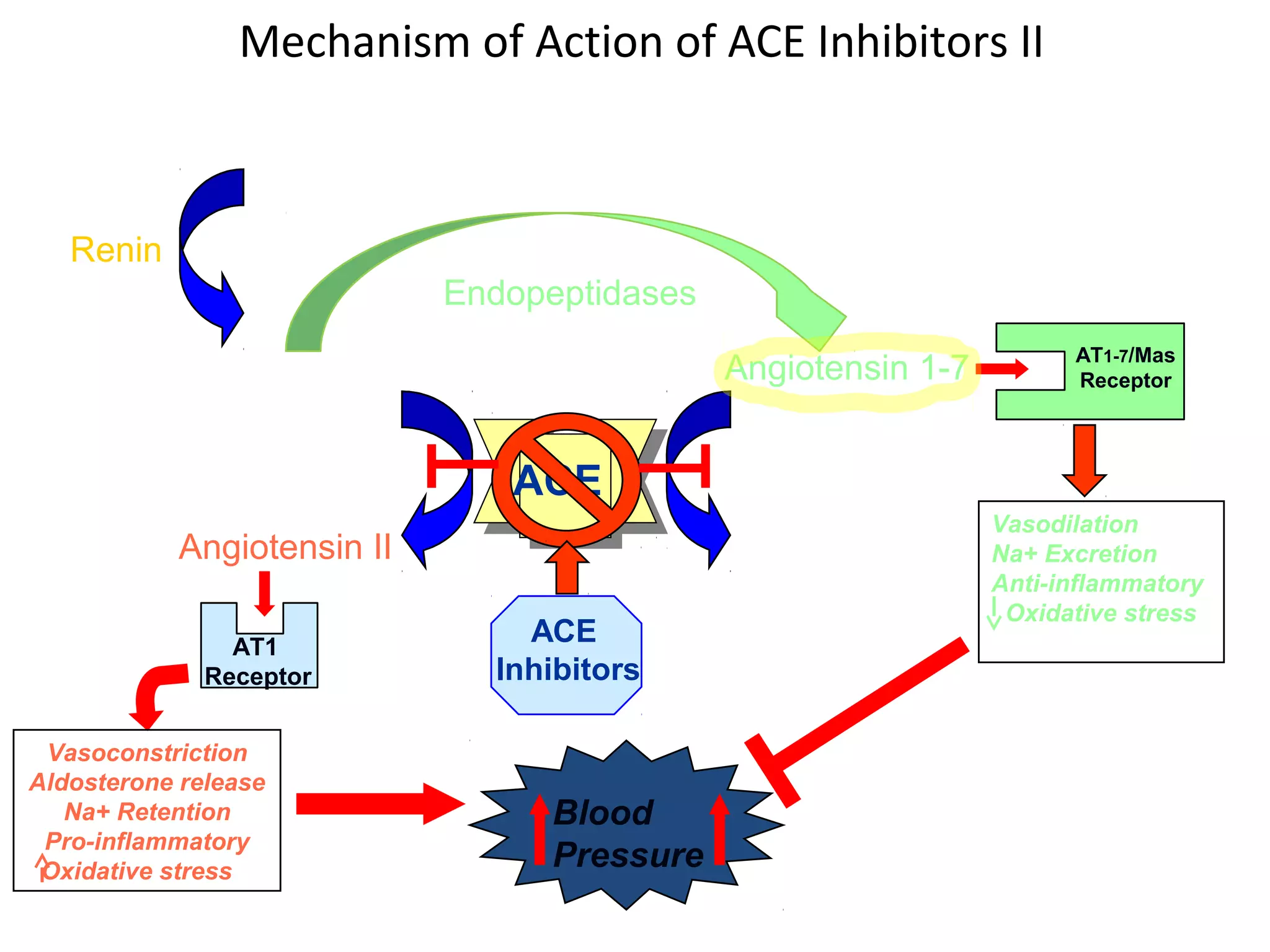
Mechanism of Action of ACE Inhibitors II
Vasodilation
Na+ Excretion
Anti-inflammatory
Oxidative stress
Vasoconstriction
Aldosterone release
Na+ Retention
Pro-inflammatory
Oxidative stress
Angiotensinogen
Renin
Angiotensin I
(Inactive)
Blood
Pressure
Kininogen
Kallikrein
Bradykinin Kinin B2
Receptor
Vasodilation
Na+ Excretion
Bradykinin(1-7)
(Inactive)
ACE
ACE
Inhibitors
Mechanism of Action of ACE Inhibitors
Angiotensin II
AT1
Receptor
Vasoconstriction
Aldosterone release
Na+ Retention
Pro-inflammatory
Oxidative stress
ACE
KininogenAngiotensinogen
Renin Kallikrein
Angiotensin I
(Inactive)
Bradykinin B2
Receptor
AT1
Receptor
Angiotensin II
Vasoconstriction
Aldosterone release
Na+ Retention
Bradykinin(1-7)
(Inactive)
Blood
Pressure
Angiotensin
Receptor
Antagonists
(the “sartans”,
e.g. Losartan)
Vasodilation
Na+ Excretion
Other antihypertensive drugs that interfere with the Renin-Angiotensin System
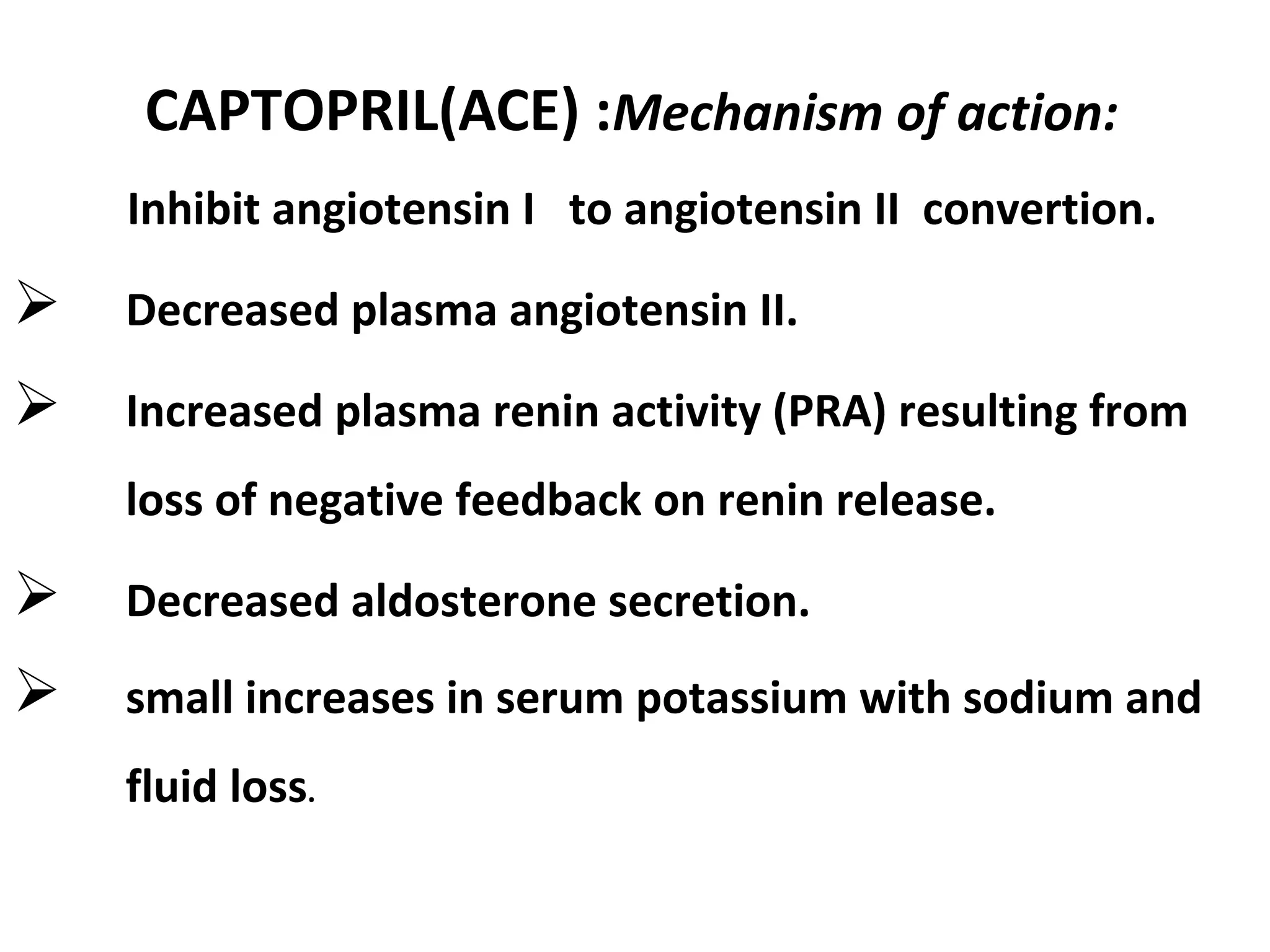
CAPTOPRIL(ACE) :Mechanism of action:
Inhibit angiotensin I to angiotensin II convertion.
 Decreased plasma angiotensin II.
 Increased plasma renin activity (PRA) resulting from
loss of negative feedback on renin release.
 Decreased aldosterone secretion.
 small increases in serum potassium with sodium and
fluid loss.
Why ACE inhibitors causes Cough ?
Therapeutic Uses
• Anti-hypertensive
• Prevent or reverse LVH
• Protect against sudden death and second
myocardial infarction after acute MI
• Improve survival and hemodynamics in
patients with congestive heart failure
• Protect against progression of diabetic and
non-diabetic nephropathy
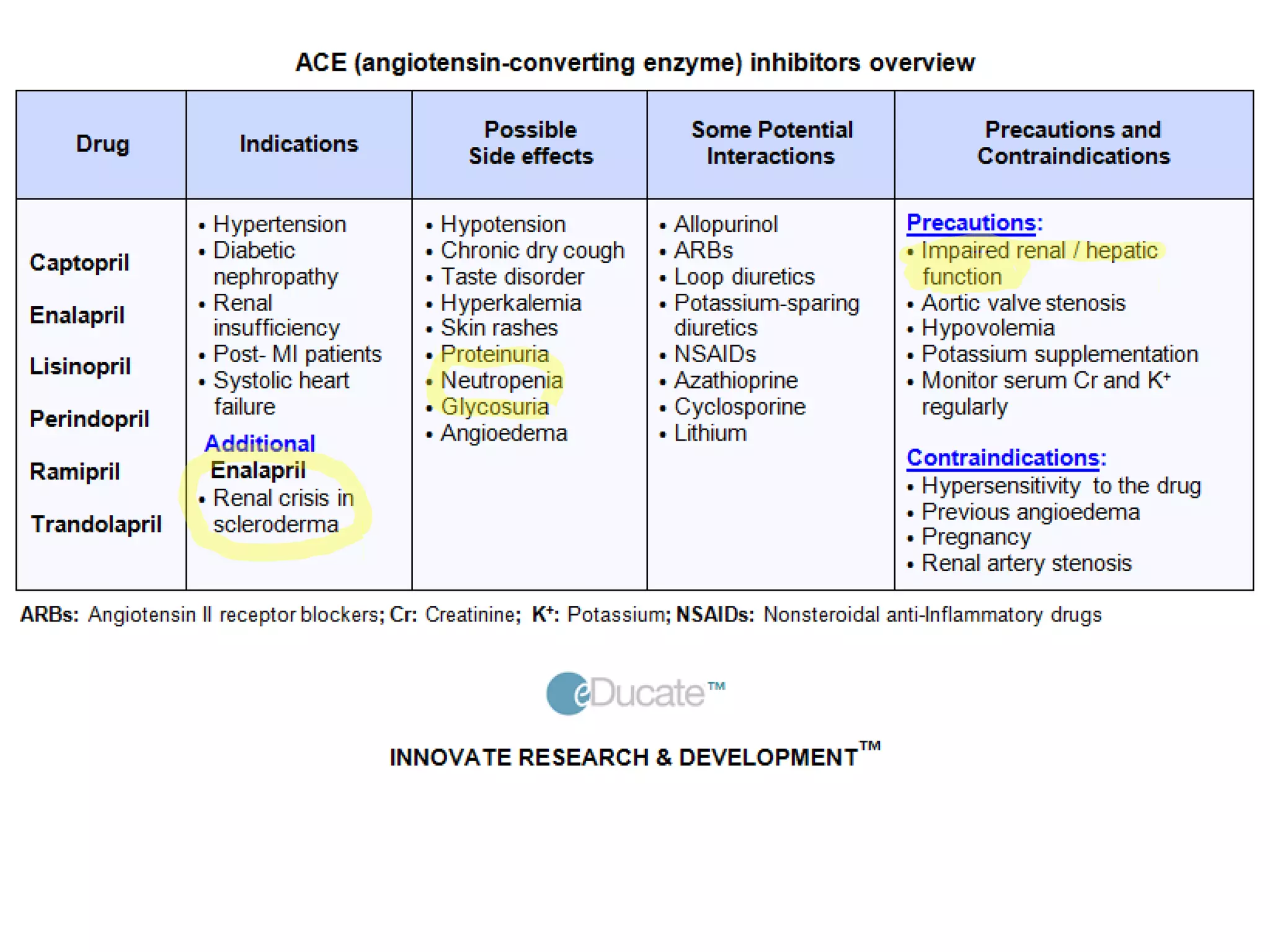
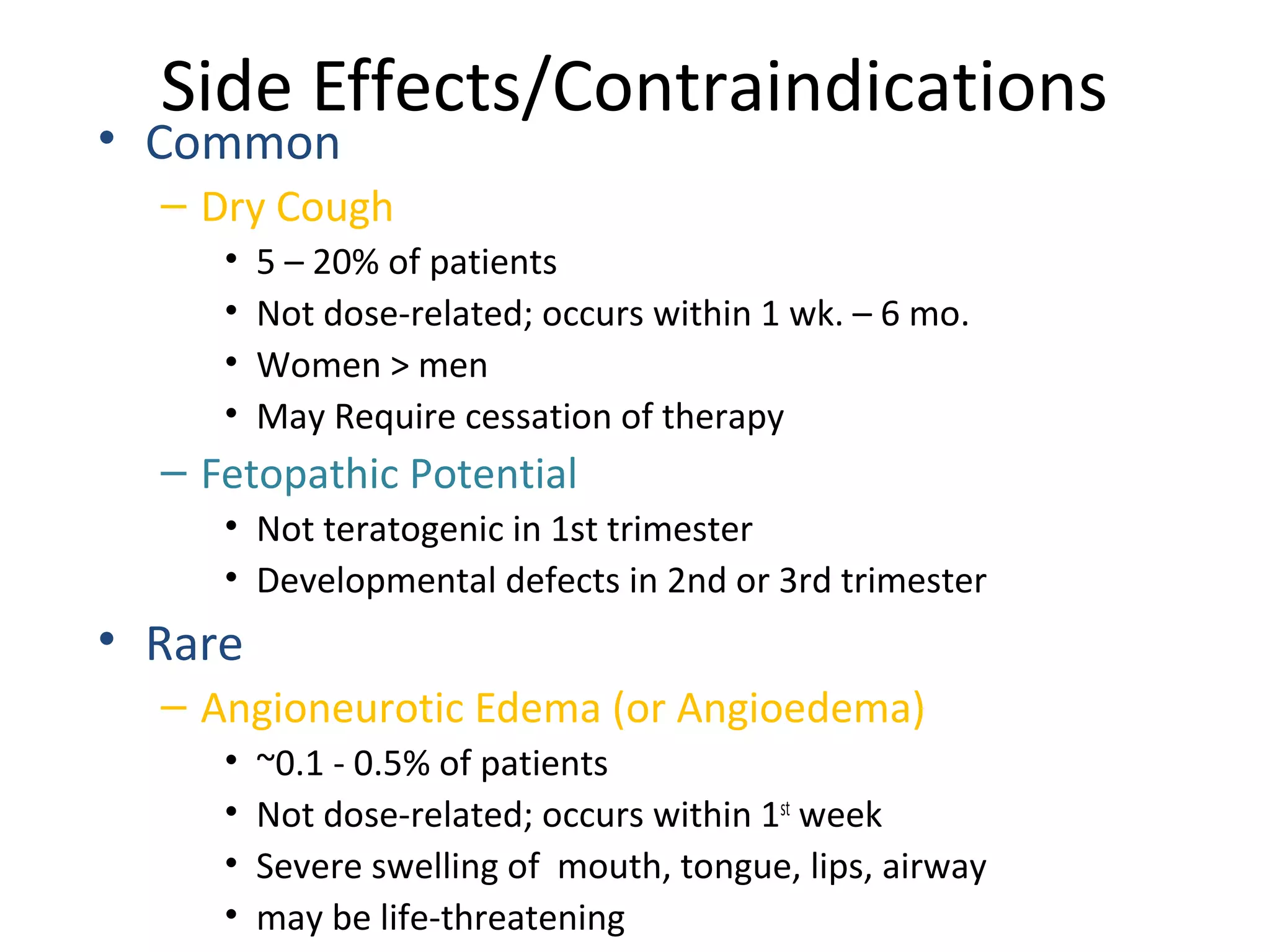
Side Effects/Contraindications
• Common
– Dry Cough
• 5 – 20% of patients
• Not dose-related; occurs within 1 wk. – 6 mo.
• Women > men
• May Require cessation of therapy
– Fetopathic Potential
• Not teratogenic in 1st trimester
• Developmental defects in 2nd or 3rd trimester
• Rare
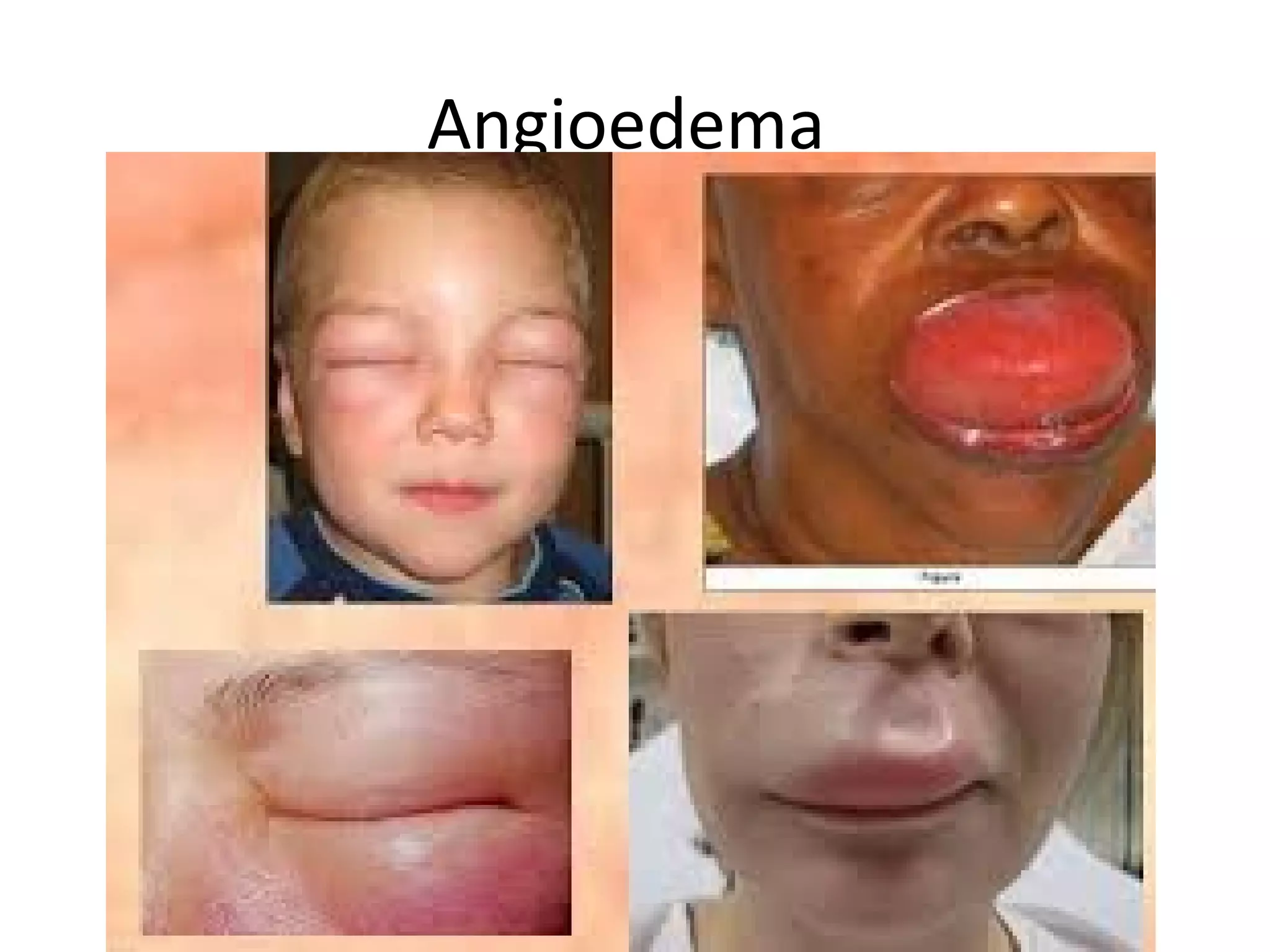
– Angioneurotic Edema (or Angioedema)
• ~0.1 - 0.5% of patients
• Not dose-related; occurs within 1st
week
• Severe swelling of mouth, tongue, lips, airway
• may be life-threatening
Side Effects/Contraindications
• Rare
– Hypotension
• First dose effect in patients with elevated PRA, salt depletion,
CHF
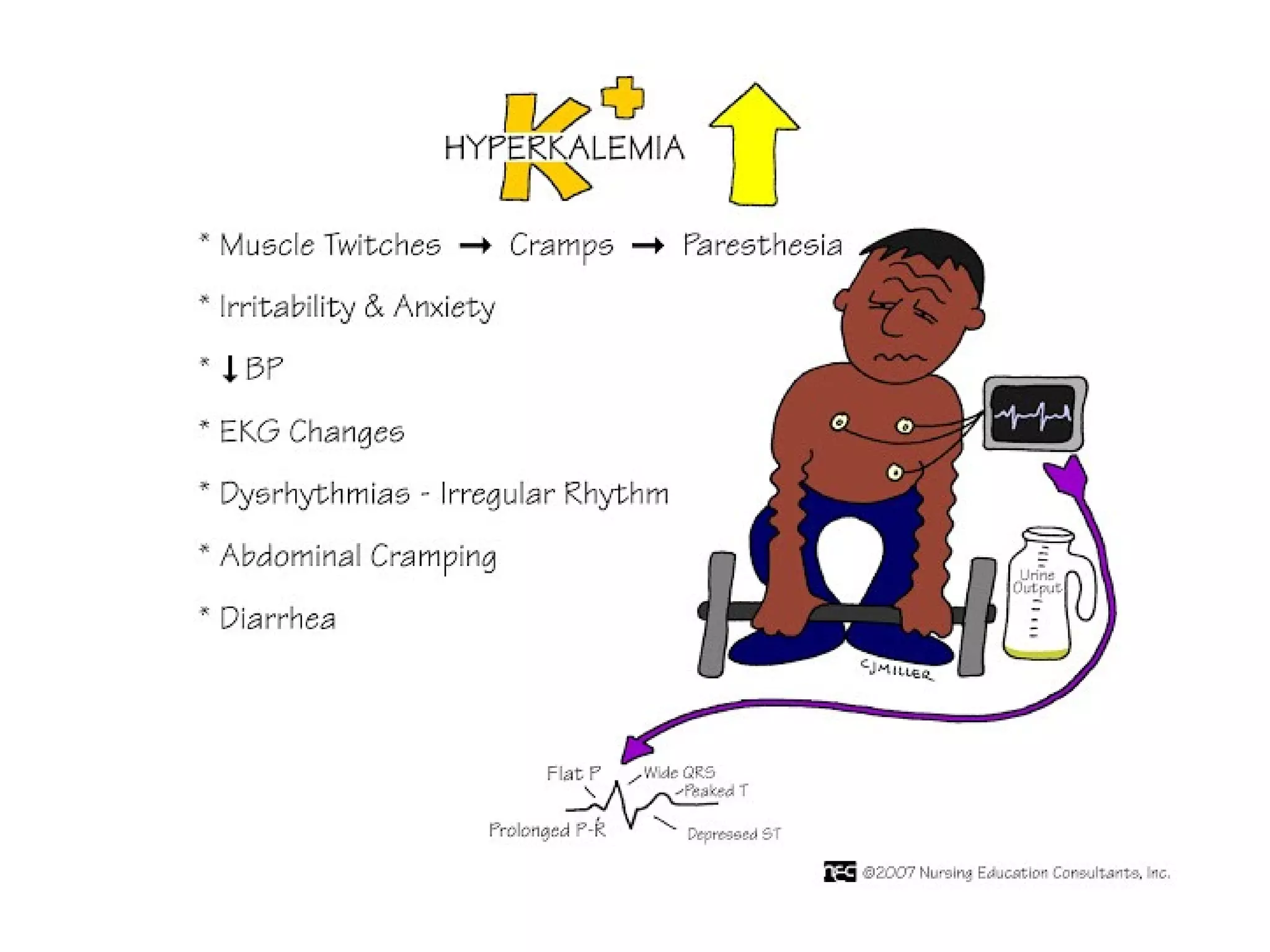
– Hyperkalemia
• In patients with renal insufficiency, diabetic nephropathy
– Acute Renal Failure
• Patients with renal stenosis, heart failure, volume depleted
– Skin Rash
• Extremely Rare (reversible)
– Alteration/loss of taste
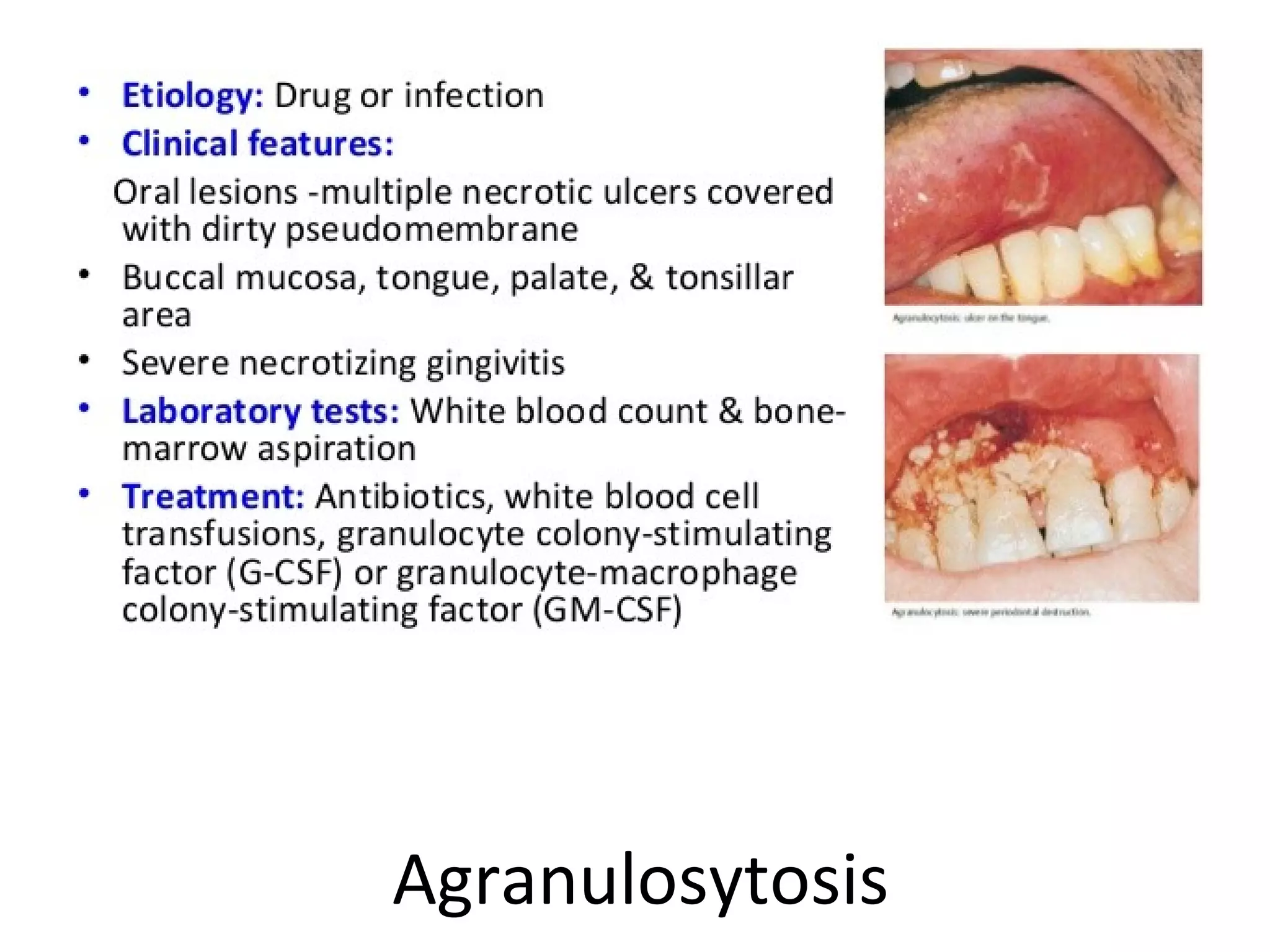
– Neutropenia
– Glycosuria
– Hepatotoxicity
Drug Interactions
– Antacids
• May reduce bioavailability of ACE inhibitors
– Capsaicin
• May worsen ACE inhibitor-induced cough
– NSAIDs
• May reduce antihypertensive response to ACE inhibitors
– K+
-sparing Diuretics or K+
supplements
• May exacerbate ACE inhibitor-induced hyperkalemia
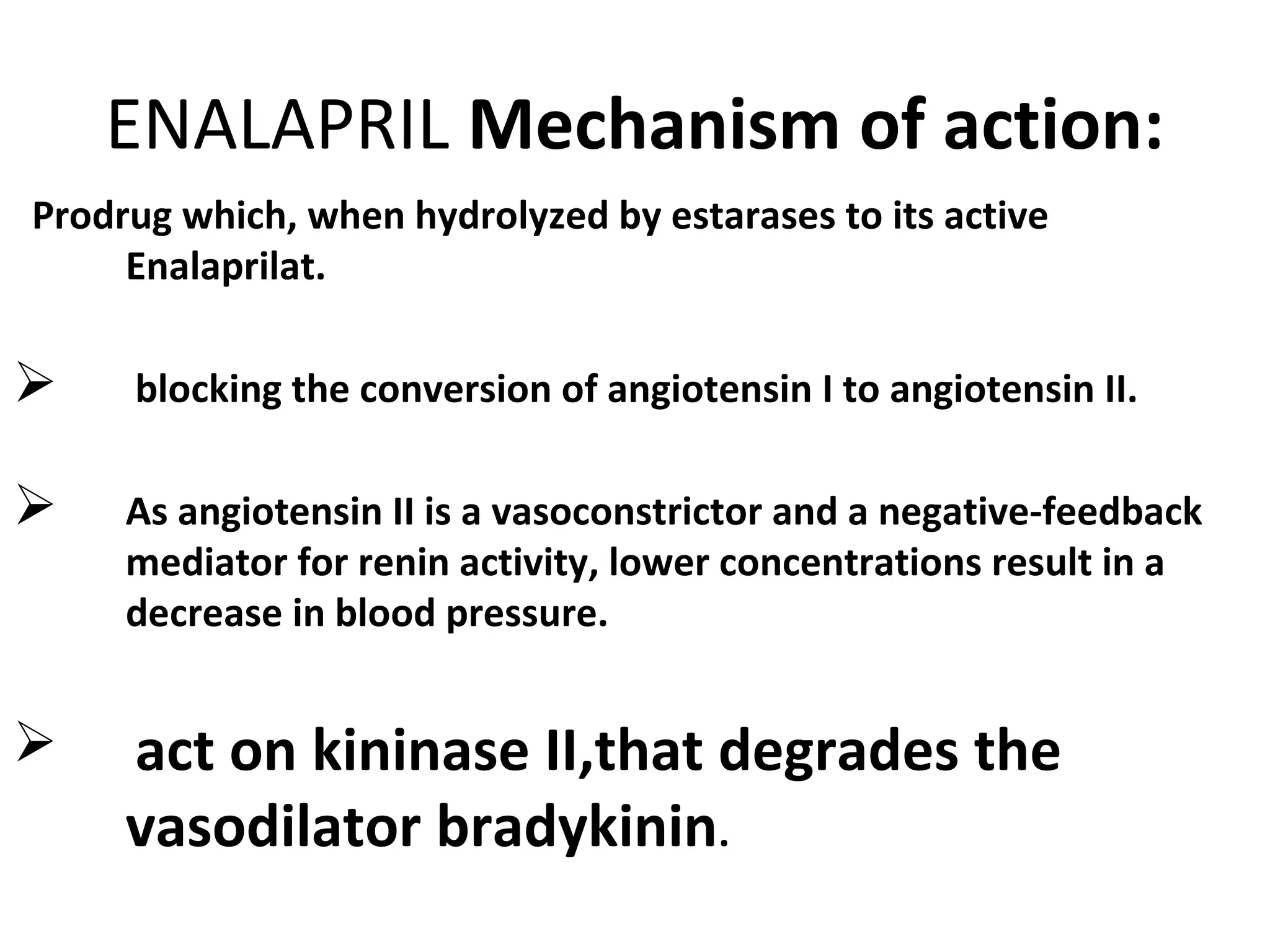
ENALAPRIL Mechanism of action:
Prodrug which, when hydrolyzed by estarases to its active
Enalaprilat.
 blocking the conversion of angiotensin I to angiotensin II.
 As angiotensin II is a vasoconstrictor and a negative-feedback
mediator for renin activity, lower concentrations result in a
decrease in blood pressure.
 act on kininase II,that degrades the
vasodilator bradykinin.
Compartive Pharmacokinetic Properties
of Angiotensin Receptor Blockers
Drug PI t1/2
(h) PPC (h) Elimination Dose/frequenc
y
Losartan 2-3 1 Renal/Hepatic 50mg, OD
* E3174 7-9 3-4 Renal/Hepatic ----
Candesartan
cilexetil
9 3-4 Renal/Biliary 4-32 mg,
OD/BD
Eprosartan 5-9 1-2 Renal/Hepatic 400-800mg,
OD/BD
Irbesartan 3 1-3 Biliary 25-100 mg,
OD/BD
Olmesartan
medoxomil
10-15 1.4-2.8 Renal/Biliary 20-40 MG, OD
Telmisartan 24 0.5-1 Biliary 40-80mg, OD
Valsartan 6-9 2-4 Hepatic 80-320 mg, OD
Write the name of ACE inhibitor which
is eliminated by both kidney & liver ?
Fosinopril
Which type of medications should
not be taken with an ACE inhibitors?
Potassium-sparing diuretics
What are the cardiorenal Effects of
ACE Inhibitors ?
Vasodilation (arterial & venous)
Decrease blood volume
Depress sympathetic activity
Inhibit cardiac and vascular hypertrophy
Write Therapeutic Use of ACE
Inhibitors ?
Hypertension
Heart failure
Post-myocardial infarction
ACE inhibitor associated with taste
distrubances due to its sulfhydryl
moiety?
Captopril
Cough and angioedema in a patient
receving ACE inhibitors is occur due to
?
Bradykinin
oral bioavailability is not reduce by
food for which ACE inhibitors ?
Enalapril
Lisinopril
Trandolapril
Perindopril
Write the name of active ACE
inhibitors?
Captopril and Lisinopril
Management of excessive hypotensive
reaction probably caused by continued
ACE inhibitor treatment perioperatively?
crystalloid fluid infusion
sympathomimetic administration
What are the contraindications of
Enalapril ?
Single kidney or Bilateral renal artery stenosis
Hyperkalemia
Which ACE inhibitor is available as a
separate drug meant for use in
hypertensive emergencies?
Enalaprilat by IV route
Role of ACE inhibitors in scleroderma
crisis?
Prevent the manifestations of scleroderma crisis
which are mediated by angiotensin II.
What is the most frequently adverse
effect associated with ACE inhibitors
and its treatment?
Dry cough. It can be reduced by iron supplements
and asprin.
What are the contraindications of ACE
inhibitors?
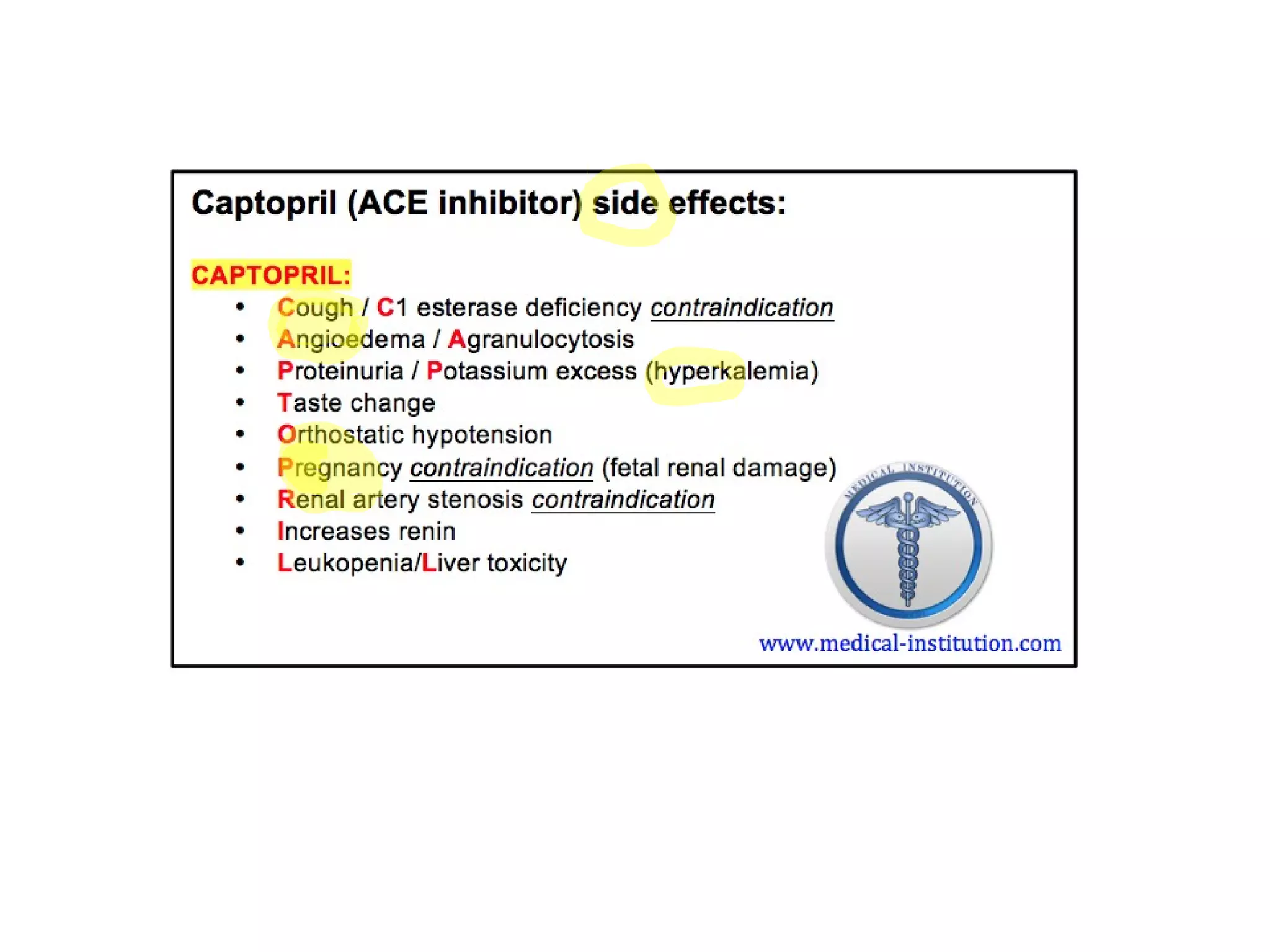
Pregnancy (teratogenic in second half of pregnancy)
and when serum creatinine is more than 3.5
mg/dl.
Which ACE inhibitor causes postural
hypotension?
Captopril
Role of Angiotensin converting enzyme
inhibitors in CHF?
First choice drugs unless contra-indicated
Drugs that can be used for the treatment
of hypertension in a diabetic patient?
ACE inhibitors (e.g. captopril) and AT1
antagonists (e.g. losartan)
Antihypertensive drugs having
neutral
role in lipid metabolism?
ARB and ACE inhibitors
Ramesh is CEO in a company and has a
traveling job. He is a known diabetic controlled on
oral hypoglycemic drugs. On his recent visit to the
doctor, his blood pressure was found to be 164/102
mm Hg. Most suitable drug for this patient should
be ?
Enalapril
Indication of ACE inhibitor in diabetes
mellitus are?
Diabetic nephropathy and Nephropathy
unrelated to diabetes
Write the names of ACE inhibitors
whose absorption is reduced by food?
Fosinopril Quinapril Ramipril
What is the effect of Enalapril on
renin on prolonged use?
Increase
ACE Inhibitors should not be given
with?
Spironolactone
Difference between ACE inhibitors
and ARBs?
ARBs do not increase bradykinin and thus have
less chances of causing cough and angioedema
as compared to ACE inhibitors
Indications of ACE inhibitors?
ACEI are used for the treatment of:
Hypertension, CHF, evolving MI, diabetic
nephropathy, diabetic retinopathy, non-diabetic
renal disease and in scleroderma crisis
Mechanism of action of ACE
inhibitors?
Decreases the activity of RAAS and also
potentiate the vasodilatory action of
bradykinin
Compounds included in ACE
inhibitors?
Captopril
Enalapril
Lisinopril
Ramipril
Perindopril
Trandolapril
Fosinopril & Moexipril
What are the differencs between
captopril and other ACEIs?
Important differences between is that captopril
is lesspotent, has fast onset and short
duration of action and less absorption in
presence of food in GIT.
Mention the teratogenic effects of
ACE inhibitors?
Fetal growth retardation
Hypoplasia of organs
Fetal death
Angioedema
Agranulosytosis
Agranulocytosis
Orthostatic hypotention
ACE Inhibitors