Drug Management of
 Diabetes Mellitus

   Dr. Amol Diwan
   SKNMC, Pune
Diabetes Mellitus
• Diabetes mellitus is a group of metabolic
  diseases characterized by hyperglycemia
  resulting from defects in insulin secretion,
  insulin action, or both.
• The name 'diabetes mellitus' derives from:
  Greek: 'diabetes' – “siphon” or “to pass
  through”
  Latin: 'mellitus' – “honeyed” or “sweet”**
• Two major types : Type 1 and Type 2
• There is either ABSOLUTE or RELATIVE
  deficiency of insulin
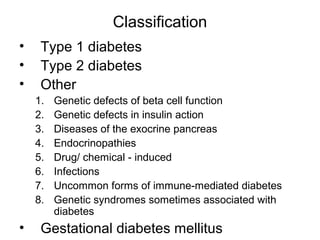
Classification
•    Type 1 diabetes
•    Type 2 diabetes
•    Other
    1.   Genetic defects of beta cell function
    2.   Genetic defects in insulin action
    3.   Diseases of the exocrine pancreas
    4.   Endocrinopathies
    5.   Drug/ chemical - induced
    6.   Infections
    7.   Uncommon forms of immune-mediated diabetes
    8.   Genetic syndromes sometimes associated with
         diabetes
•    Gestational diabetes mellitus
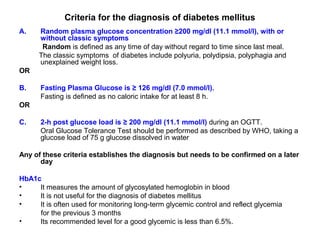
Criteria for the diagnosis of diabetes mellitus
A.    Random plasma glucose concentration ≥200 mg/dl (11.1 mmol/l), with or
      without classic symptoms
       Random is defined as any time of day without regard to time since last meal.
      The classic symptoms of diabetes include polyuria, polydipsia, polyphagia and
      unexplained weight loss.
OR

B.    Fasting Plasma Glucose is ≥ 126 mg/dl (7.0 mmol/l).
      Fasting is defined as no caloric intake for at least 8 h.
OR

C.    2-h post glucose load is ≥ 200 mg/dl (11.1 mmol/l) during an OGTT.
      Oral Glucose Tolerance Test should be performed as described by WHO, taking a
      glucose load of 75 g glucose dissolved in water

Any of these criteria establishes the diagnosis but needs to be confirmed on a later
      day

HbA1c
•    It measures the amount of glycosylated hemoglobin in blood
•    It is not useful for the diagnosis of diabetes mellitus
•    It is often used for monitoring long-term glycemic control and reflect glycemia
     for the previous 3 months
•    Its recommended level for a good glycemic is less than 6.5%.
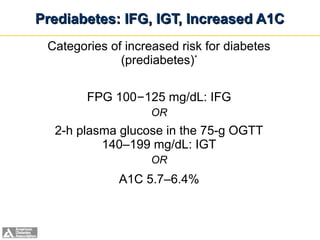
Prediabetes: IFG, IGT, Increased A1C
 Categories of increased risk for diabetes
              (prediabetes)*

          FPG 100–125 mg/dL: IFG
                                OR
  2-h plasma glucose in the 75-g OGTT
          140–199 mg/dL: IGT
                                OR
                     A1C 5.7–6.4%


     ADA. I. Classification and Diagnosis. Diabetes Care 2012;35(suppl 1):S13. Table 3.
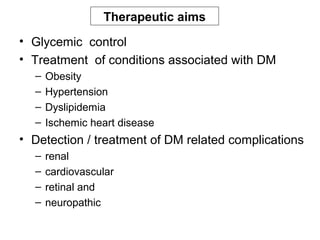
Therapeutic aims
• Glycemic control
• Treatment of conditions associated with DM
  –   Obesity
  –   Hypertension
  –   Dyslipidemia
  –   Ischemic heart disease
• Detection / treatment of DM related complications
  –   renal
  –   cardiovascular
  –   retinal and
  –   neuropathic
Therapeutic strategies

• Diabetes management should begin with
  Medical Nutrition Therapy (MNT)
 (A typical day’s meals and snacks should provide 1,500–2,000
  calories with 50% of the calories from carbohydrate, 20% from
  protein, and 30% from fat)


• An exercise regimen to increase insulin
  sensitivity and promote weight loss should also
  be started.

• If the patient’s glycemic target is not achieved
  after 3 to 4 weeks of MNT & exercise regimen,
  pharmacologic therapy is indicated.
Pharmacologic (DRUG) management

• Pharmacologic management of for
  Type 1DM is only insulin

• Pharmacologic management of
  Type 2 DM includes both oral glucose
  lowering agents or/ plus insulin
 (As Type 2 DM is a progressive disorder, it ultimately
 requires multiple therapeutic agents and often insulin)
Recap of Drugs
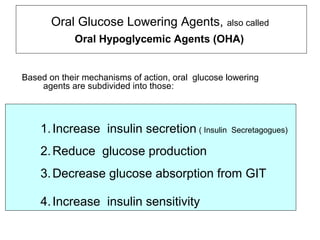
Oral Glucose Lowering Agents,              also called
            Oral Hypoglycemic Agents (OHA)


Based on their mechanisms of action, oral glucose lowering
    agents are subdivided into those:


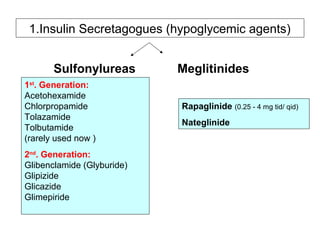
    1. Increase insulin secretion ( Insulin        Secretagogues)

    2. Reduce glucose production
    3. Decrease glucose absorption from GIT

    4. Increase insulin sensitivity
1.Insulin Secretagogues (hypoglycemic agents)


       Sulfonylureas        Meglitinides
1st. Generation:
Acetohexamide
Chlorpropamide              Rapaglinide (0.25 - 4 mg tid/ qid)
Tolazamide
                            Nateglinide
Tolbutamide
(rarely used now )
2nd. Generation:
Glibenclamide (Glyburide)
Glipizide
Glicazide
Glimepiride
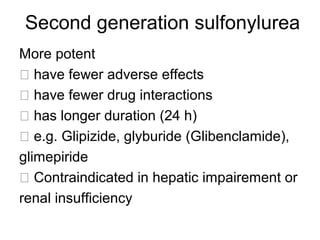
Second generation sulfonylurea
More potent
 have fewer adverse effects
 have fewer drug interactions
 has longer duration (24 h)
 e.g. Glipizide, glyburide (Glibenclamide),
glimepiride
 Contraindicated in hepatic impairement or
renal insufficiency
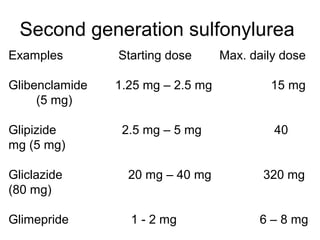
Second generation sulfonylurea
Examples        Starting dose      Max. daily dose

Glibenclamide   1.25 mg – 2.5 mg           15 mg
     (5 mg)

Glipizide        2.5 mg – 5 mg              40
mg (5 mg)

Gliclazide        20 mg – 40 mg           320 mg
(80 mg)

Glimepride        1 - 2 mg                6 – 8 mg
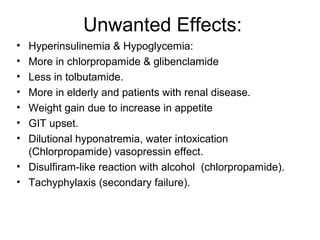
Unwanted Effects:
• Hyperinsulinemia & Hypoglycemia:
• More in chlorpropamide & glibenclamide
• Less in tolbutamide.
• More in elderly and patients with renal disease.
• Weight gain due to increase in appetite
• GIT upset.
• Dilutional hyponatremia, water intoxication
  (Chlorpropamide) vasopressin effect.
• Disulfiram-like reaction with alcohol (chlorpropamide).
• Tachyphylaxis (secondary failure).
Drugs which decrease hypoglycemic
                  effect:
• Microsomal inducers.
• Thiazide diuretics
• Corticosteroids.
• Diazoxide.
CONTRAINDICATIONS:
• Pregnancy (use insulin)
• Hepatic or renal insufficiency
• Type I diabetes
Insulin Secretagogues
                 (Sulfonylureas)
• Mechanism of action: These drugs stimulate
  insulin secretion by interacting with the ATP
  sensitive K+ channel on the beta cells of
  pancreas - must have functional beta cells -

• 1st generation sulfonylureas have a longer
  plasma half-life which causes a greater
  incidence of hypoglycemia

• 2nd generation sulfonylureas are generally
  preferred, because they cause much less
  hypoglycemia due to their shorter half-life
Sulfonylureas
1.   ADRs: hypoglycemia, weight gain
2.   Contraindications: Type 1 DM, liver or kidney
      disease, sulfa allergy, pregnancy
3. Clinical advantage: Lean patients with high
                          blood glucose
3.   Drug interactions
     Drugs which can increase hypoglycemic effects of sulfonylureas
       1.   NSAIDs,
       2.   Sulfonamides
       3.   Warfarin
       4.   Beta -blockers
     Drugs which can decrease hypoglycemic effects of sulfonylureas

       1.   Thiazides,
       2.   Hydantoins
       3.   Oral contraceptives
       4.   Corticosteroids
Oral Antidiabetic Agents
  • Insulin secretagogues
Hypoglycemia, is a side effect
common to almost ALL these drugs
     – Sulfonylureas
    – Meglitinides
Almost ALL of them are
  • Biguanides: Metformin
contraindicated in severe liver, renal
  • Thiazolidinediones
andAlpha glucosidase inhibitors should be
  • cardiac disease and
used with extreme caution in elderly
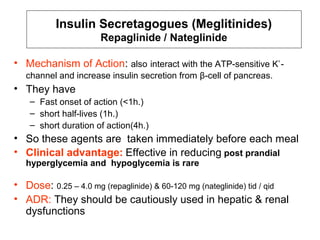
Insulin Secretagogues (Meglitinides)
                      Repaglinide / Nateglinide

• Mechanism of Action: also interact with the ATP-sensitive K+ -
   channel and increase insulin secretion from β-cell of pancreas.
• They have
    – Fast onset of action (<1h.)
    – short half-lives (1h.)
    – short duration of action(4h.)
• So these agents are taken immediately before each meal
• Clinical advantage: Effective in reducing post prandial
   hyperglycemia and hypoglycemia is rare

• Dose: 0.25 – 4.0 mg (repaglinide) & 60-120 mg (nateglinide) tid / qid
• ADR: They should be cautiously used in hepatic & renal
  dysfunctions
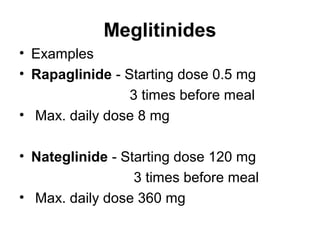
Meglitinides
• Examples
• Rapaglinide - Starting dose 0.5 mg
                 3 times before meal
• Max. daily dose 8 mg

• Nateglinide - Starting dose 120 mg
                  3 times before meal
• Max. daily dose 360 mg
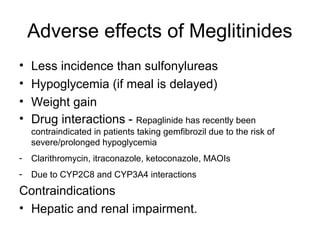
Adverse effects of Meglitinides
•   Less incidence than sulfonylureas
•   Hypoglycemia (if meal is delayed)
•   Weight gain
•   Drug interactions - Repaglinide has recently been
    contraindicated in patients taking gemfibrozil due to the risk of
    severe/prolonged hypoglycemia
-   Clarithromycin, itraconazole, ketoconazole, MAOIs
-   Due to CYP2C8 and CYP3A4 interactions
Contraindications
• Hepatic and renal impairment.
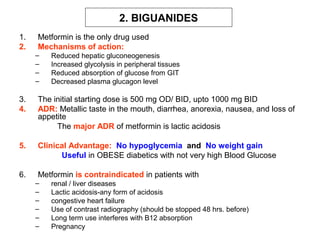
2. BIGUANIDES
1.   Metformin is the only drug used
2.   Mechanisms of action:
     –   Reduced hepatic gluconeogenesis
     –   Increased glycolysis in peripheral tissues
     –   Reduced absorption of glucose from GIT
     –   Decreased plasma glucagon level

3.   The initial starting dose is 500 mg OD/ BID, upto 1000 mg BID
4.   ADR: Metallic taste in the mouth, diarrhea, anorexia, nausea, and loss of
     appetite
          The major ADR of metformin is lactic acidosis

5.   Clinical Advantage: No hypoglycemia and No weight gain
           Useful in OBESE diabetics with not very high Blood Glucose

6.   Metformin is contraindicated in patients with
     –   renal / liver diseases
     –   Lactic acidosis-any form of acidosis
     –   congestive heart failure
     –   Use of contrast radiography (should be stopped 48 hrs. before)
     –   Long term use interferes with B12 absorption
     –   Pregnancy
BIGUANIDES
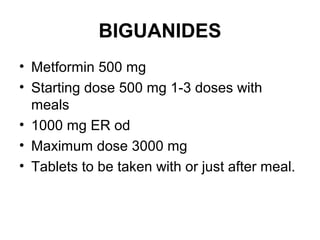
• Metformin 500 mg
• Starting dose 500 mg 1-3 doses with
  meals
• 1000 mg ER od
• Maximum dose 3000 mg
• Tablets to be taken with or just after meal.
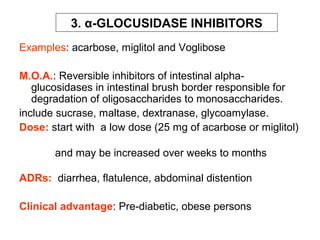
3. α-GLOCUSIDASE INHIBITORS
Examples: acarbose, miglitol and Voglibose

M.O.A.: Reversible inhibitors of intestinal alpha-
   glucosidases in intestinal brush border responsible for
   degradation of oligosaccharides to monosaccharides.
include sucrase, maltase, dextranase, glycoamylase.
Dose: start with a low dose (25 mg of acarbose or miglitol)

       and may be increased over weeks to months

ADRs: diarrhea, flatulence, abdominal distention

Clinical advantage: Pre-diabetic, obese persons
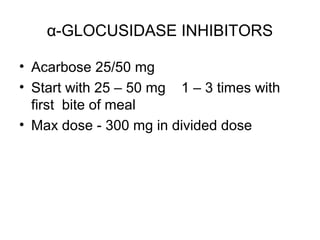
α-GLOCUSIDASE INHIBITORS

• Acarbose 25/50 mg
• Start with 25 – 50 mg 1 – 3 times with
  first bite of meal
• Max dose - 300 mg in divided dose
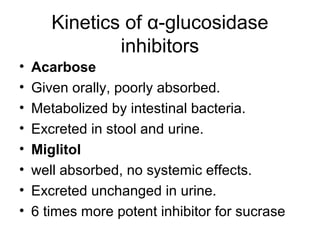
Kinetics of α-glucosidase
               inhibitors
•   Acarbose
•   Given orally, poorly absorbed.
•   Metabolized by intestinal bacteria.
•   Excreted in stool and urine.
•   Miglitol
•   well absorbed, no systemic effects.
•   Excreted unchanged in urine.
•   6 times more potent inhibitor for sucrase
Uses of alpha-glucosidase
            inhibitors
• Type II diabetics inadequately controlled
  by diet with or without other agents ( SU,
  Metformin) alone or combined with insulin
  or sulfonylurea.
Contraindications of α-glucosidase
             inhibitors

•   Inflammatory bowel disorders (IBD).
•   Renal disease.
•   Hepatic disease (used with caution).
•   Intestinal obstruction.
4. THIAZOLIDINEDIONES (glitazones)
         Rosiglitazone and Pioglitazone (Tro / Ciglitazone)

•   These drugs bind to the PPAR–y (peroxisome proliferators-activated
    receptor-y) nuclear receptor in adipose tissues

•   They correct insulin resistance

•   The first drug of this group, troglitazone, was withdrawn due to
    hepatotoxicity

•   For rosiglitazone and pioglitazone, liver function tests are
    recommended before starting and at regular intervals

•   These drugs are contraindicated in patients with liver disease or
    congestive heart failure

•   The safety of thiazolidinediones in pregnancy is not established.
Glitazones
• Rosiglitazone 4 mg/ 8 mg
• 4 mg once daily morning
• Max Dose - 8 mg

• - Pioglitazone 15 mg / 30 mg
• 15 mg once daily morning
• Max Dose - 45 mg
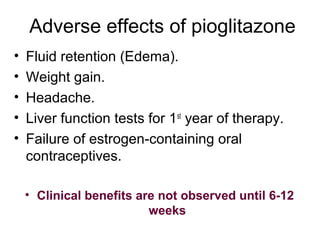
Adverse effects of pioglitazone
•   Fluid retention (Edema).
•   Weight gain.
•   Headache.
•   Liver function tests for 1st year of therapy.
•   Failure of estrogen-containing oral
    contraceptives.

    • Clinical benefits are not observed until 6-12
                          weeks
Incretin -mimetic (Exenatide / Liraglutide)
• It mimicks the endogenous incretin, glucagon-like
  peptide-1 (GLP-1) and thus it stimulates glucose-
  dependent insulin release
• As opposed to insulin secretagogues, which may cause
  non–glucose-dependent insulin release and
  hypoglycemia
• Patients may attain modest weight loss.
• This drug requires twice daily injections and is more
  expensive than high-dose glitazone therapy.

Pramlintide : Synthetic amylin that reduces glucagon
  secretion and delays gastric emptying [s/c]
  Useful in type 1 and type 2 DM
DPP- 4 inhibitors
• The newest oral hypoglycemic agents is
  Sitagliptin, Vildagliptin, Saxagliptin, Linagliptin
• A dipeptidyl peptidase IV (DPP-4) inhibitor
• DPP-4 degrades numerous biologically active
  peptides including the endogenous incretins,
  GLP-1 and glucose-dependent insulinotropic
  peptide (GIP).

• They can be used as a monotherapy or in
  combination with metformin or the glitazones
• It is given orally and once daily
Dipeptyl- peptidase inhibitors
         Sitagliptin
        Vildagliptin
         Saxagliptin
         Septagliptin
         Allogliptin
Sitagliptin Has a
                 Weight Neutral Profile
•   Monotherapy studies
     – No increase in body weight from baseline with sitagliptin
       compared with a small decrease in the placebo group

•   Add-on to metformin
     – A similar decrease in body weight for both treatment groups

•   Add-on to pioglitazone
     – No significant difference in body weight between treatment
       groups

•   Noninferiority vs Sulfonylurea
     A significant reduction in body weight with sitagliptin versus
       weight gain with glipizide
                                                                      46
Clinical uses
• Type 2 DM as an adjunct to diet &
  exercise as a monotherapy or in
  combination with other antidiabetic drugs.
• Adverse effects: Nausea, abdominal pain,
  diarrhea
• Nasopharyngitis
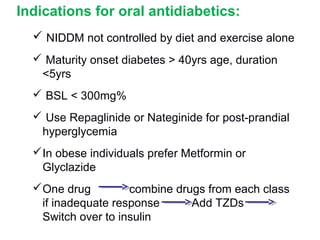
Indications for oral antidiabetics:
   NIDDM not controlled by diet and exercise alone
   Maturity onset diabetes > 40yrs age, duration
   <5yrs
   BSL < 300mg%
   Use Repaglinide or Nateginide for post-prandial
   hyperglycemia
   In obese individuals prefer Metformin or
    Glyclazide
  a


   One drug         combine drugs from each class
    if inadequate response      Add TZDs
    Switch over to insulin
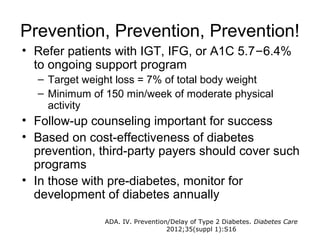
Prevention, Prevention, Prevention!
• Refer patients with IGT, IFG, or A1C 5.7–6.4%
  to ongoing support program
  – Target weight loss = 7% of total body weight
  – Minimum of 150 min/week of moderate physical
    activity
• Follow-up counseling important for success
• Based on cost-effectiveness of diabetes
  prevention, third-party payers should cover such
  programs
• In those with pre-diabetes, monitor for
  development of diabetes annually

               ADA. IV. Prevention/Delay of Type 2 Diabetes. Diabetes Care
                                  2012;35(suppl 1):S16
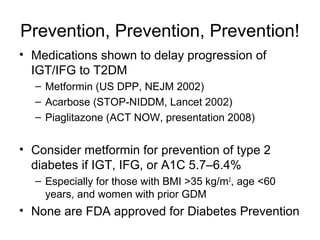
Prevention, Prevention, Prevention!
• Medications shown to delay progression of
  IGT/IFG to T2DM
  – Metformin (US DPP, NEJM 2002)
  – Acarbose (STOP-NIDDM, Lancet 2002)
  – Piaglitazone (ACT NOW, presentation 2008)


• Consider metformin for prevention of type 2
  diabetes if IGT, IFG, or A1C 5.7–6.4%
  – Especially for those with BMI >35 kg/m 2, age <60
    years, and women with prior GDM
• None are FDA approved for Diabetes Prevention
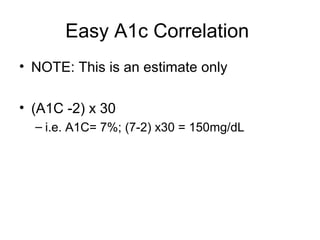
Easy A1c Correlation
• NOTE: This is an estimate only

• (A1C -2) x 30
  – i.e. A1C= 7%; (7-2) x30 = 150mg/dL
How to treat Type 2 DM
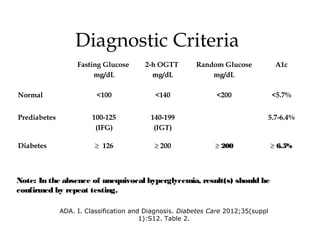
Diagnostic Criteria
                   Fasting Glucose      2-h OGTT        Random Glucose             A1c
                        mg/dL             mg/dL             mg/dL

Normal                   <100              <140               <200                <5.7%


Prediabetes             100-125           140-199                             5.7-6.4%
                         (IFG)             (IGT)

Diabetes                 ≥ 126             ≥ 200              ≥ 200               ≥ 6.5%


Note: In the absence of unequivocal hyperglycemia, result(s) should be
confirmed by repeat testing.

              ADA. I. Classification and Diagnosis. Diabetes Care 2012;35(suppl
                                        1):S12. Table 2.
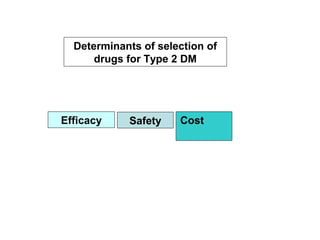
Determinants of selection of
      drugs for Type 2 DM


Efficacy    Safety    Cost
Choice of Initial Glucose-Lowering
                 Agent
• The level of hyperglycemia should influence the initial
  choice of therapy.
• mild to moderate hyperglycemia [FPG < (200–250 mg/dL)]
  often respond well to a single, oral glucose-lowering agent.
• more severe hyperglycemia [FPG > (250 mg/dL)] -stepwise
  approach "Combination Therapy"
• Insulin can be used as initial therapy in individuals with
  severe hyperglycemia [FPG > (250–300 mg/dL)
• Insulin secretagogues, biguanides, -glucosidase inhibitors,
  thiazolidinediones, and insulin are approved for
  monotherapy of type 2 DM
What is the role of an ideal
            oral hypoglycaemic agent?
Conserve islet cell function
     - delay the subsequent use of insulin.


Improve patient compliance- single daily dosing.


Reduce the incidence of hypoglycaemic events
Efficacy of Oral Hypoglycemic Agents

• Sulfonylureas are not much helpful in
  patients with moderate glucose intolerance
  and pancreatic β -cell loss


• Thiazolidinediones (glitazones) do not
  demonstrate much efficacy in patients who
  don’t have much insulin resistance
Side effects
• The benefits of combination therapy must be
  weighed against the risk of side effects.
• For sulfonylureas, the major side effect has
  been the frequency and severity of
  hypoglycemia.
• However, for many patients, weight gain is also
  unacceptable
• Renal disease
• Hepatic disease       Risk of lactic acidosis
• Pregnancy – OHAs are contraindicated
• Meglitinides are safe at higher levels of serum
Cr than sulfonylureas
• Drug interactions
Cost

Metformin and 2nd Generation Sulfonylureas
are LESS EXPENSIVE


Newer drugs are MORE EXPENSIVE
Initial Treatment of Type 2
              Diabetes
• Diet and exercise are the most effective
  treatments for type 2 diabetes !
• Diet for approx 12 weeks
• Then if control is poor (HbA1C > 7%)
  – Overweight (BMI > 25) - metformin
  – If not controlled then sulphonylureas,
    metaglitinides, amino acid derivatives
• Contraindicated in pregnancy and when
  breast feeding
• Used in conjunction with diet and exercise
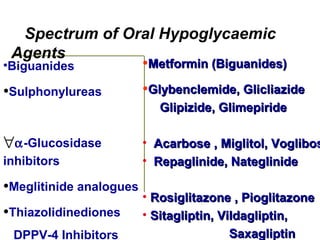
Spectrum of Oral Hypoglycaemic
 Agents
•Biguanides       •Metformin (Biguanides)
•Sulphonylureas          •Glybenclemide, Glicliazide
                            Glipizide, Glimepiride

∀α-Glucosidase           • Acarbose , Miglitol, Voglibos
inhibitors               • Repaglinide, Nateglinide

•Meglitinide analogues
                         • Rosiglitazone , Pioglitazone
•Thiazolidinediones      • Sitagliptin, Vildagliptin,
 DPPV-4 Inhibitors                      Saxagliptin
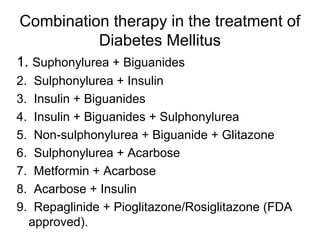
Combination therapy in the treatment of
          Diabetes Mellitus
1. Suphonylurea + Biguanides
2.    Sulphonylurea + Insulin
3.    Insulin + Biguanides
4.    Insulin + Biguanides + Sulphonylurea
5.    Non-sulphonylurea + Biguanide + Glitazone
6.    Sulphonylurea + Acarbose
7.    Metformin + Acarbose
8.    Acarbose + Insulin
9.    Repaglinide + Pioglitazone/Rosiglitazone (FDA
     approved).
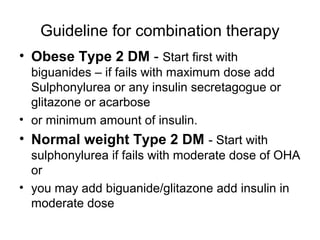
Guideline for combination therapy
• Obese Type 2 DM - Start first with
  biguanides – if fails with maximum dose add
  Sulphonylurea or any insulin secretagogue or
  glitazone or acarbose
• or minimum amount of insulin.
• Normal weight Type 2 DM - Start with
  sulphonylurea if fails with moderate dose of OHA
  or
• you may add biguanide/glitazone add insulin in
  moderate dose
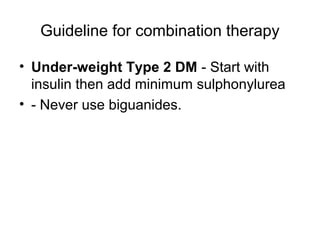
Guideline for combination therapy

• Under-weight Type 2 DM - Start with
  insulin then add minimum sulphonylurea
• - Never use biguanides.
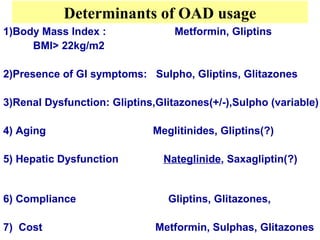
Determinants of OAD usage
1)Body Mass Index :               Metformin, Gliptins
     BMI> 22kg/m2

2)Presence of GI symptoms: Sulpho, Gliptins, Glitazones

3)Renal Dysfunction: Gliptins,Glitazones(+/-),Sulpho (variable)

4) Aging                     Meglitinides, Gliptins(?)

5) Hepatic Dysfunction          Nateglinide, Saxagliptin(?)


6) Compliance                   Gliptins, Glitazones,

7) Cost                       Metformin, Sulphas, Glitazones
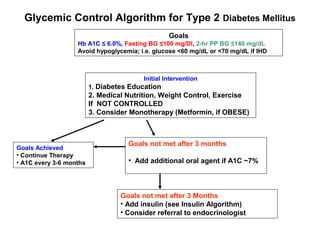
Glycemic Control Algorithm for Type 2 Diabetes Mellitus
                                                  Goals
                   Hb A1C ≤ 6.0%, Fasting BG ≤100 mg/Dl, 2-hr PP BG ≤140 mg/dL
                   Avoid hypoglycemia; i.e. glucose <60 mg/dL or <70 mg/dL if IHD


                                         Initial Intervention
                         1. Diabetes Education
                         2. Medical Nutrition, Weight Control, Exercise
                         If NOT CONTROLLED
                         3. Consider Monotherapy (Metformin, if OBESE)


                                    Goals not met after 3 months
Goals Achieved
• Continue Therapy
• A1C every 3-6 months              • Add additional oral agent if A1C ~7%


                                  Goals not met after 3 Months
                                  • Add insulin (see Insulin Algorithm)
                                  • Consider referral to endocrinologist
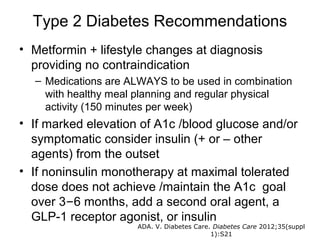
Type 2 Diabetes Recommendations
• Metformin + lifestyle changes at diagnosis
  providing no contraindication
  – Medications are ALWAYS to be used in combination
    with healthy meal planning and regular physical
    activity (150 minutes per week)
• If marked elevation of A1c /blood glucose and/or
  symptomatic consider insulin (+ or – other
  agents) from the outset
• If noninsulin monotherapy at maximal tolerated
  dose does not achieve /maintain the A1c goal
  over 3–6 months, add a second oral agent, a
  GLP-1 receptor agonist, or insulin
                     ADA. V. Diabetes Care. Diabetes Care 2012;35(suppl
                                           1):S21
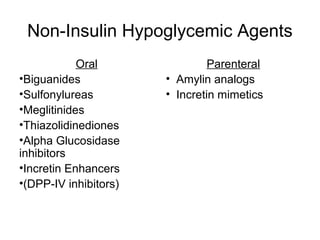
Non-Insulin Hypoglycemic Agents
            Oral                Parenteral
•Biguanides            • Amylin analogs
•Sulfonylureas         • Incretin mimetics
•Meglitinides
•Thiazolidinediones
•Alpha Glucosidase
inhibitors
•Incretin Enhancers
•(DPP-IV inhibitors)
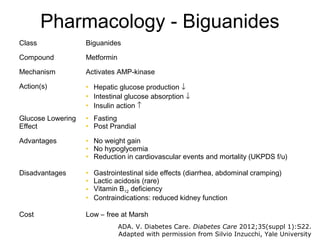
Pharmacology - Biguanides
Class              Biguanides

Compound           Metformin

Mechanism          Activates AMP-kinase

Action(s)          • Hepatic glucose production ↓
                   • Intestinal glucose absorption ↓
                   • Insulin action ↑
Glucose Lowering   • Fasting
Effect             • Post Prandial

Advantages         • No weight gain
                   • No hypoglycemia
                   • Reduction in cardiovascular events and mortality (UKPDS f/u)

Disadvantages      •   Gastrointestinal side effects (diarrhea, abdominal cramping)
                   •   Lactic acidosis (rare)
                   •   Vitamin B12 deficiency
                   •   Contraindications: reduced kidney function

Cost               Low – free at Marsh
                               ADA. V. Diabetes Care. Diabetes Care 2012;35(suppl 1):S22.
                               Adapted with permission from Silvio Inzucchi, Yale University
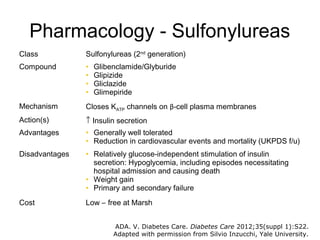
Pharmacology - Sulfonylureas
Class           Sulfonylureas (2nd generation)
Compound        •   Glibenclamide/Glyburide
                •   Glipizide
                •   Gliclazide
                •   Glimepiride
Mechanism       Closes KATP channels on β-cell plasma membranes
Action(s)       ↑ Insulin secretion
Advantages      • Generally well tolerated
                • Reduction in cardiovascular events and mortality (UKPDS f/u)
Disadvantages   • Relatively glucose-independent stimulation of insulin
                  secretion: Hypoglycemia, including episodes necessitating
                  hospital admission and causing death
                • Weight gain
                • Primary and secondary failure
Cost            Low – free at Marsh


                         ADA. V. Diabetes Care. Diabetes Care 2012;35(suppl 1):S22.
                         Adapted with permission from Silvio Inzucchi, Yale University.
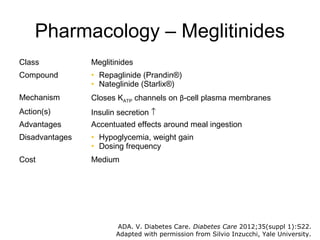
Pharmacology – Meglitinides
Class           Meglitinides
Compound        • Repaglinide (Prandin®)
                • Nateglinide (Starlix®)
Mechanism       Closes KATP channels on β-cell plasma membranes
Action(s)       Insulin secretion ↑
Advantages      Accentuated effects around meal ingestion
Disadvantages   • Hypoglycemia, weight gain
                • Dosing frequency
Cost            Medium


                       ADA. V. Diabetes Care. Diabetes Care 2012;35(suppl 1):S22.
                       Adapted with permission from Silvio Inzucchi, Yale University.
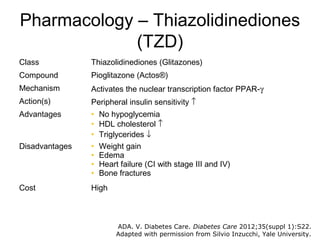
Pharmacology – Thiazolidinediones
             (TZD)
Class           Thiazolidinediones (Glitazones)
Compound        Pioglitazone (Actos®)
Mechanism       Activates the nuclear transcription factor PPAR-γ
Action(s)       Peripheral insulin sensitivity ↑
Advantages      •   No hypoglycemia
                •   HDL cholesterol ↑
                •   Triglycerides ↓
Disadvantages   •   Weight gain
                •   Edema
                •   Heart failure (CI with stage III and IV)
                •   Bone fractures
Cost            High


                         ADA. V. Diabetes Care. Diabetes Care 2012;35(suppl 1):S22.
                         Adapted with permission from Silvio Inzucchi, Yale University.
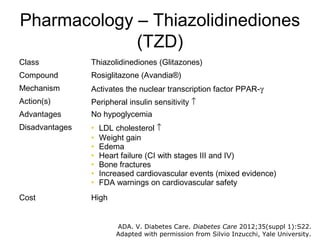
Pharmacology – Thiazolidinediones
             (TZD)
Class           Thiazolidinediones (Glitazones)
Compound        Rosiglitazone (Avandia®)
Mechanism       Activates the nuclear transcription factor PPAR-γ
Action(s)       Peripheral insulin sensitivity ↑
Advantages      No hypoglycemia
Disadvantages   •   LDL cholesterol ↑
                •   Weight gain
                •   Edema
                •   Heart failure (CI with stages III and IV)
                •   Bone fractures
                •   Increased cardiovascular events (mixed evidence)
                •   FDA warnings on cardiovascular safety
Cost            High


                        ADA. V. Diabetes Care. Diabetes Care 2012;35(suppl 1):S22.
                        Adapted with permission from Silvio Inzucchi, Yale University.
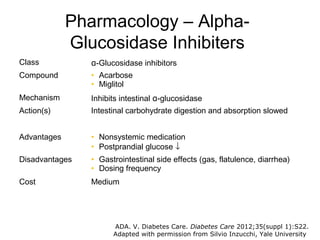
Pharmacology – Alpha-
             Glucosidase Inhibiters
Class           α-Glucosidase inhibitors
Compound        • Acarbose
                • Miglitol
Mechanism       Inhibits intestinal α-glucosidase
Action(s)       Intestinal carbohydrate digestion and absorption slowed


Advantages      • Nonsystemic medication
                • Postprandial glucose ↓
Disadvantages   • Gastrointestinal side effects (gas, flatulence, diarrhea)
                • Dosing frequency
Cost            Medium


                      ADA. V. Diabetes Care. Diabetes Care 2012;35(suppl 1):S22.
                      Adapted with permission from Silvio Inzucchi, Yale University.
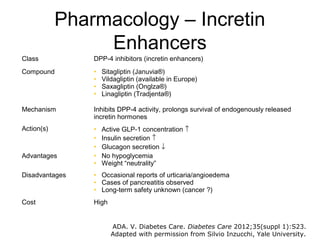
Pharmacology – Incretin
                 Enhancers
Class           DPP-4 inhibitors (incretin enhancers)
Compound        •   Sitagliptin (Januvia®)
                •   Vildagliptin (available in Europe)
                •   Saxagliptin (Onglza®)
                •   Linagliptin (Tradjenta®)

Mechanism       Inhibits DPP-4 activity, prolongs survival of endogenously released
                incretin hormones
Action(s)       •   Active GLP-1 concentration ↑
                •   Insulin secretion ↑
                •   Glucagon secretion ↓
Advantages      •   No hypoglycemia
                •   Weight “neutrality”
Disadvantages   • Occasional reports of urticaria/angioedema
                • Cases of pancreatitis observed
                • Long-term safety unknown (cancer ?)
Cost            High


                       ADA. V. Diabetes Care. Diabetes Care 2012;35(suppl 1):S23.
                       Adapted with permission from Silvio Inzucchi, Yale University.
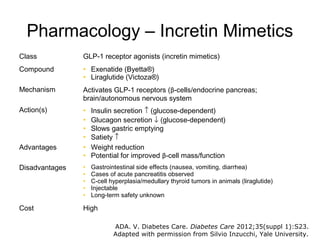
Pharmacology – Incretin Mimetics
Class           GLP-1 receptor agonists (incretin mimetics)
Compound        • Exenatide (Byetta®)
                • Liraglutide (Victoza®)
Mechanism       Activates GLP-1 receptors (β-cells/endocrine pancreas;
                brain/autonomous nervous system
Action(s)       •   Insulin secretion ↑ (glucose-dependent)
                •   Glucagon secretion ↓ (glucose-dependent)
                •   Slows gastric emptying
                •   Satiety ↑
Advantages      •   Weight reduction
                •   Potential for improved β-cell mass/function
Disadvantages   •   Gastrointestinal side effects (nausea, vomiting, diarrhea)
                •   Cases of acute pancreatitis observed
                •   C-cell hyperplasia/medullary thyroid tumors in animals (liraglutide)
                •   Injectable
                •   Long-term safety unknown

Cost            High

                            ADA. V. Diabetes Care. Diabetes Care 2012;35(suppl 1):S23.
                            Adapted with permission from Silvio Inzucchi, Yale University.
Pharmacology – Amylin Analog
Class           Antihyperglycemic Synthetic Analog
Compound        • Pramlintide (Symilin®)

Mechanism       • Amylinomimetic
Action(s)       • Glucagon secretion ↓ (glucose-dependent)
                • Slows gastric emptying
                • Satiety ↑
Advantages      • Potential weight loss
Disadvantages   • Meal time injections
                • Nausea
                • Hypoglycemia in combination with insulin
Cost            High


                       Lexi-Drugs Online [Internet]. Hudson (OH) : Lexi-Comp, Inc. 1978-2012[cited 2012
                                                                                             August 1].
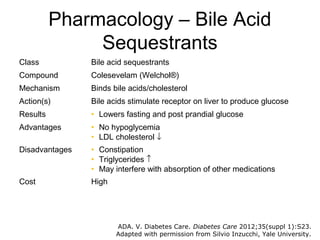
Pharmacology – Bile Acid
               Sequestrants
Class           Bile acid sequestrants
Compound        Colesevelam (Welchol®)
Mechanism       Binds bile acids/cholesterol
Action(s)       Bile acids stimulate receptor on liver to produce glucose
Results         • Lowers fasting and post prandial glucose
Advantages      • No hypoglycemia
                • LDL cholesterol ↓
Disadvantages   • Constipation
                • Triglycerides ↑
                • May interfere with absorption of other medications
Cost            High


                       ADA. V. Diabetes Care. Diabetes Care 2012;35(suppl 1):S23.
                       Adapted with permission from Silvio Inzucchi, Yale University.
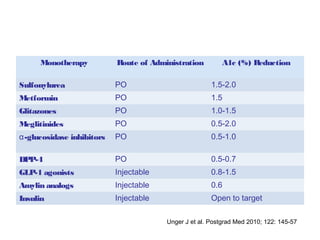
Typical A1c Reductions
      Monotherapy           Route of Administration         A1c (%) Reduction

Sulfonylurea                PO                          1.5-2.0
Metformin                   PO                          1.5
Glitazones                  PO                          1.0-1.5
Meglitinides                PO                          0.5-2.0
α -glucosidase inhibitors   PO                          0.5-1.0

DPP-4                       PO                          0.5-0.7
GLP-1 agonists              Injectable                  0.8-1.5
Amylin analogs              Injectable                  0.6
Insulin                     Injectable                  Open to target

                                         Unger J et al. Postgrad Med 2010; 122: 145-57
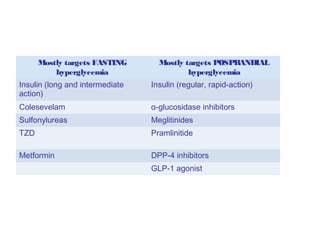
Fasting vs. Postprandial Effect
      Mostly targets FASTING       Mostly targets POSPRANDIAL
          hyperglycemia                    hyperglycemia
Insulin (long and intermediate   Insulin (regular, rapid-action)
action)
Colesevelam                      α-glucosidase inhibitors
Sulfonylureas                    Meglitinides
TZD                              Pramlinitide

Metformin                        DPP-4 inhibitors
                                 GLP-1 agonist
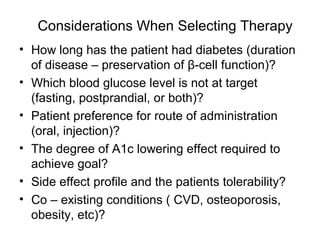
Considerations When Selecting Therapy
• How long has the patient had diabetes (duration
  of disease – preservation of β-cell function)?
• Which blood glucose level is not at target
  (fasting, postprandial, or both)?
• Patient preference for route of administration
  (oral, injection)?
• The degree of A1c lowering effect required to
  achieve goal?
• Side effect profile and the patients tolerability?
• Co – existing conditions ( CVD, osteoporosis,
  obesity, etc)?
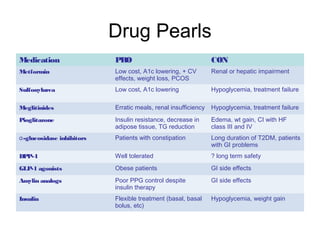
Drug Pearls
Medication                  PRO                                  CON
Metformin                   Low cost, A1c lowering, + CV         Renal or hepatic impairment
                            effects, weight loss, PCOS
Sulfonylurea                Low cost, A1c lowering               Hypoglycemia, treatment failure

Meglitinides                Erratic meals, renal insufficiency   Hypoglycemia, treatment failure

Pioglitazone                Insulin resistance, decrease in      Edema, wt gain, CI with HF
                            adipose tissue, TG reduction         class III and IV
α -glucosidase inhibitors   Patients with constipation           Long duration of T2DM, patients
                                                                 with GI problems
DPP-4                       Well tolerated                       ? long term safety

GLP-1 agonists              Obese patients                       GI side effects

Amylin analogs              Poor PPG control despite             GI side effects
                            insulin therapy
Insulin                     Flexible treatment (basal, basal     Hypoglycemia, weight gain
                            bolus, etc)
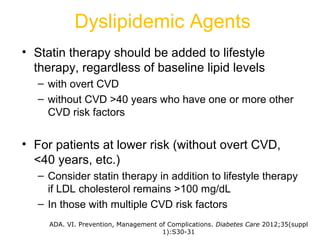
Dyslipidemic Agents
• Statin therapy should be added to lifestyle
  therapy, regardless of baseline lipid levels
   – with overt CVD
   – without CVD >40 years who have one or more other
     CVD risk factors


• For patients at lower risk (without overt CVD,
  <40 years, etc.)
   – Consider statin therapy in addition to lifestyle therapy
     if LDL cholesterol remains >100 mg/dL
   – In those with multiple CVD risk factors
     ADA. VI. Prevention, Management of Complications. Diabetes Care 2012;35(suppl
                                      1):S30-31
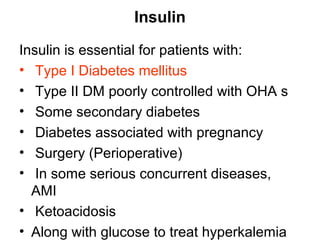
Insulin

Insulin is essential for patients with:
• Type I Diabetes mellitus
• Type II DM poorly controlled with OHA s
• Some secondary diabetes
• Diabetes associated with pregnancy
• Surgery (Perioperative)
• In some serious concurrent diseases,
  AMI
• Ketoacidosis
• Along with glucose to treat hyperkalemia
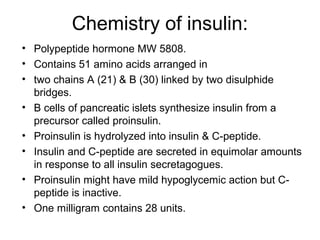
Chemistry of insulin:
• Polypeptide hormone MW 5808.
• Contains 51 amino acids arranged in
• two chains A (21) & B (30) linked by two disulphide
  bridges.
• B cells of pancreatic islets synthesize insulin from a
  precursor called proinsulin.
• Proinsulin is hydrolyzed into insulin & C-peptide.
• Insulin and C-peptide are secreted in equimolar amounts
  in response to all insulin secretagogues.
• Proinsulin might have mild hypoglycemic action but C-
  peptide is inactive.
• One milligram contains 28 units.
Types of insulin
• Rapid-acting: Insulin aspart,- lispro, - glulisine
             (1-2h. onset / 4-6h. duration of action)
• Short-acting: Regular Insulin, inhaled insulin
           (2-4h. onset / 6-12h. duration of action)
• Intermediate-acting: NPH Insulin, Lente insulin
             (3-8h. onset / 12-20h. duration of action)
• Long-acting: Insulin glargine, Insulin detemir
                            ( Myristoylated insulin )
             (6-12 onset / 16-30h. duration of action)
• Pre-mixed insulins: NPH 70%+ Insulin aspart 30%
Ultra-short
        rapid-acting insulins
• Insulin lispro, insulin aspart, insulin
  glulisine (injection)
• Do not aggregate or form complexes
• Fast onset of action (5-15 min)
• Short duration of action (3-5 h)
• Reach peak level 30-90 min after injection.
Short acting insulins
            regular insulins
•   Regular huminsulin R
•   Recombinant DNA technology
•   Clear solutions at neutral pH.
•   Hexameric analogue.
•   Onset of action 30-45 min (s.c.).
•   Peak 2-4 h.
•   Duration 6-8 h.
Short acting insulins
            regular insulins
•   I.V. emergency.
•   – Management of ketoacidosis
•   – After surgery
•   – During acute infection
•    2-3 times/day.
•    Control postprandial hyperglycemia &
•   ketoacidosis.
•    Pregnancy
Intermediate acting insulins
• Isophane (NPH), a neutral protamine
  hagedorn in phosphate buffer is
  combination of protamine & crystalline
  zinc insulin (1: 6 molecules). proteolysis
  release insulin.
• Turbid suspension at neutral pH
• Given S.C. only
• Onset of action 1-2 h.
• Insulin mixtures 75/25 - 70/30 - 50/50
  (NPH/regular)
Intermediate acting insulins
• Lente insulin
• Mixture of 30% semilente insulin (amorphous precipitate
  of insulin with zinc in acetate buffer) + 70% ultralente
  insulin (poorly soluble crystal of zinc insulin)
• Turbid suspension at neutral pH
• Given S.C.
• onset of action (1-3 h)
• Peak serum level 4-8 h.
• Duration of action 13-20 h.
• Lente and NPH insulins are equivalent in activity.
• Lente and NPH are Not used in emergencies (diabetic
  ketoacidosis).
• Require several hours to reach therapeutic levels
Long acting insulin
              Insulin glargine (lantus)
•   Slow onset of action 2 h.
•   Clear solution
•   Forms precipitate (depot) at injection site.
•   absorbed less rapidly than NPH & Lente insulin.
•   Given s.c.- Maximum effect after 4-5 h
•   produce broad plasma concentration plateau (low continous
    insulin level).
•   Prolonged duration of action (24 h)- suitable Once daily
•   Should not be mixed with other insulin
•   Advantages over intermediate-acting insulins:
•   Constant circulating insulin over 24 hr with no pronounced
    peak.
•   More safe than NPH & Lente insulins ( reduced risk of
    hypoglycemia).
ADRs of insulin
•   Hypoglycemia
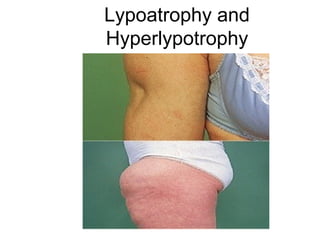
•   Lypodystrophy at the site of injection (atrophy or hypertrophy)
•   Weight gain
•   Hypersensitivity reactions.
•   Insulin resistance
•   Hypokalemia

                       How to dose insulin

      • Sliding Scale Insulin
      It is the most frequent insulin regimen in hospitalized patients
      Otherwise, use

      • Basal-      bolus insulin
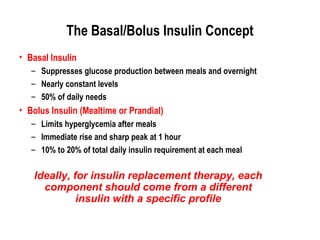
The Basal/Bolus Insulin Concept
• Basal Insulin
   – Suppresses glucose production between meals and overnight
   – Nearly constant levels
   – 50% of daily needs
• Bolus Insulin (Mealtime or Prandial)
   – Limits hyperglycemia after meals
   – Immediate rise and sharp peak at 1 hour
   – 10% to 20% of total daily insulin requirement at each meal

   Ideally, for insulin replacement therapy, each
     component should come from a different
             insulin with a specific profile
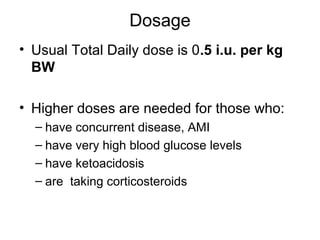
Dosage
• Usual Total Daily dose is 0.5 i.u. per kg
  BW

• Higher doses are needed for those who:
  – have concurrent disease, AMI
  – have very high blood glucose levels
  – have ketoacidosis
  – are taking corticosteroids
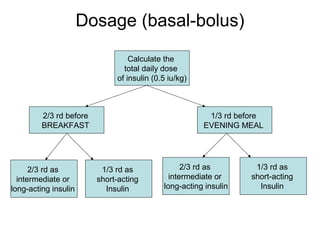
Dosage (basal-bolus)
                                  Calculate the
                                total daily dose
                              of insulin (0.5 iu/kg)


         2/3 rd before                                  1/3 rd before
         BREAKFAST                                     EVENING MEAL


      2/3 rd as           1/3 rd as               2/3 rd as        1/3 rd as
  intermediate or        short-acting         intermediate or     short-acting
long-acting insulin        Insulin          long-acting insulin     Insulin
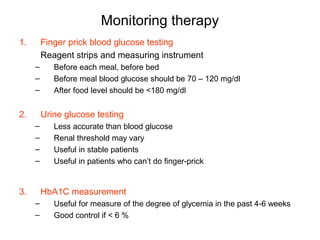
Monitoring therapy
1.       Finger prick blood glucose testing
         Reagent strips and measuring instrument
     –      Before each meal, before bed
     –      Before meal blood glucose should be 70 – 120 mg/dl
     –      After food level should be <180 mg/dl


2.       Urine glucose testing
     –      Less accurate than blood glucose
     –      Renal threshold may vary
     –      Useful in stable patients
     –      Useful in patients who can’t do finger-prick


3.       HbA1C measurement
     –      Useful for measure of the degree of glycemia in the past 4-6 weeks
     –      Good control if < 6 %
Increasing the dose of insulin
• Any dietary error to be excluded and then the dose of
  insulin should be increased by 2-4 units.
• Examples:
• If breakfast and pre-lunch BG and/or urine glucose is
   high- add short acting insulin before breakfast
• If post lunch and pre-dinner BG or urine is high –
then increase morning dose of intermediate acting insulin
   by 2-4 units
• If post dinner and late night BG or urine sugar is high,
   add short acting insulin 2-4 units before dinner
• If fasting BG or urine sugar is high then increase pre-
   dinner intermediate acting insulin.
• Self-monitoring of blood glucose (individualized
  frequency)

• HbAIC testing (2-4 times/year)

• Medical nutrition therapy and education (annual)

• Eye examination (annual)

• Foot examination (1-2 times/year)

• Screening for diabetic nephropathy (annual)

• Blood pressure measurement (quarterly)

• Lipid profile (annual)
Essential information for patients

• What is hypoglycemia and how to treat it

• Carry a diabetic card with details of drugs
  and patient information

• Carry glucose (dextrose) or simple sugar
  (sucrose)

• Careful while driving cars and handling
  heavy machine
Diabetic management “pearls”
• When mixing insulins, draw up the regular insulin
  first
• Allow mild hyperglycemia for the patient undergoing
  surgery—treat with short acting insulins
• For elective surgery, schedule patient early in day to
  avoid prolonged fasting
“Pearls”
• Use U-100 syringes for U-100 vials
• In patients with insulin pumps, use regular insulin or
  insulin aspart. Generally will deliver one unit per
  hour w/bolus insulin before meals
• Tight glycemic control can reduce the complications
  of diabetes.
• Use ACE inhibitors to delay nephropathy
• Limit dietary intake of protein
“Pearls”
• Glitazones must suspect hepatotoxicity
• Metformin cautiously with liver and renal
  impairment Concern that with
  hepatotoxicity, because risks of lactic
  acidosis are increased.
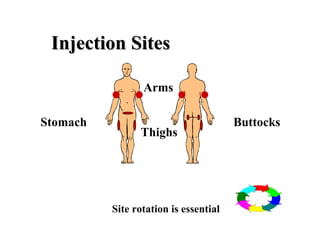
• Rotate sites of injection of insulin to avoid
  development of lipodystrophy
• Absorption of injected insulin in abdomen
  is not uniform with injections in arms or
  legs
Lypoatrophy and
Hyperlypotrophy
Injection Sites

          .. ..  Arms

Stomach                                Buttocks
                Thighs


          Site rotation is essential
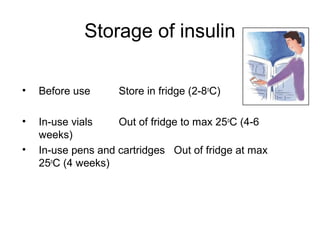
Storage of insulin

•   Before use      Store in fridge (2-8oC)

•   In-use vials    Out of fridge to max 25oC (4-6
    weeks)
•   In-use pens and cartridges Out of fridge at max
    25oC (4 weeks)
Thank You