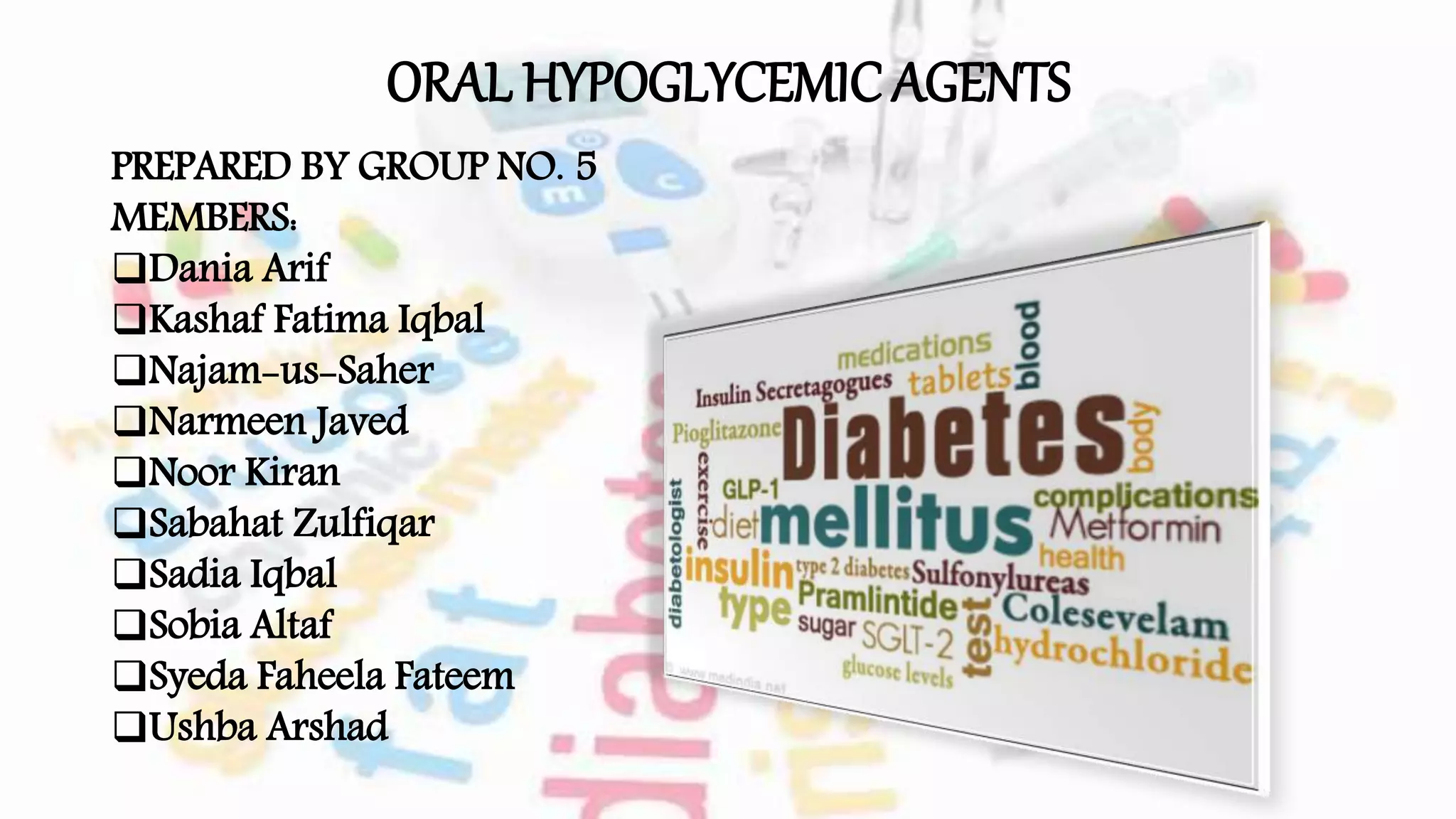
ORAL HYPOGLYCEMIC AGENTS
PREPARED BY GROUP NO. 5
MEMBERS:
Dania Arif
Kashaf Fatima Iqbal
Najam-us-Saher
Narmeen Javed
Noor Kiran
Sabahat Zulfiqar
Sadia Iqbal
Sobia Altaf
Syeda Faheela Fateem
Ushba Arshad
ORAL HYPOGLYCEMIC AGENTS
Agents that are given orally to reduce the
blood glucose levels in diabetic patients.
• Diabetes mellitus type 1 is a disease caused by lack
of insulin. Insulin must be used in type 1,which
must be injected.
• Diabetes mellitus type 2 is a disease of insulin
resistance by cells due to several factors.
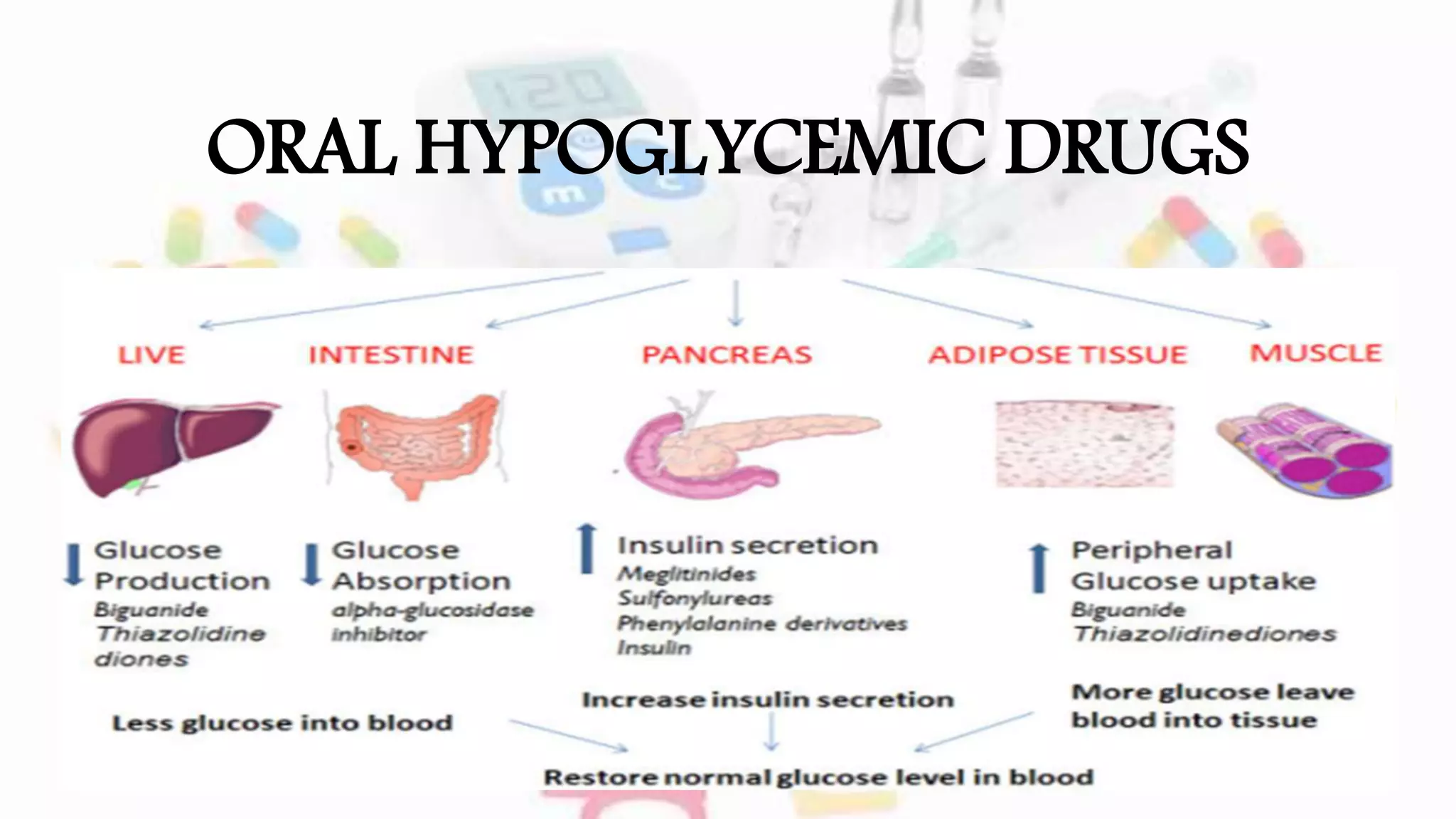
HYPOGLYCEMIC AGENTS WORKS BY:
 Increasing the amount of insulin secreted by the pancreas.
 Increasing the sensitivity of target organs to insulin
 Decreasing the rate at which glucose is absorbed from the
gastrointestinal tract.
SELECTION OF ANTI DIABETIC DRUGS
DEPENDS UPON:
• Nature of the diabetes
• Age and situation of the person
• Other factors
SYMPTOMS OF HYPERGLYCEMIA
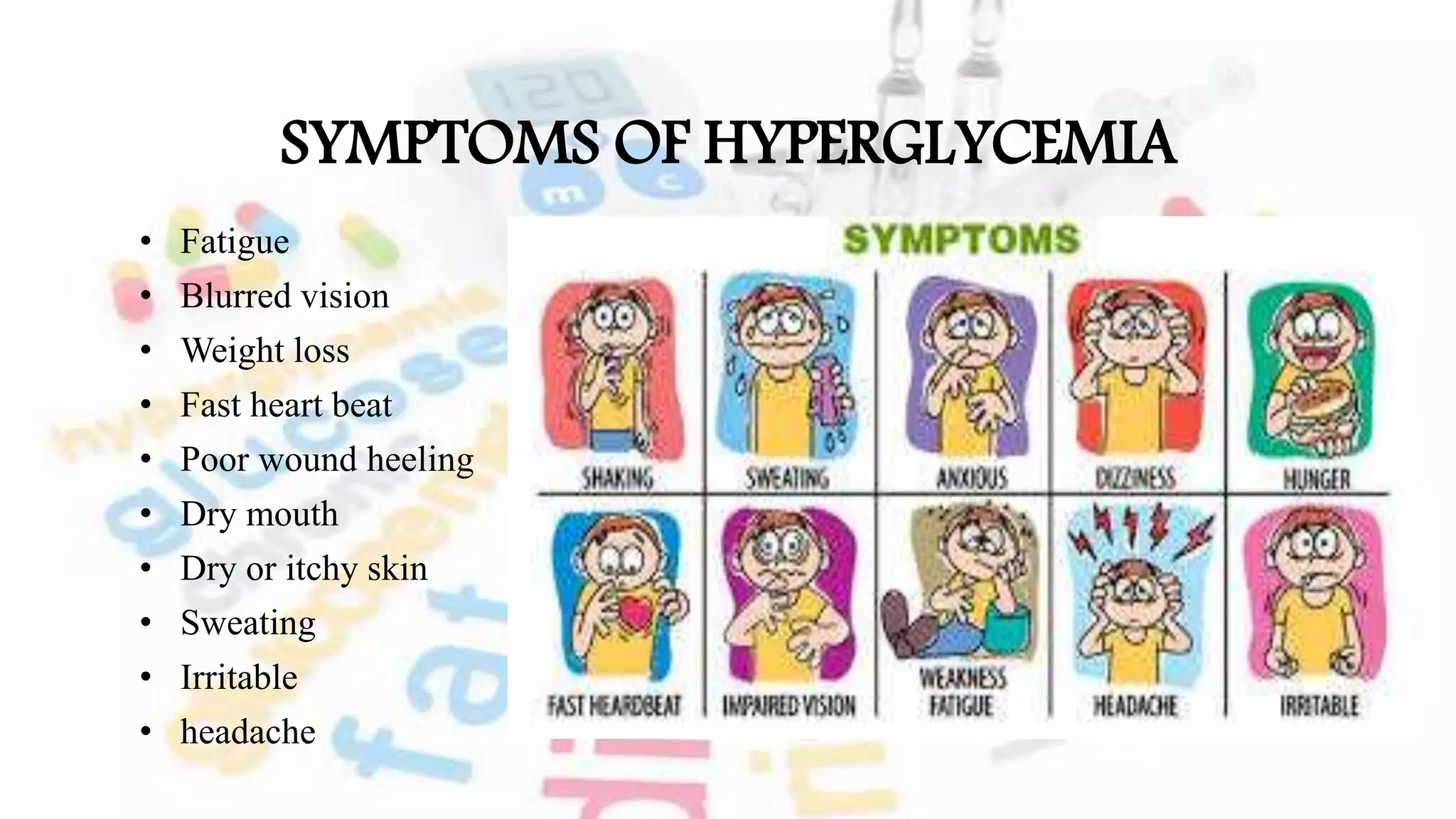
• Fatigue
• Blurred vision
• Weight loss
• Fast heart beat
• Poor wound heeling
• Dry mouth
• Dry or itchy skin
• Sweating
• Irritable
• headache
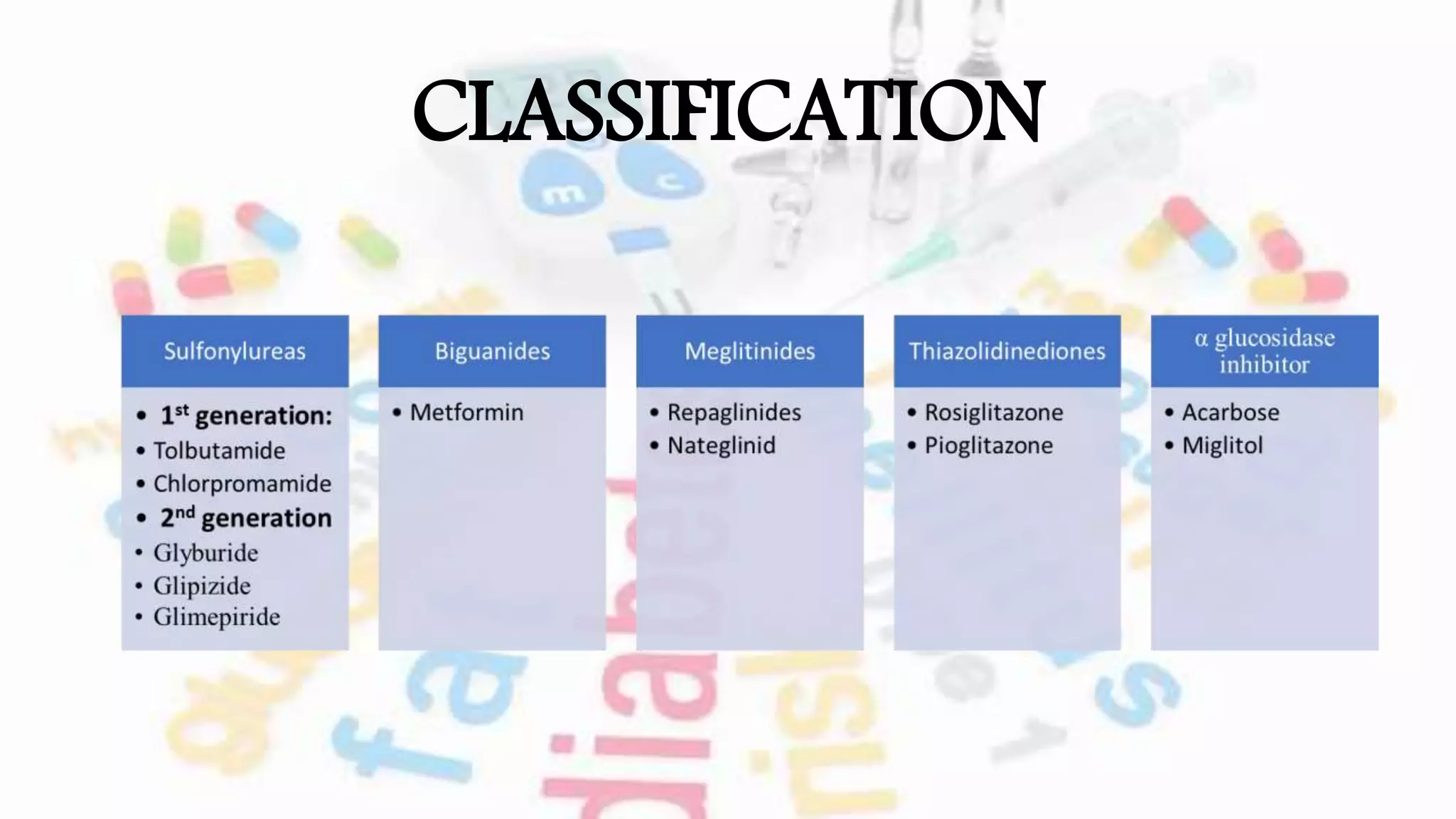
CLASSIFICATION
ORAL HYPOGLYCEMIC DRUGS
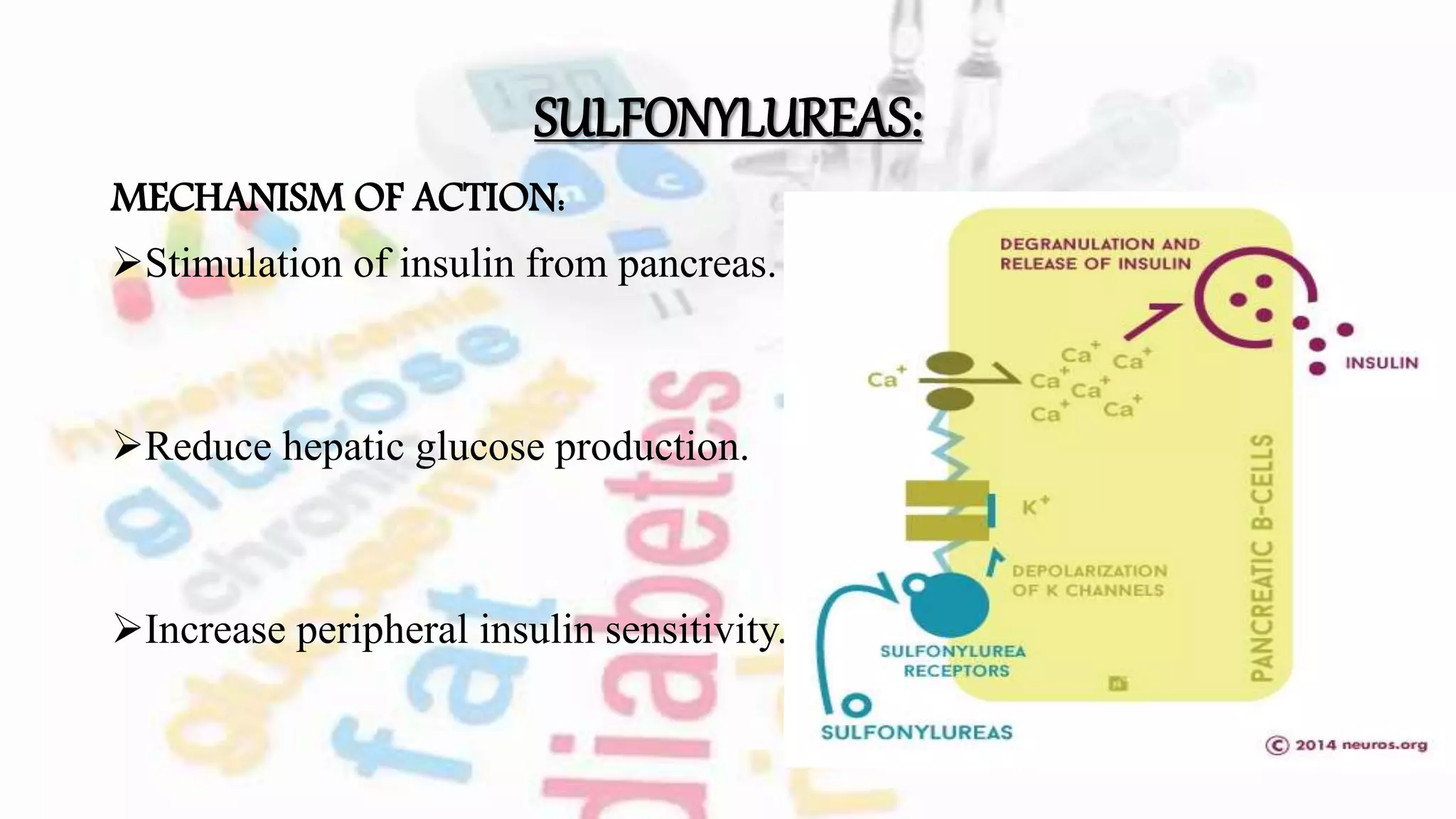
SULFONYLUREAS:
MECHANISM OF ACTION:
Stimulation of insulin from pancreas.
Reduce hepatic glucose production.
Increase peripheral insulin sensitivity.
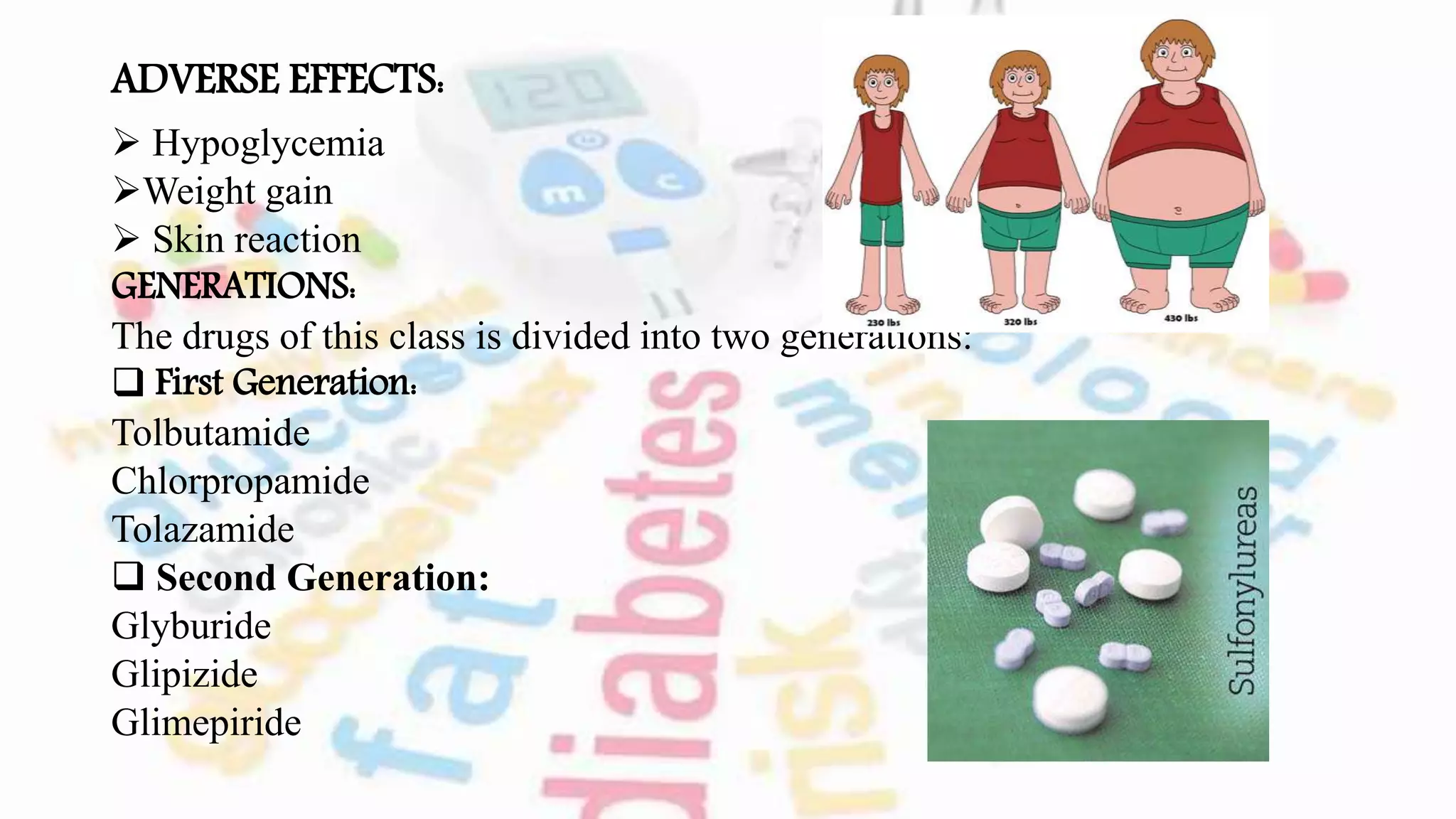
ADVERSE EFFECTS:
 Hypoglycemia
Weight gain
 Skin reaction
GENERATIONS:
The drugs of this class is divided into two generations:
 First Generation:
Tolbutamide
Chlorpropamide
Tolazamide
 Second Generation:
Glyburide
Glipizide
Glimepiride
GLINIDIES
Prandial Glucose Regulator & Meglitinides
MECHANISM OF ACTION:
 Stimulate insulin release from beta cells , closing ATP-sensitive k
channel.
 Early release of insulin.
ADVERSE EFFECTS:
• Hypoglycemia
• Allergic skin reactions
• Liver problems
Drugs:
Repaglinide
Nateglinide
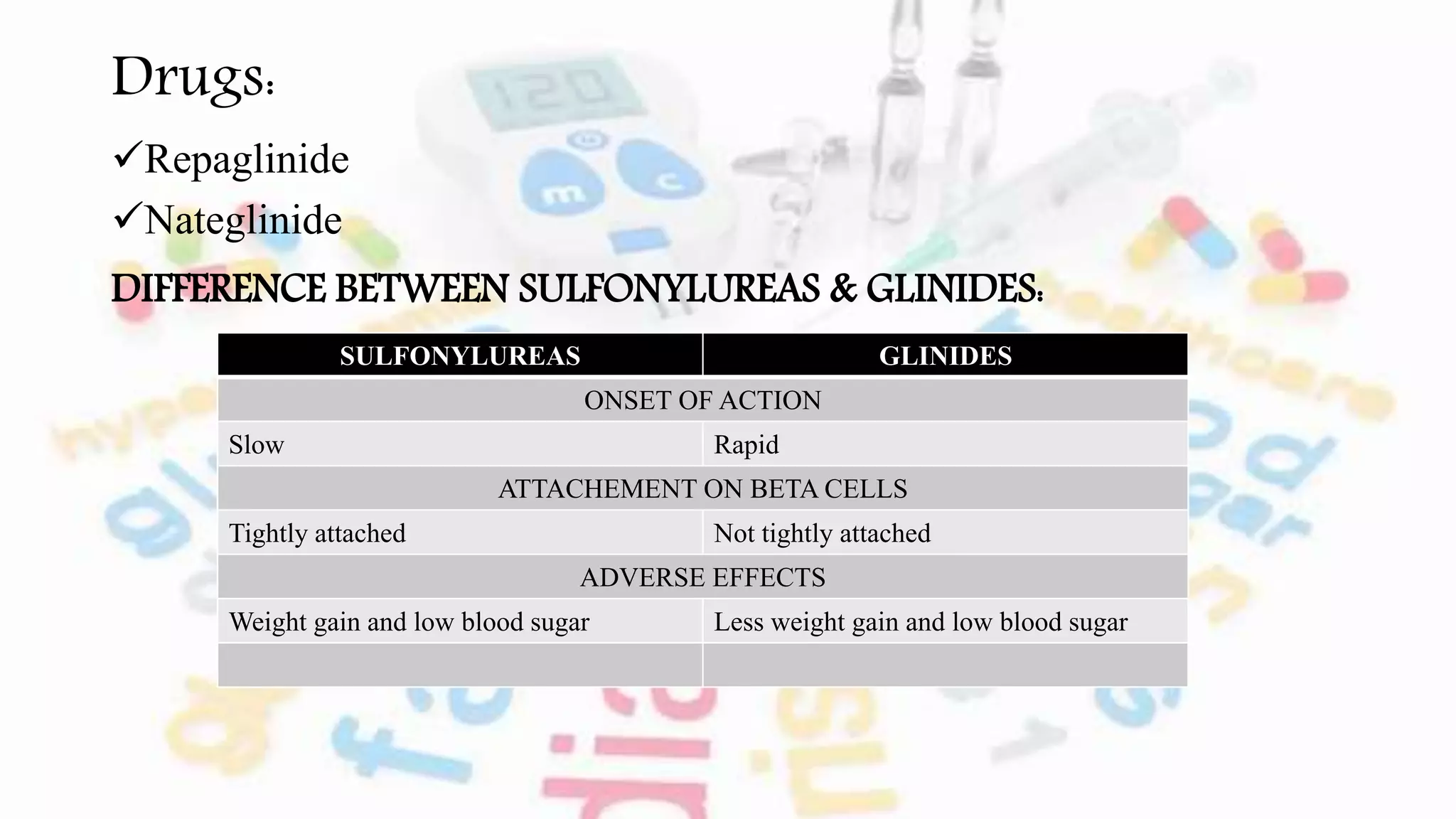
DIFFERENCE BETWEEN SULFONYLUREAS & GLINIDES:
SULFONYLUREAS GLINIDES
ONSET OF ACTION
Slow Rapid
ATTACHEMENT ON BETA CELLS
Tightly attached Not tightly attached
ADVERSE EFFECTS
Weight gain and low blood sugar Less weight gain and low blood sugar
DRUGS OF
SULFONYLYUREAS
TOLBUTAMIDE
Tolbutamide is a first-generation potassium channel blocker, sulfonylurea oral
hypoglycemic medication that acts by increasing the pancreatic insulin
secretion.
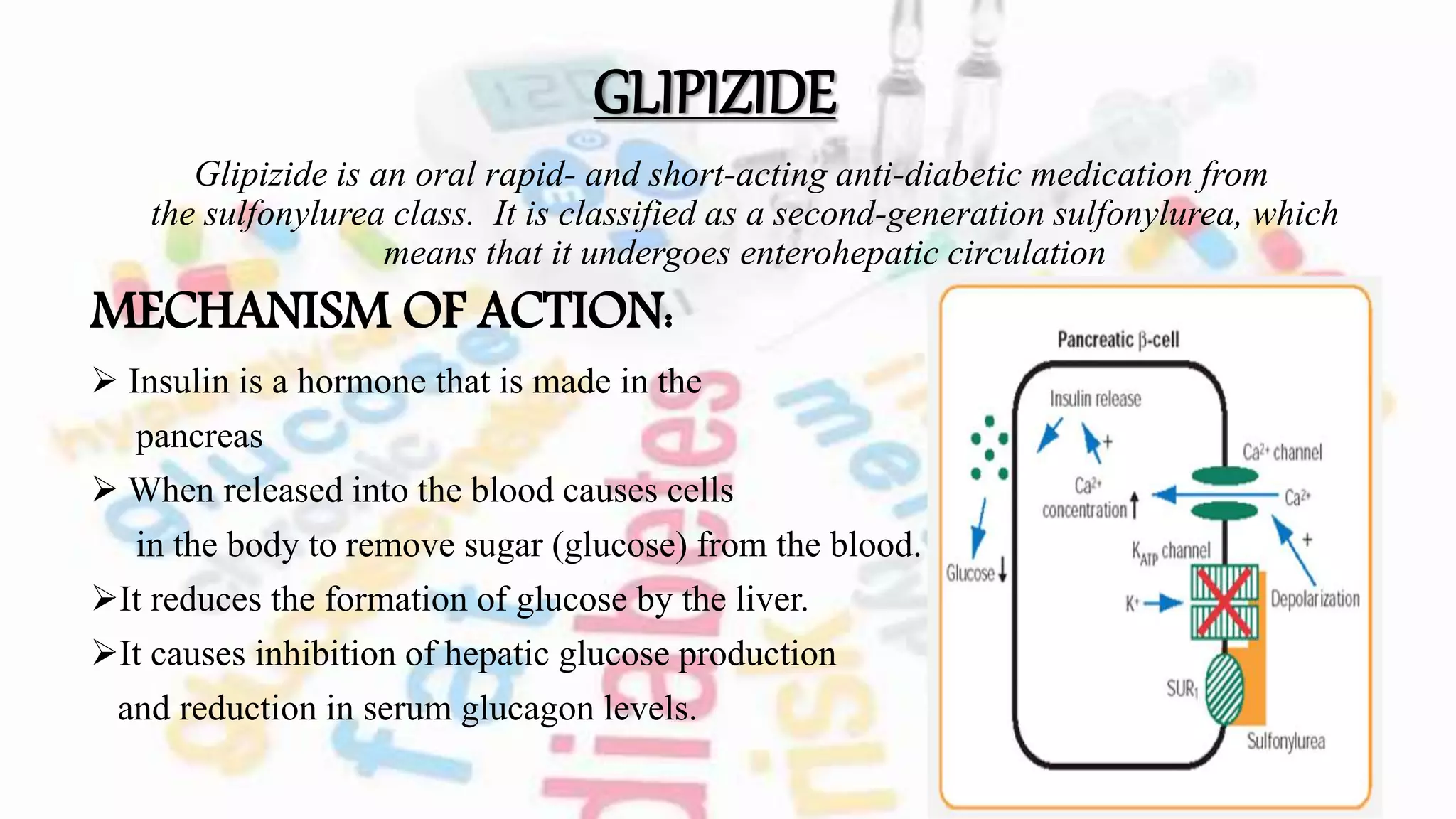
MECHANISM
Binds to sulphonylureas receptors on beta cells
Stimulates release of insulin from beta cells of pancreatic islets
By inhibiting the ATP potassium channels on the beta cells
which results in depolarization
Resulting in calcium influx, and this kinase gets activated
and release of insulin containing granules by exocytosis increases.
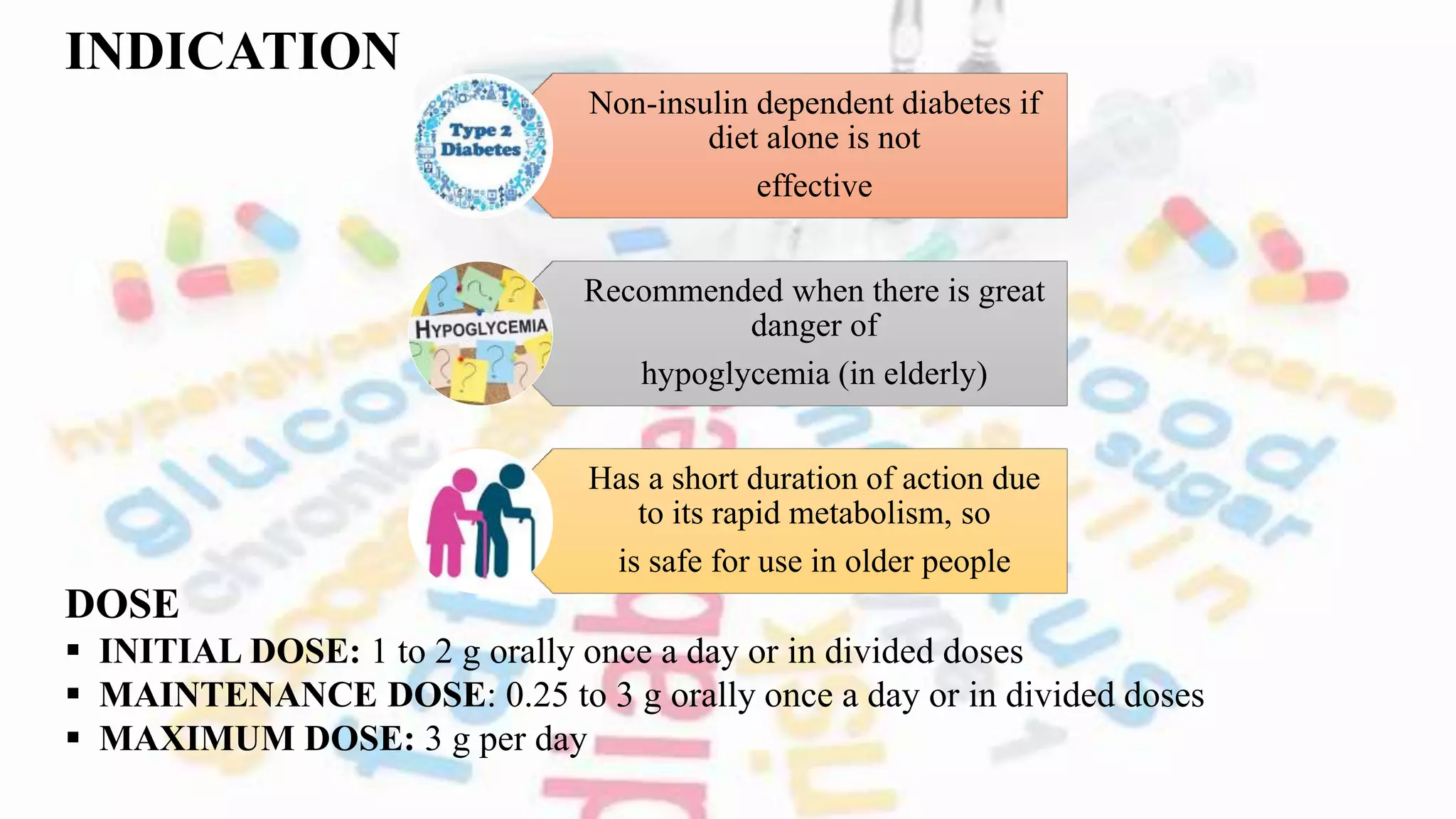
INDICATION
DOSE
 INITIAL DOSE: 1 to 2 g orally once a day or in divided doses
 MAINTENANCE DOSE: 0.25 to 3 g orally once a day or in divided doses
 MAXIMUM DOSE: 3 g per day
Non-insulin dependent diabetes if
diet alone is not
effective
Recommended when there is great
danger of
hypoglycemia (in elderly)
Has a short duration of action due
to its rapid metabolism, so
is safe for use in older people
PHARMACOKINETICS
 ABSORPTION: Get absorbed in 30 to 60 minutes but can
be altered by increased pH.
 ONSET OF ACTION: It is within one hour & lasts for 6-
12 Hrs.
 DURATION OF ACTION: Short
 HALF LIFE: 7 Hrs.
 POTENCY: Twice potent as the related second-generation
agent Glipizide
SIDE EFFECTS
 Allergic reactions like itching; red, swollen, blistered, or peeling skin with or without
fever, wheezing, tightness in the chest or throat, trouble breathing or talking, unusual
hoarseness, or swelling of the mouth, face, lips, tongue, or throat.
 Dark urine
 Dark urine
 Hypoglycemia
CONRAINDICATIONS
Tolbutamide is contraindicated in conditions like:
 Renal disease
 Hepatic disease
 Diabetic ketoacidosis
 Type I diabetes mellitus
BRANDS
SPECIAL CONSIDERATIONS
 Tolbutamide should be used with caution in patients with high blood pressure or liver or
kidney disease.
 This medication may make person more prone to sunburn, wear protective clothing and
sunscreen.
 It should be used with extreme caution during pregnancy or lactation.
 Insulin therapy may be necessary during pregnancy.
GLIPIZIDE
Glipizide is an oral rapid- and short-acting anti-diabetic medication from
the sulfonylurea class. It is classified as a second-generation sulfonylurea, which
means that it undergoes enterohepatic circulation
MECHANISM OF ACTION:
 Insulin is a hormone that is made in the
pancreas
 When released into the blood causes cells
in the body to remove sugar (glucose) from the blood.
It reduces the formation of glucose by the liver.
It causes inhibition of hepatic glucose production
and reduction in serum glucagon levels.
INDICATION:
Prescribed for type II Diabetes patient
It usually controlled well on diet.
 NIDDM, Non- insulin dépendent diabetes mellitus
GLIPIZIDE DOSAGE:
PO: Initial-2.5 to 5 mg/day as a single dose may increase slowly.
Doses greater than 15 mg may be given in 2 divided doses. Max: 40 mg/day.
 Extended-release: Should be taken with food. (Swallow whole, do not chew/ crush/
divide.
 Immediate-release: Should be taken on an empty stomach. (Take ½ hour before
meals.)
PHARMACOKINETICS :
ABSORPTION: Readily absorbed from GI tract
ONSET: 15–30 min
DURATION: up to 24 h
METABOLISM: Metabolized extensively in liver.
ELIMINATION: Excreted mainly in urine with some excretion via bile in faeces.
HALF LIFE: 3–5 h.
MANUFACTURERES IN PAKISTAN: Pfizer, Pharmedic, Pulse
CONTRAINDICATION
Contraindicated in patients with:
 Hypersensitivity
 Type 1 diabetes
 Ketoacidosis
 Severe kidney or liver impairment
pregnancy and breastfeeding.
ADVERSE EFFECT:
GLIPIZIDE
ADVERSE
EFFECT
METABOLIC
HEART
CENTRAL
NERVOUS
SYSTEM
EYE & ENT
GASTROINTE-
STINAL
GENITOURI-
NARY
BLOOD
LIVER
MISCELLANEOUS
SPECIAL CONSIDERATIONS
It is not indicated in these conditions like:
Thyroid disease, Impaired hepatic function, Iddm, Impaired renal function.
INTERACTION WITH DRUGS:
1- CIMETIDENE may increase glipizide levels, causing
hypoglycemia
2- THIAZIDES may antagonize hypoglycemic effect
Glipizide XL
BRAND NAME:
oGlucotrol
oGlucotrol XL
DRUGS OF
GLINIDES
repaglinide
MECHANISM:
Stimulation of pancreatic insulin release.
By closing ATP dependent B-cells.
INDICATIONS:
Type II diabetes mellitus
Long term cardiovascular
Renal effects
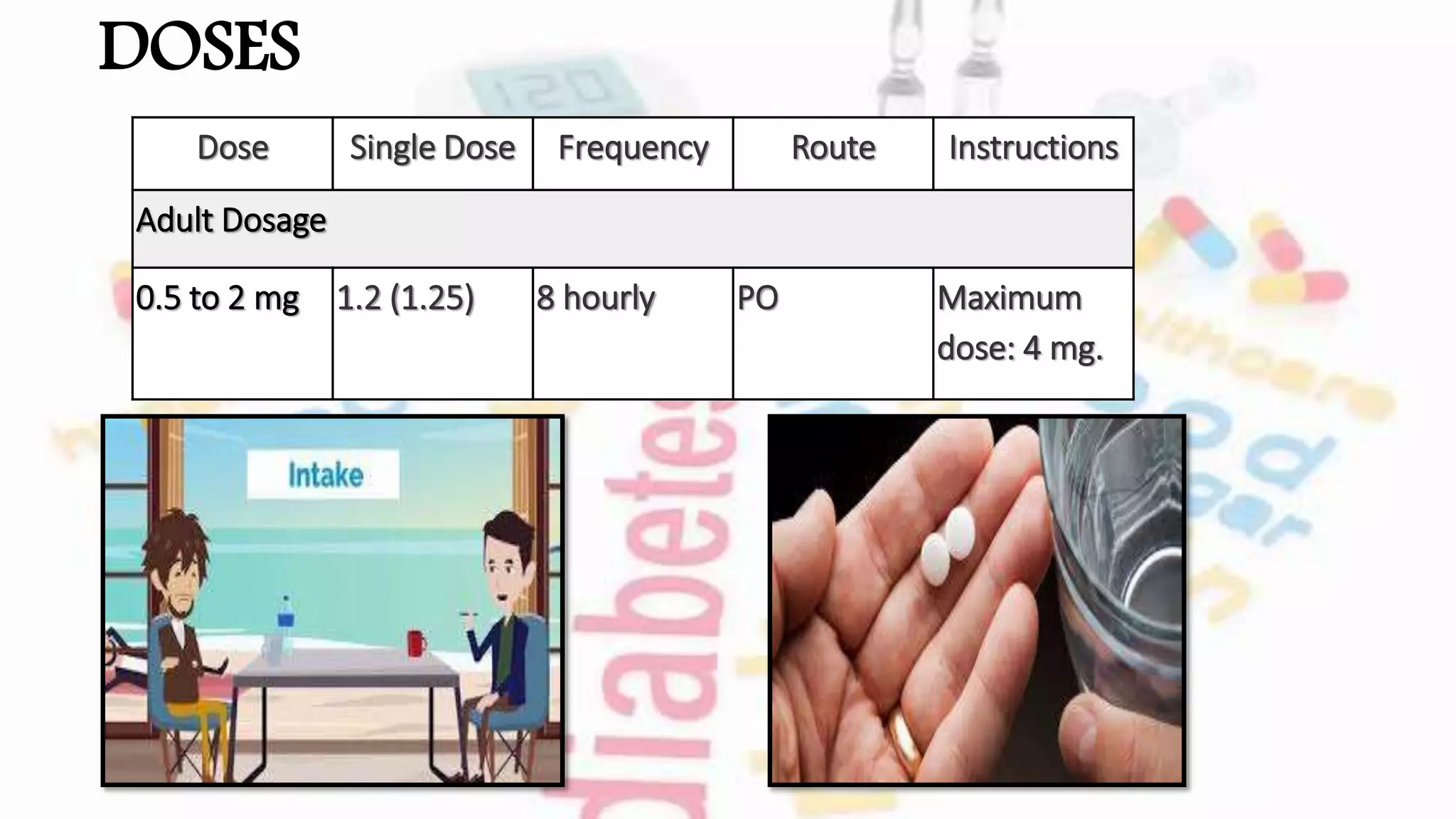
DOSES
Dose Single Dose Frequency Route Instructions
Adult Dosage
0.5 to 2 mg 1.2 (1.25) 8 hourly PO Maximum
dose: 4 mg.
PHARMACOKINETICS:
ORALABSORPTION: 56%
PROTEIN BINDING: > 98 %
HALF LIFE: 0.8(0.6-1)hr.
EXCRETION: It is 90% excreted in the feces
and 8% in the urine.
ONSET OFACTION: Rapid.
DURATION OF ACTION: Short.
CONTRAINDICATIONS:
Diabetic ketoacidosis
Co-administration with gemfibrozil
Known hypersensitivity
SIDE EFFECTS:
Hypoglycemia
Rhinitis
Cardiac
Ischemia
Angina
OTHERS ARE
Nausea Headache Constipation
Vomiting Back Pain Diarrhea
BRAND NAMES
Limzel
Raptrol
Novirep
SPECIAL CONSIDERATIONS
Not suitable for people with type 1 diabetes
You are pregnant, planning a pregnancy or breastfeeding
Taking any supplements which can lower blood glucose levels
If you have kidney or liver damage.
Nateglinide
MECHANISM OF ACTION:
• Nateglinide has no impact on insulin discharge without glucose or
maybe, it potentiates the impact of extracellular glucose on ATP-
sensitive potassium channel and also has little impact on insulin levels.
• Impacts of nateglinide are most elevated at intermediate glucose level
(3 to 10 mmo1/L) and it does not expand the insulin discharge
effectively stimulated by high glucose fixations.
• (It should be greater than 15 mmo1/L)
• Nateglinide seems to be specific for pancreatic B-cells and does not
seems to be influence skeletal or cardiovascular muscle or thyroid
tissue.
PHARMACOKINETICS
• ABSORPTION:Nateglinide is rapidly absorbed in the intestine.
• ONSET: After 30 min of administration.
• DURATION: 1 hour
• METABOLISM: Nateglinide is extensively metabolised, primarily by
cytochrome P450 2C9.
• ELIMINATION: eliminated By Urine (83%) and feces (10%).
• HALF LIFE: 1.5 hours
• Manufactures of netaglinide in Pakistan: WILSHIRE
LABORATORIES (PVT) LTD.
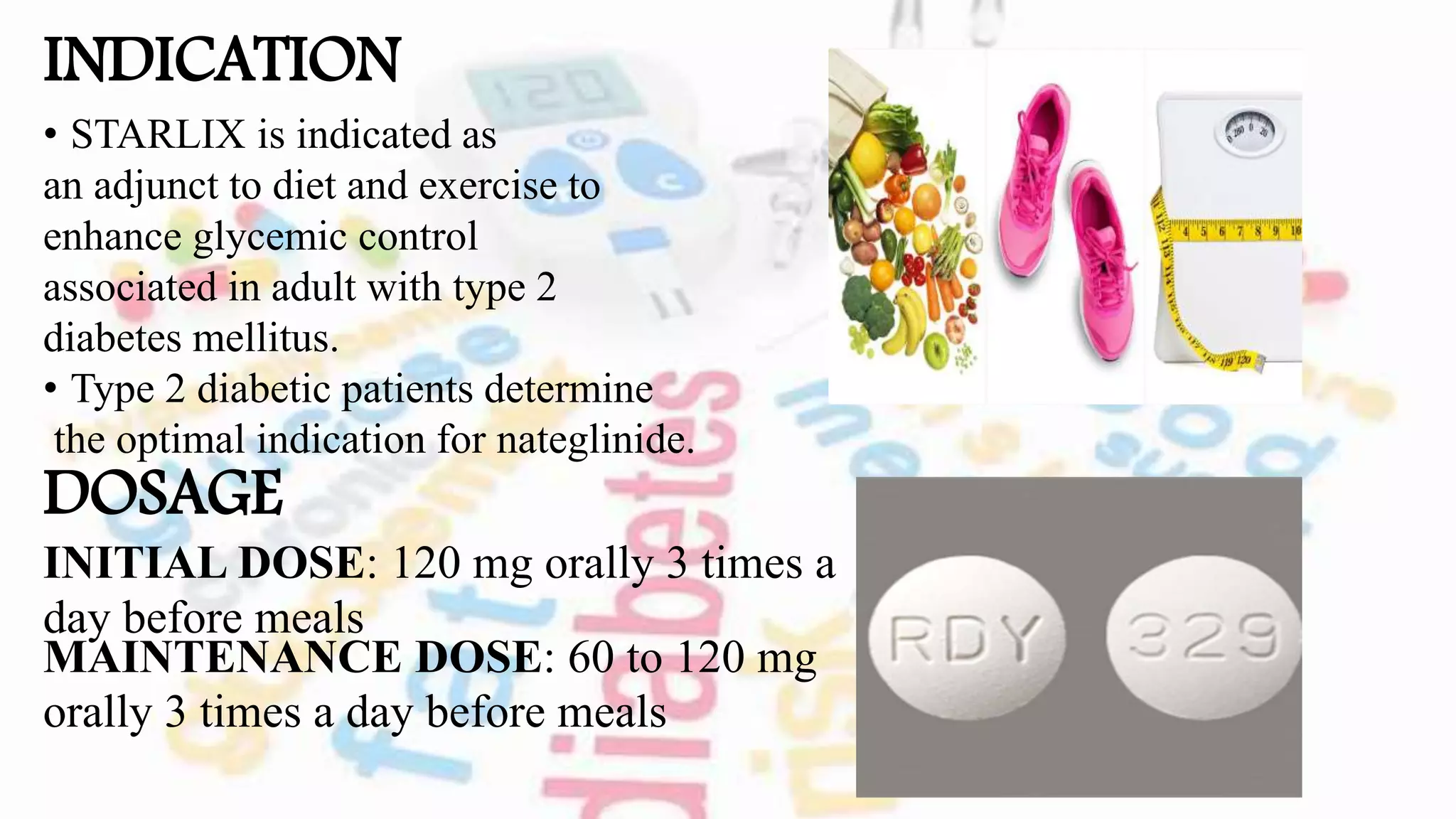
INDICATION
• STARLIX is indicated as
an adjunct to diet and exercise to
enhance glycemic control
associated in adult with type 2
diabetes mellitus.
• Type 2 diabetic patients determine
the optimal indication for nateglinide.
DOSAGE
INITIAL DOSE: 120 mg orally 3 times a
day before meals
MAINTENANCE DOSE: 60 to 120 mg
orally 3 times a day before meals
CONTRAINDICATIONS
Nateglinide is contraindicated in patients who:
 Hypersensitivity.
 Type 1 (namely insulin-dependent) diabetes mellitus.
SIDE EFFECT:
SERIOU
S SIDE
EFFECTS
:
• Seizure (convulsions)
• Jaundice (yellowing of the skin
or eyes)
LESS
SERIOUS
SIDE
EFFECTS
• Runny or stuffy nose, sneezing, cough,
cold or
• flu symptoms
• Diarrheal, nausea
• Back pain
• Dizziness or
• Joint pain or stiffness
SPECIAL CONSIDERATION
• Type 1 diabetes, (namely insulin-
dependent).
• liver disease
• For the treatment of diabetic
ketoacidosis.
Brand Name: Starlix Tablet

Oral hypoglycemic agents

  • 1.
    ORAL HYPOGLYCEMIC AGENTS PREPAREDBY GROUP NO. 5 MEMBERS: Dania Arif Kashaf Fatima Iqbal Najam-us-Saher Narmeen Javed Noor Kiran Sabahat Zulfiqar Sadia Iqbal Sobia Altaf Syeda Faheela Fateem Ushba Arshad
  • 2.
    ORAL HYPOGLYCEMIC AGENTS Agentsthat are given orally to reduce the blood glucose levels in diabetic patients. • Diabetes mellitus type 1 is a disease caused by lack of insulin. Insulin must be used in type 1,which must be injected. • Diabetes mellitus type 2 is a disease of insulin resistance by cells due to several factors.
  • 3.
    HYPOGLYCEMIC AGENTS WORKSBY:  Increasing the amount of insulin secreted by the pancreas.  Increasing the sensitivity of target organs to insulin  Decreasing the rate at which glucose is absorbed from the gastrointestinal tract. SELECTION OF ANTI DIABETIC DRUGS DEPENDS UPON: • Nature of the diabetes • Age and situation of the person • Other factors
  • 4.
    SYMPTOMS OF HYPERGLYCEMIA •Fatigue • Blurred vision • Weight loss • Fast heart beat • Poor wound heeling • Dry mouth • Dry or itchy skin • Sweating • Irritable • headache
  • 5.
  • 6.
  • 7.
    SULFONYLUREAS: MECHANISM OF ACTION: Stimulationof insulin from pancreas. Reduce hepatic glucose production. Increase peripheral insulin sensitivity.
  • 8.
    ADVERSE EFFECTS:  Hypoglycemia Weightgain  Skin reaction GENERATIONS: The drugs of this class is divided into two generations:  First Generation: Tolbutamide Chlorpropamide Tolazamide  Second Generation: Glyburide Glipizide Glimepiride
  • 9.
    GLINIDIES Prandial Glucose Regulator& Meglitinides MECHANISM OF ACTION:  Stimulate insulin release from beta cells , closing ATP-sensitive k channel.  Early release of insulin. ADVERSE EFFECTS: • Hypoglycemia • Allergic skin reactions • Liver problems
  • 10.
    Drugs: Repaglinide Nateglinide DIFFERENCE BETWEEN SULFONYLUREAS& GLINIDES: SULFONYLUREAS GLINIDES ONSET OF ACTION Slow Rapid ATTACHEMENT ON BETA CELLS Tightly attached Not tightly attached ADVERSE EFFECTS Weight gain and low blood sugar Less weight gain and low blood sugar
  • 11.
  • 12.
    TOLBUTAMIDE Tolbutamide is afirst-generation potassium channel blocker, sulfonylurea oral hypoglycemic medication that acts by increasing the pancreatic insulin secretion. MECHANISM Binds to sulphonylureas receptors on beta cells Stimulates release of insulin from beta cells of pancreatic islets By inhibiting the ATP potassium channels on the beta cells which results in depolarization Resulting in calcium influx, and this kinase gets activated and release of insulin containing granules by exocytosis increases.
  • 13.
    INDICATION DOSE  INITIAL DOSE:1 to 2 g orally once a day or in divided doses  MAINTENANCE DOSE: 0.25 to 3 g orally once a day or in divided doses  MAXIMUM DOSE: 3 g per day Non-insulin dependent diabetes if diet alone is not effective Recommended when there is great danger of hypoglycemia (in elderly) Has a short duration of action due to its rapid metabolism, so is safe for use in older people
  • 14.
    PHARMACOKINETICS  ABSORPTION: Getabsorbed in 30 to 60 minutes but can be altered by increased pH.  ONSET OF ACTION: It is within one hour & lasts for 6- 12 Hrs.  DURATION OF ACTION: Short  HALF LIFE: 7 Hrs.  POTENCY: Twice potent as the related second-generation agent Glipizide
  • 15.
    SIDE EFFECTS  Allergicreactions like itching; red, swollen, blistered, or peeling skin with or without fever, wheezing, tightness in the chest or throat, trouble breathing or talking, unusual hoarseness, or swelling of the mouth, face, lips, tongue, or throat.  Dark urine  Dark urine  Hypoglycemia CONRAINDICATIONS Tolbutamide is contraindicated in conditions like:  Renal disease  Hepatic disease  Diabetic ketoacidosis  Type I diabetes mellitus
  • 16.
    BRANDS SPECIAL CONSIDERATIONS  Tolbutamideshould be used with caution in patients with high blood pressure or liver or kidney disease.  This medication may make person more prone to sunburn, wear protective clothing and sunscreen.  It should be used with extreme caution during pregnancy or lactation.  Insulin therapy may be necessary during pregnancy.
  • 17.
    GLIPIZIDE Glipizide is anoral rapid- and short-acting anti-diabetic medication from the sulfonylurea class. It is classified as a second-generation sulfonylurea, which means that it undergoes enterohepatic circulation MECHANISM OF ACTION:  Insulin is a hormone that is made in the pancreas  When released into the blood causes cells in the body to remove sugar (glucose) from the blood. It reduces the formation of glucose by the liver. It causes inhibition of hepatic glucose production and reduction in serum glucagon levels.
  • 18.
    INDICATION: Prescribed for typeII Diabetes patient It usually controlled well on diet.  NIDDM, Non- insulin dépendent diabetes mellitus GLIPIZIDE DOSAGE: PO: Initial-2.5 to 5 mg/day as a single dose may increase slowly. Doses greater than 15 mg may be given in 2 divided doses. Max: 40 mg/day.  Extended-release: Should be taken with food. (Swallow whole, do not chew/ crush/ divide.  Immediate-release: Should be taken on an empty stomach. (Take ½ hour before meals.)
  • 19.
    PHARMACOKINETICS : ABSORPTION: Readilyabsorbed from GI tract ONSET: 15–30 min DURATION: up to 24 h METABOLISM: Metabolized extensively in liver. ELIMINATION: Excreted mainly in urine with some excretion via bile in faeces. HALF LIFE: 3–5 h. MANUFACTURERES IN PAKISTAN: Pfizer, Pharmedic, Pulse
  • 20.
    CONTRAINDICATION Contraindicated in patientswith:  Hypersensitivity  Type 1 diabetes  Ketoacidosis  Severe kidney or liver impairment pregnancy and breastfeeding.
  • 21.
    ADVERSE EFFECT: GLIPIZIDE ADVERSE EFFECT METABOLIC HEART CENTRAL NERVOUS SYSTEM EYE &ENT GASTROINTE- STINAL GENITOURI- NARY BLOOD LIVER MISCELLANEOUS
  • 22.
    SPECIAL CONSIDERATIONS It isnot indicated in these conditions like: Thyroid disease, Impaired hepatic function, Iddm, Impaired renal function. INTERACTION WITH DRUGS: 1- CIMETIDENE may increase glipizide levels, causing hypoglycemia 2- THIAZIDES may antagonize hypoglycemic effect Glipizide XL BRAND NAME: oGlucotrol oGlucotrol XL
  • 23.
  • 24.
    repaglinide MECHANISM: Stimulation of pancreaticinsulin release. By closing ATP dependent B-cells. INDICATIONS: Type II diabetes mellitus Long term cardiovascular Renal effects
  • 25.
    DOSES Dose Single DoseFrequency Route Instructions Adult Dosage 0.5 to 2 mg 1.2 (1.25) 8 hourly PO Maximum dose: 4 mg.
  • 26.
    PHARMACOKINETICS: ORALABSORPTION: 56% PROTEIN BINDING:> 98 % HALF LIFE: 0.8(0.6-1)hr. EXCRETION: It is 90% excreted in the feces and 8% in the urine. ONSET OFACTION: Rapid. DURATION OF ACTION: Short.
  • 27.
    CONTRAINDICATIONS: Diabetic ketoacidosis Co-administration withgemfibrozil Known hypersensitivity SIDE EFFECTS: Hypoglycemia Rhinitis Cardiac Ischemia Angina
  • 28.
    OTHERS ARE Nausea HeadacheConstipation Vomiting Back Pain Diarrhea
  • 29.
    BRAND NAMES Limzel Raptrol Novirep SPECIAL CONSIDERATIONS Notsuitable for people with type 1 diabetes You are pregnant, planning a pregnancy or breastfeeding Taking any supplements which can lower blood glucose levels If you have kidney or liver damage.
  • 30.
    Nateglinide MECHANISM OF ACTION: •Nateglinide has no impact on insulin discharge without glucose or maybe, it potentiates the impact of extracellular glucose on ATP- sensitive potassium channel and also has little impact on insulin levels. • Impacts of nateglinide are most elevated at intermediate glucose level (3 to 10 mmo1/L) and it does not expand the insulin discharge effectively stimulated by high glucose fixations. • (It should be greater than 15 mmo1/L) • Nateglinide seems to be specific for pancreatic B-cells and does not seems to be influence skeletal or cardiovascular muscle or thyroid tissue.
  • 31.
    PHARMACOKINETICS • ABSORPTION:Nateglinide israpidly absorbed in the intestine. • ONSET: After 30 min of administration. • DURATION: 1 hour • METABOLISM: Nateglinide is extensively metabolised, primarily by cytochrome P450 2C9. • ELIMINATION: eliminated By Urine (83%) and feces (10%). • HALF LIFE: 1.5 hours • Manufactures of netaglinide in Pakistan: WILSHIRE LABORATORIES (PVT) LTD.
  • 32.
    INDICATION • STARLIX isindicated as an adjunct to diet and exercise to enhance glycemic control associated in adult with type 2 diabetes mellitus. • Type 2 diabetic patients determine the optimal indication for nateglinide. DOSAGE INITIAL DOSE: 120 mg orally 3 times a day before meals MAINTENANCE DOSE: 60 to 120 mg orally 3 times a day before meals
  • 33.
    CONTRAINDICATIONS Nateglinide is contraindicatedin patients who:  Hypersensitivity.  Type 1 (namely insulin-dependent) diabetes mellitus. SIDE EFFECT: SERIOU S SIDE EFFECTS : • Seizure (convulsions) • Jaundice (yellowing of the skin or eyes) LESS SERIOUS SIDE EFFECTS • Runny or stuffy nose, sneezing, cough, cold or • flu symptoms • Diarrheal, nausea • Back pain • Dizziness or • Joint pain or stiffness
  • 34.
    SPECIAL CONSIDERATION • Type1 diabetes, (namely insulin- dependent). • liver disease • For the treatment of diabetic ketoacidosis. Brand Name: Starlix Tablet