Downloaded 41 times
- 1 / 27

- 2 / 27
 Most read
- 3 / 27
- 4 / 27

- 5 / 27
- 6 / 27
- 7 / 27
- 8 / 27
- 9 / 27

- 10 / 27
- 11 / 27
 Most read
- 12 / 27
- 13 / 27
- 14 / 27
- 15 / 27
- 16 / 27
- 17 / 27

- 18 / 27
- 19 / 27
- 20 / 27
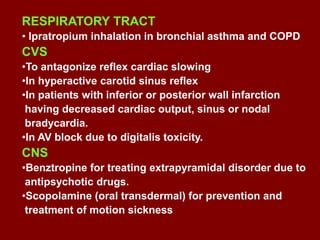
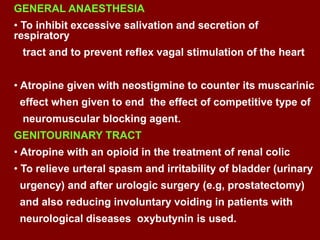
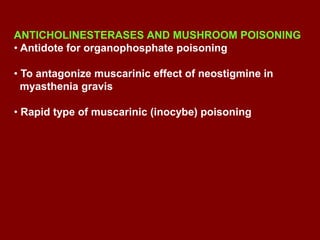
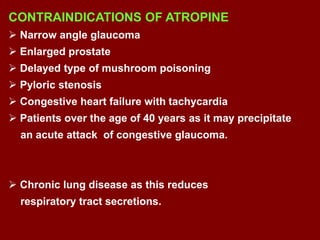
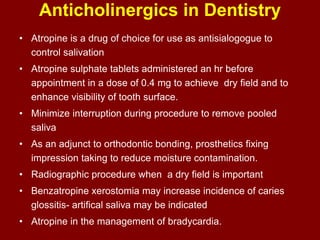
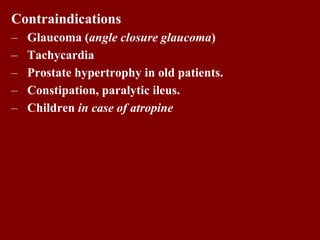


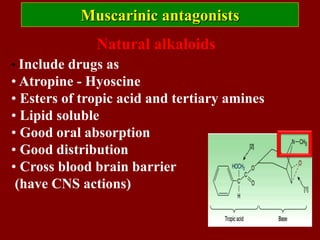
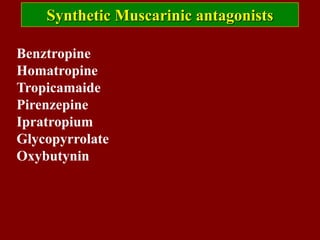
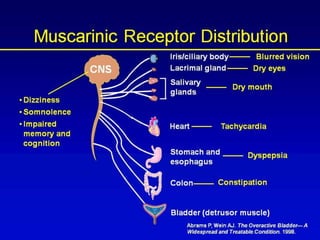
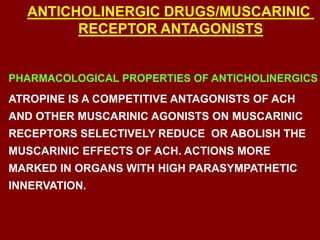
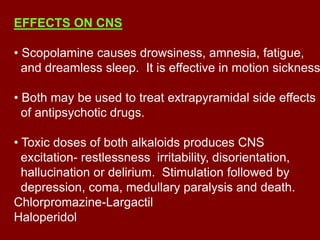
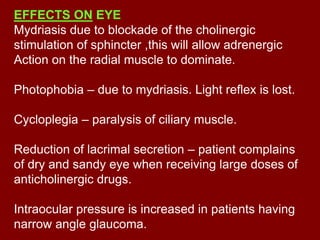
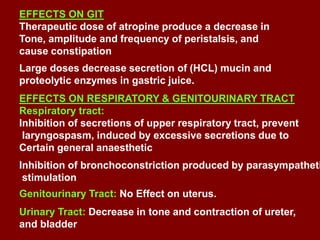
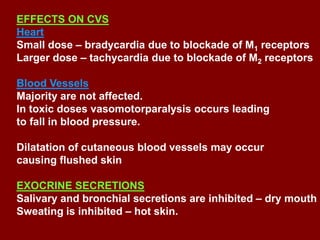
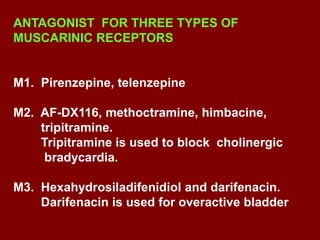
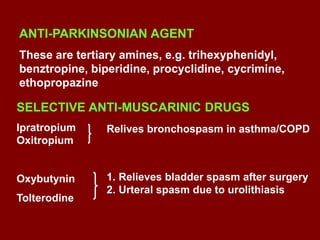
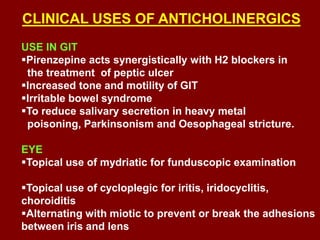
Anticholinergic drugs act as competitive antagonists at muscarinic receptors. They block the effects of the neurotransmitter acetylcholine (Ach) and thus reduce parasympathetic nervous system activity. Key points: - Atropine and scopolamine are examples of naturally occurring anticholinergic drugs. Synthetic muscarinic antagonists include benztropine, hyoscyamine, and oxybutynin. - They have therapeutic effects in the eyes (mydriasis, cycloplegia), gastrointestinal tract (reducing motility), respiratory tract (reducing secretions), and central nervous system (treating extrapyramidal side effects). - Potential adverse effects include dry


