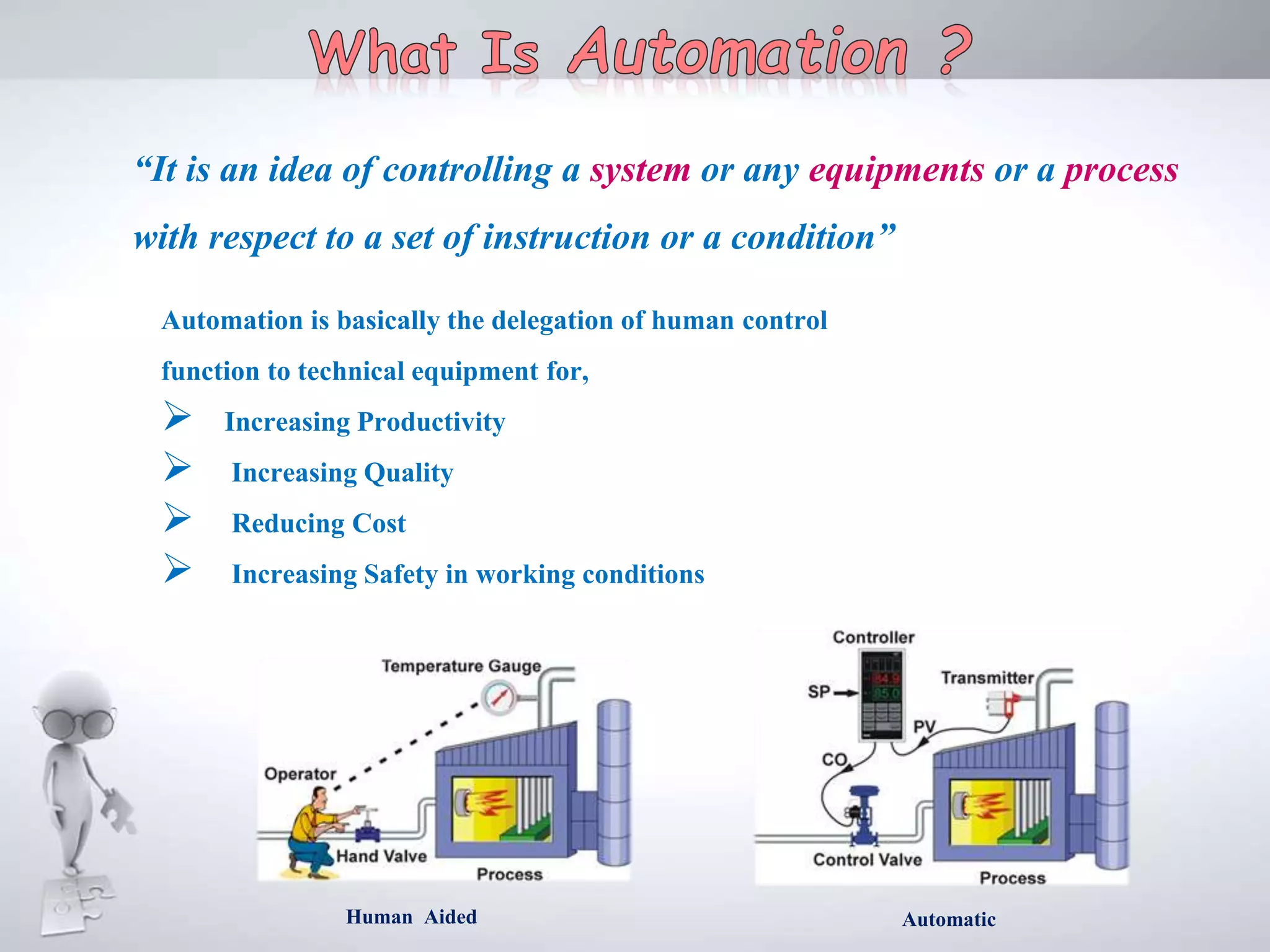
“It is an idea of controlling a system or any equipments or a process
with respect to a set of instruction or a condition”
Automation is basically the delegation of human control
function to technical equipment for,
 Increasing Productivity
 Increasing Quality
 Reducing Cost
 Increasing Safety in working conditions
Human Aided Automatic
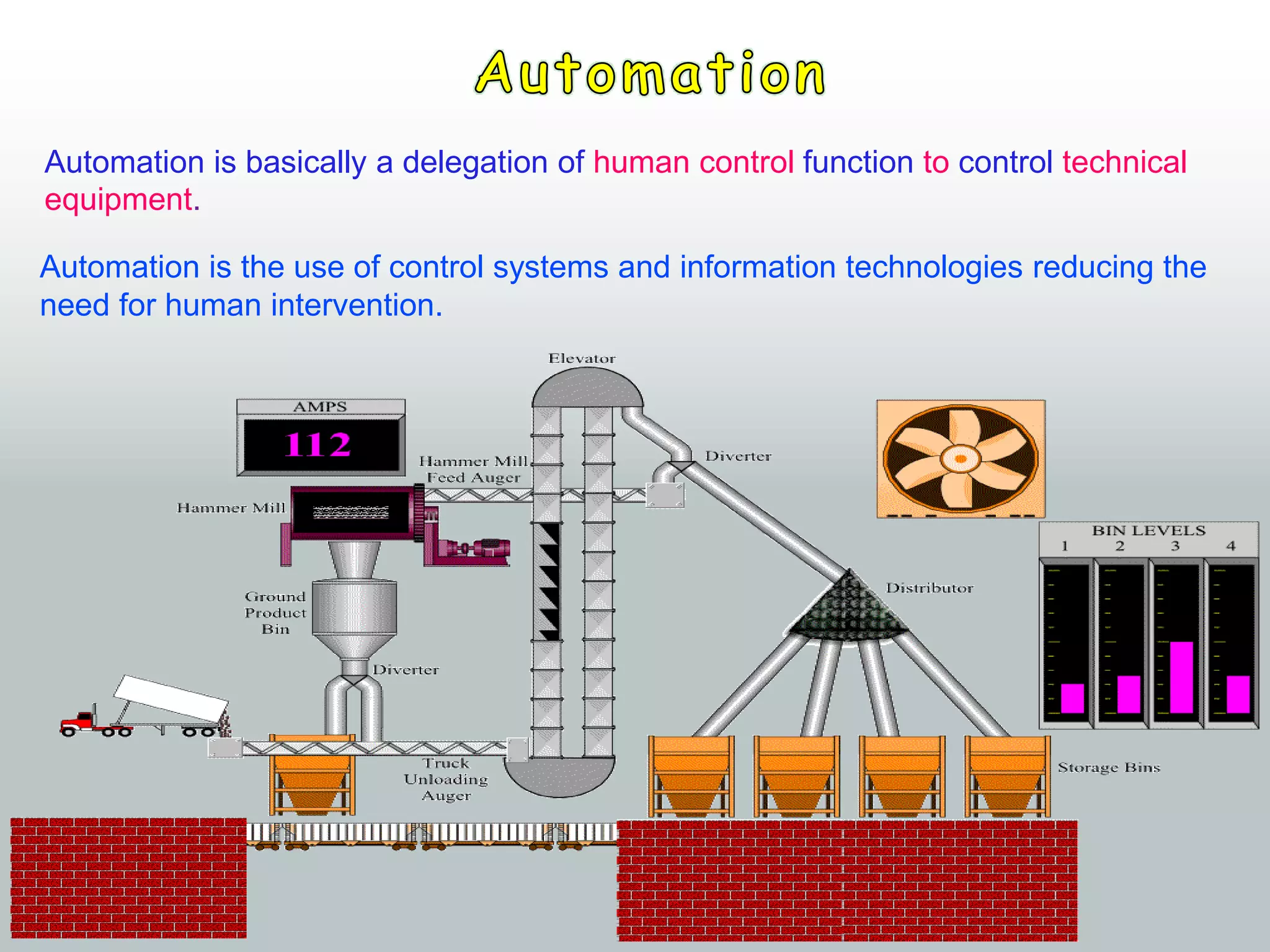
Automation is basically a delegation of human control function to control technical
equipment.
Automation is the use of control systems and information technologies reducing the
need for human intervention.
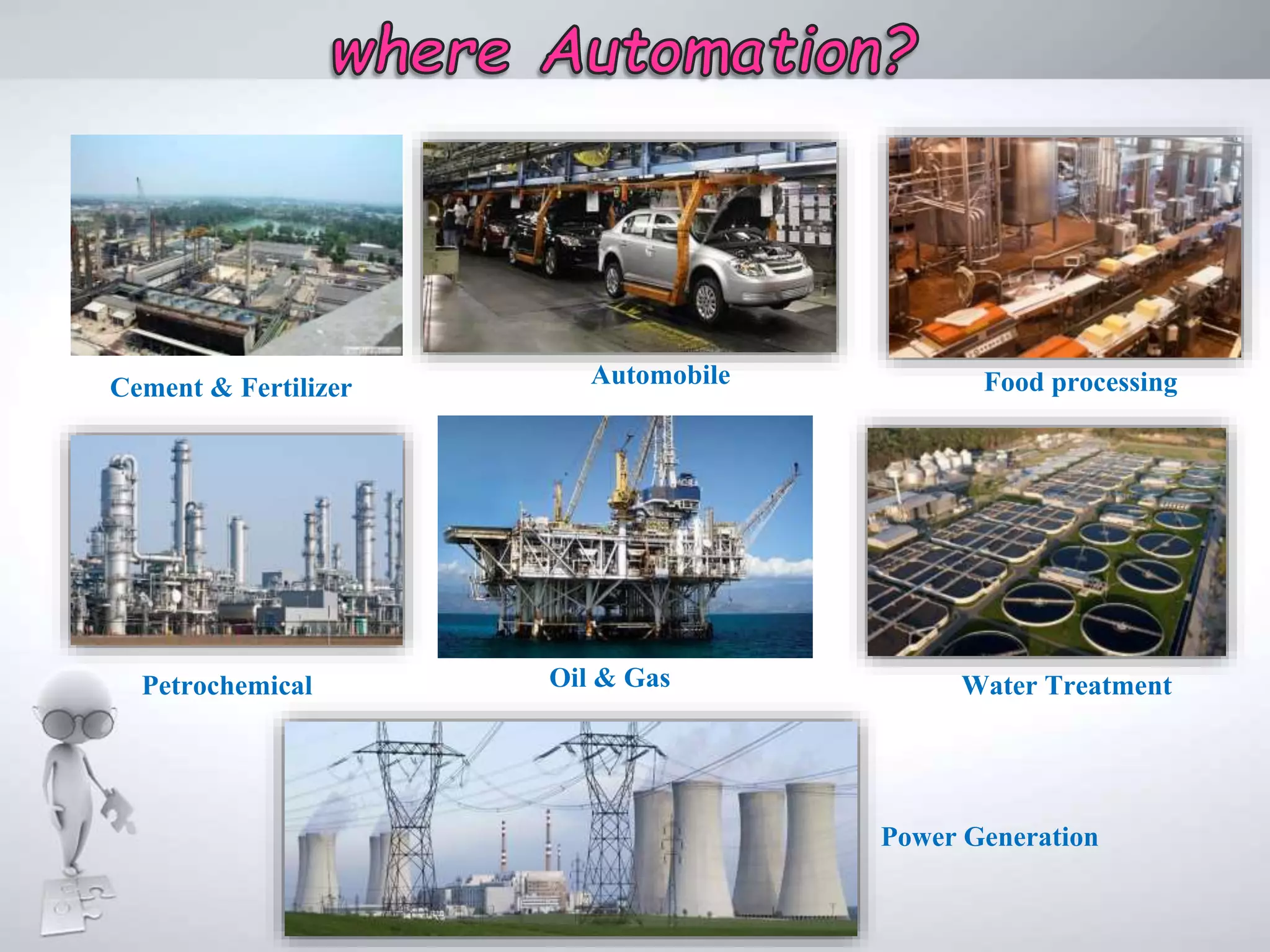
Cement & Fertilizer Automobile Food processing
Power Generation
Petrochemical Oil & Gas Water Treatment
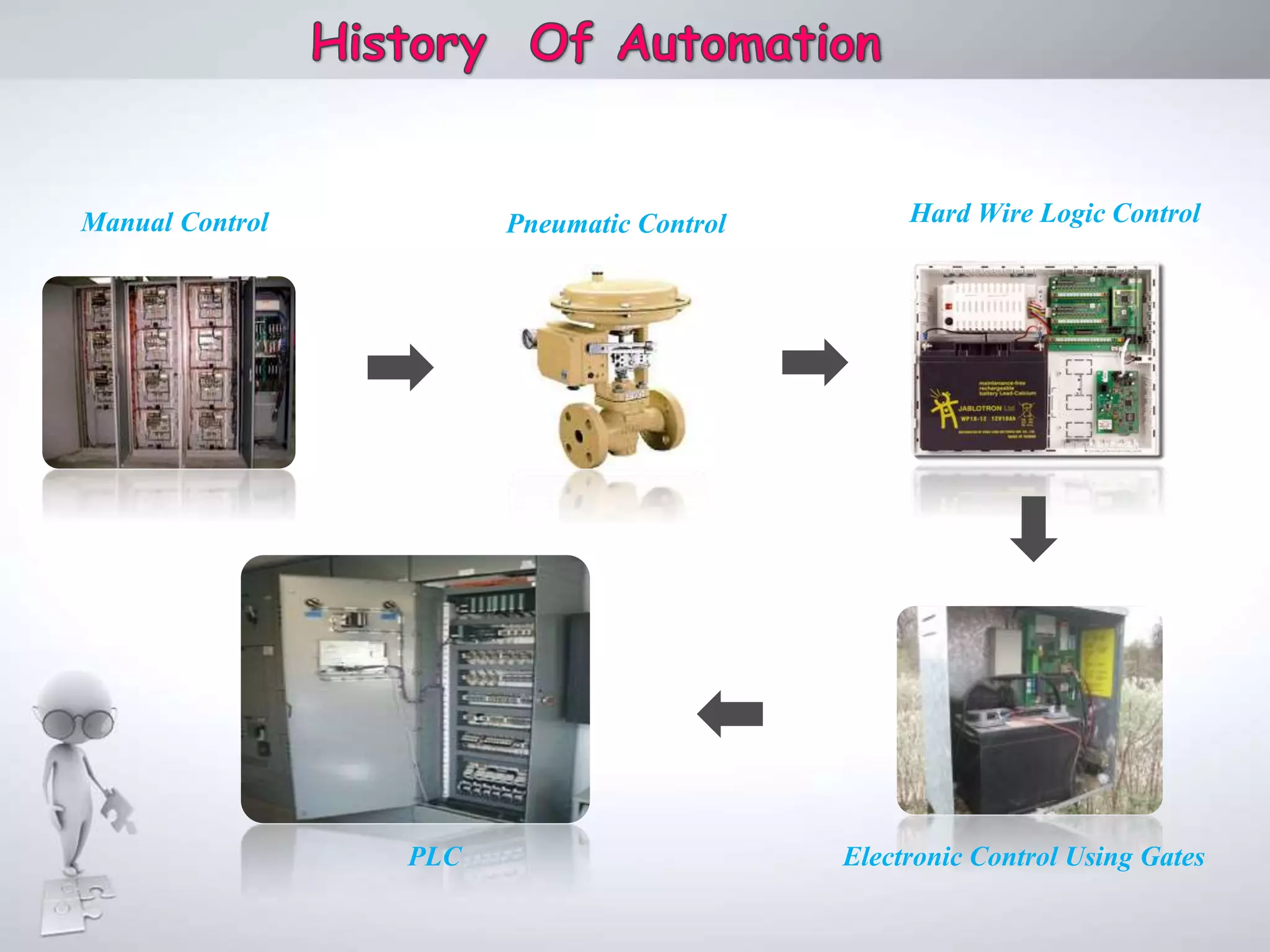
Manual Control
PLC
Pneumatic Control Hard Wire Logic Control
Electronic Control Using Gates
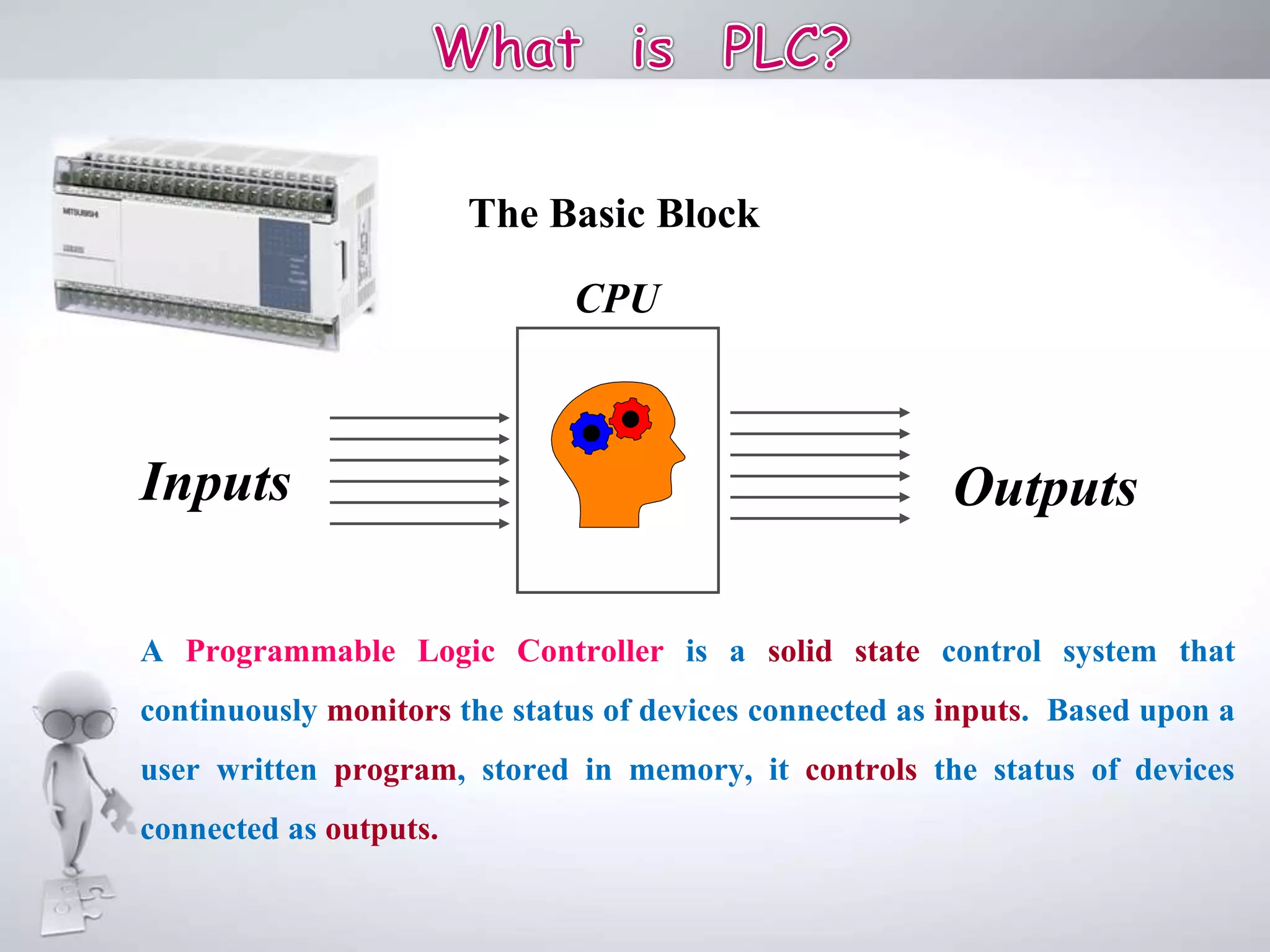
Inputs Outputs
The Basic Block
A Programmable Logic Controller is a solid state control system that
continuously monitors the status of devices connected as inputs. Based upon a
user written program, stored in memory, it controls the status of devices
connected as outputs.
CPU
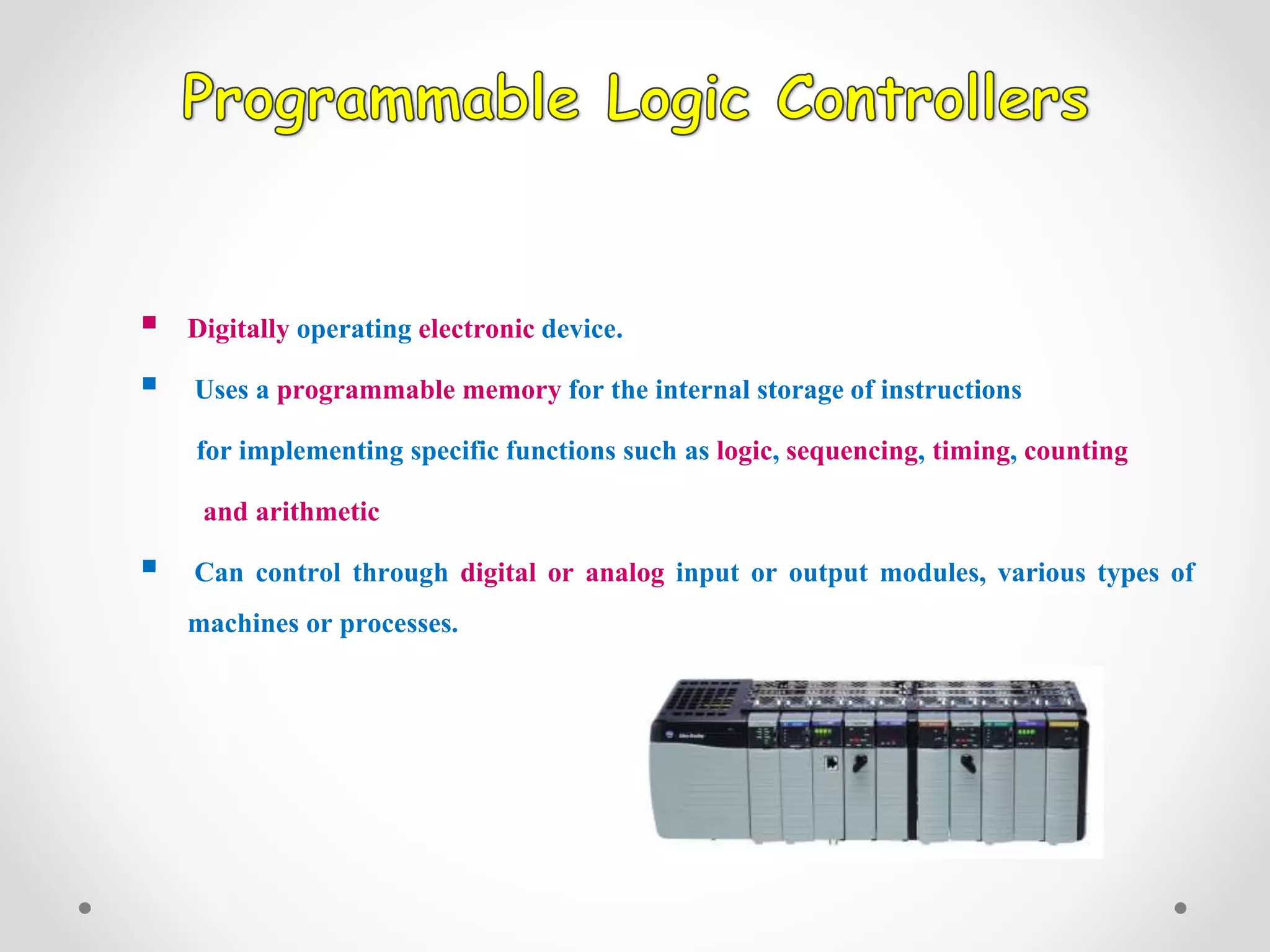
 Digitally operating electronic device.
 Uses a programmable memory for the internal storage of instructions
for implementing specific functions such as logic, sequencing, timing, counting
and arithmetic
 Can control through digital or analog input or output modules, various types of
machines or processes.
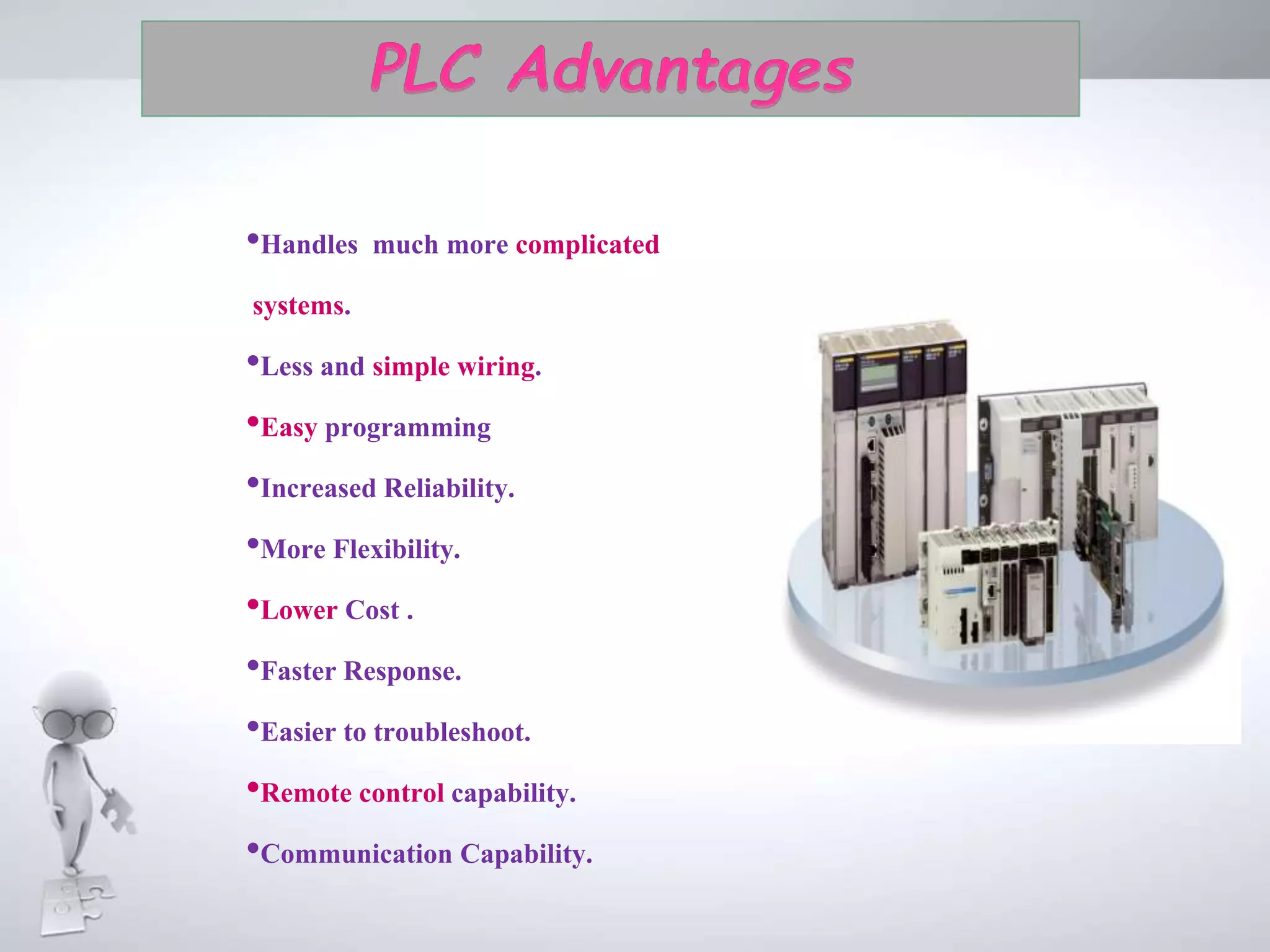
•Handles much more complicated
systems.
•Less and simple wiring.
•Easy programming
•Increased Reliability.
•More Flexibility.
•Lower Cost .
•Faster Response.
•Easier to troubleshoot.
•Remote control capability.
•Communication Capability.
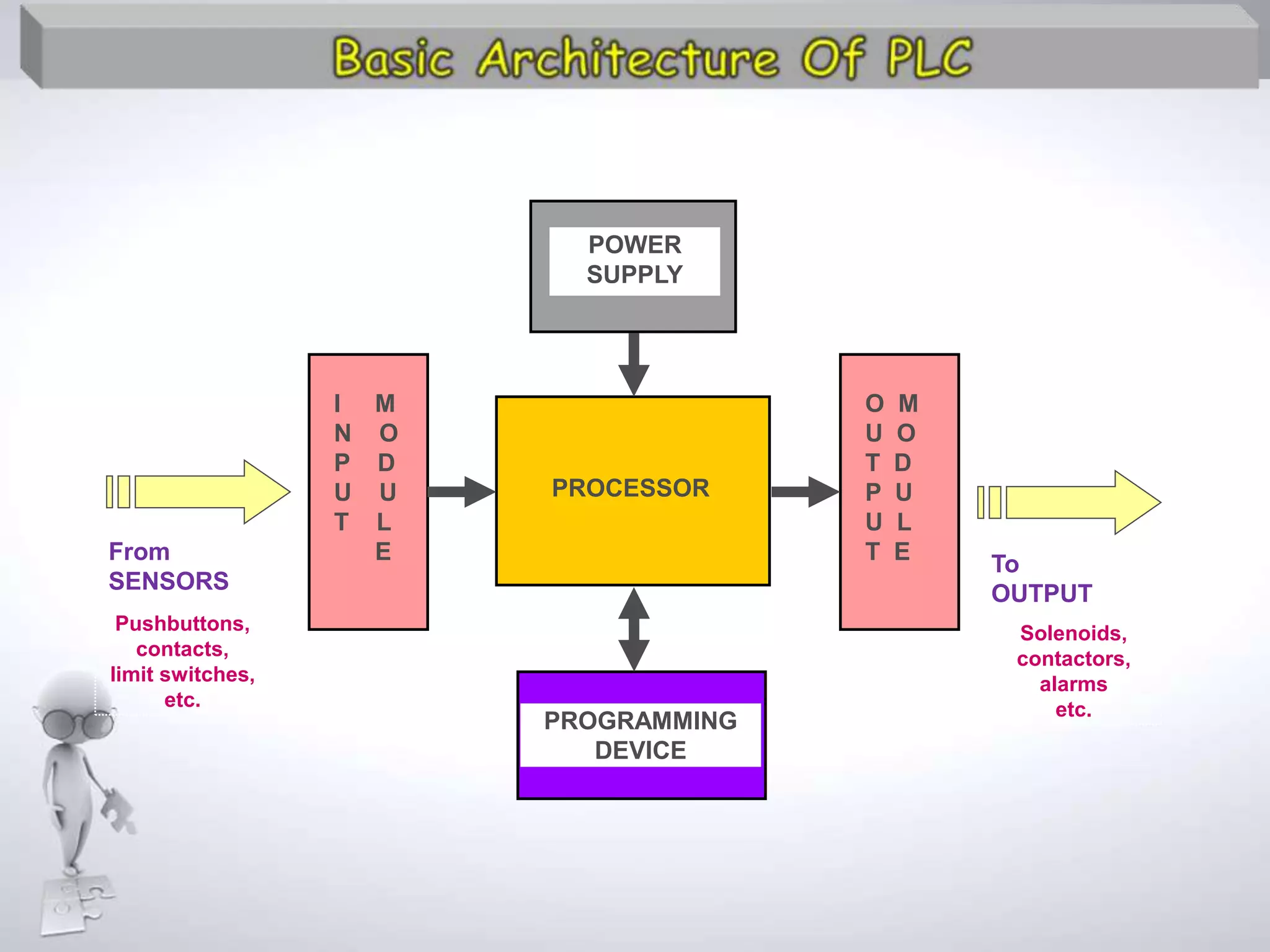
PROCESSOR
POWER
SUPPLY
I M
N O
P D
U U
T L
E
O M
U O
T D
P U
U L
T E
PROGRAMMING
DEVICE
To
OUTPUT
Solenoids,
contactors,
alarms
etc.
From
SENSORS
Pushbuttons,
contacts,
limit switches,
etc.
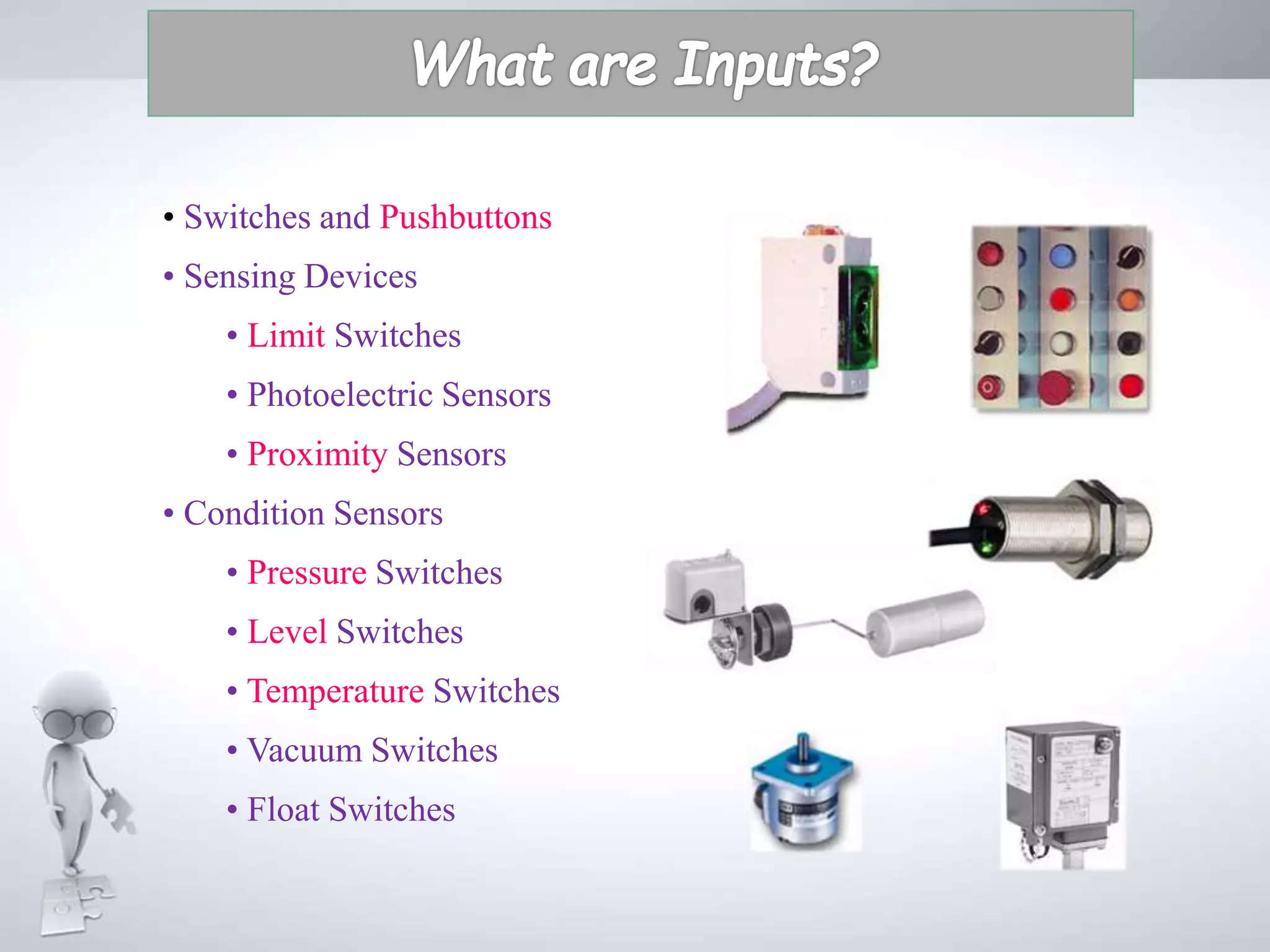
• Switches and Pushbuttons
• Sensing Devices
• Limit Switches
• Photoelectric Sensors
• Proximity Sensors
• Condition Sensors
• Pressure Switches
• Level Switches
• Temperature Switches
• Vacuum Switches
• Float Switches
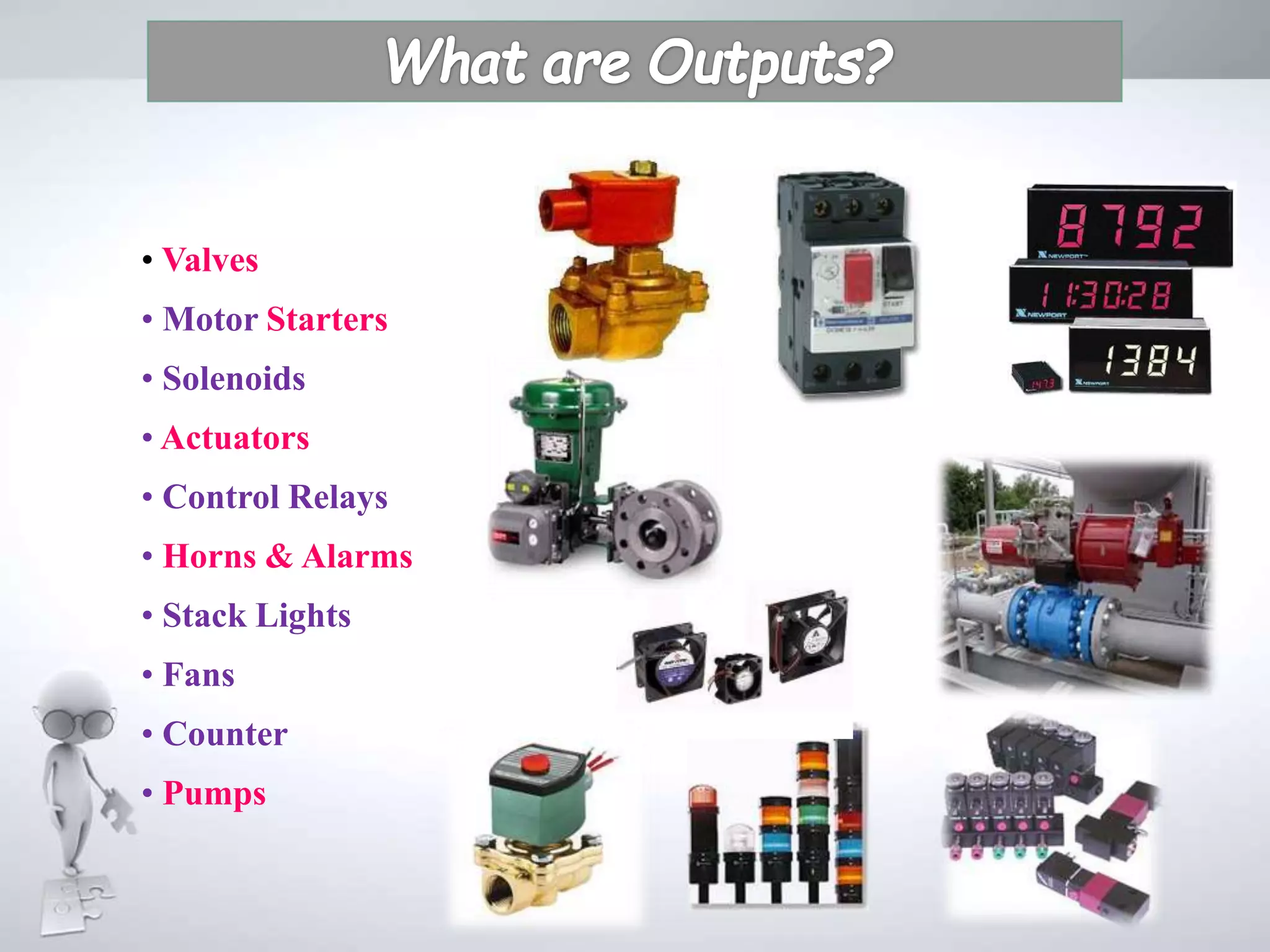
• Valves
• Motor Starters
• Solenoids
• Actuators
• Control Relays
• Horns & Alarms
• Stack Lights
• Fans
• Counter
• Pumps
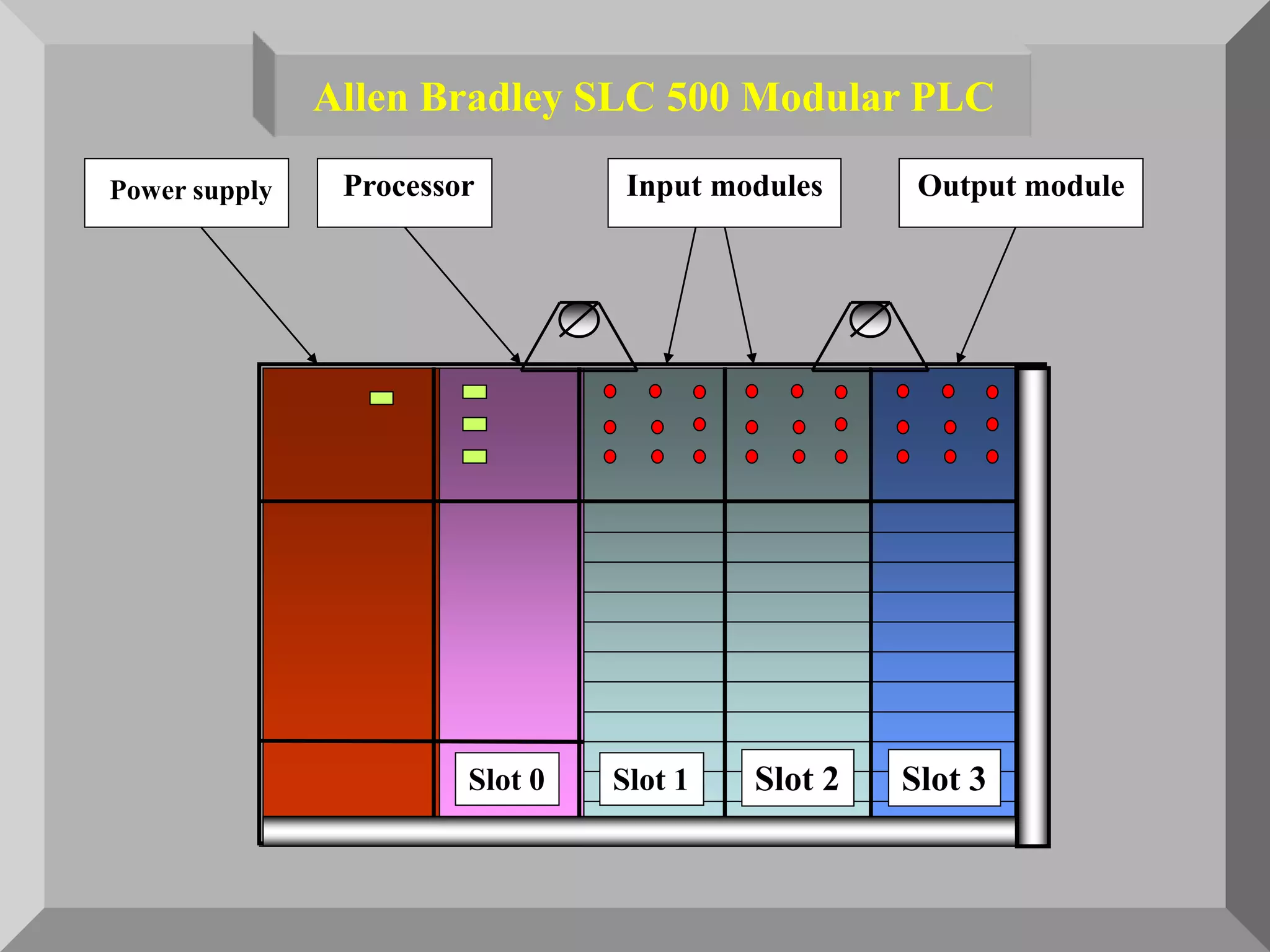
Allen Bradley SLC 500 Modular PLC
Power supply Processor Input modules Output module
Slot 0 Slot 2Slot 1 Slot 3
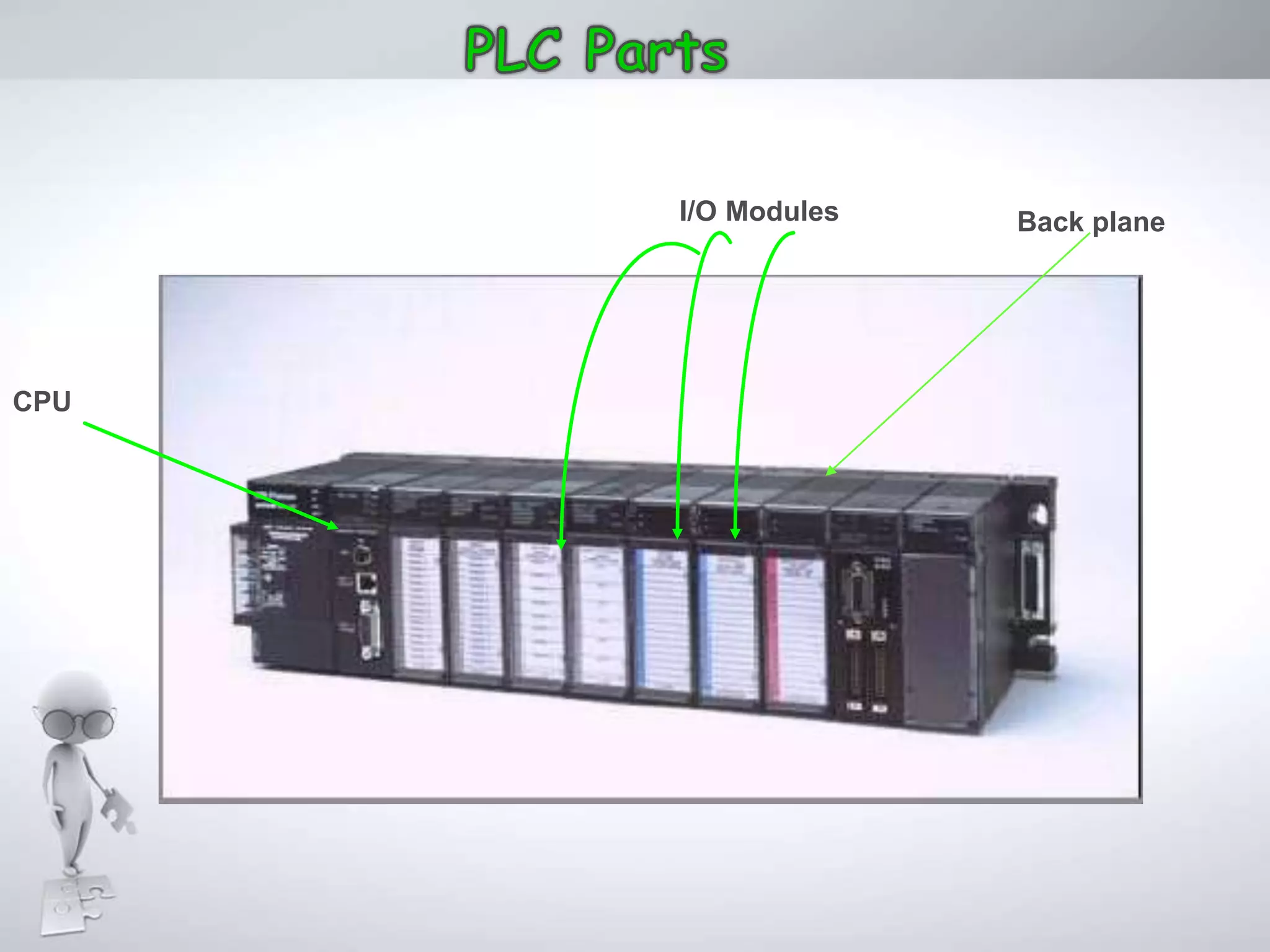
CPU
I/O Modules Back plane
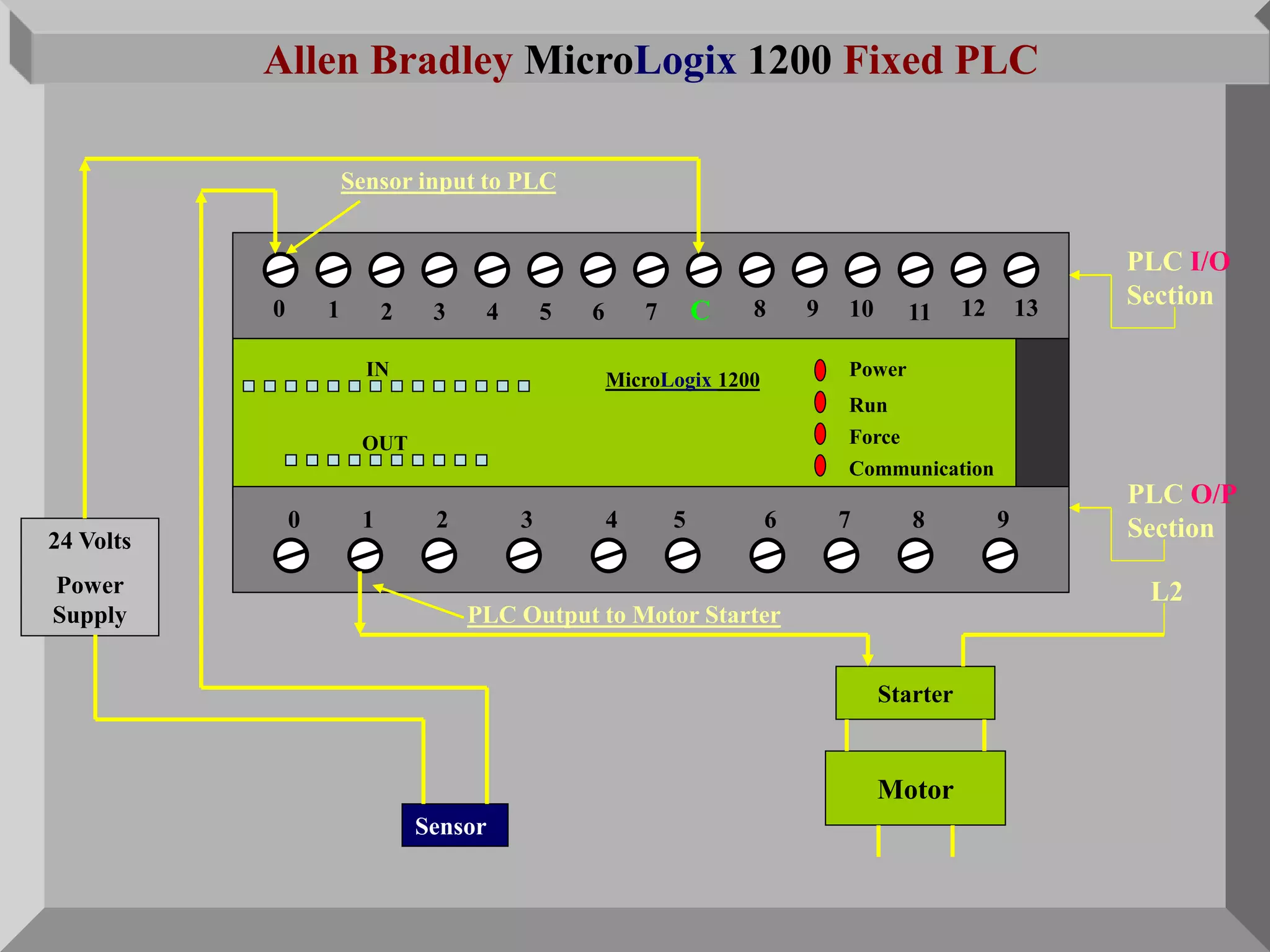
1 2 3 4 5 6 C7 1110980 12 13
0 1 2 3 4 5 6 7 8 9
Power
Run
Force
Communication
MicroLogix 1200
OUT
IN
Allen Bradley MicroLogix 1200 Fixed PLC
24 Volts
Power
Supply
Motor
Starter
L2
PLC I/O
Section
PLC O/P
Section
Sensor input to PLC
PLC Output to Motor Starter
Sensor
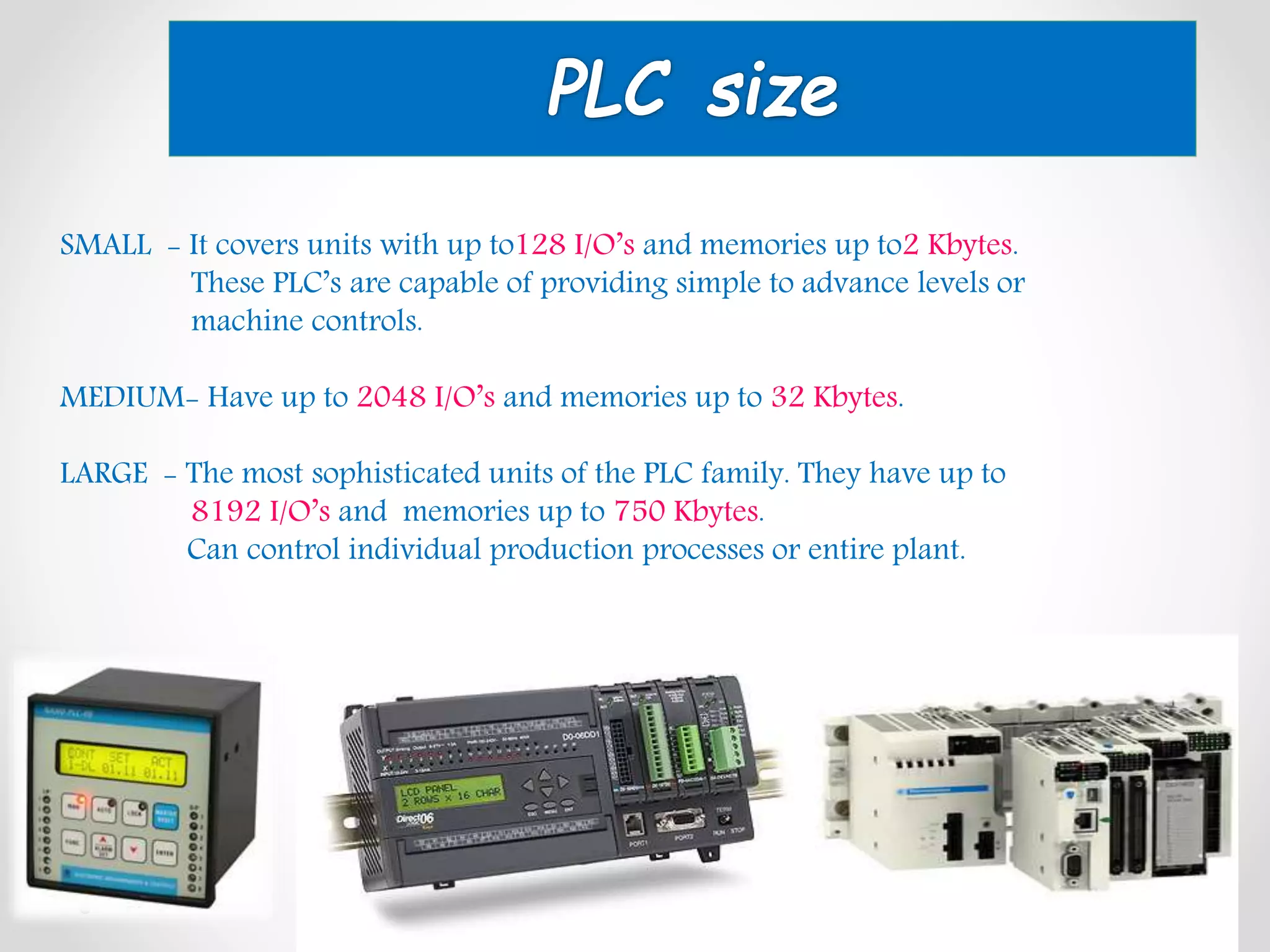
SMALL - It covers units with up to128 I/O’s and memories up to2 Kbytes.
These PLC’s are capable of providing simple to advance levels or
machine controls.
MEDIUM- Have up to 2048 I/O’s and memories up to 32 Kbytes.
LARGE - The most sophisticated units of the PLC family. They have up to
8192 I/O’s and memories up to 750 Kbytes.
Can control individual production processes or entire plant.
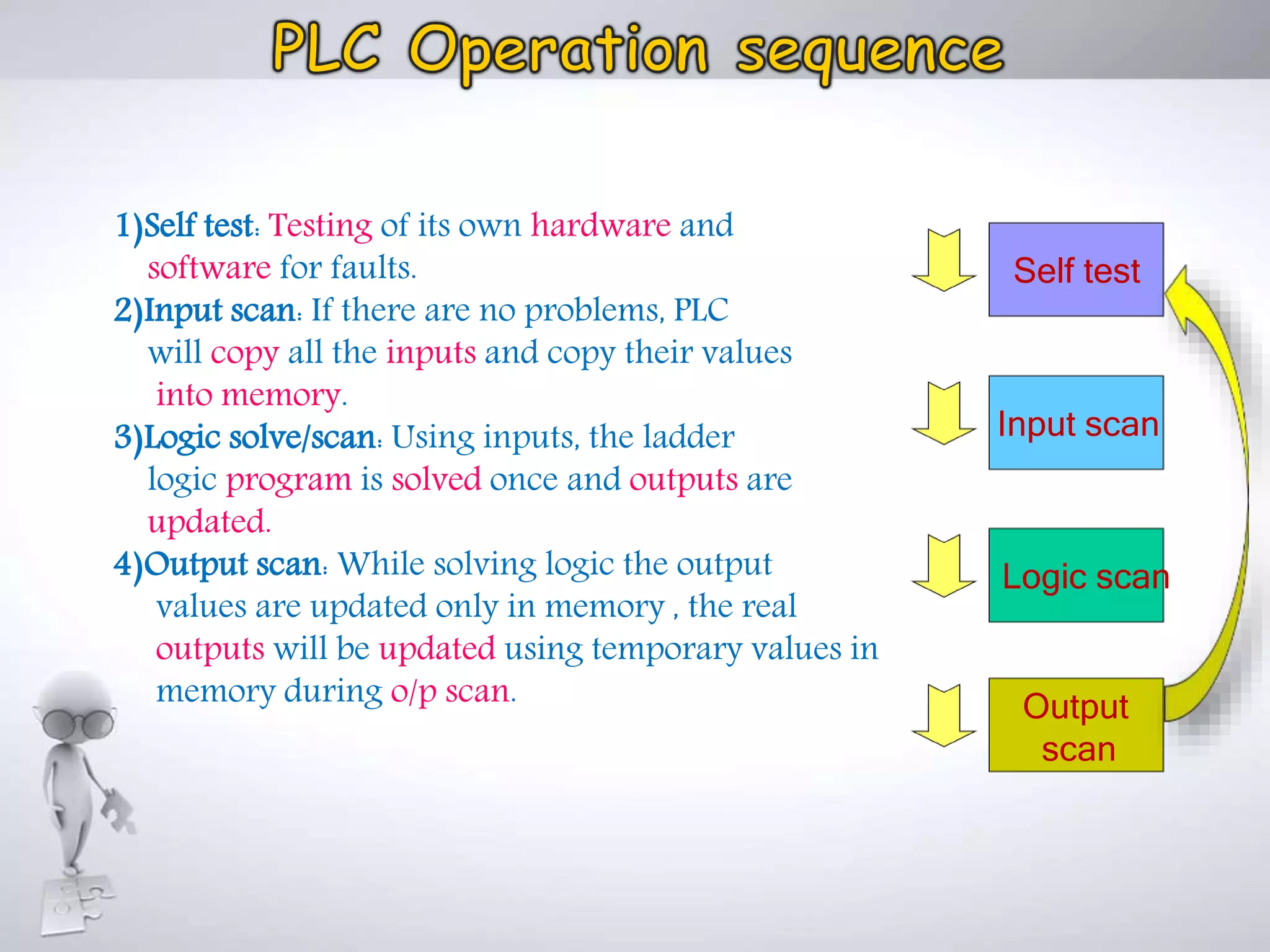
Self test
Input scan
Logic scan
Output
scan
1)Self test: Testing of its own hardware and
software for faults.
2)Input scan: If there are no problems, PLC
will copy all the inputs and copy their values
into memory.
3)Logic solve/scan: Using inputs, the ladder
logic program is solved once and outputs are
updated.
4)Output scan: While solving logic the output
values are updated only in memory , the real
outputs will be updated using temporary values in
memory during o/p scan.
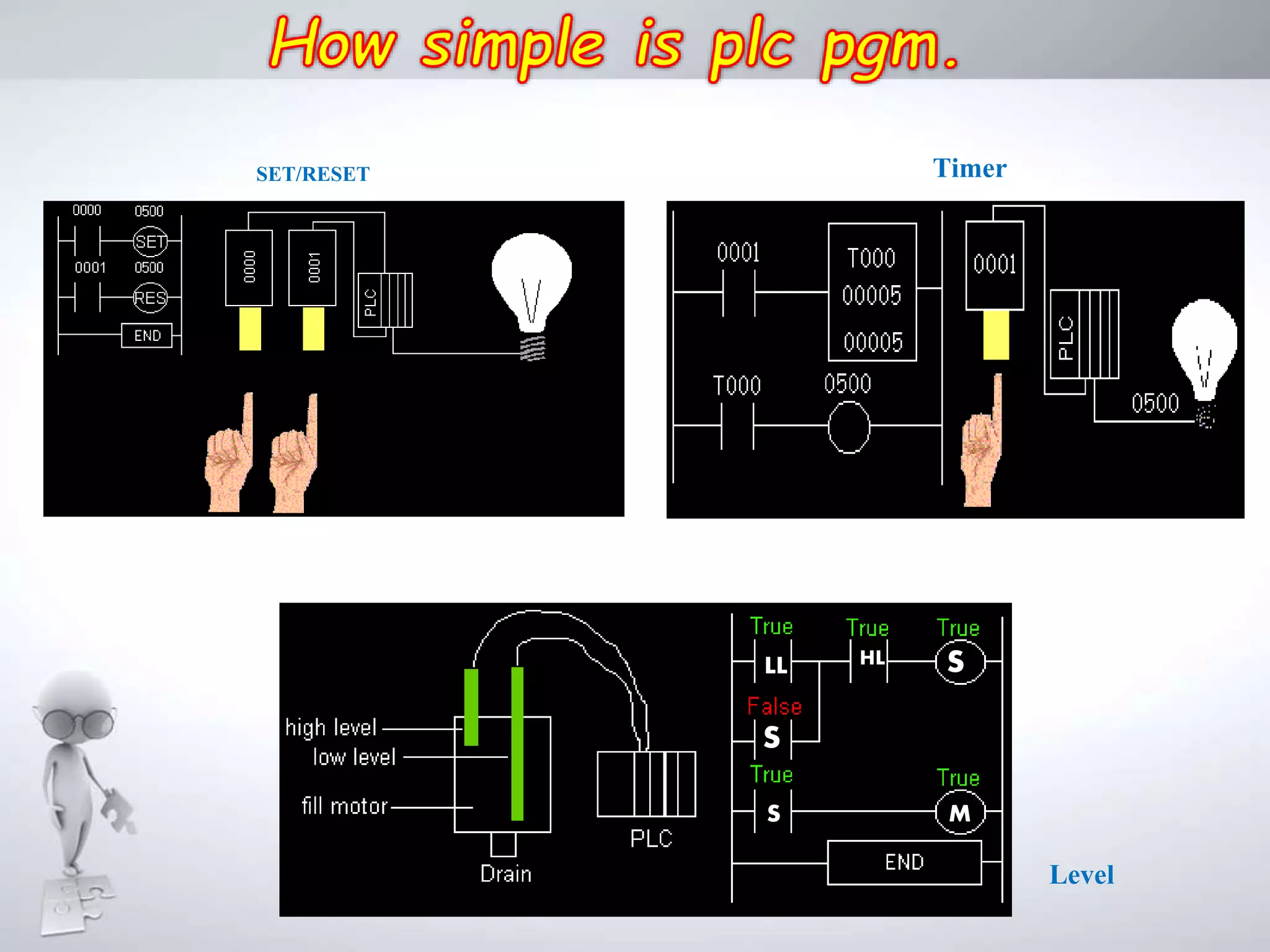
HLLL S
S
S M
SET/RESET Timer
Level
PLC
SCADASupervisory Control And Data Acquisition
What is SCADA?
SCADA is “Supervisory Control And Data Acquisition”.
Real-time industrial process control systems used to centrally
monitor and control remote or local industrial equipment such as
motors, valves, pumps, relays, sensors, etc.
SCADA is Combination of telemetry and Data Acquisition.
SCADA is not just a hardware, neither a software. It’s a concept,
it’s a system as a combination of special hardware, software and
protocols.
SCADA is used to control chemical plant processes, oil and gas
pipelines, electrical generation and transmission equipment,
manufacturing facilities, water purification and
distribution infrastructure, etc.
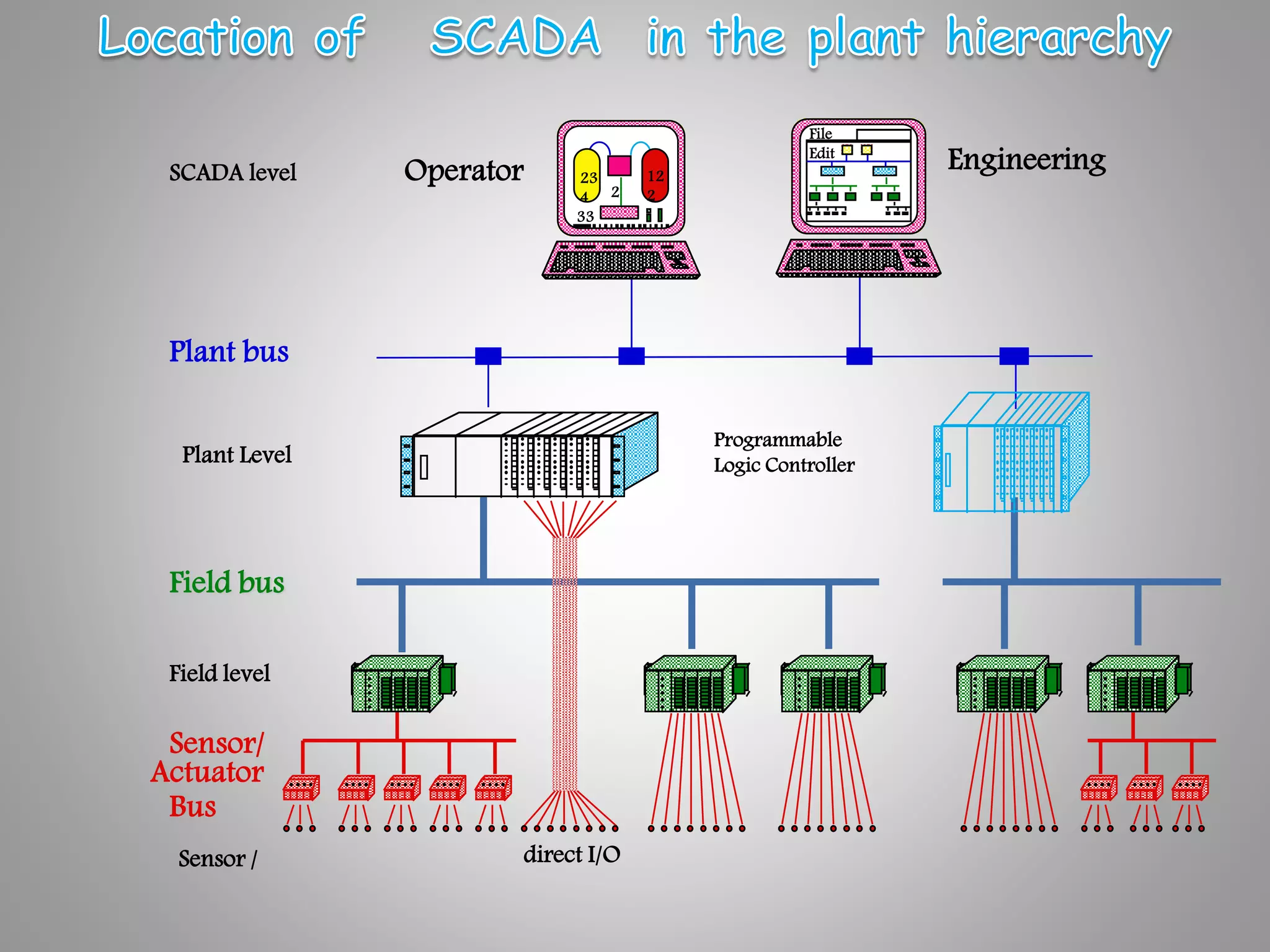
Sensor/
Actuator
Bus
Field bus
Programmable
Logic Controller
Plant bus
SCADA level
Plant Level
Field level
File
Edit
EngineeringOperator
2
12
2
33
23
4
direct I/OSensor /
SCADASupervisory Control And Data Acquisition
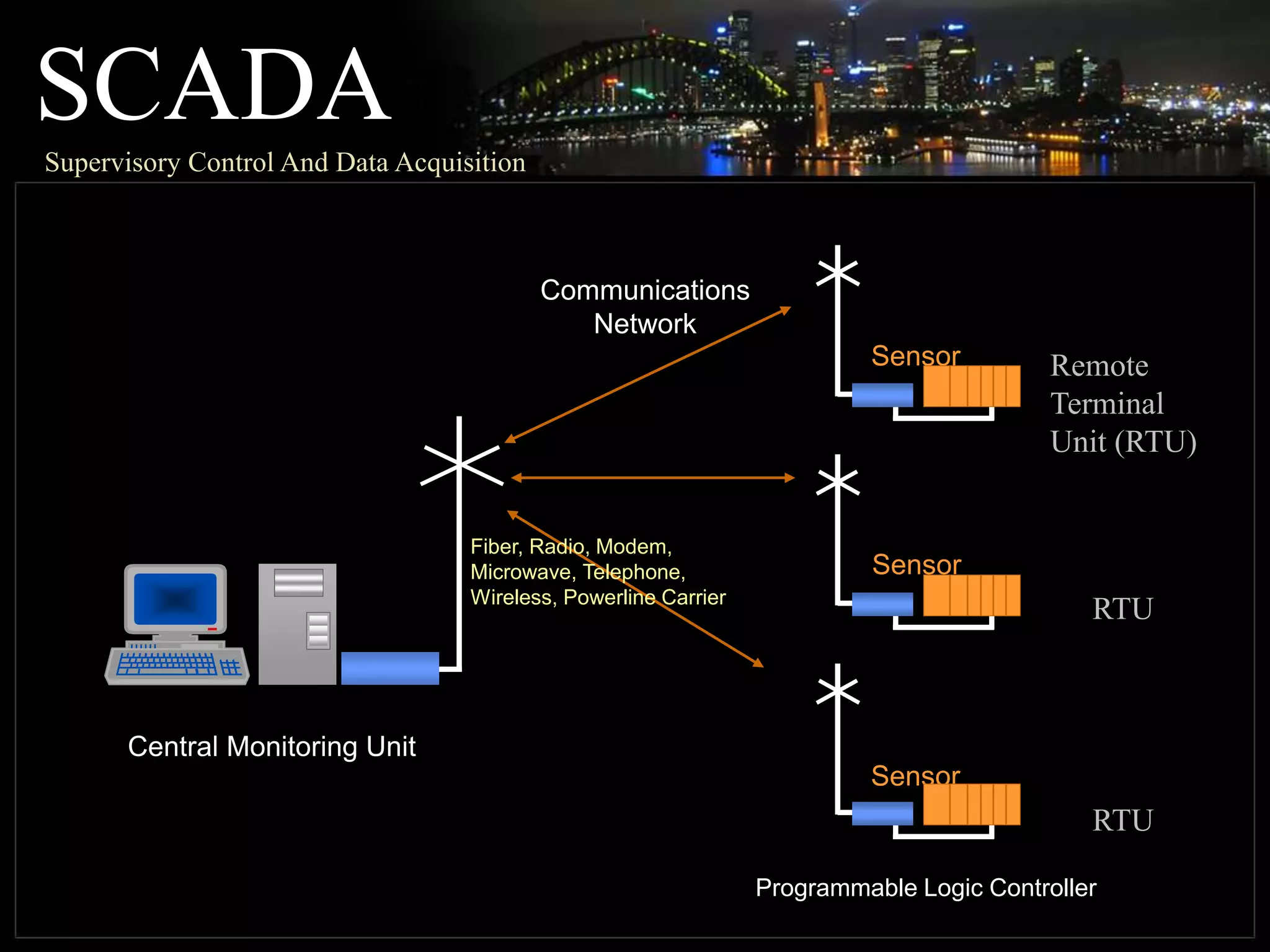
Central Monitoring Unit
Communications
Network
Sensor
Sensor
Programmable Logic Controller
Sensor
Fiber, Radio, Modem,
Microwave, Telephone,
Wireless, Powerline Carrier
Remote
Terminal
Unit (RTU)
RTU
RTU
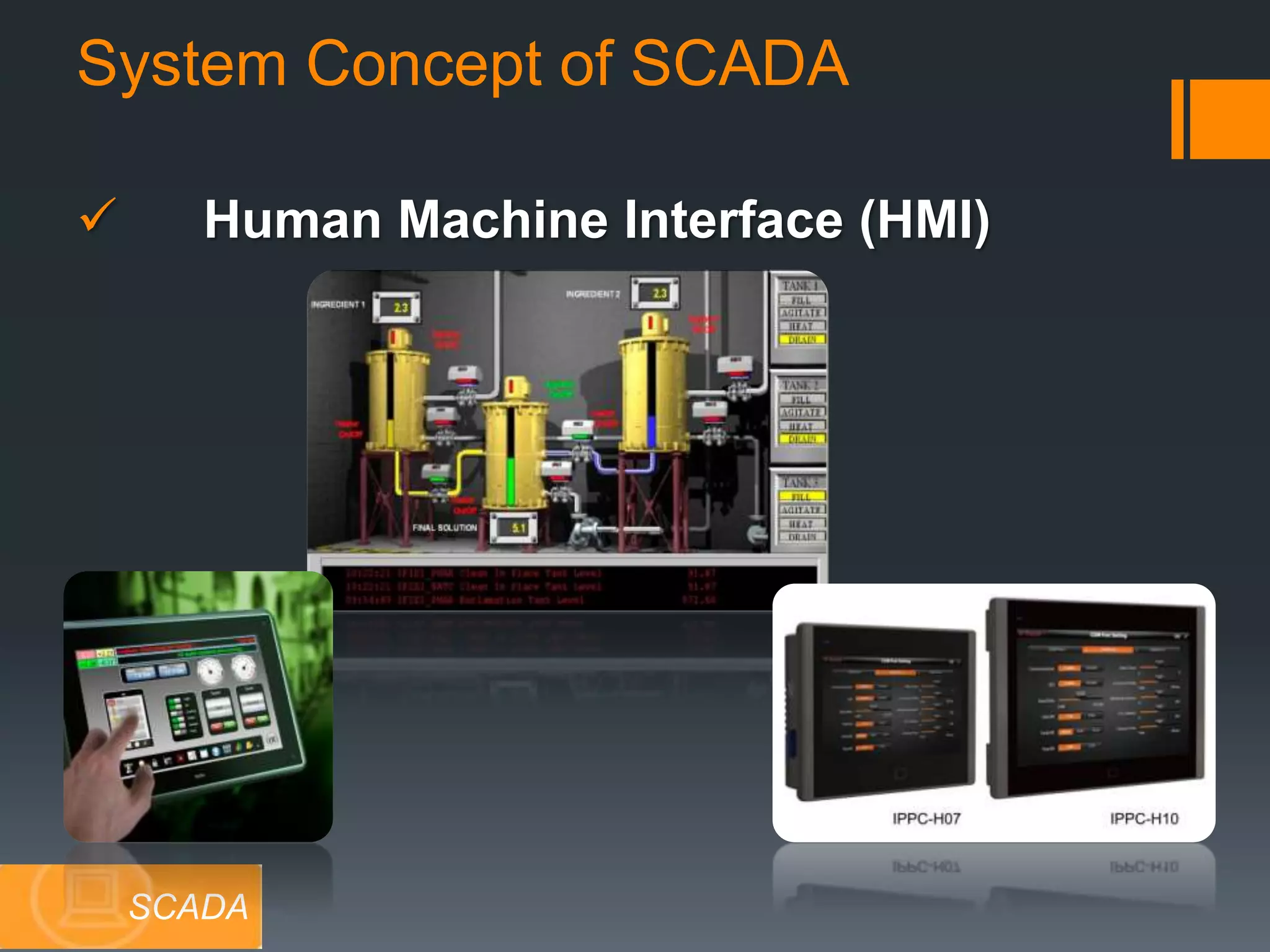
 Human Machine Interface (HMI)
System Concept of SCADA
SCADA
SCADASupervisory Control And Data Acquisition
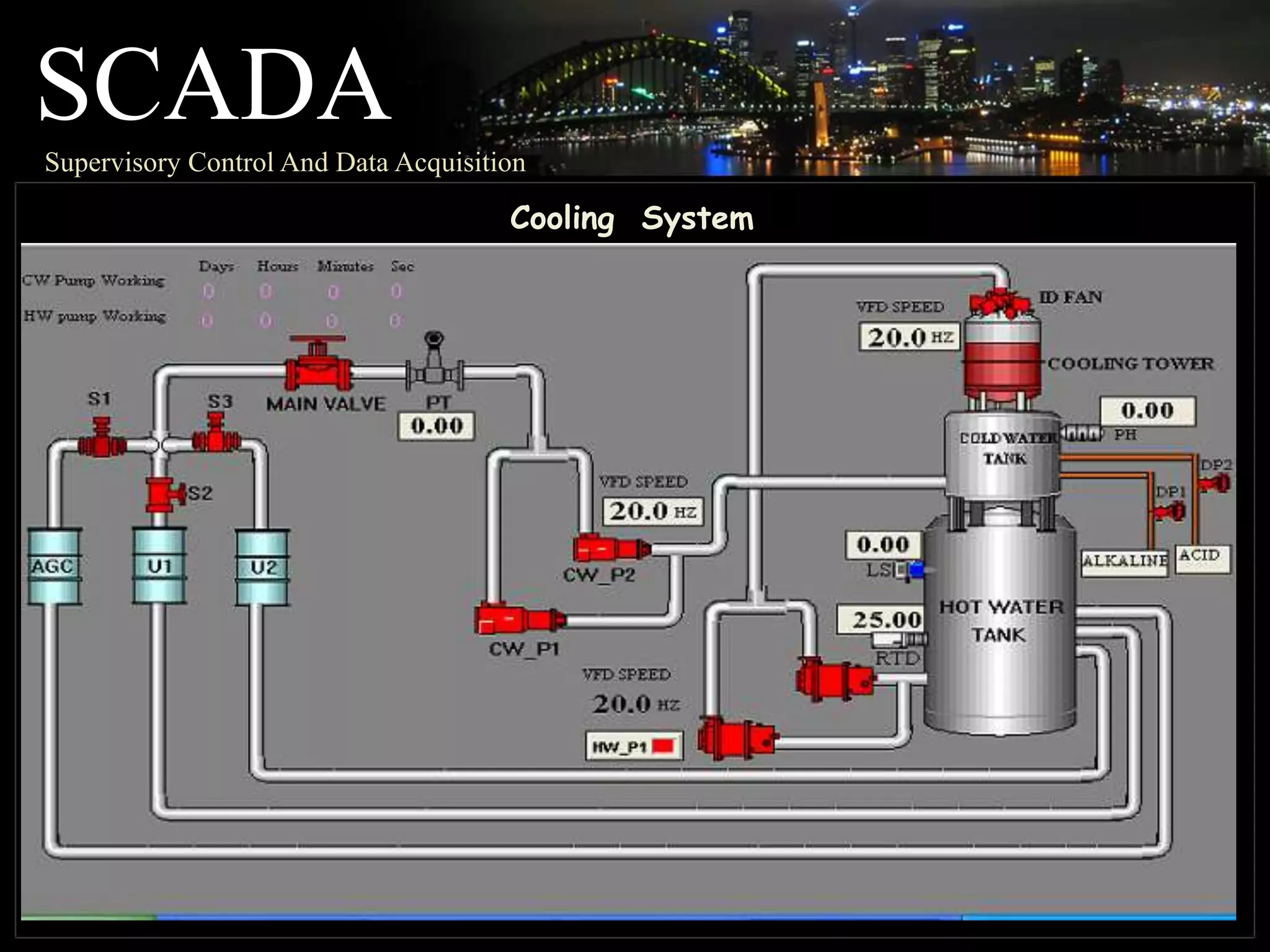
Cooling System
SCADASupervisory Control And Data Acquisition
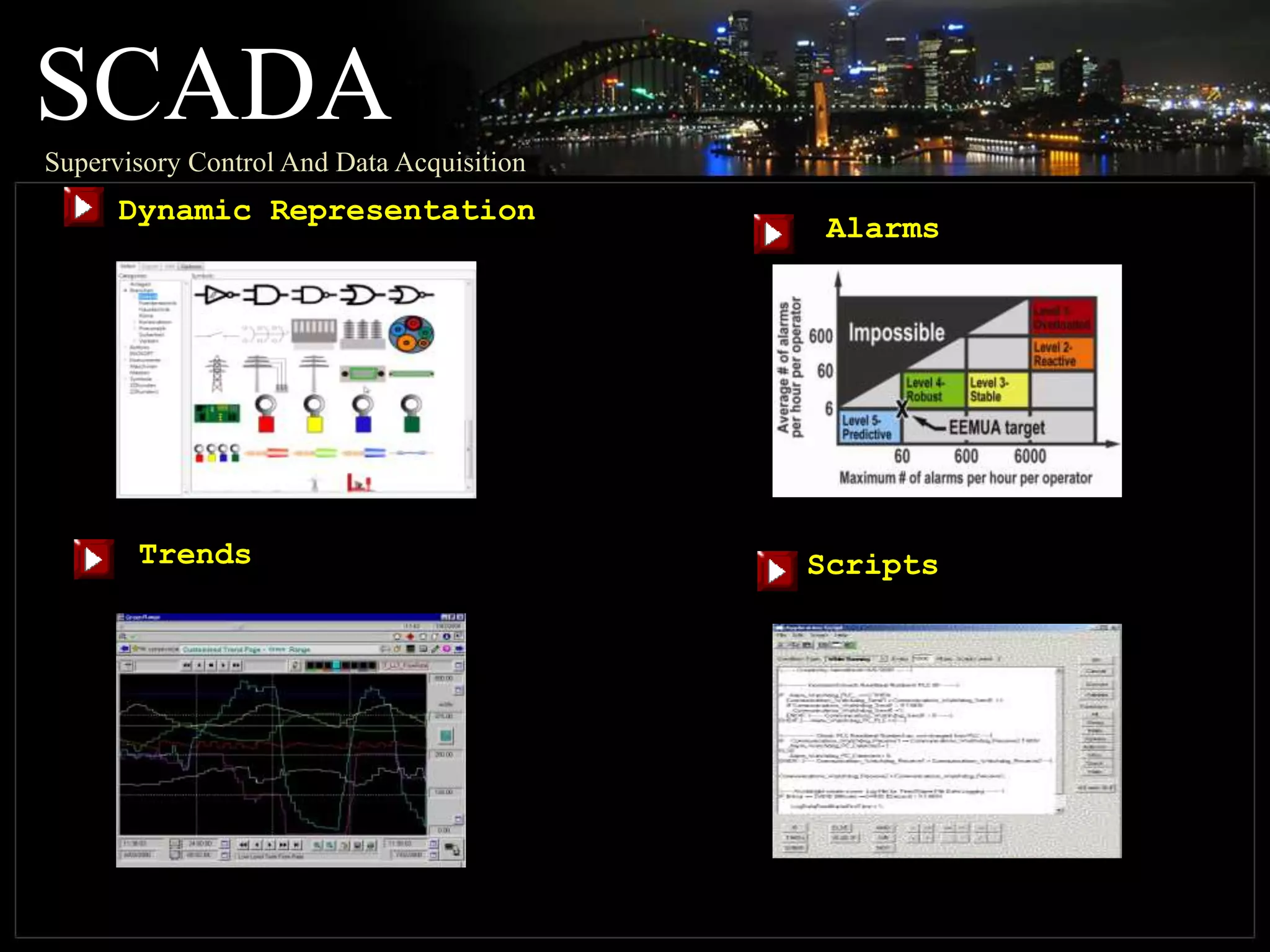
Dynamic Representation
Alarms
Trends Scripts
SCADASupervisory Control And Data Acquisition
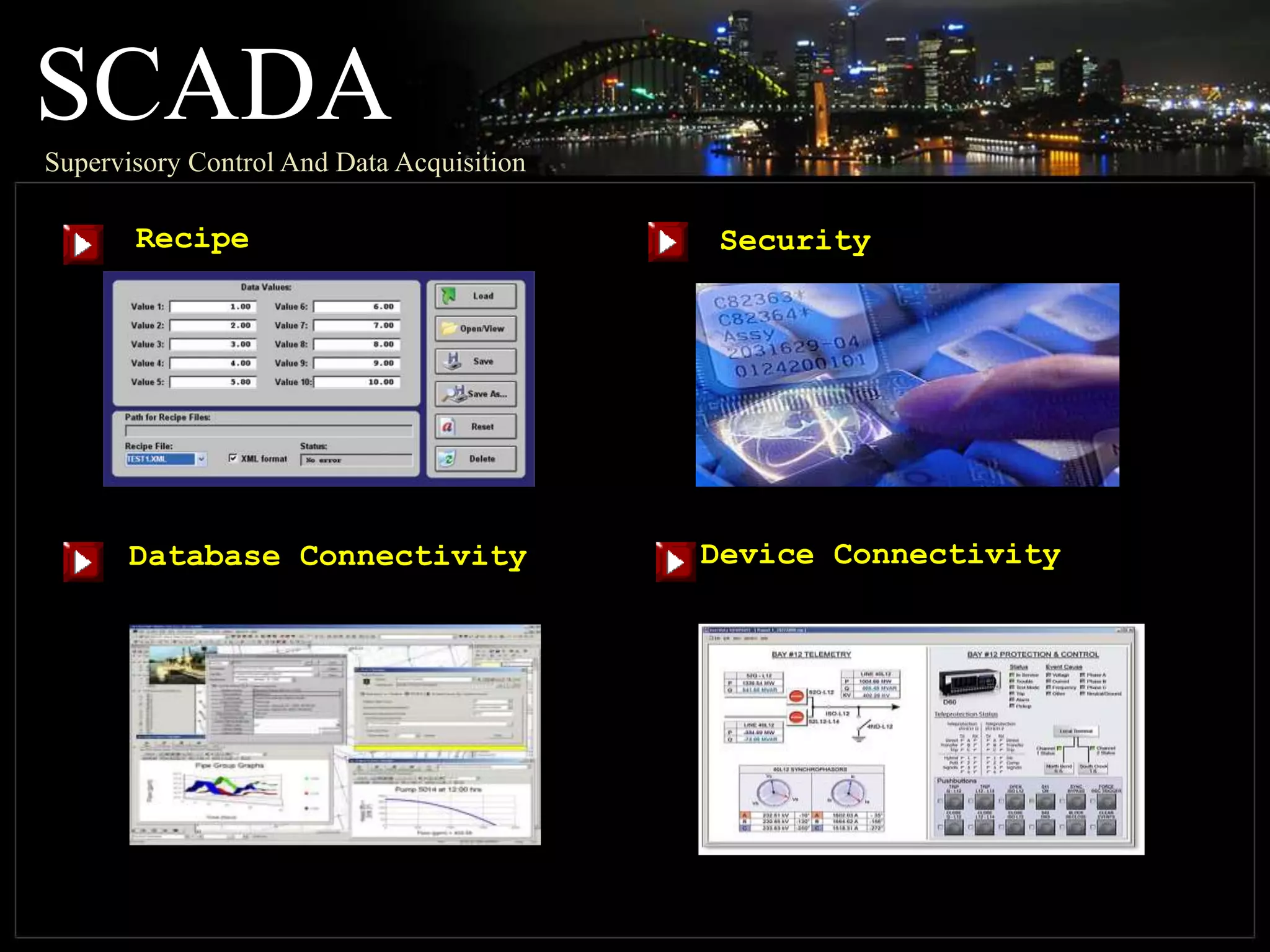
Device Connectivity
Recipe Security
Database Connectivity
 What is Automation
 History Automation
 PLC
 Architecture
 operation
 Programming
 SCADA
 Working
 features
PLC and SCADA in Industrial Automation

PLC and SCADA in Industrial Automation

  • 2.
    “It is anidea of controlling a system or any equipments or a process with respect to a set of instruction or a condition” Automation is basically the delegation of human control function to technical equipment for,  Increasing Productivity  Increasing Quality  Reducing Cost  Increasing Safety in working conditions Human Aided Automatic
  • 3.
    Automation is basicallya delegation of human control function to control technical equipment. Automation is the use of control systems and information technologies reducing the need for human intervention.
  • 4.
    Cement & FertilizerAutomobile Food processing Power Generation Petrochemical Oil & Gas Water Treatment
  • 5.
    Manual Control PLC Pneumatic ControlHard Wire Logic Control Electronic Control Using Gates
  • 6.
    Inputs Outputs The BasicBlock A Programmable Logic Controller is a solid state control system that continuously monitors the status of devices connected as inputs. Based upon a user written program, stored in memory, it controls the status of devices connected as outputs. CPU
  • 7.
     Digitally operatingelectronic device.  Uses a programmable memory for the internal storage of instructions for implementing specific functions such as logic, sequencing, timing, counting and arithmetic  Can control through digital or analog input or output modules, various types of machines or processes.
  • 8.
    •Handles much morecomplicated systems. •Less and simple wiring. •Easy programming •Increased Reliability. •More Flexibility. •Lower Cost . •Faster Response. •Easier to troubleshoot. •Remote control capability. •Communication Capability.
  • 9.
    PROCESSOR POWER SUPPLY I M N O PD U U T L E O M U O T D P U U L T E PROGRAMMING DEVICE To OUTPUT Solenoids, contactors, alarms etc. From SENSORS Pushbuttons, contacts, limit switches, etc.
  • 10.
    • Switches andPushbuttons • Sensing Devices • Limit Switches • Photoelectric Sensors • Proximity Sensors • Condition Sensors • Pressure Switches • Level Switches • Temperature Switches • Vacuum Switches • Float Switches
  • 11.
    • Valves • MotorStarters • Solenoids • Actuators • Control Relays • Horns & Alarms • Stack Lights • Fans • Counter • Pumps
  • 12.
    Allen Bradley SLC500 Modular PLC Power supply Processor Input modules Output module Slot 0 Slot 2Slot 1 Slot 3
  • 13.
  • 14.
    1 2 34 5 6 C7 1110980 12 13 0 1 2 3 4 5 6 7 8 9 Power Run Force Communication MicroLogix 1200 OUT IN Allen Bradley MicroLogix 1200 Fixed PLC 24 Volts Power Supply Motor Starter L2 PLC I/O Section PLC O/P Section Sensor input to PLC PLC Output to Motor Starter Sensor
  • 15.
    SMALL - Itcovers units with up to128 I/O’s and memories up to2 Kbytes. These PLC’s are capable of providing simple to advance levels or machine controls. MEDIUM- Have up to 2048 I/O’s and memories up to 32 Kbytes. LARGE - The most sophisticated units of the PLC family. They have up to 8192 I/O’s and memories up to 750 Kbytes. Can control individual production processes or entire plant.
  • 16.
    Self test Input scan Logicscan Output scan 1)Self test: Testing of its own hardware and software for faults. 2)Input scan: If there are no problems, PLC will copy all the inputs and copy their values into memory. 3)Logic solve/scan: Using inputs, the ladder logic program is solved once and outputs are updated. 4)Output scan: While solving logic the output values are updated only in memory , the real outputs will be updated using temporary values in memory during o/p scan.
  • 17.
  • 18.
  • 20.
    SCADASupervisory Control AndData Acquisition What is SCADA? SCADA is “Supervisory Control And Data Acquisition”. Real-time industrial process control systems used to centrally monitor and control remote or local industrial equipment such as motors, valves, pumps, relays, sensors, etc. SCADA is Combination of telemetry and Data Acquisition. SCADA is not just a hardware, neither a software. It’s a concept, it’s a system as a combination of special hardware, software and protocols. SCADA is used to control chemical plant processes, oil and gas pipelines, electrical generation and transmission equipment, manufacturing facilities, water purification and distribution infrastructure, etc.
  • 21.
    Sensor/ Actuator Bus Field bus Programmable Logic Controller Plantbus SCADA level Plant Level Field level File Edit EngineeringOperator 2 12 2 33 23 4 direct I/OSensor /
  • 22.
    SCADASupervisory Control AndData Acquisition Central Monitoring Unit Communications Network Sensor Sensor Programmable Logic Controller Sensor Fiber, Radio, Modem, Microwave, Telephone, Wireless, Powerline Carrier Remote Terminal Unit (RTU) RTU RTU
  • 23.
     Human MachineInterface (HMI) System Concept of SCADA SCADA
  • 24.
    SCADASupervisory Control AndData Acquisition Cooling System
  • 25.
    SCADASupervisory Control AndData Acquisition Dynamic Representation Alarms Trends Scripts
  • 26.
    SCADASupervisory Control AndData Acquisition Device Connectivity Recipe Security Database Connectivity
  • 28.
     What isAutomation  History Automation  PLC  Architecture  operation  Programming  SCADA  Working  features