Dr. EDEN V. EVANGELISTA
Philippine Normal University
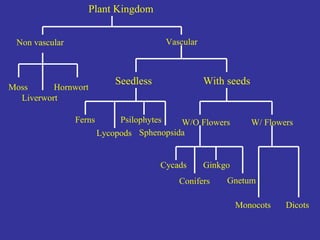
Plants
Seedless
Non vascular
Moss
Liverwort
Hornwort
Vascular
With seeds
Ferns
Lycopods
Psilophytes
Sphenopsida
W/O Flowers W/ Flowers
Cycads Ginkgo
Conifers Gnetum
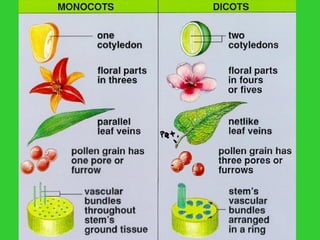
Monocots Dicots
Plant Kingdom
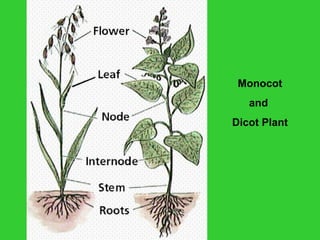
Monocot
and
Dicot Plant
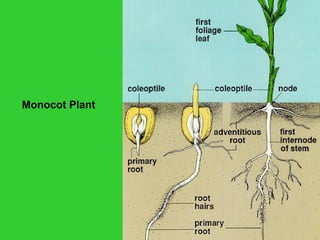
Monocot Plant
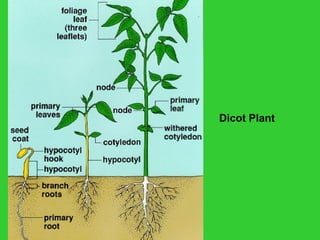
Dicot Plant
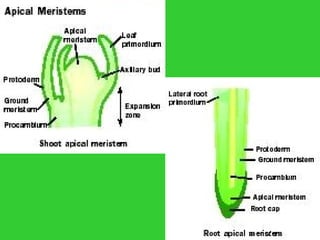
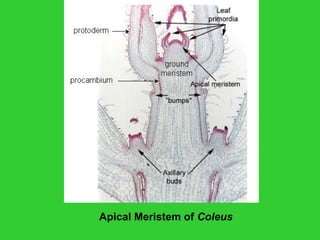
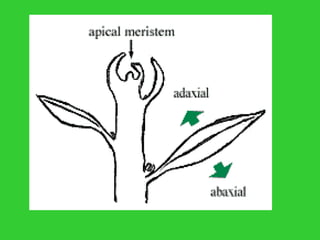
Apical Meristem of Coleus
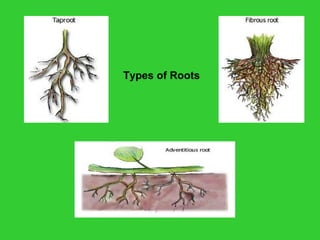
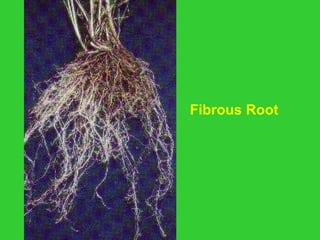
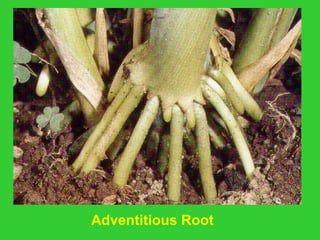
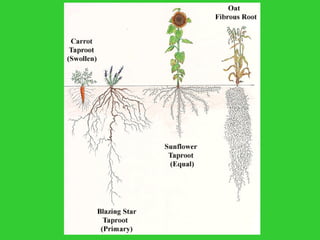
Types of Roots
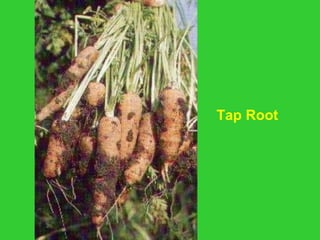
Tap Root
Fibrous Root
Adventitious Root
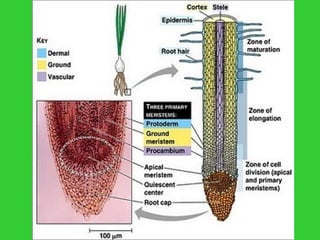
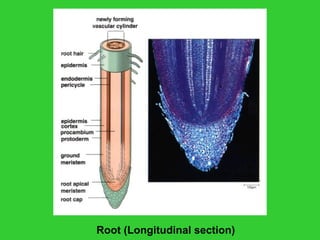
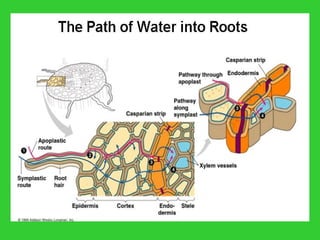
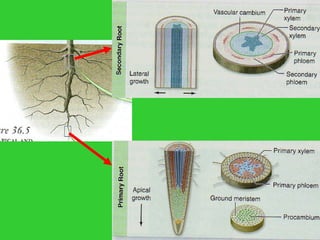
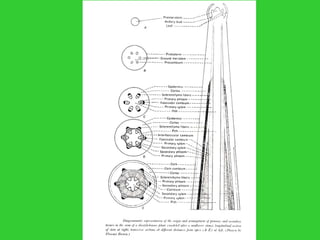
Root (Longitudinal section)
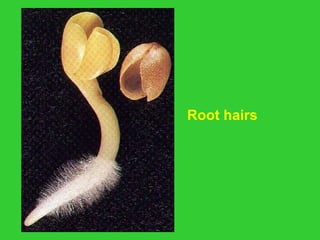
Root hairs
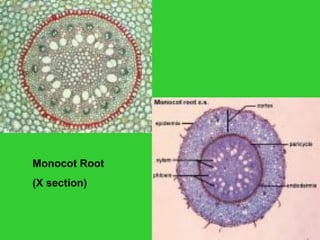
Monocot Root
(X section)
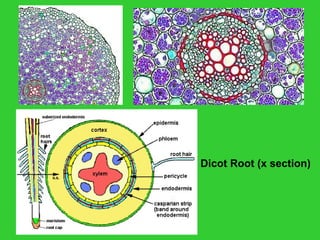
Dicot Root (x section)
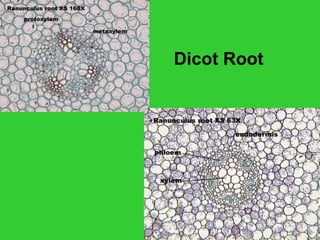
Dicot Root
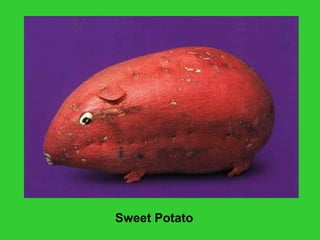
Sweet Potato
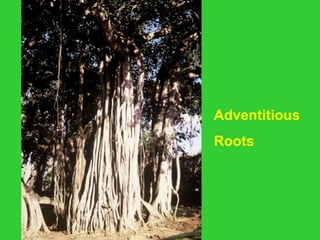
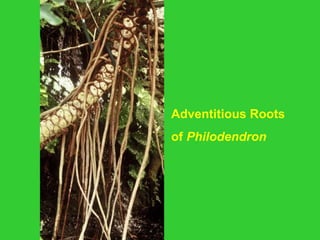
Adventitious
Roots
Adventitious Roots
of Philodendron
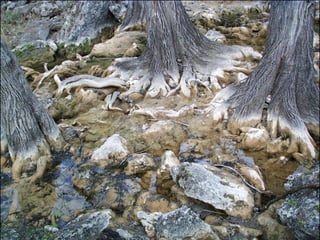
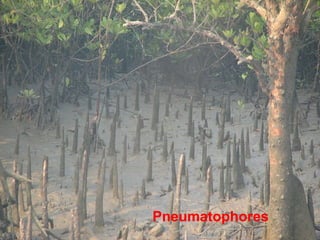
Pneumatophores
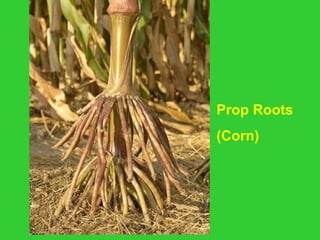
Prop Roots
(Corn)
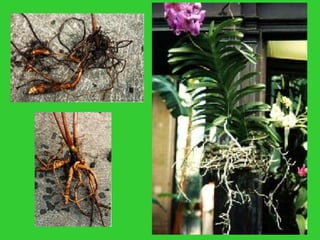
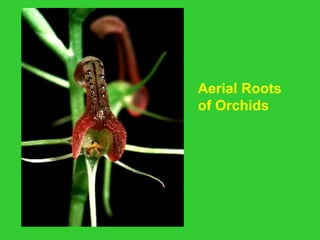
Aerial Roots
of Orchids
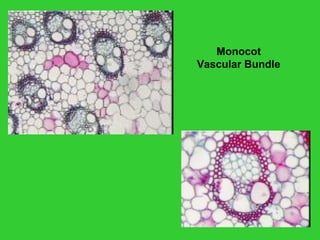
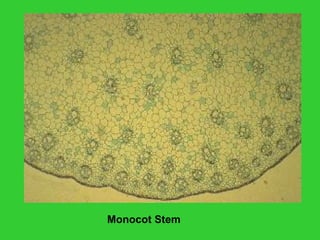
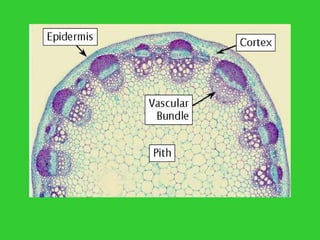
Monocot
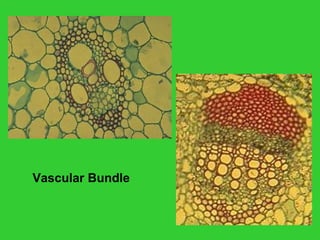
Vascular Bundle
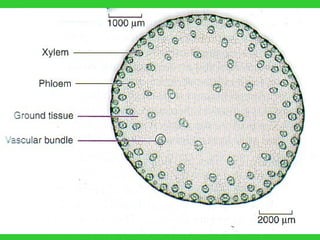
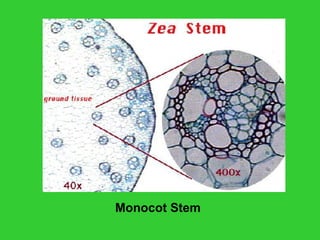
Monocot Stem
Monocot Stem
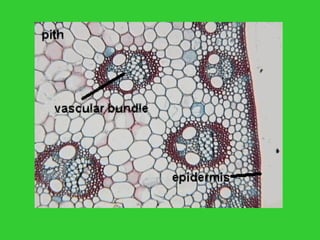
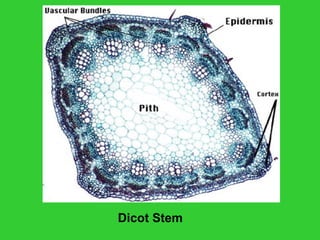
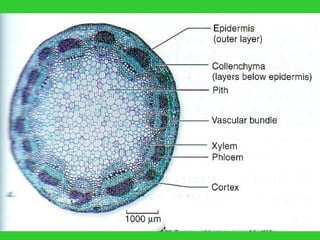
Dicot Stem
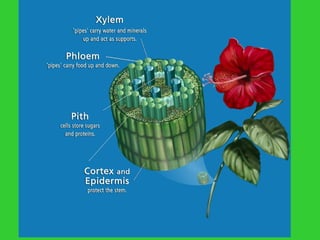
Vascular Bundle
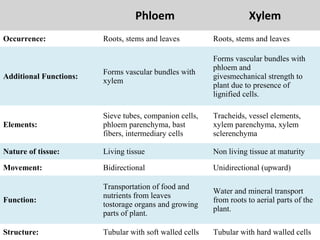
Phloem Xylem
Occurrence: Roots, stems and leaves Roots, stems and leaves
Additional Functions:
Forms vascular bundles with
xylem
Forms vascular bundles with
phloem and
givesmechanical strength to
plant due to presence of
lignified cells.
Elements:
Sieve tubes, companion cells,
phloem parenchyma, bast
fibers, intermediary cells
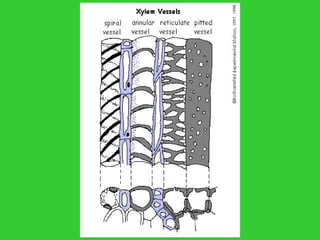
Tracheids, vessel elements,
xylem parenchyma, xylem
sclerenchyma
Nature of tissue: Living tissue Non living tissue at maturity
Movement: Bidirectional Unidirectional (upward)
Function:
Transportation of food and
nutrients from leaves
tostorage organs and growing
parts of plant.
Water and mineral transport
from roots to aerial parts of the
plant.
Structure: Tubular with soft walled cells Tubular with hard walled cells
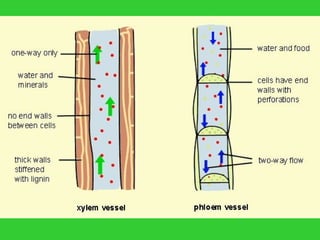
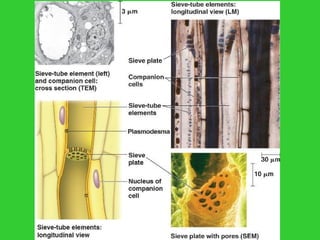
Phloem is made of living  sieve-tube
elements that lack a nucleus, ribosomes, or 
vacuoles; their metabolic functions are 
provided by companion cells.
The end walls between cells (sieve plates) 
have pores for transport of sugars.
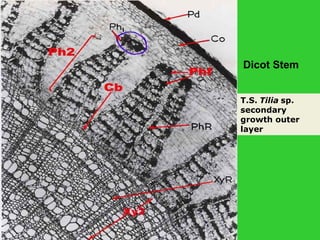
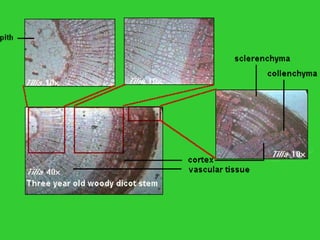
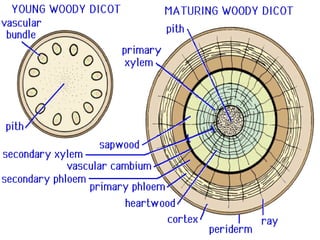
T.S. Tilia sp.
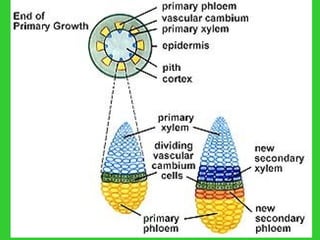
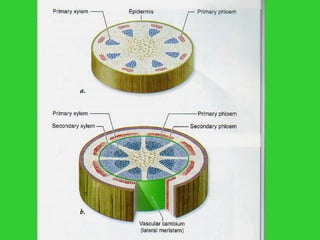
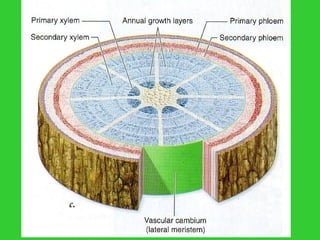
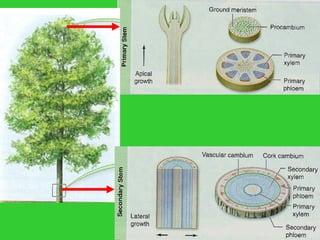
secondary
growth outer
layer
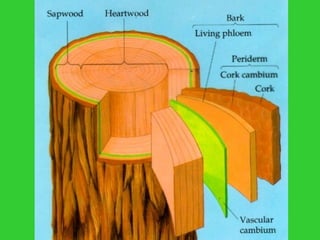
Dicot Stem
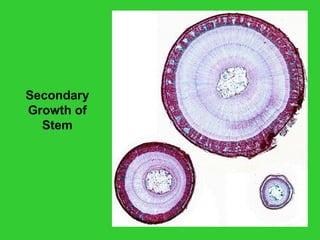
Secondary
Growth of
Stem
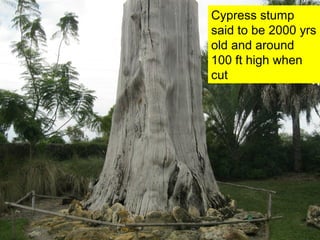
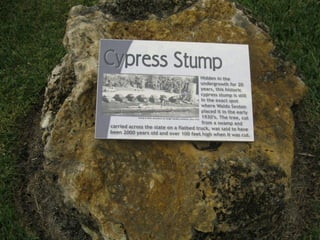
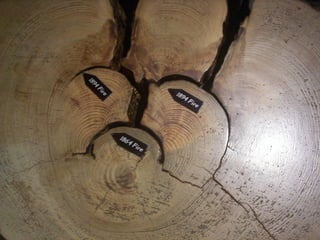
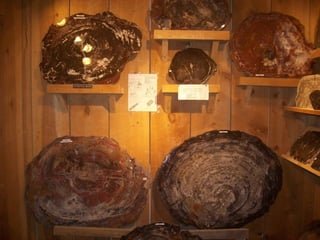
Cypress stump 
said to be 2000 yrs 
old and around 
100 ft high when 
cut 
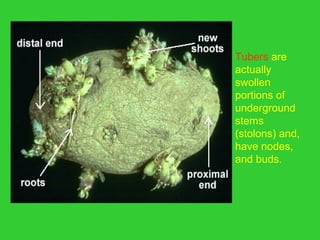
Tubers are 
actually 
swollen 
portions of 
underground 
stems 
(stolons) and, 
have nodes, 
and buds.
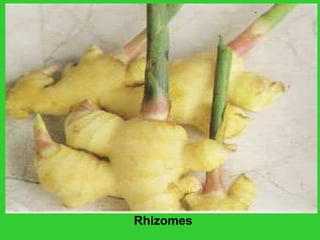
Rhizomes

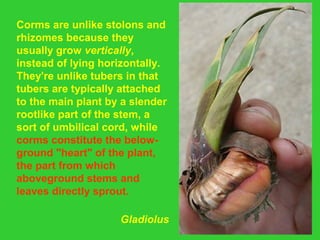
Corms are unlike stolons and
rhizomes because they
usually grow vertically,
instead of lying horizontally.
They're unlike tubers in that
tubers are typically attached
to the main plant by a slender
rootlike part of the stem, a
sort of umbilical cord, while
corms constitute the below-
ground "heart" of the plant,
the part from which
aboveground stems and
leaves directly sprout.
Gladiolus
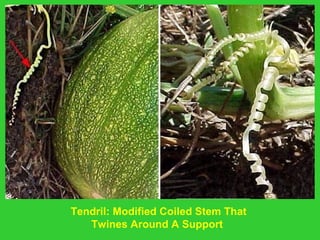
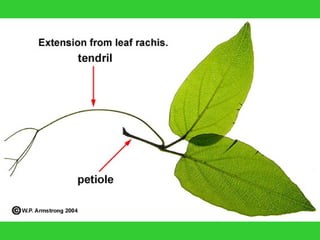
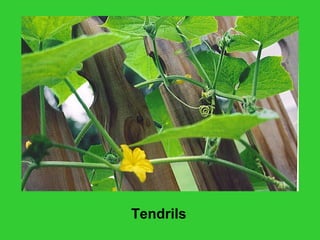
Tendril: Modified Coiled Stem That
Twines Around A Support 
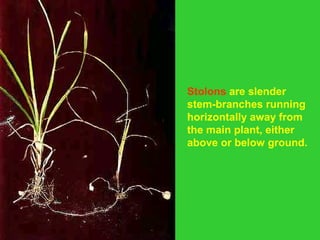
Stolons are slender
stem-branches running
horizontally away from
the main plant, either
above or below ground.
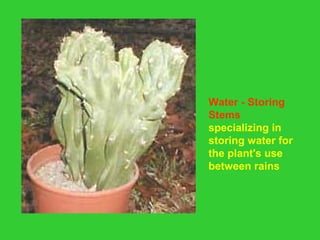
Water - Storing
Stems
specializing in
storing water for
the plant's use
between rains
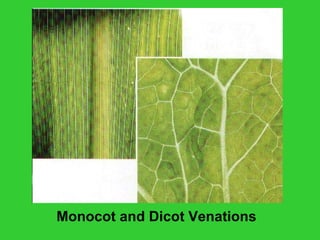
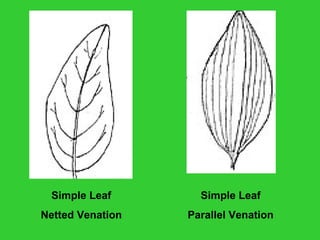
Monocot and Dicot Venations
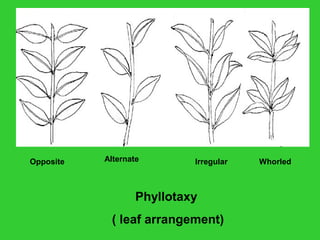
Phyllotaxy
( leaf arrangement)
Opposite Alternate Irregular Whorled
Simple Leaf
Netted Venation
Simple Leaf
Parallel Venation
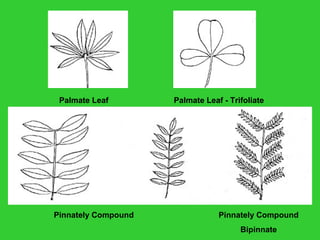
Palmate Leaf Palmate Leaf - Trifoliate
Pinnately Compound Pinnately Compound
Bipinnate
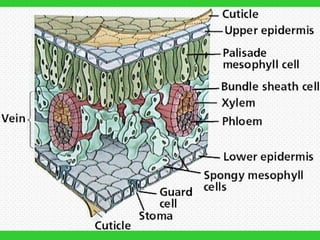
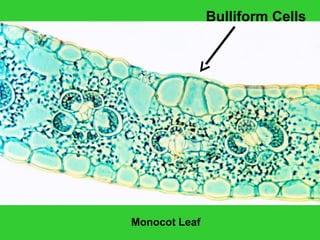
Monocot Leaf
Bulliform Cells
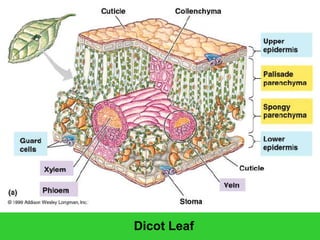
Dicot Leaf
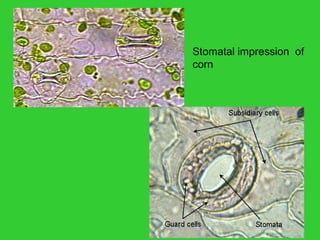
Stomatal impression of
corn
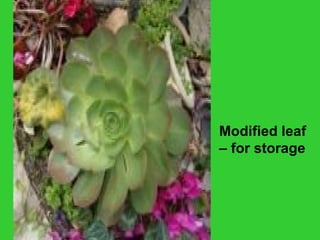
Modified leaf
– for storage
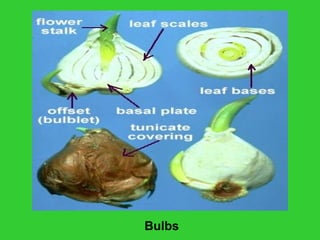
Bulbs
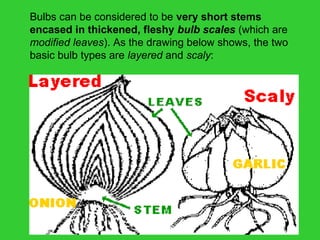
Bulbs can be considered to be very short stems
encased in thickened, fleshy bulb scales (which are
modified leaves). As the drawing below shows, the two
basic bulb types are layered and scaly:
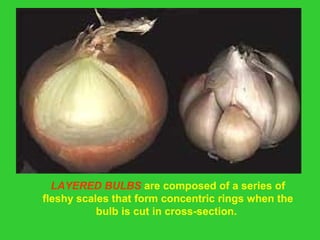
LAYERED BULBS are composed of a series of
fleshy scales that form concentric rings when the
bulb is cut in cross-section.
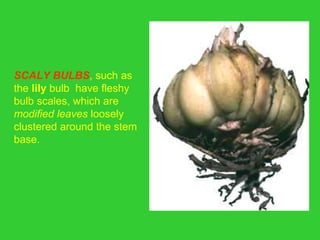
SCALY BULBS, such as
the lily bulb have fleshy
bulb scales, which are
modified leaves loosely
clustered around the stem
base.
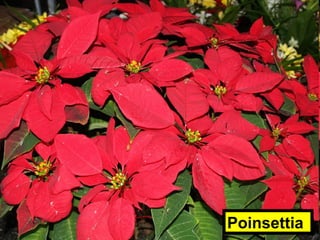
Poinsettia
Bougainvillea
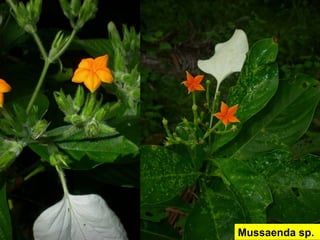
Mussaenda sp.
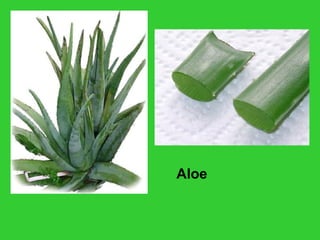
Aloe
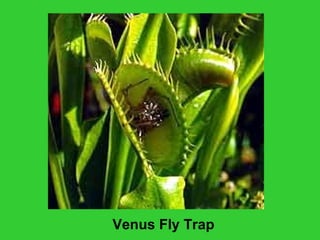
Venus Fly Trap
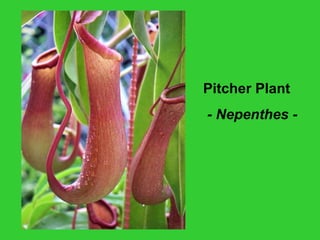
Pitcher Plant
- Nepenthes -
Tendrils
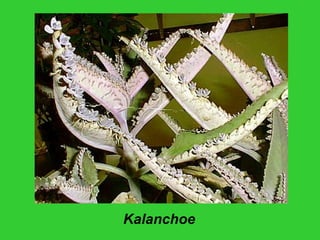
Kalanchoe
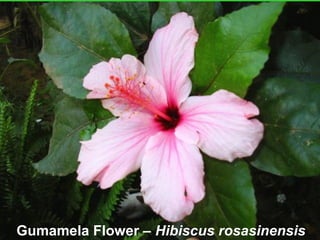
Gumamela Flower – Hibiscus rosasinensis
Cauliflower
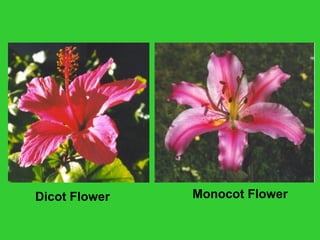
Dicot Flower Monocot Flower
Rosa sp.
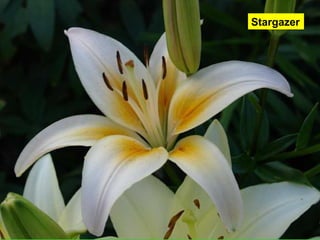
Stargazer
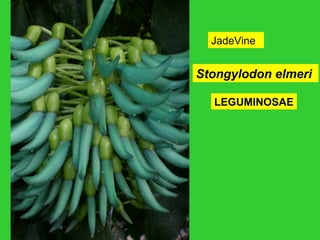
JadeVine
Stongylodon elmeri
LEGUMINOSAE
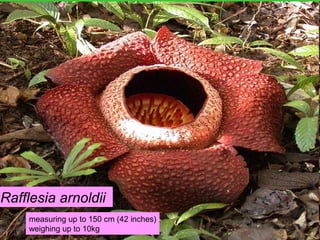
Rafflesia arnoldii
measuring up to 150 cm (42 inches)
weighing up to 10kg
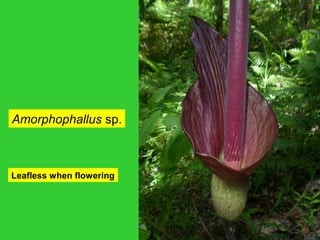
Leafless when flowering
Amorphophallus sp.
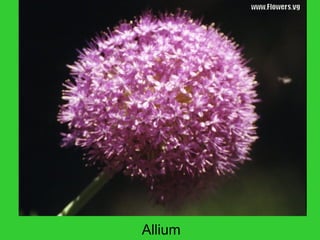
Allium
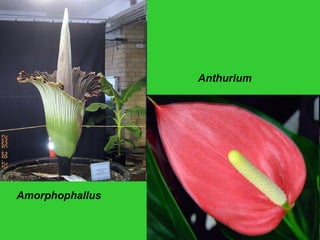
Amorphophallus
Anthurium
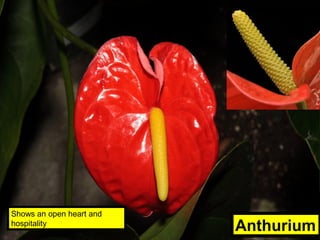
Anthurium
Shows an open heart and
hospitality
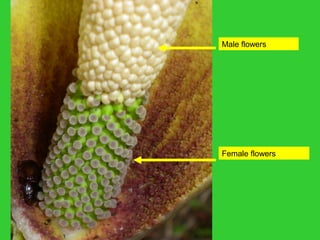
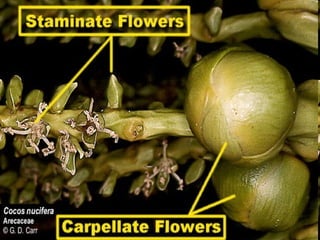
Male flowers
Female flowers
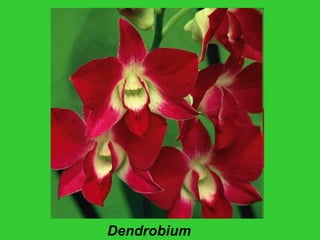
Dendrobium
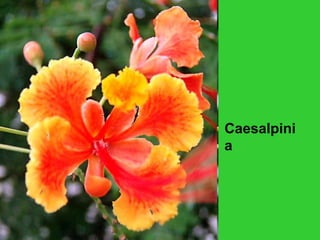
Caesalpini
a
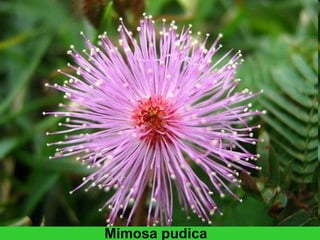
Mimosa pudica
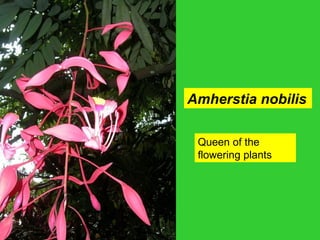
Amherstia nobilis
Queen of the
flowering plants
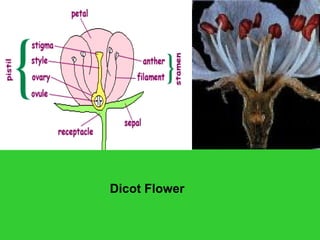
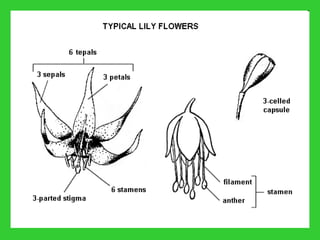
Dicot Flower
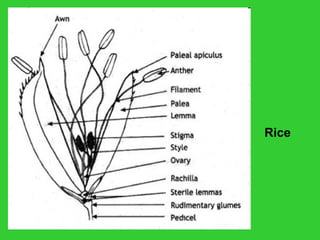
Rice
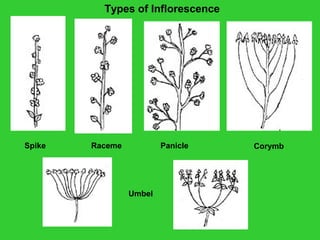
Types of Inflorescence
Raceme PanicleSpike
Umbel
Corymb
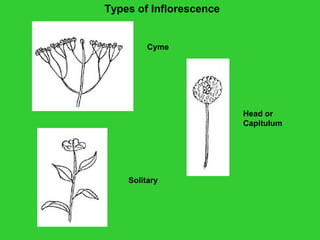
Types of Inflorescence
Solitary
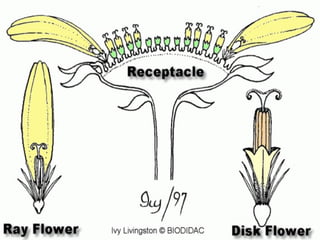
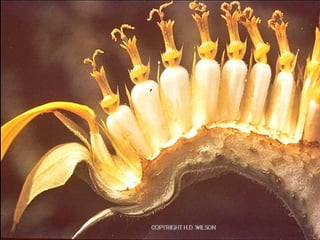
Head or
Capitulum
Cyme
Sunflower
Heliathus annuus
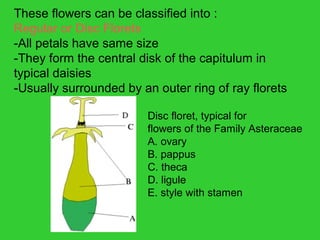
These flowers can be classified into :
Regular or Disc Florets
-All petals have same size
-They form the central disk of the capitulum in
typical daisies
-Usually surrounded by an outer ring of ray florets
Disc floret, typical for
flowers of the Family Asteraceae
A. ovary
B. pappus
C. theca
D. ligule
E. style with stamen
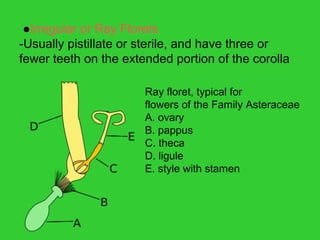
●Irregular or Ray Florets
-Usually pistillate or sterile, and have three or
fewer teeth on the extended portion of the corolla
Ray floret, typical for
flowers of the Family Asteraceae
A. ovary
B. pappus
C. theca
D. ligule
E. style with stamen
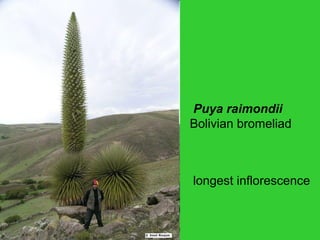
Puya raimondii
Bolivian bromeliad
longest inflorescence
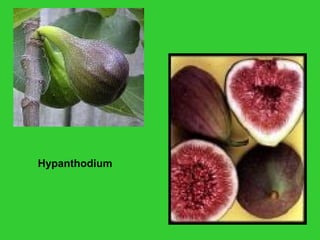
Hypanthodium
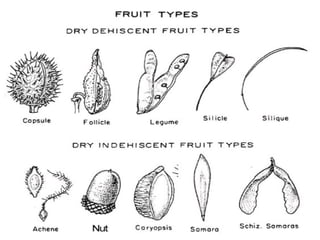
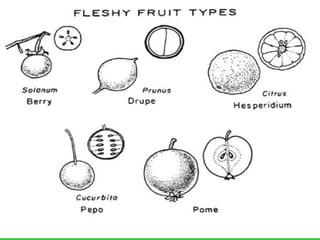
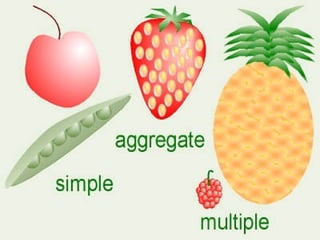
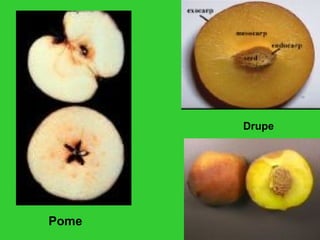
Fruits
Pome
Drupe
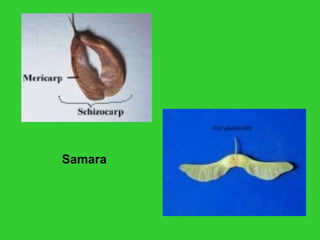
Samara
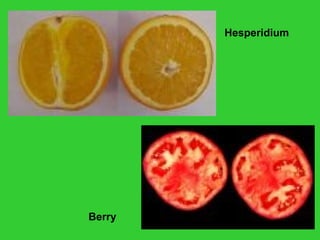
Hesperidium
Berry
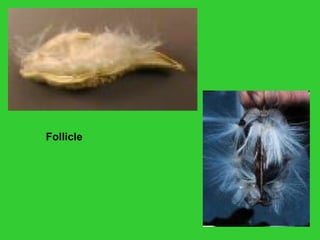
Follicle
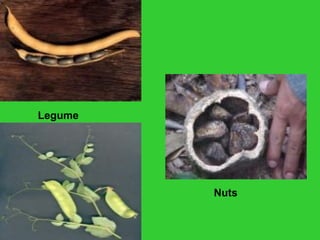
Legume
Nuts
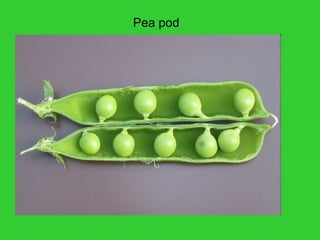
Pea pod
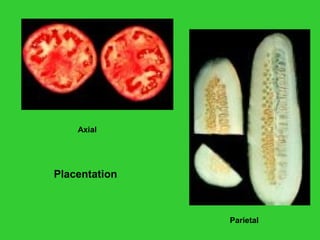
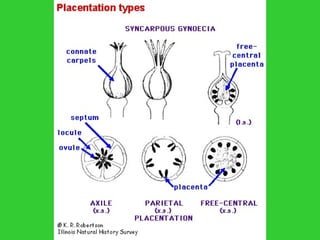
Placentation
Axial
Parietal
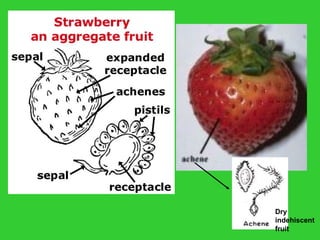
Dry
indehiscent
fruit
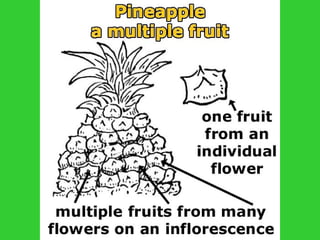
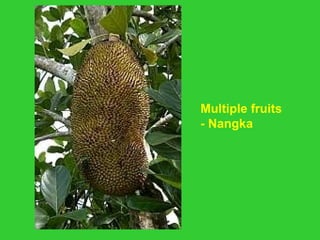
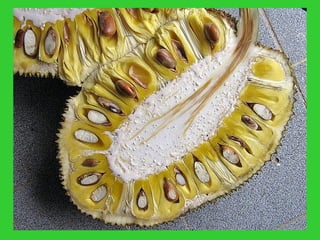
Multiple fruits
- Nangka
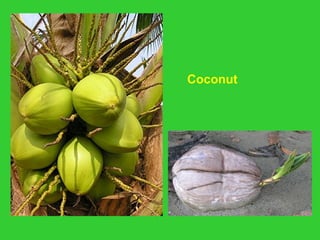
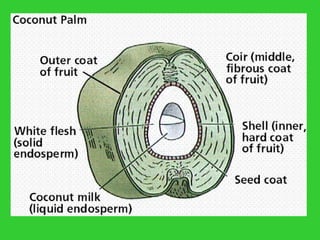
Coconut
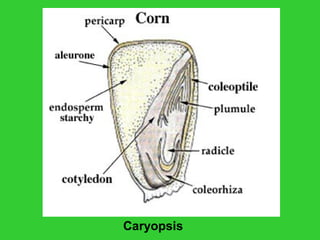
Caryopsis
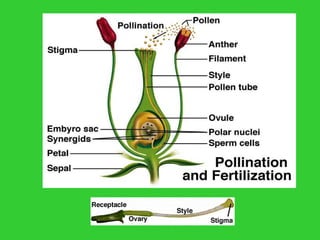
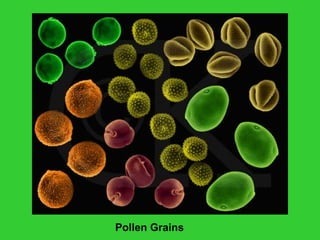
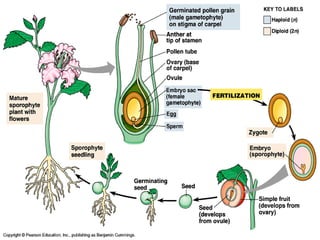
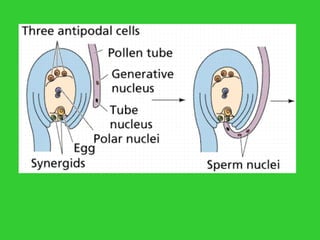
Pollen Grains
Male gametophyte
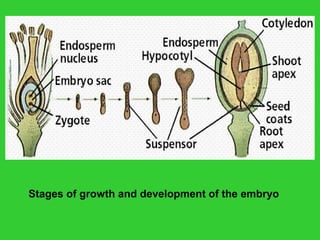
Stages of growth and development of the embryo
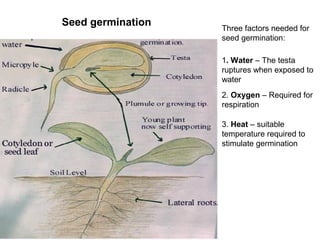
1. Water – The testa
ruptures when exposed to
water
2. Oxygen – Required for
respiration
3. Heat – suitable
temperature required to
stimulate germination
Seed germination Three factors needed for
seed germination:
Thank You

Plant morphology