PINNER PYRIMIDINE SYNTHESIS
Presented by:
Jacob Thon Bior
ND0120003
M. Pharm 1st year.
Dept. Pharmaceutical Chemistry.
KLE College of Pharmacy, Belgavi.
1
Department Of Pharmaceutical Chemistry
CONTENT:
•Introduction
•General Reaction
•Mechanism
•Stepwise explanation
•Applications.
•Reference
2
Department Of Pharmaceutical Chemistry
INTRODUCTION
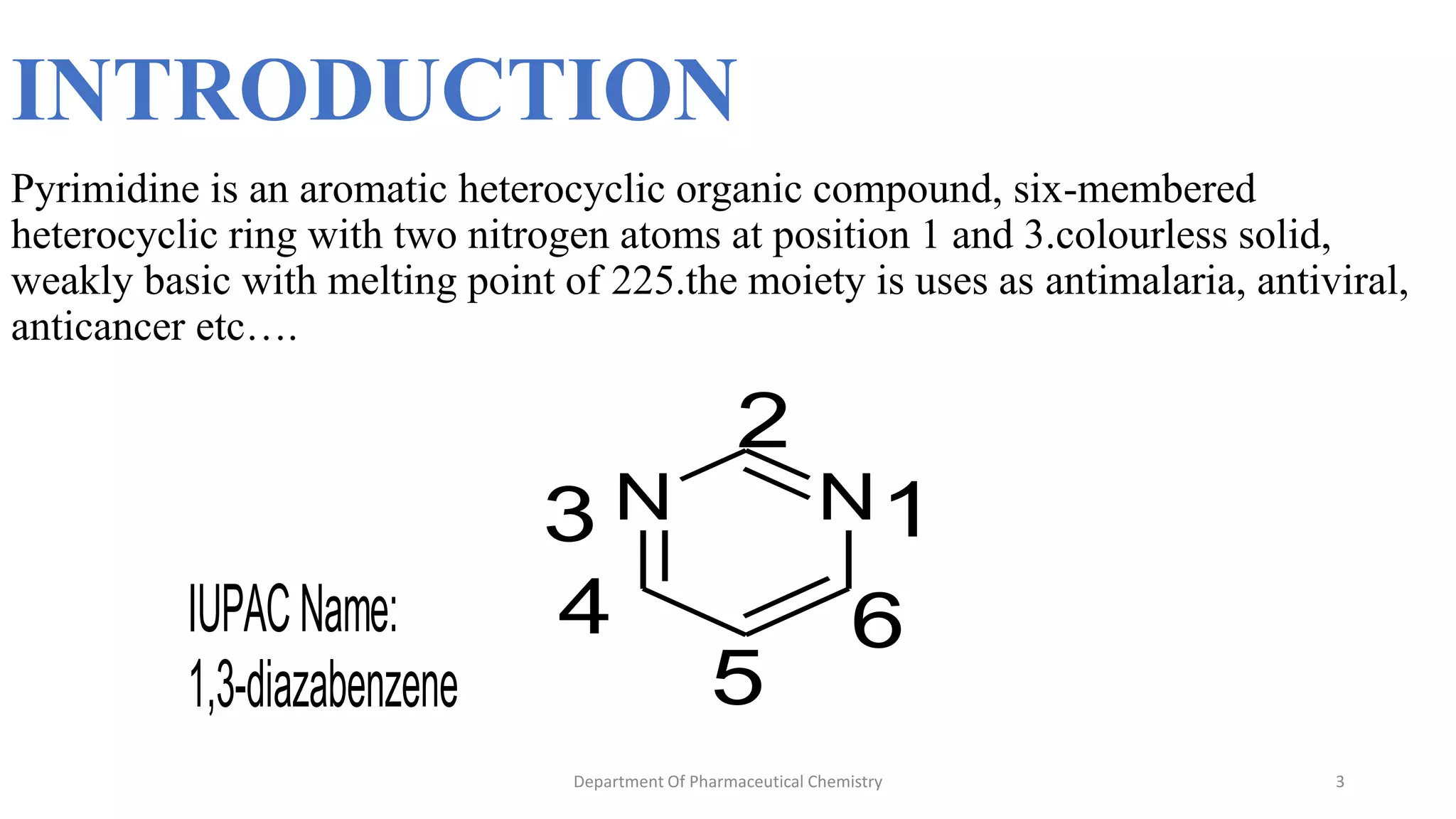
Pyrimidine is an aromatic heterocyclic organic compound, six-membered
heterocyclic ring with two nitrogen atoms at position 1 and 3.colourless solid,
weakly basic with melting point of 225.the moiety is uses as antimalaria, antiviral,
anticancer etc….
3
Department Of Pharmaceutical Chemistry
N
N 1
2
3
4
5
6
IUPACName:
1,3-diazabenzene
General Reaction:
Pinner Pyrimidine reaction is a strong acid- promoted condensation between non-N-
substituted amidine and β-keto ester ( β-diketone) to form a type of nitrogenous
heterocyclic moiety called pyrimidine.
this reaction involves cyclization reaction of amidines with β- diketone molecule in
present of acid as catalyst forming pyrimidine.the most common pyrimidine synthesis
involves the combination of a 1,3-dicarbonyl component with either urea or
amidines/guanidine.
4
Department Of Pharmaceutical Chemistry
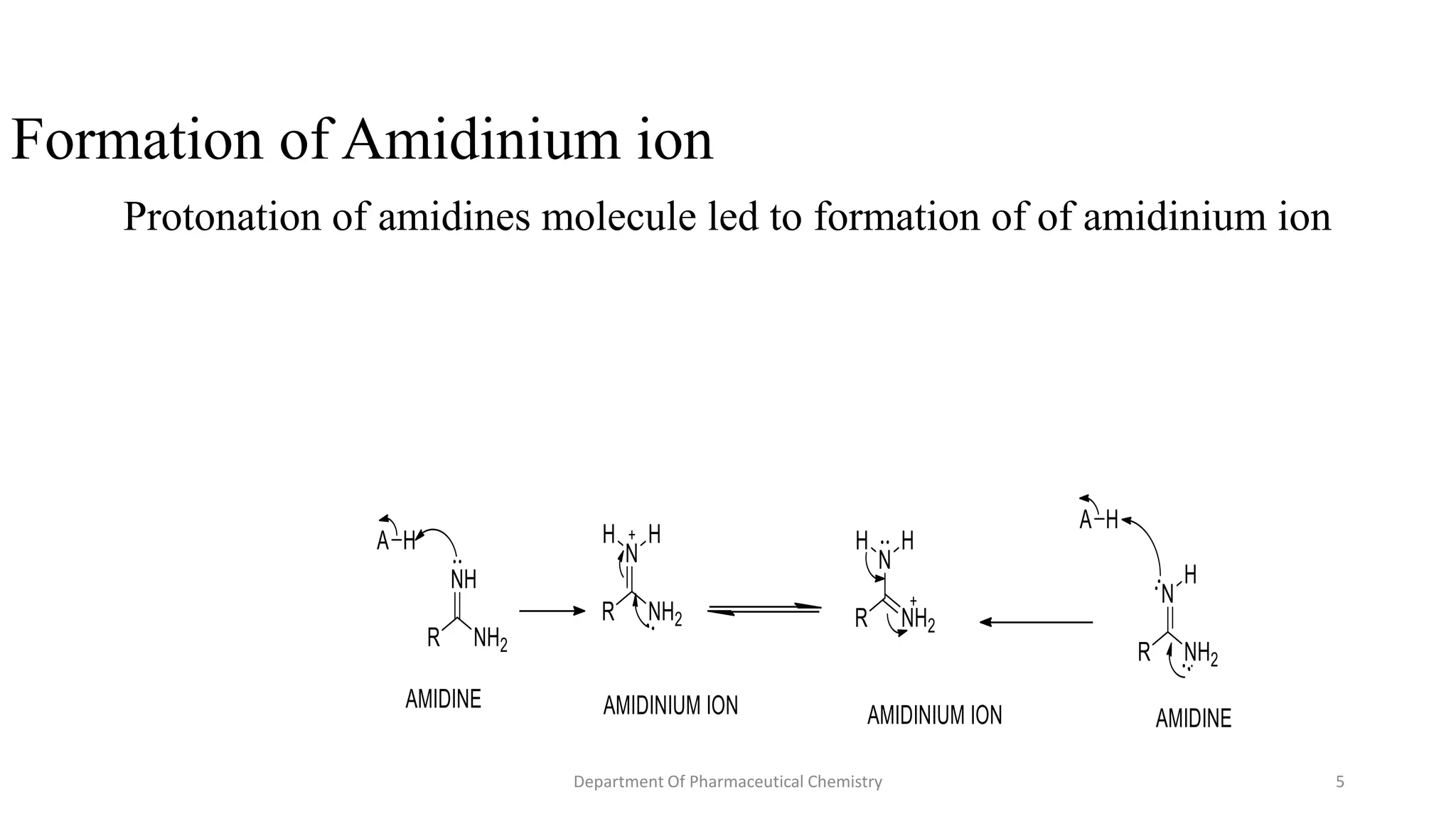
Formation of Amidinium ion
Protonation of amidines molecule led to formation of of amidinium ion
5
Department Of Pharmaceutical Chemistry
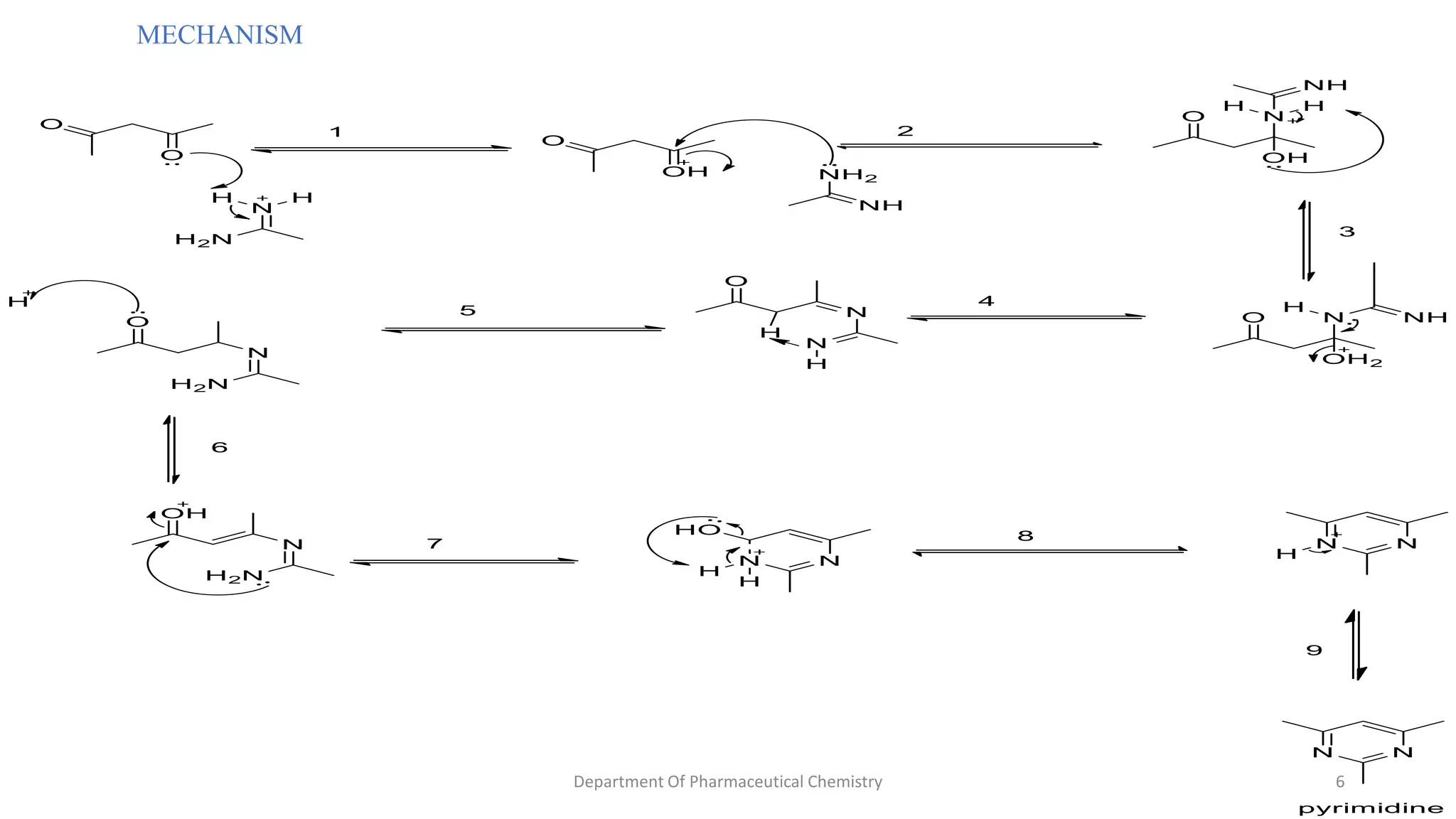
MECHANISM
6
Department Of Pharmaceutical Chemistry
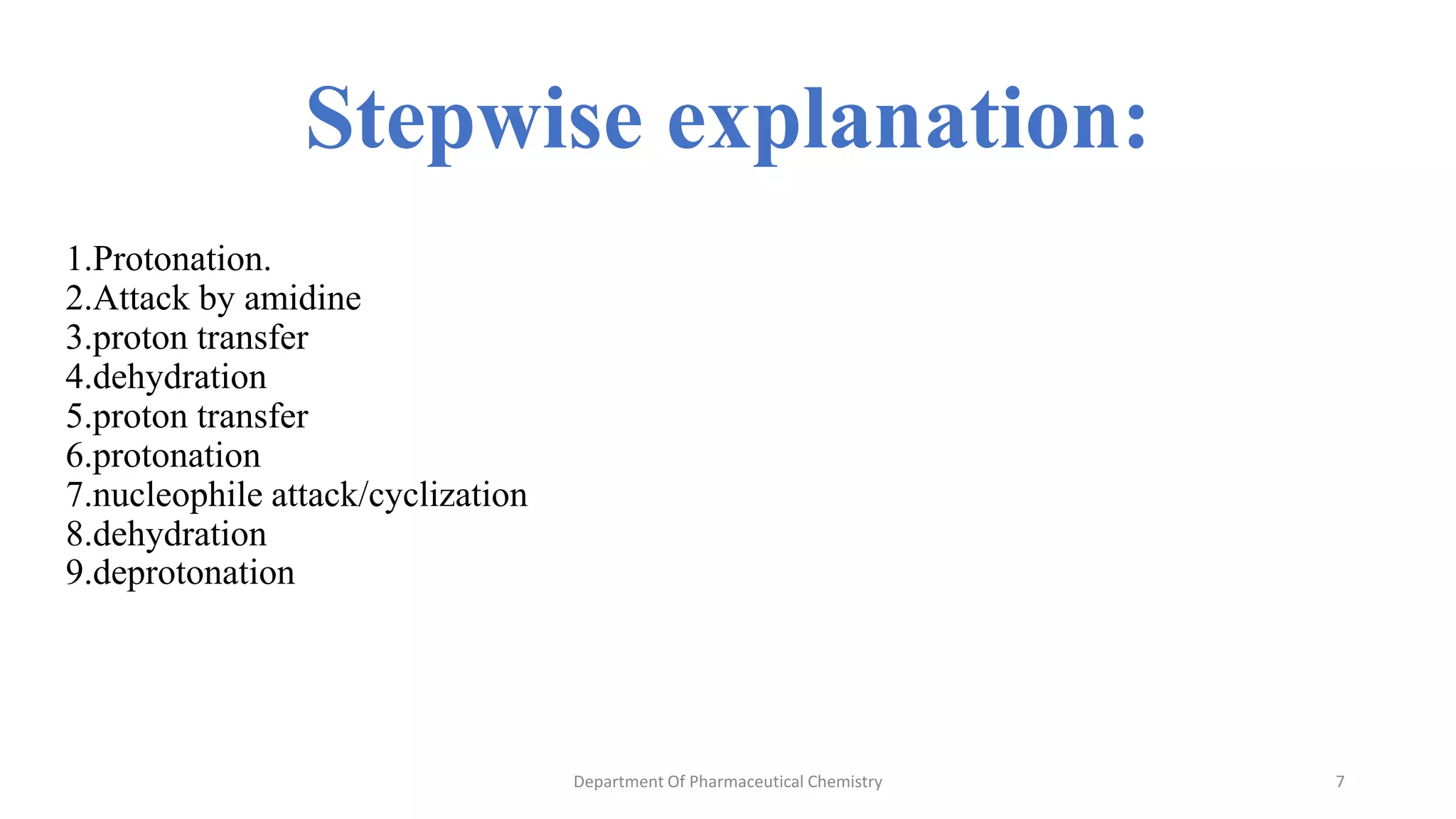
Stepwise explanation:
1.Protonation.
2.Attack by amidine
3.proton transfer
4.dehydration
5.proton transfer
6.protonation
7.nucleophile attack/cyclization
8.dehydration
9.deprotonation
Department Of Pharmaceutical Chemistry 7
Drugs with Pyrimidine moiety
Department Of Pharmaceutical Chemistry 8
APPLICATION
1. Pyrimidine derivatives have been prepared via this reaction procedure amidines react with 1,3-
dicarbonyl compound to form 2,4,6- trisubstituted pyrimidine.
9
Department Of Pharmaceutical Chemistry
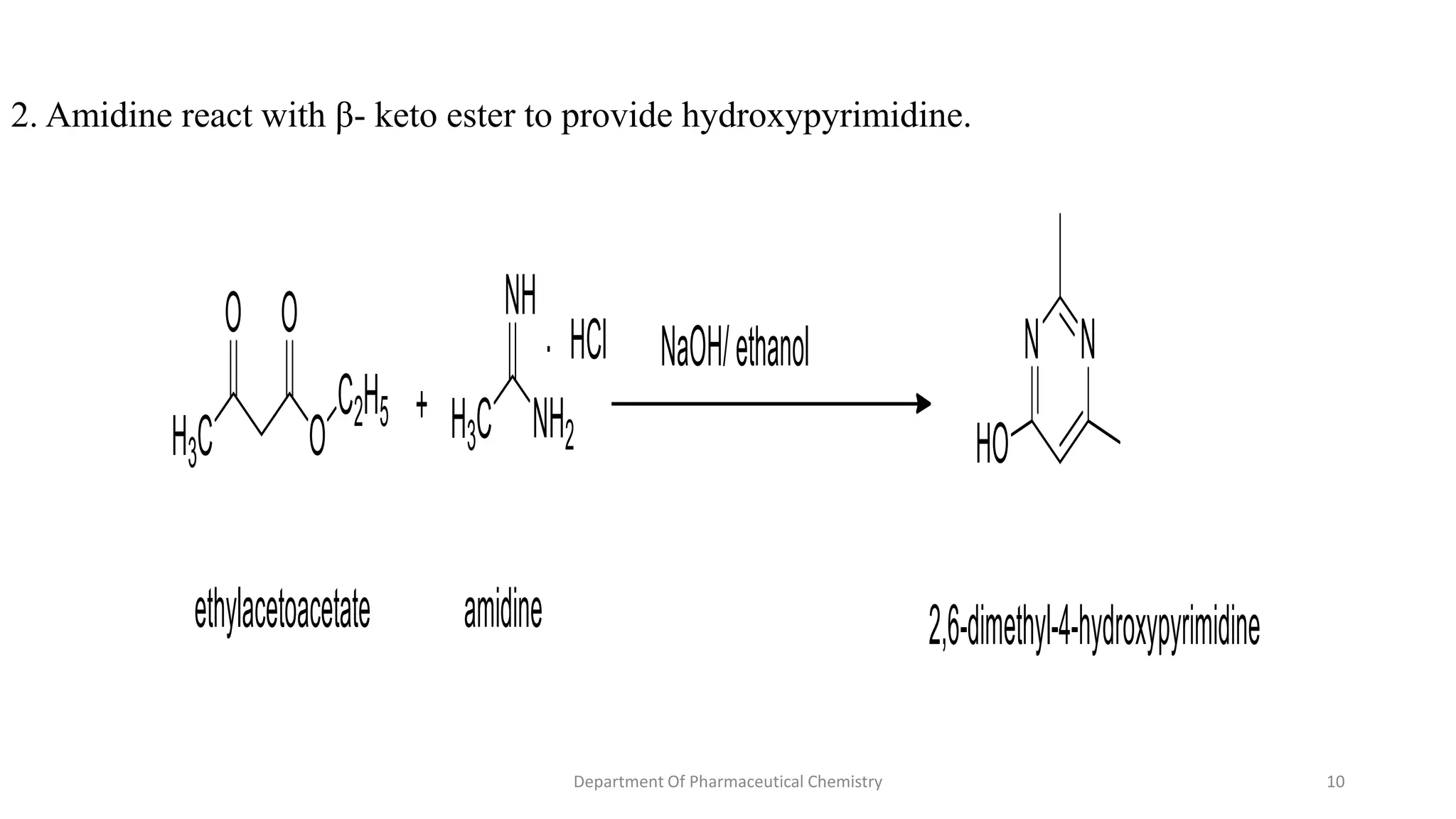
2. Amidine react with β- keto ester to provide hydroxypyrimidine.
Department Of Pharmaceutical Chemistry 10
Reference:
Organic Chemistry of Natural Products Vol 1 Gurdeep R.Chatwal Edited by M.
Arora.
Page number 276.
11
Department Of Pharmaceutical Chemistry

Pinner pyrimidine synthesis

  • 1.
    PINNER PYRIMIDINE SYNTHESIS Presentedby: Jacob Thon Bior ND0120003 M. Pharm 1st year. Dept. Pharmaceutical Chemistry. KLE College of Pharmacy, Belgavi. 1 Department Of Pharmaceutical Chemistry
  • 2.
  • 3.
    INTRODUCTION Pyrimidine is anaromatic heterocyclic organic compound, six-membered heterocyclic ring with two nitrogen atoms at position 1 and 3.colourless solid, weakly basic with melting point of 225.the moiety is uses as antimalaria, antiviral, anticancer etc…. 3 Department Of Pharmaceutical Chemistry N N 1 2 3 4 5 6 IUPACName: 1,3-diazabenzene
  • 4.
    General Reaction: Pinner Pyrimidinereaction is a strong acid- promoted condensation between non-N- substituted amidine and β-keto ester ( β-diketone) to form a type of nitrogenous heterocyclic moiety called pyrimidine. this reaction involves cyclization reaction of amidines with β- diketone molecule in present of acid as catalyst forming pyrimidine.the most common pyrimidine synthesis involves the combination of a 1,3-dicarbonyl component with either urea or amidines/guanidine. 4 Department Of Pharmaceutical Chemistry
  • 5.
    Formation of Amidiniumion Protonation of amidines molecule led to formation of of amidinium ion 5 Department Of Pharmaceutical Chemistry
  • 6.
  • 7.
    Stepwise explanation: 1.Protonation. 2.Attack byamidine 3.proton transfer 4.dehydration 5.proton transfer 6.protonation 7.nucleophile attack/cyclization 8.dehydration 9.deprotonation Department Of Pharmaceutical Chemistry 7
  • 8.
    Drugs with Pyrimidinemoiety Department Of Pharmaceutical Chemistry 8
  • 9.
    APPLICATION 1. Pyrimidine derivativeshave been prepared via this reaction procedure amidines react with 1,3- dicarbonyl compound to form 2,4,6- trisubstituted pyrimidine. 9 Department Of Pharmaceutical Chemistry
  • 10.
    2. Amidine reactwith β- keto ester to provide hydroxypyrimidine. Department Of Pharmaceutical Chemistry 10
  • 11.
    Reference: Organic Chemistry ofNatural Products Vol 1 Gurdeep R.Chatwal Edited by M. Arora. Page number 276. 11 Department Of Pharmaceutical Chemistry