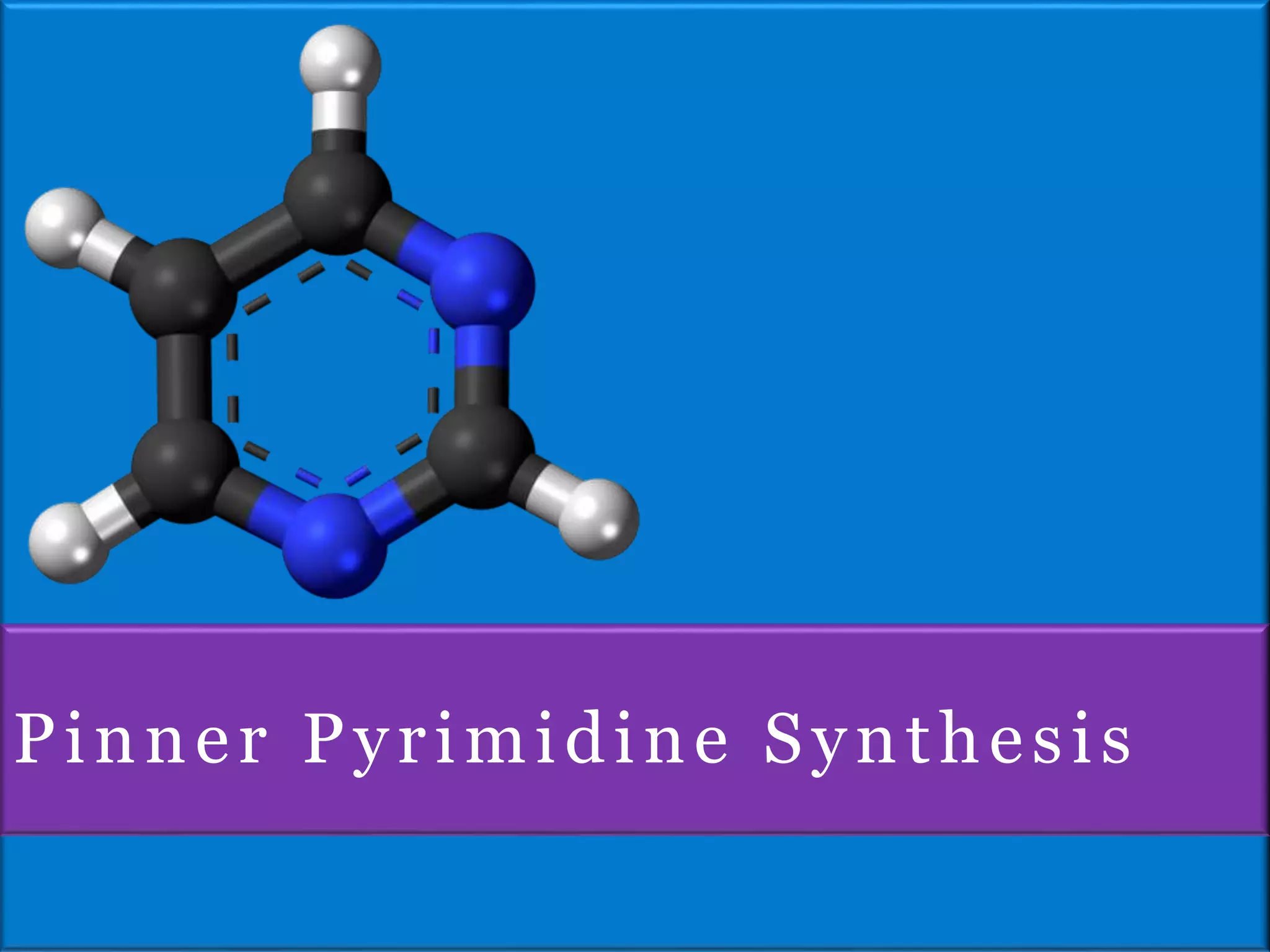
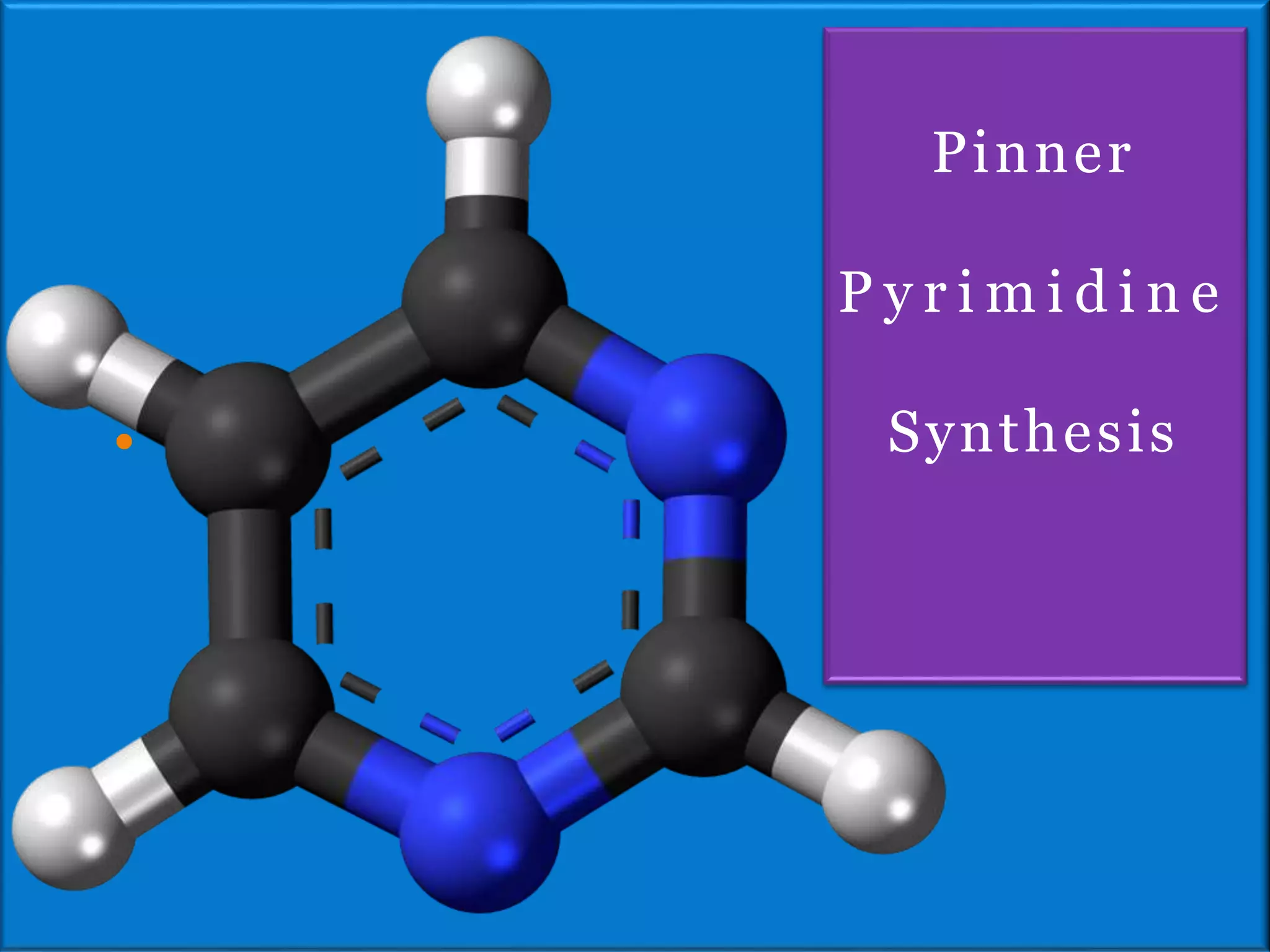
Pinner Pyrimidine Synthesis

Pinner
P y r i m i d i n e
Synthesis
The condensation of 1,3-dicarbonyl compounds with amidines catalyzed by
acids or bases to give pyrimidine derivatives is regarded as the Pinner
pyrimidine synthesis
1,3-dicarbonyl
compounds
amidines
acids or
bases
Pyrimidine derivatives
1 2
3
P i n n e r P y r i m i d i n e S y n t h e s i s
D e s c r i p t i o n
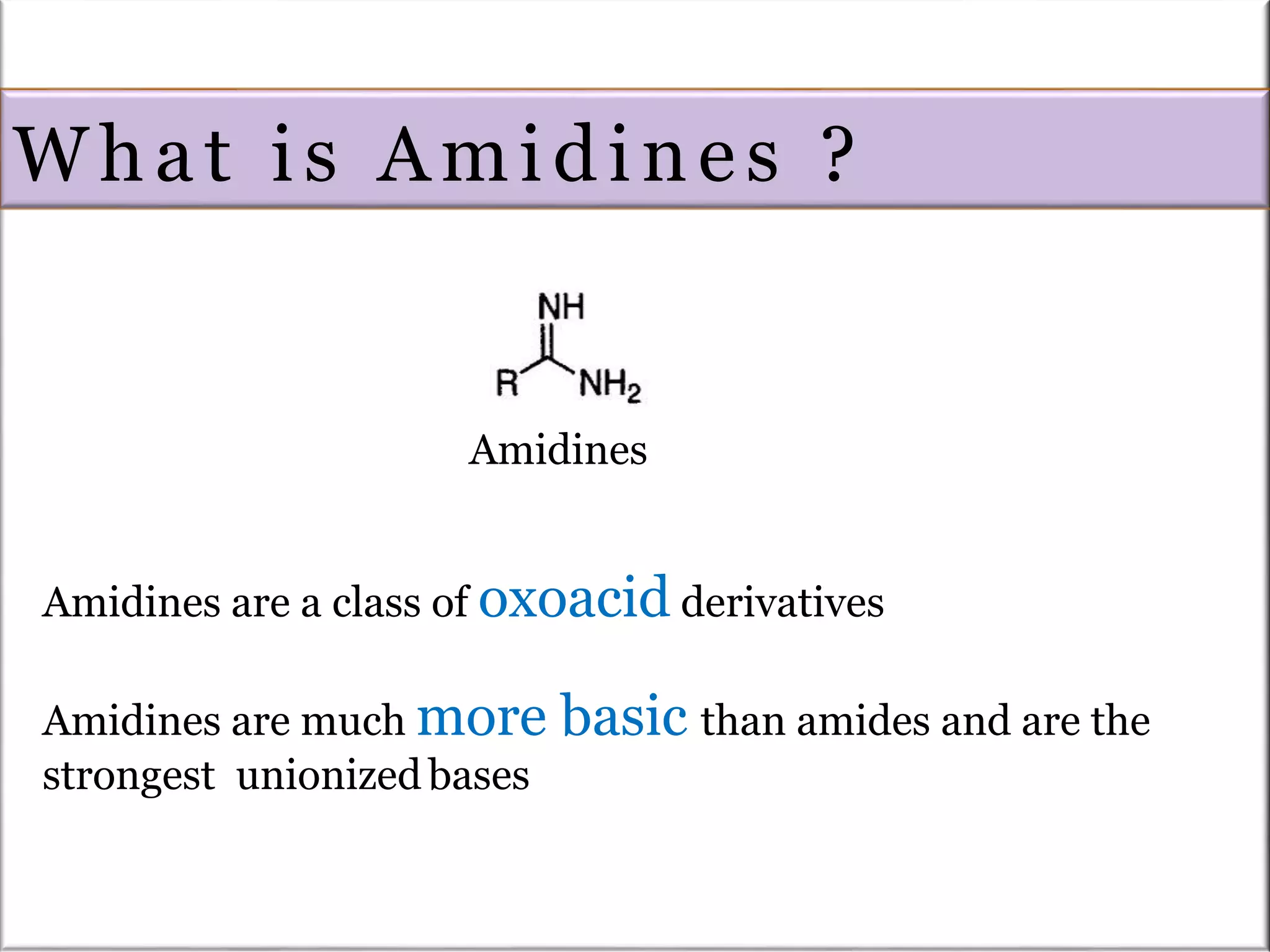
What is Amidines ?
Amidines
Amidines are a class of oxoacid derivatives
Amidines are much more basic than amides and are the
strongest unionizedbases
Protonation occurs onto the sp² hybridized nitrogen. This
occurs because the positive charge can be delocalized onto both
nitrogen atoms. The resulting cationic species is known as
a amidinium ion
Amidinium ionAmidines Amidines
An oxoacid is an acid that contains hydrogen, oxygen, and at
least one other element, with at least one hydrogen atom bond
to oxygen that can dissociate to produce the H+ cation and
the anion of the acid
The condensation of amidine derivative with other β-keto esters, malonic esters,
and β -diketones proceeded similarly.
In the 1880s, Pinner found that the amidine derivative reacted with acetoacetic
ester to give 2-substituted-6-hydroxy-4-methylpyrimidine.
amidine
derivative
Acetoacetic ester 2-substituted-6-hydroxy-
4-methylpyrimidine
1 32
4
5
6
β-keto esters malonic esters β -diketones
H i s t o r i c a l P e r s p e c t i v e
The condensation of acetylacetone, methyl acetoacetate, or dimethyl malonate
with acetamidine has been studied by Katritzky et al. and the reaction
mechanisms for these processes have been proposed by these authors.’
AcetamidineMethyl acetoacetate
condensationHCl
2,6-dimethyl-4-hydroxylpyrimidine
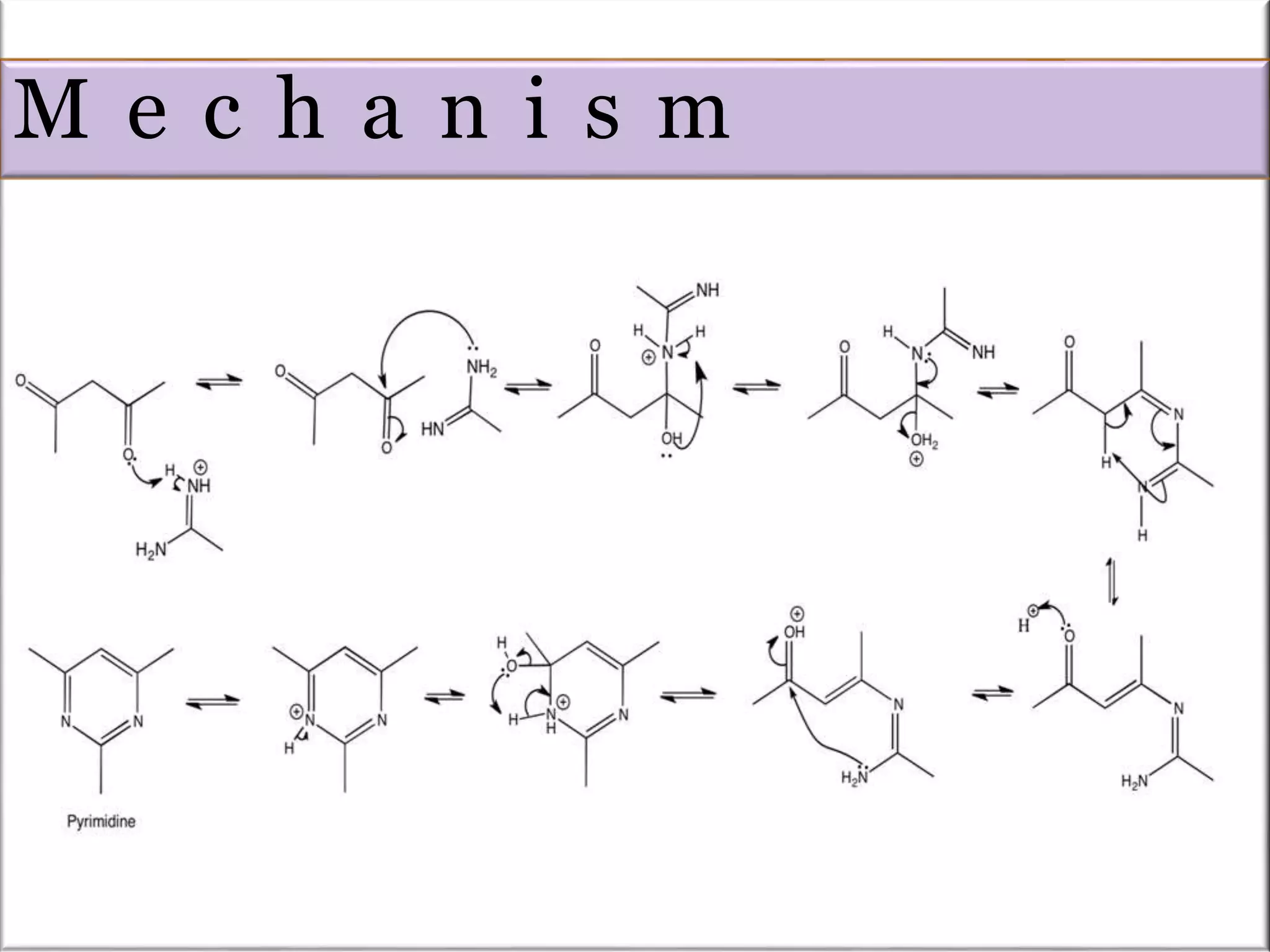
M e c h a n i s m
M e c h a n i s m
Many pyrimidine derivatives have been prepared via the Pinner procedure.
Amidines react with 1,3-dicarbonyl compounds to form 2,4,6-trisubstituted
pyrimidines
AmidinesAcetylacetone
2,4,6-trimethyl
pyrimidines
S y n t h e t i c U t i l i t y
Amidines react with β -keto esters to provide hydroxypyrimidines. The synthesis of
the 2,6-dimethyl-4-hydroxylpyrimidine has been improved dramatically by
combining Pinner's procedure with that of Donleavy et al. for the synthesis of 6-
methyluracil.
Ethyl acetoacetate
Amidines
Placed in desiccator
Over H2SO4 2,6-dimethyl-4-
hydroxylpyrimidine
S y n t h e t i c U t i l i t y
The 1,3-dicarbonyl components can be replaced by an en0l ether, which can be
prepared by Claisen condensation from an ortho ester RC(OR′)3 and a
reactive methylene compound [CH2].
En0l ether
RCN + 3 R′OH → RC(OR′)3 + NH3
Orthoesters can be prepared by the Pinner reaction, in which nitriles react
with alcohols under acid catalysis:
Nitriles alcohols Orthoesters
Orthoesters
Claisen condensation
+ CH2
methylene
compound En0l ether
Amidines
2-methyl-6-hydroxy-
5-nitrile pyrimidine
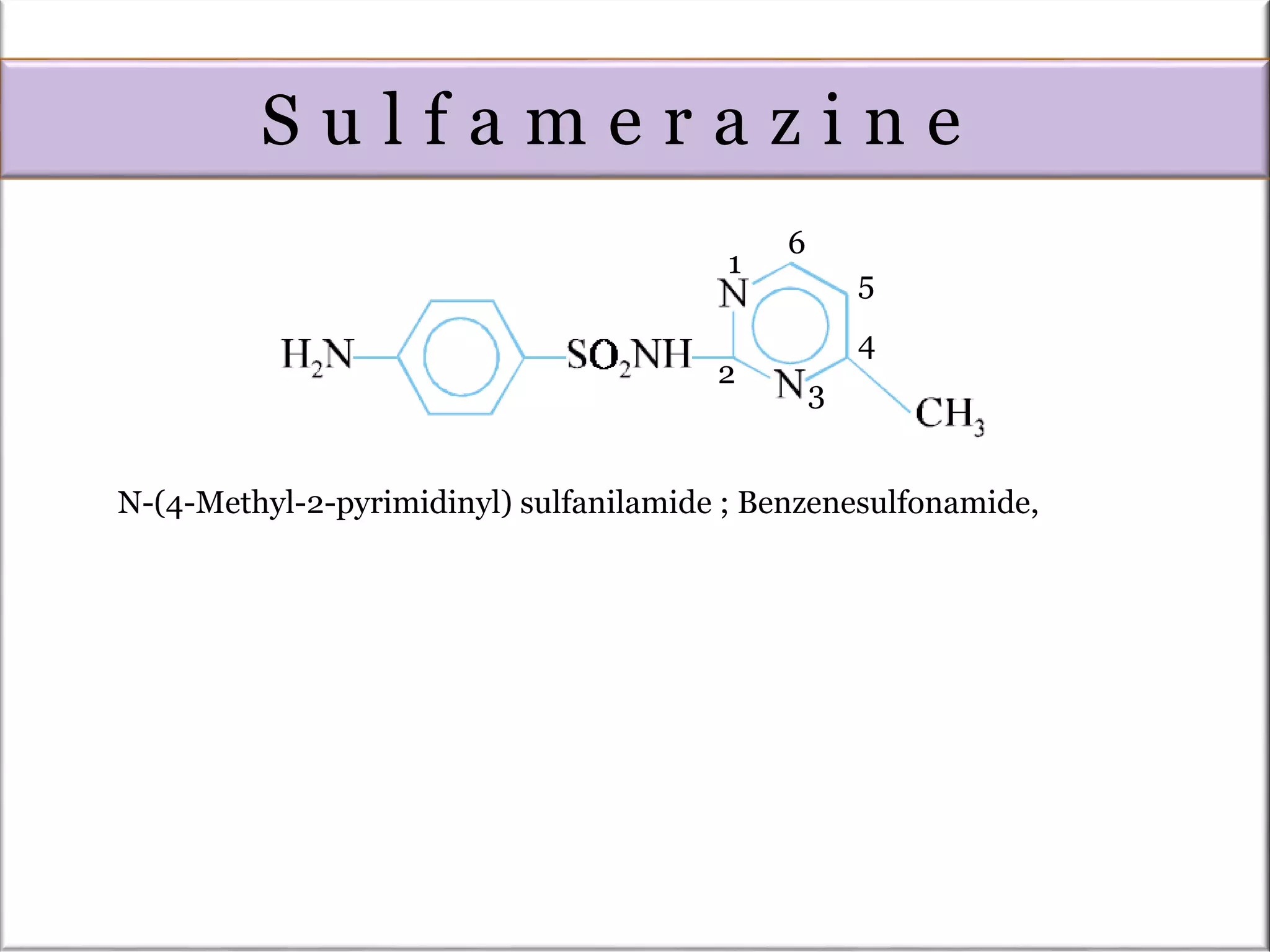
N-(4-Methyl-2-pyrimidinyl) sulfanilamide ; Benzenesulfonamide,
1
2
3
4
5
6
S u l f a m e r a z i n e
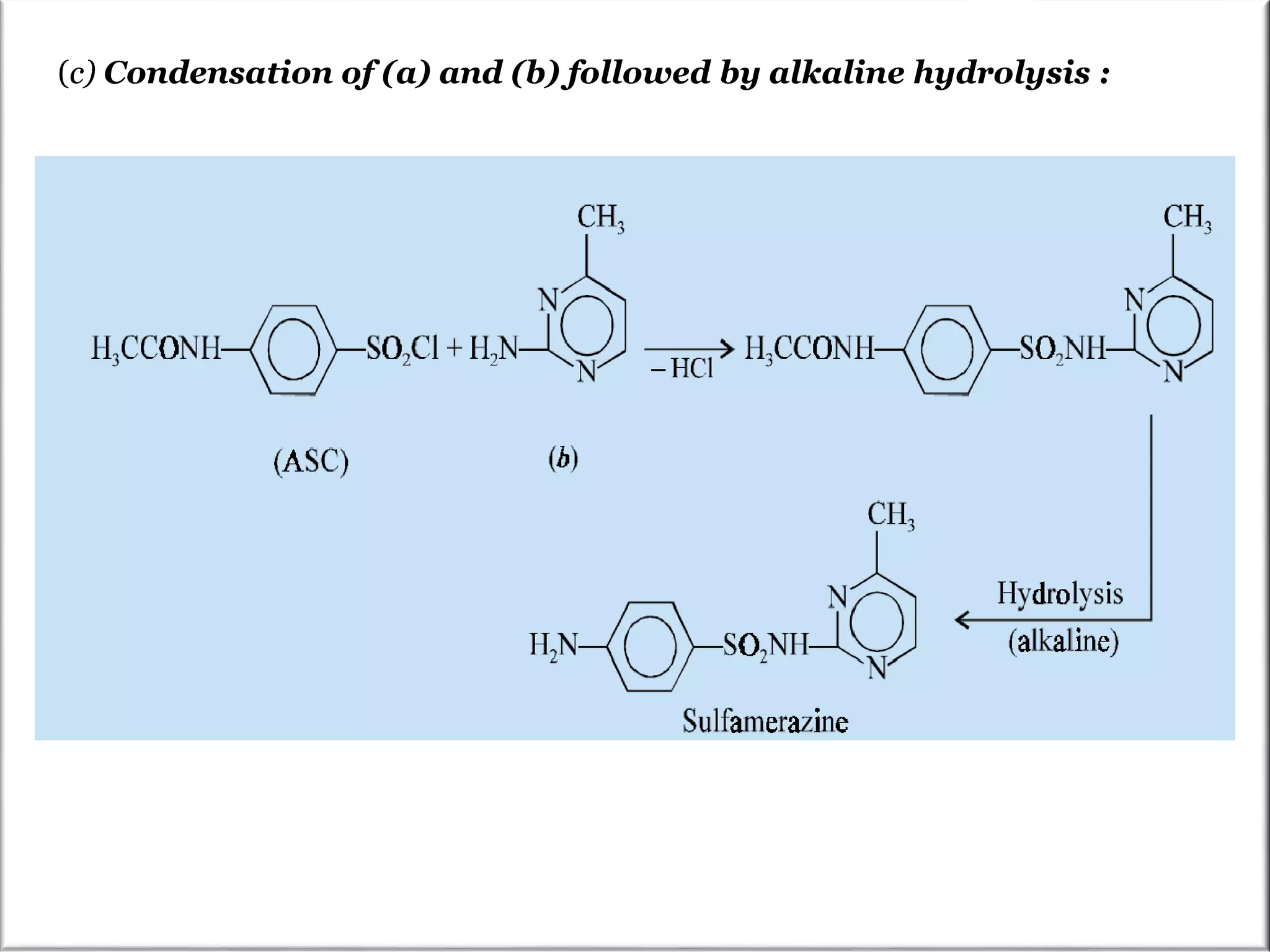
It is obtained by the condensation of :
(a) p-aminobenzene sulphonyl chloride (ASC) and
(b) 2-amino-4-methyl pyrimidine
(c) alkaline hydrolysis
(a) Preparation of ASC : It has been discussed under
sulfanilamide.
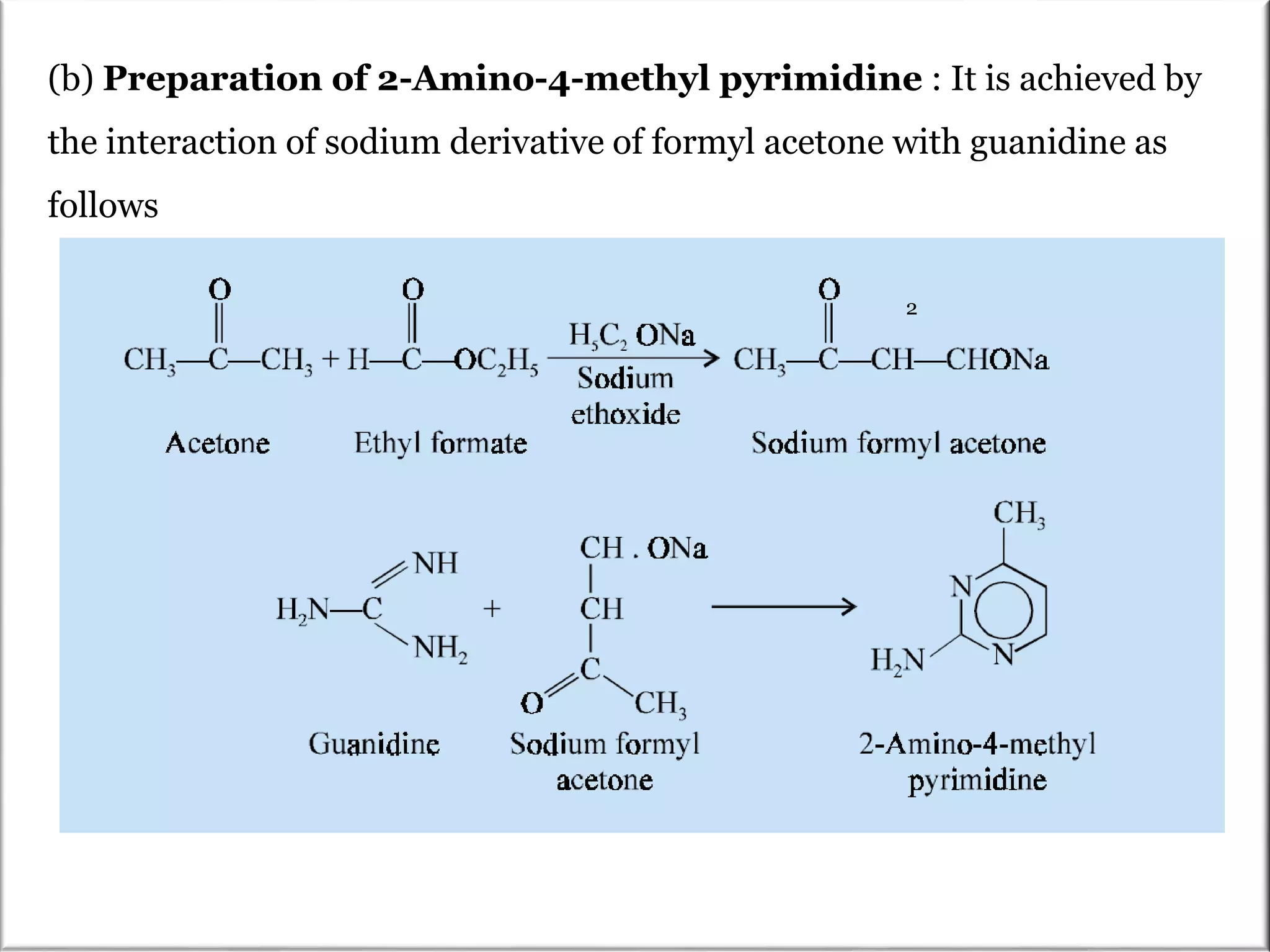
(b) Preparation of 2-Amino-4-methyl pyrimidine : It is achieved by
the interaction of sodium derivative of formyl acetone with guanidine as
follows
2
(c) Condensation of (a) and (b) followed by alkaline hydrolysis :
Trimethoprim
2, 4-Diamino-5-(3,4,5-Trimethoxybenzyl) pyrimidine ;
2,4-Pyrimidinediamine, 5-[(3,4,5-trimethoxyphenyl) methyl]
Synthesis of Trimethoprim
It may be prepared by two different methods described below :
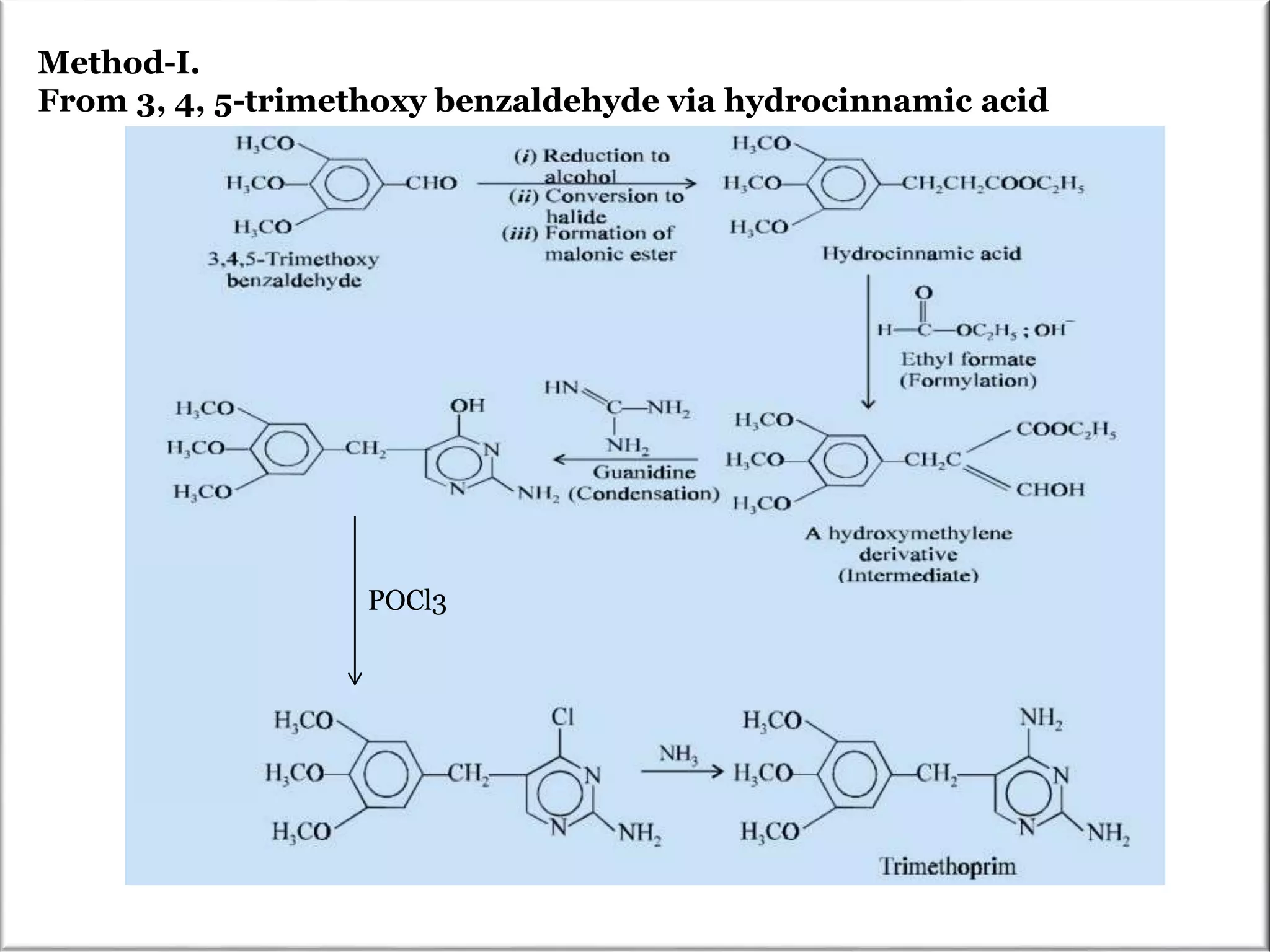
Method-I.
From 3, 4, 5-trimethoxy benzaldehyde via hydrocinnamic acid
Method-II.
From 3, 4, 5-trimethoxybenzaldehyde via cinnamonitrile
Method-I.
From 3, 4, 5-trimethoxy benzaldehyde via hydrocinnamic acid
POCl3
Hydrocinnamic acid is prepared by the bishomologation of 3, 4, 5-trimethoxy
benzaldehyde, i.e., subjecting the later to reduction forming an alcohol, coversion to halide
and finally formation of the malonic ester. This is then subjected to formylation with ethyl
formate and base to yield the corresponding hydroxymethylene derivative. Condensation of
this intermediate with guanidine gives the pyrimidine residue, by a scheme very similar to
the one discussed under pyrimethamine. The hydroxyl moiety present in the pyrimidine
nucleus is converted to the chloro group by treatment with phosphorus oxychloride and
finally amination leads to the formation of the official compound.
Method-II.
From 3, 4, 5-trimethoxybenzaldehyde via cinnamonitrile

Pinner pyrimidine synthesis

  • 1.
  • 2.
     Pinner P y ri m i d i n e Synthesis
  • 3.
    The condensation of1,3-dicarbonyl compounds with amidines catalyzed by acids or bases to give pyrimidine derivatives is regarded as the Pinner pyrimidine synthesis 1,3-dicarbonyl compounds amidines acids or bases Pyrimidine derivatives 1 2 3 P i n n e r P y r i m i d i n e S y n t h e s i s D e s c r i p t i o n
  • 4.
    What is Amidines? Amidines Amidines are a class of oxoacid derivatives Amidines are much more basic than amides and are the strongest unionizedbases
  • 5.
    Protonation occurs ontothe sp² hybridized nitrogen. This occurs because the positive charge can be delocalized onto both nitrogen atoms. The resulting cationic species is known as a amidinium ion Amidinium ionAmidines Amidines
  • 6.
    An oxoacid isan acid that contains hydrogen, oxygen, and at least one other element, with at least one hydrogen atom bond to oxygen that can dissociate to produce the H+ cation and the anion of the acid The condensation of amidine derivative with other β-keto esters, malonic esters, and β -diketones proceeded similarly.
  • 7.
    In the 1880s,Pinner found that the amidine derivative reacted with acetoacetic ester to give 2-substituted-6-hydroxy-4-methylpyrimidine. amidine derivative Acetoacetic ester 2-substituted-6-hydroxy- 4-methylpyrimidine 1 32 4 5 6 β-keto esters malonic esters β -diketones H i s t o r i c a l P e r s p e c t i v e
  • 8.
    The condensation ofacetylacetone, methyl acetoacetate, or dimethyl malonate with acetamidine has been studied by Katritzky et al. and the reaction mechanisms for these processes have been proposed by these authors.’ AcetamidineMethyl acetoacetate condensationHCl 2,6-dimethyl-4-hydroxylpyrimidine M e c h a n i s m
  • 9.
    M e ch a n i s m
  • 10.
    Many pyrimidine derivativeshave been prepared via the Pinner procedure. Amidines react with 1,3-dicarbonyl compounds to form 2,4,6-trisubstituted pyrimidines AmidinesAcetylacetone 2,4,6-trimethyl pyrimidines S y n t h e t i c U t i l i t y
  • 11.
    Amidines react withβ -keto esters to provide hydroxypyrimidines. The synthesis of the 2,6-dimethyl-4-hydroxylpyrimidine has been improved dramatically by combining Pinner's procedure with that of Donleavy et al. for the synthesis of 6- methyluracil. Ethyl acetoacetate Amidines Placed in desiccator Over H2SO4 2,6-dimethyl-4- hydroxylpyrimidine S y n t h e t i c U t i l i t y
  • 12.
    The 1,3-dicarbonyl componentscan be replaced by an en0l ether, which can be prepared by Claisen condensation from an ortho ester RC(OR′)3 and a reactive methylene compound [CH2]. En0l ether RCN + 3 R′OH → RC(OR′)3 + NH3 Orthoesters can be prepared by the Pinner reaction, in which nitriles react with alcohols under acid catalysis: Nitriles alcohols Orthoesters Orthoesters Claisen condensation + CH2 methylene compound En0l ether Amidines 2-methyl-6-hydroxy- 5-nitrile pyrimidine
  • 13.
    N-(4-Methyl-2-pyrimidinyl) sulfanilamide ;Benzenesulfonamide, 1 2 3 4 5 6 S u l f a m e r a z i n e
  • 14.
    It is obtainedby the condensation of : (a) p-aminobenzene sulphonyl chloride (ASC) and (b) 2-amino-4-methyl pyrimidine (c) alkaline hydrolysis (a) Preparation of ASC : It has been discussed under sulfanilamide.
  • 15.
    (b) Preparation of2-Amino-4-methyl pyrimidine : It is achieved by the interaction of sodium derivative of formyl acetone with guanidine as follows 2
  • 16.
    (c) Condensation of(a) and (b) followed by alkaline hydrolysis :
  • 17.
    Trimethoprim 2, 4-Diamino-5-(3,4,5-Trimethoxybenzyl) pyrimidine; 2,4-Pyrimidinediamine, 5-[(3,4,5-trimethoxyphenyl) methyl]
  • 18.
    Synthesis of Trimethoprim Itmay be prepared by two different methods described below : Method-I. From 3, 4, 5-trimethoxy benzaldehyde via hydrocinnamic acid Method-II. From 3, 4, 5-trimethoxybenzaldehyde via cinnamonitrile
  • 19.
    Method-I. From 3, 4,5-trimethoxy benzaldehyde via hydrocinnamic acid POCl3
  • 20.
    Hydrocinnamic acid isprepared by the bishomologation of 3, 4, 5-trimethoxy benzaldehyde, i.e., subjecting the later to reduction forming an alcohol, coversion to halide and finally formation of the malonic ester. This is then subjected to formylation with ethyl formate and base to yield the corresponding hydroxymethylene derivative. Condensation of this intermediate with guanidine gives the pyrimidine residue, by a scheme very similar to the one discussed under pyrimethamine. The hydroxyl moiety present in the pyrimidine nucleus is converted to the chloro group by treatment with phosphorus oxychloride and finally amination leads to the formation of the official compound.
  • 21.
    Method-II. From 3, 4,5-trimethoxybenzaldehyde via cinnamonitrile