Thinking Scientifically 
Finding the variable(s) that affect the 
period of a pendulum
A simple pendulum consists of a string, cord, or wire 
that allows a suspended mass to swing back and forth. 
The categorization of "simple" comes from the fact 
that all of the mass of the pendulum is concentrated 
in its "bob" - or suspended mass. 
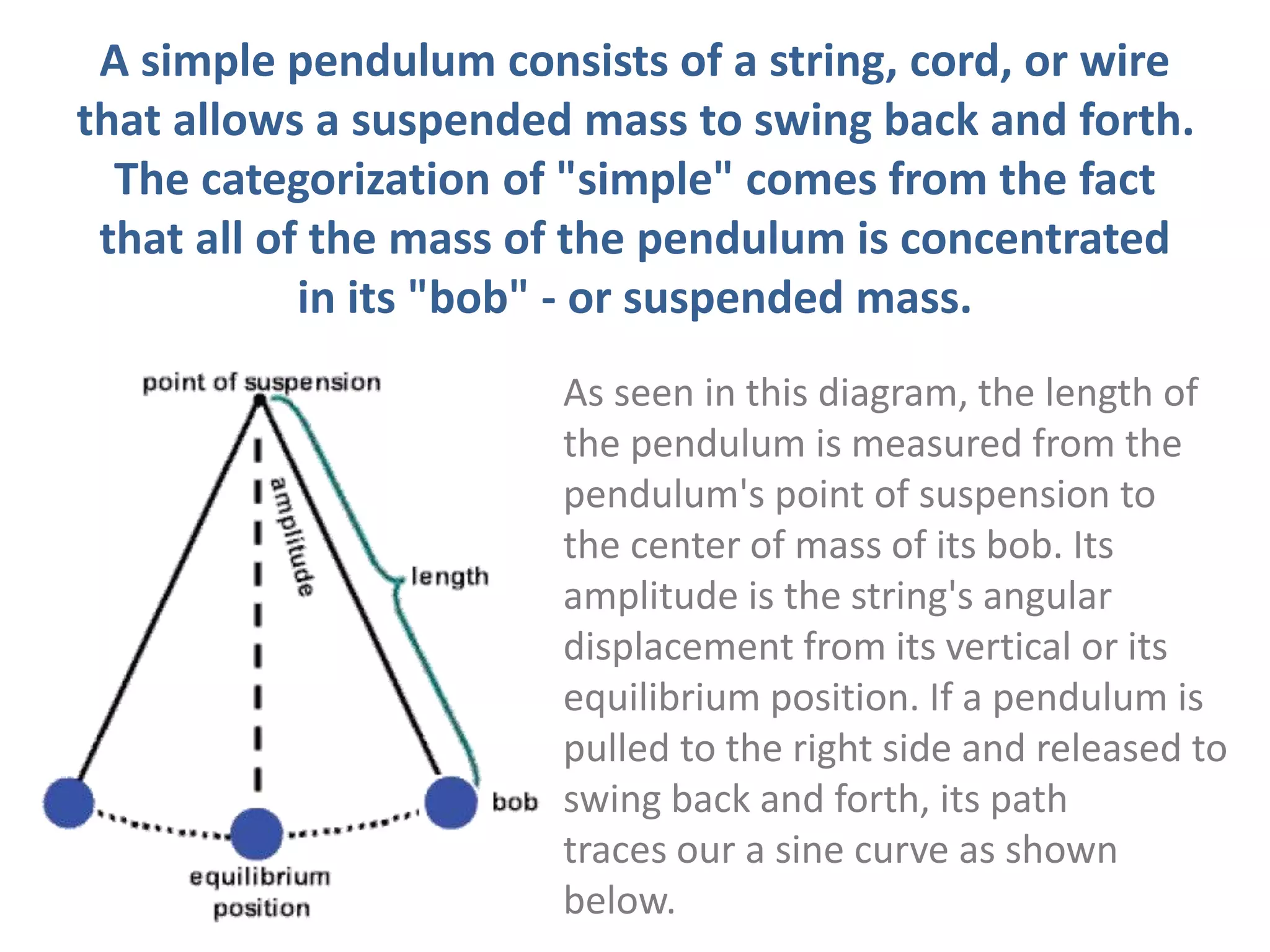
As seen in this diagram, the length of 
the pendulum is measured from the 
pendulum's point of suspension to 
the center of mass of its bob. Its 
amplitude is the string's angular 
displacement from its vertical or its 
equilibrium position. If a pendulum is 
pulled to the right side and released to 
swing back and forth, its path 
traces our a sine curve as shown 
below.
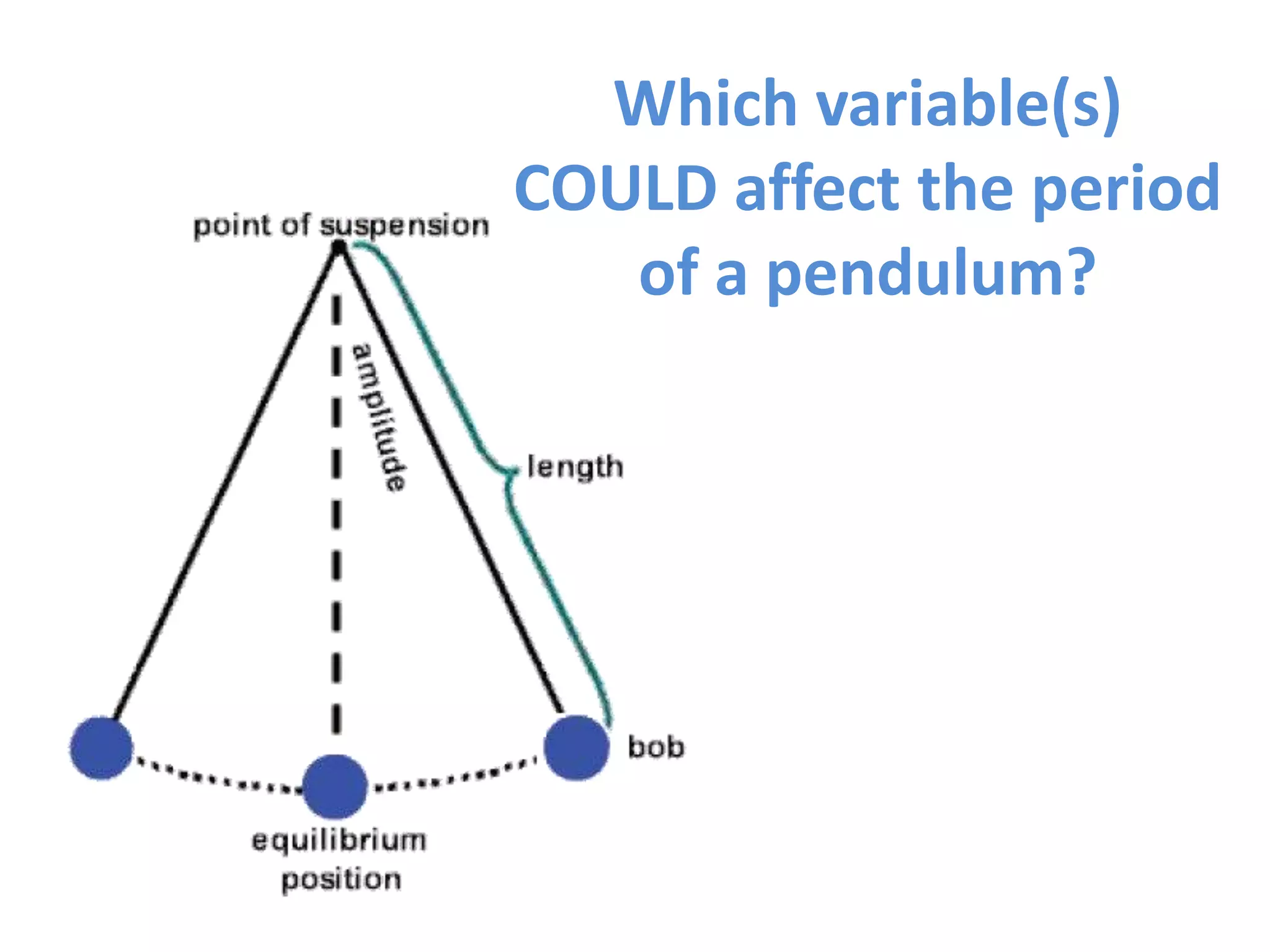
Which variable(s) 
COULD affect the period 
of a pendulum?
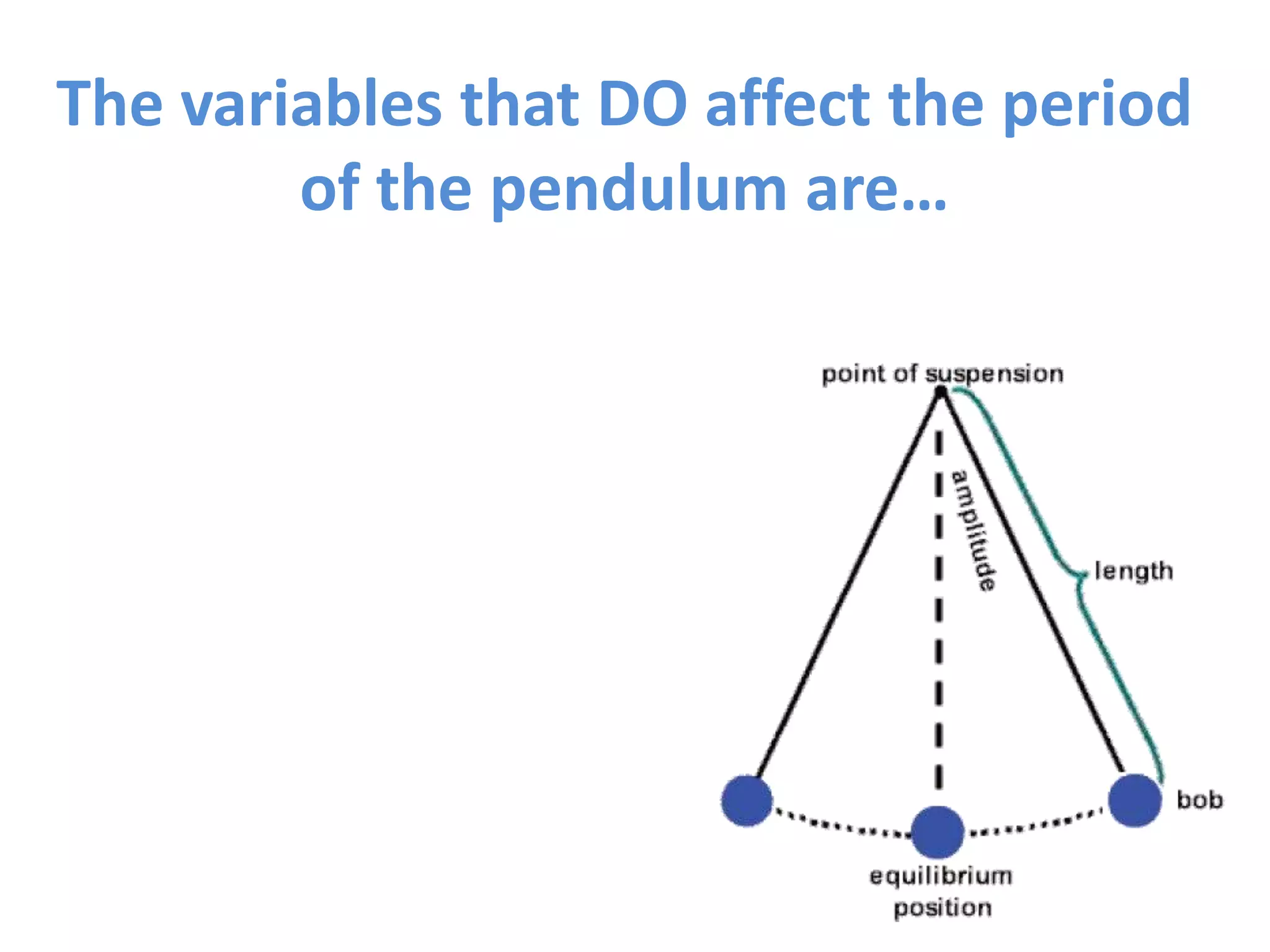
The variables that DO affect the period 
of the pendulum are…
How do you know? 
• Look at your data 
• Which variables had an effect on the period of 
your pendulum? 
• How do you know it’s enough of a change? 
• Why weren’t all the times for the trials exactly 
the same? 
• Do your results match up with what the 
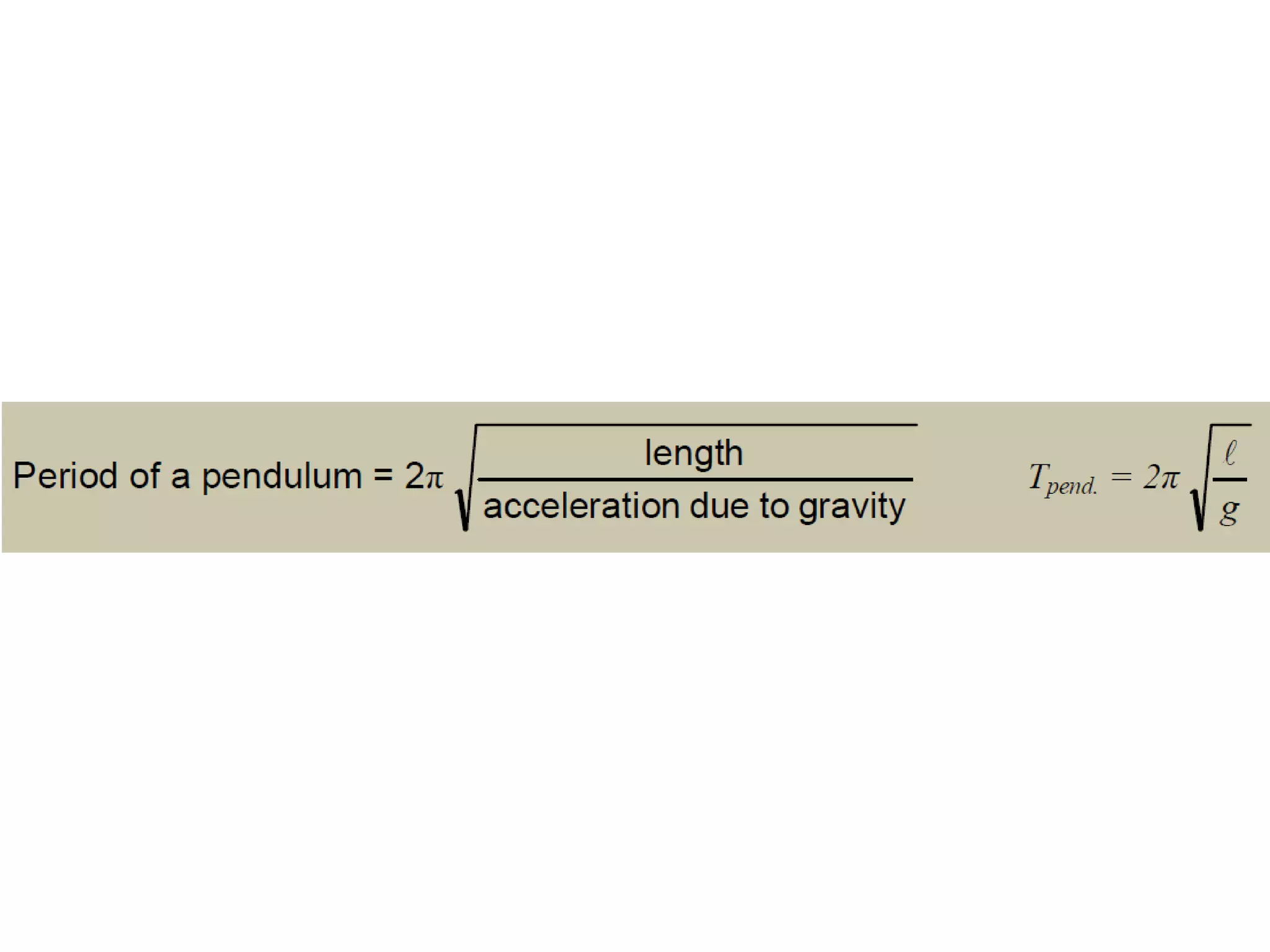
equation for this relationship says?
RERUN 
Writing an effective science 
conclusion
R.E.R.U.N. 
Recall what you did during this lab 
Explain why you did this lab and what you were trying to find out 
Reflect on the lab’s meaning. If you predicted, did it match your 
hypothesis? Was your hypothesis wrong? Why? 
Uncertainty (errors that were in the lab that you could not control 
[aka: weather problems, measurement mistakes, etc.] or errors that 
you came across during the lab that you could fix for the next time you 
perform this lab) 
New questions or new discoveries (normally you put at least three)
R.E.R.U.N. 
Recall what you did during this lab: How well did they summarize? Did you get a basic 
review about materials and methods used? Did the writer explain how the lab was set-up 
and completed? (rate on a scale of 1-5) 
Explain why you did this lab and what you were trying to find out: Did they state the 
purpose of the lab? Were you able to understand why the lab was done? 
(rate on a scale of 1-5) 
Reflect on the lab’s meaning. If you predicted, did it match your hypothesis? Was your 
hypothesis wrong? Why?: What was their hypothesis? Was it correct? Were there any 
surprises from the results? Was there any relationships that came from this lab? 
(rate on a scale of 1-5) 
Uncertainty (errors that were in the lab that you could not control [aka: weather 
problems, measurement mistakes, etc.] or errors that you came across during the lab 
that you could fix for the next time you perform this lab): What went wrong? Why wasn’t 
your data perfect? Did they specify what kinds of problems occurred during the lab? 
(rate on a scale of 1-5) 
New questions or new discoveries (normally you put at least three): Did they state at 
least 3 questions and/or discoveries? (rate on a scale of 1-5)
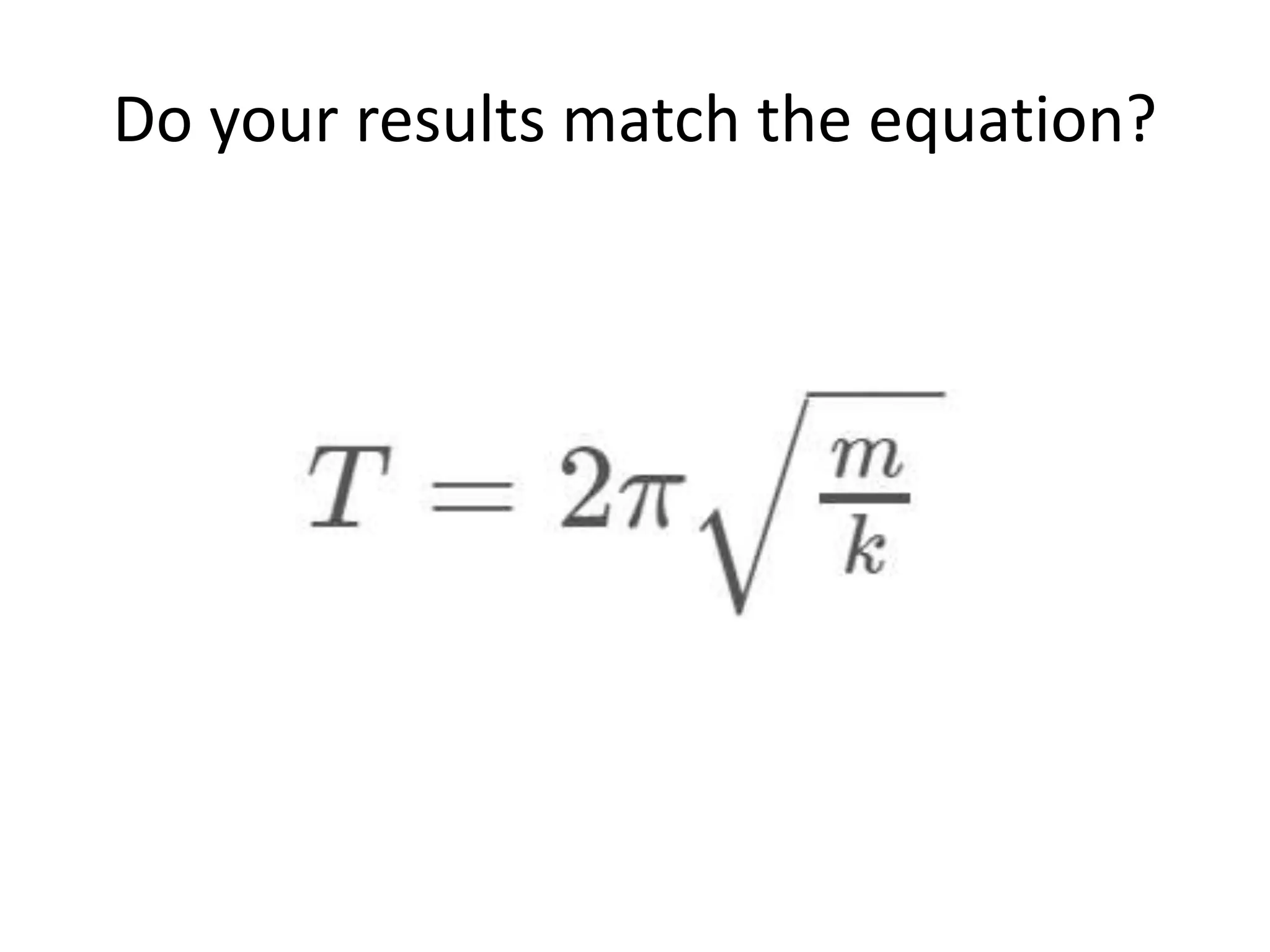
Which variable(s) could affect 
the period of a spring?
Do your results match the equation?

Pendulum lab

  • 1.
    Thinking Scientifically Findingthe variable(s) that affect the period of a pendulum
  • 2.
    A simple pendulumconsists of a string, cord, or wire that allows a suspended mass to swing back and forth. The categorization of "simple" comes from the fact that all of the mass of the pendulum is concentrated in its "bob" - or suspended mass. As seen in this diagram, the length of the pendulum is measured from the pendulum's point of suspension to the center of mass of its bob. Its amplitude is the string's angular displacement from its vertical or its equilibrium position. If a pendulum is pulled to the right side and released to swing back and forth, its path traces our a sine curve as shown below.
  • 3.
    Which variable(s) COULDaffect the period of a pendulum?
  • 4.
    The variables thatDO affect the period of the pendulum are…
  • 5.
    How do youknow? • Look at your data • Which variables had an effect on the period of your pendulum? • How do you know it’s enough of a change? • Why weren’t all the times for the trials exactly the same? • Do your results match up with what the equation for this relationship says?
  • 7.
    RERUN Writing aneffective science conclusion
  • 8.
    R.E.R.U.N. Recall whatyou did during this lab Explain why you did this lab and what you were trying to find out Reflect on the lab’s meaning. If you predicted, did it match your hypothesis? Was your hypothesis wrong? Why? Uncertainty (errors that were in the lab that you could not control [aka: weather problems, measurement mistakes, etc.] or errors that you came across during the lab that you could fix for the next time you perform this lab) New questions or new discoveries (normally you put at least three)
  • 9.
    R.E.R.U.N. Recall whatyou did during this lab: How well did they summarize? Did you get a basic review about materials and methods used? Did the writer explain how the lab was set-up and completed? (rate on a scale of 1-5) Explain why you did this lab and what you were trying to find out: Did they state the purpose of the lab? Were you able to understand why the lab was done? (rate on a scale of 1-5) Reflect on the lab’s meaning. If you predicted, did it match your hypothesis? Was your hypothesis wrong? Why?: What was their hypothesis? Was it correct? Were there any surprises from the results? Was there any relationships that came from this lab? (rate on a scale of 1-5) Uncertainty (errors that were in the lab that you could not control [aka: weather problems, measurement mistakes, etc.] or errors that you came across during the lab that you could fix for the next time you perform this lab): What went wrong? Why wasn’t your data perfect? Did they specify what kinds of problems occurred during the lab? (rate on a scale of 1-5) New questions or new discoveries (normally you put at least three): Did they state at least 3 questions and/or discoveries? (rate on a scale of 1-5)
  • 10.
    Which variable(s) couldaffect the period of a spring?
  • 11.
    Do your resultsmatch the equation?