PREPARED BY: JEGAN. S. NADAR
RHEUMATIC FEVER
RHEUMATIC FEVER
 Rheumatic fever is an immunologically mediated inflammatory disorder,
which occurs as a sequel to group A streptococcal pharyngeal infection
 Multisystem disease affecting connective tissue particularly of the heart,
joints, brain, cutaneous and subcutaneous tissues
 Rheumatic fever is not a communicable disease but results from a
communicable disease (streptococcal pharyngitis)
Jegan
EPIDEMIOLOGY
 Ages 5-15 yrs are most susceptible
 Rare <3 yrs
 Girls>boys
 Environmental factors--over crowding, poor sanitation, poverty,
 Incidence more during fall ,winter & early spring
Jegan
 Rheumatic fever is a systemic disease affecting the connective
tissue around arterioles, heart, joints and can occur after an untreated strep
throat infection, specifically due to group A streptococcus (GAS)
 During a streptococcal infection, mature antigen-presenting cells such as B
cells present the bacterial antigen to CD4+T cells which differentiate
into helper T cells
 Helper T cells subsequently activate the B cells to become plasma cells and
induce the production of antibodies against the cell wall of Streptococcus
Jegan
 S. pyogenes has a cell wall composed of branched polymers which contain M
protein
 Even Heart muscle cell contain a protein known as M protein (myosin)
Antibodies cross-react with the heart cells, a phenomenon known
as antigenic mimicry
This causes inflammation of myocardium and results in a condition
known as rheumatic heart disease
Jegan
COMPLICATIONS
 Polyarthritis
 Carditis
 Subcutaneous nodules
 Erythema marginatum
 Sydenham's chorea
Jegan
POLYARTHRITIS
A temporary migrating inflammation of
the large joints, usually starting in the
legs and migrating upwards.
Jegan
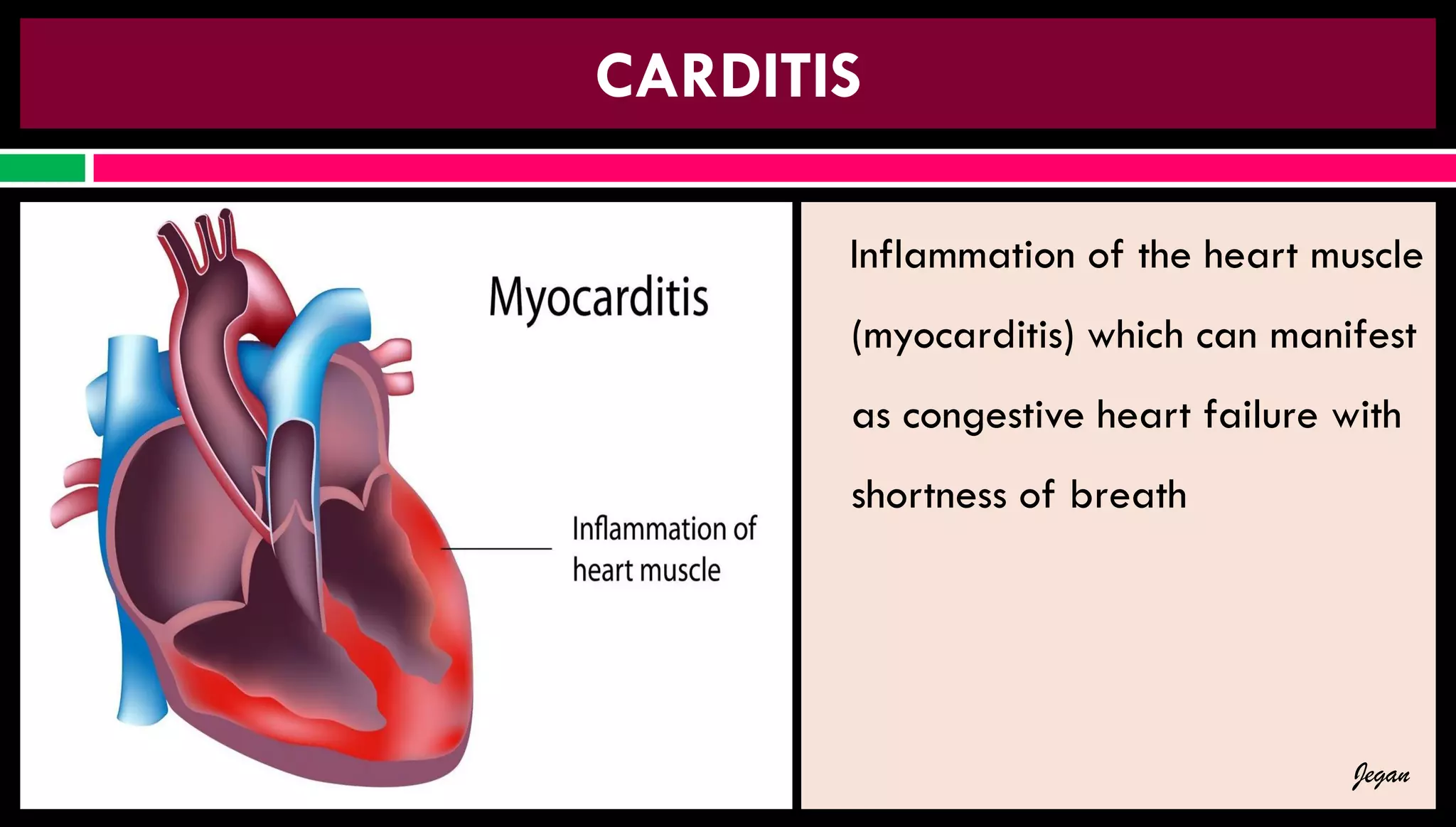
CARDITIS
Inflammation of the heart muscle
(myocarditis) which can manifest
as congestive heart failure with
shortness of breath
Jegan
SUBCUTANEOUS NODULES
 Painless, firm collections of
collagen fibers over bones
or tendons.
 They commonly appear on the
back of the wrist, the outside
elbow, and the front of the knees.
Jegan
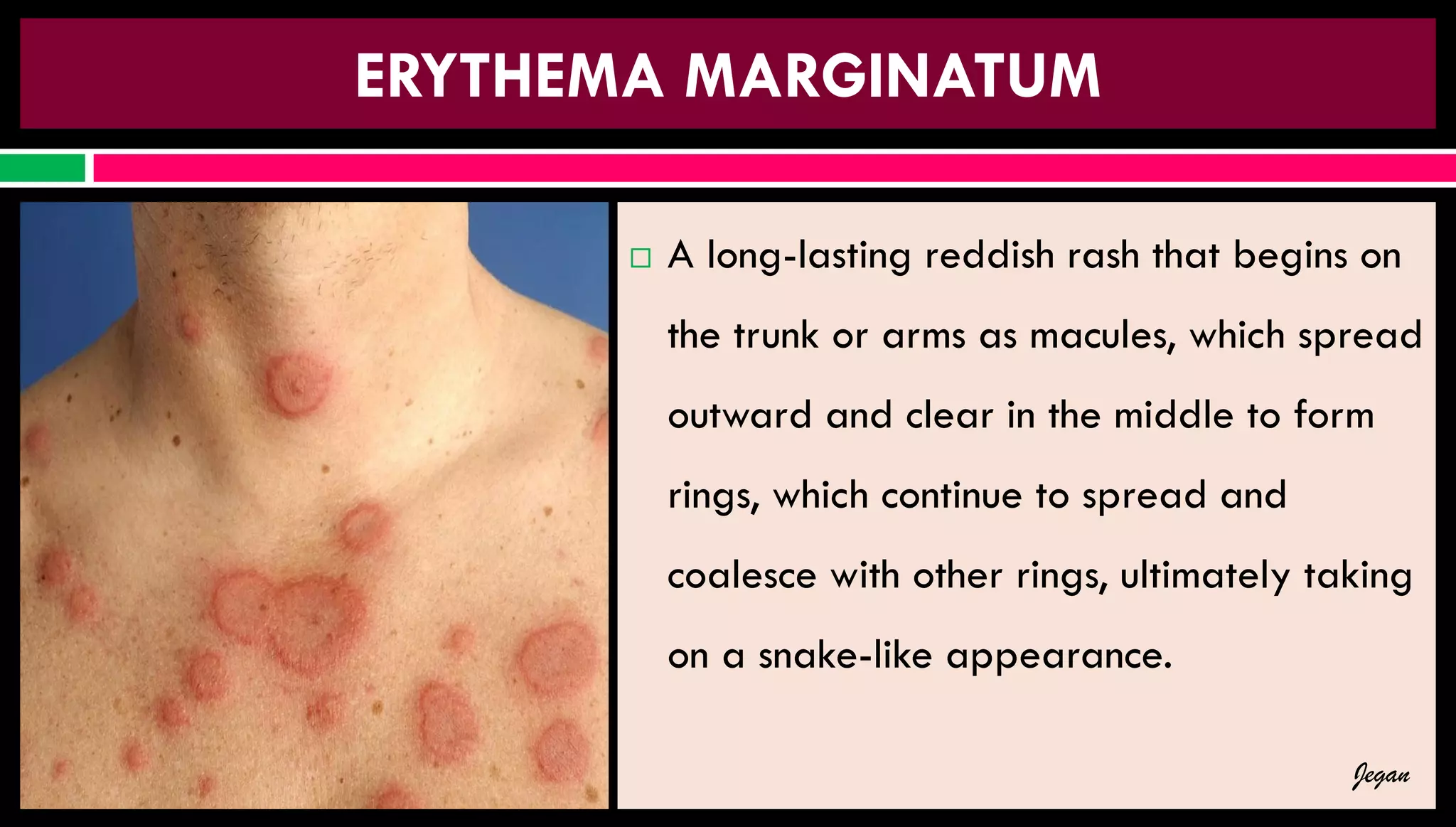
ERYTHEMA MARGINATUM
 A long-lasting reddish rash that begins on
the trunk or arms as macules, which spread
outward and clear in the middle to form
rings, which continue to spread and
coalesce with other rings, ultimately taking
on a snake-like appearance.
Jegan
SYDENHAM'S CHOREA
 (St. Vitus' dance): A characteristic
series of involuntary rapid
movements of the face and arms
Jegan
SYMPTOMS
 Pain areas: in the chest or joints
 Whole body: fatigue, fever, or inability to exercise
 Heart: fast heart rate, murmur, or palpitations
 Also common: multiple-joint inflammation, rash with pink rings and lines, or sore
throat
 Pain in one joint that migrates to another joint
 Small, painless bumps (nodules) beneath the skin
 Jerky, uncontrollable body movements Jegan
DIAGNOSIS
 Blood tests
 Electrocardiogram
 Echocardiogram
Jegan
TREATMENT
 Antibiotics
 Anti-inflammatory treatment
 Anticonvulsant medications
Jegan
Thank You

Pathophysiology of Rheumatic fever

  • 1.
    PREPARED BY: JEGAN.S. NADAR RHEUMATIC FEVER
  • 2.
    RHEUMATIC FEVER  Rheumaticfever is an immunologically mediated inflammatory disorder, which occurs as a sequel to group A streptococcal pharyngeal infection  Multisystem disease affecting connective tissue particularly of the heart, joints, brain, cutaneous and subcutaneous tissues  Rheumatic fever is not a communicable disease but results from a communicable disease (streptococcal pharyngitis) Jegan
  • 3.
    EPIDEMIOLOGY  Ages 5-15yrs are most susceptible  Rare <3 yrs  Girls>boys  Environmental factors--over crowding, poor sanitation, poverty,  Incidence more during fall ,winter & early spring Jegan
  • 4.
     Rheumatic feveris a systemic disease affecting the connective tissue around arterioles, heart, joints and can occur after an untreated strep throat infection, specifically due to group A streptococcus (GAS)  During a streptococcal infection, mature antigen-presenting cells such as B cells present the bacterial antigen to CD4+T cells which differentiate into helper T cells  Helper T cells subsequently activate the B cells to become plasma cells and induce the production of antibodies against the cell wall of Streptococcus Jegan
  • 5.
     S. pyogeneshas a cell wall composed of branched polymers which contain M protein  Even Heart muscle cell contain a protein known as M protein (myosin) Antibodies cross-react with the heart cells, a phenomenon known as antigenic mimicry This causes inflammation of myocardium and results in a condition known as rheumatic heart disease Jegan
  • 6.
    COMPLICATIONS  Polyarthritis  Carditis Subcutaneous nodules  Erythema marginatum  Sydenham's chorea Jegan
  • 7.
    POLYARTHRITIS A temporary migratinginflammation of the large joints, usually starting in the legs and migrating upwards. Jegan
  • 8.
    CARDITIS Inflammation of theheart muscle (myocarditis) which can manifest as congestive heart failure with shortness of breath Jegan
  • 9.
    SUBCUTANEOUS NODULES  Painless,firm collections of collagen fibers over bones or tendons.  They commonly appear on the back of the wrist, the outside elbow, and the front of the knees. Jegan
  • 10.
    ERYTHEMA MARGINATUM  Along-lasting reddish rash that begins on the trunk or arms as macules, which spread outward and clear in the middle to form rings, which continue to spread and coalesce with other rings, ultimately taking on a snake-like appearance. Jegan
  • 11.
    SYDENHAM'S CHOREA  (St.Vitus' dance): A characteristic series of involuntary rapid movements of the face and arms Jegan
  • 12.
    SYMPTOMS  Pain areas:in the chest or joints  Whole body: fatigue, fever, or inability to exercise  Heart: fast heart rate, murmur, or palpitations  Also common: multiple-joint inflammation, rash with pink rings and lines, or sore throat  Pain in one joint that migrates to another joint  Small, painless bumps (nodules) beneath the skin  Jerky, uncontrollable body movements Jegan
  • 13.
    DIAGNOSIS  Blood tests Electrocardiogram  Echocardiogram Jegan
  • 14.
    TREATMENT  Antibiotics  Anti-inflammatorytreatment  Anticonvulsant medications Jegan
  • 15.