


POLYCYTHEMIA
PREPARED BY: JEGAN. S. NADAR
Polycythemia
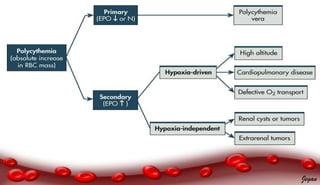
Polycythemia or erythrocytosis is characterized by an increase in the red cell mass,
measured as increased hemoglobin and hematocrit above the normal level.
Polycythemia is classified into:
Absolute polycythemia- red cell mass (volume) is raised, which is subdivided
into primary and secondary polycythemia.
Relative or pseudopolycythemia -red cell volume is normal but the plasma
volume is reduced.
Jegan
Secondary Polycythemia
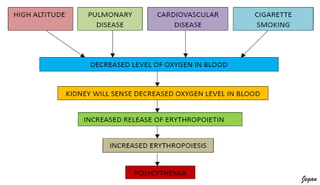
• Secondary polycythemia is an increase in red cell mass which can occur because of many
conditions. It resolves when the underlying cause is treated.
• It is due to increased erythropoietin effect
• Causes of secondary polycythemia:
High altitudes
Pulmonary disease and alveolar hypoventilation
Cardiovascular disease , especially congenital with the cyanosis
Increased affinity haemoglobin (familial polycythaemia)
Heavy cigarette smoking
Renal cancer
Jegan
Jegan
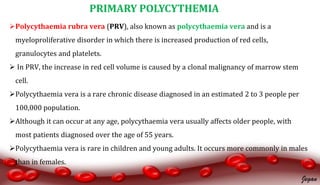
Polycythaemia rubra vera (PRV), also known as polycythaemia vera and is a
myeloproliferative disorder in which there is increased production of red cells,
granulocytes and platelets.
 In PRV, the increase in red cell volume is caused by a clonal malignancy of marrow stem
cell.
Polycythaemia vera is a rare chronic disease diagnosed in an estimated 2 to 3 people per
100,000 population.
Although it can occur at any age, polycythaemia vera usually affects older people, with
most patients diagnosed over the age of 55 years.
Polycythaemia vera is rare in children and young adults. It occurs more commonly in males
than in females.
PRIMARY POLYCYTHEMIA
Jegan
Relative polycythemia
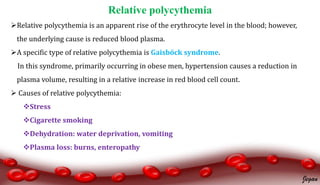
Relative polycythemia is an apparent rise of the erythrocyte level in the blood; however,
the underlying cause is reduced blood plasma.
A specific type of relative polycythemia is Gaisböck syndrome.
In this syndrome, primarily occurring in obese men, hypertension causes a reduction in
plasma volume, resulting in a relative increase in red blood cell count.
 Causes of relative polycythemia:
Stress
Cigarette smoking
Dehydration: water deprivation, vomiting
Plasma loss: burns, enteropathy
Jegan
Jegan
Clinical Findings
SYMPTOMS
Headaches, dyspnea, numbness or tingling in the fingers.
Blurred vision
Sweating during nights.
Redness of the skin especially the face, may look red, ruddy cyanosis.
Weight loss.
Hypertension.
Jegan
ComplicationsPossible complications of polycythemia vera include:
Blood clots - Polycythemia vera causes an increase in blood thickness and decrease in
blood flow, as well as abnormalities in the platelets, and this increase the risk of blood
clots.
Blood clots can cause a stroke, a heart attack, or blockage of an artery in the lungs
(pulmonary embolism) or in a vein deep within a muscle (deep vein thrombosis).
It is the major cause of death in 10-40% of patients.
Jegan
DIAGNOSIS
 Complete blood test
 Blood smear test
 Erythropoietin level
 Bone marrow test
Jegan
Pathophysiology of polycythemia

Pathophysiology of polycythemia

  • 1.
  • 2.
    Polycythemia Polycythemia or erythrocytosisis characterized by an increase in the red cell mass, measured as increased hemoglobin and hematocrit above the normal level. Polycythemia is classified into: Absolute polycythemia- red cell mass (volume) is raised, which is subdivided into primary and secondary polycythemia. Relative or pseudopolycythemia -red cell volume is normal but the plasma volume is reduced. Jegan
  • 3.
    Secondary Polycythemia • Secondarypolycythemia is an increase in red cell mass which can occur because of many conditions. It resolves when the underlying cause is treated. • It is due to increased erythropoietin effect • Causes of secondary polycythemia: High altitudes Pulmonary disease and alveolar hypoventilation Cardiovascular disease , especially congenital with the cyanosis Increased affinity haemoglobin (familial polycythaemia) Heavy cigarette smoking Renal cancer Jegan
  • 4.
  • 5.
    Polycythaemia rubra vera(PRV), also known as polycythaemia vera and is a myeloproliferative disorder in which there is increased production of red cells, granulocytes and platelets.  In PRV, the increase in red cell volume is caused by a clonal malignancy of marrow stem cell. Polycythaemia vera is a rare chronic disease diagnosed in an estimated 2 to 3 people per 100,000 population. Although it can occur at any age, polycythaemia vera usually affects older people, with most patients diagnosed over the age of 55 years. Polycythaemia vera is rare in children and young adults. It occurs more commonly in males than in females. PRIMARY POLYCYTHEMIA Jegan
  • 6.
    Relative polycythemia Relative polycythemiais an apparent rise of the erythrocyte level in the blood; however, the underlying cause is reduced blood plasma. A specific type of relative polycythemia is Gaisböck syndrome. In this syndrome, primarily occurring in obese men, hypertension causes a reduction in plasma volume, resulting in a relative increase in red blood cell count.  Causes of relative polycythemia: Stress Cigarette smoking Dehydration: water deprivation, vomiting Plasma loss: burns, enteropathy Jegan
  • 7.
  • 8.
    Clinical Findings SYMPTOMS Headaches, dyspnea,numbness or tingling in the fingers. Blurred vision Sweating during nights. Redness of the skin especially the face, may look red, ruddy cyanosis. Weight loss. Hypertension. Jegan
  • 9.
    ComplicationsPossible complications ofpolycythemia vera include: Blood clots - Polycythemia vera causes an increase in blood thickness and decrease in blood flow, as well as abnormalities in the platelets, and this increase the risk of blood clots. Blood clots can cause a stroke, a heart attack, or blockage of an artery in the lungs (pulmonary embolism) or in a vein deep within a muscle (deep vein thrombosis). It is the major cause of death in 10-40% of patients. Jegan
  • 10.
    DIAGNOSIS  Complete bloodtest  Blood smear test  Erythropoietin level  Bone marrow test Jegan