RHEUMATIC FEVER
PREVALENCE



There is a marked decline in the prevalence.
- Improved standards of living
- Literacy rate
- Medical facilities
- Penicillin : Treat streptococcal infections
INCIDENCE IN INDIA
•

The reported incidence of RF in India
varies from 0.42 – 10.9 per 1000.

•

Rheumatic heart disease (RHD): 0.56 – 11
per 1000.

•

Recent studies using echocardiography
show a incidence of RHD : 0.12 – 0.67 per
1000.
DEFINITION


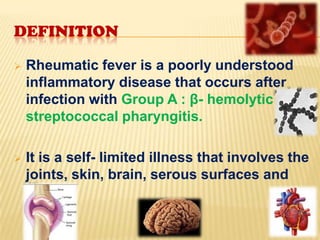
Rheumatic fever is a poorly understood
inflammatory disease that occurs after
infection with Group A : β- hemolytic
streptococcal pharyngitis.



It is a self- limited illness that involves the
joints, skin, brain, serous surfaces and
heart.
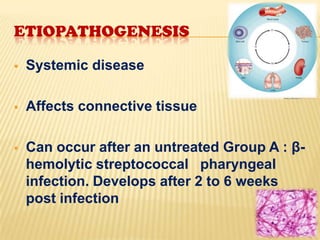
ETIOPATHOGENESIS


Systemic disease



Affects connective tissue



Can occur after an untreated Group A : βhemolytic streptococcal pharyngeal
infection. Develops after 2 to 6 weeks
post infection
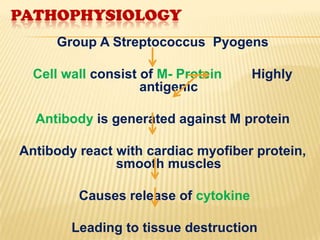
PATHOPHYSIOLOGY
Group A Streptococcus Pyogens

Cell wall consist of M- Protein
antigenic

Highly

Antibody is generated against M protein
Antibody react with cardiac myofiber protein,
smooth muscles
Causes release of cytokine
Leading to tissue destruction
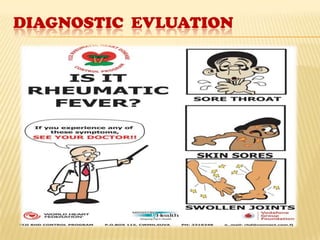
DIAGNOSTIC EVLUATION
DIAGNOSIS
•

Diagnosis follow a set of guidelines :
Given by Dr. T Ducklet Jones in 1944,
revised by AHA in 1965, latest revised by
WHO in 2003.

•

Modified Jones Criteria : Two major
manifestation or one major and two
minor.
INVESTIGATION

Increased level of antibodies against
streptococci.
 Positive throat culture for Group A
streptococcus
 Recent scarlet fever.

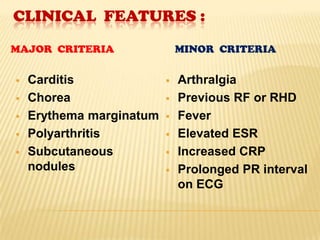
CLINICAL FEATURES :
MAJOR CRITERIA







Carditis
Chorea
Erythema marginatum
Polyarthritis
Subcutaneous
nodules

MINOR CRITERIA









Arthralgia
Previous RF or RHD
Fever
Elevated ESR
Increased CRP
Prolonged PR interval
on ECG
CHEST RADIOGRAPH OF AN 8 YEAR OLD PATIENT
WITH ACUTE CARDITIS
BEFORE TREATMENT
SAME PATIENT AFTER 4 WEEKS
SUBCUTANEOUS NODULE ON THE
EXTENSOR SURFACE OF ELBOW OF A
PATIENT WITH ACUTE RF
ERYTHEMA
MARGINATUM
ON THE
TRUNK,
SHOWING
ERYTHEMATO
US LESIONS
WITH PALE
CENTERS
AND
ROUNDED OR
SERPIGINOUS
MARGINS
CLOSER VIEW OF ERYTHEMA
MARGINATUM IN THE SAME PATIENT
TREATMENT
No specific treatment. Management is
symptomatic.
1. Bed rest
- It is advised in all patients with carditis till
activity subsides.
- Immobilization may have to be continued
for
2–3 months.
2. Diet
- Salt restriction
3. Antimicrobial Therapy
- Penicillin :4L units I/M BD * 10 days.
- Benzathine penicillin
- Erythromycin : 20-30 mg/kg BD
4. Suppressive Therapy
- Aspirin
- Steroids
5. Management of Chorea
- Complete physical and mental rest
- Phenobarbitone : 3-5gm/kg/day
-Chlorpromazine, diazepam, haloperidol
provides
sedation
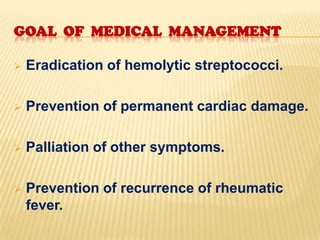
GOAL OF MEDICAL MANAGEMENT


Eradication of hemolytic streptococci.



Prevention of permanent cardiac damage.



Palliation of other symptoms.



Prevention of recurrence of rheumatic
fever.
OBJECTIVES OF NURSING
MANAGEMENT


Encourage compliance with drug
regimens.



Facilitate recovery from illness.



Provide emotional support.



Prevent the disease.
Rheumatic  fever

Rheumatic fever

  • 1.
  • 2.
    PREVALENCE  There is amarked decline in the prevalence. - Improved standards of living - Literacy rate - Medical facilities - Penicillin : Treat streptococcal infections
  • 3.
    INCIDENCE IN INDIA • Thereported incidence of RF in India varies from 0.42 – 10.9 per 1000. • Rheumatic heart disease (RHD): 0.56 – 11 per 1000. • Recent studies using echocardiography show a incidence of RHD : 0.12 – 0.67 per 1000.
  • 4.
    DEFINITION  Rheumatic fever isa poorly understood inflammatory disease that occurs after infection with Group A : β- hemolytic streptococcal pharyngitis.  It is a self- limited illness that involves the joints, skin, brain, serous surfaces and heart.
  • 5.
    ETIOPATHOGENESIS  Systemic disease  Affects connectivetissue  Can occur after an untreated Group A : βhemolytic streptococcal pharyngeal infection. Develops after 2 to 6 weeks post infection
  • 6.
    PATHOPHYSIOLOGY Group A StreptococcusPyogens Cell wall consist of M- Protein antigenic Highly Antibody is generated against M protein Antibody react with cardiac myofiber protein, smooth muscles Causes release of cytokine Leading to tissue destruction
  • 7.
  • 8.
    DIAGNOSIS • Diagnosis follow aset of guidelines : Given by Dr. T Ducklet Jones in 1944, revised by AHA in 1965, latest revised by WHO in 2003. • Modified Jones Criteria : Two major manifestation or one major and two minor.
  • 9.
    INVESTIGATION Increased level ofantibodies against streptococci.  Positive throat culture for Group A streptococcus  Recent scarlet fever. 
  • 10.
    CLINICAL FEATURES : MAJORCRITERIA      Carditis Chorea Erythema marginatum Polyarthritis Subcutaneous nodules MINOR CRITERIA       Arthralgia Previous RF or RHD Fever Elevated ESR Increased CRP Prolonged PR interval on ECG
  • 11.
    CHEST RADIOGRAPH OFAN 8 YEAR OLD PATIENT WITH ACUTE CARDITIS BEFORE TREATMENT
  • 12.
  • 13.
    SUBCUTANEOUS NODULE ONTHE EXTENSOR SURFACE OF ELBOW OF A PATIENT WITH ACUTE RF
  • 14.
    ERYTHEMA MARGINATUM ON THE TRUNK, SHOWING ERYTHEMATO US LESIONS WITHPALE CENTERS AND ROUNDED OR SERPIGINOUS MARGINS
  • 15.
    CLOSER VIEW OFERYTHEMA MARGINATUM IN THE SAME PATIENT
  • 17.
    TREATMENT No specific treatment.Management is symptomatic. 1. Bed rest - It is advised in all patients with carditis till activity subsides. - Immobilization may have to be continued for 2–3 months. 2. Diet - Salt restriction
  • 18.
    3. Antimicrobial Therapy -Penicillin :4L units I/M BD * 10 days. - Benzathine penicillin - Erythromycin : 20-30 mg/kg BD 4. Suppressive Therapy - Aspirin - Steroids 5. Management of Chorea - Complete physical and mental rest - Phenobarbitone : 3-5gm/kg/day -Chlorpromazine, diazepam, haloperidol provides sedation
  • 19.
    GOAL OF MEDICALMANAGEMENT  Eradication of hemolytic streptococci.  Prevention of permanent cardiac damage.  Palliation of other symptoms.  Prevention of recurrence of rheumatic fever.
  • 20.
    OBJECTIVES OF NURSING MANAGEMENT  Encouragecompliance with drug regimens.  Facilitate recovery from illness.  Provide emotional support.  Prevent the disease.