VALVULAR
HEART
DISEASE
NUR HANISAH ZAINOREN
What Is Valvular Heart
Disease?
Heart valve disease
occurs when your heart's
valves do not work the
way they should.
How Do Heart Valves
Work?
MAINTAIN
ONE-WAY BLOOD FLOW
THROUGH YOUR HEART
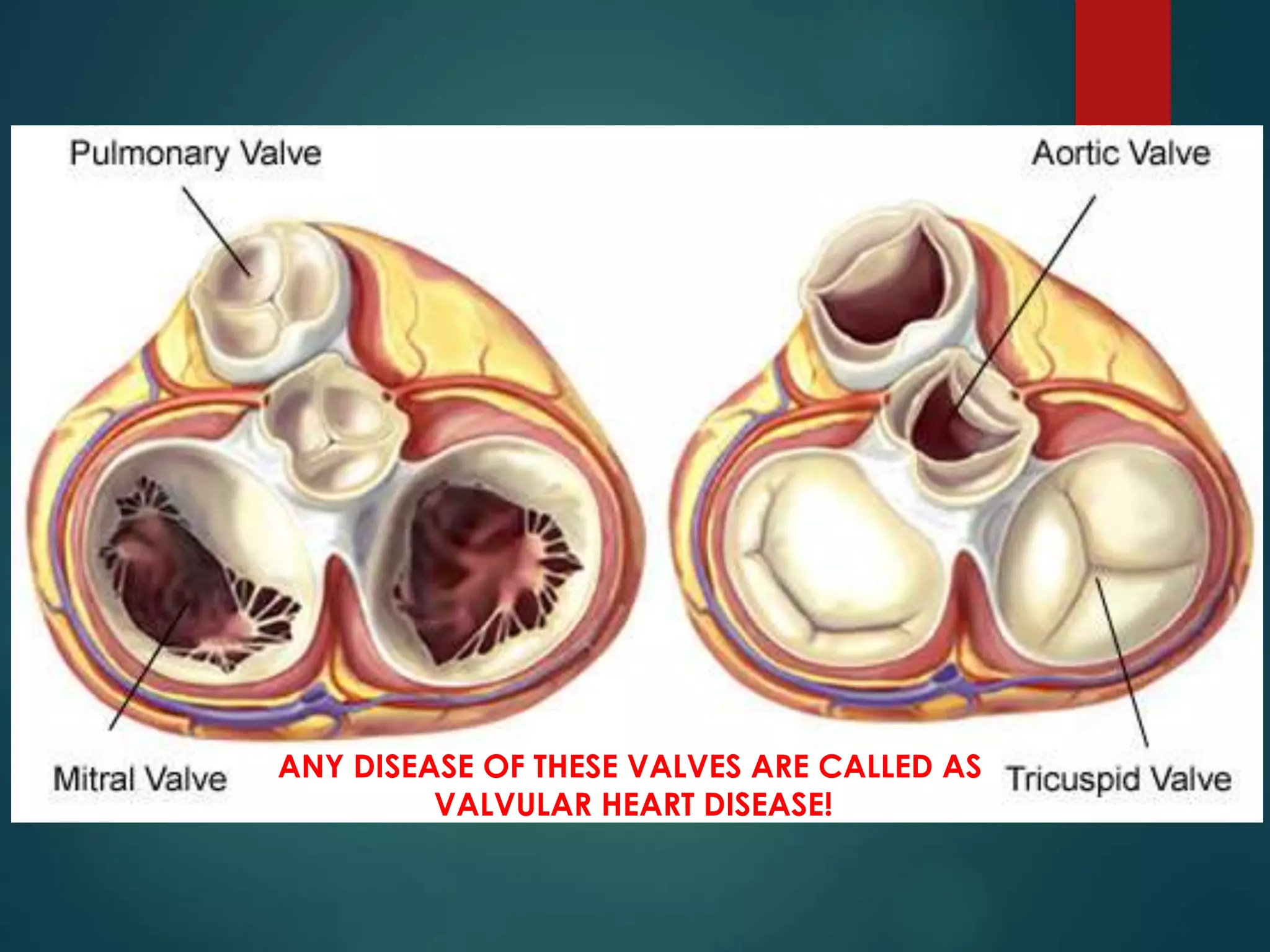
 The four heart valves make
sure that blood always flows
freely in a forward direction
and that there is no backward
leakage.
Heart
Valves
ANY DISEASE OF THESE VALVES ARE CALLED AS
VALVULAR HEART DISEASE!
Types of valve disease
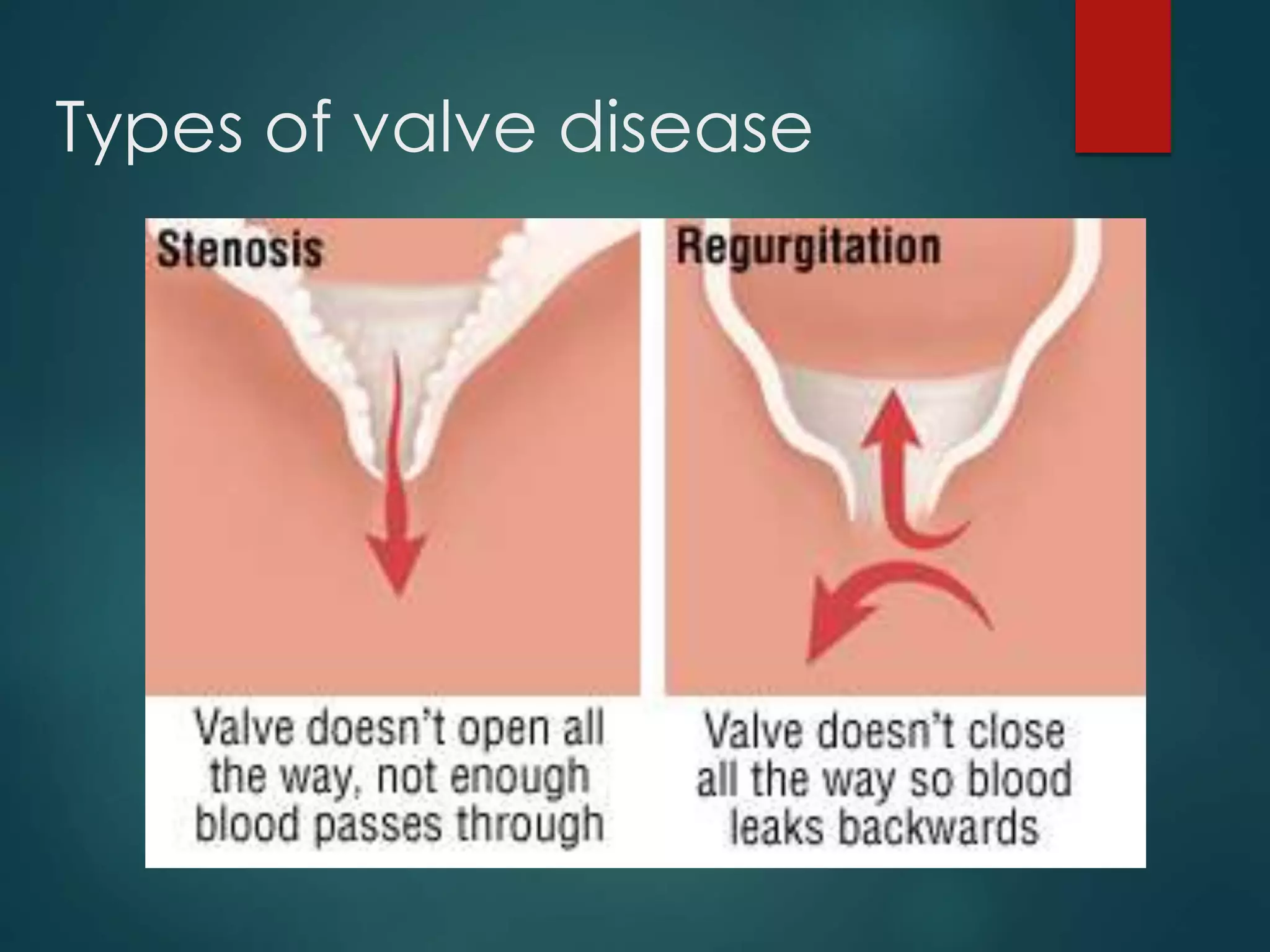
Valvular Stenosis
THE VALVE OPENING NARROWS
 the valve leaflets may become fused or thickened that the
valve cannot open freely  obstructs the normal flow of blood
EFFECTS:
the chamber behind the stenotic valve is subject to greater stress
 must generate more pressure (work hard) to force blood through
the narrowed opening
 initially, the compensates for the additional workload by
gradual hypertrophy and dilation of the myocardium
 heart failure
Valvular Regurgitation
LEAKAGE OR BACKFLOW OF BLOOD RESULTS FROM
INCOMPLETE CLOSURE OF THE VALVE
 due to:
- Scarring and retraction of valve leaflets
OR
- Weakening of supporting structures
EFFECTS:
causes the to pump the same blood twice
(as the blood comes back into the chamber)
 the dilates to accommodate more blood
 ventricular dilation and hypertrophy  eventually leads to
heart failure
Principal Causes
•Valve stenosis •Valve regurgitation
• Congenital
• Rheumatic carditis
• Senile degeneration
• Congenital
• Rheumatic carditis
(acute or chronic)
• Infective endocarditis
• Valve ring dilatation
(e.g. dilated cardiomyopathy)
• Syphilitic aortitis
• Traumatic valve rupture
• Damage to chordae and
papillary muscle (e.g. MI)
• Senile degeneration
Valvular Heart Disease
1. MITRAL STENOSIS
2. MITRAL REGURGITATION
3. AORTIC STENOSIS
4. AORTIC REGURGITATION
5. TRICUSPID STENOSIS
6. TRICUSPID REGURGITATION
7. PULMONARY STENOSIS
8. PULMONARY REGURGITATION
1. MITRAL STENOSIS
Aetiology
 Almost always rheumatic
in origin
 Older people: can be
caused by heavy
calcification of mitral
valve congestion
 Congenital (rare)
Pathophysiology
Normal mitral valve
orifice is 5cm2 in
diastole & may be
reduced to 1cm2 in
severe mitral stenosis
Pathophysiology
Pathophysiology
Pathophysiology
Pathophysiology
Pathophysiology
Atrial fibrillation due to
progressive dilatation
of the LA is very
common.
Its onset often
precipitates
pulmonary oedema
In contrast, a more gradual
rise in left atrial pressure
tends to cause an increase
in pulmonary vascular
resistance  pulmo. HTN 
RVH, TR RHF
Pathophysiology
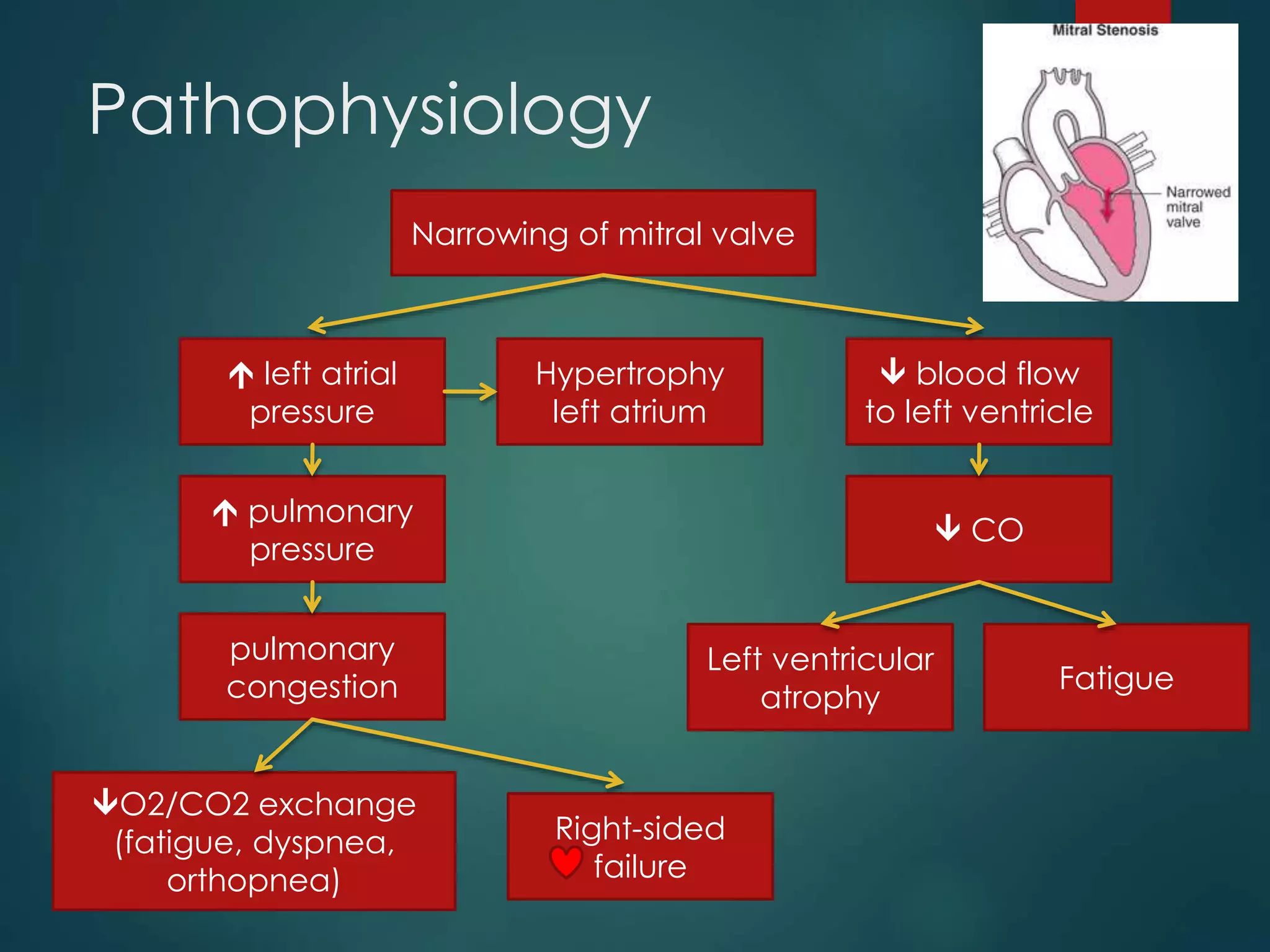
Narrowing of mitral valve
 CO
O2/CO2 exchange
(fatigue, dyspnea,
orthopnea)
Left ventricular
atrophy
pulmonary
congestion
 pulmonary
pressure
 left atrial
pressure
Hypertrophy
left atrium
 blood flow
to left ventricle
Right-sided
failure
Fatigue
Clinical features
Symptoms
 Breathlessness, cough (pulmonary congestion)
 Chest pain (pulmonary hypertension)
 Hemoptysis (pulmonary congestion or hypertension)
 Fatigue (low cardiac output)
 Oedema, ascites (right heart failure)
 Palpitation (atrial fibrillation)
 Thromboembolic complications
Clinical features
Signs
 Atrial fibrillation
 Mitral facies (abnormal flushing of the cheeks that occurs from cutaneous
vasodilation in the setting of severe mitral valve stenosis)
 Auscultation - Loud first heart sound, opening snap
(created by forceful opening of mitral valve)
- Mid-diastolic murmur (apex)
 Crepitations, pulmonary edema, effusions
(raised pulmonary capillary pressure)
 RV heave, loud P2 (pulmonary hypertension)
Mitral stenosis
…Lub Hoot…
Investigations
 ECG: - right ventricular hypertrophy  tall R waves
 Chest x-ray: - enlarged LA & appendage
- signs of pulmonary venous congestion
 ECHO: - thickened immobile cusps
- reduced valve area
- enlarged LA
- reduced rate of diastolic filling of LV
 Doppler: - pressure gradient across mitral valve
 Cardiac catheterization: - coronary artery disease
- pulmonary artery pressure
- mitral stenosis and regurgitation
Management
Medically
 Anticoagulant
To reduce the risk of
systemic embolism
 Digoxin, beta blockers,
or rate limiting calcium
antagonists
To control ventricular rate
in atrial fibrillation
 Diuretic
To control pulmonary
congestion
Surgically
 Mitral balloon
valvuloplasty***
 Mitral valvotomy
 Valve replacement
Balloon
mitral
valvuloplasty
2. MITRAL REGURGITATION
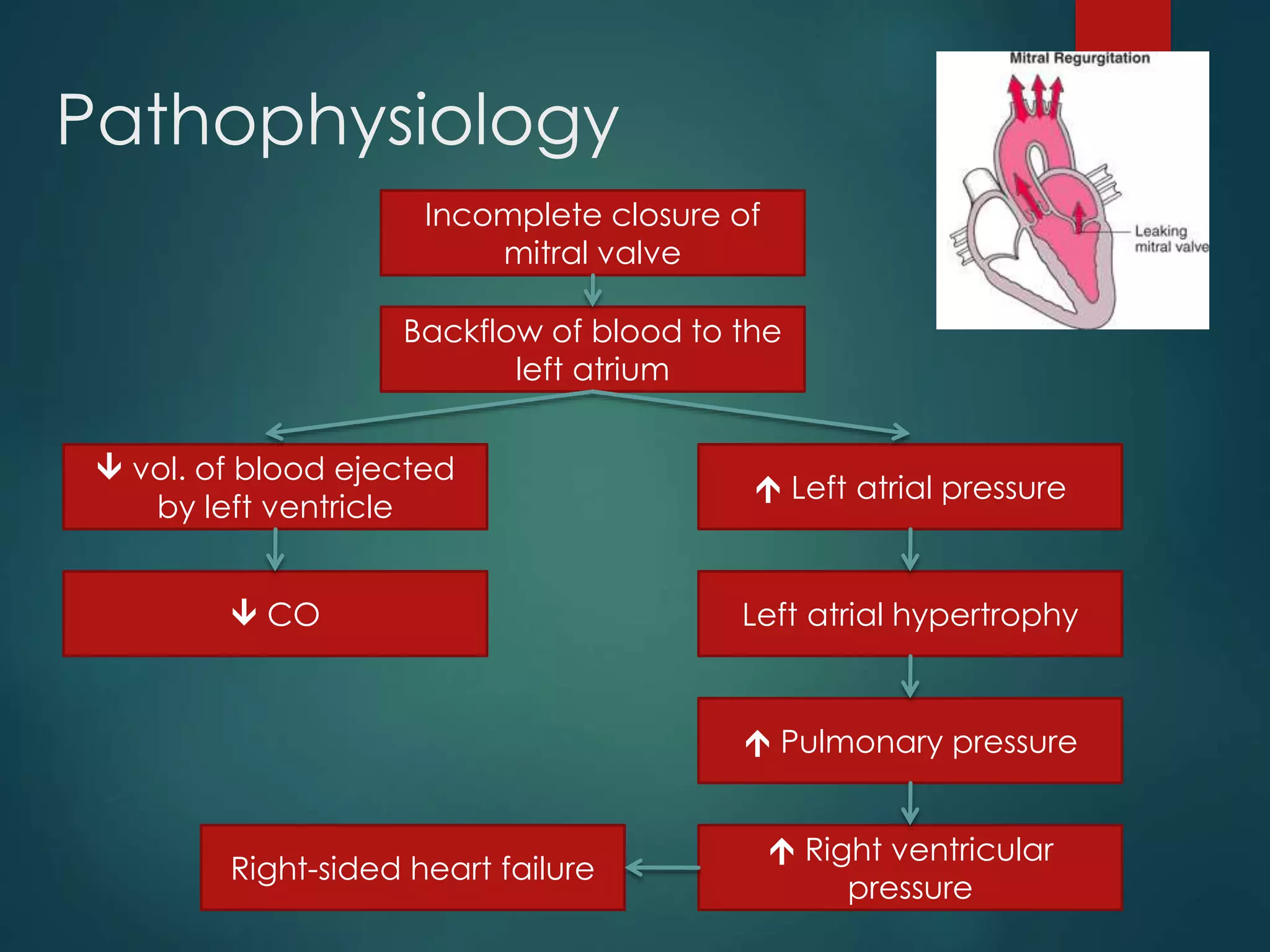
Mitral regurgitation
Incomplete closure of mitral valve
Aetiology
 Rheumatic disease is the principal cause (in
countries where disease is common)
 Mitral valve prolapse
 Dilatation of the LV and mitral valve ring
(e.g. coronary artery disease, cardiomyopathy)
 Damage to valve cusps and chordae
(e.g. rheumatic heart disease, endocarditis)
 Ischaemia or infarction of papillary muscle (MI)
Pathophysiology
Pathophysiology
Incomplete closure of
mitral valve
 vol. of blood ejected
by left ventricle
 Left atrial pressure
Right-sided heart failure
Left atrial hypertrophy CO
 Pulmonary pressure
Backflow of blood to the
left atrium
 Right ventricular
pressure
mitral valve prolapse
 A.k.a ‘floppy’ mitral valve
 One of the most common cause
of mild mitral regurgitation
 Caused by
 congenital anomalies
 degenerative myxomatous
changes
 feature of connective tissue
disorders like Marfan’s syndrome
Mitral regurgitation
mitral valve prolapse
 Mildest form:
 Valve remains competent but bulges
back into atrium during systole  mid-
systolic click but no murmur
 In the presence of regurgitant valve:
 Click is followed by a late systolic
murmur, which lengthens as the
regurgitation becomes more severe
 Severe form:
 Progressive elongation of chordae
tendinae increasing regurgitation
Chordal rupture severe regurgitation
Mitral regurgitation
Clinical Manifestations
 Fatigue & weakness – due to  CO – predominant complaint
 Exertional dyspnea & cough – pulmonary congestion
 Palpitations – due to atrial fibrillation (occur in 75% of pts.)
 Edema, ascites – Right-sided heart failure
SYMPTOMS
Clinical Manifestations
 Atrial fibrillation
 Cardiomegally
 Apical pansystolic murmur +/- thrill
 Soft S1, apical S3
 Signs of pulmonary venous congestion (crepitations, pulmonary
edema, effusions)
 Signs of pulmonary hypertension & right heart failure
SIGNS
Mitral regurgitation
…Hoot Dub…
Investigations
 ECG: - left atrial hypertrophy
- left ventricular hypertrophy
 Chest x-ray: - enlarged LA,LV
- pulmonary venous congestion
- pulmonary oedema
 ECHO: - dilated LA,LV
- structural abnormalities of mitral valve (e.g. prolapse)
 Doppler: - detects and quantifies regurgitation
 Cardiac catheterization: - dilated LA,LV
- mitral regurgitation
- pulmonary hypertension
- coexisting coronary artery disease
Management
Medically
 Vasodilators
(e.g. ACE inhibitors)
 Diuretics
 If atrial fibrillation
presents,
 Anticoagulant
 Digoxin
Surgically
 Mitral valve repair
OR
 Mitral valve
replacement
To treat
mitral valve
prolapse
3. AORTIC STENOSIS
Aortic Stenosis
Narrowing of the aortic valve
Aetiology
 INFANTS, CHILDREN,
ADOLESCENTS
• Congenital aortic stenosis
• Congenital subvalvular
aortic stenosis
• Congenital subvalvular
aortic stenosis
 YOUNG ADULTS TO
MIDDLE-AGED
• Calcification and fibrosis
of congenitally bicuspid
aortic valve
• Rheumatic aortic stenosis
 MIDDLE-AGED TO ELDERLY
• Senile degenerative
aortic stenosis
• Calcification of bicuspid
valve
• Rheumatic aortic stenosis
Pathophysiology
Pathophysiology
Stiffening/Narrowing of
Aortic Valve
Incomplete emptying of
left atrium
Left ventricular hypertrophy
Pulmonary congestion
Compression of
coronary arteries
Right-sided heart failure
 CO
 Myocardial
O2 needs
Myocardial ischemia
(chest pain)
 O2 supply
Clinical features
Symptoms
 Mild or moderate stenosis: usually asymptomatic
 Exertional dyspnea
 Angina (due to demands of
hypertrophied LV)
 Exertional syncope
 Sudden death
 Episodes o acute pulmonary oedema
CARDINAL
SYMPTOMS
CO fails to rise
to meet demand
Clinical features
Signs
 Ejection systolic murmur
 Slow-rising carotid pulse
 Thrusting apex beat (LV pressure overload)
 Narrow pulse pressure
 Signs of pulmonary venous congestion (e.g. crepititions)
Investigations
 ECG: - left ventricular hypertrophy
- left bundle branch block
 Chest x-ray: - may be normal
- enlarged LV & dilated ascending aorta (PA view)
- calcified valve on lateral view
 ECHO: - calcified valve with restricted opening, hypertrophied LV
 Doppler: - measurement of severity of stenosis
- detection of associated aortic regurgitation
 Cardiac catheterization: - to identify asst. coronary artery disease
- may be used to measure gradient
between LV and aorta
Management
 Asymptomatic aortic stenosis  kept under review
 Moderate/severe stenosis  evaluated every 1-2 years
with Doppler echocardiography (to detect progression in severity)
 Symptomatic severe aortic stenosis  valve replacement
 Congenital aortic stenosis  aortic balloon valvuloplasty
 Atrial fibrillation or post valve replacement with a
mechanical prosthesis  anticoagulant
(as the development of angina, syncope,
symptoms of low CO or heart failure
has a poor prognosis and is an indication
for prompt surgery)
4. AORTIC REGURGITATION
Causes
 Congenital:
 Bicuspid valve or disproportionate cusps
 Acquired:
 Rheumatic disease
 Infective endocarditis
 Trauma
 Aortic dilatation (marfan’s syndrome, aneurysm,
dissection, syphilis)
Pathophysiology
Pathophysiology
Incomplete closure of the
aortic valve
Backflow of blood to Left
ventricle
Left ventricular
hypertrophy & dilation
 Left atrial pressure
Left-sided heart failure
(late stage)
Left atrium hypertrophy
 CO
 Pulmonary pressure
Right-sided heart failure
 Right ventricular
pressure
Clinical features
Symptoms
 Mild or moderate aortic regurgitation:
 Usually asymptomatic
 Awareness of heartbeat, ‘palpitations’
 Severe aortic regurgitation:
 Breathlessness
 Angina
particularly when lying on the left side,
which results from increased in stroke volume
(because compensatory ventricular
dilatation&hypertrophy occur)
Clinical features
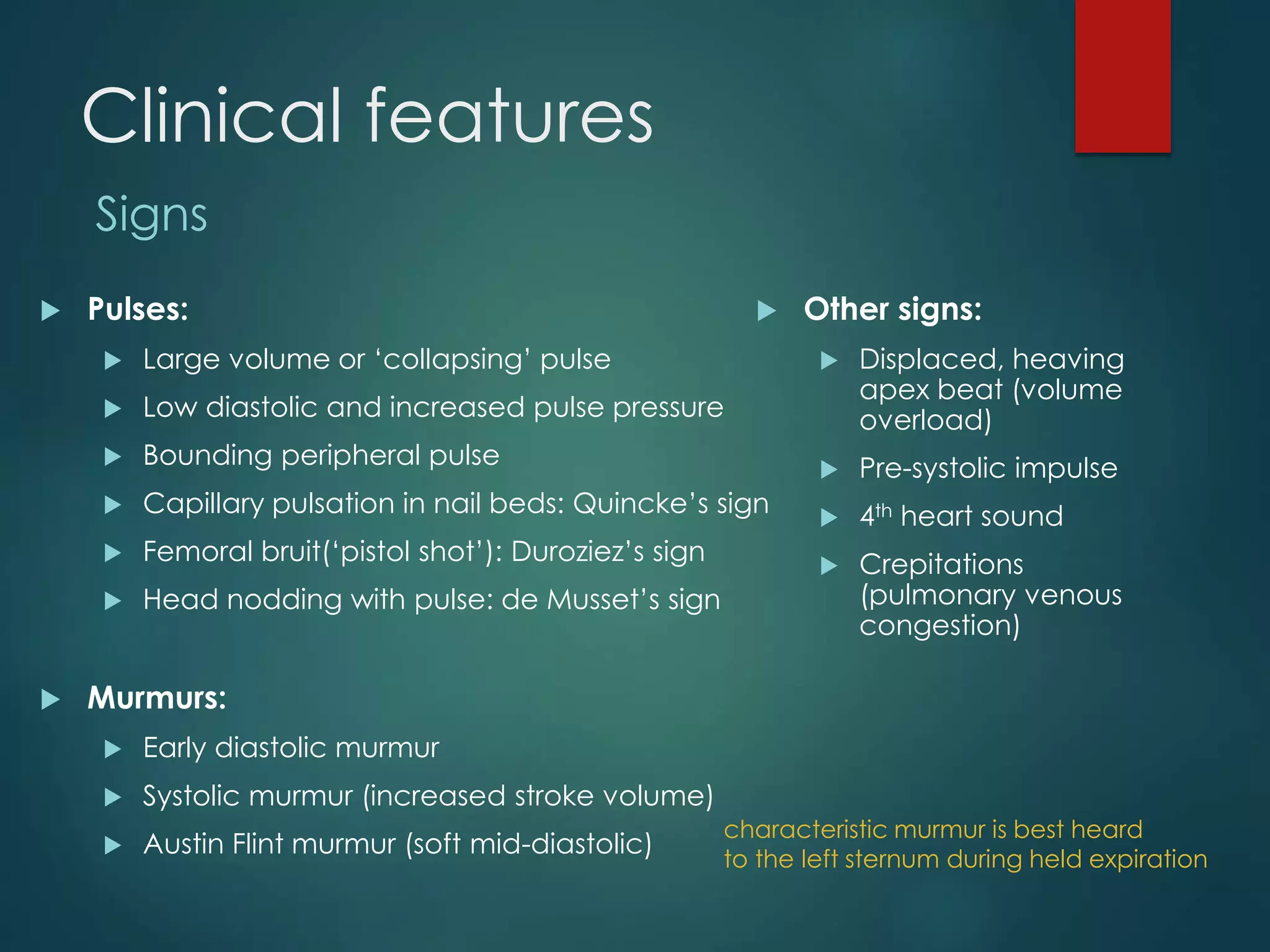
 Pulses:
 Large volume or ‘collapsing’ pulse
 Low diastolic and increased pulse pressure
 Bounding peripheral pulse
 Capillary pulsation in nail beds: Quincke’s sign
 Femoral bruit(‘pistol shot’): Duroziez’s sign
 Head nodding with pulse: de Musset’s sign
 Murmurs:
 Early diastolic murmur
 Systolic murmur (increased stroke volume)
 Austin Flint murmur (soft mid-diastolic)
 Other signs:
 Displaced, heaving
apex beat (volume
overload)
 Pre-systolic impulse
 4th heart sound
 Crepitations
(pulmonary venous
congestion)
Signs
characteristic murmur is best heard
to the left sternum during held expiration
Investigations
 ECG: initially normal,
later left ventricular hypertrophy & T-wave inversion
 Chest x-ray: - cardiac dilatation, maybe aortic dilatation
- features of left heart failure
 ECHO: - dilated LV
- hyperdynamic LV
- fluttering anterior mitral leaflet
 Doppler: - detects reflux
 Cardiac catheterization: - dilated LV
- aortic regurgitation
- dilated aortic root
Management
 Treatment may be required for underlying conditions,
such as endocarditis or syphilis
 Aortic regurgitation with symptoms aortic valve
replacement (may be combined with aortic root
replacement and coronary bypass surgery)
 Asymptomatic patients  annually follow up with
echocardiography for evidence of increasing
ventricular size
 Systolic BP should be controlled with vasodilating drugs,
such as nifedipine or ACE inhibitors
5. TRICUSPID STENOSIS
Tricuspid Stenosis
 usually occurs together with aortic or mitral
stenosis
 may be due to rheumatic heart disease (<5%)
  blood flow from right atrium to right ventricle
  right ventricular output
  left ventricular filling   co
  systemic pressure
Tricuspid Stenosis
Symptoms
 symptoms of right-sided
heart failure
- hepatomegaly
- ascites
- peripheral edema
- neck vein
engorgement
  co – fatigue,
hypotension
Signs
 Raised JVP
 Mid-diastolic murmur
(best heard at lower left or
right sternal edge)
Tricuspid Stenosis
Management
 Valve replacement
 Valvotomy
 Balloon valvuloplasty
6. TRICUSPID REGURGITATION
Tricuspid Regurgitation
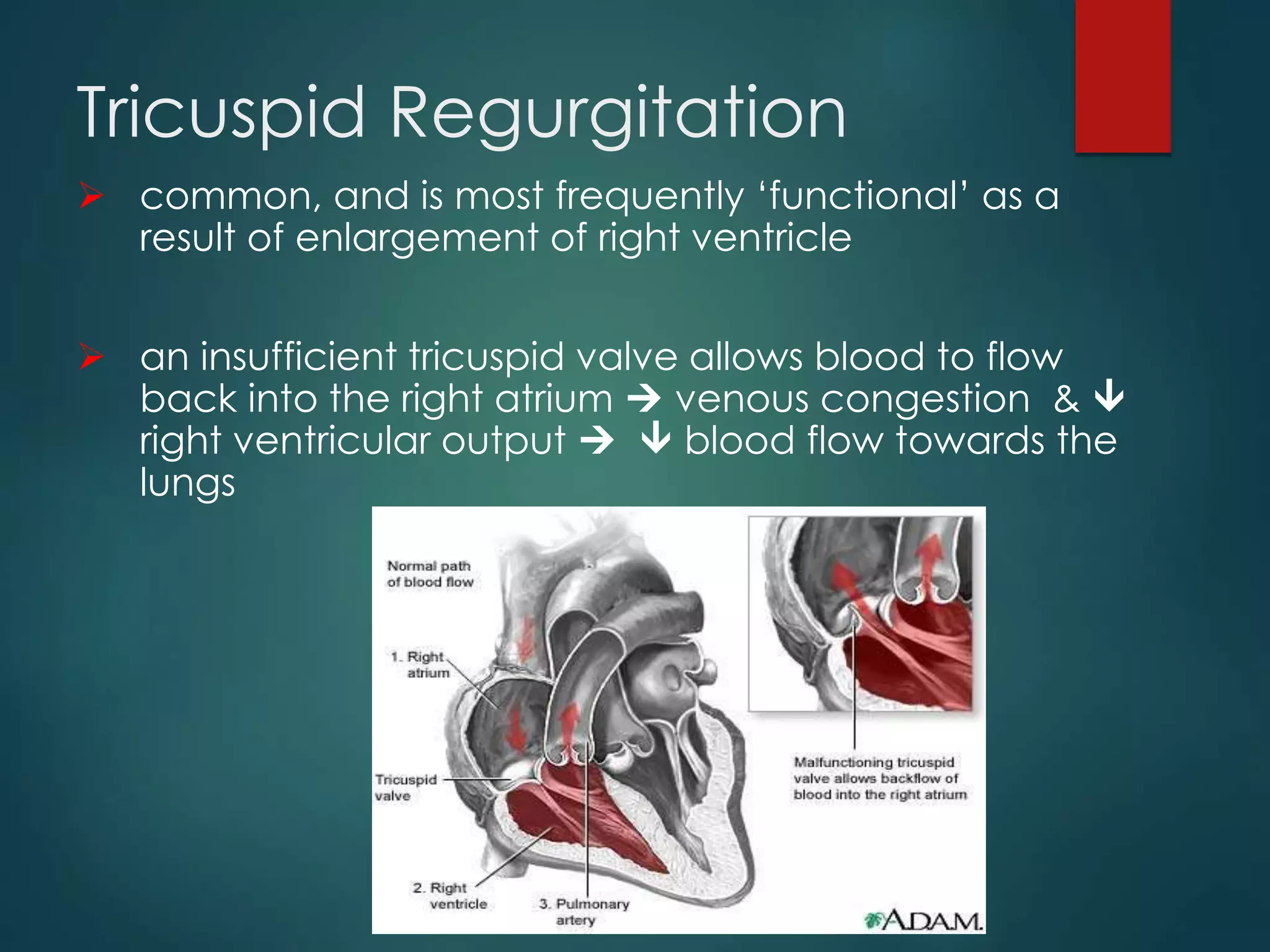
 common, and is most frequently ‘functional’ as a
result of enlargement of right ventricle
 an insufficient tricuspid valve allows blood to flow
back into the right atrium  venous congestion & 
right ventricular output   blood flow towards the
lungs
primary
 Rheumatic heart disease
 Endocarditis, particularly
in injection drug-users
 Ebstein’s congenital
anomaly
secondary
 Right ventricular
dilatation due to chronic
left heart failure
(‘functional tricuspid
regurgitation’)
 Right ventricular
infarction
 Pulmonary hypertension
(e.g. cor pulmonale)
Tricuspid Regurgitation
causes
Tricuspid Regurgitation
Symptoms
 Usually non-specific
 Tiredness (reduced
forward flow)
 Oedema
 Hepatic enlargement
(venous congestion)
Signs
 Raised JVP
 Pansystolic murmur (left
sternal edge)
 Pulsatile liver
Tricuspid Regurgitation
Management
 Correction of the cause of right ventricular
overload (if TR is due to right ventricular dilatation)
 Use of diuretic and vasodilator treatment of CCF
 Valve repair
 Valve replacement
7. PULMONARY STENOSIS
Pulmonary Stenosis
Symptoms
 Fatigue, dyspnea on
exertion, cyanosis
 Poor weight gain or
failure to thrive in infants
 Hepatomegaly,
ascites, edema
Signs
 Ejection systolic murmur
(loudest at the left upper
sternum & radiating towards
the left shoulder)
 Murmur often preceded by
an ejection sound (click)
 May be wide splitting of
second heart sound (delay in
ventricular ejection
 May be a thrill (best felt when
patient leans forward and
breathes out)
Investigations
 ECG: - right ventricular hypertrophy
 Chest x-ray: - post-stenotic dilatation in the pulmonary artery
 Doppler echocardiography is the definitive investigation
Management
 Mild to modearate isolated pulmonary stenosis is
relatively common and does not usually progress or
require treatment
 Severe pulmonary stenosis  percutaneous pulmonary
balloon valvuloplasty
OR
surgical valvotomy
8. PULMONARY REGURGITATION
Pulmonary Regurgitation
 A rare condition
 Usually associated with pulmonary hypertension
which may be
• Secondary of the disease of left side of the heart
• Primary pulmonary vascular disease
• Eisenmenger’s syndrome
 Blood flows back into right ventricle  right ventricle
and atrium hypertrophy  symptoms of right-sided
heart failure
 Trivial PR is a frequent finding in normal individuals and has
no clinical significance
Reference
 For videos of
heart murmurs:
https://www.youtu
be.com/playlist?list
=PLB7F86984222A1F
7C
THANK YOU

VALVULAR HEART DISEASE

  • 1.
  • 2.
    What Is ValvularHeart Disease? Heart valve disease occurs when your heart's valves do not work the way they should.
  • 3.
    How Do HeartValves Work? MAINTAIN ONE-WAY BLOOD FLOW THROUGH YOUR HEART  The four heart valves make sure that blood always flows freely in a forward direction and that there is no backward leakage.
  • 4.
  • 5.
    ANY DISEASE OFTHESE VALVES ARE CALLED AS VALVULAR HEART DISEASE!
  • 6.
  • 7.
    Valvular Stenosis THE VALVEOPENING NARROWS  the valve leaflets may become fused or thickened that the valve cannot open freely  obstructs the normal flow of blood EFFECTS: the chamber behind the stenotic valve is subject to greater stress  must generate more pressure (work hard) to force blood through the narrowed opening  initially, the compensates for the additional workload by gradual hypertrophy and dilation of the myocardium  heart failure
  • 8.
    Valvular Regurgitation LEAKAGE ORBACKFLOW OF BLOOD RESULTS FROM INCOMPLETE CLOSURE OF THE VALVE  due to: - Scarring and retraction of valve leaflets OR - Weakening of supporting structures EFFECTS: causes the to pump the same blood twice (as the blood comes back into the chamber)  the dilates to accommodate more blood  ventricular dilation and hypertrophy  eventually leads to heart failure
  • 9.
    Principal Causes •Valve stenosis•Valve regurgitation • Congenital • Rheumatic carditis • Senile degeneration • Congenital • Rheumatic carditis (acute or chronic) • Infective endocarditis • Valve ring dilatation (e.g. dilated cardiomyopathy) • Syphilitic aortitis • Traumatic valve rupture • Damage to chordae and papillary muscle (e.g. MI) • Senile degeneration
  • 10.
    Valvular Heart Disease 1.MITRAL STENOSIS 2. MITRAL REGURGITATION 3. AORTIC STENOSIS 4. AORTIC REGURGITATION 5. TRICUSPID STENOSIS 6. TRICUSPID REGURGITATION 7. PULMONARY STENOSIS 8. PULMONARY REGURGITATION
  • 11.
  • 12.
    Aetiology  Almost alwaysrheumatic in origin  Older people: can be caused by heavy calcification of mitral valve congestion  Congenital (rare)
  • 14.
    Pathophysiology Normal mitral valve orificeis 5cm2 in diastole & may be reduced to 1cm2 in severe mitral stenosis
  • 15.
  • 16.
  • 17.
  • 18.
  • 19.
    Pathophysiology Atrial fibrillation dueto progressive dilatation of the LA is very common. Its onset often precipitates pulmonary oedema In contrast, a more gradual rise in left atrial pressure tends to cause an increase in pulmonary vascular resistance  pulmo. HTN  RVH, TR RHF
  • 20.
    Pathophysiology Narrowing of mitralvalve  CO O2/CO2 exchange (fatigue, dyspnea, orthopnea) Left ventricular atrophy pulmonary congestion  pulmonary pressure  left atrial pressure Hypertrophy left atrium  blood flow to left ventricle Right-sided failure Fatigue
  • 21.
    Clinical features Symptoms  Breathlessness,cough (pulmonary congestion)  Chest pain (pulmonary hypertension)  Hemoptysis (pulmonary congestion or hypertension)  Fatigue (low cardiac output)  Oedema, ascites (right heart failure)  Palpitation (atrial fibrillation)  Thromboembolic complications
  • 22.
    Clinical features Signs  Atrialfibrillation  Mitral facies (abnormal flushing of the cheeks that occurs from cutaneous vasodilation in the setting of severe mitral valve stenosis)  Auscultation - Loud first heart sound, opening snap (created by forceful opening of mitral valve) - Mid-diastolic murmur (apex)  Crepitations, pulmonary edema, effusions (raised pulmonary capillary pressure)  RV heave, loud P2 (pulmonary hypertension)
  • 23.
  • 24.
    Investigations  ECG: -right ventricular hypertrophy  tall R waves  Chest x-ray: - enlarged LA & appendage - signs of pulmonary venous congestion  ECHO: - thickened immobile cusps - reduced valve area - enlarged LA - reduced rate of diastolic filling of LV  Doppler: - pressure gradient across mitral valve  Cardiac catheterization: - coronary artery disease - pulmonary artery pressure - mitral stenosis and regurgitation
  • 25.
    Management Medically  Anticoagulant To reducethe risk of systemic embolism  Digoxin, beta blockers, or rate limiting calcium antagonists To control ventricular rate in atrial fibrillation  Diuretic To control pulmonary congestion Surgically  Mitral balloon valvuloplasty***  Mitral valvotomy  Valve replacement
  • 26.
  • 27.
  • 28.
  • 29.
    Aetiology  Rheumatic diseaseis the principal cause (in countries where disease is common)  Mitral valve prolapse  Dilatation of the LV and mitral valve ring (e.g. coronary artery disease, cardiomyopathy)  Damage to valve cusps and chordae (e.g. rheumatic heart disease, endocarditis)  Ischaemia or infarction of papillary muscle (MI)
  • 30.
  • 31.
    Pathophysiology Incomplete closure of mitralvalve  vol. of blood ejected by left ventricle  Left atrial pressure Right-sided heart failure Left atrial hypertrophy CO  Pulmonary pressure Backflow of blood to the left atrium  Right ventricular pressure
  • 32.
    mitral valve prolapse A.k.a ‘floppy’ mitral valve  One of the most common cause of mild mitral regurgitation  Caused by  congenital anomalies  degenerative myxomatous changes  feature of connective tissue disorders like Marfan’s syndrome Mitral regurgitation
  • 33.
    mitral valve prolapse Mildest form:  Valve remains competent but bulges back into atrium during systole  mid- systolic click but no murmur  In the presence of regurgitant valve:  Click is followed by a late systolic murmur, which lengthens as the regurgitation becomes more severe  Severe form:  Progressive elongation of chordae tendinae increasing regurgitation Chordal rupture severe regurgitation Mitral regurgitation
  • 35.
    Clinical Manifestations  Fatigue& weakness – due to  CO – predominant complaint  Exertional dyspnea & cough – pulmonary congestion  Palpitations – due to atrial fibrillation (occur in 75% of pts.)  Edema, ascites – Right-sided heart failure SYMPTOMS
  • 36.
    Clinical Manifestations  Atrialfibrillation  Cardiomegally  Apical pansystolic murmur +/- thrill  Soft S1, apical S3  Signs of pulmonary venous congestion (crepitations, pulmonary edema, effusions)  Signs of pulmonary hypertension & right heart failure SIGNS
  • 37.
  • 38.
    Investigations  ECG: -left atrial hypertrophy - left ventricular hypertrophy  Chest x-ray: - enlarged LA,LV - pulmonary venous congestion - pulmonary oedema  ECHO: - dilated LA,LV - structural abnormalities of mitral valve (e.g. prolapse)  Doppler: - detects and quantifies regurgitation  Cardiac catheterization: - dilated LA,LV - mitral regurgitation - pulmonary hypertension - coexisting coronary artery disease
  • 39.
    Management Medically  Vasodilators (e.g. ACEinhibitors)  Diuretics  If atrial fibrillation presents,  Anticoagulant  Digoxin Surgically  Mitral valve repair OR  Mitral valve replacement To treat mitral valve prolapse
  • 40.
  • 41.
  • 42.
    Aetiology  INFANTS, CHILDREN, ADOLESCENTS •Congenital aortic stenosis • Congenital subvalvular aortic stenosis • Congenital subvalvular aortic stenosis  YOUNG ADULTS TO MIDDLE-AGED • Calcification and fibrosis of congenitally bicuspid aortic valve • Rheumatic aortic stenosis  MIDDLE-AGED TO ELDERLY • Senile degenerative aortic stenosis • Calcification of bicuspid valve • Rheumatic aortic stenosis
  • 43.
  • 44.
    Pathophysiology Stiffening/Narrowing of Aortic Valve Incompleteemptying of left atrium Left ventricular hypertrophy Pulmonary congestion Compression of coronary arteries Right-sided heart failure  CO  Myocardial O2 needs Myocardial ischemia (chest pain)  O2 supply
  • 45.
    Clinical features Symptoms  Mildor moderate stenosis: usually asymptomatic  Exertional dyspnea  Angina (due to demands of hypertrophied LV)  Exertional syncope  Sudden death  Episodes o acute pulmonary oedema CARDINAL SYMPTOMS CO fails to rise to meet demand
  • 46.
    Clinical features Signs  Ejectionsystolic murmur  Slow-rising carotid pulse  Thrusting apex beat (LV pressure overload)  Narrow pulse pressure  Signs of pulmonary venous congestion (e.g. crepititions)
  • 47.
    Investigations  ECG: -left ventricular hypertrophy - left bundle branch block  Chest x-ray: - may be normal - enlarged LV & dilated ascending aorta (PA view) - calcified valve on lateral view  ECHO: - calcified valve with restricted opening, hypertrophied LV  Doppler: - measurement of severity of stenosis - detection of associated aortic regurgitation  Cardiac catheterization: - to identify asst. coronary artery disease - may be used to measure gradient between LV and aorta
  • 48.
    Management  Asymptomatic aorticstenosis  kept under review  Moderate/severe stenosis  evaluated every 1-2 years with Doppler echocardiography (to detect progression in severity)  Symptomatic severe aortic stenosis  valve replacement  Congenital aortic stenosis  aortic balloon valvuloplasty  Atrial fibrillation or post valve replacement with a mechanical prosthesis  anticoagulant (as the development of angina, syncope, symptoms of low CO or heart failure has a poor prognosis and is an indication for prompt surgery)
  • 49.
  • 50.
    Causes  Congenital:  Bicuspidvalve or disproportionate cusps  Acquired:  Rheumatic disease  Infective endocarditis  Trauma  Aortic dilatation (marfan’s syndrome, aneurysm, dissection, syphilis)
  • 51.
  • 52.
    Pathophysiology Incomplete closure ofthe aortic valve Backflow of blood to Left ventricle Left ventricular hypertrophy & dilation  Left atrial pressure Left-sided heart failure (late stage) Left atrium hypertrophy  CO  Pulmonary pressure Right-sided heart failure  Right ventricular pressure
  • 53.
    Clinical features Symptoms  Mildor moderate aortic regurgitation:  Usually asymptomatic  Awareness of heartbeat, ‘palpitations’  Severe aortic regurgitation:  Breathlessness  Angina particularly when lying on the left side, which results from increased in stroke volume (because compensatory ventricular dilatation&hypertrophy occur)
  • 54.
    Clinical features  Pulses: Large volume or ‘collapsing’ pulse  Low diastolic and increased pulse pressure  Bounding peripheral pulse  Capillary pulsation in nail beds: Quincke’s sign  Femoral bruit(‘pistol shot’): Duroziez’s sign  Head nodding with pulse: de Musset’s sign  Murmurs:  Early diastolic murmur  Systolic murmur (increased stroke volume)  Austin Flint murmur (soft mid-diastolic)  Other signs:  Displaced, heaving apex beat (volume overload)  Pre-systolic impulse  4th heart sound  Crepitations (pulmonary venous congestion) Signs characteristic murmur is best heard to the left sternum during held expiration
  • 55.
    Investigations  ECG: initiallynormal, later left ventricular hypertrophy & T-wave inversion  Chest x-ray: - cardiac dilatation, maybe aortic dilatation - features of left heart failure  ECHO: - dilated LV - hyperdynamic LV - fluttering anterior mitral leaflet  Doppler: - detects reflux  Cardiac catheterization: - dilated LV - aortic regurgitation - dilated aortic root
  • 56.
    Management  Treatment maybe required for underlying conditions, such as endocarditis or syphilis  Aortic regurgitation with symptoms aortic valve replacement (may be combined with aortic root replacement and coronary bypass surgery)  Asymptomatic patients  annually follow up with echocardiography for evidence of increasing ventricular size  Systolic BP should be controlled with vasodilating drugs, such as nifedipine or ACE inhibitors
  • 57.
  • 58.
    Tricuspid Stenosis  usuallyoccurs together with aortic or mitral stenosis  may be due to rheumatic heart disease (<5%)   blood flow from right atrium to right ventricle   right ventricular output   left ventricular filling   co   systemic pressure
  • 59.
    Tricuspid Stenosis Symptoms  symptomsof right-sided heart failure - hepatomegaly - ascites - peripheral edema - neck vein engorgement   co – fatigue, hypotension Signs  Raised JVP  Mid-diastolic murmur (best heard at lower left or right sternal edge)
  • 60.
    Tricuspid Stenosis Management  Valvereplacement  Valvotomy  Balloon valvuloplasty
  • 61.
  • 62.
    Tricuspid Regurgitation  common,and is most frequently ‘functional’ as a result of enlargement of right ventricle  an insufficient tricuspid valve allows blood to flow back into the right atrium  venous congestion &  right ventricular output   blood flow towards the lungs
  • 63.
    primary  Rheumatic heartdisease  Endocarditis, particularly in injection drug-users  Ebstein’s congenital anomaly secondary  Right ventricular dilatation due to chronic left heart failure (‘functional tricuspid regurgitation’)  Right ventricular infarction  Pulmonary hypertension (e.g. cor pulmonale) Tricuspid Regurgitation causes
  • 64.
    Tricuspid Regurgitation Symptoms  Usuallynon-specific  Tiredness (reduced forward flow)  Oedema  Hepatic enlargement (venous congestion) Signs  Raised JVP  Pansystolic murmur (left sternal edge)  Pulsatile liver
  • 65.
    Tricuspid Regurgitation Management  Correctionof the cause of right ventricular overload (if TR is due to right ventricular dilatation)  Use of diuretic and vasodilator treatment of CCF  Valve repair  Valve replacement
  • 66.
  • 67.
    Pulmonary Stenosis Symptoms  Fatigue,dyspnea on exertion, cyanosis  Poor weight gain or failure to thrive in infants  Hepatomegaly, ascites, edema Signs  Ejection systolic murmur (loudest at the left upper sternum & radiating towards the left shoulder)  Murmur often preceded by an ejection sound (click)  May be wide splitting of second heart sound (delay in ventricular ejection  May be a thrill (best felt when patient leans forward and breathes out)
  • 68.
    Investigations  ECG: -right ventricular hypertrophy  Chest x-ray: - post-stenotic dilatation in the pulmonary artery  Doppler echocardiography is the definitive investigation
  • 69.
    Management  Mild tomodearate isolated pulmonary stenosis is relatively common and does not usually progress or require treatment  Severe pulmonary stenosis  percutaneous pulmonary balloon valvuloplasty OR surgical valvotomy
  • 70.
  • 71.
    Pulmonary Regurgitation  Arare condition  Usually associated with pulmonary hypertension which may be • Secondary of the disease of left side of the heart • Primary pulmonary vascular disease • Eisenmenger’s syndrome  Blood flows back into right ventricle  right ventricle and atrium hypertrophy  symptoms of right-sided heart failure  Trivial PR is a frequent finding in normal individuals and has no clinical significance
  • 72.
    Reference  For videosof heart murmurs: https://www.youtu be.com/playlist?list =PLB7F86984222A1F 7C
  • 73.