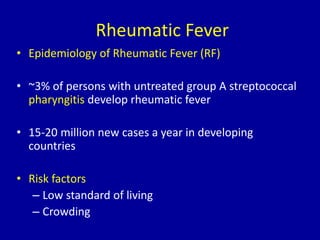
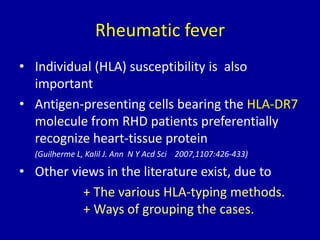
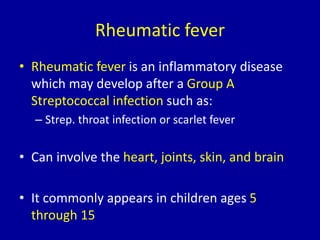
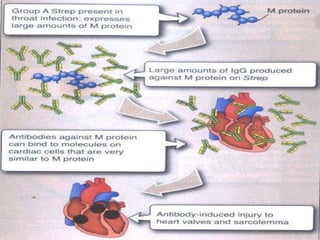
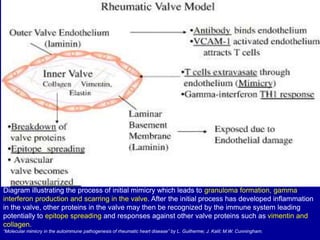
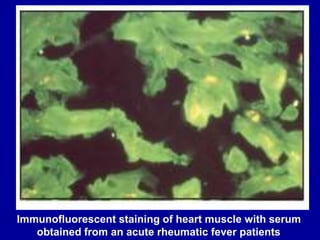
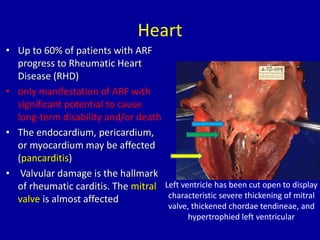
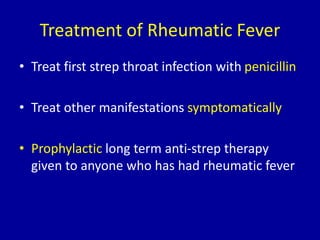
Rheumatic heart disease is an autoimmune condition that can develop after a streptococcal throat infection. The bacteria produces antigens that are similar to heart tissue, leading to molecular mimicry where the immune system attacks the heart. Approximately 3% of untreated streptococcal infections lead to rheumatic fever, which can cause inflammation of the heart valves and joints. Repeated bouts of rheumatic fever over time can cause scarring of the heart valves, leading to stenosis or incompetence that may require valve replacement. Treatment involves antibiotics to prevent future streptococcal infections, while prophylaxis aims to protect those with a history of rheumatic fever from additional attacks.



















![PERI-PROSTHETIC FRACTURE NAIL-PLATE CONSTRUCT [NPC].pptx](https://cdn.slidesharecdn.com/ss_thumbnails/drarunkumardrmohamedashrafperiprostheticfrasturenail-plateconstructnpc-260209164459-7e9d15a1-thumbnail.jpg?width=640&height=640&fit=bounds)
![CTEV [ clubfoot] DR ARUN LAL ,DR MOHAMED ASHRAF travancore medical college k...](https://cdn.slidesharecdn.com/ss_thumbnails/ctevclubfootdrarunlaldrmohamedashraftravancoremedicalcollegekollamkeralaindia-260208063247-18fc466c-thumbnail.jpg?width=640&height=640&fit=bounds)


