Ocular Emergencies Pisit Preechawat, MD Department of Ophthalmology, Ramathibodi Hospital
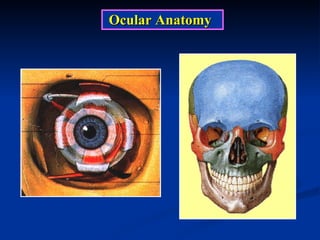
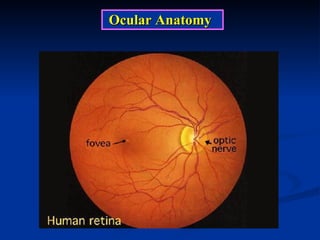
Ocular Anatomy
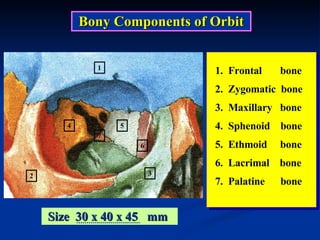
1.  Frontal  bone 2.  Zygomatic  bone 3.  Maxillary  bone 4.  Sphenoid  bone 5.  Ethmoid  bone 6.  Lacrimal  bone 7.  Palatine  bone  1 2 3 4 5 6 7 Bony Components of Orbit Size  30 x 40 x 45  mm
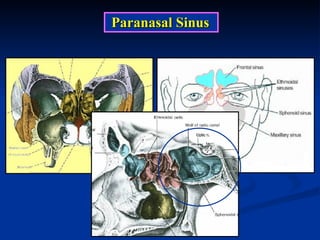
Paranasal Sinus
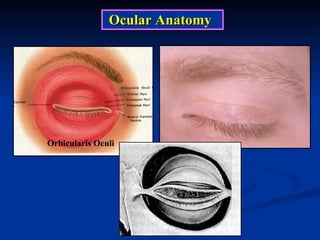
Ocular Anatomy Orbicularis Oculi
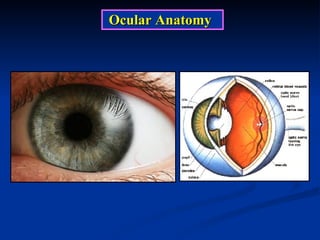
Ocular Anatomy
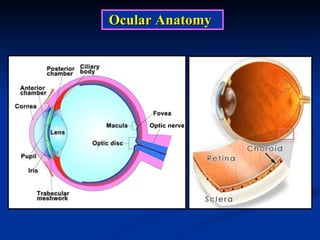
Ocular Anatomy
Ocular Anatomy
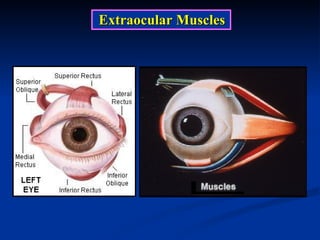
Extraocular Muscles
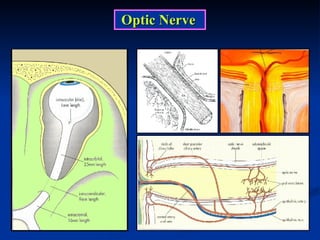
Optic Nerve
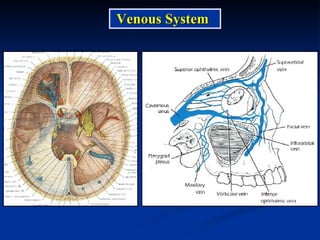
Venous System
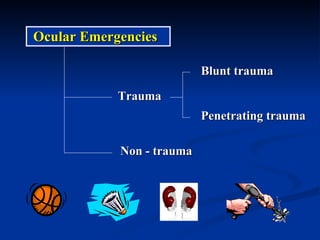
Ocular Emergencies Trauma Non - trauma Blunt trauma Penetrating trauma
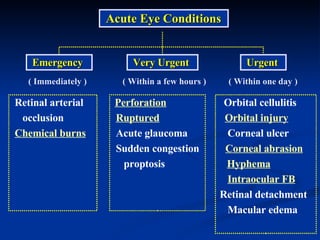
Retinal arterial  Perforation   Orbital cellulitis occlusion   Ruptured   Orbital injury Chemical burns     Acute glaucoma    Corneal ulcer   Sudden congestion  Corneal abrasion   proptosis   Hyphema   Intraocular FB   Retinal detachment   Macular edema ( Immediately )  ( Within a few hours )  ( Within one day ) Acute Eye Conditions Emergency Very Urgent Urgent
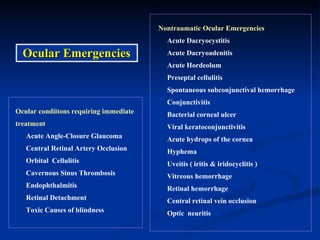
Ocular condiitons requiring immediate  treatment Acute Angle-Closure Glaucoma Central Retinal Artery Occlusion Orbital  Cellulitis Cavernous Sinus Thrombosis Endophthalmitis Retinal Detachment Toxic Causes of blindness Nontraumatic Ocular Emergencies Acute Dacryocystitis Acute Dacryoadenitis Acute Hordeolum Preseptal cellulitis Spontaneous subconjunctival hemorrhage Conjunctivitis Bacterial corneal ulcer Viral keratoconjunctivitis Acute hydrops of the cornea Hyphema Uveitis ( iritis & iridocyclitis ) Vitreous hemorrhage Retinal hemorrhage Central retinal vein occlusion Optic  neuritis Ocular Emergencies
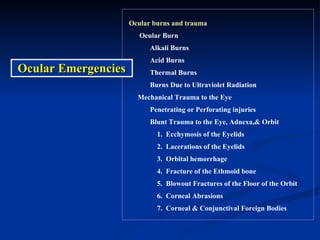
Ocular burns and trauma Ocular Burn Alkali Burns Acid Burns Thermal Burns Burns Due to Ultraviolet Radiation Mechanical Trauma to the Eye Penetrating or Perforating injuries Blunt Trauma to the Eye, Adnexa,& Orbit 1.  Ecchymosis of the Eyelids 2.  Lacerations of the Eyelids 3.  Orbital hemorrhage 4.  Fracture of the Ethmoid bone 5.  Blowout Fractures of the Floor of the Orbit 6.  Corneal Abrasions 7.  Corneal & Conjunctival Foreign Bodies Ocular Emergencies
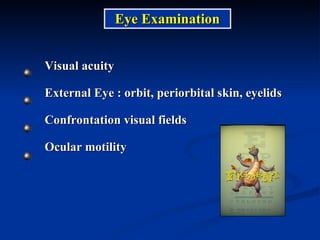
Eye Examination Visual acuity  External Eye : orbit, periorbital skin, eyelids Confrontation visual fields Ocular motility
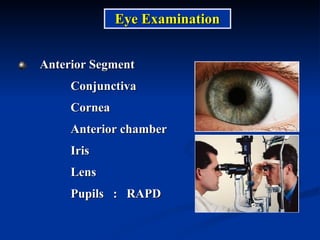
Anterior Segment Conjunctiva Cornea Anterior chamber Iris  Lens Pupils  :  RAPD Eye Examination
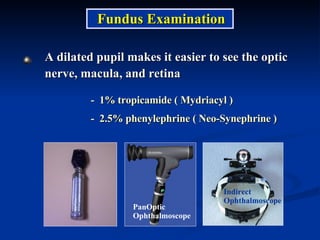
A dilated pupil makes it easier to see the optic nerve, macula, and retina -  1% tropicamide ( Mydriacyl ) -  2.5% phenylephrine ( Neo-Synephrine ) Fundus Examination PanOptic Ophthalmoscope Indirect Ophthalmoscope
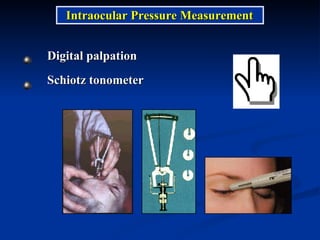
Digital palpation Schiotz tonometer Intraocular Pressure Measurement
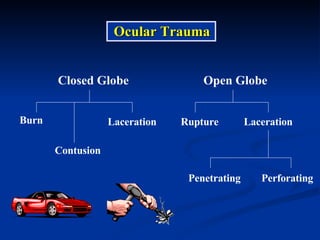
Ocular Trauma Closed Globe Open Globe Burn Contusion Laceration Laceration Penetrating Perforating Rupture
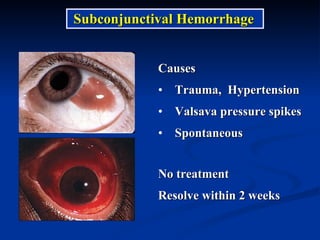
Causes Trauma,  Hypertension Valsava pressure spikes Spontaneous No treatment Resolve within 2 weeks Subconjunctival Hemorrhage
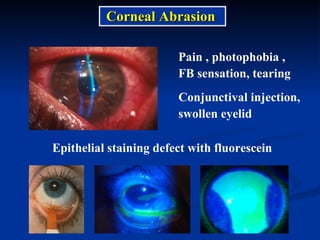
Pain , photophobia ,  FB sensation, tearing Conjunctival injection,  swollen eyelid Corneal Abrasion Epithelial staining defect with fluorescein
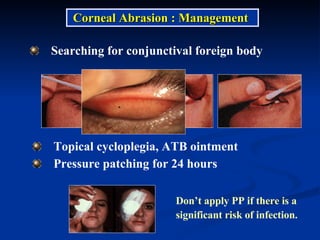
Topical cycloplegia, ATB ointment Pressure patching for 24 hours Searching for conjunctival foreign body Don’t apply PP if there is a significant risk of infection. Corneal Abrasion   : Management
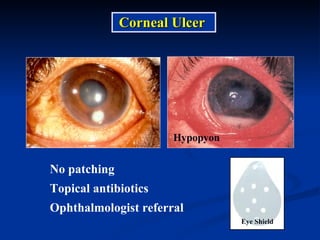
Corneal Ulcer Hypopyon Eye Shield No patching Topical antibiotics Ophthalmologist referral
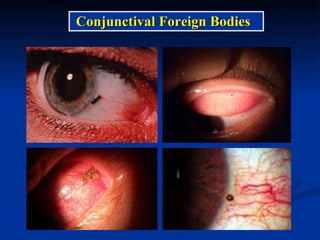
Conjunctival Foreign Bodies
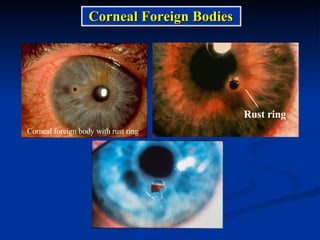
Corneal foreign body with rust ring Rust ring Corneal Foreign Bodies
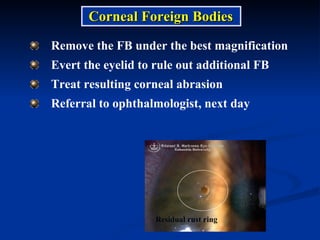
Remove the FB under the best magnification Evert the eyelid to rule out additional FB Treat resulting corneal abrasion Referral to ophthalmologist, next day Residual rust ring Corneal Foreign Bodies
Corneal Foreign Body Removal
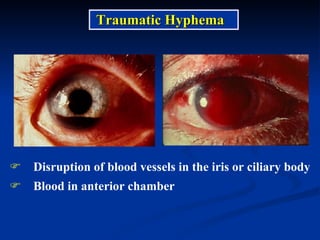
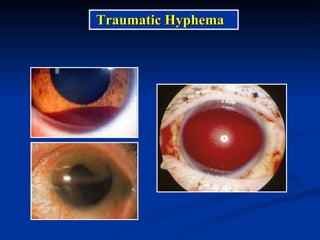
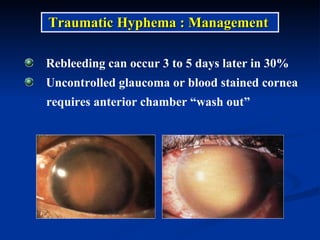
Disruption of blood vessels in the iris or ciliary body Blood in anterior chamber Traumatic Hyphema
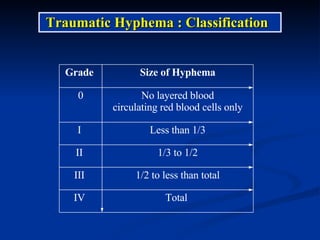
Traumatic Hyphema : Classification Total  IV  1/2  to less than total III  1/3  to  1/2 II  Less than  1/3 I  No layered blood circulating red blood cells only 0 Size of Hyphema Grade 
Traumatic Hyphema
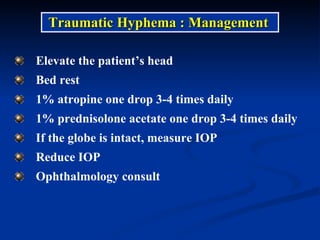
Elevate the patient’s head Bed rest 1% atropine one drop 3-4 times daily 1% prednisolone acetate one drop 3-4 times daily If the globe is intact, measure IOP Reduce IOP Ophthalmology consult Traumatic Hyphema : Management
Rebleeding can occur 3 to 5 days later in 30% Uncontrolled glaucoma or blood stained cornea  requires anterior chamber “wash out”  Traumatic Hyphema : Management
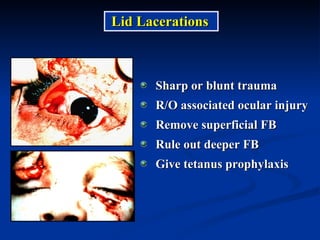
Sharp or blunt trauma R/O associated ocular injury Remove superficial FB Rule out deeper FB Give tetanus prophylaxis  Lid Lacerations
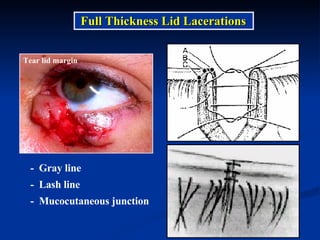
Full Thickness Lid Lacerations -  Gray line -  Lash line -  Mucocutaneous junction Tear lid margin
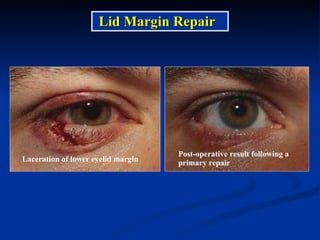
Laceration of lower eyelid margin Post-operative result following a primary repair Lid Margin Repair
Refer to ophthalmologist if there are  associated ocular injuries Lid Lacerations Ruptured globe Lacrimal drainage system Levator aponeurosis Medial canthal tendon Tissue loss ( > 1/3 )
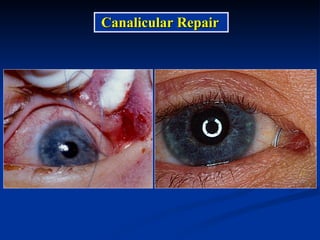
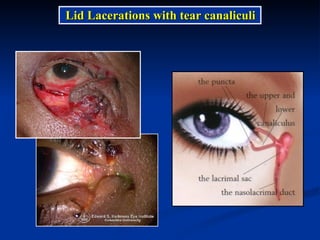
Lid Lacerations   with tear canaliculi
Canalicular Repair
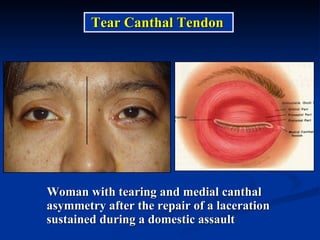
Woman with tearing and medial canthal asymmetry after the repair of a laceration sustained during a domestic assault Tear Canthal Tendon
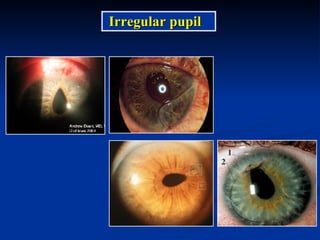
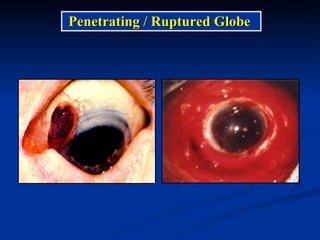
Penetrating / Ruptured Globe  Corneal or scleral lacerations Hypotony (not always present) Severe chemosis & hemorrhage Intraocular contents may be outside the globe Limitation of extraocular motility Shallow anterior chamber Irregular pupil
Irregular pupil
Penetrating / Ruptured Globe
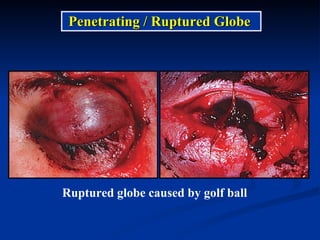
Ruptured globe caused by golf ball Penetrating / Ruptured Globe
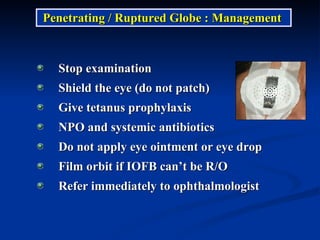
Stop examination Shield the eye (do not patch) Give tetanus prophylaxis NPO and systemic antibiotics Do not apply eye ointment or eye drop Film orbit if IOFB can’t be R/O Refer immediately to ophthalmologist Penetrating / Ruptured Globe : Management
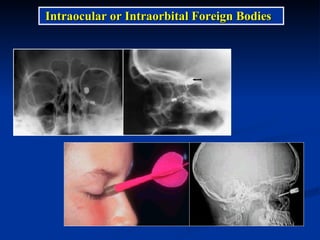
Intraocular or Intraorbital Foreign Bodies
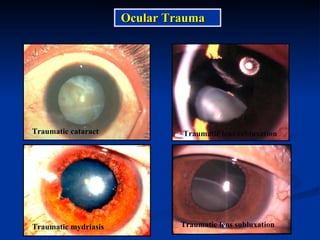
Ocular Trauma Traumatic cataract Traumatic mydriasis Traumatic lens subluxation Traumatic lens subluxation
True ocular emergency  Both acid and alkali burns can be blinding -  Acid burns tend to coagulate proteins, limiting  the depth of penetration. -  Alkali burns can rapidly penetrate the cornea,  causing damage to intraocular structures. Chemical Ocular Injury
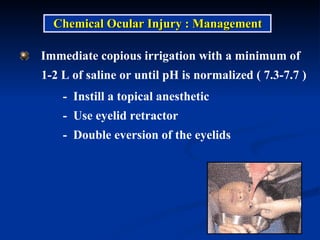
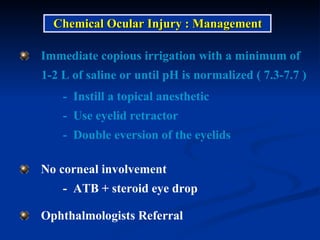
Immediate copious irrigation with a minimum of  1-2 L of saline or until pH is normalized ( 7.3-7.7 ) -  Instill a topical anesthetic -  Use eyelid retractor -  Double eversion of the eyelids Chemical Ocular Injury : Management
Irrigation in case of chemical injury
Immediate copious irrigation with a minimum of  1-2 L of saline or until pH is normalized ( 7.3-7.7 ) -  Instill a topical anesthetic -  Use eyelid retractor -  Double eversion of the eyelids Chemical Ocular Injury : Management Ophthalmologists Referral No corneal involvement  -  ATB + steroid eye drop
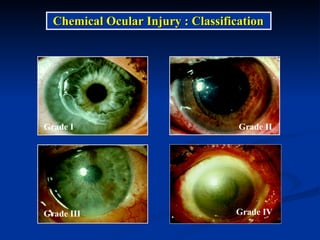
Chemical Ocular Injury : Classification  Grade I Grade II Grade III Grade IV
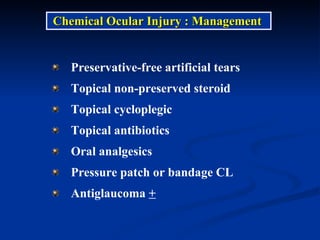
Chemical Ocular Injury : Management  Preservative-free artificial tears  Topical non-preserved steroid Topical cycloplegic Topical antibiotics Oral analgesics Pressure patch or bandage CL Antiglaucoma  +
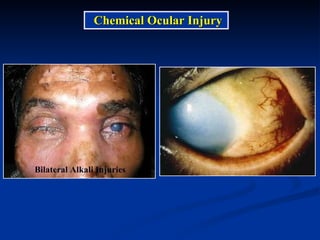
Bilateral Alkali Injuries Chemical Ocular Injury
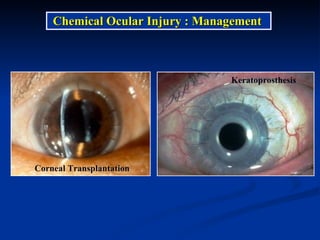
Chemical Ocular Injury : Management  Corneal Transplantation Keratoprosthesis
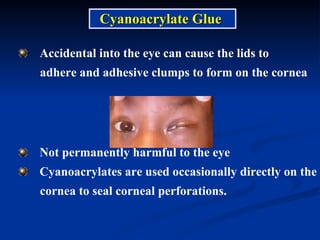
Accidental into the eye can cause the lids to  adhere and adhesive clumps to form on the cornea Not permanently harmful to the eye Cyanoacrylates are used occasionally directly on the  cornea to seal corneal perforations.  Cyanoacrylate Glue
Moisten the glue with eye ointment, and remove as much as can be removed easily without causing  damage to underlying tissue The glue will loosen and become easier to remove  in a few days.  Cyanoacrylate Glue
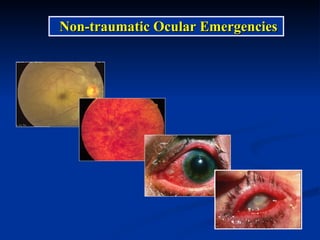
Non-traumatic Ocular Emergencies
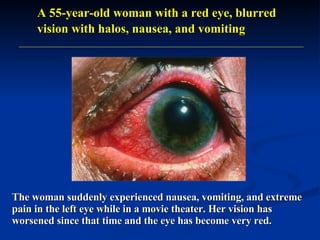
The woman suddenly experienced nausea, vomiting, and extreme pain in the left eye while in a movie theater. Her vision has worsened since that time and the eye has become very red.  A 55-year-old woman with a red eye, blurred vision with halos, nausea, and vomiting
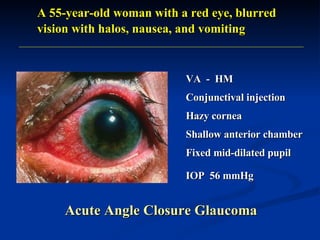
VA  -  HM Conjunctival injection Hazy cornea Shallow anterior chamber Fixed mid-dilated pupil  A 55-year-old woman with a red eye, blurred vision with halos, nausea, and vomiting Acute Angle Closure Glaucoma IOP  56 mmHg
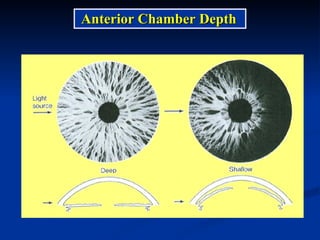
Anterior Chamber Depth
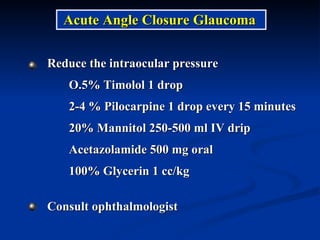
Reduce the intraocular pressure O.5% Timolol 1 drop  2-4 % Pilocarpine 1 drop every 15 minutes 20% Mannitol 250-500 ml IV drip Acetazolamide 500 mg oral  100% Glycerin 1 cc/kg  Consult ophthalmologist Acute Angle Closure Glaucoma
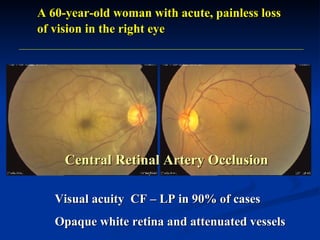
A 60-year-old woman with acute, painless loss of vision in the right eye Visual acuity  CF – LP   in 90% of cases Opaque white retina and attenuated vessels Central Retinal Artery Occlusion
Treatment must be initiated immediately. Ocular massage Inhaled carbogen ( 95% O2 and 5% CO2 ) Reduced intraocular pressure Central Retinal Artery Occlusion Consult ophthalmologist immediately  Anterior chamber paracentesis Direct infusion of t-PA or urokinase in the  ophthalmic artery
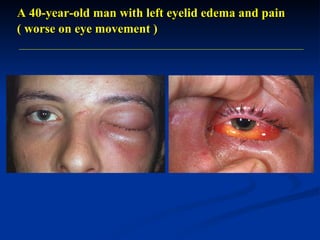
A 40-year-old man with left eyelid edema and pain   ( worse on eye movement )
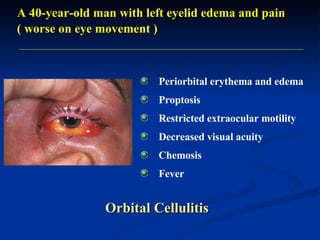
A 40-year-old man with left eyelid edema and pain   ( worse on eye movement ) Periorbital erythema and edema Proptosis Restricted extraocular motility Decreased visual acuity Chemosis Fever Orbital Cellulitis
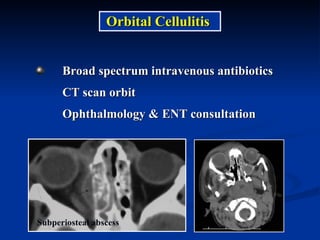
Broad spectrum intravenous antibiotics CT scan orbit Ophthalmology & ENT consultation  Orbital Cellulitis Subperiosteal abscess
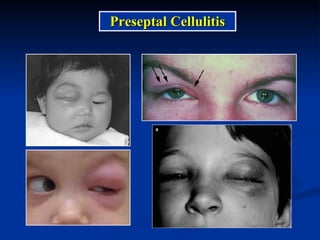
Preseptal Cellulitis
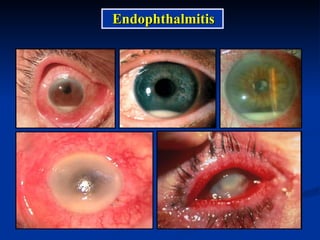
Endophthalmitis
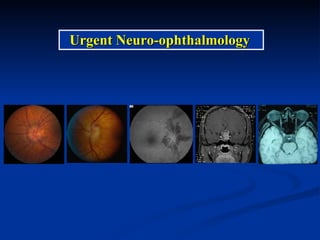
Urgent Neuro-ophthalmology
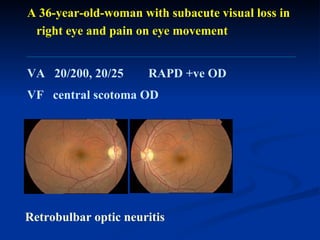
A 36-year-old-woman with subacute visual loss in  right eye and pain on eye movement  VA  20/200, 20/25  RAPD +ve OD VF  central scotoma OD Retrobulbar optic neuritis
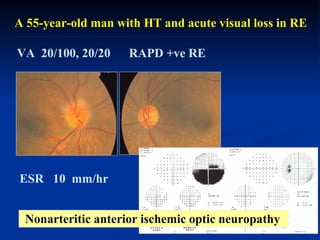
A 55-year-old man with HT and acute visual loss in RE  VA  20/100, 20/20  RAPD +ve RE  Nonarteritic anterior ischemic optic neuropathy ESR  10  mm/hr
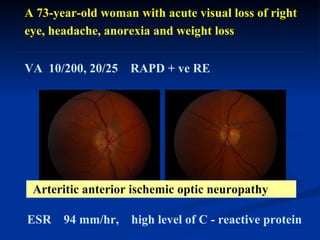
A 73-year-old woman with acute visual loss of right eye, headache, anorexia and weight loss VA  10/200, 20/25  RAPD + ve RE ESR  94 mm/hr,  high level of C - reactive protein Arteritic anterior ischemic optic neuropathy
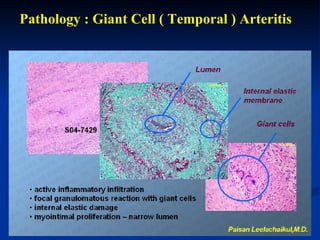
Pathology : Giant Cell ( Temporal ) Arteritis
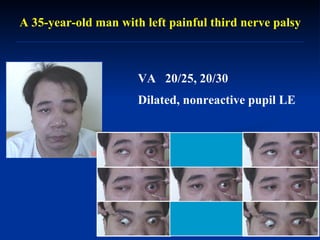
A 35-year-old man with left painful third nerve palsy  VA  20/25, 20/30  Dilated, nonreactive pupil LE
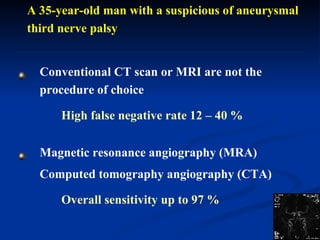
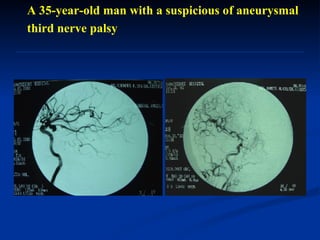
A 35-year-old man with a suspicious of aneurysmal third nerve palsy  Conventional CT scan or MRI are not the procedure of choice High false negative rate 12 – 40 % Magnetic resonance angiography (MRA) Computed tomography angiography (CTA) Overall sensitivity up to 97 %
A 35-year-old man with a suspicious of aneurysmal third nerve palsy
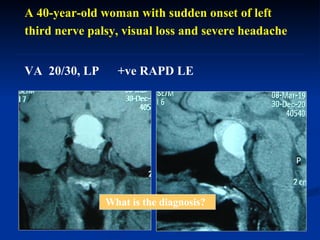
A 40-year-old woman with sudden onset of left  third nerve palsy, visual loss and severe headache  What is the diagnosis? VA  20/30, LP  +ve RAPD LE
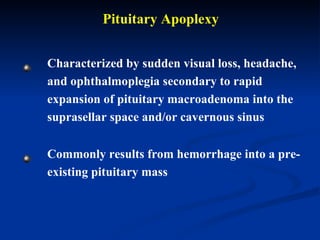
Pituitary Apoplexy Characterized by sudden visual loss, headache, and ophthalmoplegia  secondary to rapid expansion of pituitary macroadenoma into the suprasellar space and/or cavernous sinus   Commonly results from hemorrhage into a pre-existing pituitary mass
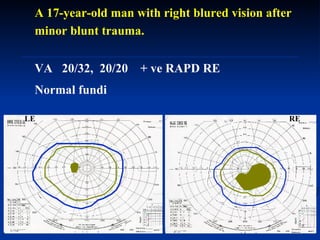
A 17-year-old man with right blured vision after  minor blunt trauma.  VA  20/32,  20/20  + ve RAPD RE Normal fundi  RE LE
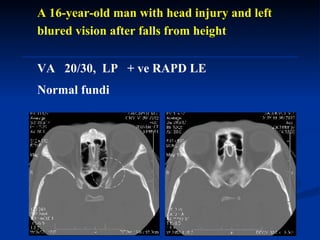
A 16-year-old man with head injury and left blured vision after falls from height  VA  20/30,  LP  + ve RAPD LE  Normal fundi
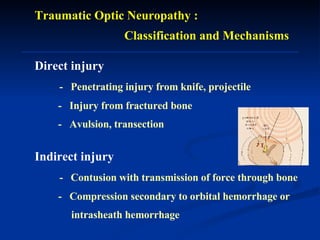
Traumatic Optic Neuropathy :  Classification and Mechanisms Direct injury   -  Penetrating injury from knife, projectile -  Injury from fractured bone -  Avulsion, transection  Indirect injury   -  Contusion with transmission of force through bone -  Compression secondary to orbital hemorrhage or  intrasheath hemorrhage
Clinical Features of Traumatic Optic Neuropathy Most commonly unilateral May be overlooked in setting of significant globe or maxillofacial trauma Reduced visual acuity (  NLP to 20/20 ) Visual field defect : No pathognomonic defect Normal optic disc with development of optic atrophy
Medical Management Options Steroids : Controversial -  Thought to limit free-radical amplification  of the injury response -  Dosages ( low, high, mega)  -  May be harmful   Observation :  57% of untreated patients shown to have 3 lines or more acuity improvement
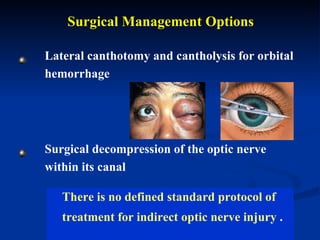
Surgical Management Options Lateral canthotomy and cantholysis for orbital hemorrhage Surgical decompression of the optic nerve within its canal  There is no defined standard protocol of  treatment for indirect optic nerve injury .
Thank you for your attention

Ocular Emergency

  • 1.
    Ocular Emergencies PisitPreechawat, MD Department of Ophthalmology, Ramathibodi Hospital
  • 2.
  • 3.
    1. Frontal bone 2. Zygomatic bone 3. Maxillary bone 4. Sphenoid bone 5. Ethmoid bone 6. Lacrimal bone 7. Palatine bone 1 2 3 4 5 6 7 Bony Components of Orbit Size 30 x 40 x 45 mm
  • 4.
  • 5.
  • 6.
  • 7.
  • 8.
  • 9.
  • 10.
  • 11.
  • 12.
    Ocular Emergencies TraumaNon - trauma Blunt trauma Penetrating trauma
  • 13.
    Retinal arterial Perforation Orbital cellulitis occlusion Ruptured Orbital injury Chemical burns Acute glaucoma Corneal ulcer Sudden congestion Corneal abrasion proptosis Hyphema Intraocular FB Retinal detachment Macular edema ( Immediately ) ( Within a few hours ) ( Within one day ) Acute Eye Conditions Emergency Very Urgent Urgent
  • 14.
    Ocular condiitons requiringimmediate treatment Acute Angle-Closure Glaucoma Central Retinal Artery Occlusion Orbital Cellulitis Cavernous Sinus Thrombosis Endophthalmitis Retinal Detachment Toxic Causes of blindness Nontraumatic Ocular Emergencies Acute Dacryocystitis Acute Dacryoadenitis Acute Hordeolum Preseptal cellulitis Spontaneous subconjunctival hemorrhage Conjunctivitis Bacterial corneal ulcer Viral keratoconjunctivitis Acute hydrops of the cornea Hyphema Uveitis ( iritis & iridocyclitis ) Vitreous hemorrhage Retinal hemorrhage Central retinal vein occlusion Optic neuritis Ocular Emergencies
  • 15.
    Ocular burns andtrauma Ocular Burn Alkali Burns Acid Burns Thermal Burns Burns Due to Ultraviolet Radiation Mechanical Trauma to the Eye Penetrating or Perforating injuries Blunt Trauma to the Eye, Adnexa,& Orbit 1. Ecchymosis of the Eyelids 2. Lacerations of the Eyelids 3. Orbital hemorrhage 4. Fracture of the Ethmoid bone 5. Blowout Fractures of the Floor of the Orbit 6. Corneal Abrasions 7. Corneal & Conjunctival Foreign Bodies Ocular Emergencies
  • 16.
    Eye Examination Visualacuity External Eye : orbit, periorbital skin, eyelids Confrontation visual fields Ocular motility
  • 17.
    Anterior Segment ConjunctivaCornea Anterior chamber Iris Lens Pupils : RAPD Eye Examination
  • 18.
    A dilated pupilmakes it easier to see the optic nerve, macula, and retina - 1% tropicamide ( Mydriacyl ) - 2.5% phenylephrine ( Neo-Synephrine ) Fundus Examination PanOptic Ophthalmoscope Indirect Ophthalmoscope
  • 19.
    Digital palpation Schiotztonometer Intraocular Pressure Measurement
  • 20.
    Ocular Trauma ClosedGlobe Open Globe Burn Contusion Laceration Laceration Penetrating Perforating Rupture
  • 21.
    Causes Trauma, Hypertension Valsava pressure spikes Spontaneous No treatment Resolve within 2 weeks Subconjunctival Hemorrhage
  • 22.
    Pain , photophobia, FB sensation, tearing Conjunctival injection, swollen eyelid Corneal Abrasion Epithelial staining defect with fluorescein
  • 23.
    Topical cycloplegia, ATBointment Pressure patching for 24 hours Searching for conjunctival foreign body Don’t apply PP if there is a significant risk of infection. Corneal Abrasion : Management
  • 24.
    Corneal Ulcer HypopyonEye Shield No patching Topical antibiotics Ophthalmologist referral
  • 25.
  • 26.
    Corneal foreign bodywith rust ring Rust ring Corneal Foreign Bodies
  • 27.
    Remove the FBunder the best magnification Evert the eyelid to rule out additional FB Treat resulting corneal abrasion Referral to ophthalmologist, next day Residual rust ring Corneal Foreign Bodies
  • 28.
  • 29.
    Disruption of bloodvessels in the iris or ciliary body Blood in anterior chamber Traumatic Hyphema
  • 30.
    Traumatic Hyphema :Classification Total IV  1/2 to less than total III  1/3 to 1/2 II  Less than 1/3 I  No layered blood circulating red blood cells only 0 Size of Hyphema Grade 
  • 31.
  • 32.
    Elevate the patient’shead Bed rest 1% atropine one drop 3-4 times daily 1% prednisolone acetate one drop 3-4 times daily If the globe is intact, measure IOP Reduce IOP Ophthalmology consult Traumatic Hyphema : Management
  • 33.
    Rebleeding can occur3 to 5 days later in 30% Uncontrolled glaucoma or blood stained cornea requires anterior chamber “wash out” Traumatic Hyphema : Management
  • 34.
    Sharp or blunttrauma R/O associated ocular injury Remove superficial FB Rule out deeper FB Give tetanus prophylaxis Lid Lacerations
  • 35.
    Full Thickness LidLacerations - Gray line - Lash line - Mucocutaneous junction Tear lid margin
  • 36.
    Laceration of lowereyelid margin Post-operative result following a primary repair Lid Margin Repair
  • 37.
    Refer to ophthalmologistif there are associated ocular injuries Lid Lacerations Ruptured globe Lacrimal drainage system Levator aponeurosis Medial canthal tendon Tissue loss ( > 1/3 )
  • 38.
    Lid Lacerations with tear canaliculi
  • 39.
  • 40.
    Woman with tearingand medial canthal asymmetry after the repair of a laceration sustained during a domestic assault Tear Canthal Tendon
  • 41.
    Penetrating / RupturedGlobe Corneal or scleral lacerations Hypotony (not always present) Severe chemosis & hemorrhage Intraocular contents may be outside the globe Limitation of extraocular motility Shallow anterior chamber Irregular pupil
  • 42.
  • 43.
  • 44.
    Ruptured globe causedby golf ball Penetrating / Ruptured Globe
  • 45.
    Stop examination Shieldthe eye (do not patch) Give tetanus prophylaxis NPO and systemic antibiotics Do not apply eye ointment or eye drop Film orbit if IOFB can’t be R/O Refer immediately to ophthalmologist Penetrating / Ruptured Globe : Management
  • 46.
  • 47.
    Ocular Trauma Traumaticcataract Traumatic mydriasis Traumatic lens subluxation Traumatic lens subluxation
  • 48.
    True ocular emergency Both acid and alkali burns can be blinding - Acid burns tend to coagulate proteins, limiting the depth of penetration. - Alkali burns can rapidly penetrate the cornea, causing damage to intraocular structures. Chemical Ocular Injury
  • 49.
    Immediate copious irrigationwith a minimum of 1-2 L of saline or until pH is normalized ( 7.3-7.7 ) - Instill a topical anesthetic - Use eyelid retractor - Double eversion of the eyelids Chemical Ocular Injury : Management
  • 50.
    Irrigation in caseof chemical injury
  • 51.
    Immediate copious irrigationwith a minimum of 1-2 L of saline or until pH is normalized ( 7.3-7.7 ) - Instill a topical anesthetic - Use eyelid retractor - Double eversion of the eyelids Chemical Ocular Injury : Management Ophthalmologists Referral No corneal involvement - ATB + steroid eye drop
  • 52.
    Chemical Ocular Injury: Classification Grade I Grade II Grade III Grade IV
  • 53.
    Chemical Ocular Injury: Management Preservative-free artificial tears Topical non-preserved steroid Topical cycloplegic Topical antibiotics Oral analgesics Pressure patch or bandage CL Antiglaucoma +
  • 54.
    Bilateral Alkali InjuriesChemical Ocular Injury
  • 55.
    Chemical Ocular Injury: Management Corneal Transplantation Keratoprosthesis
  • 56.
    Accidental into theeye can cause the lids to adhere and adhesive clumps to form on the cornea Not permanently harmful to the eye Cyanoacrylates are used occasionally directly on the cornea to seal corneal perforations. Cyanoacrylate Glue
  • 57.
    Moisten the gluewith eye ointment, and remove as much as can be removed easily without causing damage to underlying tissue The glue will loosen and become easier to remove in a few days. Cyanoacrylate Glue
  • 58.
  • 59.
    The woman suddenlyexperienced nausea, vomiting, and extreme pain in the left eye while in a movie theater. Her vision has worsened since that time and the eye has become very red. A 55-year-old woman with a red eye, blurred vision with halos, nausea, and vomiting
  • 60.
    VA - HM Conjunctival injection Hazy cornea Shallow anterior chamber Fixed mid-dilated pupil A 55-year-old woman with a red eye, blurred vision with halos, nausea, and vomiting Acute Angle Closure Glaucoma IOP 56 mmHg
  • 61.
  • 62.
    Reduce the intraocularpressure O.5% Timolol 1 drop 2-4 % Pilocarpine 1 drop every 15 minutes 20% Mannitol 250-500 ml IV drip Acetazolamide 500 mg oral 100% Glycerin 1 cc/kg Consult ophthalmologist Acute Angle Closure Glaucoma
  • 63.
    A 60-year-old womanwith acute, painless loss of vision in the right eye Visual acuity CF – LP in 90% of cases Opaque white retina and attenuated vessels Central Retinal Artery Occlusion
  • 64.
    Treatment must beinitiated immediately. Ocular massage Inhaled carbogen ( 95% O2 and 5% CO2 ) Reduced intraocular pressure Central Retinal Artery Occlusion Consult ophthalmologist immediately Anterior chamber paracentesis Direct infusion of t-PA or urokinase in the ophthalmic artery
  • 65.
    A 40-year-old manwith left eyelid edema and pain ( worse on eye movement )
  • 66.
    A 40-year-old manwith left eyelid edema and pain ( worse on eye movement ) Periorbital erythema and edema Proptosis Restricted extraocular motility Decreased visual acuity Chemosis Fever Orbital Cellulitis
  • 67.
    Broad spectrum intravenousantibiotics CT scan orbit Ophthalmology & ENT consultation Orbital Cellulitis Subperiosteal abscess
  • 68.
  • 69.
  • 70.
  • 71.
    A 36-year-old-woman withsubacute visual loss in right eye and pain on eye movement VA 20/200, 20/25 RAPD +ve OD VF central scotoma OD Retrobulbar optic neuritis
  • 72.
    A 55-year-old manwith HT and acute visual loss in RE VA 20/100, 20/20 RAPD +ve RE Nonarteritic anterior ischemic optic neuropathy ESR 10 mm/hr
  • 73.
    A 73-year-old womanwith acute visual loss of right eye, headache, anorexia and weight loss VA 10/200, 20/25 RAPD + ve RE ESR 94 mm/hr, high level of C - reactive protein Arteritic anterior ischemic optic neuropathy
  • 74.
    Pathology : GiantCell ( Temporal ) Arteritis
  • 75.
    A 35-year-old manwith left painful third nerve palsy VA 20/25, 20/30 Dilated, nonreactive pupil LE
  • 76.
    A 35-year-old manwith a suspicious of aneurysmal third nerve palsy Conventional CT scan or MRI are not the procedure of choice High false negative rate 12 – 40 % Magnetic resonance angiography (MRA) Computed tomography angiography (CTA) Overall sensitivity up to 97 %
  • 77.
    A 35-year-old manwith a suspicious of aneurysmal third nerve palsy
  • 78.
    A 40-year-old womanwith sudden onset of left third nerve palsy, visual loss and severe headache What is the diagnosis? VA 20/30, LP +ve RAPD LE
  • 79.
    Pituitary Apoplexy Characterizedby sudden visual loss, headache, and ophthalmoplegia secondary to rapid expansion of pituitary macroadenoma into the suprasellar space and/or cavernous sinus Commonly results from hemorrhage into a pre-existing pituitary mass
  • 80.
    A 17-year-old manwith right blured vision after minor blunt trauma. VA 20/32, 20/20 + ve RAPD RE Normal fundi RE LE
  • 81.
    A 16-year-old manwith head injury and left blured vision after falls from height VA 20/30, LP + ve RAPD LE Normal fundi
  • 82.
    Traumatic Optic Neuropathy: Classification and Mechanisms Direct injury - Penetrating injury from knife, projectile - Injury from fractured bone - Avulsion, transection Indirect injury - Contusion with transmission of force through bone - Compression secondary to orbital hemorrhage or intrasheath hemorrhage
  • 83.
    Clinical Features ofTraumatic Optic Neuropathy Most commonly unilateral May be overlooked in setting of significant globe or maxillofacial trauma Reduced visual acuity ( NLP to 20/20 ) Visual field defect : No pathognomonic defect Normal optic disc with development of optic atrophy
  • 84.
    Medical Management OptionsSteroids : Controversial - Thought to limit free-radical amplification of the injury response - Dosages ( low, high, mega) - May be harmful Observation : 57% of untreated patients shown to have 3 lines or more acuity improvement
  • 85.
    Surgical Management OptionsLateral canthotomy and cantholysis for orbital hemorrhage Surgical decompression of the optic nerve within its canal There is no defined standard protocol of treatment for indirect optic nerve injury .
  • 86.
    Thank you foryour attention