Review of DSM5 Mental Disorders for NCMHCE Study
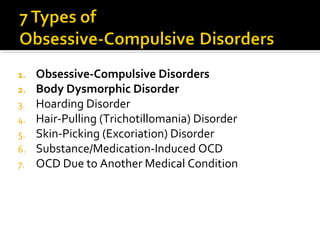
1. Obsessive-Compulsive Disorders
2. Body Dysmorphic Disorder
3. Hoarding Disorder
4. Hair-Pulling (Trichotillomania) Disorder
5. Skin-Picking (Excoriation) Disorder
6. Substance/Medication-Induced OCD
7. OCD Due to Another Medical Condition
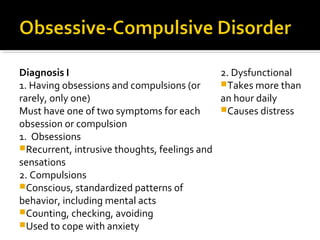
Diagnosis I
1. Having obsessions and compulsions (or
rarely, only one)
Must have one of two symptoms for each
obsession or compulsion
1. Obsessions
Recurrent, intrusive thoughts, feelings and
sensations
2. Compulsions
Conscious, standardized patterns of
behavior, including mental acts
Counting, checking, avoiding
Used to cope with anxiety
2. Dysfunctional
Takes more than
an hour daily
Causes distress
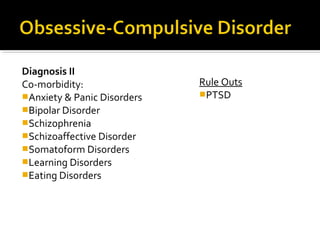
Diagnosis II
Co-morbidity:
Anxiety & Panic Disorders
Bipolar Disorder
Schizophrenia
Schizoaffective Disorder
Somatoform Disorders
Learning Disorders
Eating Disorders
Rule Outs
PTSD
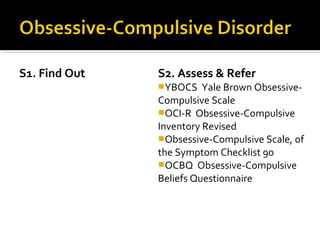
S1. Find Out S2. Assess & Refer
YBOCS Yale Brown Obsessive-
Compulsive Scale
OCI-R Obsessive-Compulsive
Inventory Revised
Obsessive-Compulsive Scale, of
the Symptom Checklist 90
OCBQ Obsessive-Compulsive
Beliefs Questionnaire
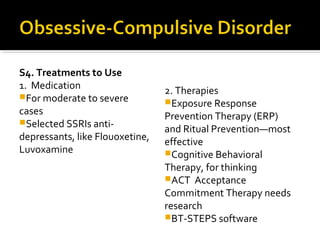
S4. Treatments to Use
1. Medication
For moderate to severe
cases
Selected SSRIs anti-
depressants, like Flouoxetine,
Luvoxamine
2. Therapies
Exposure Response
Prevention Therapy (ERP)
and Ritual Prevention—most
effective
Cognitive Behavioral
Therapy, for thinking
ACT Acceptance
Commitment Therapy needs
research
BT-STEPS software
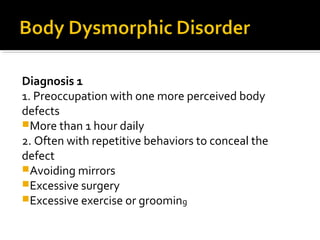
Diagnosis 1
1. Preoccupation with one more perceived body
defects
More than 1 hour daily
2. Often with repetitive behaviors to conceal the
defect
Avoiding mirrors
Excessive surgery
Excessive exercise or grooming
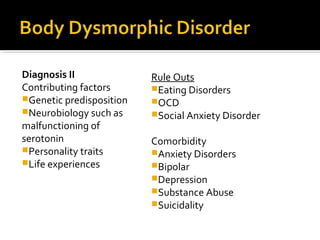
Diagnosis II
Contributing factors
Genetic predisposition
Neurobiology such as
malfunctioning of
serotonin
Personality traits
Life experiences
Rule Outs
Eating Disorders
OCD
Social Anxiety Disorder
Comorbidity
Anxiety Disorders
Bipolar
Depression
Substance Abuse
Suicidality
S1. Find Out
?
S2. Assess & Refer
Tests for Eating
Disorders and Social
Anxiety Disorder?
Tests for OCD?
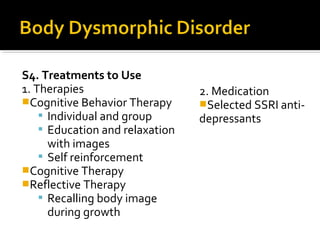
S4. Treatments to Use
1. Therapies
Cognitive Behavior Therapy
 Individual and group
 Education and relaxation
with images
 Self reinforcement
Cognitive Therapy
Reflective Therapy
 Recalling body image
during growth
2. Medication
Selected SSRI anti-
depressants

Obsessive Compulsive & Related Disorders for NCMHCE Study

  • 1.
    Review of DSM5Mental Disorders for NCMHCE Study
  • 2.
    1. Obsessive-Compulsive Disorders 2.Body Dysmorphic Disorder 3. Hoarding Disorder 4. Hair-Pulling (Trichotillomania) Disorder 5. Skin-Picking (Excoriation) Disorder 6. Substance/Medication-Induced OCD 7. OCD Due to Another Medical Condition
  • 4.
    Diagnosis I 1. Havingobsessions and compulsions (or rarely, only one) Must have one of two symptoms for each obsession or compulsion 1. Obsessions Recurrent, intrusive thoughts, feelings and sensations 2. Compulsions Conscious, standardized patterns of behavior, including mental acts Counting, checking, avoiding Used to cope with anxiety 2. Dysfunctional Takes more than an hour daily Causes distress
  • 5.
    Diagnosis II Co-morbidity: Anxiety &Panic Disorders Bipolar Disorder Schizophrenia Schizoaffective Disorder Somatoform Disorders Learning Disorders Eating Disorders Rule Outs PTSD
  • 6.
    S1. Find OutS2. Assess & Refer YBOCS Yale Brown Obsessive- Compulsive Scale OCI-R Obsessive-Compulsive Inventory Revised Obsessive-Compulsive Scale, of the Symptom Checklist 90 OCBQ Obsessive-Compulsive Beliefs Questionnaire
  • 7.
    S4. Treatments toUse 1. Medication For moderate to severe cases Selected SSRIs anti- depressants, like Flouoxetine, Luvoxamine 2. Therapies Exposure Response Prevention Therapy (ERP) and Ritual Prevention—most effective Cognitive Behavioral Therapy, for thinking ACT Acceptance Commitment Therapy needs research BT-STEPS software
  • 9.
    Diagnosis 1 1. Preoccupationwith one more perceived body defects More than 1 hour daily 2. Often with repetitive behaviors to conceal the defect Avoiding mirrors Excessive surgery Excessive exercise or grooming
  • 10.
    Diagnosis II Contributing factors Geneticpredisposition Neurobiology such as malfunctioning of serotonin Personality traits Life experiences Rule Outs Eating Disorders OCD Social Anxiety Disorder Comorbidity Anxiety Disorders Bipolar Depression Substance Abuse Suicidality
  • 11.
    S1. Find Out ? S2.Assess & Refer Tests for Eating Disorders and Social Anxiety Disorder? Tests for OCD?
  • 12.
    S4. Treatments toUse 1. Therapies Cognitive Behavior Therapy  Individual and group  Education and relaxation with images  Self reinforcement Cognitive Therapy Reflective Therapy  Recalling body image during growth 2. Medication Selected SSRI anti- depressants