Review of DSM5 Mental Disorders for NCMHCE Study
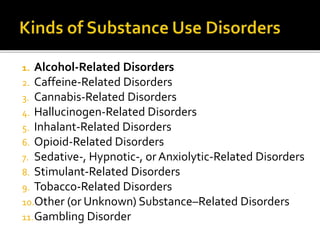
1. Alcohol-Related Disorders
2. Caffeine-Related Disorders
3. Cannabis-Related Disorders
4. Hallucinogen-Related Disorders
5. Inhalant-Related Disorders
6. Opioid-Related Disorders
7. Sedative-, Hypnotic-, or Anxiolytic-Related Disorders
8. Stimulant-Related Disorders
9. Tobacco-Related Disorders
10.Other (or Unknown) Substanceโ€“Related Disorders
11.Gambling Disorder
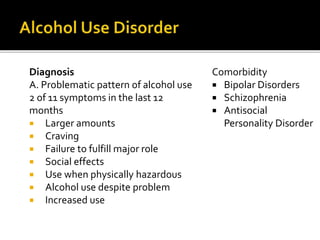
Diagnosis
A. Problematic pattern of alcohol use
2 of 11 symptoms in the last 12
months
๏‚ก Larger amounts
๏‚ก Craving
๏‚ก Failure to fulfill major role
๏‚ก Social effects
๏‚ก Use when physically hazardous
๏‚ก Alcohol use despite problem
๏‚ก Increased use
Comorbidity
๏‚ก Bipolar Disorders
๏‚ก Schizophrenia
๏‚ก Antisocial
Personality Disorder
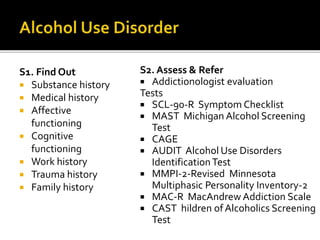
S1. Find Out
๏‚ก Substance history
๏‚ก Medical history
๏‚ก Affective
functioning
๏‚ก Cognitive
functioning
๏‚ก Work history
๏‚ก Trauma history
๏‚ก Family history
S2. Assess & Refer
๏‚ก Addictionologist evaluation
Tests
๏‚ก SCL-90-R Symptom Checklist
๏‚ก MAST Michigan Alcohol Screening
Test
๏‚ก CAGE
๏‚ก AUDIT Alcohol Use Disorders
IdentificationTest
๏‚ก MMPI-2-Revised Minnesota
Multiphasic Personality Inventory-2
๏‚ก MAC-R MacAndrew Addiction Scale
๏‚ก CAST hildren ofAlcoholics Screening
Test
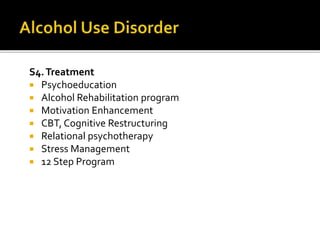
S4.Treatment
๏‚ก Psychoeducation
๏‚ก Alcohol Rehabilitation program
๏‚ก Motivation Enhancement
๏‚ก CBT, Cognitive Restructuring
๏‚ก Relational psychotherapy
๏‚ก Stress Management
๏‚ก 12 Step Program
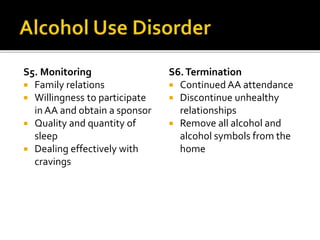
S5. Monitoring
๏‚ก Family relations
๏‚ก Willingness to participate
in AA and obtain a sponsor
๏‚ก Quality and quantity of
sleep
๏‚ก Dealing effectively with
cravings
S6.Termination
๏‚ก Continued AA attendance
๏‚ก Discontinue unhealthy
relationships
๏‚ก Remove all alcohol and
alcohol symbols from the
home

Substance Abuse Disorders for NCMHCE Study

  • 1.
    Review of DSM5Mental Disorders for NCMHCE Study
  • 2.
    1. Alcohol-Related Disorders 2.Caffeine-Related Disorders 3. Cannabis-Related Disorders 4. Hallucinogen-Related Disorders 5. Inhalant-Related Disorders 6. Opioid-Related Disorders 7. Sedative-, Hypnotic-, or Anxiolytic-Related Disorders 8. Stimulant-Related Disorders 9. Tobacco-Related Disorders 10.Other (or Unknown) Substanceโ€“Related Disorders 11.Gambling Disorder
  • 4.
    Diagnosis A. Problematic patternof alcohol use 2 of 11 symptoms in the last 12 months ๏‚ก Larger amounts ๏‚ก Craving ๏‚ก Failure to fulfill major role ๏‚ก Social effects ๏‚ก Use when physically hazardous ๏‚ก Alcohol use despite problem ๏‚ก Increased use Comorbidity ๏‚ก Bipolar Disorders ๏‚ก Schizophrenia ๏‚ก Antisocial Personality Disorder
  • 5.
    S1. Find Out ๏‚กSubstance history ๏‚ก Medical history ๏‚ก Affective functioning ๏‚ก Cognitive functioning ๏‚ก Work history ๏‚ก Trauma history ๏‚ก Family history S2. Assess & Refer ๏‚ก Addictionologist evaluation Tests ๏‚ก SCL-90-R Symptom Checklist ๏‚ก MAST Michigan Alcohol Screening Test ๏‚ก CAGE ๏‚ก AUDIT Alcohol Use Disorders IdentificationTest ๏‚ก MMPI-2-Revised Minnesota Multiphasic Personality Inventory-2 ๏‚ก MAC-R MacAndrew Addiction Scale ๏‚ก CAST hildren ofAlcoholics Screening Test
  • 6.
    S4.Treatment ๏‚ก Psychoeducation ๏‚ก AlcoholRehabilitation program ๏‚ก Motivation Enhancement ๏‚ก CBT, Cognitive Restructuring ๏‚ก Relational psychotherapy ๏‚ก Stress Management ๏‚ก 12 Step Program
  • 7.
    S5. Monitoring ๏‚ก Familyrelations ๏‚ก Willingness to participate in AA and obtain a sponsor ๏‚ก Quality and quantity of sleep ๏‚ก Dealing effectively with cravings S6.Termination ๏‚ก Continued AA attendance ๏‚ก Discontinue unhealthy relationships ๏‚ก Remove all alcohol and alcohol symbols from the home