Review of DSM5 Mental Disorders for NCMHCE Study
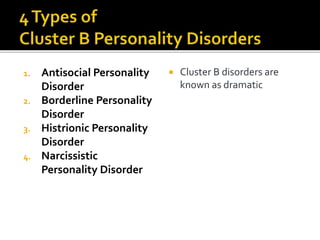
1. Antisocial Personality
Disorder
2. Borderline Personality
Disorder
3. Histrionic Personality
Disorder
4. Narcissistic
Personality Disorder
 Cluster B disorders are
known as dramatic
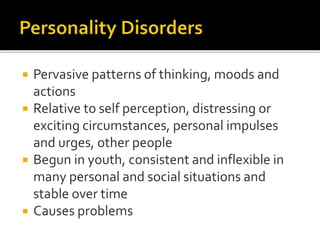
 Pervasive patterns of thinking, moods and
actions
 Relative to self perception, distressing or
exciting circumstances, personal impulses
and urges, other people
 Begun in youth, consistent and inflexible in
many personal and social situations and
stable over time
 Causes problems
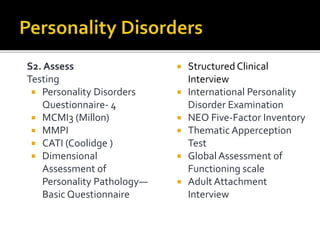
S2. Assess
Testing
 Personality Disorders
Questionnaire- 4
 MCMI3 (Millon)
 MMPI
 CATI (Coolidge )
 Dimensional
Assessment of
Personality Pathology—
Basic Questionnaire
 Structured Clinical
Interview
 International Personality
Disorder Examination
 NEO Five-Factor Inventory
 Thematic Apperception
Test
 Global Assessment of
Functioning scale
 Adult Attachment
Interview
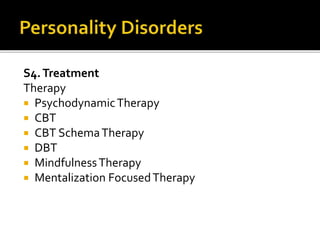
S4.Treatment
Therapy
 PsychodynamicTherapy
 CBT
 CBT SchemaTherapy
 DBT
 MindfulnessTherapy
 Mentalization FocusedTherapy
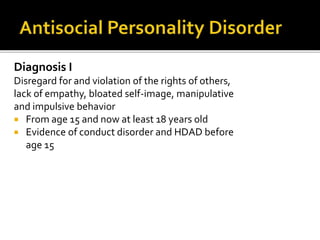
Diagnosis I
Disregard for and violation of the rights of others,
lack of empathy, bloated self-image, manipulative
and impulsive behavior
 From age 15 and now at least 18 years old
 Evidence of conduct disorder and HDAD before
age 15
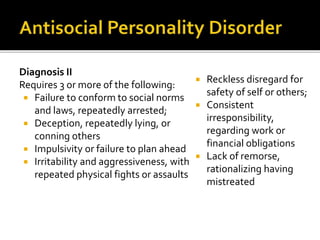
Diagnosis II
Requires 3 or more of the following:
 Failure to conform to social norms
and laws, repeatedly arrested;
 Deception, repeatedly lying, or
conning others
 Impulsivity or failure to plan ahead
 Irritability and aggressiveness, with
repeated physical fights or assaults
 Reckless disregard for
safety of self or others;
 Consistent
irresponsibility,
regarding work or
financial obligations
 Lack of remorse,
rationalizing having
mistreated
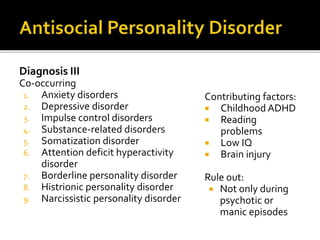
Diagnosis III
Co-occurring
1. Anxiety disorders
2. Depressive disorder
3. Impulse control disorders
4. Substance-related disorders
5. Somatization disorder
6. Attention deficit hyperactivity
disorder
7. Borderline personality disorder
8. Histrionic personality disorder
9. Narcissistic personality disorder
Contributing factors:
 Childhood ADHD
 Reading
problems
 Low IQ
 Brain injury
Rule out:
 Not only during
psychotic or
manic episodes
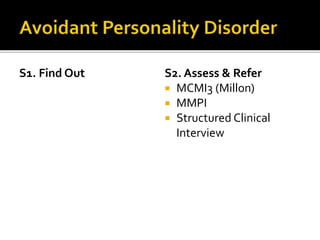
S1. Find Out S2. Assess & Refer
 MCMI3 (Millon)
 MMPI
 Structured Clinical
Interview
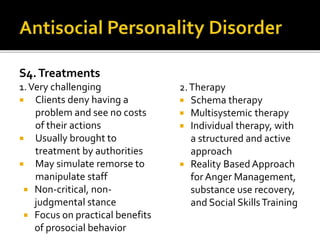
S4.Treatments
1.Very challenging
 Clients deny having a
problem and see no costs
of their actions
 Usually brought to
treatment by authorities
 May simulate remorse to
manipulate staff
 Non-critical, non-
judgmental stance
 Focus on practical benefits
of prosocial behavior
2.Therapy
 Schema therapy
 Multisystemic therapy
 Individual therapy, with
a structured and active
approach
 Reality Based Approach
forAnger Management,
substance use recovery,
and Social SkillsTraining
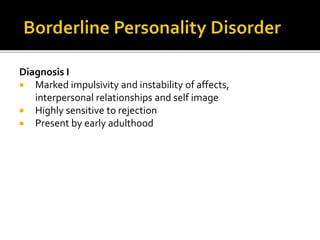
Diagnosis I
 Marked impulsivity and instability of affects,
interpersonal relationships and self image
 Highly sensitive to rejection
 Present by early adulthood
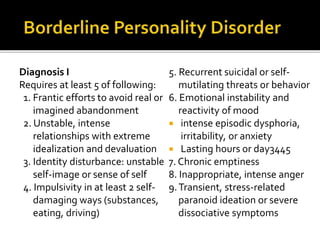
Diagnosis I
Requires at least 5 of following:
1. Frantic efforts to avoid real or
imagined abandonment
2. Unstable, intense
relationships with extreme
idealization and devaluation
3. Identity disturbance: unstable
self-image or sense of self
4. Impulsivity in at least 2 self-
damaging ways (substances,
eating, driving)
5. Recurrent suicidal or self-
mutilating threats or behavior
6. Emotional instability and
reactivity of mood
 intense episodic dysphoria,
irritability, or anxiety
 Lasting hours or day3445
7. Chronic emptiness
8. Inappropriate, intense anger
9.Transient, stress-related
paranoid ideation or severe
dissociative symptoms
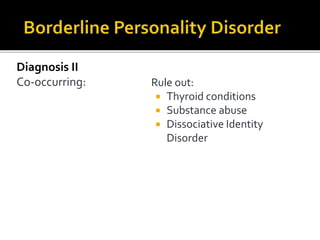
Diagnosis II
Co-occurring: Rule out:
 Thyroid conditions
 Substance abuse
 Dissociative Identity
Disorder
S1. Find Out S2. Assess & Refer
 MCMI3 (Millon)
 MMPI
 Structured Clinical
Interview
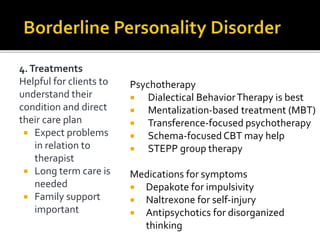
4.Treatments
Helpful for clients to
understand their
condition and direct
their care plan
 Expect problems
in relation to
therapist
 Long term care is
needed
 Family support
important
Psychotherapy
 Dialectical BehaviorTherapy is best
 Mentalization-based treatment (MBT)
 Transference-focused psychotherapy
 Schema-focused CBT may help
 STEPP group therapy
Medications for symptoms
 Depakote for impulsivity
 Naltrexone for self-injury
 Antipsychotics for disorganized
thinking
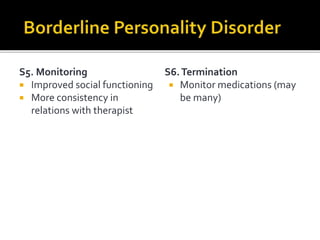
S5. Monitoring
 Improved social functioning
 More consistency in
relations with therapist
S6.Termination
 Monitor medications (may
be many)
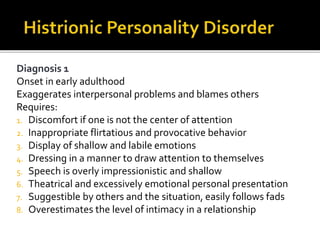
Diagnosis 1
Onset in early adulthood
Exaggerates interpersonal problems and blames others
Requires:
1. Discomfort if one is not the center of attention
2. Inappropriate flirtatious and provocative behavior
3. Display of shallow and labile emotions
4. Dressing in a manner to draw attention to themselves
5. Speech is overly impressionistic and shallow
6. Theatrical and excessively emotional personal presentation
7. Suggestible by others and the situation, easily follows fads
8. Overestimates the level of intimacy in a relationship
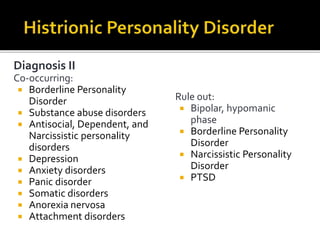
Diagnosis II
Co-occurring:
 Borderline Personality
Disorder
 Substance abuse disorders
 Antisocial, Dependent, and
Narcissistic personality
disorders
 Depression
 Anxiety disorders
 Panic disorder
 Somatic disorders
 Anorexia nervosa
 Attachment disorders
Rule out:
 Bipolar, hypomanic
phase
 Borderline Personality
Disorder
 Narcissistic Personality
Disorder
 PTSD
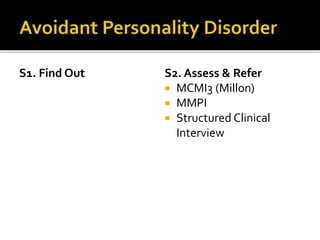
S1. Find Out S2. Assess & Refer
 MCMI3 (Millon)
 MMPI
 Structured Clinical
Interview
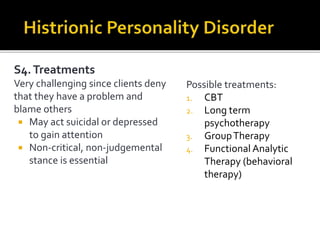
S4.Treatments
Very challenging since clients deny
that they have a problem and
blame others
 May act suicidal or depressed
to gain attention
 Non-critical, non-judgemental
stance is essential
Possible treatments:
1. CBT
2. Long term
psychotherapy
3. GroupTherapy
4. Functional Analytic
Therapy (behavioral
therapy)
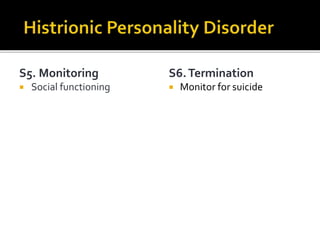
S5. Monitoring
 Social functioning
S6.Termination
 Monitor for suicide
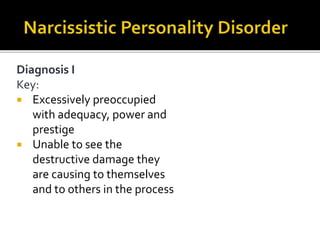
Diagnosis I
Key:
 Excessively preoccupied
with adequacy, power and
prestige
 Unable to see the
destructive damage they
are causing to themselves
and to others in the process
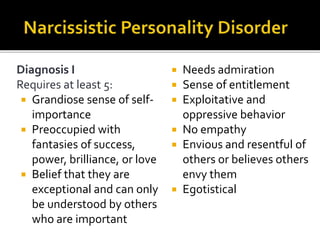
Diagnosis I
Requires at least 5:
 Grandiose sense of self-
importance
 Preoccupied with
fantasies of success,
power, brilliance, or love
 Belief that they are
exceptional and can only
be understood by others
who are important
 Needs admiration
 Sense of entitlement
 Exploitative and
oppressive behavior
 No empathy
 Envious and resentful of
others or believes others
envy them
 Egotistical
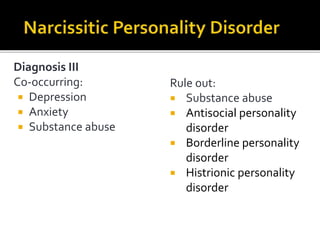
Diagnosis III
Co-occurring:
 Depression
 Anxiety
 Substance abuse
Rule out:
 Substance abuse
 Antisocial personality
disorder
 Borderline personality
disorder
 Histrionic personality
disorder
S1. Find Out S2. Assess & Refer
 MCMI3 (Millon)
 MMPI
 Structured Clinical
Interview
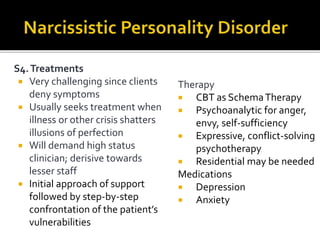
S4.Treatments
 Very challenging since clients
deny symptoms
 Usually seeks treatment when
illness or other crisis shatters
illusions of perfection
 Will demand high status
clinician; derisive towards
lesser staff
 Initial approach of support
followed by step-by-step
confrontation of the patient’s
vulnerabilities
Therapy
 CBT as SchemaTherapy
 Psychoanalytic for anger,
envy, self-sufficiency
 Expressive, conflict-solving
psychotherapy
 Residential may be needed
Medications
 Depression
 Anxiety
S5. Monitoring
 Improved social
functioning
S6.Termination
 Monitor for suicide

Cluster B Personality Disorders for NCMHCE Study

  • 1.
    Review of DSM5Mental Disorders for NCMHCE Study
  • 2.
    1. Antisocial Personality Disorder 2.Borderline Personality Disorder 3. Histrionic Personality Disorder 4. Narcissistic Personality Disorder  Cluster B disorders are known as dramatic
  • 3.
     Pervasive patternsof thinking, moods and actions  Relative to self perception, distressing or exciting circumstances, personal impulses and urges, other people  Begun in youth, consistent and inflexible in many personal and social situations and stable over time  Causes problems
  • 4.
    S2. Assess Testing  PersonalityDisorders Questionnaire- 4  MCMI3 (Millon)  MMPI  CATI (Coolidge )  Dimensional Assessment of Personality Pathology— Basic Questionnaire  Structured Clinical Interview  International Personality Disorder Examination  NEO Five-Factor Inventory  Thematic Apperception Test  Global Assessment of Functioning scale  Adult Attachment Interview
  • 5.
    S4.Treatment Therapy  PsychodynamicTherapy  CBT CBT SchemaTherapy  DBT  MindfulnessTherapy  Mentalization FocusedTherapy
  • 7.
    Diagnosis I Disregard forand violation of the rights of others, lack of empathy, bloated self-image, manipulative and impulsive behavior  From age 15 and now at least 18 years old  Evidence of conduct disorder and HDAD before age 15
  • 8.
    Diagnosis II Requires 3or more of the following:  Failure to conform to social norms and laws, repeatedly arrested;  Deception, repeatedly lying, or conning others  Impulsivity or failure to plan ahead  Irritability and aggressiveness, with repeated physical fights or assaults  Reckless disregard for safety of self or others;  Consistent irresponsibility, regarding work or financial obligations  Lack of remorse, rationalizing having mistreated
  • 9.
    Diagnosis III Co-occurring 1. Anxietydisorders 2. Depressive disorder 3. Impulse control disorders 4. Substance-related disorders 5. Somatization disorder 6. Attention deficit hyperactivity disorder 7. Borderline personality disorder 8. Histrionic personality disorder 9. Narcissistic personality disorder Contributing factors:  Childhood ADHD  Reading problems  Low IQ  Brain injury Rule out:  Not only during psychotic or manic episodes
  • 10.
    S1. Find OutS2. Assess & Refer  MCMI3 (Millon)  MMPI  Structured Clinical Interview
  • 11.
    S4.Treatments 1.Very challenging  Clientsdeny having a problem and see no costs of their actions  Usually brought to treatment by authorities  May simulate remorse to manipulate staff  Non-critical, non- judgmental stance  Focus on practical benefits of prosocial behavior 2.Therapy  Schema therapy  Multisystemic therapy  Individual therapy, with a structured and active approach  Reality Based Approach forAnger Management, substance use recovery, and Social SkillsTraining
  • 13.
    Diagnosis I  Markedimpulsivity and instability of affects, interpersonal relationships and self image  Highly sensitive to rejection  Present by early adulthood
  • 14.
    Diagnosis I Requires atleast 5 of following: 1. Frantic efforts to avoid real or imagined abandonment 2. Unstable, intense relationships with extreme idealization and devaluation 3. Identity disturbance: unstable self-image or sense of self 4. Impulsivity in at least 2 self- damaging ways (substances, eating, driving) 5. Recurrent suicidal or self- mutilating threats or behavior 6. Emotional instability and reactivity of mood  intense episodic dysphoria, irritability, or anxiety  Lasting hours or day3445 7. Chronic emptiness 8. Inappropriate, intense anger 9.Transient, stress-related paranoid ideation or severe dissociative symptoms
  • 15.
    Diagnosis II Co-occurring: Ruleout:  Thyroid conditions  Substance abuse  Dissociative Identity Disorder
  • 16.
    S1. Find OutS2. Assess & Refer  MCMI3 (Millon)  MMPI  Structured Clinical Interview
  • 17.
    4.Treatments Helpful for clientsto understand their condition and direct their care plan  Expect problems in relation to therapist  Long term care is needed  Family support important Psychotherapy  Dialectical BehaviorTherapy is best  Mentalization-based treatment (MBT)  Transference-focused psychotherapy  Schema-focused CBT may help  STEPP group therapy Medications for symptoms  Depakote for impulsivity  Naltrexone for self-injury  Antipsychotics for disorganized thinking
  • 18.
    S5. Monitoring  Improvedsocial functioning  More consistency in relations with therapist S6.Termination  Monitor medications (may be many)
  • 20.
    Diagnosis 1 Onset inearly adulthood Exaggerates interpersonal problems and blames others Requires: 1. Discomfort if one is not the center of attention 2. Inappropriate flirtatious and provocative behavior 3. Display of shallow and labile emotions 4. Dressing in a manner to draw attention to themselves 5. Speech is overly impressionistic and shallow 6. Theatrical and excessively emotional personal presentation 7. Suggestible by others and the situation, easily follows fads 8. Overestimates the level of intimacy in a relationship
  • 21.
    Diagnosis II Co-occurring:  BorderlinePersonality Disorder  Substance abuse disorders  Antisocial, Dependent, and Narcissistic personality disorders  Depression  Anxiety disorders  Panic disorder  Somatic disorders  Anorexia nervosa  Attachment disorders Rule out:  Bipolar, hypomanic phase  Borderline Personality Disorder  Narcissistic Personality Disorder  PTSD
  • 22.
    S1. Find OutS2. Assess & Refer  MCMI3 (Millon)  MMPI  Structured Clinical Interview
  • 23.
    S4.Treatments Very challenging sinceclients deny that they have a problem and blame others  May act suicidal or depressed to gain attention  Non-critical, non-judgemental stance is essential Possible treatments: 1. CBT 2. Long term psychotherapy 3. GroupTherapy 4. Functional Analytic Therapy (behavioral therapy)
  • 24.
    S5. Monitoring  Socialfunctioning S6.Termination  Monitor for suicide
  • 26.
    Diagnosis I Key:  Excessivelypreoccupied with adequacy, power and prestige  Unable to see the destructive damage they are causing to themselves and to others in the process
  • 27.
    Diagnosis I Requires atleast 5:  Grandiose sense of self- importance  Preoccupied with fantasies of success, power, brilliance, or love  Belief that they are exceptional and can only be understood by others who are important  Needs admiration  Sense of entitlement  Exploitative and oppressive behavior  No empathy  Envious and resentful of others or believes others envy them  Egotistical
  • 28.
    Diagnosis III Co-occurring:  Depression Anxiety  Substance abuse Rule out:  Substance abuse  Antisocial personality disorder  Borderline personality disorder  Histrionic personality disorder
  • 29.
    S1. Find OutS2. Assess & Refer  MCMI3 (Millon)  MMPI  Structured Clinical Interview
  • 30.
    S4.Treatments  Very challengingsince clients deny symptoms  Usually seeks treatment when illness or other crisis shatters illusions of perfection  Will demand high status clinician; derisive towards lesser staff  Initial approach of support followed by step-by-step confrontation of the patient’s vulnerabilities Therapy  CBT as SchemaTherapy  Psychoanalytic for anger, envy, self-sufficiency  Expressive, conflict-solving psychotherapy  Residential may be needed Medications  Depression  Anxiety
  • 31.
    S5. Monitoring  Improvedsocial functioning S6.Termination  Monitor for suicide