Review of DSM5 Mental Disorders for NCMHCE Study
1. Bipolar I Disorders
2. Bipolar II Disorder
3. Cyclothymic Disorder
4. Substance/ Medication Induced Biolar and Related
Disorder
Diagnosis I
๏‚กTypically repetitive cycle
of depression and mania,
possibly between
depressive episodes
๏‚กEither phase can lead to
delusions and
hallucinations
๏‚กChronic but can have
years between episodes
๏‚กOften begins in early 20s
1. Manic periods
๏‚ก Abnormal high or irritable mood
๏‚ก Increased energy and goal-
directed activity
๏‚ก Lasts 1 week or more (less if
hospitalized)
๏‚ก Includes 3-4 of:
๏‚ก Grandiosity
๏‚ก Racing thoughts
๏‚ก Little sleep
๏‚ก Distractibility
๏‚ก High risk activities
๏‚ก Pressured speech and activity
2. Sufficient intensity of episode
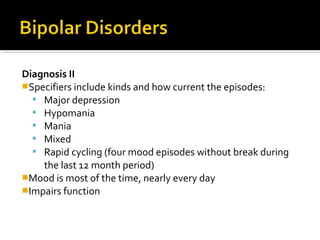
Diagnosis II
๏‚กSpecifiers include kinds and how current the episodes:
๏‚ง Major depression
๏‚ง Hypomania
๏‚ง Mania
๏‚ง Mixed
๏‚ง Rapid cycling (four mood episodes without break during
the last 12 month period)
๏‚กMood is most of the time, nearly every day
๏‚กImpairs function
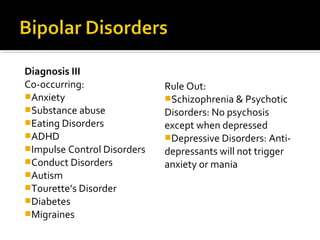
Diagnosis III
Co-occurring:
๏‚กAnxiety
๏‚กSubstance abuse
๏‚กEating Disorders
๏‚กADHD
๏‚กImpulse Control Disorders
๏‚กConduct Disorders
๏‚กAutism
๏‚กTouretteโ€™s Disorder
๏‚กDiabetes
๏‚กMigraines
Rule Out:
๏‚กSchizophrenia & Psychotic
Disorders: No psychosis
except when depressed
๏‚กDepressive Disorders: Anti-
depressants will not trigger
anxiety or mania
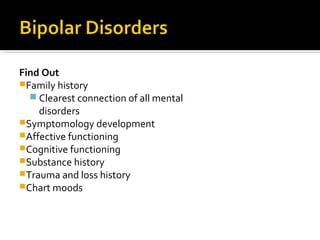
Find Out
๏‚กFamily history
๏‚ก Clearest connection of all mental
disorders
๏‚กSymptomology development
๏‚กAffective functioning
๏‚กCognitive functioning
๏‚กSubstance history
๏‚กTrauma and loss history
๏‚กChart moods
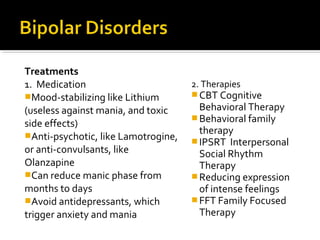
Treatments
1. Medication
๏‚กMood-stabilizing like Lithium
(useless against mania, and toxic
side effects)
๏‚กAnti-psychotic, like Lamotrogine,
or anti-convulsants, like
Olanzapine
๏‚กCan reduce manic phase from
months to days
๏‚กAvoid antidepressants, which
trigger anxiety and mania
2. Therapies
๏‚กCBT Cognitive
Behavioral Therapy
๏‚กBehavioral family
therapy
๏‚กIPSRT Interpersonal
Social Rhythm
Therapy
๏‚กReducing expression
of intense feelings
๏‚กFFT Family Focused
Therapy
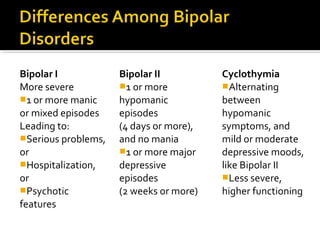
Cyclothymia
๏‚กAlternating
between
hypomanic
symptoms, and
mild or moderate
depressive moods,
like Bipolar II
๏‚กLess severe,
higher functioning
Bipolar II
๏‚ก1 or more
hypomanic
episodes
(4 days or more),
and no mania
๏‚ก1 or more major
depressive
episodes
(2 weeks or more)
Bipolar I
More severe
๏‚ก1 or more manic
or mixed episodes
Leading to:
๏‚กSerious problems,
or
๏‚กHospitalization,
or
๏‚กPsychotic
features
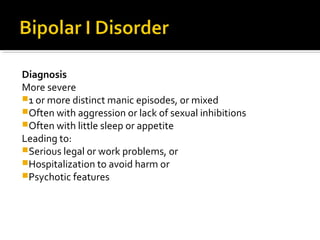
Diagnosis
More severe
๏‚ก1 or more distinct manic episodes, or mixed
๏‚กOften with aggression or lack of sexual inhibitions
๏‚กOften with little sleep or appetite
Leading to:
๏‚กSerious legal or work problems, or
๏‚กHospitalization to avoid harm or
๏‚กPsychotic features
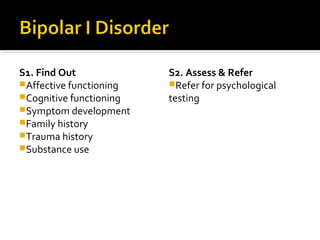
S1. Find Out
๏‚กAffective functioning
๏‚กCognitive functioning
๏‚กSymptom development
๏‚กFamily history
๏‚กTrauma history
๏‚กSubstance use
S2. Assess & Refer
๏‚กRefer for psychological
testing
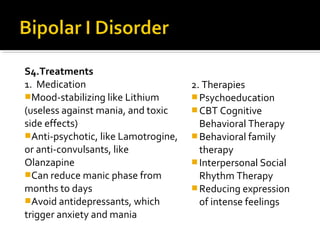
S4.Treatments
1. Medication
๏‚กMood-stabilizing like Lithium
(useless against mania, and toxic
side effects)
๏‚กAnti-psychotic, like Lamotrogine,
or anti-convulsants, like
Olanzapine
๏‚กCan reduce manic phase from
months to days
๏‚กAvoid antidepressants, which
trigger anxiety and mania
2. Therapies
๏‚กPsychoeducation
๏‚กCBT Cognitive
Behavioral Therapy
๏‚กBehavioral family
therapy
๏‚กInterpersonal Social
Rhythm Therapy
๏‚กReducing expression
of intense feelings
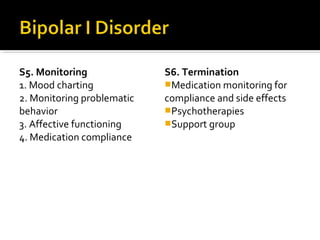
S5. Monitoring
1. Mood charting
2. Monitoring problematic
behavior
3. Affective functioning
4. Medication compliance
S6. Termination
๏‚กMedication monitoring for
compliance and side effects
๏‚กPsychotherapies
๏‚กSupport group
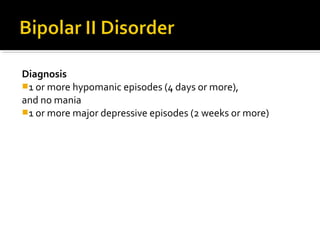
Diagnosis
๏‚ก1 or more hypomanic episodes (4 days or more),
and no mania
๏‚ก1 or more major depressive episodes (2 weeks or more)
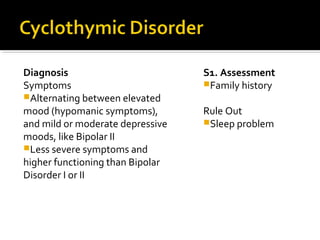
Diagnosis
Symptoms
๏‚กAlternating between elevated
mood (hypomanic symptoms),
and mild or moderate depressive
moods, like Bipolar II
๏‚กLess severe symptoms and
higher functioning than Bipolar
Disorder I or II
S1. Assessment
๏‚กFamily history
Rule Out
๏‚กSleep problem
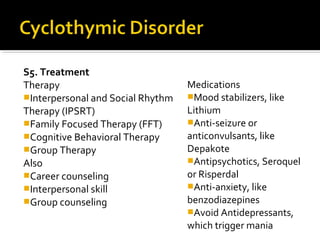
S5. Treatment
Therapy
๏‚กInterpersonal and Social Rhythm
Therapy (IPSRT)
๏‚กFamily Focused Therapy (FFT)
๏‚กCognitive Behavioral Therapy
๏‚กGroup Therapy
Also
๏‚กCareer counseling
๏‚กInterpersonal skill
๏‚กGroup counseling
Medications
๏‚กMood stabilizers, like
Lithium
๏‚กAnti-seizure or
anticonvulsants, like
Depakote
๏‚กAntipsychotics, Seroquel
or Risperdal
๏‚กAnti-anxiety, like
benzodiazepines
๏‚กAvoid Antidepressants,
which trigger mania
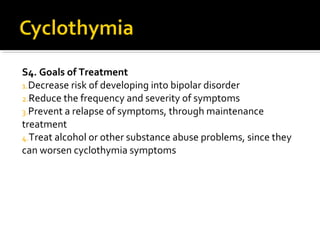
S4. Goals of Treatment
1.Decrease risk of developing into bipolar disorder
2.Reduce the frequency and severity of symptoms
3.Prevent a relapse of symptoms, through maintenance
treatment
4.Treat alcohol or other substance abuse problems, since they
can worsen cyclothymia symptoms

Bipolar & Related Disorders for NCMHCE Study

  • 1.
    Review of DSM5Mental Disorders for NCMHCE Study
  • 2.
    1. Bipolar IDisorders 2. Bipolar II Disorder 3. Cyclothymic Disorder 4. Substance/ Medication Induced Biolar and Related Disorder
  • 3.
    Diagnosis I ๏‚กTypically repetitivecycle of depression and mania, possibly between depressive episodes ๏‚กEither phase can lead to delusions and hallucinations ๏‚กChronic but can have years between episodes ๏‚กOften begins in early 20s 1. Manic periods ๏‚ก Abnormal high or irritable mood ๏‚ก Increased energy and goal- directed activity ๏‚ก Lasts 1 week or more (less if hospitalized) ๏‚ก Includes 3-4 of: ๏‚ก Grandiosity ๏‚ก Racing thoughts ๏‚ก Little sleep ๏‚ก Distractibility ๏‚ก High risk activities ๏‚ก Pressured speech and activity 2. Sufficient intensity of episode
  • 4.
    Diagnosis II ๏‚กSpecifiers includekinds and how current the episodes: ๏‚ง Major depression ๏‚ง Hypomania ๏‚ง Mania ๏‚ง Mixed ๏‚ง Rapid cycling (four mood episodes without break during the last 12 month period) ๏‚กMood is most of the time, nearly every day ๏‚กImpairs function
  • 5.
    Diagnosis III Co-occurring: ๏‚กAnxiety ๏‚กSubstance abuse ๏‚กEatingDisorders ๏‚กADHD ๏‚กImpulse Control Disorders ๏‚กConduct Disorders ๏‚กAutism ๏‚กTouretteโ€™s Disorder ๏‚กDiabetes ๏‚กMigraines Rule Out: ๏‚กSchizophrenia & Psychotic Disorders: No psychosis except when depressed ๏‚กDepressive Disorders: Anti- depressants will not trigger anxiety or mania
  • 6.
    Find Out ๏‚กFamily history ๏‚กClearest connection of all mental disorders ๏‚กSymptomology development ๏‚กAffective functioning ๏‚กCognitive functioning ๏‚กSubstance history ๏‚กTrauma and loss history ๏‚กChart moods
  • 7.
    Treatments 1. Medication ๏‚กMood-stabilizing likeLithium (useless against mania, and toxic side effects) ๏‚กAnti-psychotic, like Lamotrogine, or anti-convulsants, like Olanzapine ๏‚กCan reduce manic phase from months to days ๏‚กAvoid antidepressants, which trigger anxiety and mania 2. Therapies ๏‚กCBT Cognitive Behavioral Therapy ๏‚กBehavioral family therapy ๏‚กIPSRT Interpersonal Social Rhythm Therapy ๏‚กReducing expression of intense feelings ๏‚กFFT Family Focused Therapy
  • 8.
    Cyclothymia ๏‚กAlternating between hypomanic symptoms, and mild ormoderate depressive moods, like Bipolar II ๏‚กLess severe, higher functioning Bipolar II ๏‚ก1 or more hypomanic episodes (4 days or more), and no mania ๏‚ก1 or more major depressive episodes (2 weeks or more) Bipolar I More severe ๏‚ก1 or more manic or mixed episodes Leading to: ๏‚กSerious problems, or ๏‚กHospitalization, or ๏‚กPsychotic features
  • 10.
    Diagnosis More severe ๏‚ก1 ormore distinct manic episodes, or mixed ๏‚กOften with aggression or lack of sexual inhibitions ๏‚กOften with little sleep or appetite Leading to: ๏‚กSerious legal or work problems, or ๏‚กHospitalization to avoid harm or ๏‚กPsychotic features
  • 11.
    S1. Find Out ๏‚กAffectivefunctioning ๏‚กCognitive functioning ๏‚กSymptom development ๏‚กFamily history ๏‚กTrauma history ๏‚กSubstance use S2. Assess & Refer ๏‚กRefer for psychological testing
  • 12.
    S4.Treatments 1. Medication ๏‚กMood-stabilizing likeLithium (useless against mania, and toxic side effects) ๏‚กAnti-psychotic, like Lamotrogine, or anti-convulsants, like Olanzapine ๏‚กCan reduce manic phase from months to days ๏‚กAvoid antidepressants, which trigger anxiety and mania 2. Therapies ๏‚กPsychoeducation ๏‚กCBT Cognitive Behavioral Therapy ๏‚กBehavioral family therapy ๏‚กInterpersonal Social Rhythm Therapy ๏‚กReducing expression of intense feelings
  • 13.
    S5. Monitoring 1. Moodcharting 2. Monitoring problematic behavior 3. Affective functioning 4. Medication compliance S6. Termination ๏‚กMedication monitoring for compliance and side effects ๏‚กPsychotherapies ๏‚กSupport group
  • 15.
    Diagnosis ๏‚ก1 or morehypomanic episodes (4 days or more), and no mania ๏‚ก1 or more major depressive episodes (2 weeks or more)
  • 17.
    Diagnosis Symptoms ๏‚กAlternating between elevated mood(hypomanic symptoms), and mild or moderate depressive moods, like Bipolar II ๏‚กLess severe symptoms and higher functioning than Bipolar Disorder I or II S1. Assessment ๏‚กFamily history Rule Out ๏‚กSleep problem
  • 18.
    S5. Treatment Therapy ๏‚กInterpersonal andSocial Rhythm Therapy (IPSRT) ๏‚กFamily Focused Therapy (FFT) ๏‚กCognitive Behavioral Therapy ๏‚กGroup Therapy Also ๏‚กCareer counseling ๏‚กInterpersonal skill ๏‚กGroup counseling Medications ๏‚กMood stabilizers, like Lithium ๏‚กAnti-seizure or anticonvulsants, like Depakote ๏‚กAntipsychotics, Seroquel or Risperdal ๏‚กAnti-anxiety, like benzodiazepines ๏‚กAvoid Antidepressants, which trigger mania
  • 19.
    S4. Goals ofTreatment 1.Decrease risk of developing into bipolar disorder 2.Reduce the frequency and severity of symptoms 3.Prevent a relapse of symptoms, through maintenance treatment 4.Treat alcohol or other substance abuse problems, since they can worsen cyclothymia symptoms