Review of DSM5 Mental Disorders for NCMHCE Study
1. Disruptive Mood Dysregulation Disorder
2. Major Depressive Disorder
3. Persistent Depressive Disorder (Dysthymia)
4. Premenstrual Dysphoric Disorder
5. Substance/Medication-Induced Depressive Disorder
6. Depressive Disorder Due to Another Medical
Condition
7. Other Specified Depressive Disorder
8. Unspecified Depressive Disorder
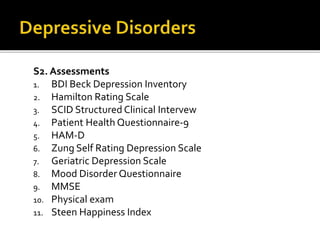
S2. Assessments
1. BDI Beck Depression Inventory
2. Hamilton Rating Scale
3. SCID Structured Clinical Intervew
4. Patient Health Questionnaire-9
5. HAM-D
6. Zung Self Rating Depression Scale
7. Geriatric Depression Scale
8. Mood Disorder Questionnaire
9. MMSE
10. Physical exam
11. Steen Happiness Index
Treatments
1. Medications
 Antidepressants usually
SSRI’s or SNRI’s
 TCA’s (Tricyclic
antidepressant)
 MAOI’s (Monoamine
oxidase inhibitor)
2.Therapies
 BAT BehavioralActivation
Therapy
 CBT Cognitive Behavioral
Therapy
 MindfulnessTherapy
 Electroconvulsive therapy
 Vagal nerve stimulation
 Transcranial magnetic
stimulation
 IPP Interpersonal
psychotherapy
 Social skills and
assertiveness training
Major Depression
 5 criteria
 For 2 weeks
 Lower
functioning
Persistent Depression
 3 criteria
 For 2 years
▪ 1 year for youth
 Milder, higher
functioning
Criteria
 Sleep problems
 Disinterest
 Low self-esteem
 Energy problems
 Poor
concentration
 Appetite change
 Agitated or slow
 Suicidal ideation
Diagnosis
Severe recurrent temper outbursts, grossly
out of proportion in intensity or duration
 Inconsistent with maturity level
 Verbal and/or physical rages, against
people or property
 Persistently irritable or angry most of the
day between outbursts
 Frequent, 2-3 times weekly
 For 12 or more months
 Onset must be between ages 6-10, until
age 18
Rule Out
 ODD:
More
severe
Disruptive Mood
Dysregulation
 2-3 times weekly
 For 12 or more
months
 ages 6-10, until
age 18
 Persistently
irritable or angry
 Verbal and/or
physical rages
Oppositional Defiant
 Difficult behavior
for 6 months
 Verbal rages
 Argumentative
 Aggressive
 More severe
Intermittent
Explosive
 3 times yearly
 Verbal aggression
 Assaults
 Outbursts causing
damage
 Ages 6-adult
 Remorseful
S1. Find Out
 Medical evaluation
 Affective functioning
 Cognitive functioning
 Symptomology development
 Family history
 Past trauma
 Substance use history
 Work/school history
 Family meeting
S2. Assess & Refer
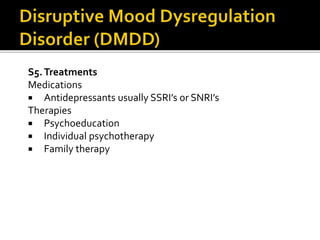
S5.Treatments
Medications
 Antidepressants usually SSRI’s or SNRI’s
Therapies
 Psychoeducation
 Individual psychotherapy
 Family therapy
Diagnosis
5 or more
symptoms
during the same
2 week period
 Must include
depressed
mood or loss
of interest or
pleasure
1. Depressed mood most of the day,
most days
2. Decreased pleasure in activities
3. Weight loss or gain; loss of energy
4. Insomnia or sleeping too much
5. Psychomotor agitation or retardation
6. Feelings of worthlessness and guilt
7. Harder to think or make decisions
8. Recurrent thoughts of death and
suicide, and/or plans or attempt
9. More likely after puberty
Diagnosis II
Specifiers
 Mild, moderate, severe
 With psychotic features
 In partial remission, in full remission,
unspecified
 Anxious distress, melancholic features
 Mixed features, atypical features
 Mood-congruent psychotic features,
mood-incongruent features
 Catatonia
 Peri-partum onset
 Seasonal pattern
Comorbidity
 Substance abuse
 Panic disorders
 OCD
Anorexia Nervosa
 Bulimia Nervosa
 Borderline
Personality
S1. Find Out
 Medical evaluation
 Affective functioning
 Cognitive functioning
 Symptomology development
 Family history
 Past trauma
 Substance use history
 Work history
 Family meeting
S2. Assessments
1. Beck Depression Inventory
2. Hamilton Rating Scale
3. SCID
4. Patient Health Questionnaire-9
5. HAM-D
6. Zung Self Rating Depression Scale
7. Geriatric Depression Scale
8. Mood Disorder Questionnaire
9. MMSE
10. Physical exam
S5.Treatments
Medications
 Antidepressants usually
SSRI’s or SNRI’s
 TCA’s (Tricyclic
antidepressant)
 MAOI’s (Monoamine
oxidase inhibitor)
Therapies
 Behavioral Activation
Therapy BAT
 Cognitive Behavioral
Therapy
 MindfulnessTherapy
 Exercise
 Electroconvulsive
therapy
 Vagal nerve stimulation
 Transcranial magnetic
stimulation
S5. Monitoring
 Medication compliance
 Interactions with family
 Use of leisure time
 Weight gain or loss
 Sleep quality
 Social activities
S6.Termination
 Medication
 Support group
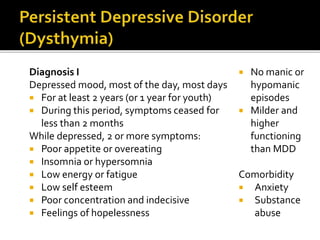
Diagnosis I
Depressed mood, most of the day, most days
 For at least 2 years (or 1 year for youth)
 During this period, symptoms ceased for
less than 2 months
While depressed, 2 or more symptoms:
 Poor appetite or overeating
 Insomnia or hypersomnia
 Low energy or fatigue
 Low self esteem
 Poor concentration and indecisive
 Feelings of hopelessness
 No manic or
hypomanic
episodes
 Milder and
higher
functioning
than MDD
Comorbidity
 Anxiety
 Substance
abuse
S1. Find Out
 Medical evaluation
 Affective functioning
 Cognitive functioning
 Symptomology development
 Family history
 Past trauma
 Substance use history
 Work/school history
 Family meeting
S2. Assess & Refer
Psych testing
 Beck Depression
Inventory (BDI)
 Steen Happiness Index
S5.Treatments
Medications
 Antidepressants usually SSRI’s or SNRI’s
 TCA’s (Tricyclic antidepressant)
 MAOI’s (Monoamine oxidase inhibitor)
Therapies
 CBT Cognitive BehavioralTherapy
 IPP Interpersonal psychotherapy
 Social skills and assertiveness training
 Decisionmaking training
S1. Diagnosis
At least 5 symptoms in the
final week before onset of
menses
 With improvement a
few days after the onset
 Minimal or absent in the
week after menses
 Same symptoms in
most menstrual cycles
in the past year
2 months of symptoms
1 or more of these:
 Mood swings
 Irritability, anger, or
increased interpersonal
conflicts
In addition, 1 or more
symptoms to make 5 total
 Decreased interest in
activities
 Difficulty concentrating
 Lethargy
 Changes in appetite;
 Hypersomnia/insomnia
 Feeling overwhelmed or
out of control
 Bloating or weight gain
S1. Find Out
 Medical evaluation
 Affective functioning
 Cognitive functioning
 Symptomology
development
 Family history
 Past trauma
 Substance use history
 Work history
 Family meeting
S2. Assess & Refer
Psych testing
 Beck Depression
Inventory (BDI)
 Patient Health
Questionnaire-9
Diagnosis
1. Symptoms start
anytime during
pregnancy or up
to 12 months
following
delivery
2. Five of the following nine symptoms,
within a two week period:
 Feelings of sadness, emptiness, or
hopelessness, nearly every day, for
most of the day
 Loss of interest or pleasure in
activities
 Weight loss or decreased appetite
 Changes in sleep patterns
 Feelings of restlessness
 Loss of energy
 Feelings of worthlessness or guilt
 Loss of concentration or increased
indecisiveness
 Recurrent thoughts of death
Diagnosis
Depressive symptoms associated with the ingestion,
injection or inhalation of a substance
 Persist beyond the anticipated length of physiological
effects, intoxication or withdrawal period
Diagnosis
Depressive symptoms
directly related to the start or
progression of disease
 Not delirium
 Not psychological
response to the condition
 No other stressor or
evidence of tendency
towards depression
Conditions causing
depression
1.Thyroid dysfunction
2. Cancer
3. Poorly-controlled diabetes
4. Chemotherapy
5. Endocrine problems
6. Post-partum
7. Parkinson’s disease

Depressive Disorders for NCMHCE Study

  • 1.
    Review of DSM5Mental Disorders for NCMHCE Study
  • 2.
    1. Disruptive MoodDysregulation Disorder 2. Major Depressive Disorder 3. Persistent Depressive Disorder (Dysthymia) 4. Premenstrual Dysphoric Disorder 5. Substance/Medication-Induced Depressive Disorder 6. Depressive Disorder Due to Another Medical Condition 7. Other Specified Depressive Disorder 8. Unspecified Depressive Disorder
  • 3.
    S2. Assessments 1. BDIBeck Depression Inventory 2. Hamilton Rating Scale 3. SCID Structured Clinical Intervew 4. Patient Health Questionnaire-9 5. HAM-D 6. Zung Self Rating Depression Scale 7. Geriatric Depression Scale 8. Mood Disorder Questionnaire 9. MMSE 10. Physical exam 11. Steen Happiness Index
  • 4.
    Treatments 1. Medications  Antidepressantsusually SSRI’s or SNRI’s  TCA’s (Tricyclic antidepressant)  MAOI’s (Monoamine oxidase inhibitor) 2.Therapies  BAT BehavioralActivation Therapy  CBT Cognitive Behavioral Therapy  MindfulnessTherapy  Electroconvulsive therapy  Vagal nerve stimulation  Transcranial magnetic stimulation  IPP Interpersonal psychotherapy  Social skills and assertiveness training
  • 5.
    Major Depression  5criteria  For 2 weeks  Lower functioning Persistent Depression  3 criteria  For 2 years ▪ 1 year for youth  Milder, higher functioning Criteria  Sleep problems  Disinterest  Low self-esteem  Energy problems  Poor concentration  Appetite change  Agitated or slow  Suicidal ideation
  • 7.
    Diagnosis Severe recurrent temperoutbursts, grossly out of proportion in intensity or duration  Inconsistent with maturity level  Verbal and/or physical rages, against people or property  Persistently irritable or angry most of the day between outbursts  Frequent, 2-3 times weekly  For 12 or more months  Onset must be between ages 6-10, until age 18 Rule Out  ODD: More severe
  • 8.
    Disruptive Mood Dysregulation  2-3times weekly  For 12 or more months  ages 6-10, until age 18  Persistently irritable or angry  Verbal and/or physical rages Oppositional Defiant  Difficult behavior for 6 months  Verbal rages  Argumentative  Aggressive  More severe Intermittent Explosive  3 times yearly  Verbal aggression  Assaults  Outbursts causing damage  Ages 6-adult  Remorseful
  • 9.
    S1. Find Out Medical evaluation  Affective functioning  Cognitive functioning  Symptomology development  Family history  Past trauma  Substance use history  Work/school history  Family meeting S2. Assess & Refer
  • 10.
    S5.Treatments Medications  Antidepressants usuallySSRI’s or SNRI’s Therapies  Psychoeducation  Individual psychotherapy  Family therapy
  • 12.
    Diagnosis 5 or more symptoms duringthe same 2 week period  Must include depressed mood or loss of interest or pleasure 1. Depressed mood most of the day, most days 2. Decreased pleasure in activities 3. Weight loss or gain; loss of energy 4. Insomnia or sleeping too much 5. Psychomotor agitation or retardation 6. Feelings of worthlessness and guilt 7. Harder to think or make decisions 8. Recurrent thoughts of death and suicide, and/or plans or attempt 9. More likely after puberty
  • 13.
    Diagnosis II Specifiers  Mild,moderate, severe  With psychotic features  In partial remission, in full remission, unspecified  Anxious distress, melancholic features  Mixed features, atypical features  Mood-congruent psychotic features, mood-incongruent features  Catatonia  Peri-partum onset  Seasonal pattern Comorbidity  Substance abuse  Panic disorders  OCD Anorexia Nervosa  Bulimia Nervosa  Borderline Personality
  • 14.
    S1. Find Out Medical evaluation  Affective functioning  Cognitive functioning  Symptomology development  Family history  Past trauma  Substance use history  Work history  Family meeting
  • 15.
    S2. Assessments 1. BeckDepression Inventory 2. Hamilton Rating Scale 3. SCID 4. Patient Health Questionnaire-9 5. HAM-D 6. Zung Self Rating Depression Scale 7. Geriatric Depression Scale 8. Mood Disorder Questionnaire 9. MMSE 10. Physical exam
  • 16.
    S5.Treatments Medications  Antidepressants usually SSRI’sor SNRI’s  TCA’s (Tricyclic antidepressant)  MAOI’s (Monoamine oxidase inhibitor) Therapies  Behavioral Activation Therapy BAT  Cognitive Behavioral Therapy  MindfulnessTherapy  Exercise  Electroconvulsive therapy  Vagal nerve stimulation  Transcranial magnetic stimulation
  • 17.
    S5. Monitoring  Medicationcompliance  Interactions with family  Use of leisure time  Weight gain or loss  Sleep quality  Social activities S6.Termination  Medication  Support group
  • 19.
    Diagnosis I Depressed mood,most of the day, most days  For at least 2 years (or 1 year for youth)  During this period, symptoms ceased for less than 2 months While depressed, 2 or more symptoms:  Poor appetite or overeating  Insomnia or hypersomnia  Low energy or fatigue  Low self esteem  Poor concentration and indecisive  Feelings of hopelessness  No manic or hypomanic episodes  Milder and higher functioning than MDD Comorbidity  Anxiety  Substance abuse
  • 20.
    S1. Find Out Medical evaluation  Affective functioning  Cognitive functioning  Symptomology development  Family history  Past trauma  Substance use history  Work/school history  Family meeting S2. Assess & Refer Psych testing  Beck Depression Inventory (BDI)  Steen Happiness Index
  • 21.
    S5.Treatments Medications  Antidepressants usuallySSRI’s or SNRI’s  TCA’s (Tricyclic antidepressant)  MAOI’s (Monoamine oxidase inhibitor) Therapies  CBT Cognitive BehavioralTherapy  IPP Interpersonal psychotherapy  Social skills and assertiveness training  Decisionmaking training
  • 23.
    S1. Diagnosis At least5 symptoms in the final week before onset of menses  With improvement a few days after the onset  Minimal or absent in the week after menses  Same symptoms in most menstrual cycles in the past year 2 months of symptoms 1 or more of these:  Mood swings  Irritability, anger, or increased interpersonal conflicts In addition, 1 or more symptoms to make 5 total  Decreased interest in activities  Difficulty concentrating  Lethargy  Changes in appetite;  Hypersomnia/insomnia  Feeling overwhelmed or out of control  Bloating or weight gain
  • 24.
    S1. Find Out Medical evaluation  Affective functioning  Cognitive functioning  Symptomology development  Family history  Past trauma  Substance use history  Work history  Family meeting S2. Assess & Refer Psych testing  Beck Depression Inventory (BDI)  Patient Health Questionnaire-9
  • 26.
    Diagnosis 1. Symptoms start anytimeduring pregnancy or up to 12 months following delivery 2. Five of the following nine symptoms, within a two week period:  Feelings of sadness, emptiness, or hopelessness, nearly every day, for most of the day  Loss of interest or pleasure in activities  Weight loss or decreased appetite  Changes in sleep patterns  Feelings of restlessness  Loss of energy  Feelings of worthlessness or guilt  Loss of concentration or increased indecisiveness  Recurrent thoughts of death
  • 28.
    Diagnosis Depressive symptoms associatedwith the ingestion, injection or inhalation of a substance  Persist beyond the anticipated length of physiological effects, intoxication or withdrawal period
  • 29.
    Diagnosis Depressive symptoms directly relatedto the start or progression of disease  Not delirium  Not psychological response to the condition  No other stressor or evidence of tendency towards depression Conditions causing depression 1.Thyroid dysfunction 2. Cancer 3. Poorly-controlled diabetes 4. Chemotherapy 5. Endocrine problems 6. Post-partum 7. Parkinson’s disease