Review of DSM5 Mental Disorders for NCMHCE Study
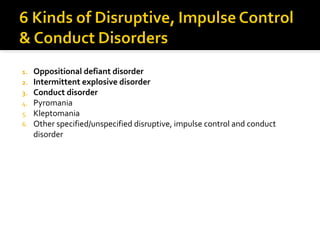
1. Oppositional defiant disorder
2. Intermittent explosive disorder
3. Conduct disorder
4. Pyromania
5. Kleptomania
6. Other specified/unspecified disruptive, impulse control and conduct
disorder
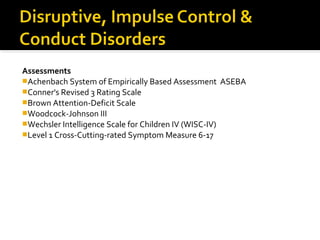
Assessments
Achenbach System of Empirically Based Assessment ASEBA
Conner's Revised 3 Rating Scale
Brown Attention-Deficit Scale
Woodcock-Johnson III
Wechsler Intelligence Scale for Children IV (WISC-IV)
Level 1 Cross-Cutting-rated Symptom Measure 6-17
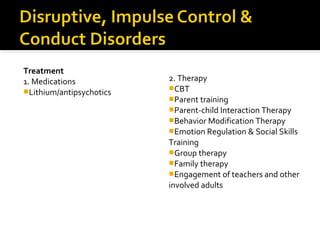
Treatment
1. Medications
Lithium/antipsychotics
2. Therapy
CBT
Parent training
Parent-child Interaction Therapy
Behavior Modification Therapy
Emotion Regulation & Social Skills
Training
Group therapy
Family therapy
Engagement of teachers and other
involved adults
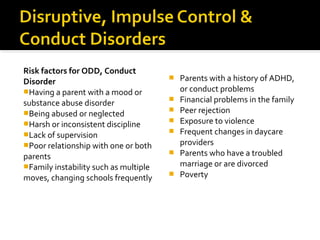
Risk factors for ODD, Conduct
Disorder
Having a parent with a mood or
substance abuse disorder
Being abused or neglected
Harsh or inconsistent discipline
Lack of supervision
Poor relationship with one or both
parents
Family instability such as multiple
moves, changing schools frequently
 Parents with a history of ADHD,
or conduct problems
 Financial problems in the family
 Peer rejection
 Exposure to violence
 Frequent changes in daycare
providers
 Parents who have a troubled
marriage or are divorced
 Poverty
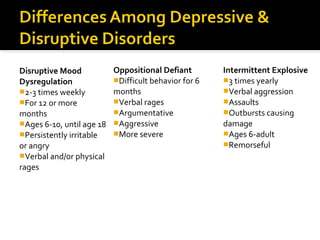
Disruptive Mood
Dysregulation
2-3 times weekly
For 12 or more
months
Ages 6-10, until age 18
Persistently irritable
or angry
Verbal and/or physical
rages
Oppositional Defiant
Difficult behavior for 6
months
Verbal rages
Argumentative
Aggressive
More severe
Intermittent Explosive
3 times yearly
Verbal aggression
Assaults
Outbursts causing
damage
Ages 6-adult
Remorseful
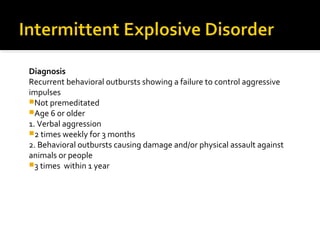
Diagnosis
Recurrent behavioral outbursts showing a failure to control aggressive
impulses
Not premeditated
Age 6 or older
1. Verbal aggression
2 times weekly for 3 months
2. Behavioral outbursts causing damage and/or physical assault against
animals or people
3 times within 1 year
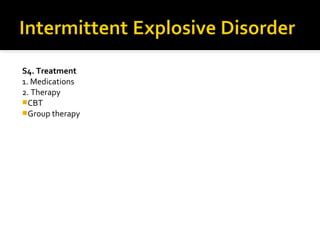
S4. Treatment
1. Medications
2. Therapy
CBT
Group therapy
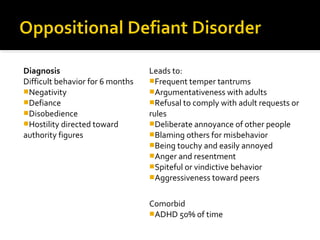
Diagnosis
Difficult behavior for 6 months
Negativity
Defiance
Disobedience
Hostility directed toward
authority figures
Leads to:
Frequent temper tantrums
Argumentativeness with adults
Refusal to comply with adult requests or
rules
Deliberate annoyance of other people
Blaming others for misbehavior
Being touchy and easily annoyed
Anger and resentment
Spiteful or vindictive behavior
Aggressiveness toward peers
Comorbid
ADHD 50% of time
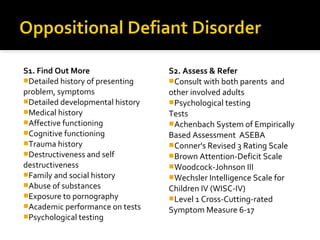
S1. Find Out More
Detailed history of presenting
problem, symptoms
Detailed developmental history
Medical history
Affective functioning
Cognitive functioning
Trauma history
Destructiveness and self
destructiveness
Family and social history
Abuse of substances
Exposure to pornography
Academic performance on tests
Psychological testing
S2. Assess & Refer
Consult with both parents and
other involved adults
Psychological testing
Tests
Achenbach System of Empirically
Based Assessment ASEBA
Conner's Revised 3 Rating Scale
Brown Attention-Deficit Scale
Woodcock-Johnson III
Wechsler Intelligence Scale for
Children IV (WISC-IV)
Level 1 Cross-Cutting-rated
Symptom Measure 6-17
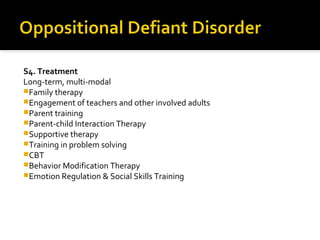
S4. Treatment
Long-term, multi-modal
Family therapy
Engagement of teachers and other involved adults
Parent training
Parent-child Interaction Therapy
Supportive therapy
Training in problem solving
CBT
Behavior Modification Therapy
Emotion Regulation & Social Skills Training
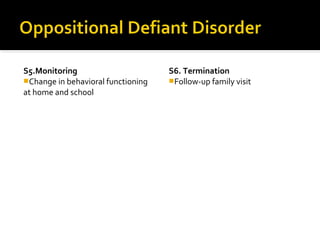
S5.Monitoring
Change in behavioral functioning
at home and school
S6. Termination
Follow-up family visit
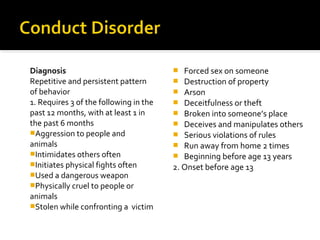
Diagnosis
Repetitive and persistent pattern
of behavior
1. Requires 3 of the following in the
past 12 months, with at least 1 in
the past 6 months
Aggression to people and
animals
Intimidates others often
Initiates physical fights often
Used a dangerous weapon
Physically cruel to people or
animals
Stolen while confronting a victim
 Forced sex on someone
 Destruction of property
 Arson
 Deceitfulness or theft
 Broken into someone’s place
 Deceives and manipulates others
 Serious violations of rules
 Run away from home 2 times
 Beginning before age 13 years
2. Onset before age 13
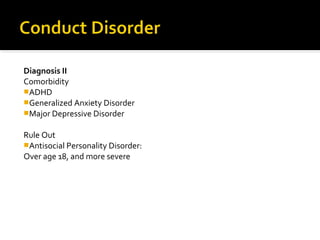
Diagnosis II
Comorbidity
ADHD
Generalized Anxiety Disorder
Major Depressive Disorder
Rule Out
Antisocial Personality Disorder:
Over age 18, and more severe
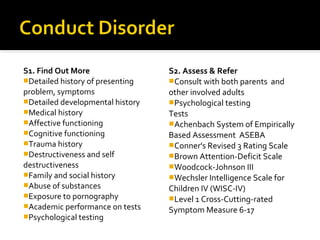
S1. Find Out More
Detailed history of presenting
problem, symptoms
Detailed developmental history
Medical history
Affective functioning
Cognitive functioning
Trauma history
Destructiveness and self
destructiveness
Family and social history
Abuse of substances
Exposure to pornography
Academic performance on tests
Psychological testing
S2. Assess & Refer
Consult with both parents and
other involved adults
Psychological testing
Tests
Achenbach System of Empirically
Based Assessment ASEBA
Conner's Revised 3 Rating Scale
Brown Attention-Deficit Scale
Woodcock-Johnson III
Wechsler Intelligence Scale for
Children IV (WISC-IV)
Level 1 Cross-Cutting-rated
Symptom Measure 6-17
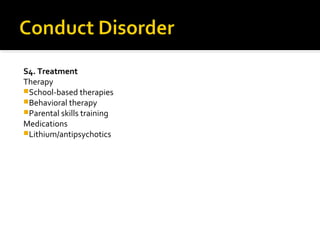
S4. Treatment
Therapy
School-based therapies
Behavioral therapy
Parental skills training
Medications
Lithium/antipsychotics
Diagnosis
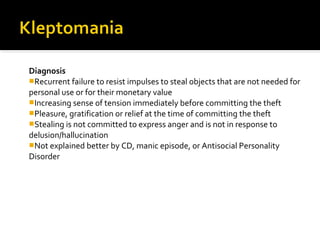
Recurrent failure to resist impulses to steal objects that are not needed for
personal use or for their monetary value
Increasing sense of tension immediately before committing the theft
Pleasure, gratification or relief at the time of committing the theft
Stealing is not committed to express anger and is not in response to
delusion/hallucination
Not explained better by CD, manic episode, or Antisocial Personality
Disorder
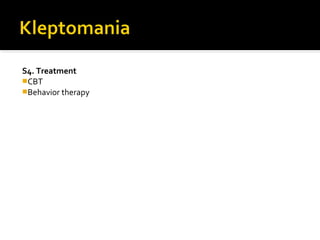
S4. Treatment
CBT
Behavior therapy
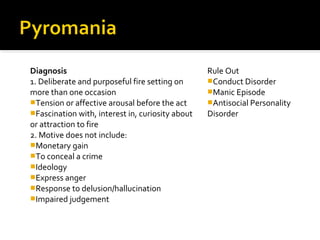
Diagnosis
1. Deliberate and purposeful fire setting on
more than one occasion
Tension or affective arousal before the act
Fascination with, interest in, curiosity about
or attraction to fire
2. Motive does not include:
Monetary gain
To conceal a crime
Ideology
Express anger
Response to delusion/hallucination
Impaired judgement
Rule Out
Conduct Disorder
Manic Episode
Antisocial Personality
Disorder

Disruptive, Impulse Control & Conduct Disorders for NCMHCE Study

  • 1.
    Review of DSM5Mental Disorders for NCMHCE Study
  • 2.
    1. Oppositional defiantdisorder 2. Intermittent explosive disorder 3. Conduct disorder 4. Pyromania 5. Kleptomania 6. Other specified/unspecified disruptive, impulse control and conduct disorder
  • 3.
    Assessments Achenbach System ofEmpirically Based Assessment ASEBA Conner's Revised 3 Rating Scale Brown Attention-Deficit Scale Woodcock-Johnson III Wechsler Intelligence Scale for Children IV (WISC-IV) Level 1 Cross-Cutting-rated Symptom Measure 6-17
  • 4.
    Treatment 1. Medications Lithium/antipsychotics 2. Therapy CBT Parenttraining Parent-child Interaction Therapy Behavior Modification Therapy Emotion Regulation & Social Skills Training Group therapy Family therapy Engagement of teachers and other involved adults
  • 5.
    Risk factors forODD, Conduct Disorder Having a parent with a mood or substance abuse disorder Being abused or neglected Harsh or inconsistent discipline Lack of supervision Poor relationship with one or both parents Family instability such as multiple moves, changing schools frequently  Parents with a history of ADHD, or conduct problems  Financial problems in the family  Peer rejection  Exposure to violence  Frequent changes in daycare providers  Parents who have a troubled marriage or are divorced  Poverty
  • 6.
    Disruptive Mood Dysregulation 2-3 timesweekly For 12 or more months Ages 6-10, until age 18 Persistently irritable or angry Verbal and/or physical rages Oppositional Defiant Difficult behavior for 6 months Verbal rages Argumentative Aggressive More severe Intermittent Explosive 3 times yearly Verbal aggression Assaults Outbursts causing damage Ages 6-adult Remorseful
  • 8.
    Diagnosis Recurrent behavioral outburstsshowing a failure to control aggressive impulses Not premeditated Age 6 or older 1. Verbal aggression 2 times weekly for 3 months 2. Behavioral outbursts causing damage and/or physical assault against animals or people 3 times within 1 year
  • 9.
    S4. Treatment 1. Medications 2.Therapy CBT Group therapy
  • 11.
    Diagnosis Difficult behavior for6 months Negativity Defiance Disobedience Hostility directed toward authority figures Leads to: Frequent temper tantrums Argumentativeness with adults Refusal to comply with adult requests or rules Deliberate annoyance of other people Blaming others for misbehavior Being touchy and easily annoyed Anger and resentment Spiteful or vindictive behavior Aggressiveness toward peers Comorbid ADHD 50% of time
  • 12.
    S1. Find OutMore Detailed history of presenting problem, symptoms Detailed developmental history Medical history Affective functioning Cognitive functioning Trauma history Destructiveness and self destructiveness Family and social history Abuse of substances Exposure to pornography Academic performance on tests Psychological testing S2. Assess & Refer Consult with both parents and other involved adults Psychological testing Tests Achenbach System of Empirically Based Assessment ASEBA Conner's Revised 3 Rating Scale Brown Attention-Deficit Scale Woodcock-Johnson III Wechsler Intelligence Scale for Children IV (WISC-IV) Level 1 Cross-Cutting-rated Symptom Measure 6-17
  • 13.
    S4. Treatment Long-term, multi-modal Familytherapy Engagement of teachers and other involved adults Parent training Parent-child Interaction Therapy Supportive therapy Training in problem solving CBT Behavior Modification Therapy Emotion Regulation & Social Skills Training
  • 14.
    S5.Monitoring Change in behavioralfunctioning at home and school S6. Termination Follow-up family visit
  • 16.
    Diagnosis Repetitive and persistentpattern of behavior 1. Requires 3 of the following in the past 12 months, with at least 1 in the past 6 months Aggression to people and animals Intimidates others often Initiates physical fights often Used a dangerous weapon Physically cruel to people or animals Stolen while confronting a victim  Forced sex on someone  Destruction of property  Arson  Deceitfulness or theft  Broken into someone’s place  Deceives and manipulates others  Serious violations of rules  Run away from home 2 times  Beginning before age 13 years 2. Onset before age 13
  • 17.
    Diagnosis II Comorbidity ADHD Generalized AnxietyDisorder Major Depressive Disorder Rule Out Antisocial Personality Disorder: Over age 18, and more severe
  • 18.
    S1. Find OutMore Detailed history of presenting problem, symptoms Detailed developmental history Medical history Affective functioning Cognitive functioning Trauma history Destructiveness and self destructiveness Family and social history Abuse of substances Exposure to pornography Academic performance on tests Psychological testing S2. Assess & Refer Consult with both parents and other involved adults Psychological testing Tests Achenbach System of Empirically Based Assessment ASEBA Conner's Revised 3 Rating Scale Brown Attention-Deficit Scale Woodcock-Johnson III Wechsler Intelligence Scale for Children IV (WISC-IV) Level 1 Cross-Cutting-rated Symptom Measure 6-17
  • 19.
    S4. Treatment Therapy School-based therapies Behavioraltherapy Parental skills training Medications Lithium/antipsychotics
  • 21.
    Diagnosis Recurrent failure toresist impulses to steal objects that are not needed for personal use or for their monetary value Increasing sense of tension immediately before committing the theft Pleasure, gratification or relief at the time of committing the theft Stealing is not committed to express anger and is not in response to delusion/hallucination Not explained better by CD, manic episode, or Antisocial Personality Disorder
  • 22.
  • 24.
    Diagnosis 1. Deliberate andpurposeful fire setting on more than one occasion Tension or affective arousal before the act Fascination with, interest in, curiosity about or attraction to fire 2. Motive does not include: Monetary gain To conceal a crime Ideology Express anger Response to delusion/hallucination Impaired judgement Rule Out Conduct Disorder Manic Episode Antisocial Personality Disorder