•(ْ‫س‬
ُ
‫ت‬
َ
‫ال‬َ‫و‬
ْ
‫وا‬ُ‫ب‬َ‫ر‬
ْ
‫اش‬َ‫و‬
ْ
‫وا‬
ُ
‫ل‬
ُ
‫وك‬ُ‫ي‬
َ
‫ال‬ ُ‫ه‬َّ‫ن‬ِ‫إ‬
ْ
‫وا‬
ُ
‫ف‬ِ‫ر‬ُّ‫ب‬ ِ‫ح‬
َ‫ين‬ِ‫ف‬ِ‫ر‬ ْ‫س‬
ُ ْ
‫اْل‬)
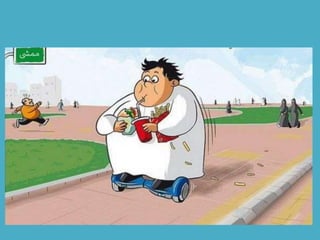
•eat and drink but waste not
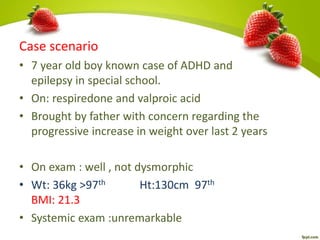
Case scenario
• 7 year old boy known case of ADHD and
epilepsy in special school.
• On: respiredone and valproic acid
• Brought by father with concern regarding the
progressive increase in weight over last 2 years
• On exam : well , not dysmorphic
• Wt: 36kg >97th Ht:130cm 97th
BMI: 21.3
• Systemic exam :unremarkable
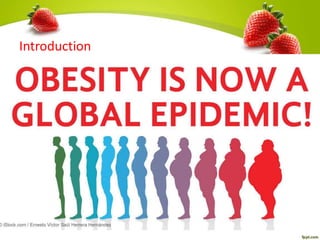
Introduction
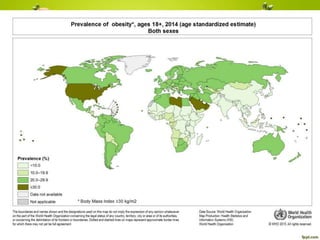
• obesity is considered one of the most serious
health challenges of the 21st century.
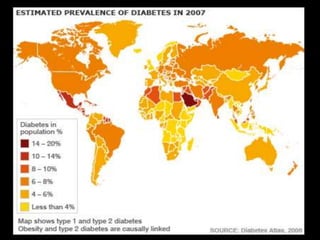
• As the prevalence of obesity increases, so does
the prevalence of the comorbidities associated
with obesity .
• Childhood obesity can have very serious short and
long term adverse health consequences on quality of
life, performance achieved and long term health and
life expectancy.
• childhood overweight and obesity are predictive of
adult overweight and obesity.
• Autopsy studies show the presence of not only fatty
streaks but also fibrous plaques in the aorta and
coronary arteries of obese teenagers.
definition
• "Overweight“: an excess of body weight.
• "obesity" : an excess of fat.
• "morbid obesity" obesity with related
comorbidities
definition
• Obesity is defined as excessive
accumulation of fatty tissue that can
hinder the effective functioning of the
human body
markers of obesity
• BMI.
• Waist circumference .
• waist-to-height ratio .
• weight-to-height ratio.
The body mass index (BMI)
• BMI was adopted as the international standard
clinical measure of adiposity
• for children two years of age and older .
• Calculation:
• Weight in Kilograms ÷ (Height in meters) 2
BMI
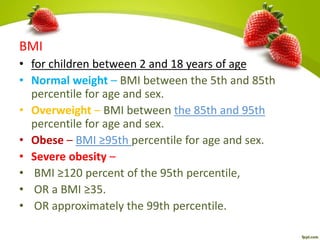
• for children between 2 and 18 years of age
• Normal weight – BMI between the 5th and 85th
percentile for age and sex.
• Overweight – BMI between the 85th and 95th
percentile for age and sex.
• Obese – BMI ≥95th percentile for age and sex.
• Severe obesity –
• BMI ≥120 percent of the 95th percentile,
• OR a BMI ≥35.
• OR approximately the 99th percentile.
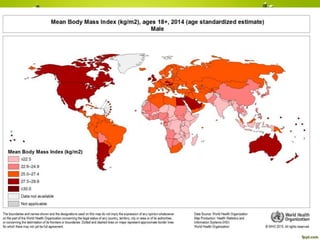
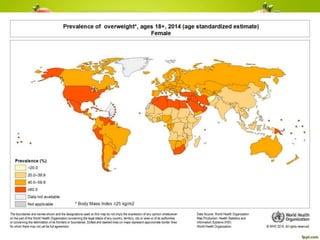
EPIDEMIOLOGY
EPIDEMIOLOGY
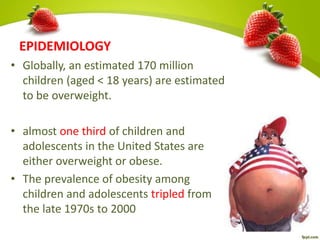
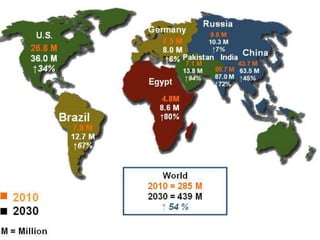
• Globally, an estimated 170 million
children (aged < 18 years) are estimated
to be overweight.
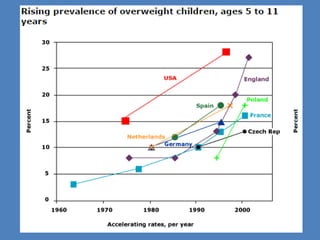
• almost one third of children and
adolescents in the United States are
either overweight or obese.
• The prevalence of obesity among
children and adolescents tripled from
the late 1970s to 2000
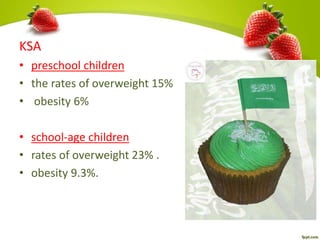
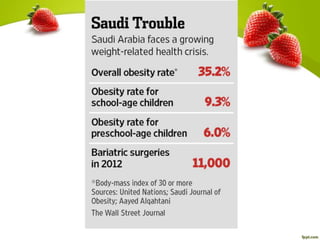
KSA
• preschool children
• the rates of overweight 15%
• obesity 6%
• school-age children
• rates of overweight 23% .
• obesity 9.3%.
EPIDEMIOLOGY
• Risk factors:
• ethnicity .
• obese parents.
• low-income populations.
persistence of childhood obesity into adulthood
• Risk factor:
• Age.
• parental obesity.
• severity of obesity.
• Obesity is somewhat more likely to persist in girls
than in boys.
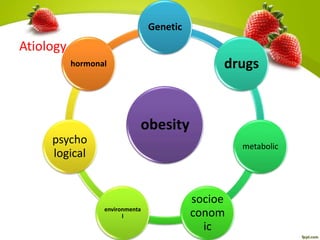
Atiology
obesity
Genetic
drugs
metabolic
socioe
conom
ic
environmenta
l
psycho
logical
hormonal
environmental factors.
• obesity in children is strongly influenced by
environmental factors.
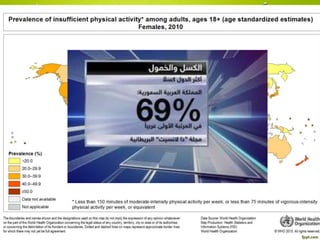
• caused by either increased in a sedentary lifestyle
• or a caloric intake that is greater than needs.
• Environmental factors explain only part of obesity
risk, but are important targets for treatment because
they are potentially modifiable
Environmental factors
• increasing trends in glycemic index of foods.
• sugar-containing beverages.
• larger portion sizes for prepared foods.
• fast food service.
• diminishing family presence at meals.
• decreasing structured physical activity.
• shortened sleep duration
• changes in elements of the built environment (eg,
availability of sidewalks and playgrounds).
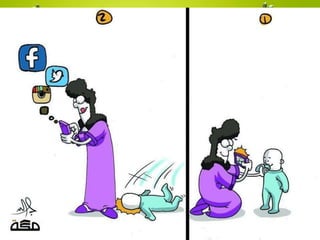
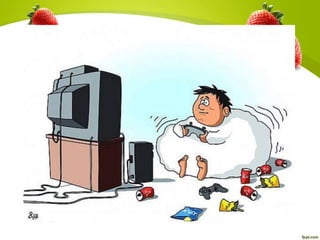
• Television viewing
• Video games
• Exergames
• Medications
• Virus
• Toxins :such as bisphenol A (BPA).
Environmental factors
Genetic factors
• Genetic factors play a permissive role and interact
with environmental factors to produce obesity.
• Account for 30 to 50 percent% .
• A few specific syndromes and single-gene defects
which are linked to obesity in childhood have been
identified
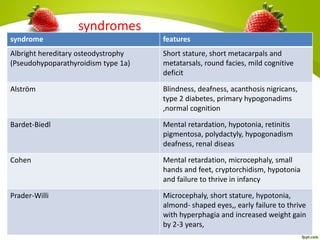
syndromes
featuressyndrome
Short stature, short metacarpals and
metatarsals, round facies, mild cognitive
deficit
Albright hereditary osteodystrophy
(Pseudohypoparathyroidism type 1a)
Blindness, deafness, acanthosis nigricans,
type 2 diabetes, primary hypogonadims
,normal cognition
Alström
Mental retardation, hypotonia, retinitis
pigmentosa, polydactyly, hypogonadism
deafness, renal diseas
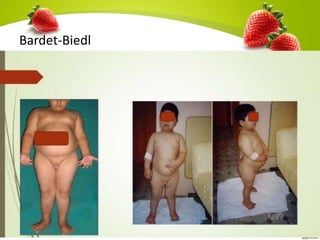
Bardet-Biedl
Mental retardation, microcephaly, small
hands and feet, cryptorchidism, hypotonia
and failure to thrive in infancy
Cohen
Microcephaly, short stature, hypotonia,
almond- shaped eyes,, early failure to thrive
with hyperphagia and increased weight gain
by 2-3 years,
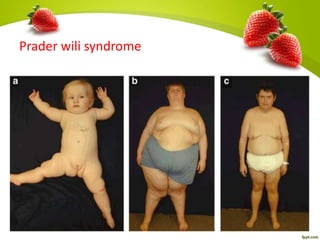
Prader-Willi
Single gene disorder
• Leptin deficiency (LEP)
• Leptin receptor deficiency (LEPR).
• Melanocortin receptor 4 haploinsufficiency (MC4R).
• Pro-opiomelanocortin deficiency (POMC)
Prader wili syndrome
Bardet-Biedl
metabolic programming
• Its refers to the concept that environmental and
nutritional influences during critical periods in
development, particularly during gestation, can
have permanent effects on an individual's
predisposition to obesity and metabolic disease.
• identified in less than 1 percent of children and
adolescents with obesity.
• The disorders include :
• Hypothyroidism.
• cortisol excess .
• growth hormone deficiency.
• Pseudohypoparathyroidism.
• acquired hypothalamic lesions.
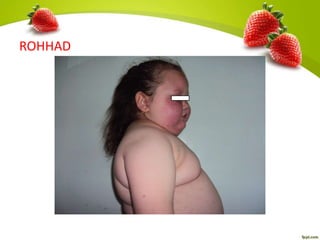
• ROHHAD/ROHHADNET syndrome
ROHHAD
evaluation
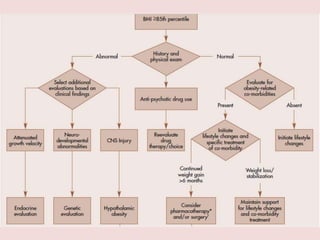
• The evaluation of the overweight or obese child
should identify treatable causes and comorbidities
History
exam
investigation
History
• the age of onset of overweight.
• The dietary history should include:
• Identification of the caretakers who feed the child
• Identification of foods high in calories and low in nutritional value
that can be reduced, eliminated, or replaced (eg, juice, soda)
• Assessment of eating patterns (eg, timing, content, and location of
meals and snacks)
• The activity history should include
• Assessment of after-school and weekend activities
• Assessment of screen-time (television, videotapes and DVDs, and
video games)
• history includes safety of parks and neighborhoods and availability
of playground equipment
History
• Review of systems :
• for evidence of comorbidities or underlying
etiologies.
• Perinatal Hx: SGA,LGA. breast-feeding duration
• Past medical Hx:
• Past surgery:
• Past medications.
• Development Hx:
• Family history : parental obesity, consanguinity,
• Psychosocial history
Examination
• General appearance
• assessment for dysmorphic features, which may
suggest a genetic syndrome.
• Growth parameters :
• Assessment of stature and height velocity is useful in
distinguishing exogenous obesity from obesity that is
secondary to genetic or endocrine abnormalities.
Examination
• Head, eyes, throat .
• Neck
• Skin and hair
• Abdomen
• Musculoskeletal
• Genitourinary
acanthosis nigricans
investigation
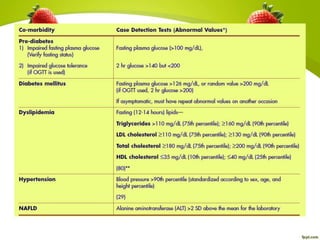
• Depends on initial impression.
• Fasting blood glucose. HbA1c.
• Lipid profile.
• Vit D level.
• Liver enzymes.
• Hormonal assesment .
• Imaging.(musculoskeletal xray, US)
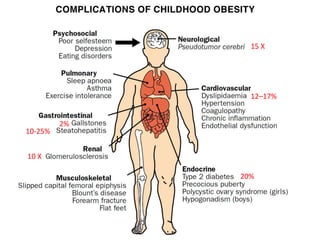
12–17%
10 X
10-25%
2%
15 X
20%
treatment
• clinicians should support intensive lifestyle (dietary,
physical activity, and behavioral) modification to the
entire family and to the patient, in an age-
appropriate manner.
• Weight maintenance in a growing child may be as
effective as weight loss in an adult.
Dietary recommendations
• Avoiding the consumption of calorie-dense,
nutrient-poor foods (e.g. sweetened beverages,
sports drinks, fruit drinks and juices, most “fast
food,” and calorie-dense snacks)
• The ideal beverage for children at all meals and
during the day is water.
• Reducing saturated dietary fat intake for children
older than 2 yr of age
• Increasing the intake of dietary fiber, fruits, and
vegetables .
• Eating timely, regular meals, particularly breakfast.
• avoiding constant “grazing” during the day,
• Controlling caloric intake through portion control
Dietary recommendations
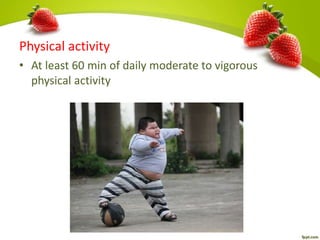
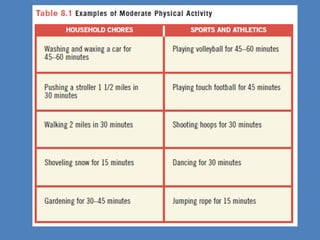
Physical activity
• At least 60 min of daily moderate to vigorous
physical activity
sedentary activities
• a decrease in time spent in sedentary activities, such
as watching television, playing video games, or using
computers for recreation.
• Screen time should be limited to 1–2 h per day.
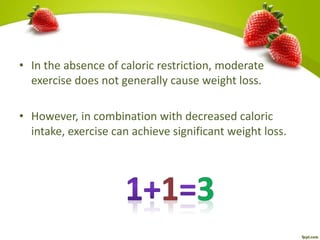
• In the absence of caloric restriction, moderate
exercise does not generally cause weight loss.
• However, in combination with decreased caloric
intake, exercise can achieve significant weight loss.
Psychosocial
• parental modeling of healthy habits.
• avoidance of overly strict dieting.
• setting limits of acceptable behaviors.
• avoidance of using food as a reward or punishment
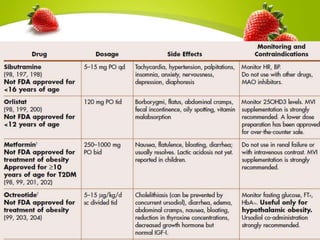
medication
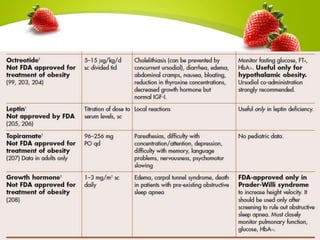
• 1- obese:
• pharmacotherapy (in combination with lifestyle
modification) be considered if a formal program of
intensive lifestyle modification has failed to limit
weight gain or to modify co-morbidities in obese
children.
medication
• Overweight
• children should not be treated with
pharmacotherapeutic agents unless “
• 1- significant, severe co-morbidities persist despite
intensive lifestyle modification.
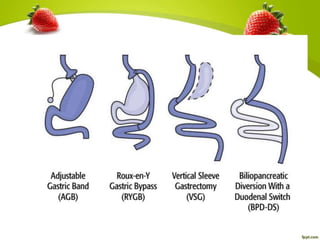
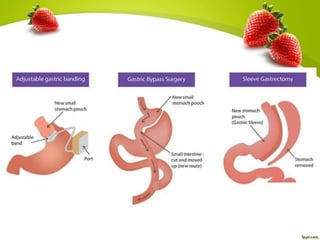
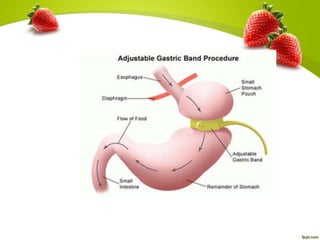
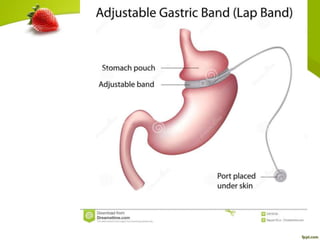
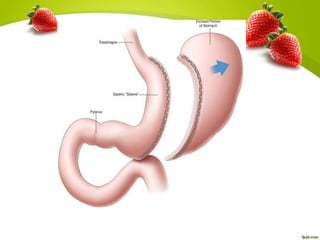
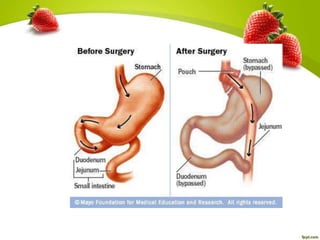
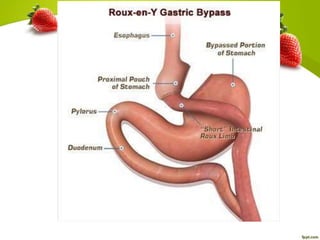
surgery
• weight loss from surgery ranges from 52 to 70
percent of excess body weight.
• In most cases, there are associated improvements in
adiposity, insulin resistance, triglyceride levels,
diabetes, obstructive sleep apnea, depression, and
impaired quality of life.
surgery
• These outcomes are comparable to those reported
for adults undergoing weight loss surgery.
• bariatric surgery on weight loss may have
neuroendocrine mechanisms.
Criteria
1. The child has attained Tanner 4 or 5 pubertal
development and final or near-final adult height.
2. The child has a BMI greater than 50 kg/m2 or has
BMI above 40 kg/m2 and significant, severe co-
morbidities.
• 3. Severe obesity and co-morbidities persist despite a
formal program of lifestyle modification, with or
without medication.
Contraindications for surgical procedures
• Medically correctable cause of obesity
• An ongoing substance abuse problem
• A medical, psychiatric, psychosocial, or cognitive
condition that prevents adherence to postoperative
dietary and medication regimens or impairs
decisional capacity
• Current or planned pregnancy within 12 to 18
months of the procedure
• Prader-Willi syndrome*
PREVENTION OF OBESITY
• breast-feeding
• breast-feeding is recommended for a minimum
of 6 months.
• Breast-feeding in infancy is associated with a
decreased incidence of overweight and obesity
in Childhood.
• Infants exclusively breast-fed for 3 to 5 months
are 35% less likely to be obese when they enter
school.
• Antibiotic exposure before 6 months of age, or
repeatedly during infancy, was associated with
increased body mass in healthy children.
• that clinicians should promote and participate in
efforts to educate the community about the
importence of the disese ,healthy dietary and activity
habits
conclusion
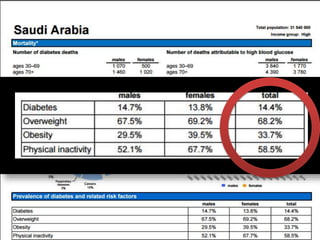
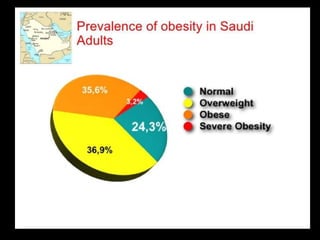
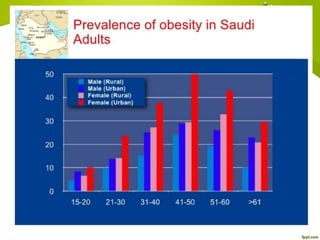
• overweight and obesity among children in Saudi
Arabia should be considered a serious public health
problem.
• The prevalence is on the rise.
• Health institutes, parents, and schools should all
have an interactive and integral role for the
prevention of such outcomes.
references
• 1- Prevention and Treatment of Pediatric
Obesity: An Endocrine Society Clinical Practice
Guideline. Journal of Clinical Endocrinology &
Metabolism, December 2008, 93(12).
• 2- Antti Saari, MD, Antibiotic Exposure in
Infancy and Risk of Being Overweight in the
First 24 Months of Life. PEDIATRICS Volume
135, number 4, April 2015.
• 3- Prioritizing areas for action in the field of
population-based prevention of childhood obesity.
World Health Organization 2012.
• 4- Lynne Allison Daniels, An Early Feeding Practices
Intervention for Obesity Prevention. PEDIATRICS
Volume 136, number 1, July 2015.
• 5- Stephen R. Daniels,The Role of the Pediatrician in
Primary Prevention of Obesity. PEDIATRICS Volume
136, number 1, July 2015
• 6-Jennifer Falbe, ScD. Adiposity and Different Types
of Screen Time. PEDIATRICS Volume 132, Number 6,
December 2013.
• 7-Julie C. Lumeng.Overweight Adolescents and Life
Events in Childhood. Pediatrics 2013;132:e1506–
e1512.
• 8-Patrick A. Ross,Obesity and Mortality Risk in
Critically Ill Children. PEDIATRICS Volume 1 37,
number 3 , M arch 2016: e2 0152035
• 9- Gustavo Cediel, Prepubertal Adiposity, Vitamin D
Status, and Insulin Resistance. PEDIATRICS Volume
138, july 2016.
• 10- Ali Al Shehri,Obesity among Saudi children. Saudi
Journal of Obesity | Volume 1 • Issue 1 • Jan-Jun
2013
Obesity

Obesity

  • 2.
  • 3.
    Case scenario • 7year old boy known case of ADHD and epilepsy in special school. • On: respiredone and valproic acid • Brought by father with concern regarding the progressive increase in weight over last 2 years • On exam : well , not dysmorphic • Wt: 36kg >97th Ht:130cm 97th BMI: 21.3 • Systemic exam :unremarkable
  • 4.
    Introduction • obesity isconsidered one of the most serious health challenges of the 21st century. • As the prevalence of obesity increases, so does the prevalence of the comorbidities associated with obesity .
  • 7.
    • Childhood obesitycan have very serious short and long term adverse health consequences on quality of life, performance achieved and long term health and life expectancy. • childhood overweight and obesity are predictive of adult overweight and obesity. • Autopsy studies show the presence of not only fatty streaks but also fibrous plaques in the aorta and coronary arteries of obese teenagers.
  • 8.
    definition • "Overweight“: anexcess of body weight. • "obesity" : an excess of fat. • "morbid obesity" obesity with related comorbidities
  • 9.
    definition • Obesity isdefined as excessive accumulation of fatty tissue that can hinder the effective functioning of the human body
  • 10.
    markers of obesity •BMI. • Waist circumference . • waist-to-height ratio . • weight-to-height ratio.
  • 11.
    The body massindex (BMI) • BMI was adopted as the international standard clinical measure of adiposity • for children two years of age and older . • Calculation: • Weight in Kilograms ÷ (Height in meters) 2
  • 12.
    BMI • for childrenbetween 2 and 18 years of age • Normal weight – BMI between the 5th and 85th percentile for age and sex. • Overweight – BMI between the 85th and 95th percentile for age and sex. • Obese – BMI ≥95th percentile for age and sex. • Severe obesity – • BMI ≥120 percent of the 95th percentile, • OR a BMI ≥35. • OR approximately the 99th percentile.
  • 14.
  • 15.
    EPIDEMIOLOGY • Globally, anestimated 170 million children (aged < 18 years) are estimated to be overweight. • almost one third of children and adolescents in the United States are either overweight or obese. • The prevalence of obesity among children and adolescents tripled from the late 1970s to 2000
  • 16.
    KSA • preschool children •the rates of overweight 15% • obesity 6% • school-age children • rates of overweight 23% . • obesity 9.3%.
  • 17.
    EPIDEMIOLOGY • Risk factors: •ethnicity . • obese parents. • low-income populations.
  • 18.
    persistence of childhoodobesity into adulthood • Risk factor: • Age. • parental obesity. • severity of obesity. • Obesity is somewhat more likely to persist in girls than in boys.
  • 32.
  • 33.
    environmental factors. • obesityin children is strongly influenced by environmental factors. • caused by either increased in a sedentary lifestyle • or a caloric intake that is greater than needs. • Environmental factors explain only part of obesity risk, but are important targets for treatment because they are potentially modifiable
  • 34.
    Environmental factors • increasingtrends in glycemic index of foods. • sugar-containing beverages. • larger portion sizes for prepared foods. • fast food service. • diminishing family presence at meals. • decreasing structured physical activity. • shortened sleep duration • changes in elements of the built environment (eg, availability of sidewalks and playgrounds).
  • 36.
    • Television viewing •Video games • Exergames • Medications • Virus • Toxins :such as bisphenol A (BPA). Environmental factors
  • 38.
    Genetic factors • Geneticfactors play a permissive role and interact with environmental factors to produce obesity. • Account for 30 to 50 percent% . • A few specific syndromes and single-gene defects which are linked to obesity in childhood have been identified
  • 39.
    syndromes featuressyndrome Short stature, shortmetacarpals and metatarsals, round facies, mild cognitive deficit Albright hereditary osteodystrophy (Pseudohypoparathyroidism type 1a) Blindness, deafness, acanthosis nigricans, type 2 diabetes, primary hypogonadims ,normal cognition Alström Mental retardation, hypotonia, retinitis pigmentosa, polydactyly, hypogonadism deafness, renal diseas Bardet-Biedl Mental retardation, microcephaly, small hands and feet, cryptorchidism, hypotonia and failure to thrive in infancy Cohen Microcephaly, short stature, hypotonia, almond- shaped eyes,, early failure to thrive with hyperphagia and increased weight gain by 2-3 years, Prader-Willi
  • 40.
    Single gene disorder •Leptin deficiency (LEP) • Leptin receptor deficiency (LEPR). • Melanocortin receptor 4 haploinsufficiency (MC4R). • Pro-opiomelanocortin deficiency (POMC)
  • 41.
  • 42.
  • 43.
    metabolic programming • Itsrefers to the concept that environmental and nutritional influences during critical periods in development, particularly during gestation, can have permanent effects on an individual's predisposition to obesity and metabolic disease.
  • 44.
    • identified inless than 1 percent of children and adolescents with obesity. • The disorders include : • Hypothyroidism. • cortisol excess . • growth hormone deficiency. • Pseudohypoparathyroidism. • acquired hypothalamic lesions. • ROHHAD/ROHHADNET syndrome
  • 45.
  • 47.
    evaluation • The evaluationof the overweight or obese child should identify treatable causes and comorbidities
  • 48.
  • 49.
    History • the ageof onset of overweight. • The dietary history should include: • Identification of the caretakers who feed the child • Identification of foods high in calories and low in nutritional value that can be reduced, eliminated, or replaced (eg, juice, soda) • Assessment of eating patterns (eg, timing, content, and location of meals and snacks) • The activity history should include • Assessment of after-school and weekend activities • Assessment of screen-time (television, videotapes and DVDs, and video games) • history includes safety of parks and neighborhoods and availability of playground equipment
  • 50.
    History • Review ofsystems : • for evidence of comorbidities or underlying etiologies. • Perinatal Hx: SGA,LGA. breast-feeding duration • Past medical Hx: • Past surgery: • Past medications. • Development Hx: • Family history : parental obesity, consanguinity, • Psychosocial history
  • 51.
    Examination • General appearance •assessment for dysmorphic features, which may suggest a genetic syndrome. • Growth parameters : • Assessment of stature and height velocity is useful in distinguishing exogenous obesity from obesity that is secondary to genetic or endocrine abnormalities.
  • 52.
    Examination • Head, eyes,throat . • Neck • Skin and hair • Abdomen • Musculoskeletal • Genitourinary
  • 53.
  • 54.
    investigation • Depends oninitial impression. • Fasting blood glucose. HbA1c. • Lipid profile. • Vit D level. • Liver enzymes. • Hormonal assesment . • Imaging.(musculoskeletal xray, US)
  • 58.
  • 59.
    treatment • clinicians shouldsupport intensive lifestyle (dietary, physical activity, and behavioral) modification to the entire family and to the patient, in an age- appropriate manner. • Weight maintenance in a growing child may be as effective as weight loss in an adult.
  • 60.
    Dietary recommendations • Avoidingthe consumption of calorie-dense, nutrient-poor foods (e.g. sweetened beverages, sports drinks, fruit drinks and juices, most “fast food,” and calorie-dense snacks) • The ideal beverage for children at all meals and during the day is water. • Reducing saturated dietary fat intake for children older than 2 yr of age
  • 61.
    • Increasing theintake of dietary fiber, fruits, and vegetables . • Eating timely, regular meals, particularly breakfast. • avoiding constant “grazing” during the day, • Controlling caloric intake through portion control Dietary recommendations
  • 63.
    Physical activity • Atleast 60 min of daily moderate to vigorous physical activity
  • 66.
    sedentary activities • adecrease in time spent in sedentary activities, such as watching television, playing video games, or using computers for recreation. • Screen time should be limited to 1–2 h per day.
  • 67.
    • In theabsence of caloric restriction, moderate exercise does not generally cause weight loss. • However, in combination with decreased caloric intake, exercise can achieve significant weight loss.
  • 69.
    Psychosocial • parental modelingof healthy habits. • avoidance of overly strict dieting. • setting limits of acceptable behaviors. • avoidance of using food as a reward or punishment
  • 70.
    medication • 1- obese: •pharmacotherapy (in combination with lifestyle modification) be considered if a formal program of intensive lifestyle modification has failed to limit weight gain or to modify co-morbidities in obese children.
  • 71.
    medication • Overweight • childrenshould not be treated with pharmacotherapeutic agents unless “ • 1- significant, severe co-morbidities persist despite intensive lifestyle modification.
  • 75.
    surgery • weight lossfrom surgery ranges from 52 to 70 percent of excess body weight. • In most cases, there are associated improvements in adiposity, insulin resistance, triglyceride levels, diabetes, obstructive sleep apnea, depression, and impaired quality of life.
  • 76.
    surgery • These outcomesare comparable to those reported for adults undergoing weight loss surgery. • bariatric surgery on weight loss may have neuroendocrine mechanisms.
  • 77.
    Criteria 1. The childhas attained Tanner 4 or 5 pubertal development and final or near-final adult height. 2. The child has a BMI greater than 50 kg/m2 or has BMI above 40 kg/m2 and significant, severe co- morbidities. • 3. Severe obesity and co-morbidities persist despite a formal program of lifestyle modification, with or without medication.
  • 85.
    Contraindications for surgicalprocedures • Medically correctable cause of obesity • An ongoing substance abuse problem • A medical, psychiatric, psychosocial, or cognitive condition that prevents adherence to postoperative dietary and medication regimens or impairs decisional capacity • Current or planned pregnancy within 12 to 18 months of the procedure • Prader-Willi syndrome*
  • 86.
    PREVENTION OF OBESITY •breast-feeding • breast-feeding is recommended for a minimum of 6 months. • Breast-feeding in infancy is associated with a decreased incidence of overweight and obesity in Childhood. • Infants exclusively breast-fed for 3 to 5 months are 35% less likely to be obese when they enter school.
  • 87.
    • Antibiotic exposurebefore 6 months of age, or repeatedly during infancy, was associated with increased body mass in healthy children.
  • 88.
    • that cliniciansshould promote and participate in efforts to educate the community about the importence of the disese ,healthy dietary and activity habits
  • 95.
    conclusion • overweight andobesity among children in Saudi Arabia should be considered a serious public health problem. • The prevalence is on the rise. • Health institutes, parents, and schools should all have an interactive and integral role for the prevention of such outcomes.
  • 96.
    references • 1- Preventionand Treatment of Pediatric Obesity: An Endocrine Society Clinical Practice Guideline. Journal of Clinical Endocrinology & Metabolism, December 2008, 93(12). • 2- Antti Saari, MD, Antibiotic Exposure in Infancy and Risk of Being Overweight in the First 24 Months of Life. PEDIATRICS Volume 135, number 4, April 2015.
  • 97.
    • 3- Prioritizingareas for action in the field of population-based prevention of childhood obesity. World Health Organization 2012. • 4- Lynne Allison Daniels, An Early Feeding Practices Intervention for Obesity Prevention. PEDIATRICS Volume 136, number 1, July 2015. • 5- Stephen R. Daniels,The Role of the Pediatrician in Primary Prevention of Obesity. PEDIATRICS Volume 136, number 1, July 2015
  • 98.
    • 6-Jennifer Falbe,ScD. Adiposity and Different Types of Screen Time. PEDIATRICS Volume 132, Number 6, December 2013. • 7-Julie C. Lumeng.Overweight Adolescents and Life Events in Childhood. Pediatrics 2013;132:e1506– e1512. • 8-Patrick A. Ross,Obesity and Mortality Risk in Critically Ill Children. PEDIATRICS Volume 1 37, number 3 , M arch 2016: e2 0152035
  • 99.
    • 9- GustavoCediel, Prepubertal Adiposity, Vitamin D Status, and Insulin Resistance. PEDIATRICS Volume 138, july 2016. • 10- Ali Al Shehri,Obesity among Saudi children. Saudi Journal of Obesity | Volume 1 • Issue 1 • Jan-Jun 2013