
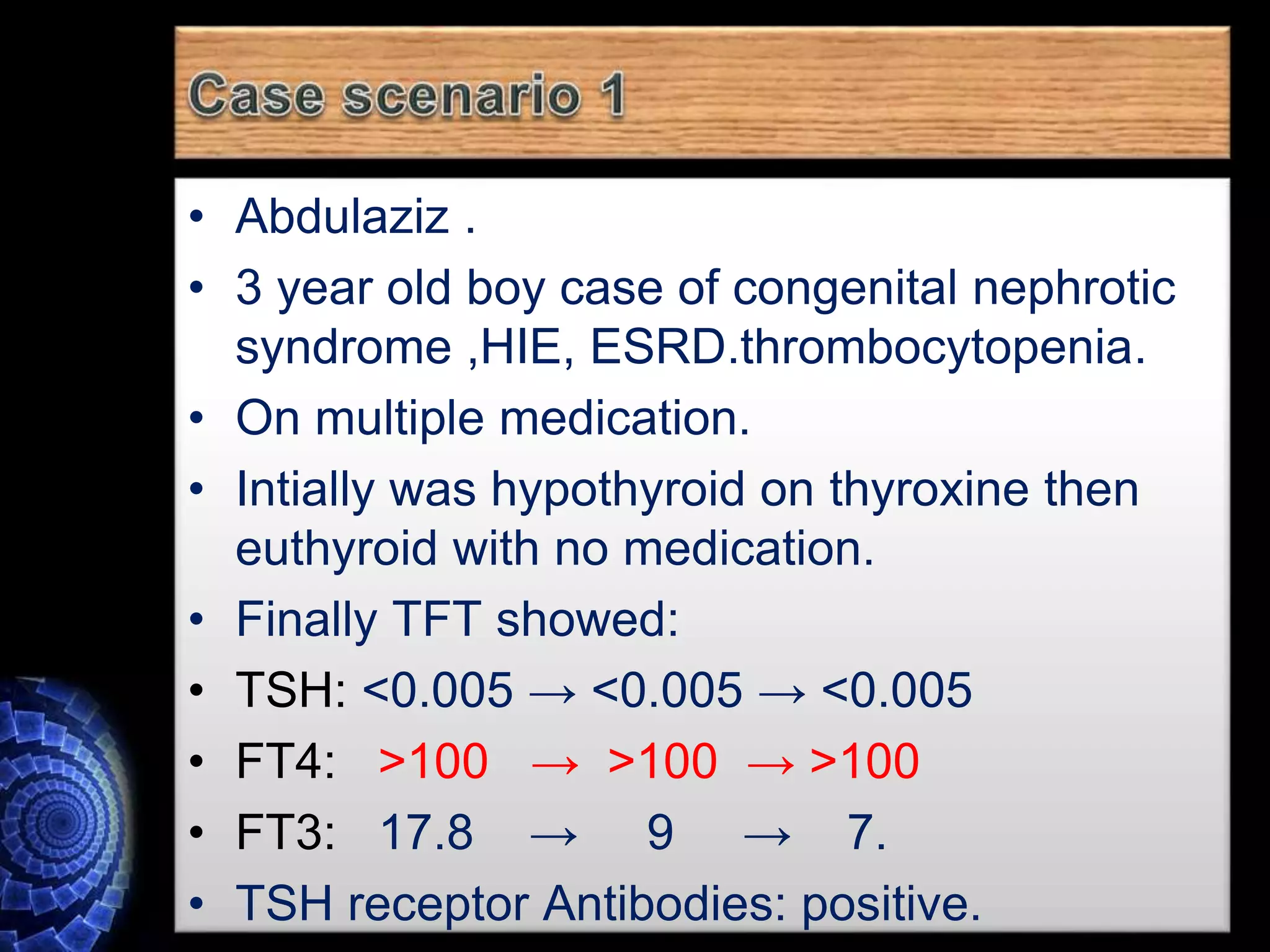
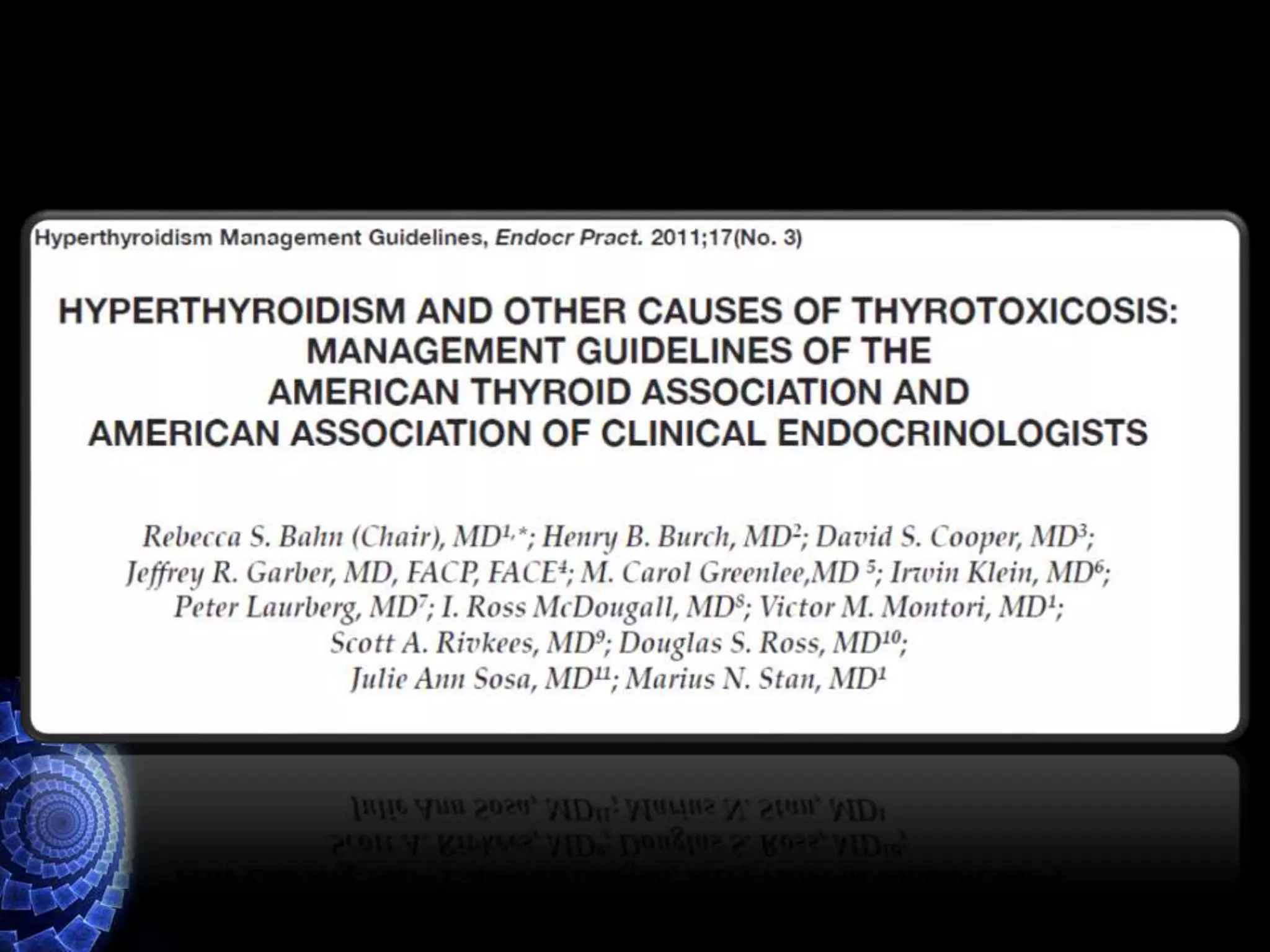

• Abdulaziz .
• 3 year old boy case of congenital nephrotic
syndrome ,HIE, ESRD.thrombocytopenia.
• On multiple medication.
• Intially was hypothyroid on thyroxine then
euthyroid with no medication.
• Finally TFT showed:
• TSH: <0.005 → <0.005 → <0.005
• FT4: >100 → >100 → >100
• FT3: 17.8 → 9 → 7.
• TSH receptor Antibodies: positive.
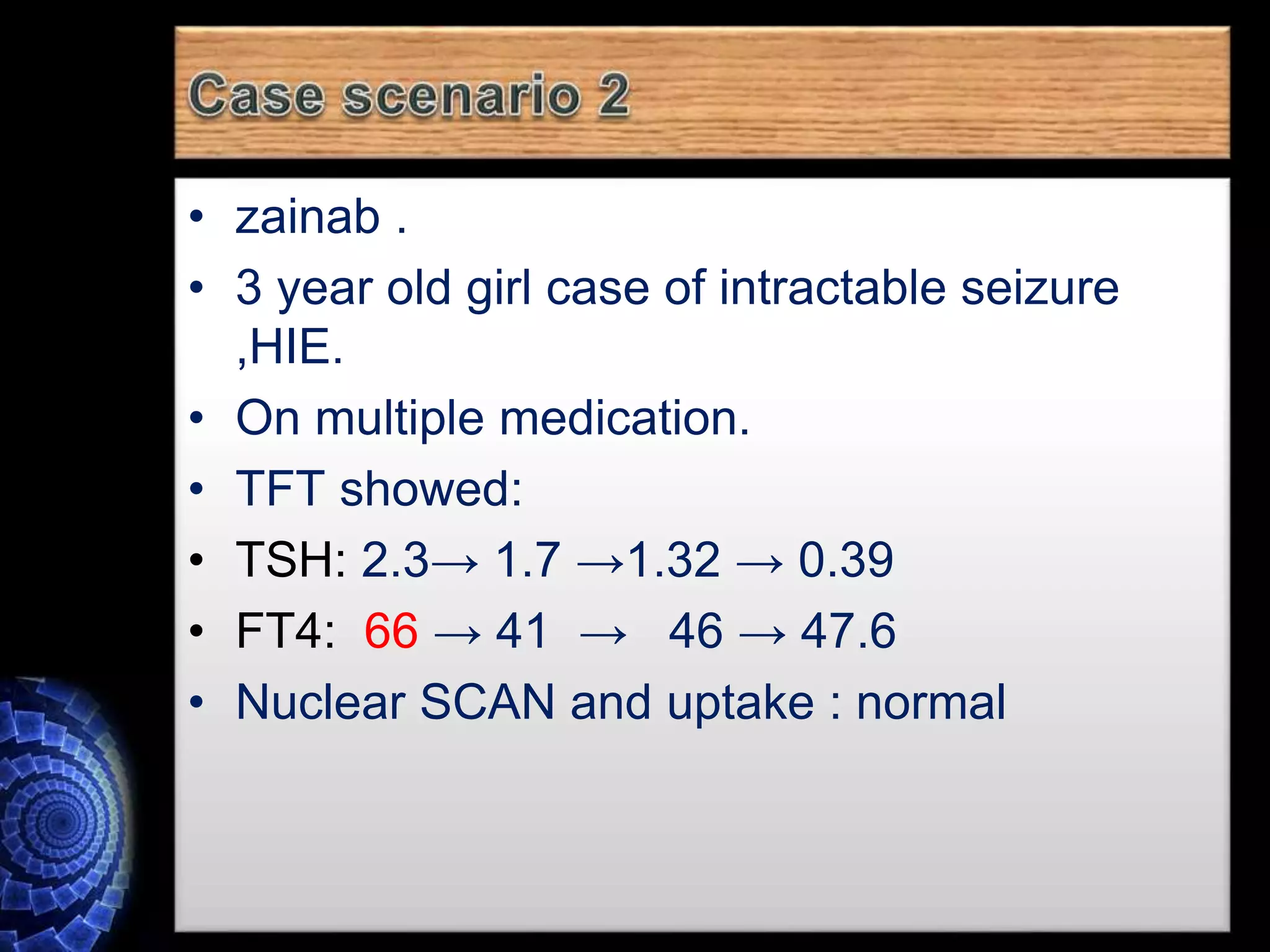
• zainab .
• 3 year old girl case of intractable seizure
,HIE.
• On multiple medication.
• TFT showed:
• TSH: 2.3→ 1.7 →1.32 → 0.39
• FT4: 66 → 41 → 46 → 47.6
• Nuclear SCAN and uptake : normal
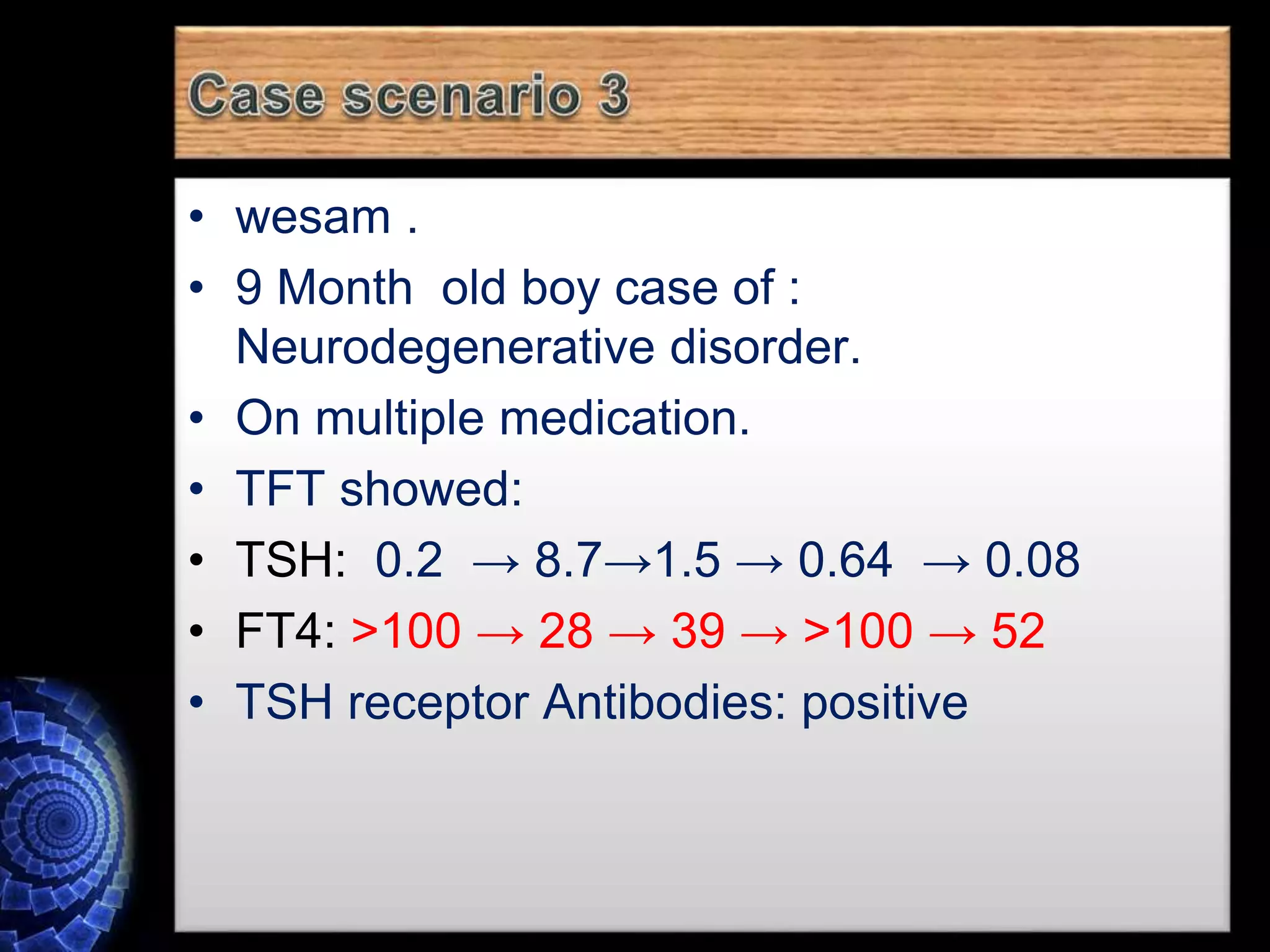
• wesam .
• 9 Month old boy case of :
Neurodegenerative disorder.
• On multiple medication.
• TFT showed:
• TSH: 0.2 → 8.7→1.5 → 0.64 → 0.08
• FT4: >100 → 28 → 39 → >100 → 52
• TSH receptor Antibodies: positive
Introduction
• Graves’ disease account for most of the
cases of thyrotoxicosis.
• there are more than 20 less common causes
of elevated free thyroid hormones.
• Most of these conditions are self-limited.
• Usually Lasting for for <8 wk.
‘‘hyperthyroidism’’ Vs ‘‘thyrotoxicosis
•thyrotoxicosis refers to the manifestations of
excessive quantities of circulating thyroid
hormone.
•hyperthyroidism means that the thyroid
gland is functioning more than normal.
• Therefore, a hyperthyroid patient is
thyrotoxic, but a thyrotoxic patient need not
have an overactive thyroid and is therefore not
actually hyperthyroid.
Introduction
•Thyrotoxicosis :
high (free T4) and suppresed (TSH).
•T3 toxicosis :
free T4 normal, high (free T3) and TSH is low
•subclinical thyrotoxicosis
both free hormones are normal but TSH is low,
•Thyrotoxicosis is the syndrome caused by an
excess of free thyroid hormones.
•The symptoms and signs depend on :
1- the degree of elevation of the hormones.
2- the length of time that they have been
elevated
3- the rate at which the hormone levels rose.
4- individual variations of patients
manifestations.
Introduction
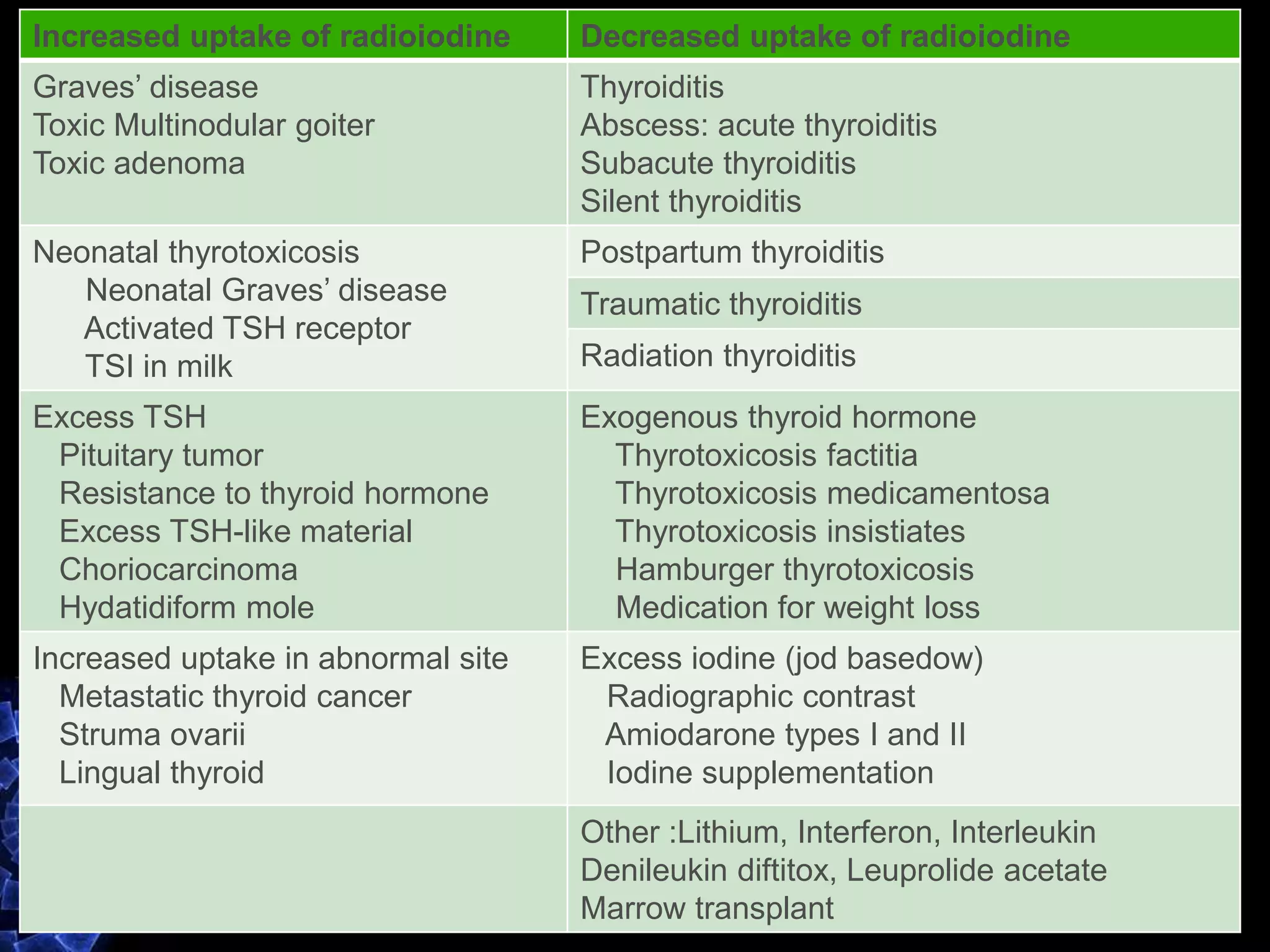
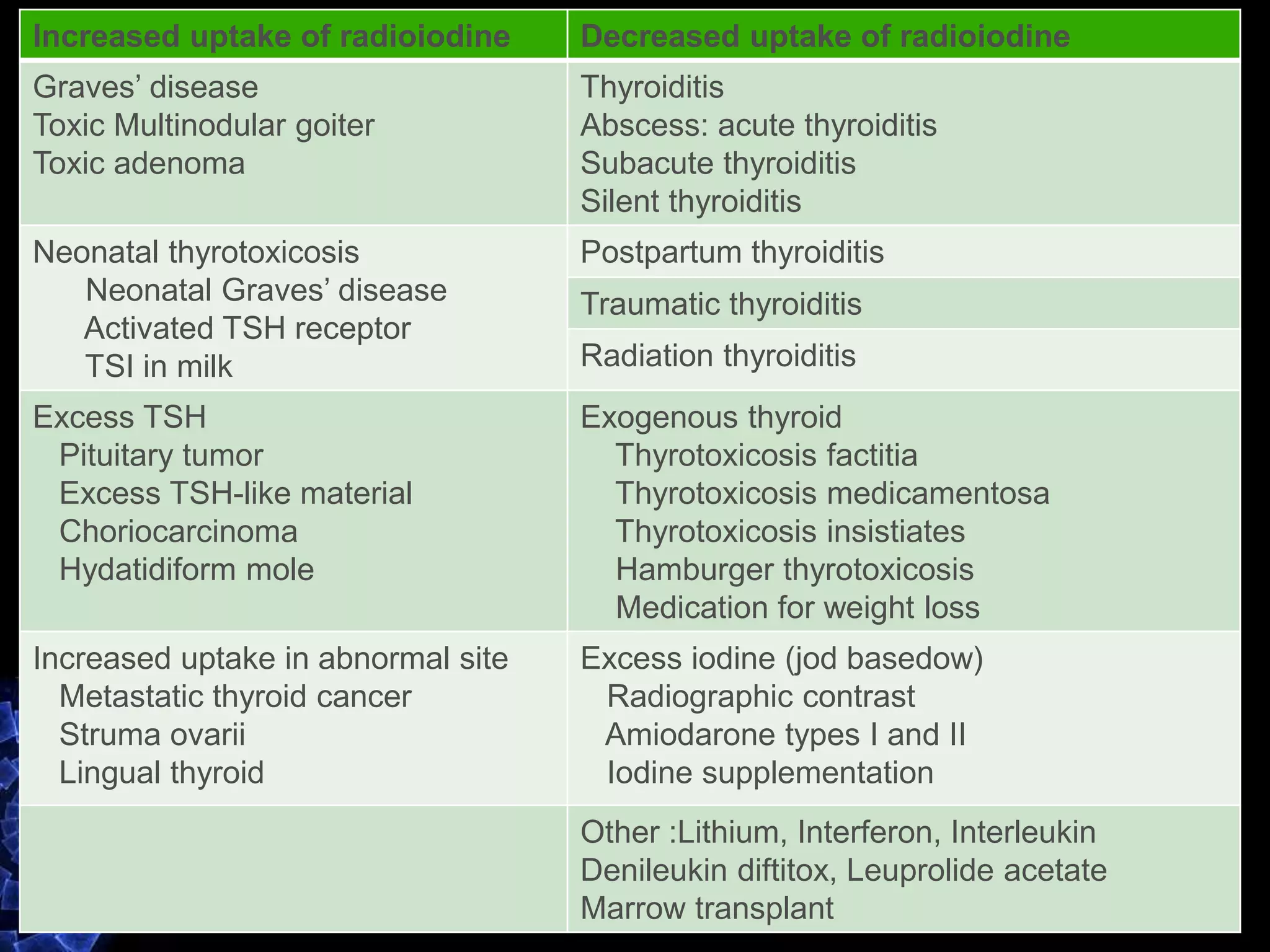
Decreased uptake of radioiodineIncreased uptake of radioiodine
Thyroiditis
Abscess: acute thyroiditis
Subacute thyroiditis
Silent thyroiditis
Graves’ disease
Toxic Multinodular goiter
Toxic adenoma
Postpartum thyroiditisNeonatal thyrotoxicosis
Neonatal Graves’ disease
Activated TSH receptor
TSI in milk
Traumatic thyroiditis
Radiation thyroiditis
Exogenous thyroid hormone
Thyrotoxicosis factitia
Thyrotoxicosis medicamentosa
Thyrotoxicosis insistiates
Hamburger thyrotoxicosis
Medication for weight loss
Excess TSH
Pituitary tumor
Resistance to thyroid hormone
Excess TSH-like material
Choriocarcinoma
Hydatidiform mole
Excess iodine (jod basedow)
Radiographic contrast
Amiodarone types I and II
Iodine supplementation
Increased uptake in abnormal site
Metastatic thyroid cancer
Struma ovarii
Lingual thyroid
Other :Lithium, Interferon, Interleukin
Denileukin diftitox, Leuprolide acetate
Marrow transplant
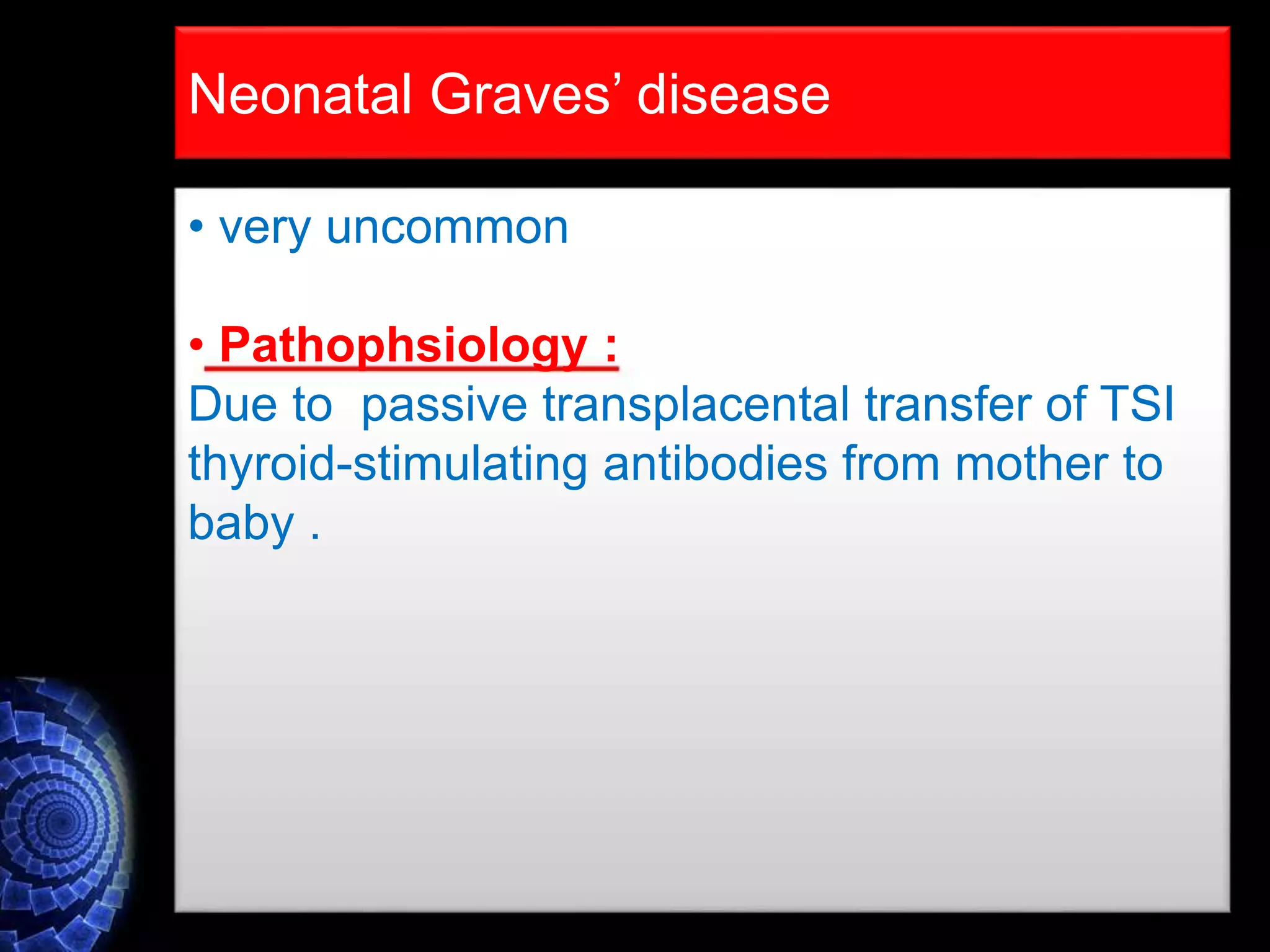
• very uncommon
• Pathophsiology :
Due to passive transplacental transfer of TSI
thyroid-stimulating antibodies from mother to
baby .
Neonatal Graves’ disease
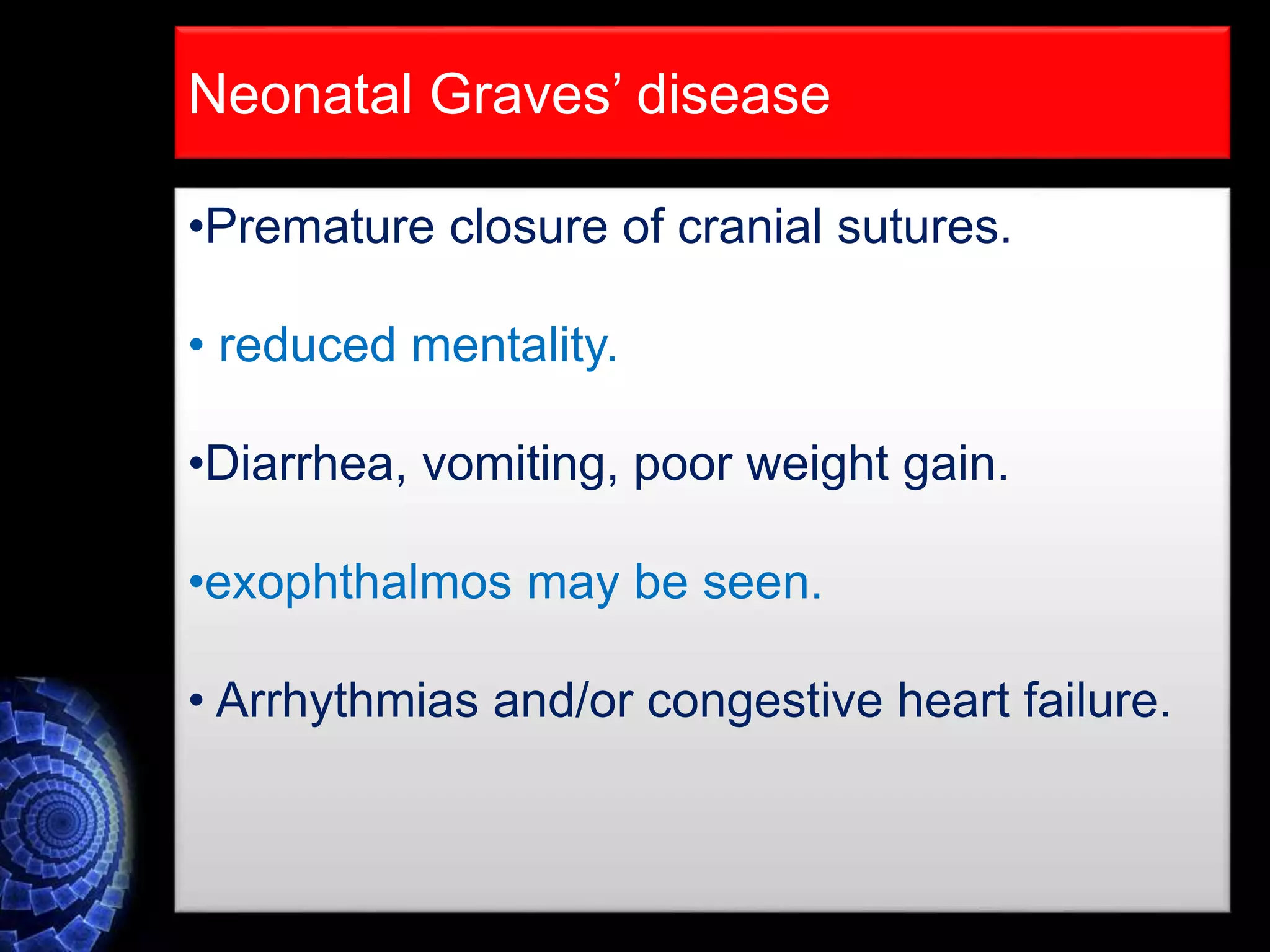
•Premature closure of cranial sutures.
• reduced mentality.
•Diarrhea, vomiting, poor weight gain.
•exophthalmos may be seen.
• Arrhythmias and/or congestive heart failure.
Neonatal Graves’ disease
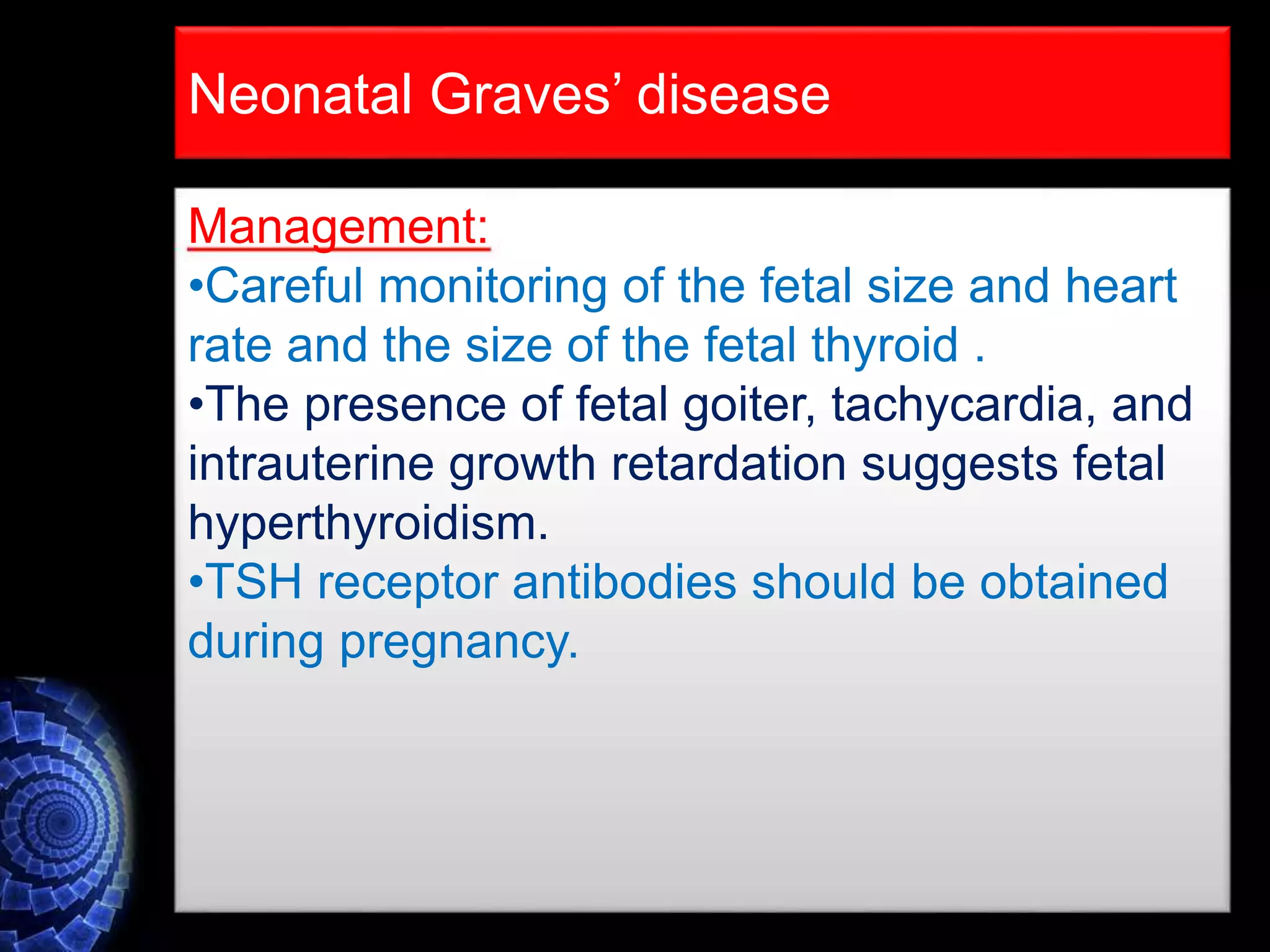
Management:
•Careful monitoring of the fetal size and heart
rate and the size of the fetal thyroid .
•The presence of fetal goiter, tachycardia, and
intrauterine growth retardation suggests fetal
hyperthyroidism.
•TSH receptor antibodies should be obtained
during pregnancy.
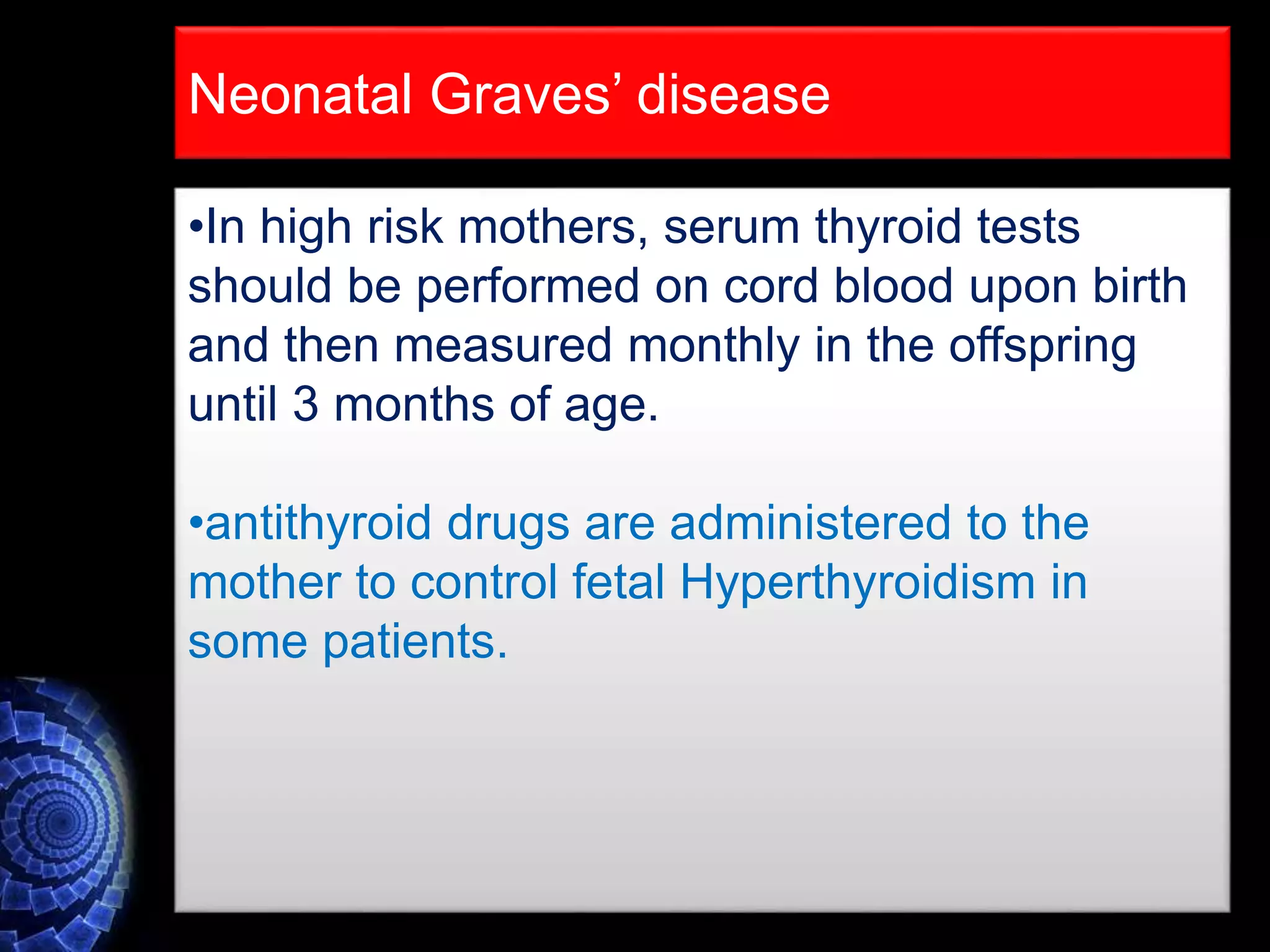
•In high risk mothers, serum thyroid tests
should be performed on cord blood upon birth
and then measured monthly in the offspring
until 3 months of age.
•antithyroid drugs are administered to the
mother to control fetal Hyperthyroidism in
some patients.
Neonatal Graves’ disease
Activated TSH receptor
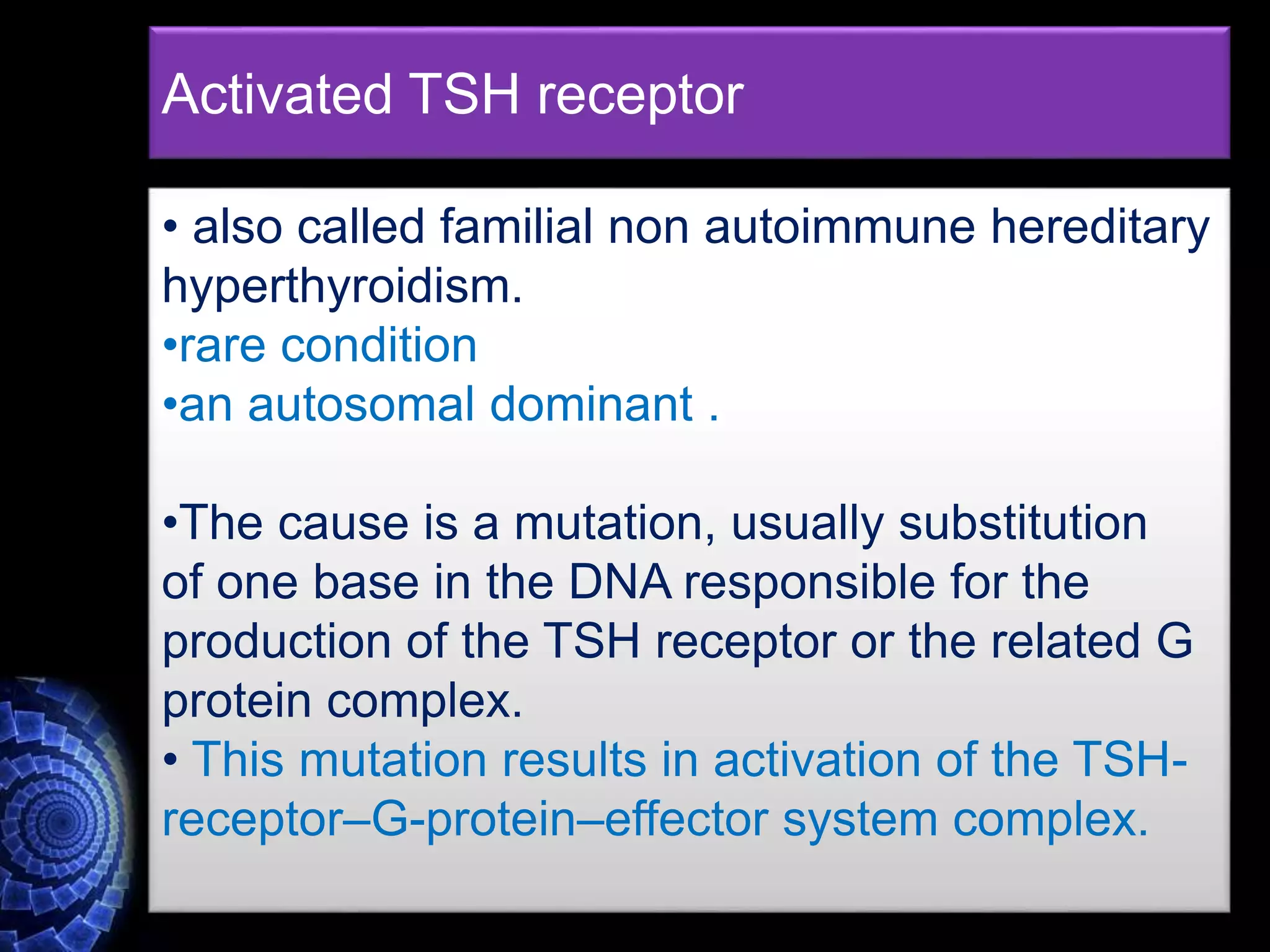
• also called familial non autoimmune hereditary
hyperthyroidism.
•rare condition
•an autosomal dominant .
•The cause is a mutation, usually substitution
of one base in the DNA responsible for the
production of the TSH receptor or the related G
protein complex.
• This mutation results in activation of the TSH-
receptor–G-protein–effector system complex.
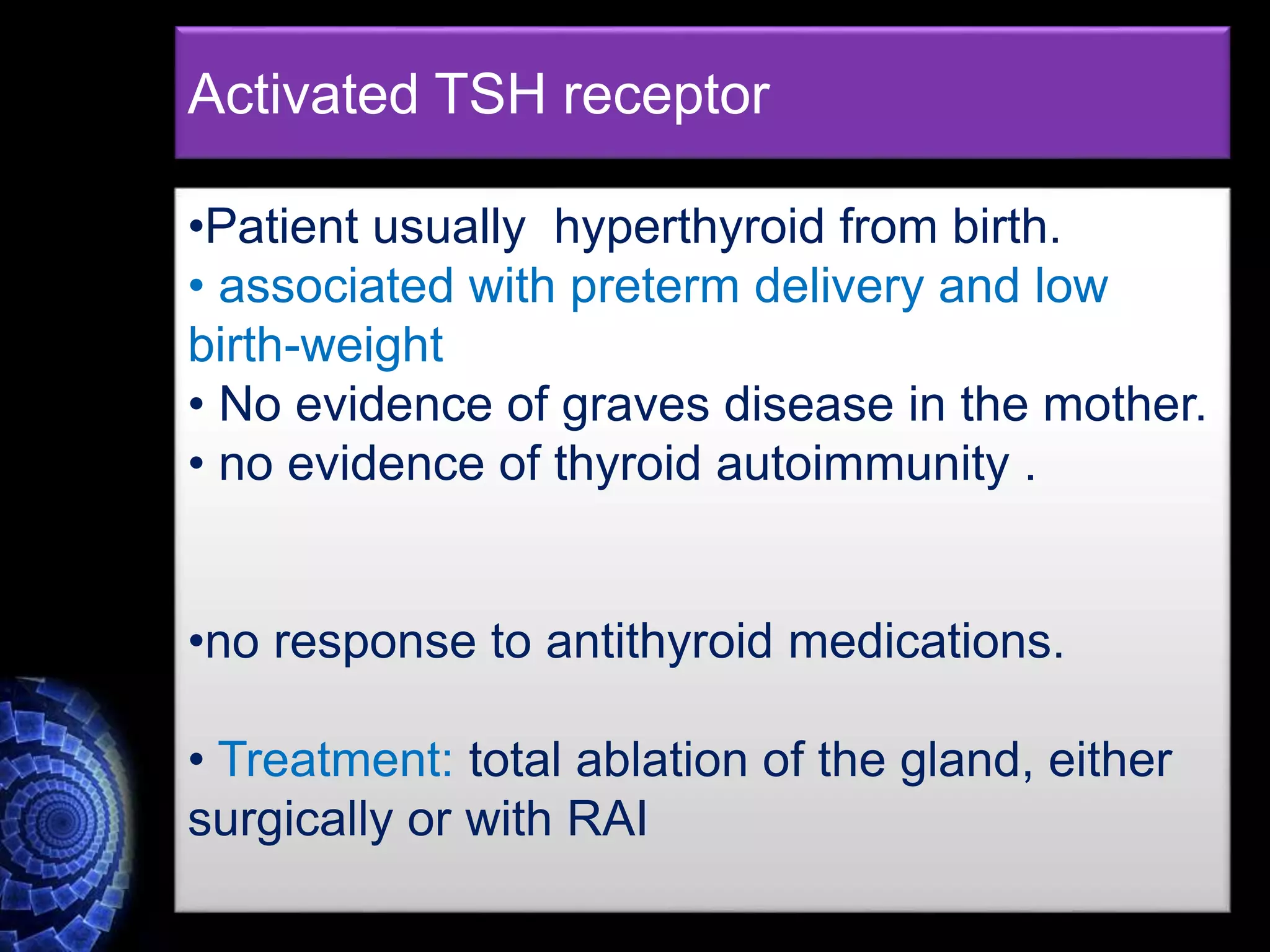
•Patient usually hyperthyroid from birth.
• associated with preterm delivery and low
birth-weight
• No evidence of graves disease in the mother.
• no evidence of thyroid autoimmunity .
•no response to antithyroid medications.
• Treatment: total ablation of the gland, either
surgically or with RAI
Activated TSH receptor
TSI in milk
•transfer of thyroid-stimulating antibodies in the
mother’s milk.
•TSH-secreting pituitary tumors are rare.
•TSH-secreting adenoma have been
associated with both multiple endocrine
neoplasia type I and McCune–Albright
syndrome.
•The thyroid gland is palpably enlarged and
often multinodular because of sustained TSH
stimulation.
Excess TSH
•Visual field defects (classically bitemporal
hemianopia) are present in approximately
40%–50%.
•Treatment:
•The most effective therapy is transsphenoidal
resection of the pituitary tumor.
•External radiation.
• octeriotide and long-acting somatostatin
lanreotide analogs also effective.
Excess TSH
•In one case report .
•The TSH was secreted by an ectopic
nasopharyngeal pituitary tumor.
• that was identified when the patient
developed nasal obstruction.
.
Excess TSH
•Familial.
•an autosomal dominant pattern of inheritance.
•may represent forms of the syndrome of
generalized resistance to thyroid hormone .
•The syndrome is caused by a mutation in
THRB .
resistance to thyroid hormone RTH
•Criteria essential for the diagnosis of this
disorder include the following:
•evidence of increased peripheral metabolism,
• diffuse thyromegaly,
•Elevated free thyroid hormone levels,
•inappropriately elevated serum levels of TSH
•
•The TRH and T3 suppression tests may help
differentiate it from adenoma.
•A number of agents including L-T3, D-T4,
bromocryptine, and triiodothyroacetic acid
(Triac) have been advocated for treatment in
case of throtoxicosis.
pituitary resistance to thyroid hormone
•Trophoblastic disease and germ cell
tumors
•Hyperthyroidism can occur in adolcenent with
a hydatidiform mole or choriocarcinoma or in
male with testicular germ cell tumors.
•Human chorionic gonadotropin (hCG) is a
glycoprotein hormone that shares a common
a-subunit with TSH.
•hCG has confirmed thyroid-stimulating
activity when present at high concentrations in
serum
Excess TSH-Like Material
•Hydatidiform moles secrete large amounts of
hCG.
•Increased thyroid function in patients with
hydatidiform moles can occur in 25%–64% of
cases.
•but only 5% of cases have clinically significant
thyrotoxicosis.
•Therapy is directed against cause.
Thionamides are useful adjunctive therapy.
Excess TSH-Like Material and
Gestational
• Struma ovarii :
• is a teratoma of the ovary that is composed
primarily of thyroid epithelium which comprises
more than 50% of its structure .
• Most struma ovarii lesions are benign, and it
has been estimated that fewer than 3% are
malignant .
High Uptake in Ectopic Sites
•Treatment of struma ovarii causing
thyrotoxicosis is surgical excision.
• Antithyroid drugs can be used preoperatively
to ameliorate thyrotoxic symptoms and signs.
High Uptake in Ectopic Sites
•Thyroid cancer can cause thyrotoxicosis
through 3 mechanisms:
•first, when there is a large volume of
functioning cancer (usually of the follicular
type).
•second, when there are activated receptors
on the cancer cells
• third, when the cancer grows rapidly within
the thyroid, invading and destroying thyroid
follicles and releasing thyroid hormones
Thyrotoxicosis from Functioning Thyroid
Cancer
•there have been a few reports of elevated
thyroid function in patients with ectopic thyroid.
• Sites of ectopic thyroid include the tongue,
neck and abdomen .
•The treatment is surgical.
Thyrotoxicosis from Ectopic Thyroid.
•An inflammation of the thyroid gland.
•It Include a diverse group of disorders:
•Acute
•Hashimoto’s .
•Subacute.
• silent thyroiditis
•drug-induced,
•radiation-related.
Thyroiditis
•also known as autoimmune or chronic
lymphocytic thyroiditis .
•Or Hashitoxicosis
•the most common form of thyroiditis
•Biochemically and clinically, there is an initial
period of thyrotoxicosis secondary to the
release of thyroid hormones from the inflamed
gland.
Hashimoto’s thyroiditis
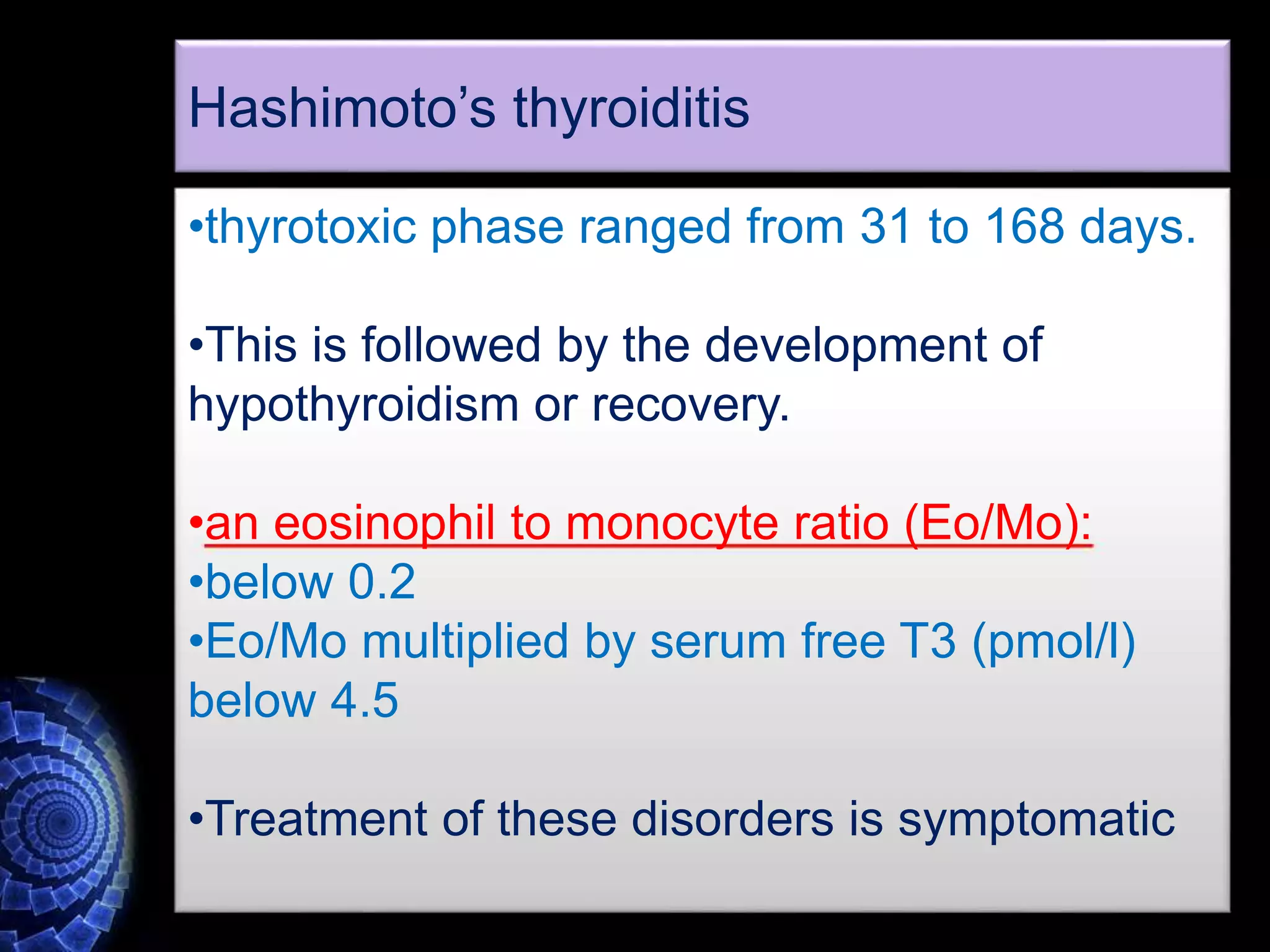
•thyrotoxic phase ranged from 31 to 168 days.
•This is followed by the development of
hypothyroidism or recovery.
•an eosinophil to monocyte ratio (Eo/Mo):
•below 0.2
•Eo/Mo multiplied by serum free T3 (pmol/l)
below 4.5
•Treatment of these disorders is symptomatic
Hashimoto’s thyroiditis
•also known as De Quervain’s or
granulomatous thyroiditis.
•This entity is rarely seen in children,
•The hallmark of this variant is a painful and
tender thyroid
•prodrome of myalgias, pharyngitis, low-grade
fever, and fatigue
•The most accepted etiology of subacute
thyroiditis is a viral illness.
subacute thyroiditis
•Pathophysiology :
•the destructive thyroiditis is caused by direct
viral infection of the gland
.or by the host’s response to the viral infection.
• is associated with several viruses, including:
• influenza virus,
•adenovirus,
• mumps virus,
•coxsackievirus..
•The erythrocyte sedimentation rate is
consistently elevated.
subacute thyroiditis
•Also called suppurative thyroiditis,
•It is rare.
•caused by Staphylococcus and Streptococcus
•The symptoms and signs are similar to those
of severe subacute thyroiditis with
thyrotoxicosis.
•Treatment : Drainage, culturing, and
appropriate antibiotics .
Acute thyroiditis
• occasionally in patient Graves' disease, who
is treated with radioiodine.
• develops thyroid pain and tenderness 5 to 10
days later.
• due to radiation-induced injury and necrosis
of thyroid follicular cells and associated
inflammation.
•usually mild and subside spontaneously in a
few days to one week.
Radiation thyroiditis
•Direct blunt or surgical trauma can cause
transient hyperthyroidism.
•This has been described after laryngectomy,
needle aspiration of the thyroid, and
parathyroidectomy
•Martial arts thyroiditis has been described
after a karate blow to the thyroid .
•The process is self-limited and resolves in
approximately 2 wk as the inflammation
subsides.
traumatic thyroiditis
•is a mild form of traumatic thyroiditis .
• It results from vigorous palpation of the
thyroid during physical exam.
•After manipulation of the gland during thyroid
biopsy.
Palpation thyroiditis
silent thyroiditis.
•Also called Painless thyroiditis.
•It is characterized primarily by transient
hyperthyroidism, followed sometimes by
hypothyroidism, and then recovery .
•It is considered a variant form of chronic
autoimmune thyroiditis.
•Also it could be secondary to medication.
•thyrotoxicosis factitia
•thyrotoxicosis medicamentosa
•Thyrotoxicosis insistiates
Thyrotoxicosis Attributable to Exogenous
Thyroid Hormones
• refers to a condition of thyrotoxicosis caused
by the ingestion of exogenous thyroid
hormone.
•It can be the result of mistaken ingestion of
excess drug, such as L-thyroxine
• or as a symptom of Munchausen syndrome.
thyrotoxicosis factitia
•The symptoms and sign: similar to those in
patients with hyperthyroidism from other
causes.
•No Exophthalmos or opthamopathy.
•Usually no goitre.
CLINICAL FEATURES
•Diagnosis depends on clinical suspicion
•biochemical thyrotoxicosis with high free T4
and/or free T3 and suppressed TSH .
•low uptake of radioiodine.
•serum thyroglobulin is usually low or
undetectable.
• antithyroglobulin antibodies should be
performed at the same time
•Some recommended to measure the
ratio of T4 to T3 to help make the diagnosis.
thyrotoxicosis factitia
•The source of thyroid might even be
unrecognized as in the case of diet pills that
contain thyroid hormones.
•Also it can be used in case of depression,
infertility or menstural problem.
•Exogenous Thyroid Hormones
•Patients with thyroid cancer prescribed
suppressive doses of thyroxine .
•Patients with goiter prescribed excessive
doses in an attempt to shrink the thyroid gland.
•Patients with a psychiatric disorder who may
take excessive doses of thyroid hormone.
thyrotoxicosis medicamentosa.
•iodine to food.
•Radiographic contrast.
•Drugs: Amiodarone.
Thyrotoxicosis Attributable to Excess
Iodine
•several outbreaks of thyrotoxicosis
attributable to thyroid gland being included
with neck trimmings that were used to make
meat.
ground beef
Hamburger thyrotoxicosis
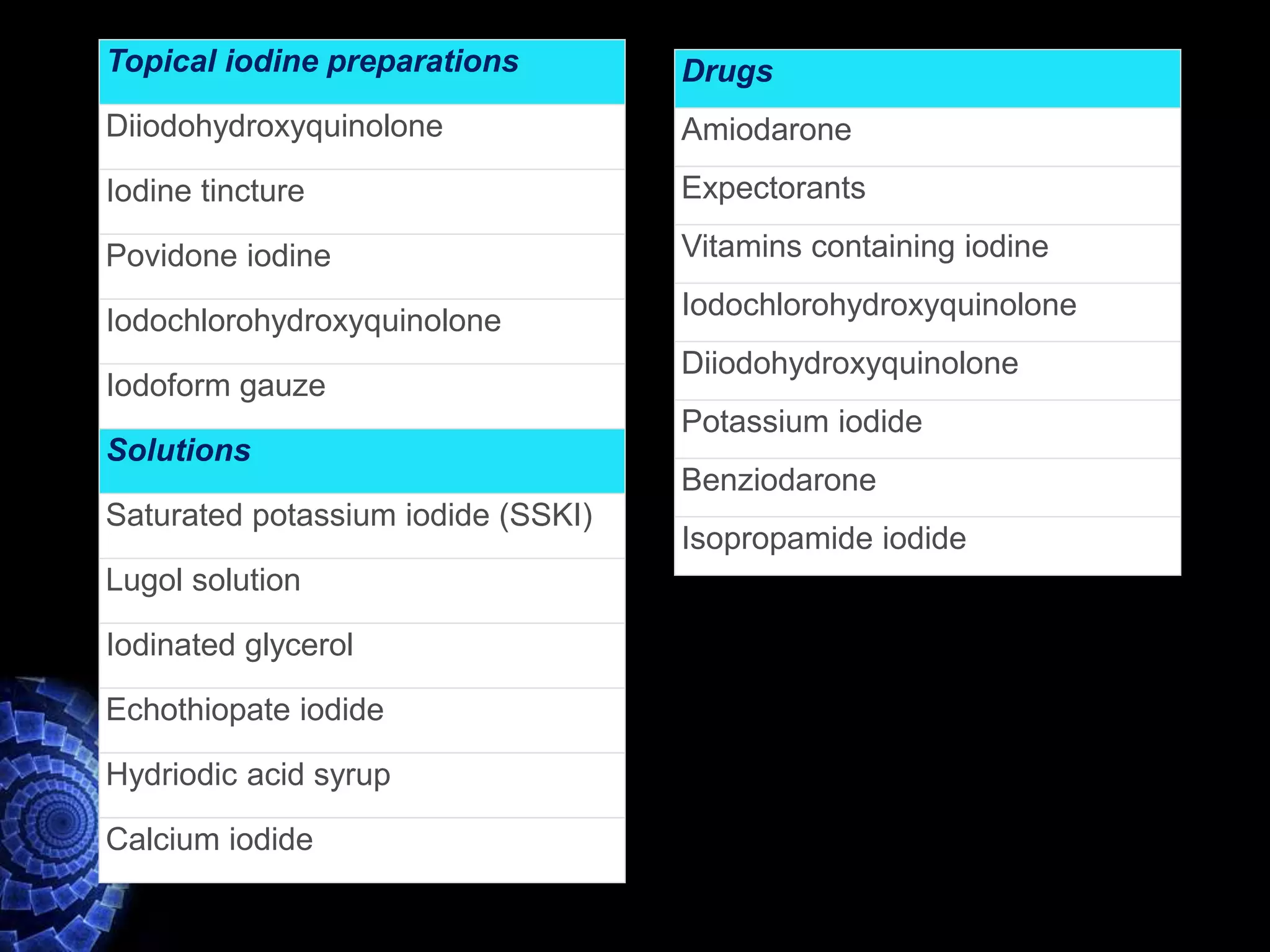
Topical iodine preparations
Diiodohydroxyquinolone
Iodine tincture
Povidone iodine
Iodochlorohydroxyquinolone
Iodoform gauze
Solutions
Saturated potassium iodide (SSKI)
Lugol solution
Iodinated glycerol
Echothiopate iodide
Hydriodic acid syrup
Calcium iodide
Drugs
Amiodarone
Expectorants
Vitamins containing iodine
Iodochlorohydroxyquinolone
Diiodohydroxyquinolone
Potassium iodide
Benziodarone
Isopropamide iodide
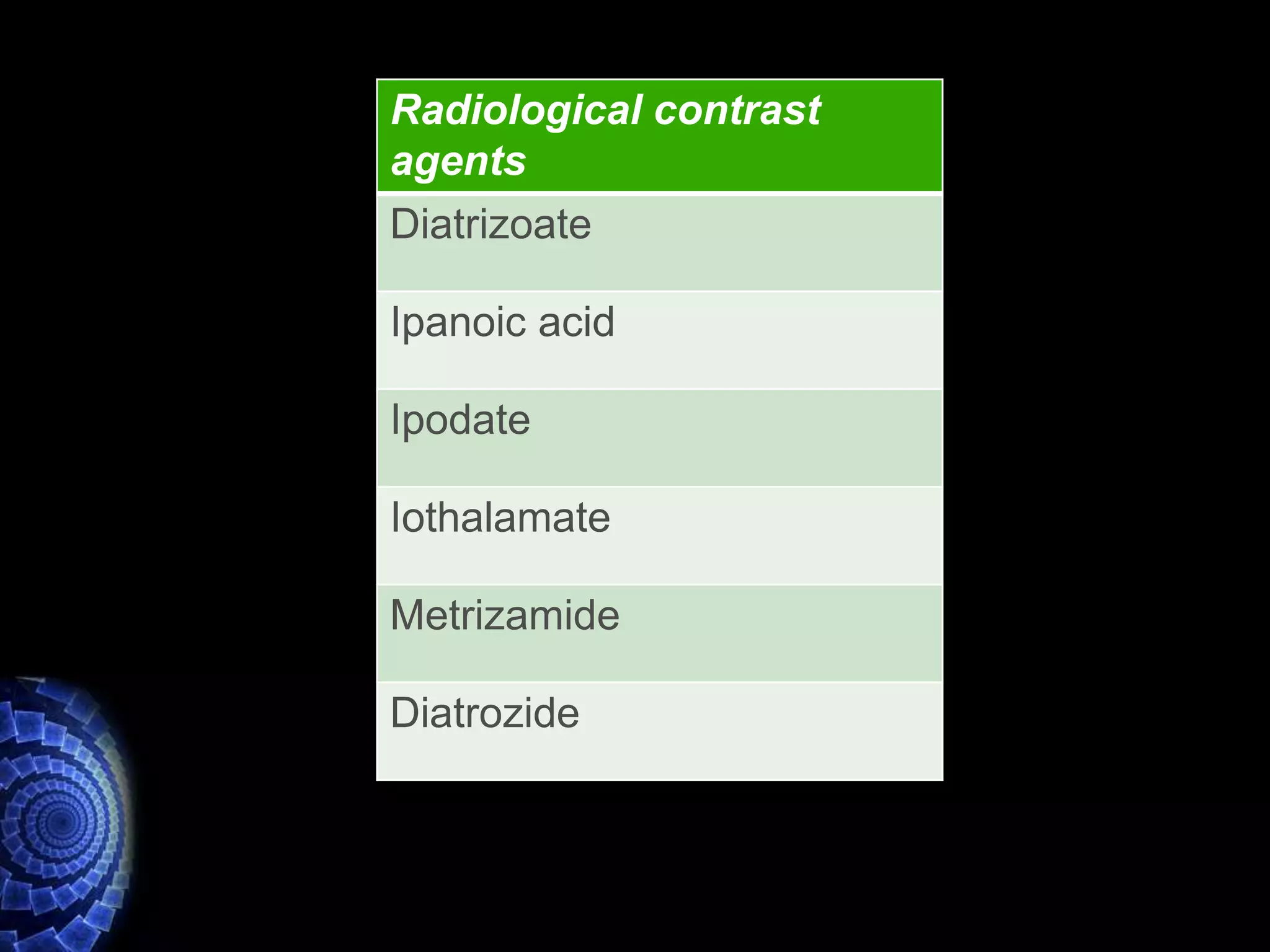
Radiological contrast
agents
Diatrizoate
Ipanoic acid
Ipodate
Iothalamate
Metrizamide
Diatrozide
•is an effective antiarrhythmic medication
but it has several side effects, including effects
on thyroid function.
•It that contains 37 % iodine.
•Deiodination of amiodarone produces about
12 mg of free iodine daily when a patient
ingests 400 mg.
•Amiodarone is fat soluble and has a half-life
of many months.
Amiodarone
•The effect on thyroid function is somewhat
dependent on the quantity of iodine ingested.
• In regions of iodine deficiency amiodarone is
more likely to cause thyrotoxicosis,
•in iodine-sufficient regions hypothyroidism is
more likely.
Amiodarone
•Type 1 amiodarone–induced
thyrotoxicosis: there is increased synthesis
of thyroid hormone (usually in patients with a
preexisting nodular goiter),.
•The excess iodine from amiodarone provides
the raw material for the nodules to produce
excess thyroid hormones.
•type 2, which is attributable to destruction of
follicles producing a thyroiditis-like picture.
Amiodarone
•Iodine-induced thyrotoxicosis is also called
Jod Basedow disease.
•Usually an increase in plasma inorganic
iodine causes reduced trapping of iodine,
organification (Wolff–Chaikoff effect) and
reduced release of preformed thyroid
hormones
Amiodarone
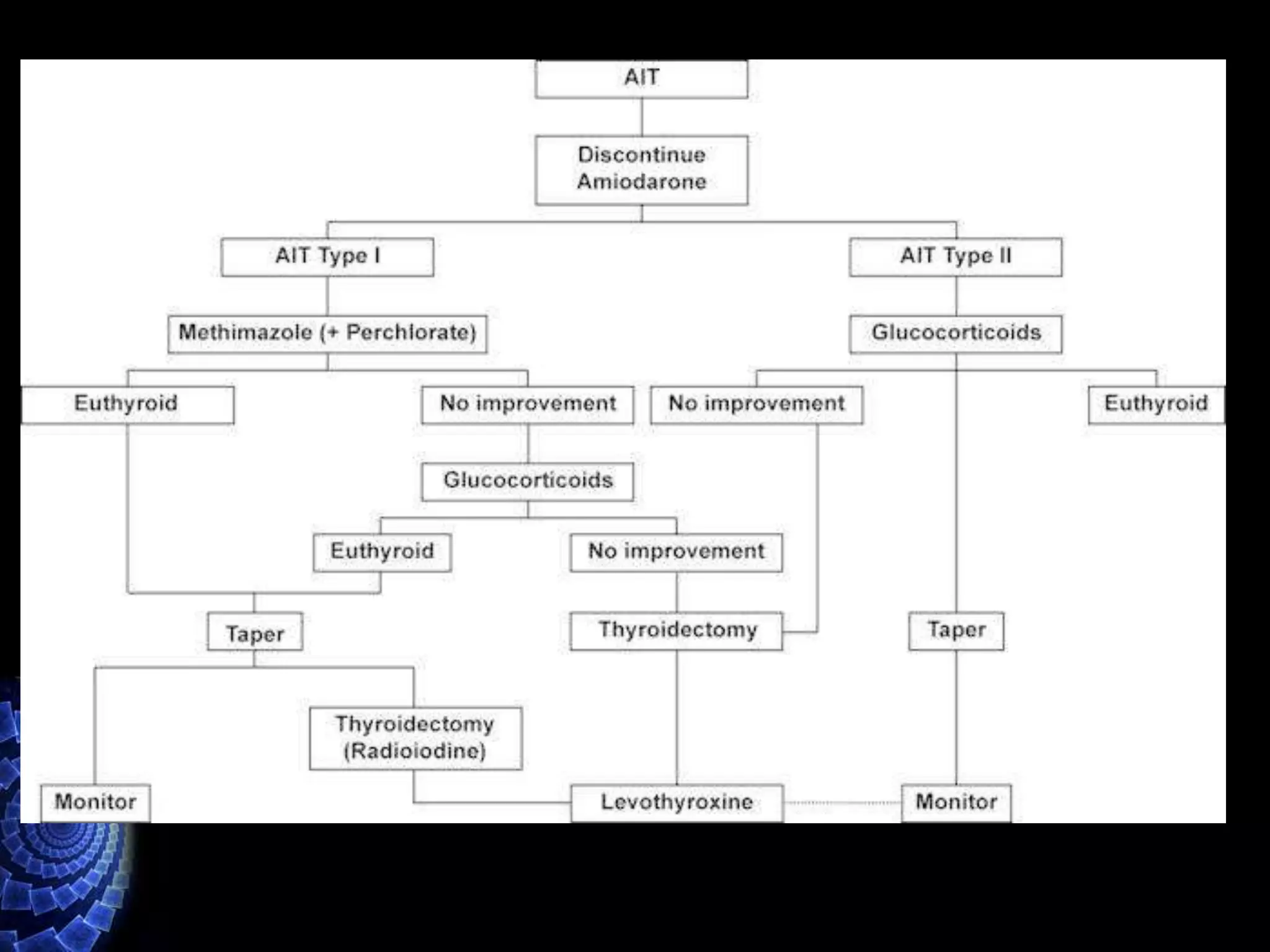
•Treatment: Antithyroid medication such as
methimazole been effective
•Potassium perchlorate has been used as a
competitive inhibitor of trapping iodine by the
sodium–iodide symporter.
•Corticosteroids such as prednisone are
effective in the destructive type 2 syndrome.
• Thyroidectomy can be undertaken when
antithyroid therapy is ineffective.
Amiodarone
Thyrotoxicosis Attributable to Nonthyroid
Medications
•interferon-alpha.
• lithium,
•Interleukin-2
• leuprolide acetate
•interferon-alpha.
•.used for viral Hepatitis
•.The most common thyroid abnormality is the
development of de novo antithyroid antibodies
without clinical disease .
•Approximately 5 to 10 percent of patients
develop clinical thyroid disease,
•including painless thyroiditis, Hashimoto's
thyroiditis, or Graves' disease.
Lithium
• used for depression .
•lithium have an increased incidence of
hyperthyroidism.
•Mostly in form of painless thyroiditis .
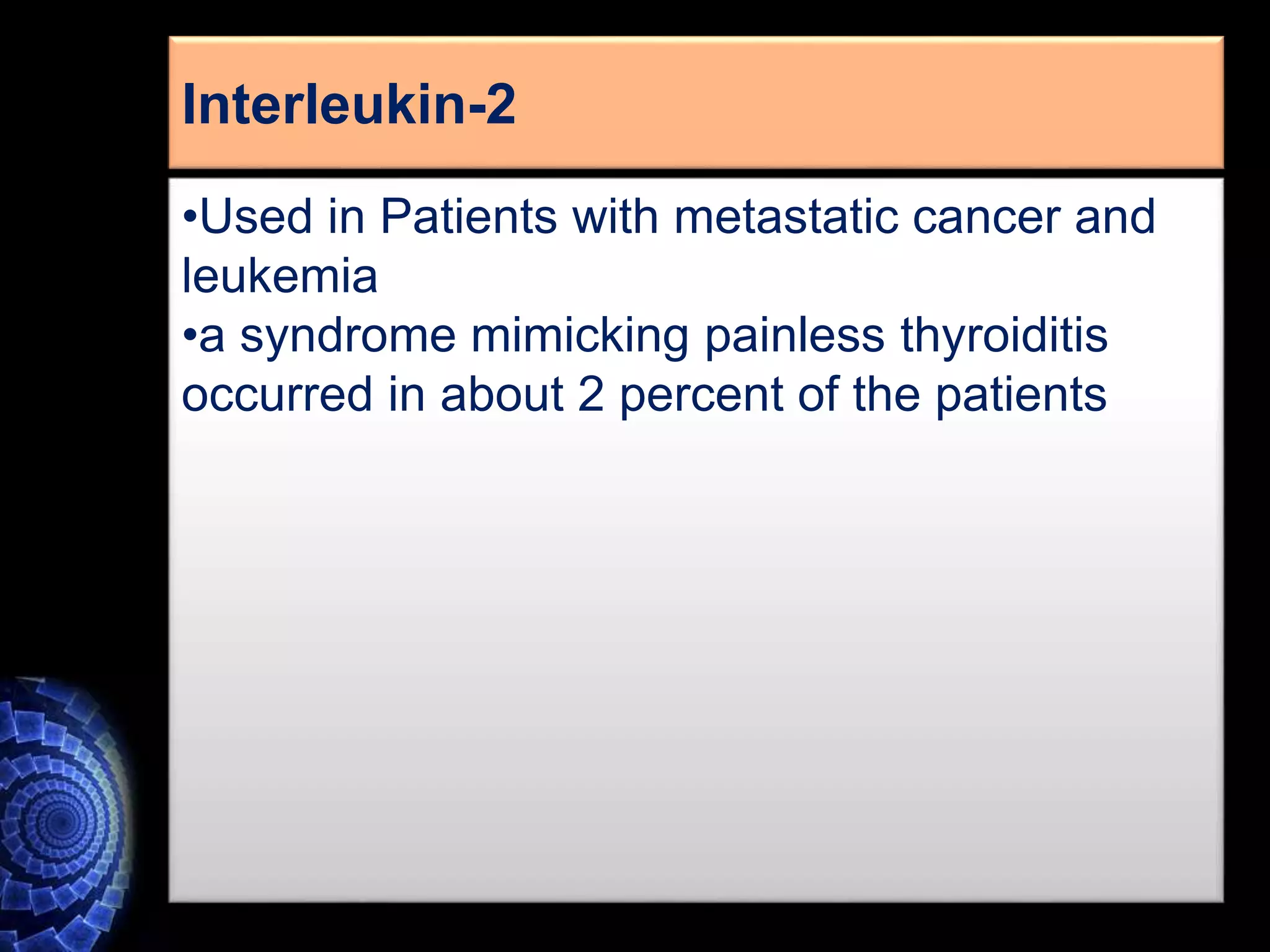
Interleukin-2
•Used in Patients with metastatic cancer and
leukemia
•a syndrome mimicking painless thyroiditis
occurred in about 2 percent of the patients
Decreased uptake of radioiodineIncreased uptake of radioiodine
Thyroiditis
Abscess: acute thyroiditis
Subacute thyroiditis
Silent thyroiditis
Graves’ disease
Toxic Multinodular goiter
Toxic adenoma
Postpartum thyroiditisNeonatal thyrotoxicosis
Neonatal Graves’ disease
Activated TSH receptor
TSI in milk
Traumatic thyroiditis
Radiation thyroiditis
Exogenous thyroid
Thyrotoxicosis factitia
Thyrotoxicosis medicamentosa
Thyrotoxicosis insistiates
Hamburger thyrotoxicosis
Medication for weight loss
Excess TSH
Pituitary tumor
Excess TSH-like material
Choriocarcinoma
Hydatidiform mole
Excess iodine (jod basedow)
Radiographic contrast
Amiodarone types I and II
Iodine supplementation
Increased uptake in abnormal site
Metastatic thyroid cancer
Struma ovarii
Lingual thyroid
Other :Lithium, Interferon, Interleukin
Denileukin diftitox, Leuprolide acetate
Marrow transplant
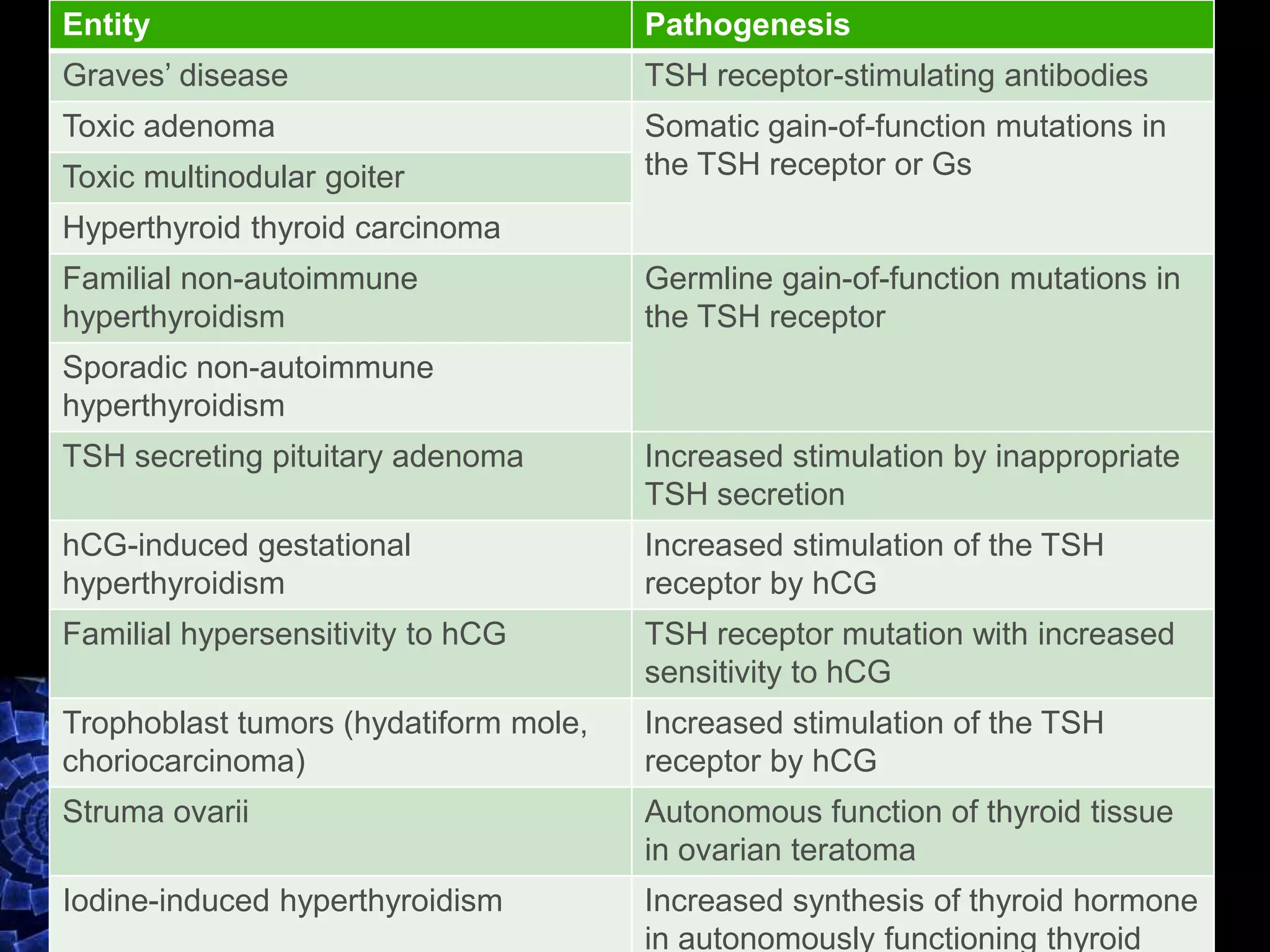
PathogenesisEntity
TSH receptor-stimulating antibodiesGraves’ disease
Somatic gain-of-function mutations in
the TSH receptor or Gs
Toxic adenoma
Toxic multinodular goiter
Hyperthyroid thyroid carcinoma
Germline gain-of-function mutations in
the TSH receptor
Familial non-autoimmune
hyperthyroidism
Sporadic non-autoimmune
hyperthyroidism
Increased stimulation by inappropriate
TSH secretion
TSH secreting pituitary adenoma
Increased stimulation of the TSH
receptor by hCG
hCG-induced gestational
hyperthyroidism
TSH receptor mutation with increased
sensitivity to hCG
Familial hypersensitivity to hCG
Increased stimulation of the TSH
receptor by hCG
Trophoblast tumors (hydatiform mole,
choriocarcinoma)
Autonomous function of thyroid tissue
in ovarian teratoma
Struma ovarii
Increased synthesis of thyroid hormone
in autonomously functioning thyroid
Iodine-induced hyperthyroidism
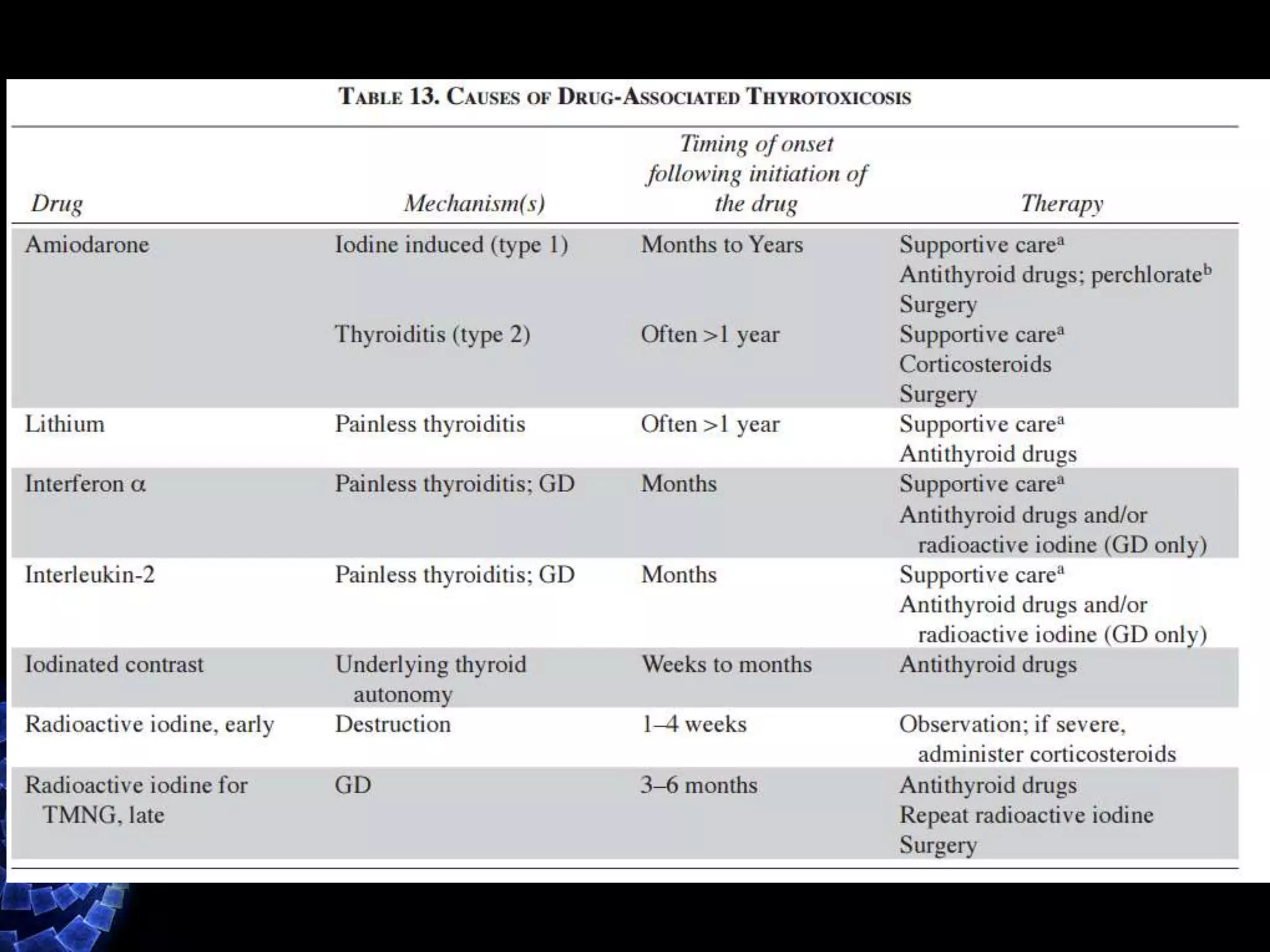
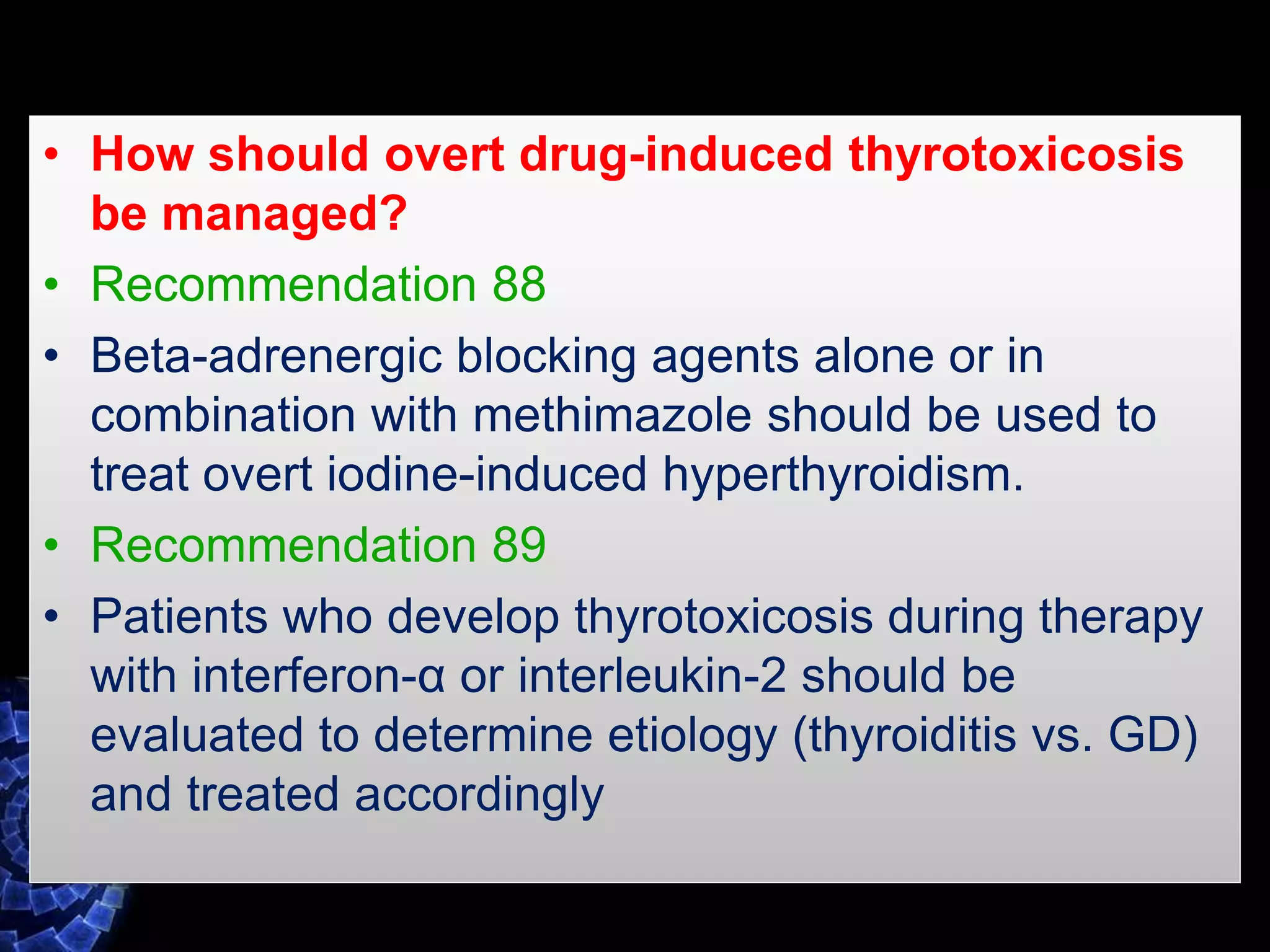
• How should overt drug-induced thyrotoxicosis
be managed?
• Recommendation 88
• Beta-adrenergic blocking agents alone or in
combination with methimazole should be used to
treat overt iodine-induced hyperthyroidism.
• Recommendation 89
• Patients who develop thyrotoxicosis during therapy
with interferon-α or interleukin-2 should be
evaluated to determine etiology (thyroiditis vs. GD)
and treated accordingly
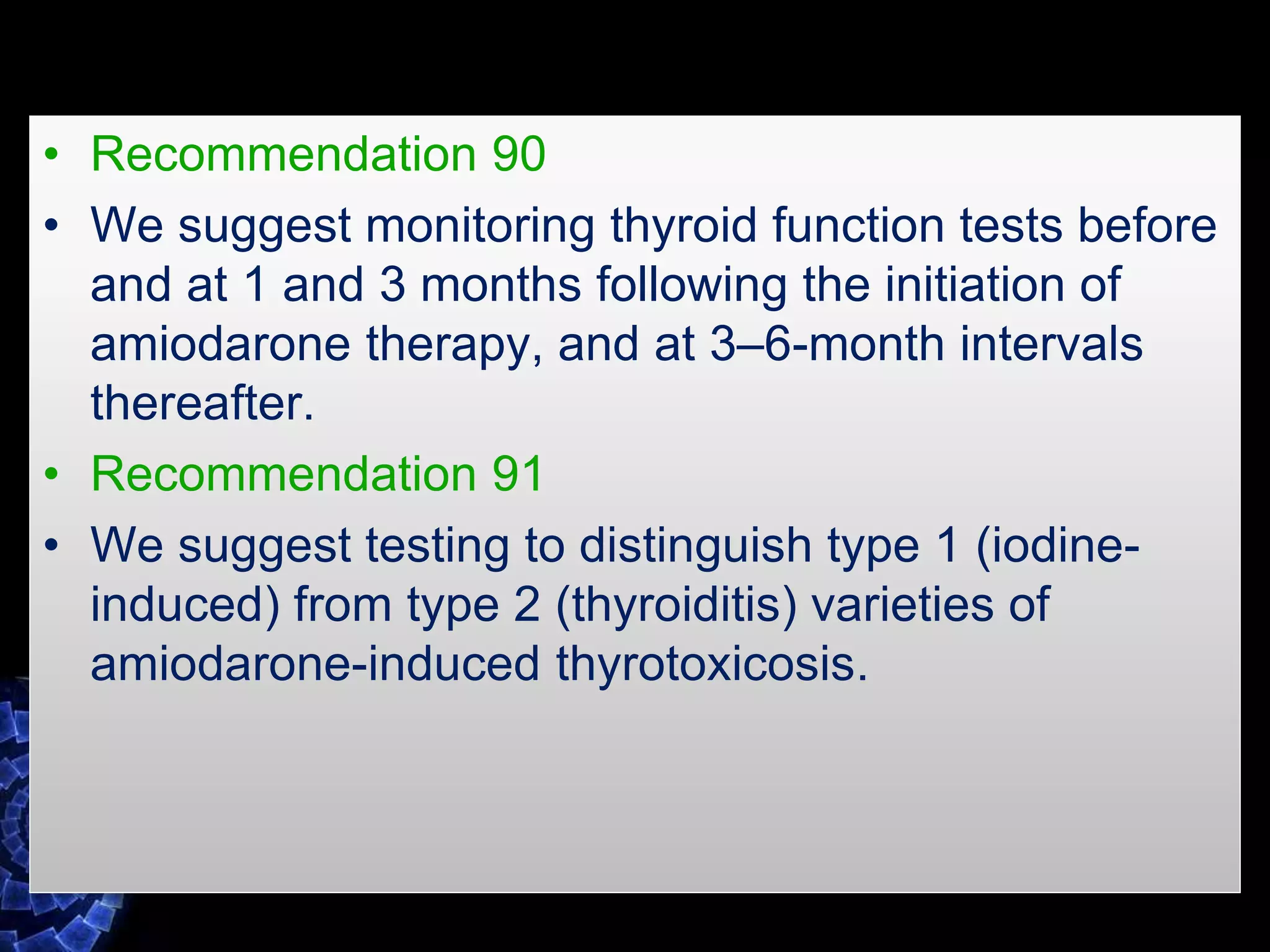
• Recommendation 90
• We suggest monitoring thyroid function tests before
and at 1 and 3 months following the initiation of
amiodarone therapy, and at 3–6-month intervals
thereafter.
• Recommendation 91
• We suggest testing to distinguish type 1 (iodine-
induced) from type 2 (thyroiditis) varieties of
amiodarone-induced thyrotoxicosis.
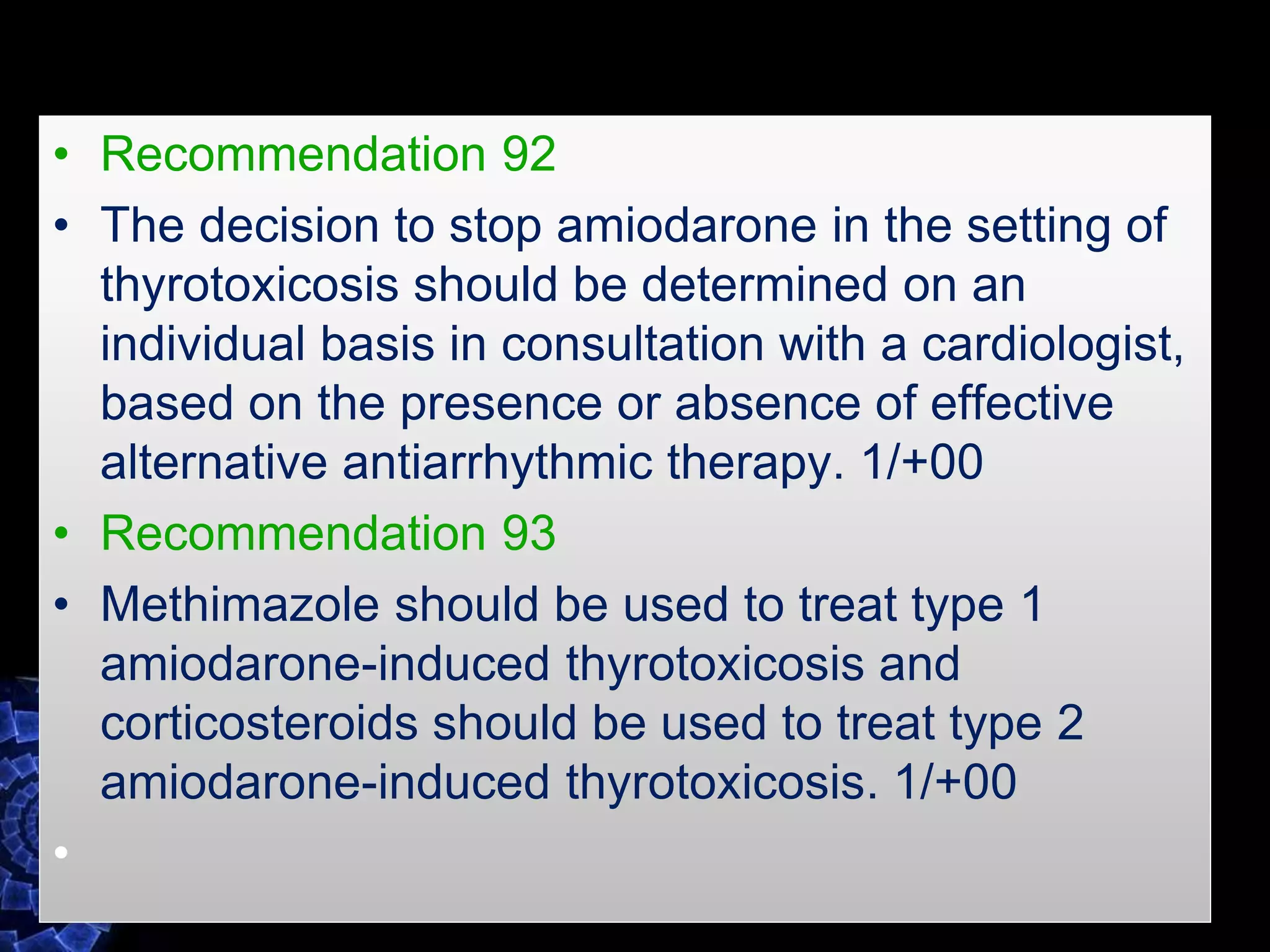
• Recommendation 92
• The decision to stop amiodarone in the setting of
thyrotoxicosis should be determined on an
individual basis in consultation with a cardiologist,
based on the presence or absence of effective
alternative antiarrhythmic therapy. 1/+00
• Recommendation 93
• Methimazole should be used to treat type 1
amiodarone-induced thyrotoxicosis and
corticosteroids should be used to treat type 2
amiodarone-induced thyrotoxicosis. 1/+00
•
• Recommendation 94
• Combined antithyroid drug and anti-inflammatory
therapy should be used to treat patients with overt
amiodarone-induced thyrotoxicosis who fail to
respond to single modality therapy, and patients in
whom the type of disease cannot be unequivocally
determined.
How should thyrotoxicosis due to
destructive thyroiditis be managed?
Recommendation 96
Patients with mild symptomatic subacute
thyroiditis should be treated initially with beta-
adrenergic-blocking drugs and nonsteroidal
anti-inflammatory agents. Those failing to
respond or those with moderate-to-severe
symptoms should be treated with
corticosteroids.
How should thyrotoxicosis due to unusual
causes be managed?
Recommendation 97
The diagnosis of TSH-secreting pituitary tumor
should be based on an inappropriately normal or
elevated serum TSH level associated with elevated
free T4 estimates and T3 concentrations, usually
associated with the presence of a pituitary tumor on
MRI and the absence of a family history or genetic
testing consistent with thyroid hormone resistance in
a thyrotoxic patient.
Recommendation 98
Patients with TSH-secreting pituitary adenomas
should undergo surgery performed by an
experienced pituitary surgeon.
Recommendation 99
Patients with struma ovarii should be treated initially
with surgical resection.
Recommendation 100
Treatment of hyperthyroidism due to
choriocarcinoma should include both methimazole
and treatment directed against the primary tumor.
•Prevalence of goiter and hypothyroidism was
observed high in patients with ESRD .
•Hyperthyroidism is rare in patients on dialysis
•The clinical diagnosis of hyperthyroidism in
ESRD may be delayed due to overlap of
symptoms.
• is not clear whether the excess iodine
stimulates the gland to a hyperactive state
(Jod-Basedow effect).
•Treatment:
• antithyroid,Surgery, I-131 ablation.
Gravs disease in ESRD on dialysis
.
thyrotoxicosis: uncommon causes

thyrotoxicosis: uncommon causes

  • 3.
    • Abdulaziz . •3 year old boy case of congenital nephrotic syndrome ,HIE, ESRD.thrombocytopenia. • On multiple medication. • Intially was hypothyroid on thyroxine then euthyroid with no medication. • Finally TFT showed: • TSH: <0.005 → <0.005 → <0.005 • FT4: >100 → >100 → >100 • FT3: 17.8 → 9 → 7. • TSH receptor Antibodies: positive.
  • 4.
    • zainab . •3 year old girl case of intractable seizure ,HIE. • On multiple medication. • TFT showed: • TSH: 2.3→ 1.7 →1.32 → 0.39 • FT4: 66 → 41 → 46 → 47.6 • Nuclear SCAN and uptake : normal
  • 5.
    • wesam . •9 Month old boy case of : Neurodegenerative disorder. • On multiple medication. • TFT showed: • TSH: 0.2 → 8.7→1.5 → 0.64 → 0.08 • FT4: >100 → 28 → 39 → >100 → 52 • TSH receptor Antibodies: positive
  • 6.
    Introduction • Graves’ diseaseaccount for most of the cases of thyrotoxicosis. • there are more than 20 less common causes of elevated free thyroid hormones. • Most of these conditions are self-limited. • Usually Lasting for for <8 wk.
  • 7.
    ‘‘hyperthyroidism’’ Vs ‘‘thyrotoxicosis •thyrotoxicosisrefers to the manifestations of excessive quantities of circulating thyroid hormone. •hyperthyroidism means that the thyroid gland is functioning more than normal. • Therefore, a hyperthyroid patient is thyrotoxic, but a thyrotoxic patient need not have an overactive thyroid and is therefore not actually hyperthyroid.
  • 8.
    Introduction •Thyrotoxicosis : high (freeT4) and suppresed (TSH). •T3 toxicosis : free T4 normal, high (free T3) and TSH is low •subclinical thyrotoxicosis both free hormones are normal but TSH is low,
  • 9.
    •Thyrotoxicosis is thesyndrome caused by an excess of free thyroid hormones. •The symptoms and signs depend on : 1- the degree of elevation of the hormones. 2- the length of time that they have been elevated 3- the rate at which the hormone levels rose. 4- individual variations of patients manifestations. Introduction
  • 11.
    Decreased uptake ofradioiodineIncreased uptake of radioiodine Thyroiditis Abscess: acute thyroiditis Subacute thyroiditis Silent thyroiditis Graves’ disease Toxic Multinodular goiter Toxic adenoma Postpartum thyroiditisNeonatal thyrotoxicosis Neonatal Graves’ disease Activated TSH receptor TSI in milk Traumatic thyroiditis Radiation thyroiditis Exogenous thyroid hormone Thyrotoxicosis factitia Thyrotoxicosis medicamentosa Thyrotoxicosis insistiates Hamburger thyrotoxicosis Medication for weight loss Excess TSH Pituitary tumor Resistance to thyroid hormone Excess TSH-like material Choriocarcinoma Hydatidiform mole Excess iodine (jod basedow) Radiographic contrast Amiodarone types I and II Iodine supplementation Increased uptake in abnormal site Metastatic thyroid cancer Struma ovarii Lingual thyroid Other :Lithium, Interferon, Interleukin Denileukin diftitox, Leuprolide acetate Marrow transplant
  • 12.
    • very uncommon •Pathophsiology : Due to passive transplacental transfer of TSI thyroid-stimulating antibodies from mother to baby . Neonatal Graves’ disease
  • 13.
    •Premature closure ofcranial sutures. • reduced mentality. •Diarrhea, vomiting, poor weight gain. •exophthalmos may be seen. • Arrhythmias and/or congestive heart failure. Neonatal Graves’ disease
  • 14.
    Neonatal Graves’ disease Management: •Carefulmonitoring of the fetal size and heart rate and the size of the fetal thyroid . •The presence of fetal goiter, tachycardia, and intrauterine growth retardation suggests fetal hyperthyroidism. •TSH receptor antibodies should be obtained during pregnancy.
  • 15.
    •In high riskmothers, serum thyroid tests should be performed on cord blood upon birth and then measured monthly in the offspring until 3 months of age. •antithyroid drugs are administered to the mother to control fetal Hyperthyroidism in some patients. Neonatal Graves’ disease
  • 16.
    Activated TSH receptor •also called familial non autoimmune hereditary hyperthyroidism. •rare condition •an autosomal dominant . •The cause is a mutation, usually substitution of one base in the DNA responsible for the production of the TSH receptor or the related G protein complex. • This mutation results in activation of the TSH- receptor–G-protein–effector system complex.
  • 17.
    •Patient usually hyperthyroidfrom birth. • associated with preterm delivery and low birth-weight • No evidence of graves disease in the mother. • no evidence of thyroid autoimmunity . •no response to antithyroid medications. • Treatment: total ablation of the gland, either surgically or with RAI Activated TSH receptor
  • 18.
    TSI in milk •transferof thyroid-stimulating antibodies in the mother’s milk.
  • 19.
    •TSH-secreting pituitary tumorsare rare. •TSH-secreting adenoma have been associated with both multiple endocrine neoplasia type I and McCune–Albright syndrome. •The thyroid gland is palpably enlarged and often multinodular because of sustained TSH stimulation. Excess TSH
  • 20.
    •Visual field defects(classically bitemporal hemianopia) are present in approximately 40%–50%. •Treatment: •The most effective therapy is transsphenoidal resection of the pituitary tumor. •External radiation. • octeriotide and long-acting somatostatin lanreotide analogs also effective. Excess TSH
  • 21.
    •In one casereport . •The TSH was secreted by an ectopic nasopharyngeal pituitary tumor. • that was identified when the patient developed nasal obstruction. . Excess TSH
  • 22.
    •Familial. •an autosomal dominantpattern of inheritance. •may represent forms of the syndrome of generalized resistance to thyroid hormone . •The syndrome is caused by a mutation in THRB . resistance to thyroid hormone RTH
  • 23.
    •Criteria essential forthe diagnosis of this disorder include the following: •evidence of increased peripheral metabolism, • diffuse thyromegaly, •Elevated free thyroid hormone levels, •inappropriately elevated serum levels of TSH • •The TRH and T3 suppression tests may help differentiate it from adenoma. •A number of agents including L-T3, D-T4, bromocryptine, and triiodothyroacetic acid (Triac) have been advocated for treatment in case of throtoxicosis. pituitary resistance to thyroid hormone
  • 24.
    •Trophoblastic disease andgerm cell tumors •Hyperthyroidism can occur in adolcenent with a hydatidiform mole or choriocarcinoma or in male with testicular germ cell tumors. •Human chorionic gonadotropin (hCG) is a glycoprotein hormone that shares a common a-subunit with TSH. •hCG has confirmed thyroid-stimulating activity when present at high concentrations in serum Excess TSH-Like Material
  • 25.
    •Hydatidiform moles secretelarge amounts of hCG. •Increased thyroid function in patients with hydatidiform moles can occur in 25%–64% of cases. •but only 5% of cases have clinically significant thyrotoxicosis. •Therapy is directed against cause. Thionamides are useful adjunctive therapy. Excess TSH-Like Material and Gestational
  • 26.
    • Struma ovarii: • is a teratoma of the ovary that is composed primarily of thyroid epithelium which comprises more than 50% of its structure . • Most struma ovarii lesions are benign, and it has been estimated that fewer than 3% are malignant . High Uptake in Ectopic Sites
  • 27.
    •Treatment of strumaovarii causing thyrotoxicosis is surgical excision. • Antithyroid drugs can be used preoperatively to ameliorate thyrotoxic symptoms and signs. High Uptake in Ectopic Sites
  • 28.
    •Thyroid cancer cancause thyrotoxicosis through 3 mechanisms: •first, when there is a large volume of functioning cancer (usually of the follicular type). •second, when there are activated receptors on the cancer cells • third, when the cancer grows rapidly within the thyroid, invading and destroying thyroid follicles and releasing thyroid hormones Thyrotoxicosis from Functioning Thyroid Cancer
  • 29.
    •there have beena few reports of elevated thyroid function in patients with ectopic thyroid. • Sites of ectopic thyroid include the tongue, neck and abdomen . •The treatment is surgical. Thyrotoxicosis from Ectopic Thyroid.
  • 30.
    •An inflammation ofthe thyroid gland. •It Include a diverse group of disorders: •Acute •Hashimoto’s . •Subacute. • silent thyroiditis •drug-induced, •radiation-related. Thyroiditis
  • 31.
    •also known asautoimmune or chronic lymphocytic thyroiditis . •Or Hashitoxicosis •the most common form of thyroiditis •Biochemically and clinically, there is an initial period of thyrotoxicosis secondary to the release of thyroid hormones from the inflamed gland. Hashimoto’s thyroiditis
  • 32.
    •thyrotoxic phase rangedfrom 31 to 168 days. •This is followed by the development of hypothyroidism or recovery. •an eosinophil to monocyte ratio (Eo/Mo): •below 0.2 •Eo/Mo multiplied by serum free T3 (pmol/l) below 4.5 •Treatment of these disorders is symptomatic Hashimoto’s thyroiditis
  • 33.
    •also known asDe Quervain’s or granulomatous thyroiditis. •This entity is rarely seen in children, •The hallmark of this variant is a painful and tender thyroid •prodrome of myalgias, pharyngitis, low-grade fever, and fatigue •The most accepted etiology of subacute thyroiditis is a viral illness. subacute thyroiditis
  • 34.
    •Pathophysiology : •the destructivethyroiditis is caused by direct viral infection of the gland .or by the host’s response to the viral infection. • is associated with several viruses, including: • influenza virus, •adenovirus, • mumps virus, •coxsackievirus.. •The erythrocyte sedimentation rate is consistently elevated. subacute thyroiditis
  • 35.
    •Also called suppurativethyroiditis, •It is rare. •caused by Staphylococcus and Streptococcus •The symptoms and signs are similar to those of severe subacute thyroiditis with thyrotoxicosis. •Treatment : Drainage, culturing, and appropriate antibiotics . Acute thyroiditis
  • 36.
    • occasionally inpatient Graves' disease, who is treated with radioiodine. • develops thyroid pain and tenderness 5 to 10 days later. • due to radiation-induced injury and necrosis of thyroid follicular cells and associated inflammation. •usually mild and subside spontaneously in a few days to one week. Radiation thyroiditis
  • 37.
    •Direct blunt orsurgical trauma can cause transient hyperthyroidism. •This has been described after laryngectomy, needle aspiration of the thyroid, and parathyroidectomy •Martial arts thyroiditis has been described after a karate blow to the thyroid . •The process is self-limited and resolves in approximately 2 wk as the inflammation subsides. traumatic thyroiditis
  • 38.
    •is a mildform of traumatic thyroiditis . • It results from vigorous palpation of the thyroid during physical exam. •After manipulation of the gland during thyroid biopsy. Palpation thyroiditis
  • 39.
    silent thyroiditis. •Also calledPainless thyroiditis. •It is characterized primarily by transient hyperthyroidism, followed sometimes by hypothyroidism, and then recovery . •It is considered a variant form of chronic autoimmune thyroiditis. •Also it could be secondary to medication.
  • 40.
    •thyrotoxicosis factitia •thyrotoxicosis medicamentosa •Thyrotoxicosisinsistiates Thyrotoxicosis Attributable to Exogenous Thyroid Hormones
  • 41.
    • refers toa condition of thyrotoxicosis caused by the ingestion of exogenous thyroid hormone. •It can be the result of mistaken ingestion of excess drug, such as L-thyroxine • or as a symptom of Munchausen syndrome. thyrotoxicosis factitia
  • 42.
    •The symptoms andsign: similar to those in patients with hyperthyroidism from other causes. •No Exophthalmos or opthamopathy. •Usually no goitre. CLINICAL FEATURES
  • 43.
    •Diagnosis depends onclinical suspicion •biochemical thyrotoxicosis with high free T4 and/or free T3 and suppressed TSH . •low uptake of radioiodine. •serum thyroglobulin is usually low or undetectable. • antithyroglobulin antibodies should be performed at the same time •Some recommended to measure the ratio of T4 to T3 to help make the diagnosis. thyrotoxicosis factitia
  • 44.
    •The source ofthyroid might even be unrecognized as in the case of diet pills that contain thyroid hormones. •Also it can be used in case of depression, infertility or menstural problem. •Exogenous Thyroid Hormones
  • 45.
    •Patients with thyroidcancer prescribed suppressive doses of thyroxine . •Patients with goiter prescribed excessive doses in an attempt to shrink the thyroid gland. •Patients with a psychiatric disorder who may take excessive doses of thyroid hormone. thyrotoxicosis medicamentosa.
  • 46.
    •iodine to food. •Radiographiccontrast. •Drugs: Amiodarone. Thyrotoxicosis Attributable to Excess Iodine
  • 47.
    •several outbreaks ofthyrotoxicosis attributable to thyroid gland being included with neck trimmings that were used to make meat. ground beef Hamburger thyrotoxicosis
  • 48.
    Topical iodine preparations Diiodohydroxyquinolone Iodinetincture Povidone iodine Iodochlorohydroxyquinolone Iodoform gauze Solutions Saturated potassium iodide (SSKI) Lugol solution Iodinated glycerol Echothiopate iodide Hydriodic acid syrup Calcium iodide Drugs Amiodarone Expectorants Vitamins containing iodine Iodochlorohydroxyquinolone Diiodohydroxyquinolone Potassium iodide Benziodarone Isopropamide iodide
  • 49.
  • 50.
    •is an effectiveantiarrhythmic medication but it has several side effects, including effects on thyroid function. •It that contains 37 % iodine. •Deiodination of amiodarone produces about 12 mg of free iodine daily when a patient ingests 400 mg. •Amiodarone is fat soluble and has a half-life of many months. Amiodarone
  • 51.
    •The effect onthyroid function is somewhat dependent on the quantity of iodine ingested. • In regions of iodine deficiency amiodarone is more likely to cause thyrotoxicosis, •in iodine-sufficient regions hypothyroidism is more likely. Amiodarone
  • 52.
    •Type 1 amiodarone–induced thyrotoxicosis:there is increased synthesis of thyroid hormone (usually in patients with a preexisting nodular goiter),. •The excess iodine from amiodarone provides the raw material for the nodules to produce excess thyroid hormones. •type 2, which is attributable to destruction of follicles producing a thyroiditis-like picture. Amiodarone
  • 53.
    •Iodine-induced thyrotoxicosis isalso called Jod Basedow disease. •Usually an increase in plasma inorganic iodine causes reduced trapping of iodine, organification (Wolff–Chaikoff effect) and reduced release of preformed thyroid hormones Amiodarone
  • 54.
    •Treatment: Antithyroid medicationsuch as methimazole been effective •Potassium perchlorate has been used as a competitive inhibitor of trapping iodine by the sodium–iodide symporter. •Corticosteroids such as prednisone are effective in the destructive type 2 syndrome. • Thyroidectomy can be undertaken when antithyroid therapy is ineffective. Amiodarone
  • 56.
    Thyrotoxicosis Attributable toNonthyroid Medications •interferon-alpha. • lithium, •Interleukin-2 • leuprolide acetate
  • 57.
    •interferon-alpha. •.used for viralHepatitis •.The most common thyroid abnormality is the development of de novo antithyroid antibodies without clinical disease . •Approximately 5 to 10 percent of patients develop clinical thyroid disease, •including painless thyroiditis, Hashimoto's thyroiditis, or Graves' disease.
  • 58.
    Lithium • used fordepression . •lithium have an increased incidence of hyperthyroidism. •Mostly in form of painless thyroiditis .
  • 59.
    Interleukin-2 •Used in Patientswith metastatic cancer and leukemia •a syndrome mimicking painless thyroiditis occurred in about 2 percent of the patients
  • 60.
    Decreased uptake ofradioiodineIncreased uptake of radioiodine Thyroiditis Abscess: acute thyroiditis Subacute thyroiditis Silent thyroiditis Graves’ disease Toxic Multinodular goiter Toxic adenoma Postpartum thyroiditisNeonatal thyrotoxicosis Neonatal Graves’ disease Activated TSH receptor TSI in milk Traumatic thyroiditis Radiation thyroiditis Exogenous thyroid Thyrotoxicosis factitia Thyrotoxicosis medicamentosa Thyrotoxicosis insistiates Hamburger thyrotoxicosis Medication for weight loss Excess TSH Pituitary tumor Excess TSH-like material Choriocarcinoma Hydatidiform mole Excess iodine (jod basedow) Radiographic contrast Amiodarone types I and II Iodine supplementation Increased uptake in abnormal site Metastatic thyroid cancer Struma ovarii Lingual thyroid Other :Lithium, Interferon, Interleukin Denileukin diftitox, Leuprolide acetate Marrow transplant
  • 61.
    PathogenesisEntity TSH receptor-stimulating antibodiesGraves’disease Somatic gain-of-function mutations in the TSH receptor or Gs Toxic adenoma Toxic multinodular goiter Hyperthyroid thyroid carcinoma Germline gain-of-function mutations in the TSH receptor Familial non-autoimmune hyperthyroidism Sporadic non-autoimmune hyperthyroidism Increased stimulation by inappropriate TSH secretion TSH secreting pituitary adenoma Increased stimulation of the TSH receptor by hCG hCG-induced gestational hyperthyroidism TSH receptor mutation with increased sensitivity to hCG Familial hypersensitivity to hCG Increased stimulation of the TSH receptor by hCG Trophoblast tumors (hydatiform mole, choriocarcinoma) Autonomous function of thyroid tissue in ovarian teratoma Struma ovarii Increased synthesis of thyroid hormone in autonomously functioning thyroid Iodine-induced hyperthyroidism
  • 64.
    • How shouldovert drug-induced thyrotoxicosis be managed? • Recommendation 88 • Beta-adrenergic blocking agents alone or in combination with methimazole should be used to treat overt iodine-induced hyperthyroidism. • Recommendation 89 • Patients who develop thyrotoxicosis during therapy with interferon-α or interleukin-2 should be evaluated to determine etiology (thyroiditis vs. GD) and treated accordingly
  • 65.
    • Recommendation 90 •We suggest monitoring thyroid function tests before and at 1 and 3 months following the initiation of amiodarone therapy, and at 3–6-month intervals thereafter. • Recommendation 91 • We suggest testing to distinguish type 1 (iodine- induced) from type 2 (thyroiditis) varieties of amiodarone-induced thyrotoxicosis.
  • 66.
    • Recommendation 92 •The decision to stop amiodarone in the setting of thyrotoxicosis should be determined on an individual basis in consultation with a cardiologist, based on the presence or absence of effective alternative antiarrhythmic therapy. 1/+00 • Recommendation 93 • Methimazole should be used to treat type 1 amiodarone-induced thyrotoxicosis and corticosteroids should be used to treat type 2 amiodarone-induced thyrotoxicosis. 1/+00 •
  • 67.
    • Recommendation 94 •Combined antithyroid drug and anti-inflammatory therapy should be used to treat patients with overt amiodarone-induced thyrotoxicosis who fail to respond to single modality therapy, and patients in whom the type of disease cannot be unequivocally determined.
  • 68.
    How should thyrotoxicosisdue to destructive thyroiditis be managed? Recommendation 96 Patients with mild symptomatic subacute thyroiditis should be treated initially with beta- adrenergic-blocking drugs and nonsteroidal anti-inflammatory agents. Those failing to respond or those with moderate-to-severe symptoms should be treated with corticosteroids.
  • 69.
    How should thyrotoxicosisdue to unusual causes be managed? Recommendation 97 The diagnosis of TSH-secreting pituitary tumor should be based on an inappropriately normal or elevated serum TSH level associated with elevated free T4 estimates and T3 concentrations, usually associated with the presence of a pituitary tumor on MRI and the absence of a family history or genetic testing consistent with thyroid hormone resistance in a thyrotoxic patient.
  • 70.
    Recommendation 98 Patients withTSH-secreting pituitary adenomas should undergo surgery performed by an experienced pituitary surgeon. Recommendation 99 Patients with struma ovarii should be treated initially with surgical resection. Recommendation 100 Treatment of hyperthyroidism due to choriocarcinoma should include both methimazole and treatment directed against the primary tumor.
  • 71.
    •Prevalence of goiterand hypothyroidism was observed high in patients with ESRD . •Hyperthyroidism is rare in patients on dialysis •The clinical diagnosis of hyperthyroidism in ESRD may be delayed due to overlap of symptoms. • is not clear whether the excess iodine stimulates the gland to a hyperactive state (Jod-Basedow effect). •Treatment: • antithyroid,Surgery, I-131 ablation. Gravs disease in ESRD on dialysis
  • 73.