

obesityobesity
Jordan University of Science
and Technology
faculty of Nursing
Outline
 Introduction.
 Key fact.
 Significant of the problem worldwide and locally.
 Definition and type of obesity.
 Health Effects of Obesity.
 Management and community health nursing role.
 Research finding
Introduction
Obesity is a public health and policy problem
because of its increase prevalence, costs and
health effect. (WHO, 2012, National heart lung and blood institute.
2012)
. The risk factor for chronic disease are highly
prevalence (Zindah, Belbeisi, Walke & Makdad 2008)
. The obesity and the overweight are risk for
number of chronic disease include diabetes
cardio vascular disease and cancer (WHO,2010)
Introduction
 Overweight and obesity are fifth
leading risk for global death.
 The prevalence of obesity has increase at
alarming rate; both low and high income
countries; both adult and child; both male
and female (WHO,2010)
 Obesity is one of the leading
preventable cause of death worldwide.
(Mokaded, Marks, Stroup, Gerberding, 2004)..
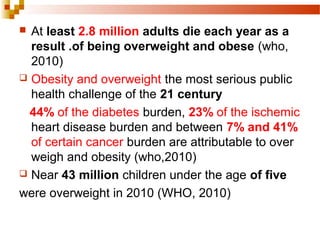
 At least 2.8 million adults die each year as a
result .of being overweight and obese (who,
2010)
 Obesity and overweight the most serious public
health challenge of the 21 century
44% of the diabetes burden, 23% of the ischemic
heart disease burden and between 7% and 41%
of certain cancer burden are attributable to over
weigh and obesity (who,2010)
 Near 43 million children under the age of five
were overweight in 2010 (WHO, 2010)
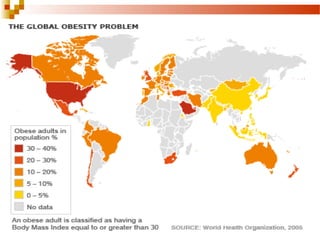
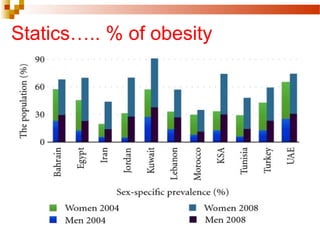
Statics….. % of obesity
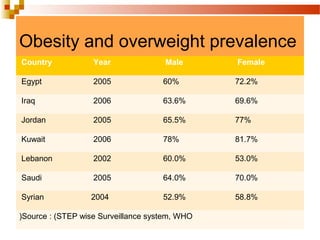
Obesity and overweight prevalence
Country Year Male Female
Egypt 2005 60% 72.2%
Iraq 2006 63.6% 69.6%
Jordan 2005 65.5% 77%
Kuwait 2006 78% 81.7%
Lebanon 2002 60.0% 53.0%
Saudi 2005 64.0% 70.0%
Syrian 2004 52.9% 58.8%
Source : (STEP wise Surveillance system, WHO)
Obesity and overweight prevalence
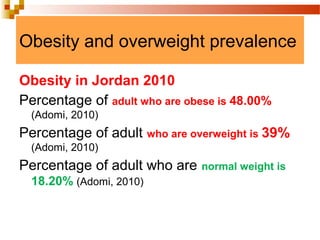
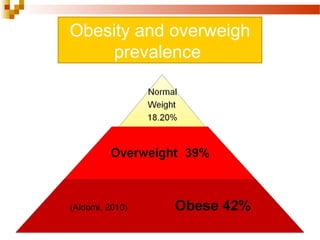
Obesity in Jordan 2010
Percentage of adult who are obese is 48.00%
(Adomi, 2010)
Percentage of adult who are overweight is 39%
(Adomi, 2010)
Percentage of adult who are normal weight is
18.20% (Adomi, 2010)
Obesity and overweigh
prevalence
Definition of obesity
Obesity is a medical condition in which excess
body fat has accumulated to the extent that it
may have an adverse effect on health, leading
to reduce life expectancy and increase health
problem (WHO, 2000; Haslam, James, 2005)
Overweight is defined as abnormal or excessive
fat accumulation that may impair health.(WHO,
2011)
Am I
obese ??
Classification
The obesity classified according to body
mass index (BMI), waist circumference.
(National Heart Lung and Blood institute,2012)
BMI is a useful measure of overweight and obesity. Its
calculated from your height and weight. BMI is
estimate of body fat and a good gauge of your risk for
disease that can occur with more body fat.
The higher your BMI, the higher your risk for certain
disease type 2diabetes, gall stone, breathing
problem and certain cancer (National Heart Lung and Blood
Institution, 2012; WHO, 2011)
Classification
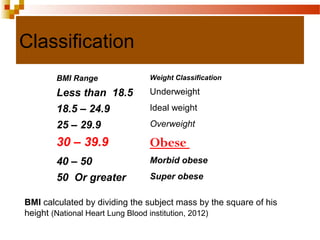
BMI Range Weight Classification
Less than 18.5 Underweight
18.5 – 24.9 Ideal weight
25 – 29.9 Overweight
30 – 39.9 Obese
40 – 50 Morbid obese
50 Or greater Super obese
BMI calculated by dividing the subject mass by the square of his
height (National Heart Lung Blood institution, 2012)
Classification
Waist circumference (W.C)
Measuring waist circumference help screen for
possible health risks that come with overweight
and obesity. If most of your fat is around your
waist rather than at your hip. You are risk for
heart disease and Diabetes mellitus.
(National Heart Lung and Blood institution, 2012).
Classification
A high-risk waist circumference is:
• A man with waist measurement over 40
inches (102 cm).
• A woman with waist measurement over
35 inches (88 cm) (Webmed 2010)
Classification
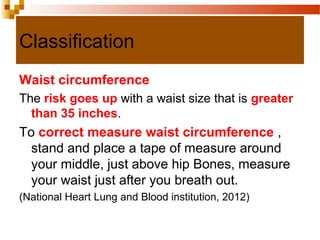
Waist circumference
The risk goes up with a waist size that is greater
than 35 inches.
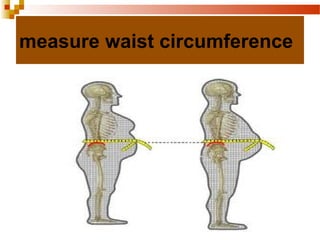
To correct measure waist circumference ,
stand and place a tape of measure around
your middle, just above hip Bones, measure
your waist just after you breath out.
(National Heart Lung and Blood institution, 2012)
measure waist circumference
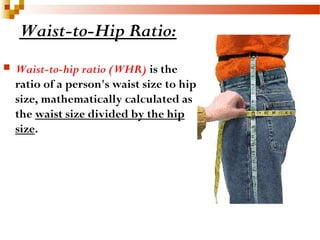
Waist-to-Hip Ratio:
 Waist-to-hip ratio (WHR) is the
ratio of a person's waist size to hip
size, mathematically calculated as
the waist size divided by the hip
size.
Good Ratios
 For men, a ratio of .90 or less is considered safe.
 For women, a ratio of .80 or less is considered safe.
Risky Ratios
 For both men and women, a waist-to-hip ratio of 1.0 or
higher is considered "at risk" or in the danger zone for
undesirable health consequences, such as heart disease and
other ailments connected with being overweight.
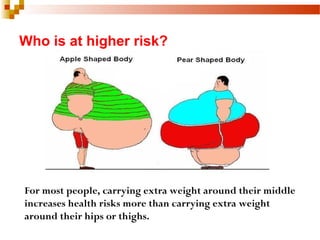
Who is at higher risk?
For most people, carrying extra weight around their middle
increases health risks more than carrying extra weight
around their hips or thighs.
Causes
Causes of Obesity?
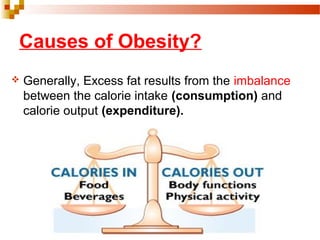
 Generally, Excess fat results from the imbalance
between the calorie intake (consumption) and
calorie output (expenditure).
 Genetic predisposition to weight gain:
Between individuals, and between communities, there are quite
large differences in the predisposition to weight gain. Fat
distribution is partly genetic.
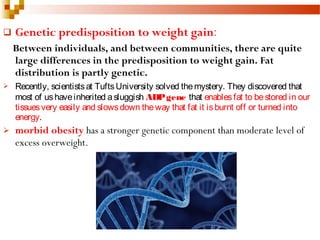
 Recently, scientistsat TuftsUniversity solved themystery. They discovered that
most of ushaveinherited asluggish ADPgene that enablesfat to bestored in our
tissuesvery easily and slowsdown theway that fat it isburnt off or turned into
energy. 
 morbid obesity has a stronger genetic component than moderate level of
excess overweight.
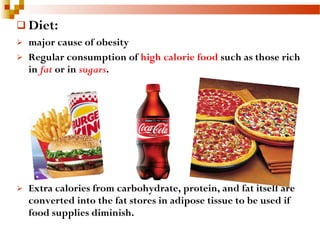
 Diet:
 major cause of obesity
 Regular consumption of high calorie food such as those rich
in fat or in sugars.
 Extra calories from carbohydrate, protein, and fat itself are
converted into the fat stores in adipose tissue to be used if
food supplies diminish.
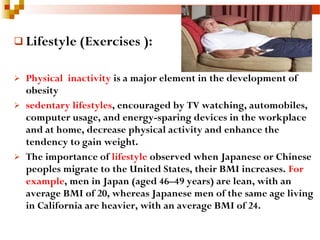
 Lifestyle (Exercises ):
 Physical inactivity is a major element in the development of
obesity
 sedentary lifestyles, encouraged by TV watching, automobiles,
computer usage, and energy-sparing devices in the workplace
and at home, decrease physical activity and enhance the
tendency to gain weight.
 The importance of lifestyle observed when Japanese or Chinese
peoples migrate to the United States, their BMI increases. For
example, men in Japan (aged 46–49 years) are lean, with an
average BMI of 20, whereas Japanese men of the same age living
in California are heavier, with an average BMI of 24.
 medical disorders:
 Hypothyroidism, Cushing’s syndrome, pancreatic insulinoma,
growth hormone deficiency, and hypothalamic insufficiency
 A variety of psychosocial factors contribute to the
development of obesity and to difficulty losing weight
 Medications:
 antipsychotics (phenothiazines, butyrophenones);
antidepressants and antiepileptics, (tricyclic antidepressants,
lithium, valproate, carbamazepine); and insulin and some oral
hypoglycemics. Whereas most of these medications contribute
modestly to obesity,
 the large doses of steroids sometimes used to treat autoimmune
diseases can cause true obesity
 Others factorOthers factor
 Socioeconomic status:
 In some developed countries, poorer children or those who live
in rural settings are more at risk of obesity, whereas in countries
undergoing economic transition childhood obesity is associated
with a more affluent lifestyle and with living in urban regions.
 Sex:
 Men have more muscle than women, on average. Because
muscle burns more calories than other types of tissue, men use
more calories than women, even at rest. Thus, women are more
likely than men to gain weight with the same calorie intake.
 Age:
 People tend to lose muscle and gain fat as they age. Their
metabolism also slows somewhat. Both of these lower their
calorie requirements.
 Emotions:
 Some people overeat because of depression, hopelessness,
anger, boredom, and many other reasons that have nothing
to do with hunger.
 Pregnancy:
 Women tend to weigh an average of 4-6 pounds more after
a pregnancy than they did before the pregnancy. This can
compound with each pregnancy. This weight gain may
contribute to obesity in women.
 Alcohol:
 Alcohol (beer and mixed drinks) is very high in calories.
Drinking alcohol may cause you to gain more weight
around your stomach.
Consequences
Health Effects of Obesity
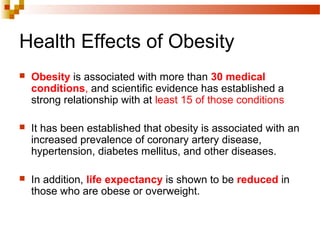
 Obesity is associated with more than 30 medical
conditions, and scientific evidence has established a
strong relationship with at least 15 of those conditions
 It has been established that obesity is associated with an
increased prevalence of coronary artery disease,
hypertension, diabetes mellitus, and other diseases.
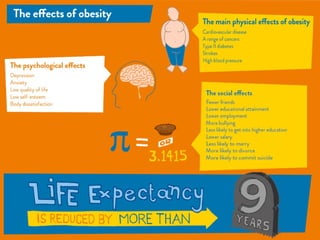
 In addition, life expectancy is shown to be reduced in
those who are obese or overweight.
1
 Obesity increase the risk of many
physical and mental condition. (Haslam,
James, 2005)
 The Health problem consequences fall
into two broad categories: those
attributable to the effect of increased fat
mass (osteoarthritis, obstructive sleep
apnea) and those due to the increased
number of fat cells (diabetes, cancer,
cardio vascular disease, non-alcoholic
fatty liver disease). (Bray, 2004).
Cont.
 Diabetes (Type 2)
 As many as 90% of individuals with type 2 diabetes are reported
to be overweight or obese.
 Obesity has been found to be the largest environmental
influence on the prevalence of diabetes in a population.
 Obesity complicates the management of type 2 diabetes by
increasing insulin resistance and glucose intolerance, which
makes drug treatment for type 2 diabetes less effective.
 A weight loss of as little as 5% can reduce high blood sugar.
Cont.
 Hypertension
 Over 75% of hypertension cases are reported to be directly attributed to
obesity.
 Weight or BMI in association with age is the strongest indicator of blood
pressure in humans.
 The association between obesity and high blood pressure has been
observed in virtually all societies, ages, ethnic groups, and in both
genders.
 The risk of developing hypertension is five to six times greater in obese
adult Americans, age 20 to 45, compared to non-obese individuals of
the same age.
Cont.
 Cardiovascular Disease (CVD)
 Obesity increases CVD risk due to its effect on blood lipid levels.
 Weight loss improves blood lipid levels by lowering triglycerides
and LDL (“bad”) cholesterol and increasing HDL (“good”)
cholesterol.
 Weight loss of 5% to 10% can reduce total blood cholesterol.
 The effects of obesity on cardiovascular health can begin in
childhood, which increases the risk of developing CVD as an
adult.
 Overweight and obesity increase the risk of illness and death
associated with coronary heart disease.
 Obesity is a major risk factor for heart attack, and is now
recognized as such by the American Heart Association.
Cont.
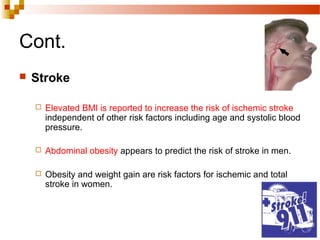
 Stroke
 Elevated BMI is reported to increase the risk of ischemic stroke
independent of other risk factors including age and systolic blood
pressure.
 Abdominal obesity appears to predict the risk of stroke in men.
 Obesity and weight gain are risk factors for ischemic and total
stroke in women.
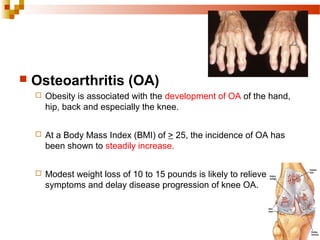
 Osteoarthritis (OA)
 Obesity is associated with the development of OA of the hand,
hip, back and especially the knee.
 At a Body Mass Index (BMI) of > 25, the incidence of OA has
been shown to steadily increase.
 Modest weight loss of 10 to 15 pounds is likely to relieve
symptoms and delay disease progression of knee OA.
 Sleep Apnea
 Obesity, particularly upper body obesity, is the most significant
risk factor for obstructive sleep apnea.
 There is a 12 to 30-fold higher incidence of obstructive sleep
apnea among morbidly obese patients compared to the general
population.
 Among patients with obstructive sleep apnea, at least 60% to
70% are obese.
Cont.
 Cancers
 Carpal Tunnel Syndrome (CTS)
 Chronic Venous Insufficiency (CVI) & Deep Vein Thrombosis (DVT)
 Gallbladder Disease
 Gout
 abdominal hernias
Cont.
 Impaired Respiratory Function
 Infertility
 Liver Disease
 Low Back Pain
 Surgical Complications
 Daytime Sleepiness
Mortality
. Obesity is one of the leading
preventable cause of death worldwide.
(Mokaded, Marks, Stroup, Gerberding, 2004).
. One million of deaths in European are
attributed to excess weight. (Friend etal 2007)
. Obesity reduce life expectancy by six to
seven year (peeters etal, 2003)
 BMI of 30-35 reduce life expectancy by two
year (Whitlock, etal 2009)
 BMI of more than 40 reduce life expectancy
by 10 year (Whitlock, etal, 2009)
 BMI above 32 has been associated with a
doubled mortality rate among women
above 16 year old (Manson, etal, 1995)
life expectancy
Treatment of obesity
Treatment of obesity comes into
three categories:
behavior modification.
{diet and exercise}
Pharmacotherapy.
surgical intervention .
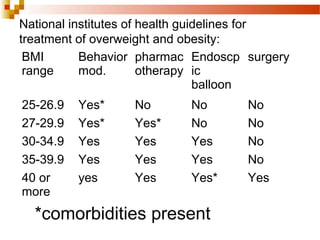
National institutes of health guidelines for
treatment of overweight and obesity:
BMI
range
Behavior
mod.
pharmac
otherapy
Endoscp
ic
balloon
surgery
25-26.9 Yes* No No No
27-29.9 Yes* Yes* No No
30-34.9 Yes Yes Yes No
35-39.9 Yes Yes Yes No
40 or
more
yes Yes Yes* Yes
comorbidities present*
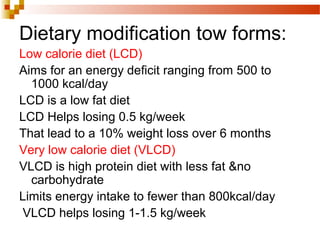
Dietary modification tow forms:
Low calorie diet (LCD)
Aims for an energy deficit ranging from 500 to
1000 kcal/day
LCD is a low fat diet
LCD Helps losing 0.5 kg/week
That lead to a 10% weight loss over 6 months
Very low calorie diet (VLCD)
VLCD is high protein diet with less fat &no
carbohydrate
Limits energy intake to fewer than 800kcal/day
VLCD helps losing 1-1.5 kg/week
Cont…..
Short term weight loss with VLCD is dramatic
with some people losing up to 20kg in 3 months.
But long term doesn’t differ from LCD
VLCD require physician supervision
Increasing energy expenditure:
exercise is very effective in preventing long
term weight regain.
At least ,doing exercise 3 times /week for
45 minute
Or doing 20 minute exercise each day
community health nursing role
 Prevention, early detection and the appropriate
treatment of obesity are of great importance in
nursing practice in all settings and should not be
undervalued.
 Nurses can and should participate in health
promotion and education for the prevention of
obesity.
 Nurses can promote appropriate nutrition advice
not only to the general public, but most
importantly to policy-makers.
■ Advocating for the promotion of increased
physical activity at governmental level.
■ Supporting efforts to preserve and enhance
parks, to develop walking and bicycle paths, and
to promote the use of physical activity
opportunities by families.
■ Engaging families with parental obesity in
prevention activities
■ Encouraging parenting styles that support
increased physical activity and reduce sedentary
behaviors
 Encouraging parental modeling of healthy
dietary choices.
 community and school nurses, in collaboration
with a multidisciplinary team, are involved in
screening programmes and support for children
who are underweight or at risk of being
overweight or obese.
 Nurses can promote healthy lifestyle patterns
that reduce the risks of being overweight or
obese. For example, breastfeeding, physical
activity, regular meals, and nutrition and weight
counseling are all areas where nurses may help
to reduce the risk of obesity.
 Obesity education programme.
 Community and school nurses may use research
evidence in designing health promotion for different
populations .
Research finding
The study conducted by khader & etal in
2008 to estimate the prevalence of
overweight and obesity and determine
their associated factor among school
children age 6-12 year in the north of
Jordan.
Research finding
* The prevalence of obesity and overweight
among school children in Jordan was 25.0%;
19.4% were overweight and 5.6% were obese.
*associated factor with obesity and overweight
school children:
. Watch TV. Daily bucket money more than 20
piasters
. Having overweight and obese mother and father
HOW TO DESIGN A FITNESS
PROGRAM?
Consider your goals.
Think about your likes and dislikes. Choose activities you’ll
enjoy.
Plan a logical progression of activity.
Build activity into your daily routine.
Think variety.
Allow time for recovery.
Put it on paper. A written plan may encourage you to stay
on track.
GETTING STARTED
Start slowly and build up gradually.
Break things up if you have to.
Be creative. Include other activities such as
walking, bicycling, rowing or dancing in your routine.
Listen to your body. Don’t push yourself too hard.
Be flexible. If you’re not feeling good, give yourself
permission to take a day or two off.
MONITOR YOUR PROGRESS
Assess your progress at six weeks after you start
your program and then again every three to six
months.
You may need to increase the amount of time
you exercise in order to continue improving.
If you lose motivation, set new goals or try a new
activity.
Exercising with a friend or taking a class at a
local fitness centre may help.
Ready
Steady
GO!
References
Haslam DW, James WP (2005). “obesity”. Lancet
366 (9492): 1197-209 Manson JE, willet WC,
Stampfer MJ, et al. (1995). “body weight and
mortality among women”. N. Engl. J. med. 333
(11):677-85
Friend M, Hainer V, basdevant A, et al. (April 2007).
“inter-disciplinary European guidelines
Peeters A, Barendergt JJ, Willekens F, Mackenbach
JP, Al mamun A, Bonneux L (January 2003)
Yusuf S, Hawken S, Ounpuu, S,Dans T, Avezum A, lanas
F, McQueen M, Budaj A, Pais P, Varigos J, Lisheng L,
INTERHEART Study investigators. (2004). “Effect of
potentially modifiable risk factors associated with
myocardial infarction in 52 countries (the INTERHEART
study): case-control study. “lancet 364 (9438): 937-52
Bleich S, Cutler D, Murray C, Adams A (2008). “Why is the
developed world obese?”. Annu Rev Public Health 29: 273-
95
Shick SM, Wing RR, Klem ML, McGuire MT, Hill JO,
Seagle H (April 1998). “Persons successful at Long-
term weight loss and maintenance continue to
consume a low-energy, low-fat diet”. J Am Diet
Assoc 98 (4): 408-13
Hamaideh S, Al-Khteeb R, Rawashdeh A, (2010).
Overweight and Obesity and Their Correlates
Among Jodanian Adolescents. Journal of Nursing
Scholarship. 42(4): p 387-394.
Khader, et al (2009) Overweight and Obesity
Among School Children in Jordan: Prevalence and
Associated Factors. Maternal Child Health J.
13:424-431.
http://www.who.intfeaturesqa49enindex.html
http://www.ju.edu.jounitsRestaurantUnitDoc
uments 1_H.A1-Domi_obesity_PETRA.pdf
Healthhealth-topicsob http://www.nhlbi.nih.gov

My seminar Obesity by Hani

  • 1.
    obesityobesity Jordan University ofScience and Technology faculty of Nursing
  • 2.
    Outline  Introduction.  Keyfact.  Significant of the problem worldwide and locally.  Definition and type of obesity.  Health Effects of Obesity.  Management and community health nursing role.  Research finding
  • 3.
    Introduction Obesity is apublic health and policy problem because of its increase prevalence, costs and health effect. (WHO, 2012, National heart lung and blood institute. 2012) . The risk factor for chronic disease are highly prevalence (Zindah, Belbeisi, Walke & Makdad 2008) . The obesity and the overweight are risk for number of chronic disease include diabetes cardio vascular disease and cancer (WHO,2010)
  • 4.
    Introduction  Overweight andobesity are fifth leading risk for global death.  The prevalence of obesity has increase at alarming rate; both low and high income countries; both adult and child; both male and female (WHO,2010)  Obesity is one of the leading preventable cause of death worldwide. (Mokaded, Marks, Stroup, Gerberding, 2004)..
  • 5.
     At least2.8 million adults die each year as a result .of being overweight and obese (who, 2010)  Obesity and overweight the most serious public health challenge of the 21 century 44% of the diabetes burden, 23% of the ischemic heart disease burden and between 7% and 41% of certain cancer burden are attributable to over weigh and obesity (who,2010)  Near 43 million children under the age of five were overweight in 2010 (WHO, 2010)
  • 7.
  • 8.
    Obesity and overweightprevalence Country Year Male Female Egypt 2005 60% 72.2% Iraq 2006 63.6% 69.6% Jordan 2005 65.5% 77% Kuwait 2006 78% 81.7% Lebanon 2002 60.0% 53.0% Saudi 2005 64.0% 70.0% Syrian 2004 52.9% 58.8% Source : (STEP wise Surveillance system, WHO)
  • 9.
    Obesity and overweightprevalence Obesity in Jordan 2010 Percentage of adult who are obese is 48.00% (Adomi, 2010) Percentage of adult who are overweight is 39% (Adomi, 2010) Percentage of adult who are normal weight is 18.20% (Adomi, 2010)
  • 10.
  • 11.
    Definition of obesity Obesityis a medical condition in which excess body fat has accumulated to the extent that it may have an adverse effect on health, leading to reduce life expectancy and increase health problem (WHO, 2000; Haslam, James, 2005) Overweight is defined as abnormal or excessive fat accumulation that may impair health.(WHO, 2011)
  • 12.
  • 13.
    Classification The obesity classifiedaccording to body mass index (BMI), waist circumference. (National Heart Lung and Blood institute,2012) BMI is a useful measure of overweight and obesity. Its calculated from your height and weight. BMI is estimate of body fat and a good gauge of your risk for disease that can occur with more body fat. The higher your BMI, the higher your risk for certain disease type 2diabetes, gall stone, breathing problem and certain cancer (National Heart Lung and Blood Institution, 2012; WHO, 2011)
  • 14.
    Classification BMI Range WeightClassification Less than 18.5 Underweight 18.5 – 24.9 Ideal weight 25 – 29.9 Overweight 30 – 39.9 Obese 40 – 50 Morbid obese 50 Or greater Super obese BMI calculated by dividing the subject mass by the square of his height (National Heart Lung Blood institution, 2012)
  • 15.
    Classification Waist circumference (W.C) Measuringwaist circumference help screen for possible health risks that come with overweight and obesity. If most of your fat is around your waist rather than at your hip. You are risk for heart disease and Diabetes mellitus. (National Heart Lung and Blood institution, 2012).
  • 16.
    Classification A high-risk waistcircumference is: • A man with waist measurement over 40 inches (102 cm). • A woman with waist measurement over 35 inches (88 cm) (Webmed 2010)
  • 17.
    Classification Waist circumference The riskgoes up with a waist size that is greater than 35 inches. To correct measure waist circumference , stand and place a tape of measure around your middle, just above hip Bones, measure your waist just after you breath out. (National Heart Lung and Blood institution, 2012)
  • 18.
  • 19.
    Waist-to-Hip Ratio:  Waist-to-hipratio (WHR) is the ratio of a person's waist size to hip size, mathematically calculated as the waist size divided by the hip size.
  • 20.
    Good Ratios  Formen, a ratio of .90 or less is considered safe.  For women, a ratio of .80 or less is considered safe. Risky Ratios  For both men and women, a waist-to-hip ratio of 1.0 or higher is considered "at risk" or in the danger zone for undesirable health consequences, such as heart disease and other ailments connected with being overweight.
  • 21.
    Who is athigher risk? For most people, carrying extra weight around their middle increases health risks more than carrying extra weight around their hips or thighs.
  • 22.
  • 23.
    Causes of Obesity? Generally, Excess fat results from the imbalance between the calorie intake (consumption) and calorie output (expenditure).
  • 24.
     Genetic predispositionto weight gain: Between individuals, and between communities, there are quite large differences in the predisposition to weight gain. Fat distribution is partly genetic.  Recently, scientistsat TuftsUniversity solved themystery. They discovered that most of ushaveinherited asluggish ADPgene that enablesfat to bestored in our tissuesvery easily and slowsdown theway that fat it isburnt off or turned into energy.   morbid obesity has a stronger genetic component than moderate level of excess overweight.
  • 25.
     Diet:  majorcause of obesity  Regular consumption of high calorie food such as those rich in fat or in sugars.  Extra calories from carbohydrate, protein, and fat itself are converted into the fat stores in adipose tissue to be used if food supplies diminish.
  • 27.
     Lifestyle (Exercises):  Physical inactivity is a major element in the development of obesity  sedentary lifestyles, encouraged by TV watching, automobiles, computer usage, and energy-sparing devices in the workplace and at home, decrease physical activity and enhance the tendency to gain weight.  The importance of lifestyle observed when Japanese or Chinese peoples migrate to the United States, their BMI increases. For example, men in Japan (aged 46–49 years) are lean, with an average BMI of 20, whereas Japanese men of the same age living in California are heavier, with an average BMI of 24.
  • 28.
     medical disorders: Hypothyroidism, Cushing’s syndrome, pancreatic insulinoma, growth hormone deficiency, and hypothalamic insufficiency  A variety of psychosocial factors contribute to the development of obesity and to difficulty losing weight  Medications:  antipsychotics (phenothiazines, butyrophenones); antidepressants and antiepileptics, (tricyclic antidepressants, lithium, valproate, carbamazepine); and insulin and some oral hypoglycemics. Whereas most of these medications contribute modestly to obesity,  the large doses of steroids sometimes used to treat autoimmune diseases can cause true obesity  Others factorOthers factor
  • 29.
     Socioeconomic status: In some developed countries, poorer children or those who live in rural settings are more at risk of obesity, whereas in countries undergoing economic transition childhood obesity is associated with a more affluent lifestyle and with living in urban regions.  Sex:  Men have more muscle than women, on average. Because muscle burns more calories than other types of tissue, men use more calories than women, even at rest. Thus, women are more likely than men to gain weight with the same calorie intake.  Age:  People tend to lose muscle and gain fat as they age. Their metabolism also slows somewhat. Both of these lower their calorie requirements.
  • 30.
     Emotions:  Somepeople overeat because of depression, hopelessness, anger, boredom, and many other reasons that have nothing to do with hunger.  Pregnancy:  Women tend to weigh an average of 4-6 pounds more after a pregnancy than they did before the pregnancy. This can compound with each pregnancy. This weight gain may contribute to obesity in women.  Alcohol:  Alcohol (beer and mixed drinks) is very high in calories. Drinking alcohol may cause you to gain more weight around your stomach.
  • 31.
  • 32.
    Health Effects ofObesity  Obesity is associated with more than 30 medical conditions, and scientific evidence has established a strong relationship with at least 15 of those conditions  It has been established that obesity is associated with an increased prevalence of coronary artery disease, hypertension, diabetes mellitus, and other diseases.  In addition, life expectancy is shown to be reduced in those who are obese or overweight.
  • 33.
  • 34.
     Obesity increasethe risk of many physical and mental condition. (Haslam, James, 2005)  The Health problem consequences fall into two broad categories: those attributable to the effect of increased fat mass (osteoarthritis, obstructive sleep apnea) and those due to the increased number of fat cells (diabetes, cancer, cardio vascular disease, non-alcoholic fatty liver disease). (Bray, 2004).
  • 35.
    Cont.  Diabetes (Type2)  As many as 90% of individuals with type 2 diabetes are reported to be overweight or obese.  Obesity has been found to be the largest environmental influence on the prevalence of diabetes in a population.  Obesity complicates the management of type 2 diabetes by increasing insulin resistance and glucose intolerance, which makes drug treatment for type 2 diabetes less effective.  A weight loss of as little as 5% can reduce high blood sugar.
  • 36.
    Cont.  Hypertension  Over75% of hypertension cases are reported to be directly attributed to obesity.  Weight or BMI in association with age is the strongest indicator of blood pressure in humans.  The association between obesity and high blood pressure has been observed in virtually all societies, ages, ethnic groups, and in both genders.  The risk of developing hypertension is five to six times greater in obese adult Americans, age 20 to 45, compared to non-obese individuals of the same age.
  • 37.
    Cont.  Cardiovascular Disease(CVD)  Obesity increases CVD risk due to its effect on blood lipid levels.  Weight loss improves blood lipid levels by lowering triglycerides and LDL (“bad”) cholesterol and increasing HDL (“good”) cholesterol.  Weight loss of 5% to 10% can reduce total blood cholesterol.  The effects of obesity on cardiovascular health can begin in childhood, which increases the risk of developing CVD as an adult.  Overweight and obesity increase the risk of illness and death associated with coronary heart disease.  Obesity is a major risk factor for heart attack, and is now recognized as such by the American Heart Association.
  • 38.
    Cont.  Stroke  ElevatedBMI is reported to increase the risk of ischemic stroke independent of other risk factors including age and systolic blood pressure.  Abdominal obesity appears to predict the risk of stroke in men.  Obesity and weight gain are risk factors for ischemic and total stroke in women.
  • 39.
     Osteoarthritis (OA) Obesity is associated with the development of OA of the hand, hip, back and especially the knee.  At a Body Mass Index (BMI) of > 25, the incidence of OA has been shown to steadily increase.  Modest weight loss of 10 to 15 pounds is likely to relieve symptoms and delay disease progression of knee OA.
  • 40.
     Sleep Apnea Obesity, particularly upper body obesity, is the most significant risk factor for obstructive sleep apnea.  There is a 12 to 30-fold higher incidence of obstructive sleep apnea among morbidly obese patients compared to the general population.  Among patients with obstructive sleep apnea, at least 60% to 70% are obese.
  • 41.
    Cont.  Cancers  CarpalTunnel Syndrome (CTS)  Chronic Venous Insufficiency (CVI) & Deep Vein Thrombosis (DVT)  Gallbladder Disease  Gout  abdominal hernias
  • 42.
    Cont.  Impaired RespiratoryFunction  Infertility  Liver Disease  Low Back Pain  Surgical Complications  Daytime Sleepiness
  • 43.
    Mortality . Obesity isone of the leading preventable cause of death worldwide. (Mokaded, Marks, Stroup, Gerberding, 2004). . One million of deaths in European are attributed to excess weight. (Friend etal 2007) . Obesity reduce life expectancy by six to seven year (peeters etal, 2003)
  • 44.
     BMI of30-35 reduce life expectancy by two year (Whitlock, etal 2009)  BMI of more than 40 reduce life expectancy by 10 year (Whitlock, etal, 2009)  BMI above 32 has been associated with a doubled mortality rate among women above 16 year old (Manson, etal, 1995) life expectancy
  • 45.
  • 46.
    Treatment of obesitycomes into three categories: behavior modification. {diet and exercise} Pharmacotherapy. surgical intervention .
  • 47.
    National institutes ofhealth guidelines for treatment of overweight and obesity: BMI range Behavior mod. pharmac otherapy Endoscp ic balloon surgery 25-26.9 Yes* No No No 27-29.9 Yes* Yes* No No 30-34.9 Yes Yes Yes No 35-39.9 Yes Yes Yes No 40 or more yes Yes Yes* Yes comorbidities present*
  • 48.
    Dietary modification towforms: Low calorie diet (LCD) Aims for an energy deficit ranging from 500 to 1000 kcal/day LCD is a low fat diet LCD Helps losing 0.5 kg/week That lead to a 10% weight loss over 6 months Very low calorie diet (VLCD) VLCD is high protein diet with less fat &no carbohydrate Limits energy intake to fewer than 800kcal/day VLCD helps losing 1-1.5 kg/week
  • 49.
    Cont….. Short term weightloss with VLCD is dramatic with some people losing up to 20kg in 3 months. But long term doesn’t differ from LCD VLCD require physician supervision
  • 50.
    Increasing energy expenditure: exerciseis very effective in preventing long term weight regain. At least ,doing exercise 3 times /week for 45 minute Or doing 20 minute exercise each day
  • 51.
    community health nursingrole  Prevention, early detection and the appropriate treatment of obesity are of great importance in nursing practice in all settings and should not be undervalued.  Nurses can and should participate in health promotion and education for the prevention of obesity.  Nurses can promote appropriate nutrition advice not only to the general public, but most importantly to policy-makers.
  • 52.
    ■ Advocating forthe promotion of increased physical activity at governmental level. ■ Supporting efforts to preserve and enhance parks, to develop walking and bicycle paths, and to promote the use of physical activity opportunities by families. ■ Engaging families with parental obesity in prevention activities ■ Encouraging parenting styles that support increased physical activity and reduce sedentary behaviors
  • 53.
     Encouraging parentalmodeling of healthy dietary choices.  community and school nurses, in collaboration with a multidisciplinary team, are involved in screening programmes and support for children who are underweight or at risk of being overweight or obese.  Nurses can promote healthy lifestyle patterns that reduce the risks of being overweight or obese. For example, breastfeeding, physical activity, regular meals, and nutrition and weight counseling are all areas where nurses may help to reduce the risk of obesity.
  • 54.
     Obesity educationprogramme.  Community and school nurses may use research evidence in designing health promotion for different populations .
  • 55.
    Research finding The studyconducted by khader & etal in 2008 to estimate the prevalence of overweight and obesity and determine their associated factor among school children age 6-12 year in the north of Jordan.
  • 56.
    Research finding * Theprevalence of obesity and overweight among school children in Jordan was 25.0%; 19.4% were overweight and 5.6% were obese. *associated factor with obesity and overweight school children: . Watch TV. Daily bucket money more than 20 piasters . Having overweight and obese mother and father
  • 57.
    HOW TO DESIGNA FITNESS PROGRAM? Consider your goals. Think about your likes and dislikes. Choose activities you’ll enjoy. Plan a logical progression of activity. Build activity into your daily routine. Think variety. Allow time for recovery. Put it on paper. A written plan may encourage you to stay on track.
  • 58.
    GETTING STARTED Start slowlyand build up gradually. Break things up if you have to. Be creative. Include other activities such as walking, bicycling, rowing or dancing in your routine. Listen to your body. Don’t push yourself too hard. Be flexible. If you’re not feeling good, give yourself permission to take a day or two off.
  • 59.
    MONITOR YOUR PROGRESS Assessyour progress at six weeks after you start your program and then again every three to six months. You may need to increase the amount of time you exercise in order to continue improving. If you lose motivation, set new goals or try a new activity. Exercising with a friend or taking a class at a local fitness centre may help.
  • 60.
  • 61.
    References Haslam DW, JamesWP (2005). “obesity”. Lancet 366 (9492): 1197-209 Manson JE, willet WC, Stampfer MJ, et al. (1995). “body weight and mortality among women”. N. Engl. J. med. 333 (11):677-85 Friend M, Hainer V, basdevant A, et al. (April 2007). “inter-disciplinary European guidelines Peeters A, Barendergt JJ, Willekens F, Mackenbach JP, Al mamun A, Bonneux L (January 2003)
  • 62.
    Yusuf S, HawkenS, Ounpuu, S,Dans T, Avezum A, lanas F, McQueen M, Budaj A, Pais P, Varigos J, Lisheng L, INTERHEART Study investigators. (2004). “Effect of potentially modifiable risk factors associated with myocardial infarction in 52 countries (the INTERHEART study): case-control study. “lancet 364 (9438): 937-52 Bleich S, Cutler D, Murray C, Adams A (2008). “Why is the developed world obese?”. Annu Rev Public Health 29: 273- 95
  • 63.
    Shick SM, WingRR, Klem ML, McGuire MT, Hill JO, Seagle H (April 1998). “Persons successful at Long- term weight loss and maintenance continue to consume a low-energy, low-fat diet”. J Am Diet Assoc 98 (4): 408-13 Hamaideh S, Al-Khteeb R, Rawashdeh A, (2010). Overweight and Obesity and Their Correlates Among Jodanian Adolescents. Journal of Nursing Scholarship. 42(4): p 387-394.
  • 64.
    Khader, et al(2009) Overweight and Obesity Among School Children in Jordan: Prevalence and Associated Factors. Maternal Child Health J. 13:424-431. http://www.who.intfeaturesqa49enindex.html http://www.ju.edu.jounitsRestaurantUnitDoc uments 1_H.A1-Domi_obesity_PETRA.pdf Healthhealth-topicsob http://www.nhlbi.nih.gov