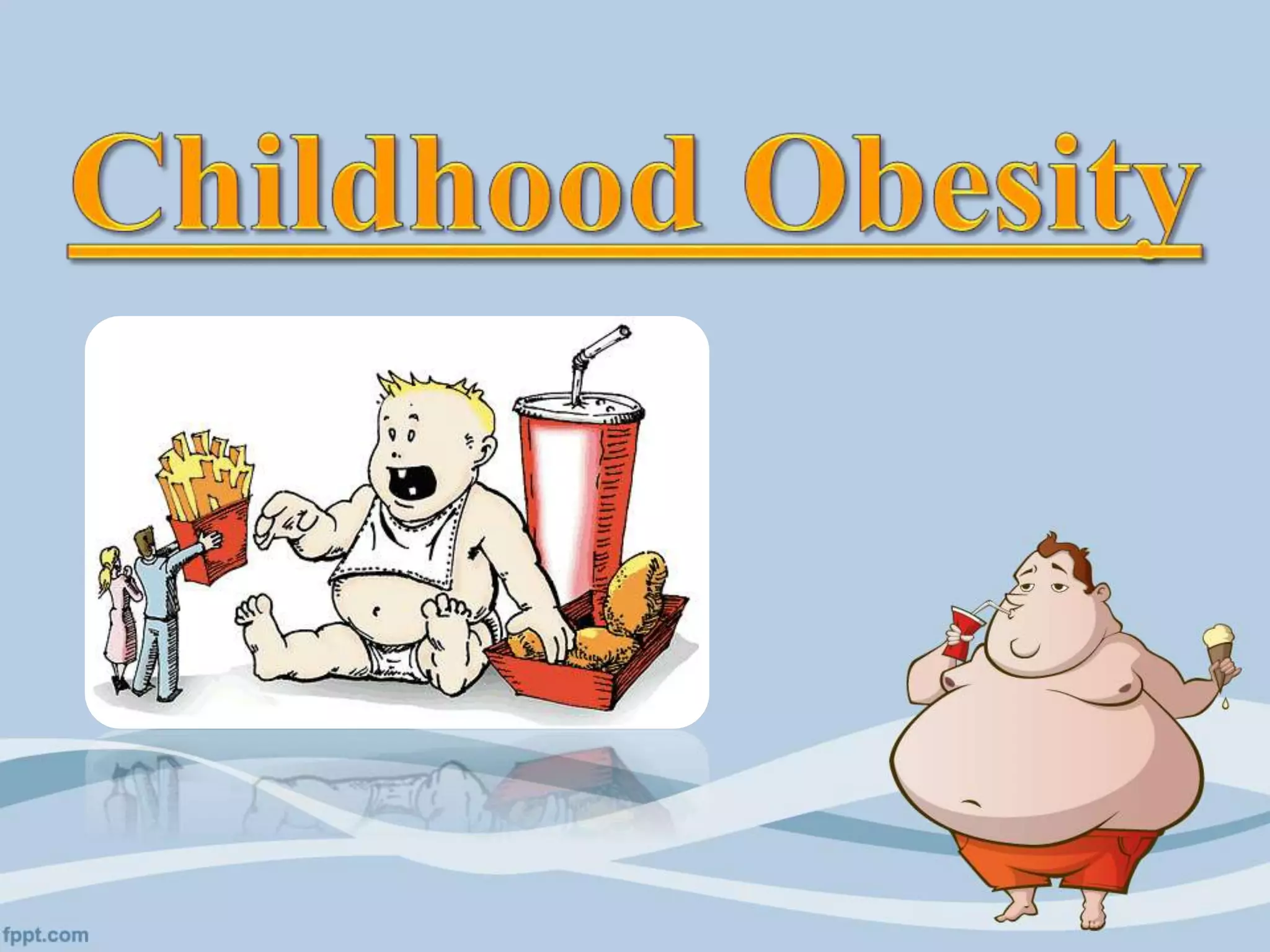
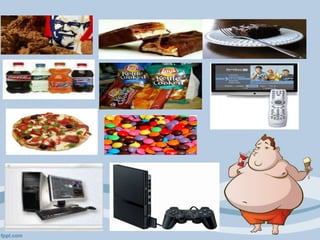
Childhood Obesity
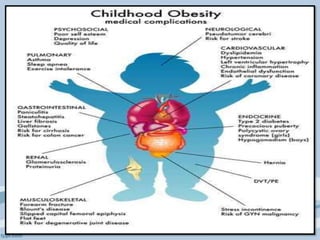
is a condition where excess body
fat negatively
affects a child's health or well being.
Epidemiology
• The prevalence has increased at an
alarming rate.
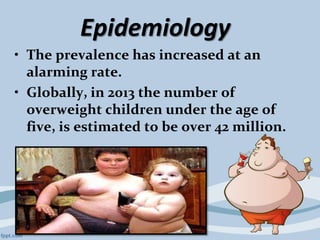
• Globally, in 2013 the number of
overweight children under the age of
five, is estimated to be over 42 million.
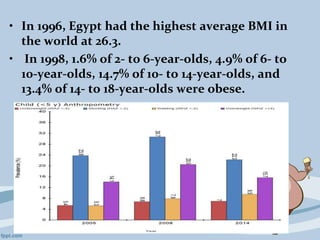
• In 1996, Egypt had the highest average BMI in
the world at 26.3.
• In 1998, 1.6% of 2- to 6-year-olds, 4.9% of 6- to
10-year-olds, 14.7% of 10- to 14-year-olds, and
13.4% of 14- to 18-year-olds were obese.
Diagnosis of childhood
obesity
• Body mass index (BMI) is acceptable for
determining obesity for children two
years of age and older.
Formula: weight (kg) / [height (m)]2
• The normal range for BMI in children
vary with age and gender.
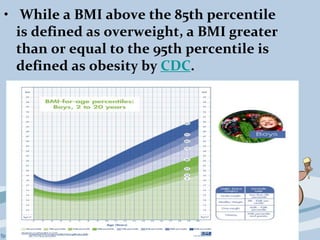
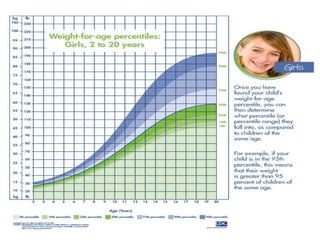
• While a BMI above the 85th percentile
is defined as overweight, a BMI greater
than or equal to the 95th percentile is
defined as obesity by CDC.
• References:-
 Haemer MA, Daniels SR. Special issues in treatment of pediatric obesity. In: Gray GA,
Bouchard C, editors. Handbook of obesity, volume 2: clinical applications. 4th ed. Boca
Raton: CRC Press; 2014.
 Public Health Agency of Canada (2012). Curbing Childhood Obesity: A Federal, Provincial
and Territorial Framework for Action to Promote Healthy Weights. http://www.phac-
aspc.gc.ca/hp-ps/hl-mvs/framework-cadre/index-eng.php
 http://www.ncbi.nlm.nih.gov/pmc/articles/
 http://www.who.int/countries/egy/en/
 http://www.cdc.gov/healthyschools/obesity/facts.htm
• Name :-
 Mostafa Mohamed Mostafa Abdelkader
• ID :-
• 897
Thank you
Causes of childhood obesity
• By: Mustapha Mansour Ahmed
• No.: 898
• Genetics and early life factors.
– Leptin encoding gene mutation.
– Syndromes with certain genetic mutations.
(Prader-Willi).
• Neuroendocrinal causes.
– Hypothyroidism.
– Cushing’s $.
– 1ry hyperinsulinism.
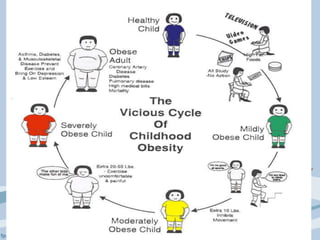
Diet and
Energy
input.
Physical
activity and
Life style.
Thank you
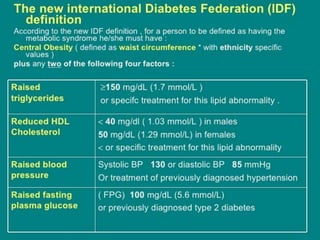
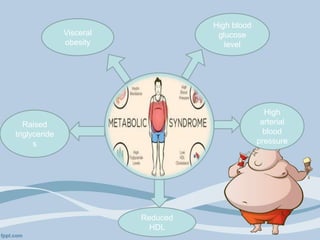
METABOLIC SYNDROME
‫يونس‬ ‫ابراهيم‬ ‫حلمي‬ ‫معتز‬
900
Metabolic
syndrome
High blood
glucose
level
Visceral
obesity
Reduced
HDL
Raised
triglyceride
s
High
arterial
blood
pressure
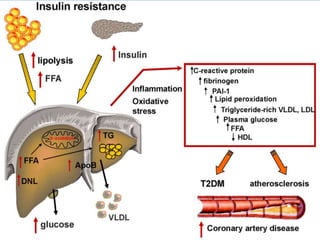
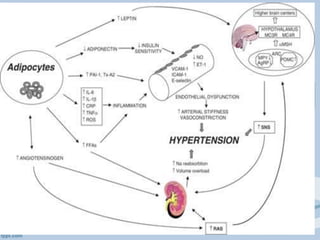
obesity insulin
resistance
hyperinsulinemia
increases
the
sympatheti
c activity
Increases the activity in
the renin-angiotensin
system
hypertension
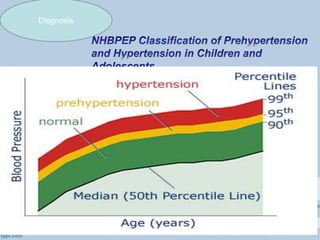
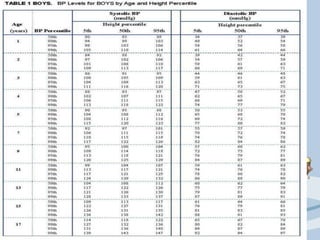
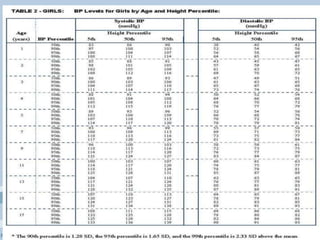
Classification Systolic or diastolic blood pressure*
Normal < 90th percentile
Prehypertension 90th to < 95th percentile or ≥ 120/80 mm Hg†
Stage 1
hypertension
95th to < 99th percentile plus 5 mm Hg
Stage 2
hypertension
> 99th percentile plus 5 mm Hg
Diagnosis
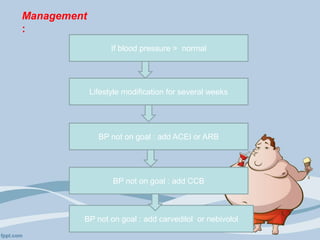
Management
:
If blood pressure < normal
Lifestyle modification for several weeks
BP not on goal : add ACEI or ARB
BP not on goal : add CCB
BP not on goal : add carvedilol or nebivolol
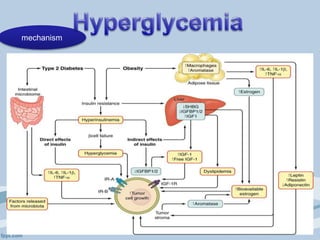
mechanism
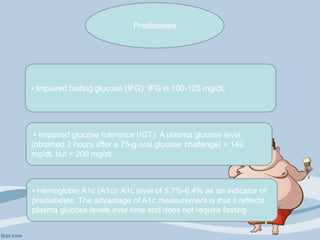
• Impaired fasting glucose (IFG): IFG is 100-125 mg/dL
• Impaired glucose tolerance (IGT): A plasma glucose level
(obtained 2 hours after a 75-g oral glucose challenge) > 140
mg/dL but < 200 mg/dL
• Hemoglobin A1c (A1c): A1c level of 5.7%-6.4% as an indicator of
prediabetes. The advantage of A1c measurement is that it reflects
plasma glucose levels over time and does not require fasting
Prediabetes
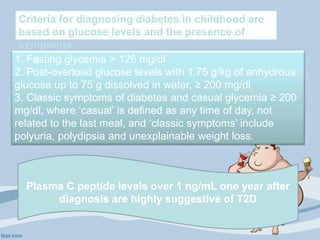
Criteria for diagnosing diabetes in childhood are
based on glucose levels and the presence of
symptoms :
1. Fasting glycemia > 126 mg/dl
2. Post-overload glucose levels with 1.75 g/kg of anhydrous
glucose up to 75 g dissolved in water, ≥ 200 mg/dl
3. Classic symptoms of diabetes and casual glycemia ≥ 200
mg/dl, where ‘casual’ is defined as any time of day, not
related to the last meal, and ‘classic symptoms’ include
polyuria, polydipsia and unexplainable weight loss.
Plasma C peptide levels over 1 ng/mL one year after
diagnosis are highly suggestive of T2D
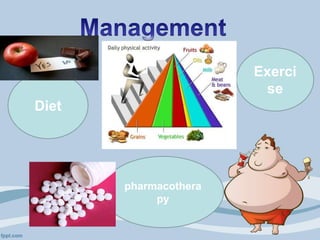
Diet
Exerci
se
pharmacothera
py
By: Manar Sabry
No.: 902
Prevention and treatment of
child obesity
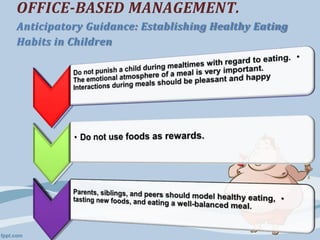
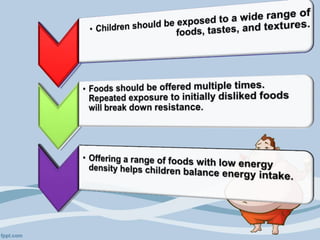
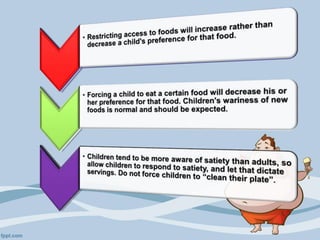
OFFICE-BASED MANAGEMENT.
Anticipatory Guidance: Establishing Healthy Eating
Habits in Children
MULTIDISCIPLINARY AND COMMUNITY-
BASED MANAGEMENT.
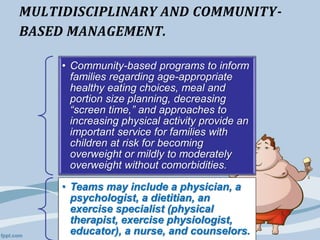
• Community-based programs to inform
families regarding age-appropriate
healthy eating choices, meal and
portion size planning, decreasing
“screen time,” and approaches to
increasing physical activity provide an
important service for families with
children at risk for becoming
overweight or mildly to moderately
overweight without comorbidities.
• Teams may include a physician, a
psychologist, a dietitian, an
exercise specialist (physical
therapist, exercise physiologist,
educator), a nurse, and counselors.
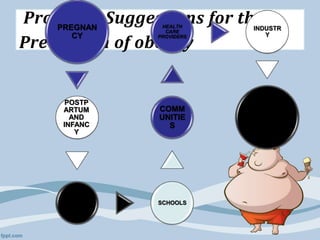
Proposed Suggestions for the
Prevention of obesity
PREGNAN
CY
POSTP
ARTUM
AND
INFANC
Y
FAMILIES SCHOOLS
COMM
UNITIE
S
HEALTH
CARE
PROVIDERS
INDUSTR
Y
GOVERNMENT
AND
REGULATORY
AGENCIES
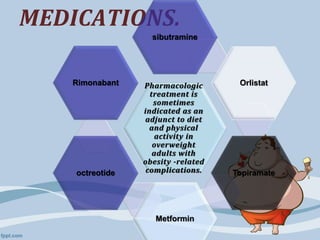
MEDICATIONS.
Pharmacologic
treatment is
sometimes
indicated as an
adjunct to diet
and physical
activity in
overweight
adults with
obesity -related
complications.
sibutramine
Orlistat
Topiramate
Metformin
octreotide
Rimonabant

Childhood obesity, collected ppt

  • 2.
    Childhood Obesity is acondition where excess body fat negatively affects a child's health or well being.
  • 3.
    Epidemiology • The prevalencehas increased at an alarming rate. • Globally, in 2013 the number of overweight children under the age of five, is estimated to be over 42 million.
  • 4.
    • In 1996,Egypt had the highest average BMI in the world at 26.3. • In 1998, 1.6% of 2- to 6-year-olds, 4.9% of 6- to 10-year-olds, 14.7% of 10- to 14-year-olds, and 13.4% of 14- to 18-year-olds were obese.
  • 5.
    Diagnosis of childhood obesity •Body mass index (BMI) is acceptable for determining obesity for children two years of age and older. Formula: weight (kg) / [height (m)]2 • The normal range for BMI in children vary with age and gender.
  • 6.
    • While aBMI above the 85th percentile is defined as overweight, a BMI greater than or equal to the 95th percentile is defined as obesity by CDC.
  • 9.
    • References:-  HaemerMA, Daniels SR. Special issues in treatment of pediatric obesity. In: Gray GA, Bouchard C, editors. Handbook of obesity, volume 2: clinical applications. 4th ed. Boca Raton: CRC Press; 2014.  Public Health Agency of Canada (2012). Curbing Childhood Obesity: A Federal, Provincial and Territorial Framework for Action to Promote Healthy Weights. http://www.phac- aspc.gc.ca/hp-ps/hl-mvs/framework-cadre/index-eng.php  http://www.ncbi.nlm.nih.gov/pmc/articles/  http://www.who.int/countries/egy/en/  http://www.cdc.gov/healthyschools/obesity/facts.htm • Name :-  Mostafa Mohamed Mostafa Abdelkader • ID :- • 897 Thank you
  • 10.
    Causes of childhoodobesity • By: Mustapha Mansour Ahmed • No.: 898
  • 11.
    • Genetics andearly life factors. – Leptin encoding gene mutation. – Syndromes with certain genetic mutations. (Prader-Willi). • Neuroendocrinal causes. – Hypothyroidism. – Cushing’s $. – 1ry hyperinsulinism.
  • 12.
  • 14.
  • 15.
  • 26.
  • 27.
  • 28.
    Classification Systolic ordiastolic blood pressure* Normal < 90th percentile Prehypertension 90th to < 95th percentile or ≥ 120/80 mm Hg† Stage 1 hypertension 95th to < 99th percentile plus 5 mm Hg Stage 2 hypertension > 99th percentile plus 5 mm Hg Diagnosis
  • 31.
    Management : If blood pressure< normal Lifestyle modification for several weeks BP not on goal : add ACEI or ARB BP not on goal : add CCB BP not on goal : add carvedilol or nebivolol
  • 32.
  • 33.
    • Impaired fastingglucose (IFG): IFG is 100-125 mg/dL • Impaired glucose tolerance (IGT): A plasma glucose level (obtained 2 hours after a 75-g oral glucose challenge) > 140 mg/dL but < 200 mg/dL • Hemoglobin A1c (A1c): A1c level of 5.7%-6.4% as an indicator of prediabetes. The advantage of A1c measurement is that it reflects plasma glucose levels over time and does not require fasting Prediabetes
  • 34.
    Criteria for diagnosingdiabetes in childhood are based on glucose levels and the presence of symptoms : 1. Fasting glycemia > 126 mg/dl 2. Post-overload glucose levels with 1.75 g/kg of anhydrous glucose up to 75 g dissolved in water, ≥ 200 mg/dl 3. Classic symptoms of diabetes and casual glycemia ≥ 200 mg/dl, where ‘casual’ is defined as any time of day, not related to the last meal, and ‘classic symptoms’ include polyuria, polydipsia and unexplainable weight loss. Plasma C peptide levels over 1 ng/mL one year after diagnosis are highly suggestive of T2D
  • 35.
  • 36.
    By: Manar Sabry No.:902 Prevention and treatment of child obesity
  • 38.
    OFFICE-BASED MANAGEMENT. Anticipatory Guidance:Establishing Healthy Eating Habits in Children
  • 41.
    MULTIDISCIPLINARY AND COMMUNITY- BASEDMANAGEMENT. • Community-based programs to inform families regarding age-appropriate healthy eating choices, meal and portion size planning, decreasing “screen time,” and approaches to increasing physical activity provide an important service for families with children at risk for becoming overweight or mildly to moderately overweight without comorbidities. • Teams may include a physician, a psychologist, a dietitian, an exercise specialist (physical therapist, exercise physiologist, educator), a nurse, and counselors.
  • 42.
    Proposed Suggestions forthe Prevention of obesity PREGNAN CY POSTP ARTUM AND INFANC Y FAMILIES SCHOOLS COMM UNITIE S HEALTH CARE PROVIDERS INDUSTR Y GOVERNMENT AND REGULATORY AGENCIES
  • 43.
    MEDICATIONS. Pharmacologic treatment is sometimes indicated asan adjunct to diet and physical activity in overweight adults with obesity -related complications. sibutramine Orlistat Topiramate Metformin octreotide Rimonabant