OBESITY ​IN A NUTSHELLCopyright © 2020 Nermeen Asham, BScN, RN, Weight Loss Consultant
ABOUT OBESITY 
❖ An adipose tissue dysfunction & excessive accumulation of body fat that impairs health 
❖ Is not defined by Body Mass Index (BMI) 
❖ Not a cosmetic concern nor a character flaw and it is not due to poor willpower 
❖ Is a serious medical condition and has its own ICD diagnostic code 
❖ Can have a lifetime progression (maternity, childhood, adulthood, elderly) 
❖ Has a physiological, psychological, genetic, and lifestyle component 
❖ Puts the body in chronic inflammation and leads to many complications 
❖ A “silent”, multifactorial, multisystemic, complex, & relapsing disease 
❖ Progressive (it is staged) yet treatable and requires ongoing care and lifelong support  
❖ Resulted in our current obesity pandemic & public health crisis 
❖ Bias, stigma, and discrimination can negatively impact access to care and treatment options 
❖ Often misunderstood, unrecognized, unmanaged, overlooked, & underestimated 
❖ If left untreated, it can affect nearly every organ in the body 
❖ Specialists certified in Obesity Medicine: ABOM Diplomate (board certified physician) or a 
Nurse Practitioner / Physician Assistant with OMA’s Certificate of Advanced Education  
 
INCREASES RISK OF HEALTH CONDITIONS FROM A To Z 
❖ Adiposopathy 
❖ Alzheimer’s / Dementia 
❖ Arthritis (Rheumatoid or Osteoarthritis) 
❖ Asthma / Allergic Rhinitis 
❖ Atherosclerosis / Coronary Heart Disease  
❖ Cancer 
❖ Cellulitis 
❖ Chronic Inflammation 
❖ Chronic Kidney Disease 
❖ Colds (frequent) / Flu  
❖ Congestive Heart Failure 
❖ Constipation 
❖ COVID-19 severity / Long COVID 
❖ Cytokine Storm Syndrome 
❖ Deep Vein Thrombosis 
❖ Delayed Gastric Emptying / Slow Metabolism 
❖ Diabetes (& Prediabetes) 
❖ Digestive Flatulence / Gas or Bloating 
❖ Eating Disorder 
❖ Encephalopathy 
❖ Fatty Liver Disease 
❖ Gallbladder Disease / Gallstones 
❖ Gastroesophageal Reflux or Heartburn 
❖ Gout 
❖ Hyperlipidemia 
❖ Hypertension (& Prehypertension) 
❖ Hypoventilation Syndrome 
❖ Idiopathic Pulmonary Fibrosis 
❖ Immunodeficiency 
❖ Infertility / Polycystic Ovaries 
❖ Iron-Deficiency Anemia 
❖ Irregular Menstrual Cycles 
❖ Jaundice 
❖ Leaky Gut / Compromised Microbiome 
❖ Liver Dysfunction 
❖ Migraine 
❖ Nutritional Imbalances 
❖ Obstructive Sleep Apnea 
❖ Pancreatitis 
❖ Plantar Fasciitis / Heel Spur 
❖ Pneumonia 
❖ Polypharmacy 
❖ Pulmonary Viral Infections 
❖ Sarcopenia  
❖ Sciatica / Nerve Pain 
❖ Spinal Diseases 
❖ Sports Injury 
❖ Stroke 
KNOW YOUR RISK & VITAL SIGNS 
❖ History of Childhood Obesity  
❖ Genetic Predisposition 
❖ Hunger & Appetite Hormones 
(unbalanced Cortisol, Ghrelin, Leptin, 
Thyroid)  
❖ Current Medical Diagnosis  
(Anxiety, Binge Eating Disorder, 
Bulimia, Chronic Fatigue Syndrome, 
Crisis Fatigue, Depression, Diabetes, 
Eating Disorder, Emotional Eating, 
Fibromyalgia, Insomnia, Multiple 
Sclerosis, Overweight, Post-Traumatic 
Stress Disorder / PTSD, Restless Leg 
Syndrome, Sleep Apnea, or Thyroid 
Disorder) 
❖ Prescribed Medications 
(Anticonvulsants, Antihistamines, 
Antipsychotics, Beta-Adrenergic 
Blockers, Corticosteroids, Insulin, 
Hormone Therapy/Contraceptives, 
Lithium, Selective Serotonin Reuptake 
Inhibitors / SSRIs, Tricyclic 
Antidepressants)  
❖ Obesogenic Environments 
❖ Unhealthy Food Choices 
❖ Sedentary Lifestyle 
❖ Psychological Stressors 


❖ Basal Metabolic Rate (BMR)​:  
Men:​< 1800 cal​; ​Women:​< 1400 cal 
 
❖ Body Mass Index (BMI)​:  
> 25.0-29.9 
 
❖ Body Fat %​:  
Men:​> 12-25%​; ​Women:​> 24-36% 
 
❖ Lean Body Mass %​:  
Men:​< 80-90%​; ​Women: ​< 68-75% 
 
❖ Neck Circumference​:  
Men:​> 14 in​; ​Women:​> 12 in 
 
❖ Oxygen Saturation​: 
​< 90% on room air 
 
❖ Total Body Water % (TBW)​:  
Men:​< 50-65%​; ​Women:​< 45-60% 
 
❖ Waist Circumference​:  
Men:​> 37 in​; ​Women:​> 32 in 
 
❖ Waist-to-Hip Ratio​:  
Men:​> 0.9​; ​Women:​> 0.85 
 
❖ Waist-to-Height Ratio​:  
> 1:2​​(greater than half your height) 
PREVENTION 
❖ Go for your annual check-ups, health 
screenings, immunizations, blood tests 
❖ Focus on improving your metabolic health 
first before weight loss 
❖ Do hunger reality checks and practice 
mindful eating 
❖ Choose healthy foods 
❖ Engage in regular physical activity 
❖ Get 7-8 hrs/night of restorative sleep 
❖ Keep stress at bay with relaxation techniques 
TREATMENT OPTIONS 
❖ Healthy Lifestyle & Prevention Programs 
❖ Commercial, Non-Clinical Programs 
❖ Medical Obesity Treatment Programs 
❖ Pharmacotherapy  
(FDA-Approved Weight Loss Medications) 
❖ Cognitive Behavioral Therapy (CBT) 
❖ Non-Surgical Endoluminal Procedures 
❖ Primary Metabolic and Bariatric Surgery 
❖ Revision Bariatric Surgery 
❖ Post-Weight Loss Reconstructive Surgery 
RESOURCES 
❖ American Society for Metabolic and Bariatric Surgery (ASMBS):   
➢ https://asmbs.org 
❖ CDC’s Adult BMI Calculator & Resources for Overweight and Obesity:   
➢ https://www.cdc.gov/healthyweight/assessing/bmi/adult_bmi/english_bmi_calculator
/bmi_calculator.html
➢ https://www.cdc.gov/obesity/resources/index.html 
❖ Obesity Action Coalition (OAC):  
➢ https://www.obesityaction.org 
❖ Obesity Help (OH):  
➢ https://www.obesityhelp.com 
❖ Obesity Medicine Association (OMA): 
➢ https://obesitymedicine.org 
❖ The Obesity Society (TOS): 
➢ https://www.obesity.org 
❖ World Health Organization (WHO):  
➢ https://www.who.int/news-room/fact-sheets/detail/obesity-and-overwei-ght 
 
KEY TAKEAWAYS 
❖ Reduce any weight bias and stigma. If you experience this, speak to your doctor about it. 
❖ Treat obesity like any other chronic disease or medical condition. 
❖ Focus on improving health outcomes rather than weight loss alone. Your health comes first. 
❖ Obesity management is not about fad diets or “quick fixes” but rather a healthy lifestyle 
journey. It’s a process and a way of living that supports long-term weight maintenance. 
❖ With optimal health and weight management, you can improve your blood test results, no 
longer have “borderline” diagnosis, take less medication or none at all, and you can prevent 
chronic diseases or elective surgeries in the future. 
❖ Successful and sustainable weight loss requires a comprehensive approach which involves 4 
key components: (1) medical, (2) nutrition, (3) activity/exercise, and (4) education for a 
lasting behavior change and a healthy lifestyle. 
❖ There are evidence-based recommendations to monitor or treat obesity. By seeking help and 
treating it early, you can prevent the disease from progressing to the next stage. 
❖ Because of its complexity and the need for lifelong support, get help from obesity certified 
specialists or weight management experts. They can review your health profile, identify the 
underlying cause(s) for your weight gain, provide compassionate care, as well as create an 
individualized and sustainable weight loss treatment care plan tailored for you. 

Cheat Sheet for Obesity

  • 1.
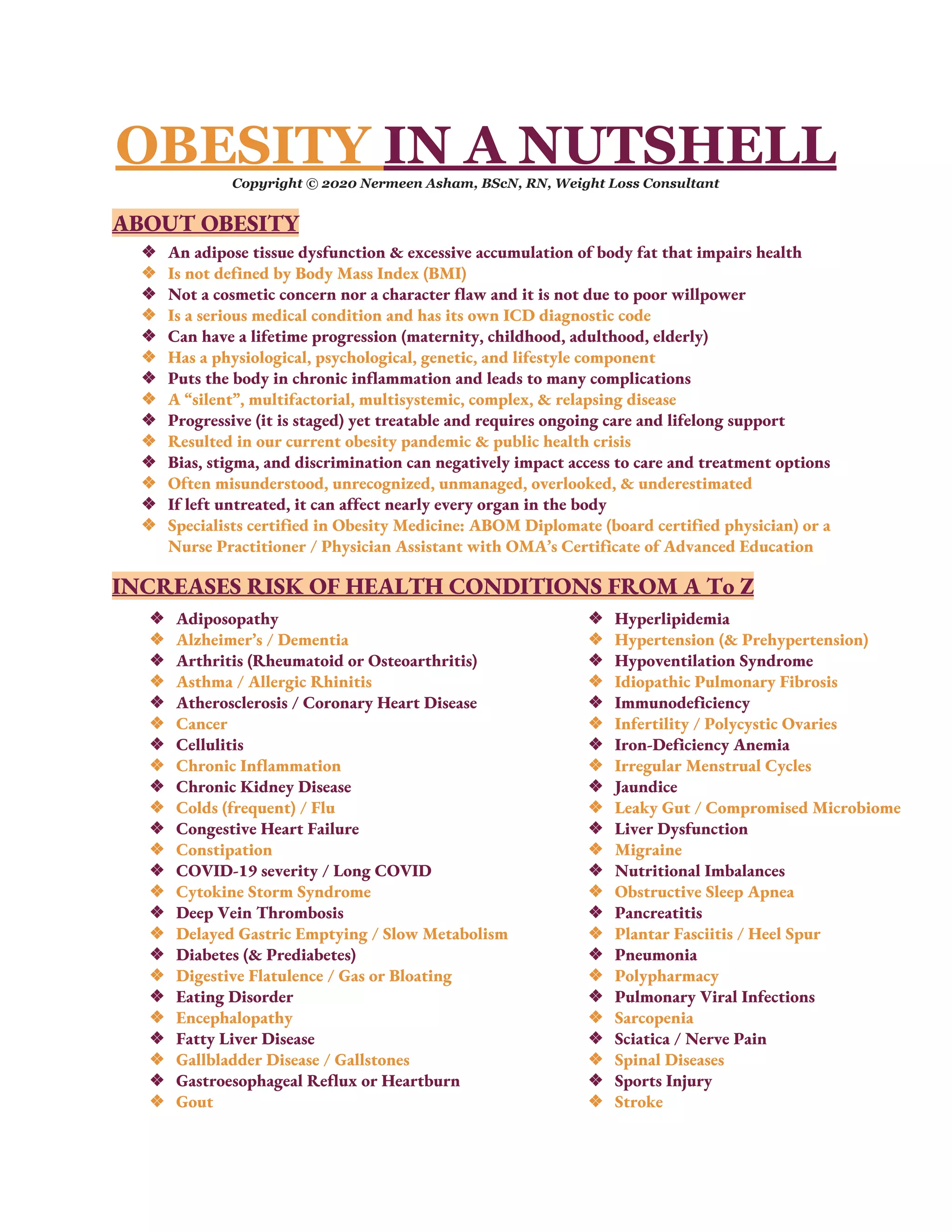
    OBESITY ​IN ANUTSHELLCopyright © 2020 Nermeen Asham, BScN, RN, Weight Loss Consultant ABOUT OBESITY  ❖ An adipose tissue dysfunction & excessive accumulation of body fat that impairs health  ❖ Is not defined by Body Mass Index (BMI)  ❖ Not a cosmetic concern nor a character flaw and it is not due to poor willpower  ❖ Is a serious medical condition and has its own ICD diagnostic code  ❖ Can have a lifetime progression (maternity, childhood, adulthood, elderly)  ❖ Has a physiological, psychological, genetic, and lifestyle component  ❖ Puts the body in chronic inflammation and leads to many complications  ❖ A “silent”, multifactorial, multisystemic, complex, & relapsing disease  ❖ Progressive (it is staged) yet treatable and requires ongoing care and lifelong support   ❖ Resulted in our current obesity pandemic & public health crisis  ❖ Bias, stigma, and discrimination can negatively impact access to care and treatment options  ❖ Often misunderstood, unrecognized, unmanaged, overlooked, & underestimated  ❖ If left untreated, it can affect nearly every organ in the body  ❖ Specialists certified in Obesity Medicine: ABOM Diplomate (board certified physician) or a  Nurse Practitioner / Physician Assistant with OMA’s Certificate of Advanced Education     INCREASES RISK OF HEALTH CONDITIONS FROM A To Z  ❖ Adiposopathy  ❖ Alzheimer’s / Dementia  ❖ Arthritis (Rheumatoid or Osteoarthritis)  ❖ Asthma / Allergic Rhinitis  ❖ Atherosclerosis / Coronary Heart Disease   ❖ Cancer  ❖ Cellulitis  ❖ Chronic Inflammation  ❖ Chronic Kidney Disease  ❖ Colds (frequent) / Flu   ❖ Congestive Heart Failure  ❖ Constipation  ❖ COVID-19 severity / Long COVID  ❖ Cytokine Storm Syndrome  ❖ Deep Vein Thrombosis  ❖ Delayed Gastric Emptying / Slow Metabolism  ❖ Diabetes (& Prediabetes)  ❖ Digestive Flatulence / Gas or Bloating  ❖ Eating Disorder  ❖ Encephalopathy  ❖ Fatty Liver Disease  ❖ Gallbladder Disease / Gallstones  ❖ Gastroesophageal Reflux or Heartburn  ❖ Gout  ❖ Hyperlipidemia  ❖ Hypertension (& Prehypertension)  ❖ Hypoventilation Syndrome  ❖ Idiopathic Pulmonary Fibrosis  ❖ Immunodeficiency  ❖ Infertility / Polycystic Ovaries  ❖ Iron-Deficiency Anemia  ❖ Irregular Menstrual Cycles  ❖ Jaundice  ❖ Leaky Gut / Compromised Microbiome  ❖ Liver Dysfunction  ❖ Migraine  ❖ Nutritional Imbalances  ❖ Obstructive Sleep Apnea  ❖ Pancreatitis  ❖ Plantar Fasciitis / Heel Spur  ❖ Pneumonia  ❖ Polypharmacy  ❖ Pulmonary Viral Infections  ❖ Sarcopenia   ❖ Sciatica / Nerve Pain  ❖ Spinal Diseases  ❖ Sports Injury  ❖ Stroke 
  • 2.
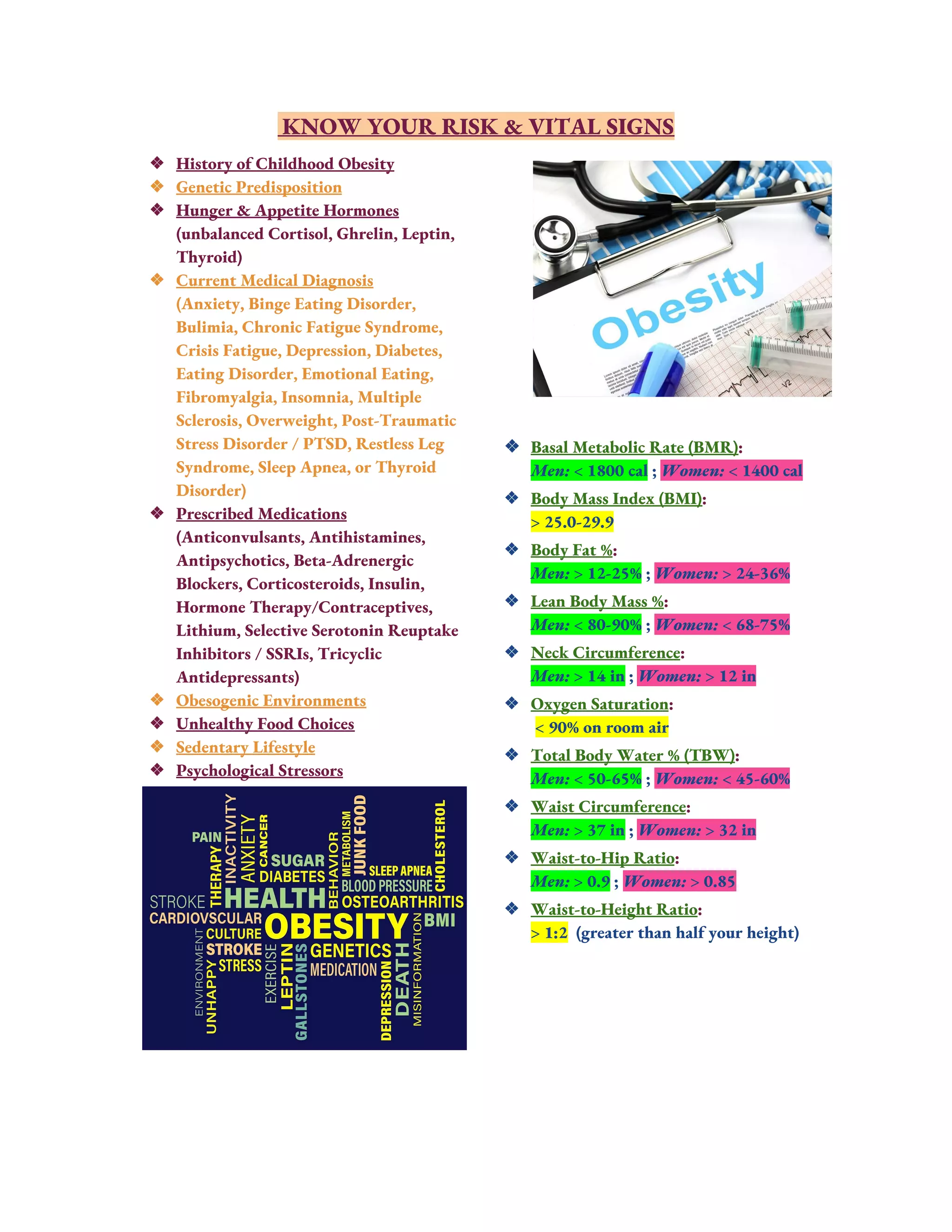
    KNOW YOUR RISK& VITAL SIGNS  ❖ History of Childhood Obesity   ❖ Genetic Predisposition  ❖ Hunger & Appetite Hormones  (unbalanced Cortisol, Ghrelin, Leptin,  Thyroid)   ❖ Current Medical Diagnosis   (Anxiety, Binge Eating Disorder,  Bulimia, Chronic Fatigue Syndrome,  Crisis Fatigue, Depression, Diabetes,  Eating Disorder, Emotional Eating,  Fibromyalgia, Insomnia, Multiple  Sclerosis, Overweight, Post-Traumatic  Stress Disorder / PTSD, Restless Leg  Syndrome, Sleep Apnea, or Thyroid  Disorder)  ❖ Prescribed Medications  (Anticonvulsants, Antihistamines,  Antipsychotics, Beta-Adrenergic  Blockers, Corticosteroids, Insulin,  Hormone Therapy/Contraceptives,  Lithium, Selective Serotonin Reuptake  Inhibitors / SSRIs, Tricyclic  Antidepressants)   ❖ Obesogenic Environments  ❖ Unhealthy Food Choices  ❖ Sedentary Lifestyle  ❖ Psychological Stressors                  ❖ Basal Metabolic Rate (BMR)​:   Men:​< 1800 cal​; ​Women:​< 1400 cal    ❖ Body Mass Index (BMI)​:   > 25.0-29.9    ❖ Body Fat %​:   Men:​> 12-25%​; ​Women:​> 24-36%    ❖ Lean Body Mass %​:   Men:​< 80-90%​; ​Women: ​< 68-75%    ❖ Neck Circumference​:   Men:​> 14 in​; ​Women:​> 12 in    ❖ Oxygen Saturation​:  ​< 90% on room air    ❖ Total Body Water % (TBW)​:   Men:​< 50-65%​; ​Women:​< 45-60%    ❖ Waist Circumference​:   Men:​> 37 in​; ​Women:​> 32 in    ❖ Waist-to-Hip Ratio​:   Men:​> 0.9​; ​Women:​> 0.85    ❖ Waist-to-Height Ratio​:   > 1:2​​(greater than half your height) 
  • 3.
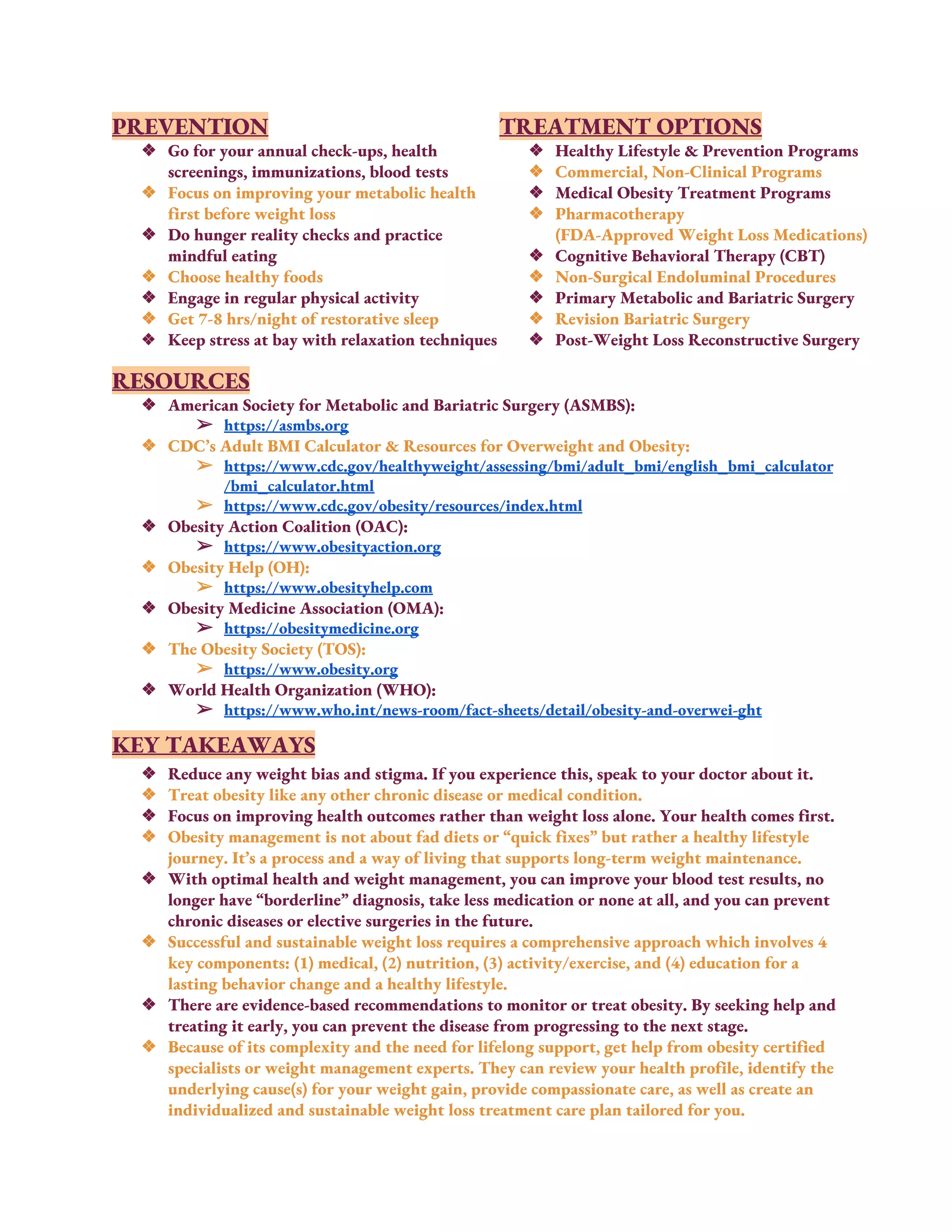
    PREVENTION  ❖ Go foryour annual check-ups, health  screenings, immunizations, blood tests  ❖ Focus on improving your metabolic health  first before weight loss  ❖ Do hunger reality checks and practice  mindful eating  ❖ Choose healthy foods  ❖ Engage in regular physical activity  ❖ Get 7-8 hrs/night of restorative sleep  ❖ Keep stress at bay with relaxation techniques  TREATMENT OPTIONS  ❖ Healthy Lifestyle & Prevention Programs  ❖ Commercial, Non-Clinical Programs  ❖ Medical Obesity Treatment Programs  ❖ Pharmacotherapy   (FDA-Approved Weight Loss Medications)  ❖ Cognitive Behavioral Therapy (CBT)  ❖ Non-Surgical Endoluminal Procedures  ❖ Primary Metabolic and Bariatric Surgery  ❖ Revision Bariatric Surgery  ❖ Post-Weight Loss Reconstructive Surgery  RESOURCES  ❖ American Society for Metabolic and Bariatric Surgery (ASMBS):    ➢ https://asmbs.org  ❖ CDC’s Adult BMI Calculator & Resources for Overweight and Obesity:    ➢ https://www.cdc.gov/healthyweight/assessing/bmi/adult_bmi/english_bmi_calculator /bmi_calculator.html ➢ https://www.cdc.gov/obesity/resources/index.html  ❖ Obesity Action Coalition (OAC):   ➢ https://www.obesityaction.org  ❖ Obesity Help (OH):   ➢ https://www.obesityhelp.com  ❖ Obesity Medicine Association (OMA):  ➢ https://obesitymedicine.org  ❖ The Obesity Society (TOS):  ➢ https://www.obesity.org  ❖ World Health Organization (WHO):   ➢ https://www.who.int/news-room/fact-sheets/detail/obesity-and-overwei-ght    KEY TAKEAWAYS  ❖ Reduce any weight bias and stigma. If you experience this, speak to your doctor about it.  ❖ Treat obesity like any other chronic disease or medical condition.  ❖ Focus on improving health outcomes rather than weight loss alone. Your health comes first.  ❖ Obesity management is not about fad diets or “quick fixes” but rather a healthy lifestyle  journey. It’s a process and a way of living that supports long-term weight maintenance.  ❖ With optimal health and weight management, you can improve your blood test results, no  longer have “borderline” diagnosis, take less medication or none at all, and you can prevent  chronic diseases or elective surgeries in the future.  ❖ Successful and sustainable weight loss requires a comprehensive approach which involves 4  key components: (1) medical, (2) nutrition, (3) activity/exercise, and (4) education for a  lasting behavior change and a healthy lifestyle.  ❖ There are evidence-based recommendations to monitor or treat obesity. By seeking help and  treating it early, you can prevent the disease from progressing to the next stage.  ❖ Because of its complexity and the need for lifelong support, get help from obesity certified  specialists or weight management experts. They can review your health profile, identify the  underlying cause(s) for your weight gain, provide compassionate care, as well as create an  individualized and sustainable weight loss treatment care plan tailored for you.