Dr. Angelo Smith M.D 
WHPL
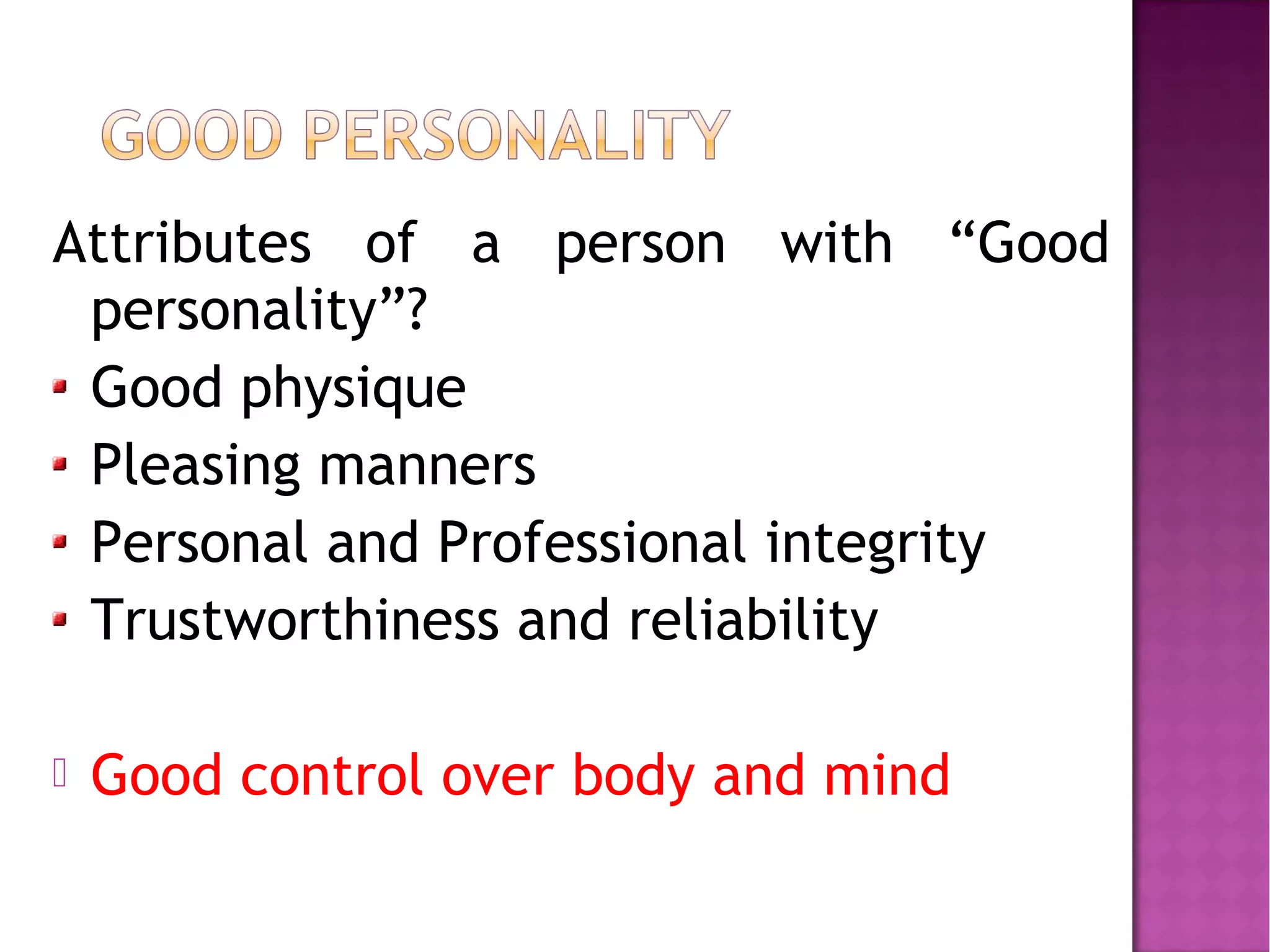
Attributes of a person with “Good 
personality”? 
Good physique 
Pleasing manners 
Personal and Professional integrity 
Trustworthiness and reliability 
 Good control over body and mind
PROFESSIONAL 
PHYSICAL SPIRITUAL 
6 
ASPECTS 
OF 
PERSONALITY 
MENTAL
Nutrition 
Personal Hygiene 
Exercising 
Traditional methods (Yoga, 
Pranayam etc.) 
Modern methods (Gym, aerobics, 
etc.) 
Walking and jogging
Agitated mind is unhealthy 
What agitates human mind? 
Not getting what one desires 
Getting what one dislikes 
Uncontrolled emotions in the mind 
Continuous accumulation of such likes and 
dislikes stresses the mind out. 
Stress agitates the mind 
 Stressed mind is unhealthy
Stress-free mind is healthy and calm 
Such calm mind can be controlled 
more easily 
 De-stressing the mind is needed: 
Prevention of accumulation of day-to-day 
complexes 
Clearing the stockpile of stored 
complexes
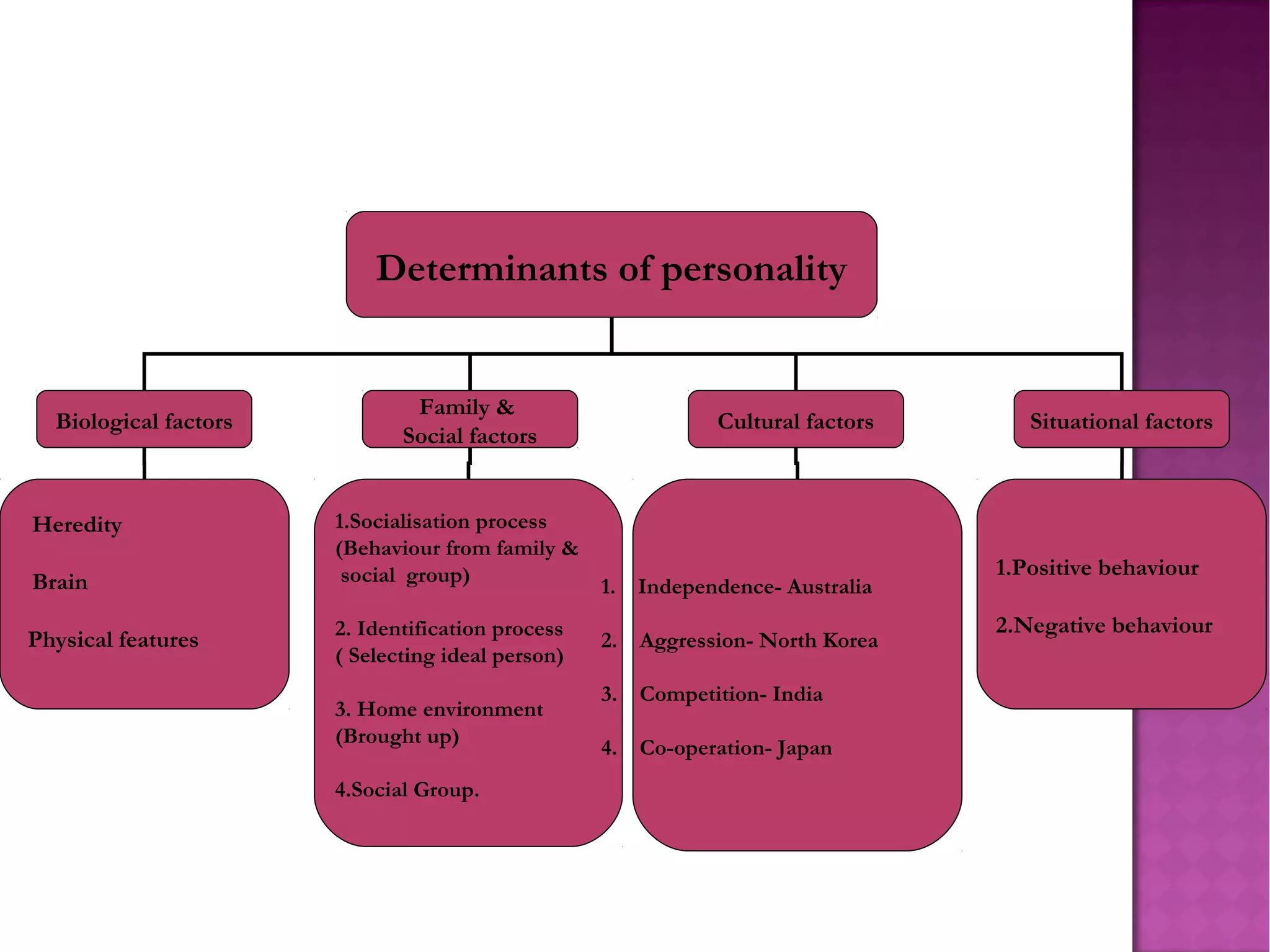
Determinants of personality 
Biological factors Family & 
Social factors Cultural factors Situational factors 
Heredity 
Brain 
Physical features 
1.Socialisation process 
(Behaviour from family & 
social group) 
2. Identification process 
( Selecting ideal person) 
3. Home environment 
(Brought up) 
4.Social Group. 
1. Independence- Australia 
2. Aggression- North Korea 
3. Competition- India 
4. Co-operation- Japan 
1.Positive behaviour 
2.Negative behaviour
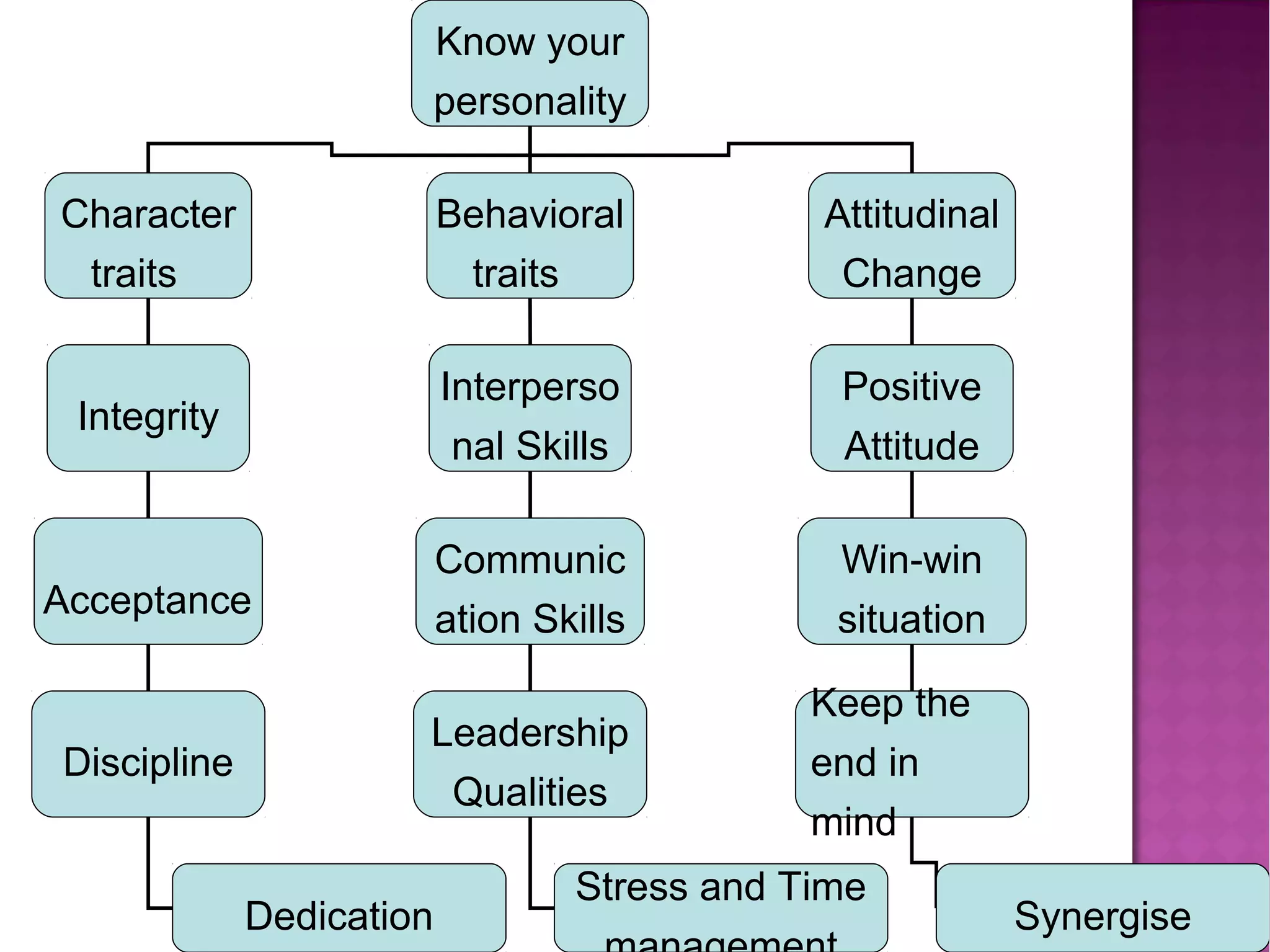
Know your 
personality 
Character 
traits 
Behavioral 
traits 
Attitudinal 
Change 
Integrity 
Interperso 
nal Skills 
Positive 
Attitude 
Acceptance 
Communic 
ation Skills 
Win-win 
situation 
Discipline 
Leadership 
Qualities 
Keep the 
end in 
mind 
Dedication 
Stress and Time 
management 
Synergise
Nine Types 
Perfectionists 
Helpers 
Romantics 
Achievers 
Asserters 
Questioners 
Adventurers 
Observers and 
Peacemakers.
Perfectionists – are realistic, conscientious and 
principled 
Ex: Narayan Murthy – Infosys. 
Helpers – are warn, concerned, nurturing and 
sensitive to other people’s needs 
Ex: Mother Teresa. 
Achievers – are energetic, optimistic, self assured 
and goal oriented 
Ex: Sachin Tendulkar 
Romantics – have sensitive feelings and are warm 
and perceptive 
Ex: M. F. Hussain – great Indian Painter 
Observers – have a need for knowledge and are 
introverted, curious, analytical and insightful. 
Ex: Amartya Sen - Great economist
Questioners – are responsible and trustworthy. 
Ex: Shabana Azmi 
Adventurers – are energetic, lively and optimistic. 
They want to contribute to the world 
Ex: Vijay Mallya - NRI businessman. 
Asserters – are direct, self-reliant, self confident 
and protective. 
Ex: T. N. Seshan - Chief Election Commissioner. 
Peacemakers – are receptive, good-natured and 
supportive. They seek union with others and the 
world around them 
Ex: Atal Bihari Vajpayee.
25 
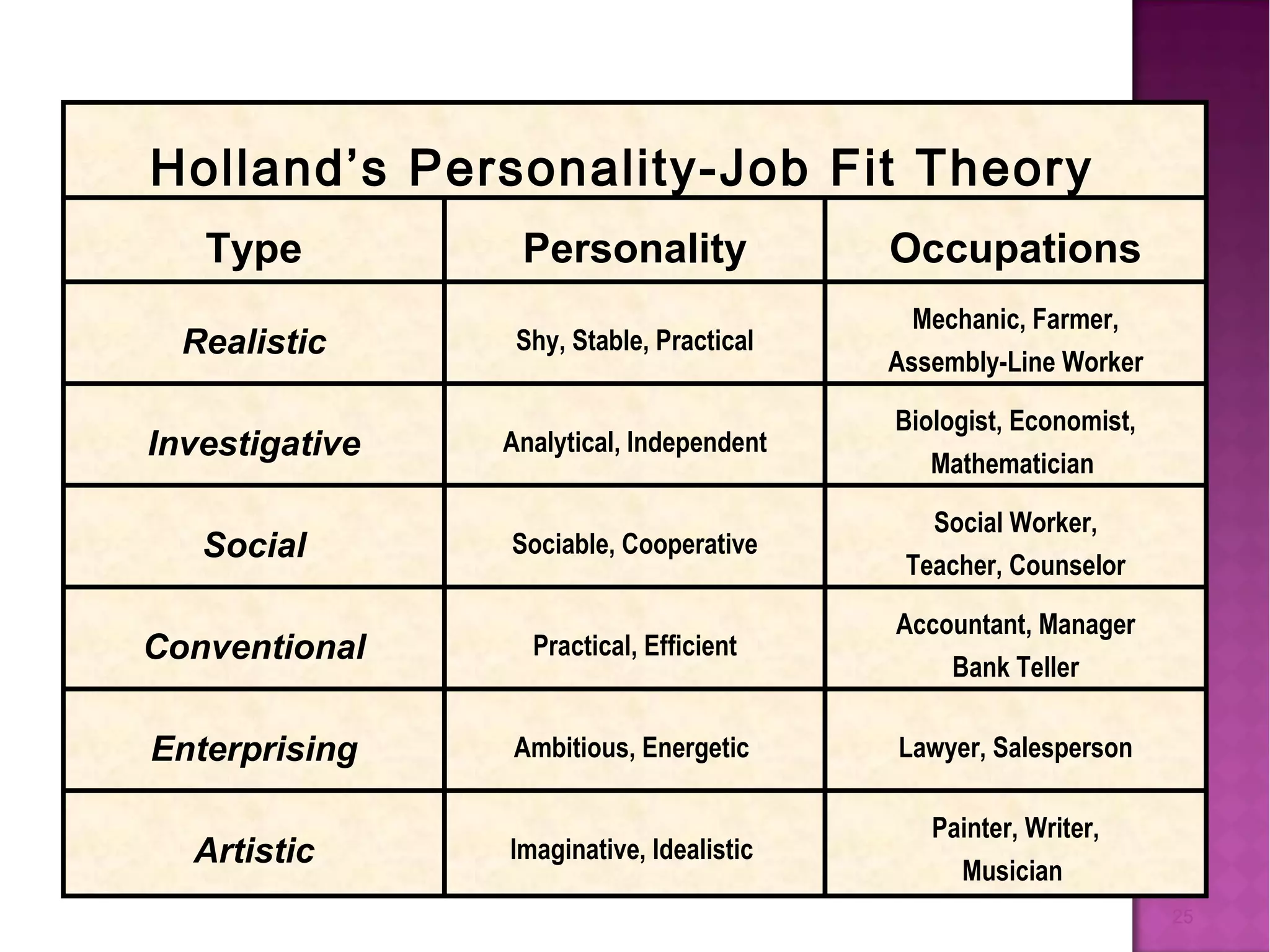
Holland’s Personality-Job Fit Theory 
Type Personality Occupations 
Realistic 
Investigative 
Social 
Conventional 
Enterprising 
Artistic 
Shy, Stable, Practical 
Analytical, Independent 
Sociable, Cooperative 
Practical, Efficient 
Ambitious, Energetic 
Imaginative, Idealistic 
Mechanic, Farmer, 
Assembly-Line Worker 
Biologist, Economist, 
Mathematician 
Social Worker, 
Teacher, Counselor 
Accountant, Manager 
Bank Teller 
Lawyer, Salesperson 
Painter, Writer, 
Musician
Type A Personality 
• Always moving, walking, and 
eating rapidly. 
• Feel impatient with the rate at 
which most events take place. 
• Strive to think or do two or more 
things at once. 
• Cannot cope with leisure time. 
• Are obsessed with numbers, 
measuring their success in 
terms of how many or how much 
of everything they acquire. 
Type B Personality 
• Never suffer from a sense of time 
urgency with its accompanying 
impatience. 
• Feel no need to display or discuss 
either their achievements or 
accomplishments unless such 
exposure is demanded by the 
situation. 
• Play for fun & relaxation, instead 
of exhibit their superiority at any 
cost. 
Can relax without guilt.
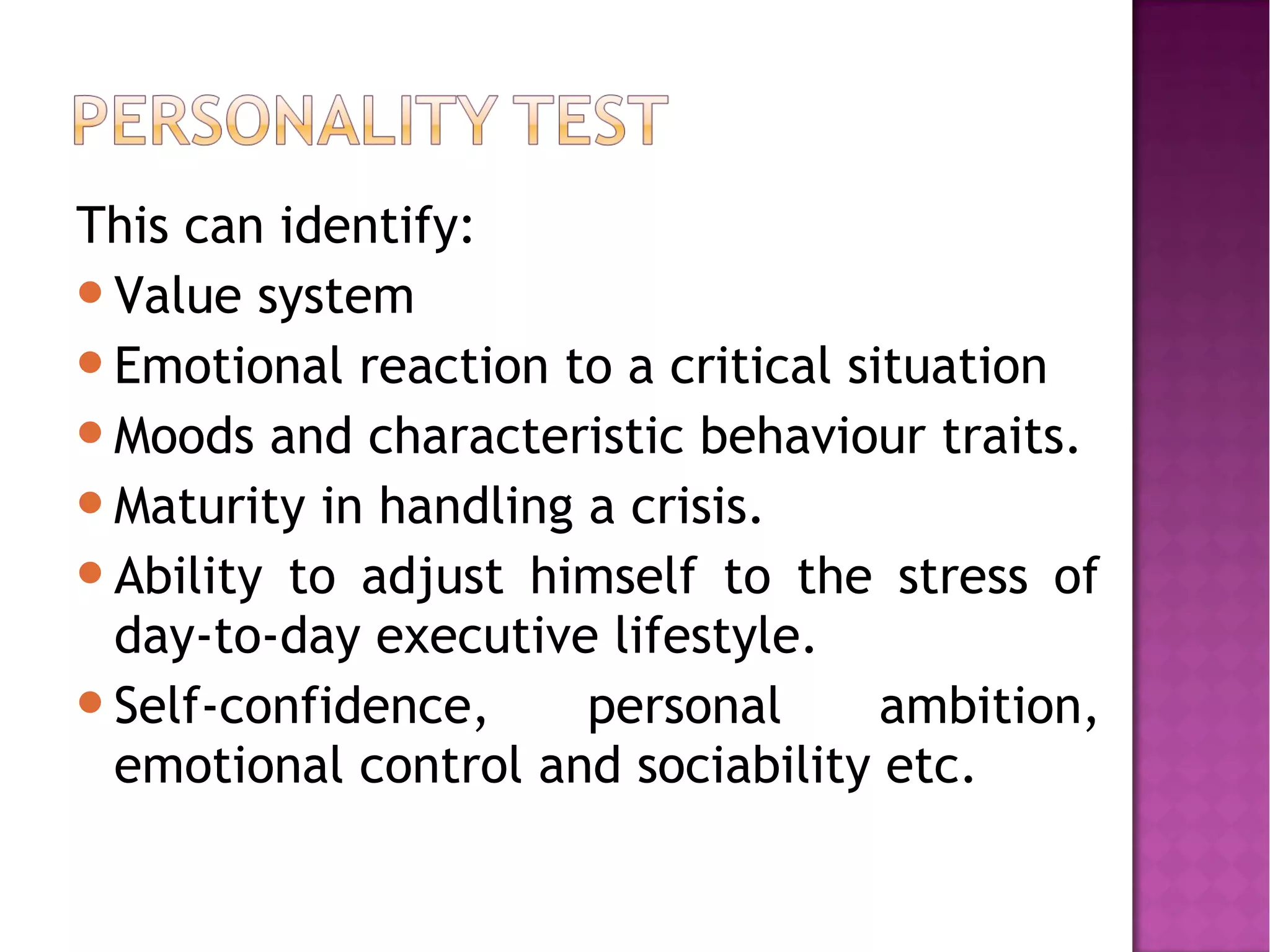
This can identify: 
Value system 
Emotional reaction to a critical situation 
Moods and characteristic behaviour traits. 
Maturity in handling a crisis. 
Ability to adjust himself to the stress of 
day-to-day executive lifestyle. 
Self-confidence, personal ambition, 
emotional control and sociability etc.
Types of personalities and traitsPersonality development

Types of personalities and traitsPersonality development

  • 1.
  • 3.
    Attributes of aperson with “Good personality”? Good physique Pleasing manners Personal and Professional integrity Trustworthiness and reliability  Good control over body and mind
  • 6.
    PROFESSIONAL PHYSICAL SPIRITUAL 6 ASPECTS OF PERSONALITY MENTAL
  • 7.
    Nutrition Personal Hygiene Exercising Traditional methods (Yoga, Pranayam etc.) Modern methods (Gym, aerobics, etc.) Walking and jogging
  • 8.
    Agitated mind isunhealthy What agitates human mind? Not getting what one desires Getting what one dislikes Uncontrolled emotions in the mind Continuous accumulation of such likes and dislikes stresses the mind out. Stress agitates the mind  Stressed mind is unhealthy
  • 9.
    Stress-free mind ishealthy and calm Such calm mind can be controlled more easily  De-stressing the mind is needed: Prevention of accumulation of day-to-day complexes Clearing the stockpile of stored complexes
  • 10.
    Determinants of personality Biological factors Family & Social factors Cultural factors Situational factors Heredity Brain Physical features 1.Socialisation process (Behaviour from family & social group) 2. Identification process ( Selecting ideal person) 3. Home environment (Brought up) 4.Social Group. 1. Independence- Australia 2. Aggression- North Korea 3. Competition- India 4. Co-operation- Japan 1.Positive behaviour 2.Negative behaviour
  • 19.
    Know your personality Character traits Behavioral traits Attitudinal Change Integrity Interperso nal Skills Positive Attitude Acceptance Communic ation Skills Win-win situation Discipline Leadership Qualities Keep the end in mind Dedication Stress and Time management Synergise
  • 20.
    Nine Types Perfectionists Helpers Romantics Achievers Asserters Questioners Adventurers Observers and Peacemakers.
  • 21.
    Perfectionists – arerealistic, conscientious and principled Ex: Narayan Murthy – Infosys. Helpers – are warn, concerned, nurturing and sensitive to other people’s needs Ex: Mother Teresa. Achievers – are energetic, optimistic, self assured and goal oriented Ex: Sachin Tendulkar Romantics – have sensitive feelings and are warm and perceptive Ex: M. F. Hussain – great Indian Painter Observers – have a need for knowledge and are introverted, curious, analytical and insightful. Ex: Amartya Sen - Great economist
  • 22.
    Questioners – areresponsible and trustworthy. Ex: Shabana Azmi Adventurers – are energetic, lively and optimistic. They want to contribute to the world Ex: Vijay Mallya - NRI businessman. Asserters – are direct, self-reliant, self confident and protective. Ex: T. N. Seshan - Chief Election Commissioner. Peacemakers – are receptive, good-natured and supportive. They seek union with others and the world around them Ex: Atal Bihari Vajpayee.
  • 25.
    25 Holland’s Personality-JobFit Theory Type Personality Occupations Realistic Investigative Social Conventional Enterprising Artistic Shy, Stable, Practical Analytical, Independent Sociable, Cooperative Practical, Efficient Ambitious, Energetic Imaginative, Idealistic Mechanic, Farmer, Assembly-Line Worker Biologist, Economist, Mathematician Social Worker, Teacher, Counselor Accountant, Manager Bank Teller Lawyer, Salesperson Painter, Writer, Musician
  • 26.
    Type A Personality • Always moving, walking, and eating rapidly. • Feel impatient with the rate at which most events take place. • Strive to think or do two or more things at once. • Cannot cope with leisure time. • Are obsessed with numbers, measuring their success in terms of how many or how much of everything they acquire. Type B Personality • Never suffer from a sense of time urgency with its accompanying impatience. • Feel no need to display or discuss either their achievements or accomplishments unless such exposure is demanded by the situation. • Play for fun & relaxation, instead of exhibit their superiority at any cost. Can relax without guilt.
  • 27.
    This can identify: Value system Emotional reaction to a critical situation Moods and characteristic behaviour traits. Maturity in handling a crisis. Ability to adjust himself to the stress of day-to-day executive lifestyle. Self-confidence, personal ambition, emotional control and sociability etc.