NUCLEAR OVERHAUSER
EFFECT
SUBMITTED BY
RESHMA FATHIMA.K
FIRSTYEAR M.PHARM
DEPT.OF.PHARMACEUTICS
INTRODUCTION
EXPLANATION FOR
NOE
CONCLUSION
REFERENCE
 The nuclear overhauser effect is of great value
in studying the molecular geometry of the
compounds.
 It tell whether the two protons are in close
proximity within the molecules or not.
 An important consequence of this effect is
that the line intensities observed in the
normal spectrum may not be the same as in
the decoupled spectrum.
INTRODUCTION (Contd)…..
• Consider a molecule in which two protons are close enough to allow through
space interactions of the fluctuating magnetic vector for this effect, the
number of intervening bonds between the two concerned protons have no
significance
C C
Ha
Hb
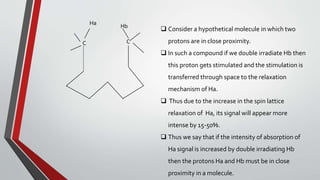
 Consider a hypothetical molecule in which two
protons are in close proximity.
 In such a compound if we double irradiate Hb then
this proton gets stimulated and the stimulation is
transferred through space to the relaxation
mechanism of Ha.
 Thus due to the increase in the spin lattice
relaxation of Ha, its signal will appear more
intense by 15-50%.
 Thus we say that if the intensity of absorption of
Ha signal is increased by double irradiating Hb
then the protons Ha and Hb must be in close
proximity in a molecule.
EXPLANATION FOR NOE
• NuclearOVERHAUSER Effect (NOE): resonance line intensity changes caused by
dipolar cross relaxation from neighboring spins with perturbed energy level
populations.
• To understand the nature of the NOE, we have to look at a two-spin system I1 and I2.
• Since NOE does not involves coherences, but merely polarization, i.e. population
differences between the a and b states, we can use the energy level diagram here:
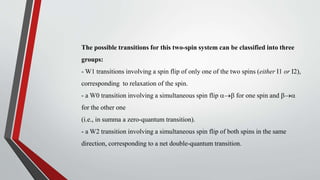
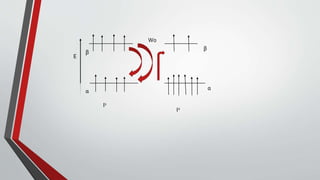
The possible transitions for this two-spin system can be classified into three
groups:
- W1 transitions involving a spin flip of only one of the two spins (either I1 or I2),
corresponding to relaxation of the spin.
- a W0 transition involving a simultaneous spin flip for one spin and 
for the other one
(i.e., in summa a zero-quantum transition).
- a W2 transition involving a simultaneous spin flip of both spins in the same
direction, corresponding to a net double-quantum transition.
E
W0
β
β
α
α
I1
I2
β
α
β
α
I1
I2
E
W2
• With the I1 polarization going back from saturation to the BOLTZMANN equilibrium, the
W0 mechanism will cause the neighboring (so far unperturbed) spin to deviate from its
BOLTZMANN equilibrium towards a decrease in ,population difference. After a 90°
pulse, this will result in a decrease in signal intensity for I2 — a "negative NOE effect".
• On the other hand, the W2 mechanism will cause the population difference of the
undisturbed spin I2 to increase, corresponding to an increase in signal intensity: a "positive
NOE effect".
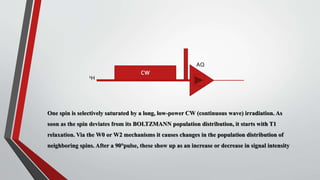
• These effects can be directly observed in a very simple experiment, the 1D difference NOE
sequence
CW
AQ
1H
One spin is selectively saturated by a long, low-power CW (continuous wave) irradiation. As
soon as the spin deviates from its BOLTZMANN population distribution, it starts with T1
relaxation. Via the W0 or W2 mechanisms it causes changes in the population distribution of
neighboring spins. After a 90°pulse, these show up as an increase or decrease in signal intensity
• Usually, the experiment is repeated without saturation,
giving the normal 1D spectrum.
• This is then subtracted from the irradiated spectrum, so that
the small intensity changes from the NOE effects can be
easier distinguished spins with a positive NOE (i.e., higher
intensity in the NOE spectrum than in the reference 1D)
show a small positive residual signal, spins with a negative
NOE yield a negative signal, spins without an NOE cancel
completely.
• The nuclear overhauser effect is of great
value in studying the molecular geometry of
the compounds.
• An important consequence of this effect is
that the line intensities observed in the
normal spectrum may not be the same as in
the decoupled spectrum.
• Dipole dipole relaxation occurs when two
nuclei are located close together and are
moving at appropriate relative rate.
• Irradiation of one of these nuclei with
a B2 field alters the Boltzmann
population distribution of the other
nucleus and therefore perturbs the
intensity of the resonance.
• No J coupling need be present
between nuclei.
REFERENCES
• Textbook of organic spectroscopy byY.R SHARMA
• Textbook of nuclear magnetic resonance spectroscopy by
JOSEPH.B.LAMBERT
Nuclear overhauser effect

Nuclear overhauser effect

  • 1.
    NUCLEAR OVERHAUSER EFFECT SUBMITTED BY RESHMAFATHIMA.K FIRSTYEAR M.PHARM DEPT.OF.PHARMACEUTICS
  • 3.
  • 4.
     The nuclearoverhauser effect is of great value in studying the molecular geometry of the compounds.  It tell whether the two protons are in close proximity within the molecules or not.  An important consequence of this effect is that the line intensities observed in the normal spectrum may not be the same as in the decoupled spectrum.
  • 5.
    INTRODUCTION (Contd)….. • Considera molecule in which two protons are close enough to allow through space interactions of the fluctuating magnetic vector for this effect, the number of intervening bonds between the two concerned protons have no significance
  • 6.
    C C Ha Hb  Considera hypothetical molecule in which two protons are in close proximity.  In such a compound if we double irradiate Hb then this proton gets stimulated and the stimulation is transferred through space to the relaxation mechanism of Ha.  Thus due to the increase in the spin lattice relaxation of Ha, its signal will appear more intense by 15-50%.  Thus we say that if the intensity of absorption of Ha signal is increased by double irradiating Hb then the protons Ha and Hb must be in close proximity in a molecule.
  • 7.
    EXPLANATION FOR NOE •NuclearOVERHAUSER Effect (NOE): resonance line intensity changes caused by dipolar cross relaxation from neighboring spins with perturbed energy level populations. • To understand the nature of the NOE, we have to look at a two-spin system I1 and I2. • Since NOE does not involves coherences, but merely polarization, i.e. population differences between the a and b states, we can use the energy level diagram here:
  • 8.
    The possible transitionsfor this two-spin system can be classified into three groups: - W1 transitions involving a spin flip of only one of the two spins (either I1 or I2), corresponding to relaxation of the spin. - a W0 transition involving a simultaneous spin flip for one spin and  for the other one (i.e., in summa a zero-quantum transition). - a W2 transition involving a simultaneous spin flip of both spins in the same direction, corresponding to a net double-quantum transition.
  • 9.
  • 10.
  • 11.
    • With theI1 polarization going back from saturation to the BOLTZMANN equilibrium, the W0 mechanism will cause the neighboring (so far unperturbed) spin to deviate from its BOLTZMANN equilibrium towards a decrease in ,population difference. After a 90° pulse, this will result in a decrease in signal intensity for I2 — a "negative NOE effect". • On the other hand, the W2 mechanism will cause the population difference of the undisturbed spin I2 to increase, corresponding to an increase in signal intensity: a "positive NOE effect". • These effects can be directly observed in a very simple experiment, the 1D difference NOE sequence
  • 12.
    CW AQ 1H One spin isselectively saturated by a long, low-power CW (continuous wave) irradiation. As soon as the spin deviates from its BOLTZMANN population distribution, it starts with T1 relaxation. Via the W0 or W2 mechanisms it causes changes in the population distribution of neighboring spins. After a 90°pulse, these show up as an increase or decrease in signal intensity
  • 13.
    • Usually, theexperiment is repeated without saturation, giving the normal 1D spectrum. • This is then subtracted from the irradiated spectrum, so that the small intensity changes from the NOE effects can be easier distinguished spins with a positive NOE (i.e., higher intensity in the NOE spectrum than in the reference 1D) show a small positive residual signal, spins with a negative NOE yield a negative signal, spins without an NOE cancel completely.
  • 14.
    • The nuclearoverhauser effect is of great value in studying the molecular geometry of the compounds. • An important consequence of this effect is that the line intensities observed in the normal spectrum may not be the same as in the decoupled spectrum. • Dipole dipole relaxation occurs when two nuclei are located close together and are moving at appropriate relative rate.
  • 15.
    • Irradiation ofone of these nuclei with a B2 field alters the Boltzmann population distribution of the other nucleus and therefore perturbs the intensity of the resonance. • No J coupling need be present between nuclei.
  • 16.
    REFERENCES • Textbook oforganic spectroscopy byY.R SHARMA • Textbook of nuclear magnetic resonance spectroscopy by JOSEPH.B.LAMBERT