

Deepak yadav 
m.sc-iii 
Guided by:-prf.G K SRIVASTAVA University of allahabad
DISCOVERY 
OF 
NUCLEUS
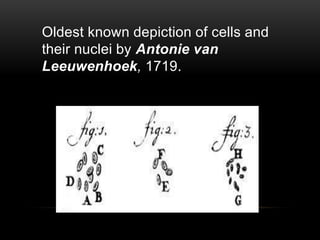
Oldest known depiction of cells and 
their nuclei by Antonie van 
Leeuwenhoek, 1719.
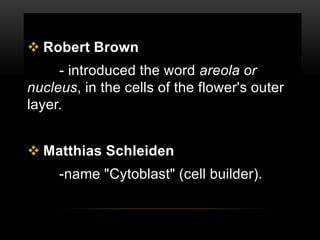
 Robert Brown 
- introduced the word areola or 
nucleus, in the cells of the flower's outer 
layer. 
 Matthias Schleiden 
-name "Cytoblast" (cell builder).
Robert Remak and Rudolf Virchow 
propagated the new paradigm that cells 
are generated solely by cells ("Omnis 
cellula e cellula"). 
The function of the nucleus clear only 
later, after mitosis discovered and the 
Mendelian rules 20th century).
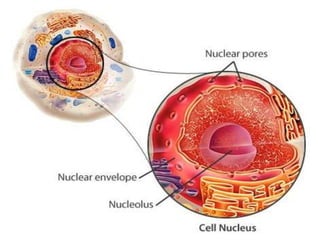
CELL 
NUCLEUS
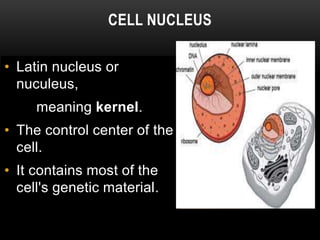
CELL NUCLEUS 
• Latin nucleus or 
nuculeus, 
meaning kernel. 
• The control center of the 
cell. 
• It contains most of the 
cell's genetic material.
PRIMARY FUNCTIONS: 
• Repository of genetic information 
• Enables synthesis of nearly all proteins 
• Houses the nucleolus 
• Responsible for production of 
ribosomes. 
• Selective transportation of regulatory 
factors and energy.
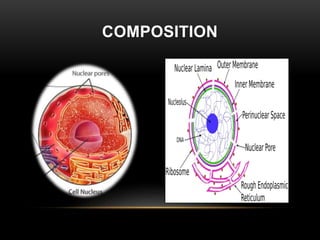
COMPOSITION
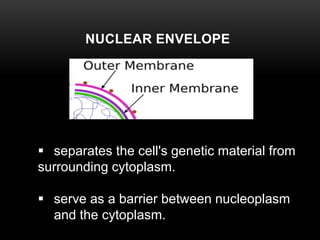
NUCLEAR ENVELOPE 
 separates the cell's genetic material from 
surrounding cytoplasm. 
 serve as a barrier between nucleoplasm 
and the cytoplasm.
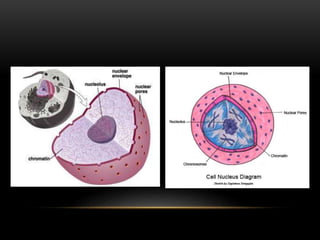
Also known as the nuclear membrane, nucleolemma, or karyotheca. 
is the double lipid bilayer membrane which surrounds the genetic material and nucleolus in 
eukaryotic cells.
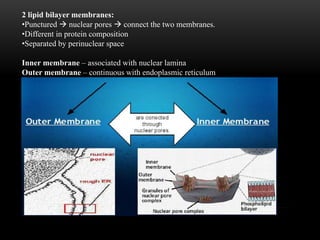
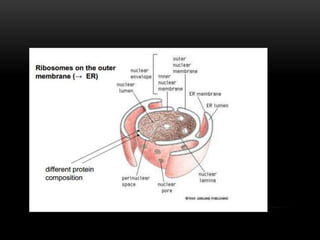
2 lipid bilayer membranes: 
•Punctured  nuclear pores  connect the two membranes. 
•Different in protein composition 
•Separated by perinuclear space 
Inner membrane – associated with nuclear lamina 
Outer membrane – continuous with endoplasmic reticulum
Outer membrane 
The outer nuclear membrane is also contiguous with the 
endoplasmic reticulum. 
While it is physically linked, the outer nuclear membrane 
contains various proteins found in far higher concentrations than the endoplasmic 
reticulum. 
Inner Membrane 
The inner nuclear membrane encloses the nucleoplasm, and is covered 
by the nuclear lamina, 
It is connected to the outer membrane by nuclear 
pores which penetrate the membranes.
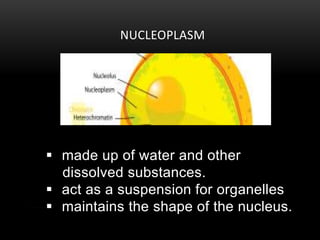
NUCLEOPLASM 
 made up of water and other 
dissolved substances. 
 act as a suspension for organelles 
 maintains the shape of the nucleus.
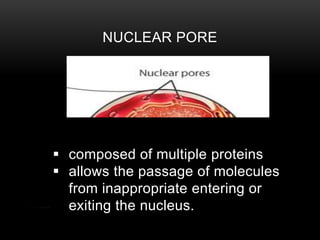
NUCLEAR PORE 
 composed of multiple proteins 
 allows the passage of molecules 
from inappropriate entering or 
exiting the nucleus.
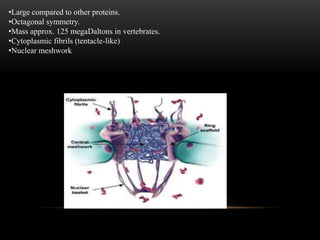
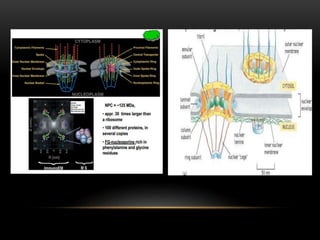
•Large compared to other proteins. 
•Octagonal symmetry. 
•Mass approx. 125 megaDaltons in vertebrates. 
•Cytoplasmic fibrils (tentacle-like) 
•Nuclear meshwork
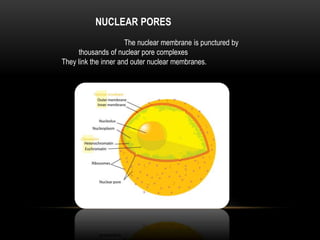
NUCLEAR PORES 
The nuclear membrane is punctured by 
thousands of nuclear pore complexes 
They link the inner and outer nuclear membranes.
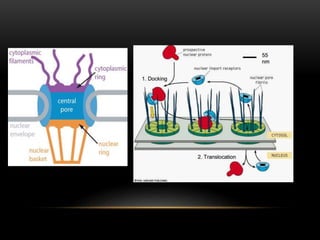
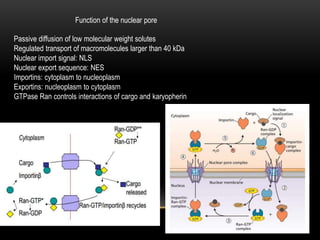
Function of the nuclear pore 
Passive diffusion of low molecular weight solutes 
Regulated transport of macromolecules larger than 40 kDa 
Nuclear import signal: NLS 
Nuclear export sequence: NES 
Importins: cytoplasm to nucleoplasm 
Exportins: nucleoplasm to cytoplasm 
GTPase Ran controls interactions of cargo and karyopherin
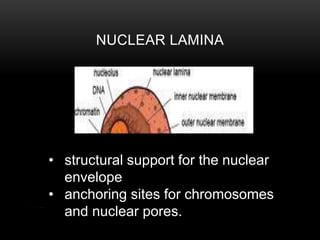
NUCLEAR LAMINA 
• structural support for the nuclear 
envelope 
• anchoring sites for chromosomes 
and nuclear pores.
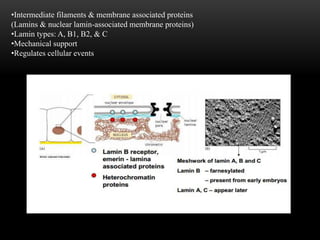
•Intermediate filaments & membrane associated proteins 
(Lamins & nuclear lamin-associated membrane proteins) 
•Lamin types: A, B1, B2, & C 
•Mechanical support 
•Regulates cellular events
PROGERIA 
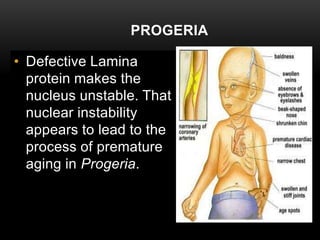
• Defective Lamina 
protein makes the 
nucleus unstable. That 
nuclear instability 
appears to lead to the 
process of premature 
aging in Progeria.
CHROMOSOMES 
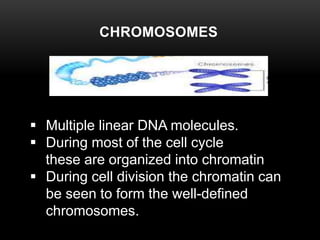
 Multiple linear DNA molecules. 
 During most of the cell cycle 
these are organized into chromatin 
 During cell division the chromatin can 
be seen to form the well-defined 
chromosomes.
NUCLEOLUS 
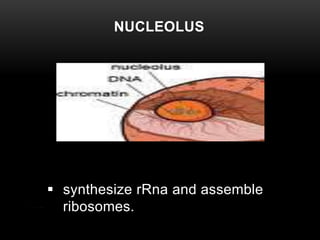
 synthesize rRna and assemble 
ribosomes.
HAVE 
YOU LEARNED?
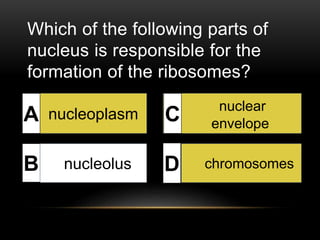
Which of the following parts of 
nucleus is responsible for the 
formation of the ribosomes? 
nucleoplasm 
nucleolus 
nuclear 
envelope 
chromosomes 
A 
B nucleolus 
C 
D
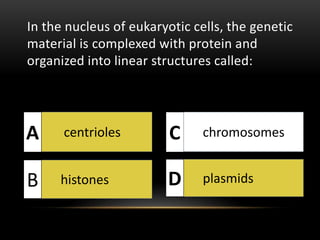
In the nucleus of eukaryotic cells, the genetic 
material is complexed with protein and 
organized into linear structures called: 
A centrioles 
chromosomes 
histones plasmids 
B 
C D
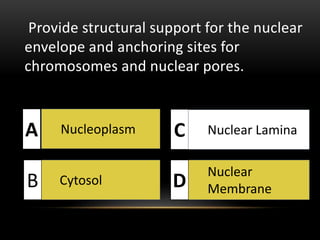
Provide structural support for the nuclear 
envelope and anchoring sites for 
chromosomes and nuclear pores. 
A Nucleoplasm 
C 
Cytosol 
Nuclear Lamina 
B 
D 
Nuclear 
Membrane
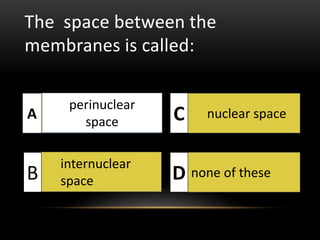
The space between the 
membranes is called: 
perinuclear 
space 
internuclear 
space 
nuclear space 
none of these 
A 
B 
C 
D 
perinuclear 
space
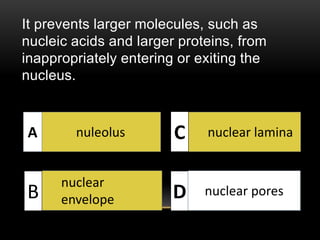
It prevents larger molecules, such as 
nucleic acids and larger proteins, from 
inappropriately entering or exiting the 
nucleus. 
nuleolus 
nuclear 
envelope 
nuclear lamina 
A 
B 
C 
D nuclear pores
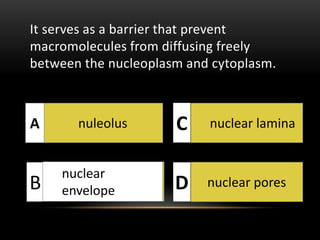
It serves as a barrier that prevent 
macromolecules from diffusing freely 
between the nucleoplasm and cytoplasm. 
nuleolus 
nuclear 
envelope 
nuclear lamina 
nuclear pores 
A 
B 
C 
D
Nucleus of eukaryote

Nucleus of eukaryote

  • 1.
    Deepak yadav m.sc-iii Guided by:-prf.G K SRIVASTAVA University of allahabad
  • 2.
  • 3.
    Oldest known depictionof cells and their nuclei by Antonie van Leeuwenhoek, 1719.
  • 5.
     Robert Brown - introduced the word areola or nucleus, in the cells of the flower's outer layer.  Matthias Schleiden -name "Cytoblast" (cell builder).
  • 6.
    Robert Remak andRudolf Virchow propagated the new paradigm that cells are generated solely by cells ("Omnis cellula e cellula"). The function of the nucleus clear only later, after mitosis discovered and the Mendelian rules 20th century).
  • 7.
  • 8.
    CELL NUCLEUS •Latin nucleus or nuculeus, meaning kernel. • The control center of the cell. • It contains most of the cell's genetic material.
  • 9.
    PRIMARY FUNCTIONS: •Repository of genetic information • Enables synthesis of nearly all proteins • Houses the nucleolus • Responsible for production of ribosomes. • Selective transportation of regulatory factors and energy.
  • 10.
  • 11.
    NUCLEAR ENVELOPE separates the cell's genetic material from surrounding cytoplasm.  serve as a barrier between nucleoplasm and the cytoplasm.
  • 12.
    Also known asthe nuclear membrane, nucleolemma, or karyotheca. is the double lipid bilayer membrane which surrounds the genetic material and nucleolus in eukaryotic cells.
  • 13.
    2 lipid bilayermembranes: •Punctured  nuclear pores  connect the two membranes. •Different in protein composition •Separated by perinuclear space Inner membrane – associated with nuclear lamina Outer membrane – continuous with endoplasmic reticulum
  • 15.
    Outer membrane Theouter nuclear membrane is also contiguous with the endoplasmic reticulum. While it is physically linked, the outer nuclear membrane contains various proteins found in far higher concentrations than the endoplasmic reticulum. Inner Membrane The inner nuclear membrane encloses the nucleoplasm, and is covered by the nuclear lamina, It is connected to the outer membrane by nuclear pores which penetrate the membranes.
  • 16.
    NUCLEOPLASM  madeup of water and other dissolved substances.  act as a suspension for organelles  maintains the shape of the nucleus.
  • 17.
    NUCLEAR PORE composed of multiple proteins  allows the passage of molecules from inappropriate entering or exiting the nucleus.
  • 18.
    •Large compared toother proteins. •Octagonal symmetry. •Mass approx. 125 megaDaltons in vertebrates. •Cytoplasmic fibrils (tentacle-like) •Nuclear meshwork
  • 21.
    NUCLEAR PORES Thenuclear membrane is punctured by thousands of nuclear pore complexes They link the inner and outer nuclear membranes.
  • 22.
    Function of thenuclear pore Passive diffusion of low molecular weight solutes Regulated transport of macromolecules larger than 40 kDa Nuclear import signal: NLS Nuclear export sequence: NES Importins: cytoplasm to nucleoplasm Exportins: nucleoplasm to cytoplasm GTPase Ran controls interactions of cargo and karyopherin
  • 24.
    NUCLEAR LAMINA •structural support for the nuclear envelope • anchoring sites for chromosomes and nuclear pores.
  • 25.
    •Intermediate filaments &membrane associated proteins (Lamins & nuclear lamin-associated membrane proteins) •Lamin types: A, B1, B2, & C •Mechanical support •Regulates cellular events
  • 26.
    PROGERIA • DefectiveLamina protein makes the nucleus unstable. That nuclear instability appears to lead to the process of premature aging in Progeria.
  • 27.
    CHROMOSOMES  Multiplelinear DNA molecules.  During most of the cell cycle these are organized into chromatin  During cell division the chromatin can be seen to form the well-defined chromosomes.
  • 28.
    NUCLEOLUS  synthesizerRna and assemble ribosomes.
  • 29.
  • 30.
    Which of thefollowing parts of nucleus is responsible for the formation of the ribosomes? nucleoplasm nucleolus nuclear envelope chromosomes A B nucleolus C D
  • 31.
    In the nucleusof eukaryotic cells, the genetic material is complexed with protein and organized into linear structures called: A centrioles chromosomes histones plasmids B C D
  • 32.
    Provide structural supportfor the nuclear envelope and anchoring sites for chromosomes and nuclear pores. A Nucleoplasm C Cytosol Nuclear Lamina B D Nuclear Membrane
  • 33.
    The space betweenthe membranes is called: perinuclear space internuclear space nuclear space none of these A B C D perinuclear space
  • 34.
    It prevents largermolecules, such as nucleic acids and larger proteins, from inappropriately entering or exiting the nucleus. nuleolus nuclear envelope nuclear lamina A B C D nuclear pores
  • 35.
    It serves asa barrier that prevent macromolecules from diffusing freely between the nucleoplasm and cytoplasm. nuleolus nuclear envelope nuclear lamina nuclear pores A B C D