NUCLEUS
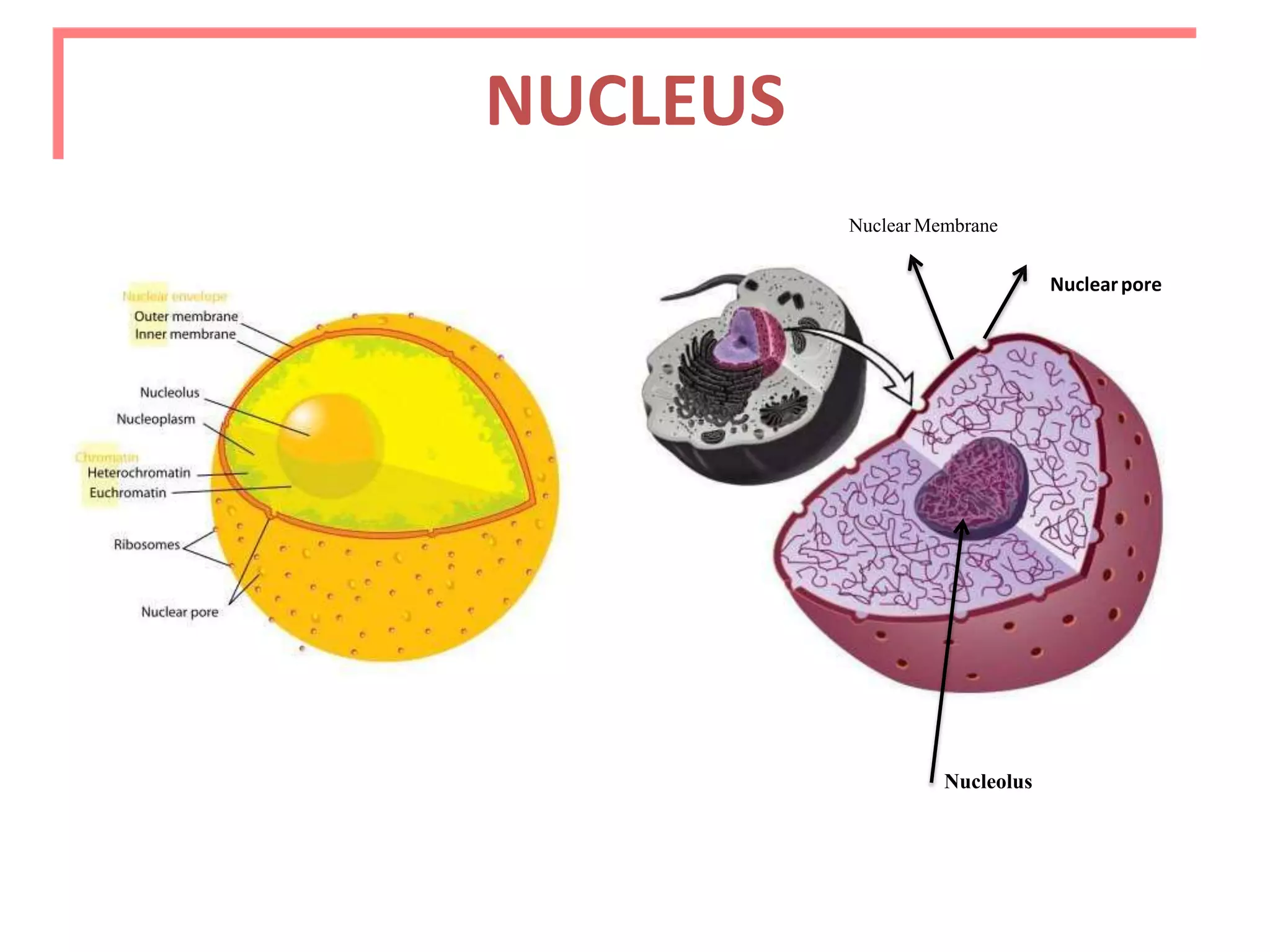
Nuclear Membrane
Nuclearpore
Nucleolus
What is Nucleus ?
• Nucleus” is a Latin word meaning Kernel. It is
the “CONTROL CENTER” of the cell. It was First
cell organelle to be discovered It is membrane
bound organelle found in eukaryotic cells.
Main functions are - to maintain the integrity
of genes - to control the activities of the cell
by regulating gene expression .
THE NUCLEUS:FUNCTIONS
• It stores the cell's hereditary material, or DNA.
• Site of DNA replication
• Site of DNA transcription to mRNA
• Ribosomal formation
• -Nucleolus: RNA & protein required for ribosomal
synthesis
• It coordinates the cell's activities, which include
growth, intermediary metabolism, protein
synthesis, and reproduction (cell division) by
regulating gene expression.
THE NUCLEUS:STRUCTURE
• Average diameter of nucleus is 6um, which
occupies around 10% of cell volume
• The contents of the nucleus are enclosed by a
complex nuclear envelope.
• Included within the nucleus are:
• 1- Chromatin
• 2- Nucleoplasm
• 3- Nucleolus (concentrated area of chromatin,
RNAand proteins)
The NUCLEAR ENVELOPE (NE)
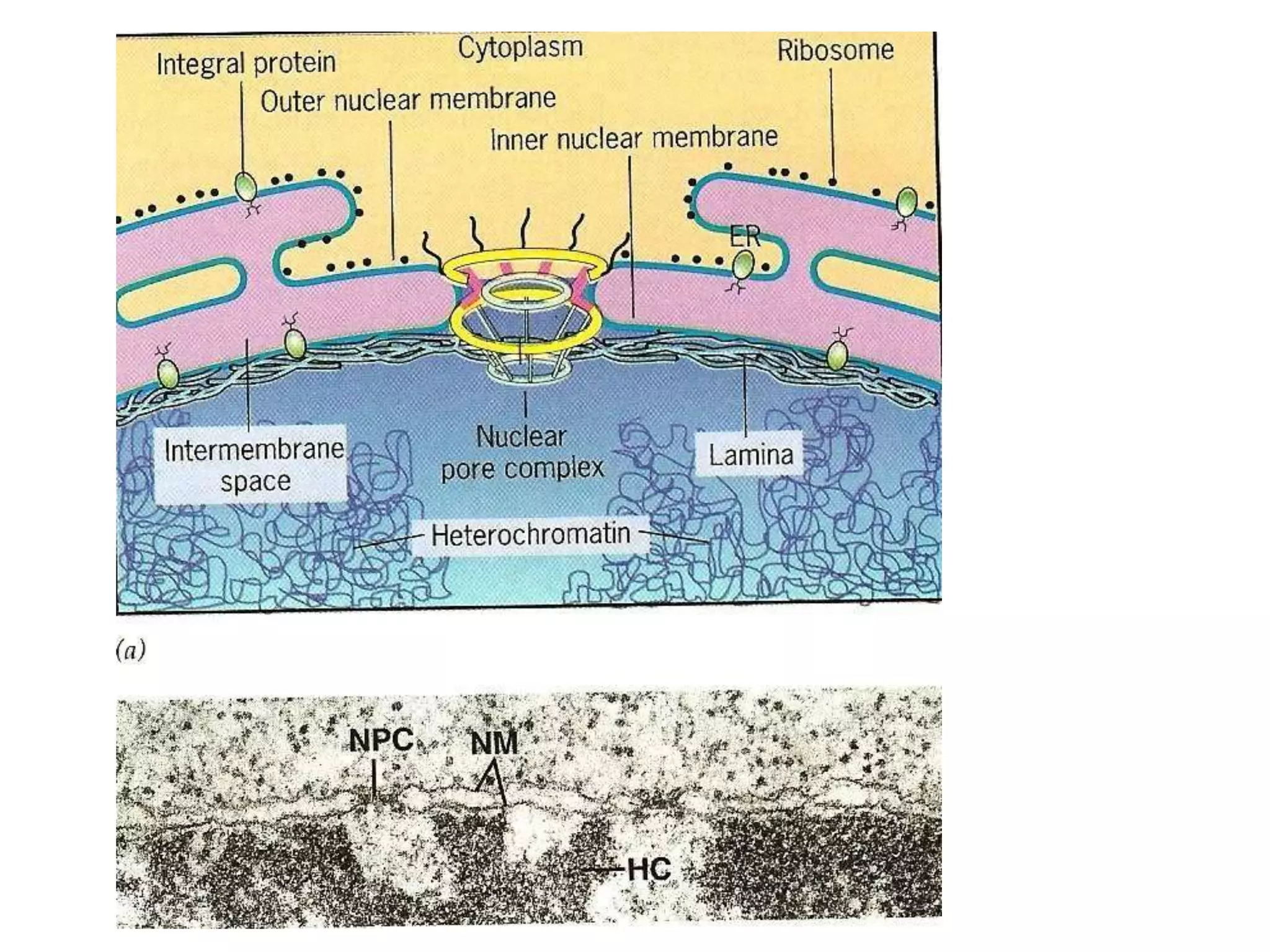
• The nuclear envelope completely encloses the nucleus
and separates the cell's genetic material from the
surrounding cytoplasm, serving as a barrier to prevent
macromolecules from diffusing freely between the
nucleoplasm and the cytoplasm.
• Also known as perinuclear envelope, nuclear
membrane or karyotheca Encloses the nucleus and
separates the cell's genetic material from the
surrounding cytoplasm.
• The space between the membranes is called the
perinuclear space and is continuous with the RER
lumen.
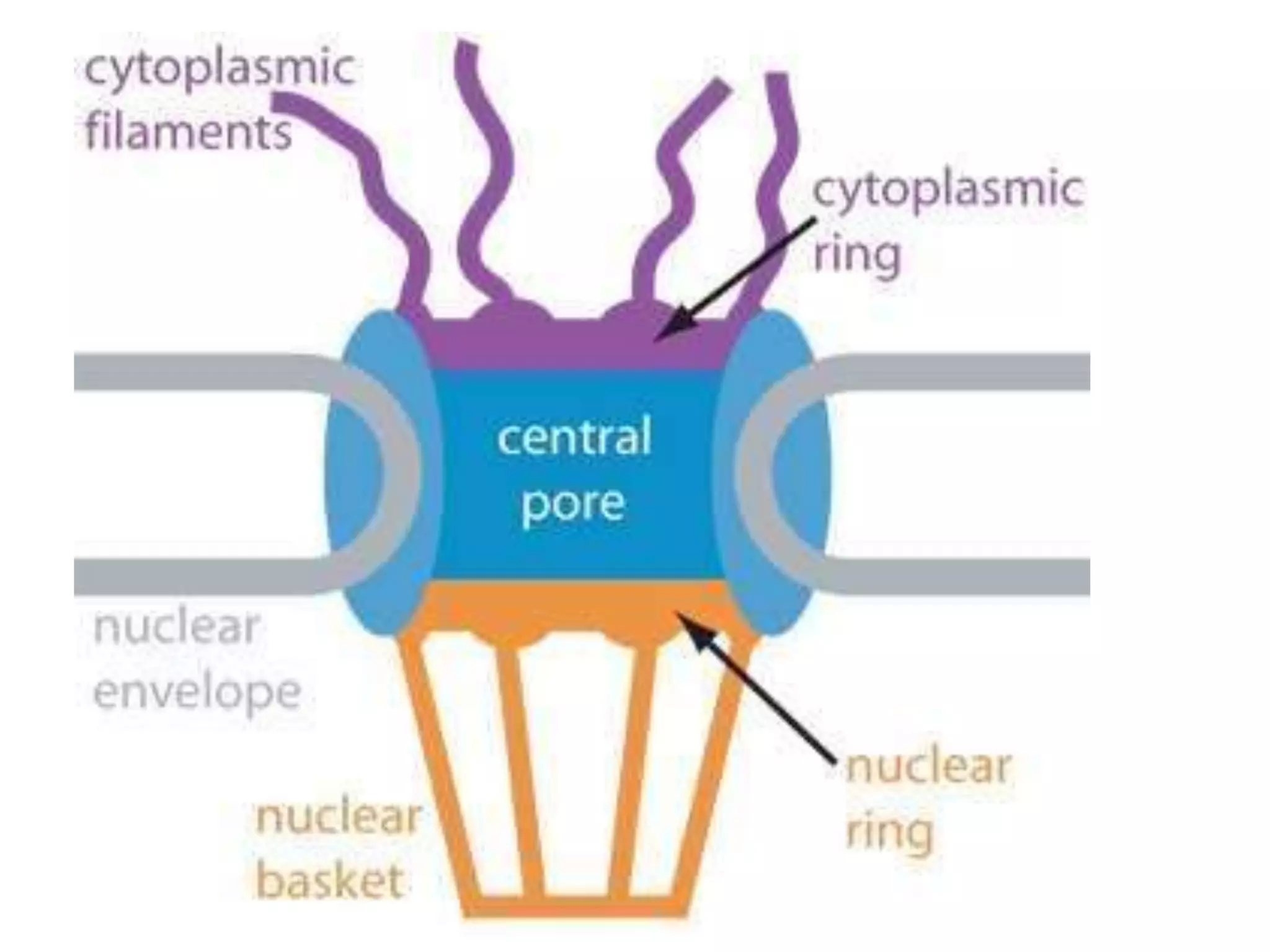
NUCLEAR PORE COMPLEX
• It is a complex in the nuclear membrane that
enables the trafficking of molecules between
the nucleus and cytoplasm.
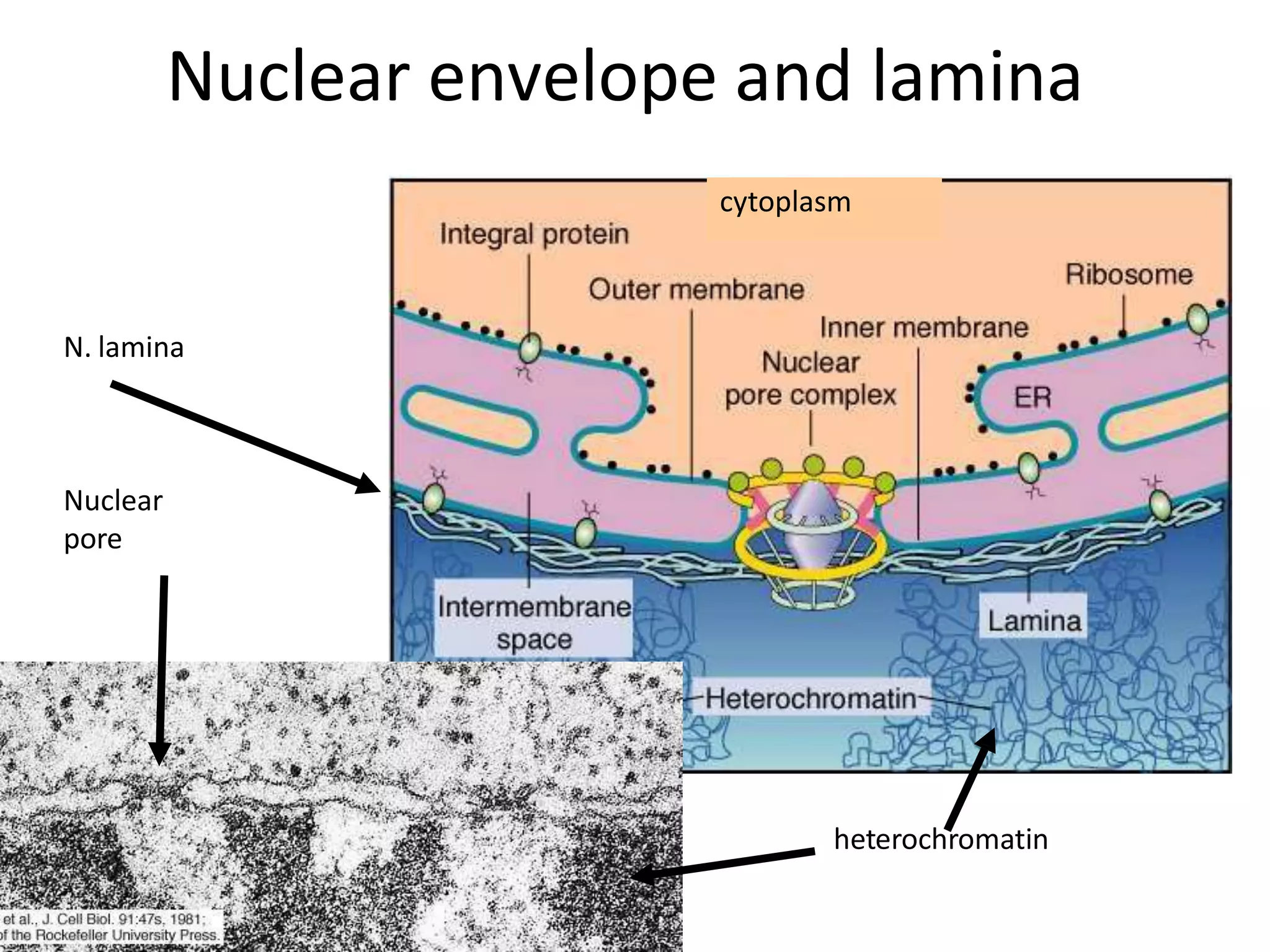
Nuclear envelope and lamina
Nuclear
pore
N. lamina
cytoplasm
heterochromatin
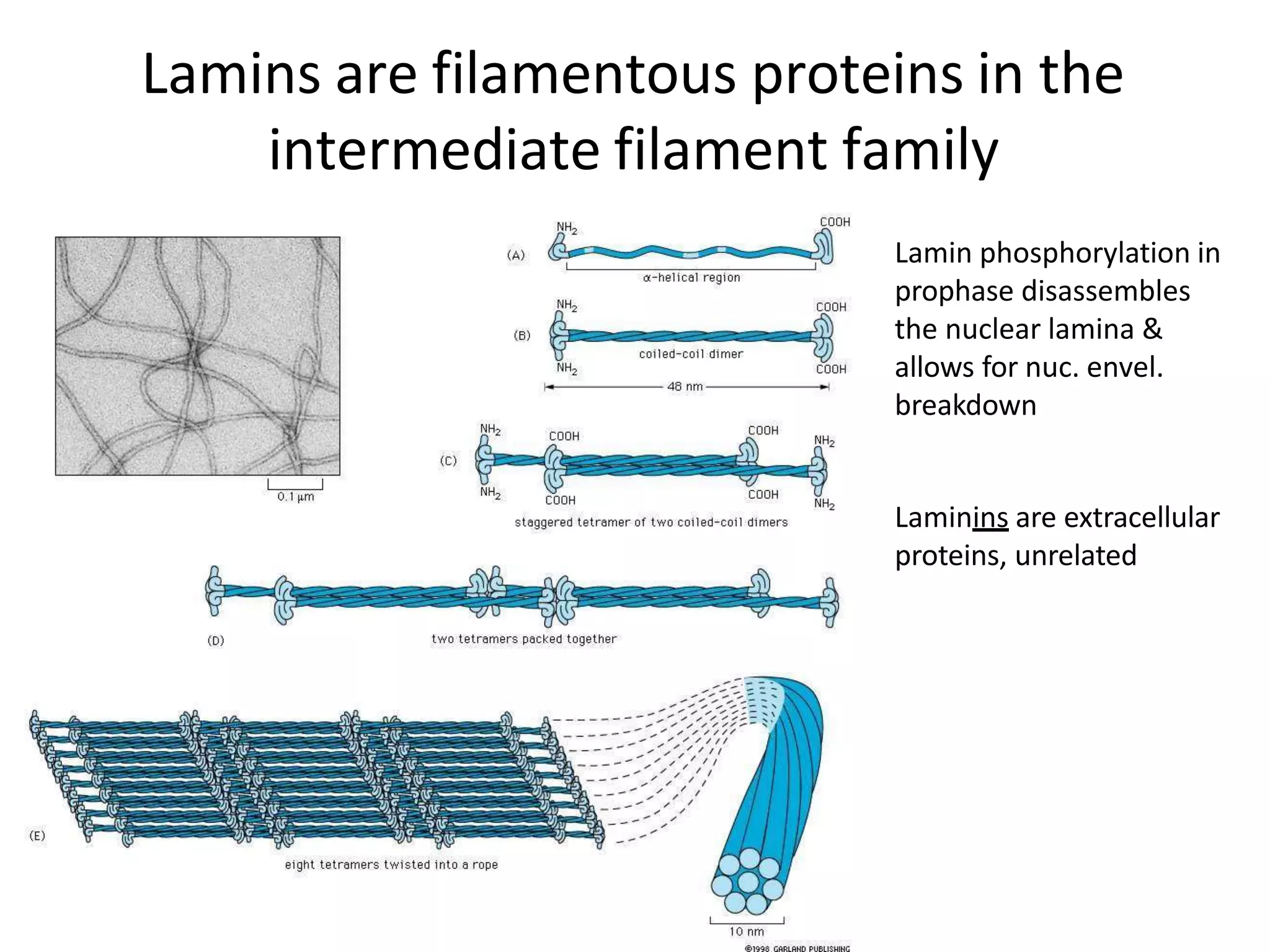
Lamins are filamentous proteins in the
intermediate filament family
Lamin phosphorylation in
prophase disassembles
the nuclear lamina &
allows for nuc. envel.
breakdown
Laminins are extracellular
proteins, unrelated
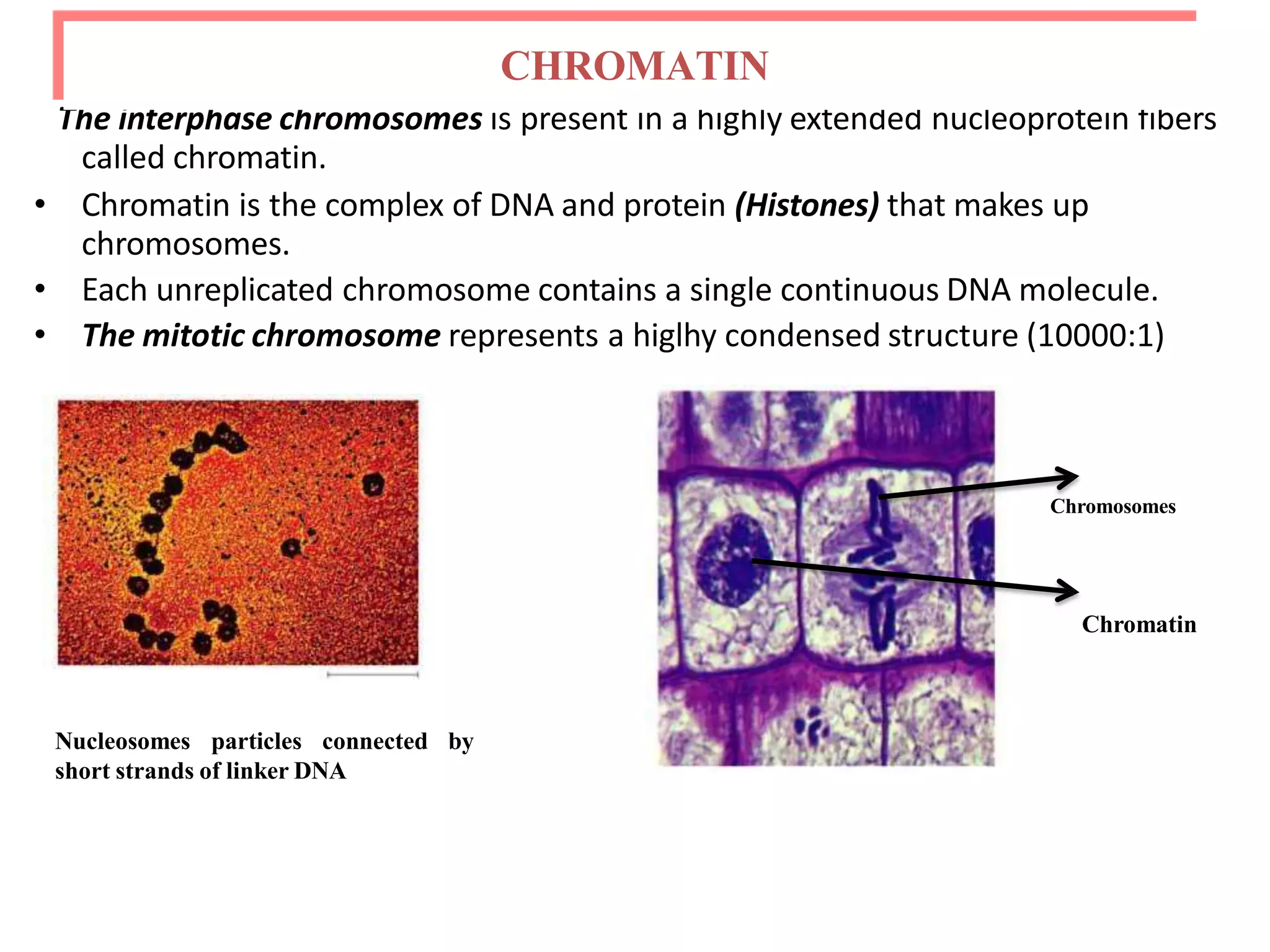
The interphase chromosomes is present in a highly extended nucleoprotein fibers
called chromatin.
• Chromatin is the complex of DNA and protein (Histones) that makes up
chromosomes.
• Each unreplicated chromosome contains a single continuous DNA molecule.
• The mitotic chromosome represents a higlhy condensed structure (10000:1)
CHROMATIN
Nucleosomes particles connected by
short strands of linker DNA
Chromosomes
Chromatin
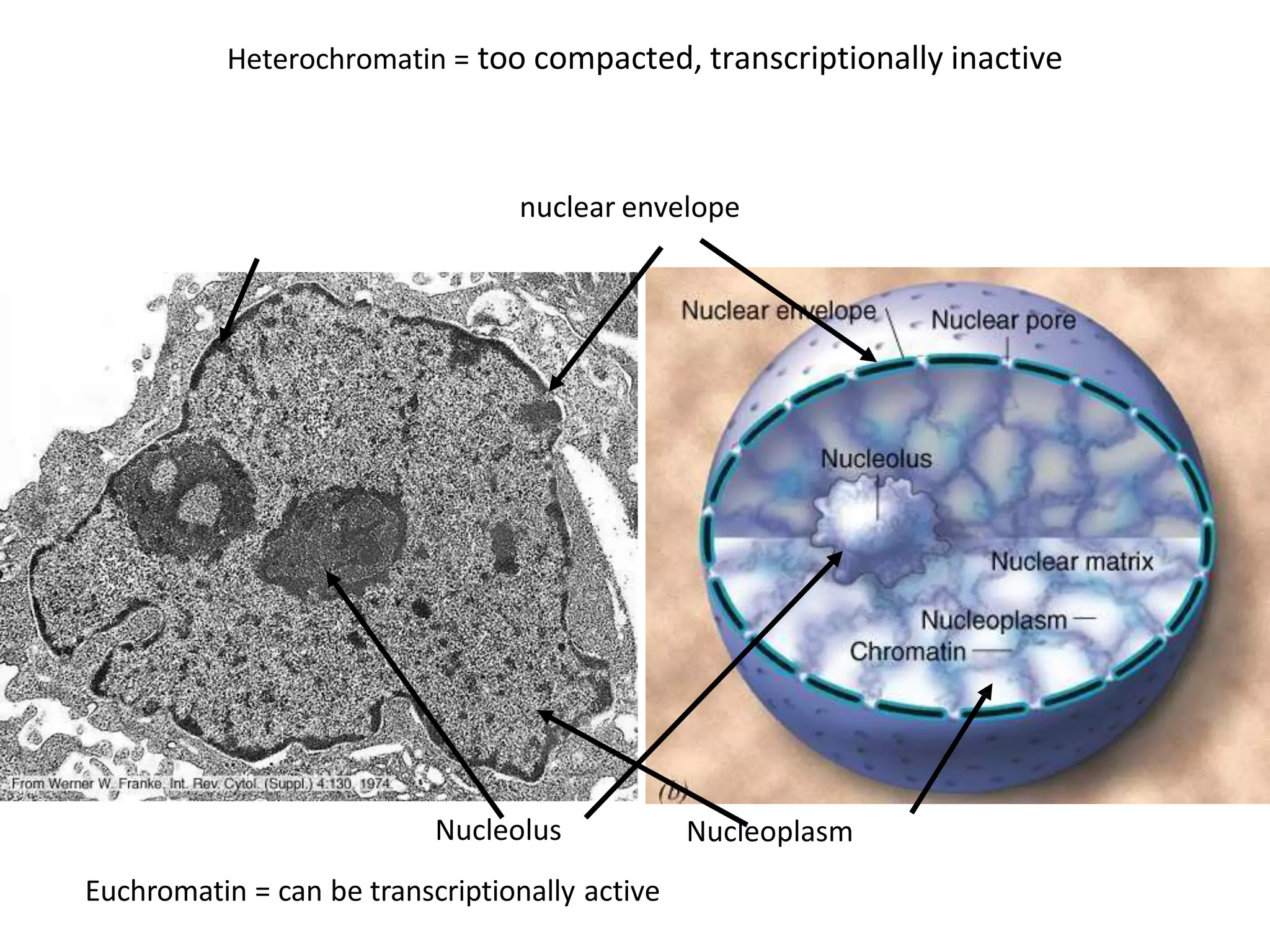
Nucleolus Nucleoplasm
nuclear envelope
Heterochromatin = too compacted, transcriptionally inactive
Euchromatin = can be transcriptionally active
Nucleolus :
• Nucleolus is the discrete densely stained
structure found in nucleus It is a nuclear
inclusion that is not surrounded by a
membrane Present in cells that are actively
synthesizing proteins Its size depends on
metabolic activity of cellAverage size .5-5um
in dia Nucleolus .
• It is mainly associated with synthesis of rRNA
Nucleoplasm :
• Nucleoplasm is the protoplasm within the
nuclear envelope It consists of a nuclear
matrix and various types of particles Highly
viscous liquid which scaffolds chromosomes,
nucleolus and various granules like
heterochromatin, perichromatin granules
Many substances like nucleotides and certain
enzymes are also dissolved in it Nucleoplasm.
Lec-no-14.pptx

Lec-no-14.pptx

  • 3.
  • 4.
    What is Nucleus? • Nucleus” is a Latin word meaning Kernel. It is the “CONTROL CENTER” of the cell. It was First cell organelle to be discovered It is membrane bound organelle found in eukaryotic cells. Main functions are - to maintain the integrity of genes - to control the activities of the cell by regulating gene expression .
  • 5.
    THE NUCLEUS:FUNCTIONS • Itstores the cell's hereditary material, or DNA. • Site of DNA replication • Site of DNA transcription to mRNA • Ribosomal formation • -Nucleolus: RNA & protein required for ribosomal synthesis • It coordinates the cell's activities, which include growth, intermediary metabolism, protein synthesis, and reproduction (cell division) by regulating gene expression.
  • 6.
    THE NUCLEUS:STRUCTURE • Averagediameter of nucleus is 6um, which occupies around 10% of cell volume • The contents of the nucleus are enclosed by a complex nuclear envelope. • Included within the nucleus are: • 1- Chromatin • 2- Nucleoplasm • 3- Nucleolus (concentrated area of chromatin, RNAand proteins)
  • 7.
    The NUCLEAR ENVELOPE(NE) • The nuclear envelope completely encloses the nucleus and separates the cell's genetic material from the surrounding cytoplasm, serving as a barrier to prevent macromolecules from diffusing freely between the nucleoplasm and the cytoplasm. • Also known as perinuclear envelope, nuclear membrane or karyotheca Encloses the nucleus and separates the cell's genetic material from the surrounding cytoplasm. • The space between the membranes is called the perinuclear space and is continuous with the RER lumen.
  • 9.
    NUCLEAR PORE COMPLEX •It is a complex in the nuclear membrane that enables the trafficking of molecules between the nucleus and cytoplasm.
  • 12.
    Nuclear envelope andlamina Nuclear pore N. lamina cytoplasm heterochromatin
  • 13.
    Lamins are filamentousproteins in the intermediate filament family Lamin phosphorylation in prophase disassembles the nuclear lamina & allows for nuc. envel. breakdown Laminins are extracellular proteins, unrelated
  • 14.
    The interphase chromosomesis present in a highly extended nucleoprotein fibers called chromatin. • Chromatin is the complex of DNA and protein (Histones) that makes up chromosomes. • Each unreplicated chromosome contains a single continuous DNA molecule. • The mitotic chromosome represents a higlhy condensed structure (10000:1) CHROMATIN Nucleosomes particles connected by short strands of linker DNA Chromosomes Chromatin
  • 15.
    Nucleolus Nucleoplasm nuclear envelope Heterochromatin= too compacted, transcriptionally inactive Euchromatin = can be transcriptionally active
  • 16.
    Nucleolus : • Nucleolusis the discrete densely stained structure found in nucleus It is a nuclear inclusion that is not surrounded by a membrane Present in cells that are actively synthesizing proteins Its size depends on metabolic activity of cellAverage size .5-5um in dia Nucleolus . • It is mainly associated with synthesis of rRNA
  • 17.
    Nucleoplasm : • Nucleoplasmis the protoplasm within the nuclear envelope It consists of a nuclear matrix and various types of particles Highly viscous liquid which scaffolds chromosomes, nucleolus and various granules like heterochromatin, perichromatin granules Many substances like nucleotides and certain enzymes are also dissolved in it Nucleoplasm.