Networked teaching, networked
learning,
Personal Learning Networks
Fabio Nascimbeni
UNIR
Learning and networking: a world
of change
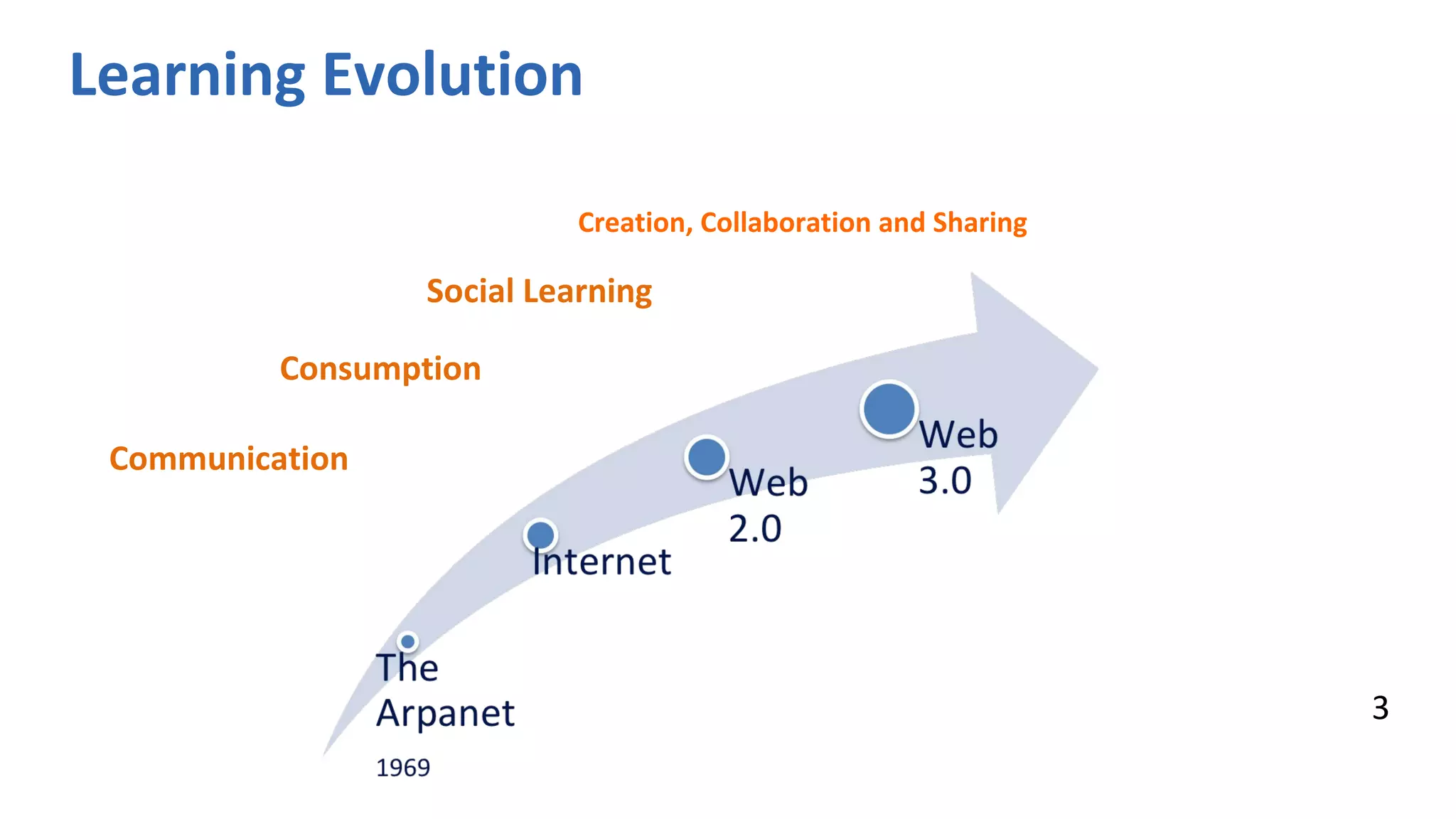
Learning Evolution
3
Communication
Consumption
Creation, Collaboration and Sharing
Social Learning
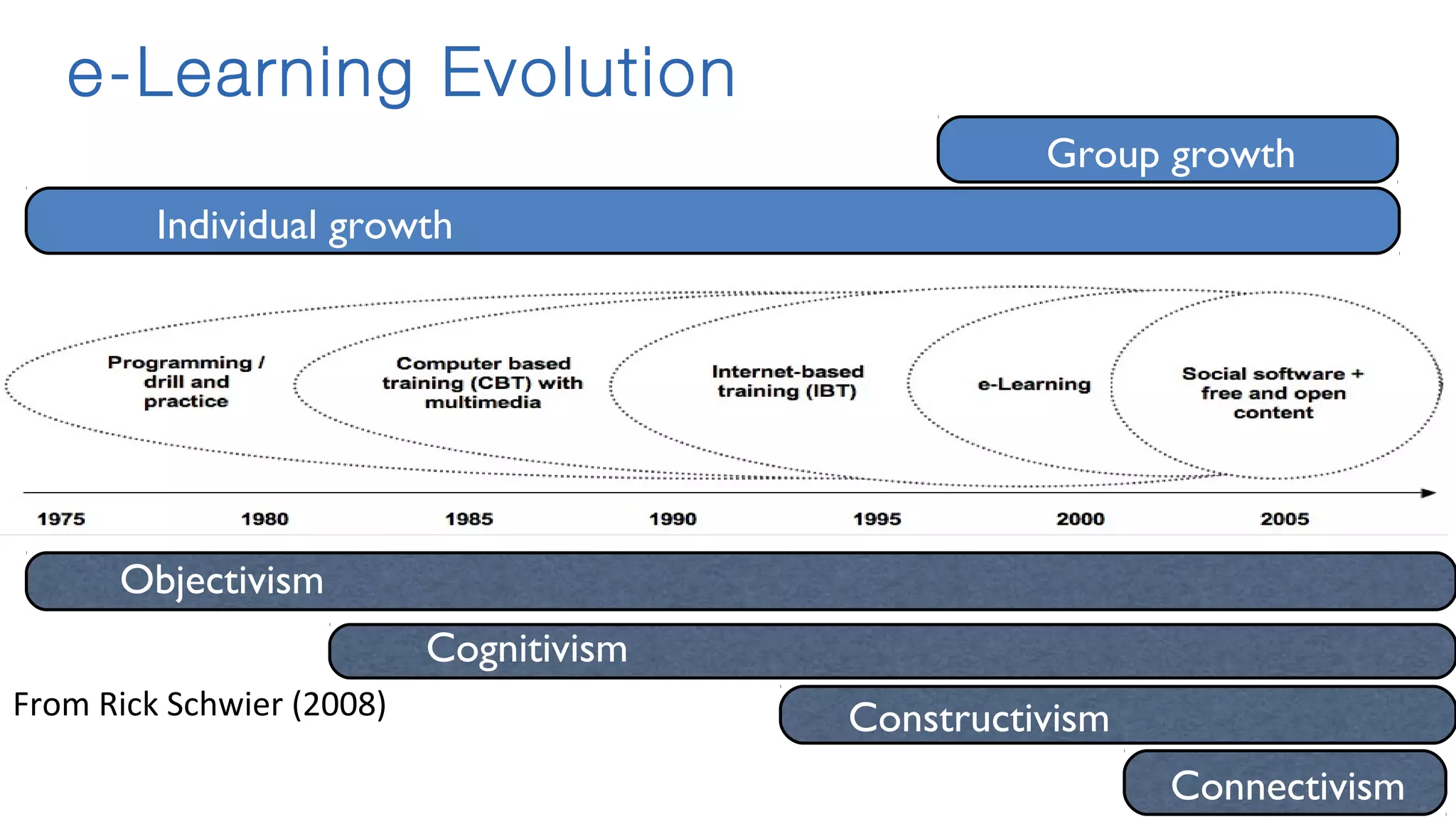
Objectivism
Cognitivism
Connectivism
Constructivism
Individual growth
Group growth
From Rick Schwier (2008)
e-Learning Evolution
Connectivism
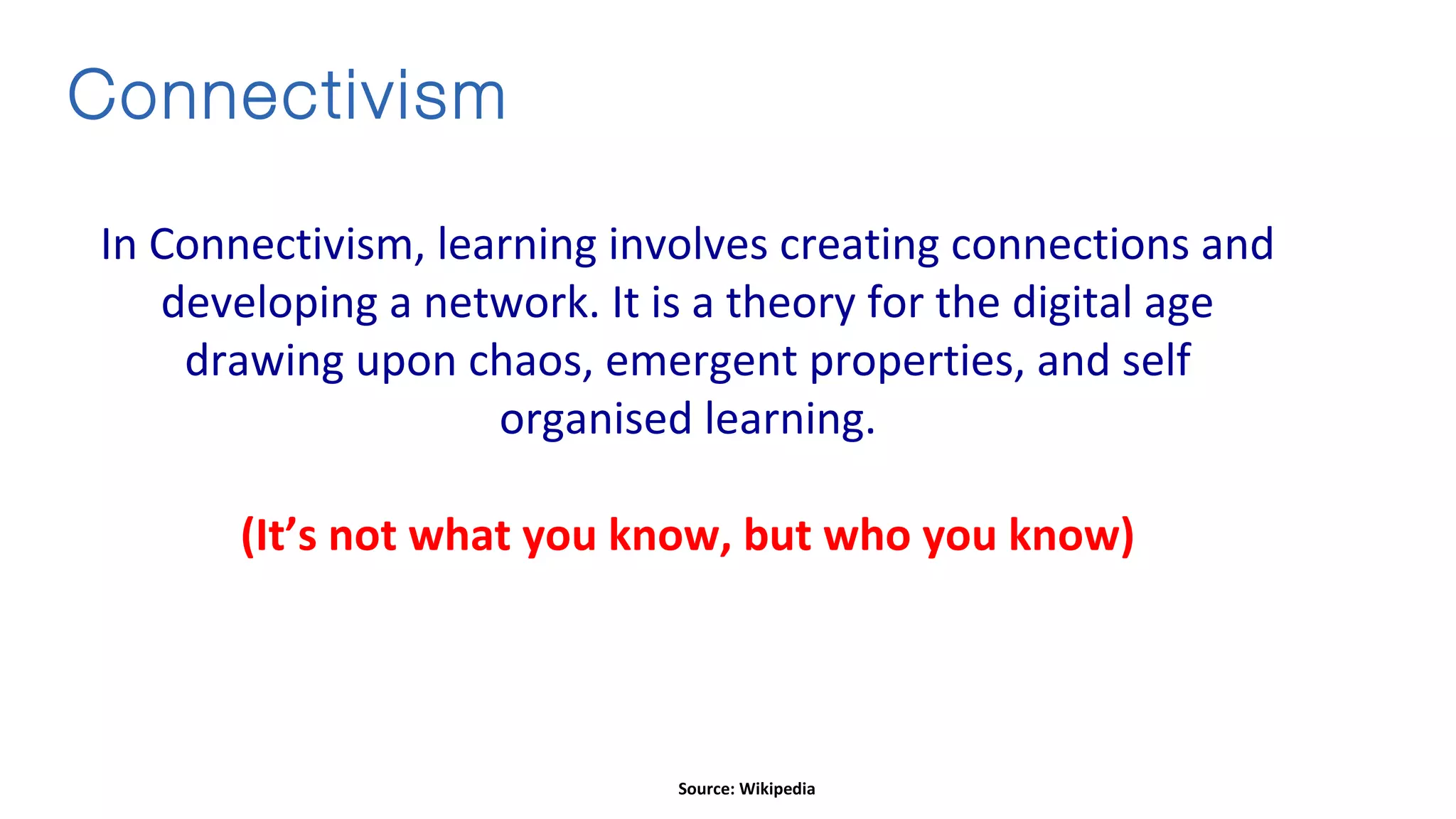
In Connectivism, learning involves creating connections and
developing a network. It is a theory for the digital age
drawing upon chaos, emergent properties, and self
organised learning.
(It’s not what you know, but who you know)
Source: Wikipedia
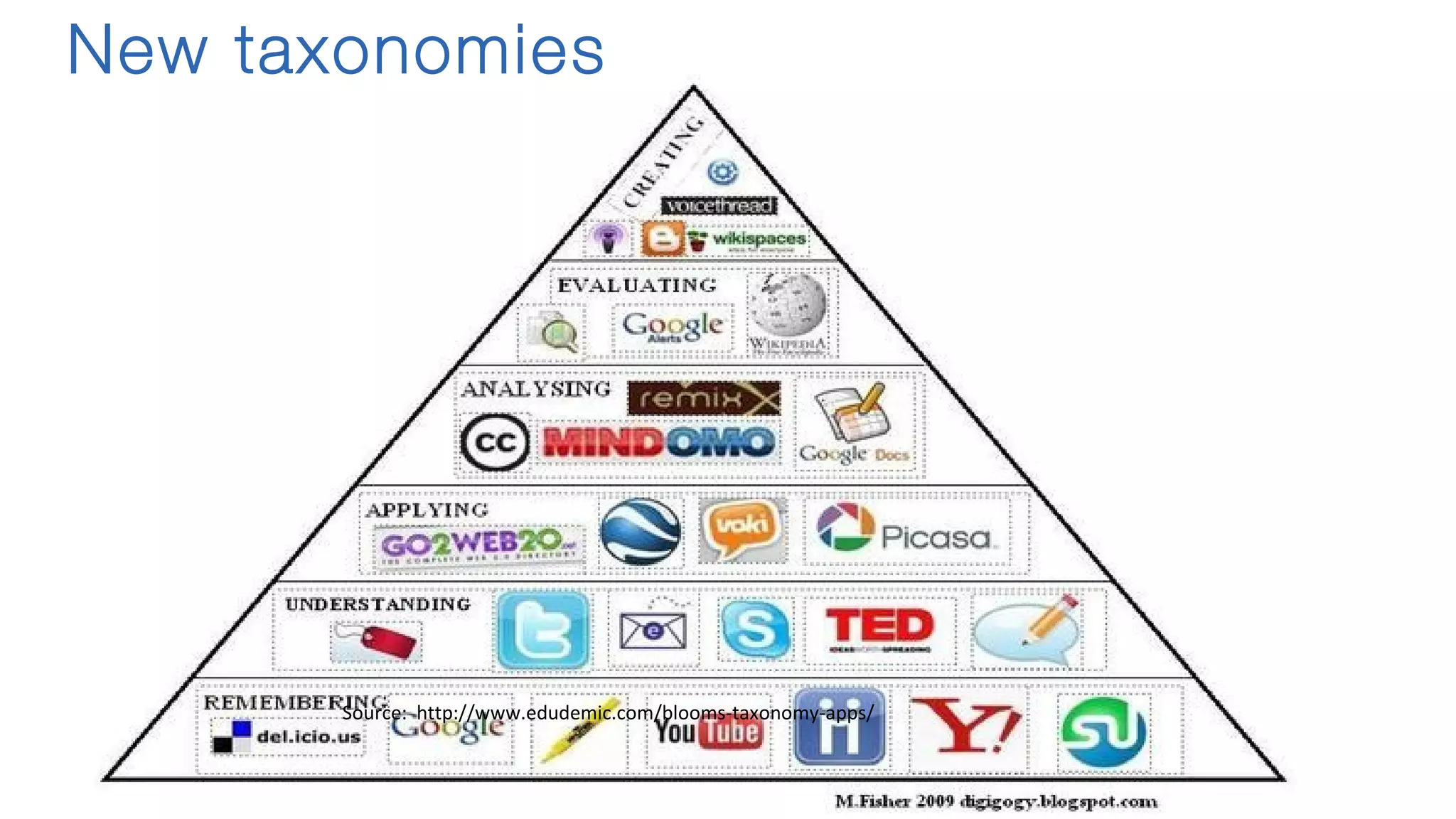
Source: http://www.edudemic.com/blooms-taxonomy-apps/
New taxonomies
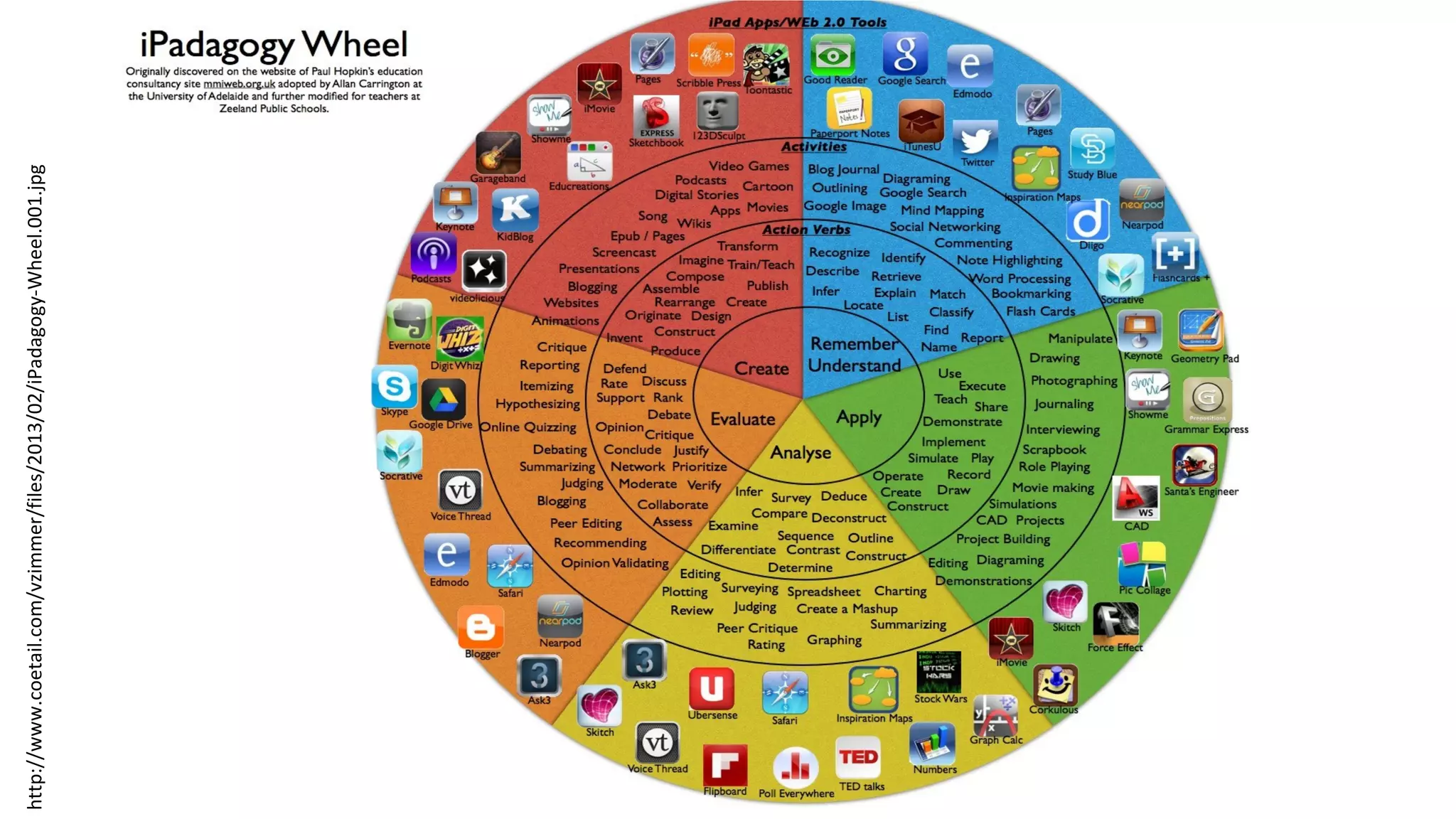
http://www.coetail.com/vzimmer/files/2013/02/iPadagogy-Wheel.001.jpg
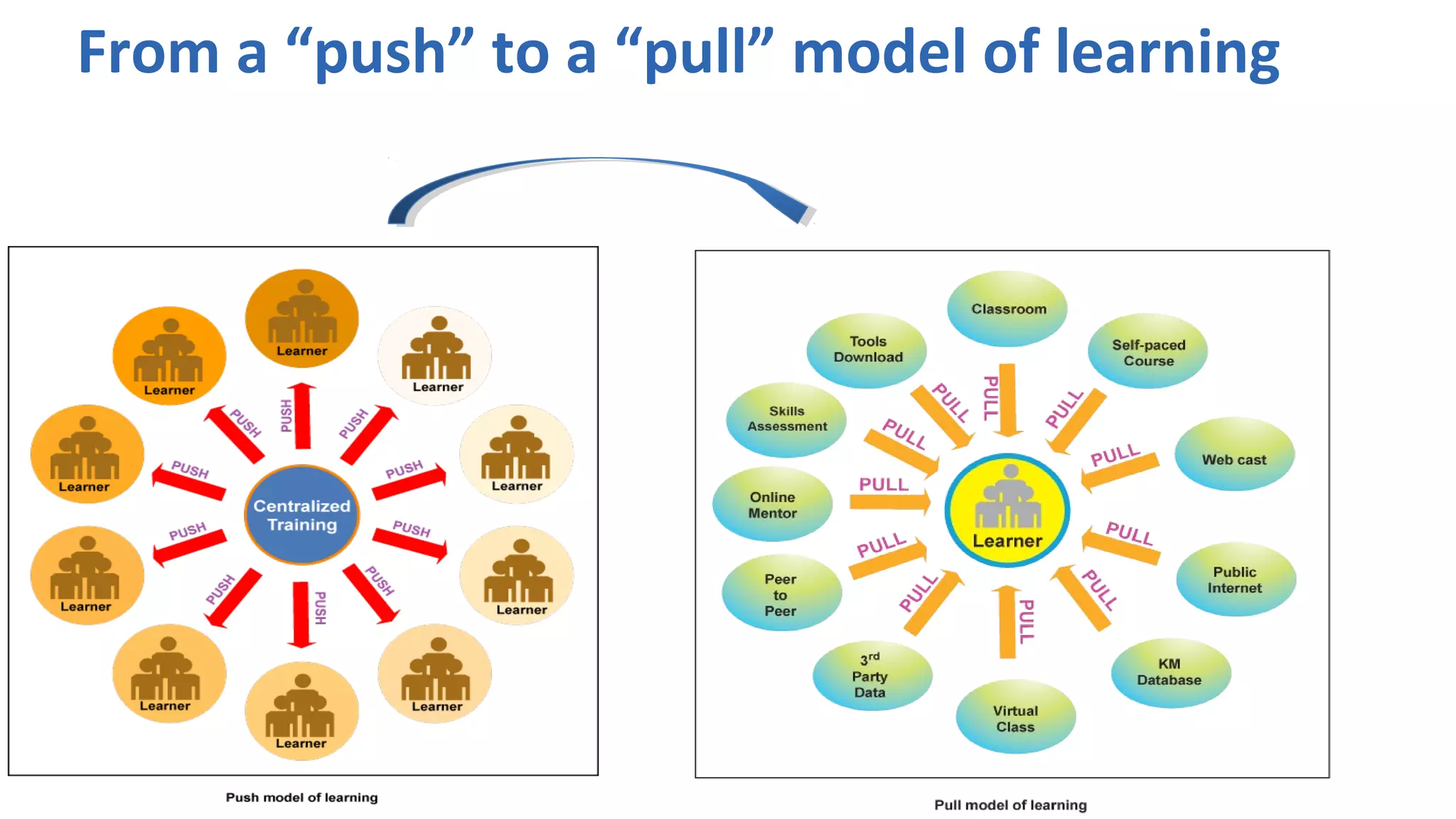
From a “push” to a “pull” model of learning
Personal Learning Networks
Networking has always been there…
“Lifetime learning, part of the role of an academic in both teaching and research roles,
advances the economy and culture of a community” (Whyte 1989).
“Without sharing there is no education” (Wiley 2008).
“Personal learning networks (“PLN”) are not new. We have long relied on…colleagues and
acquaintances to supplement our knowledge…” (Warlick 2009)
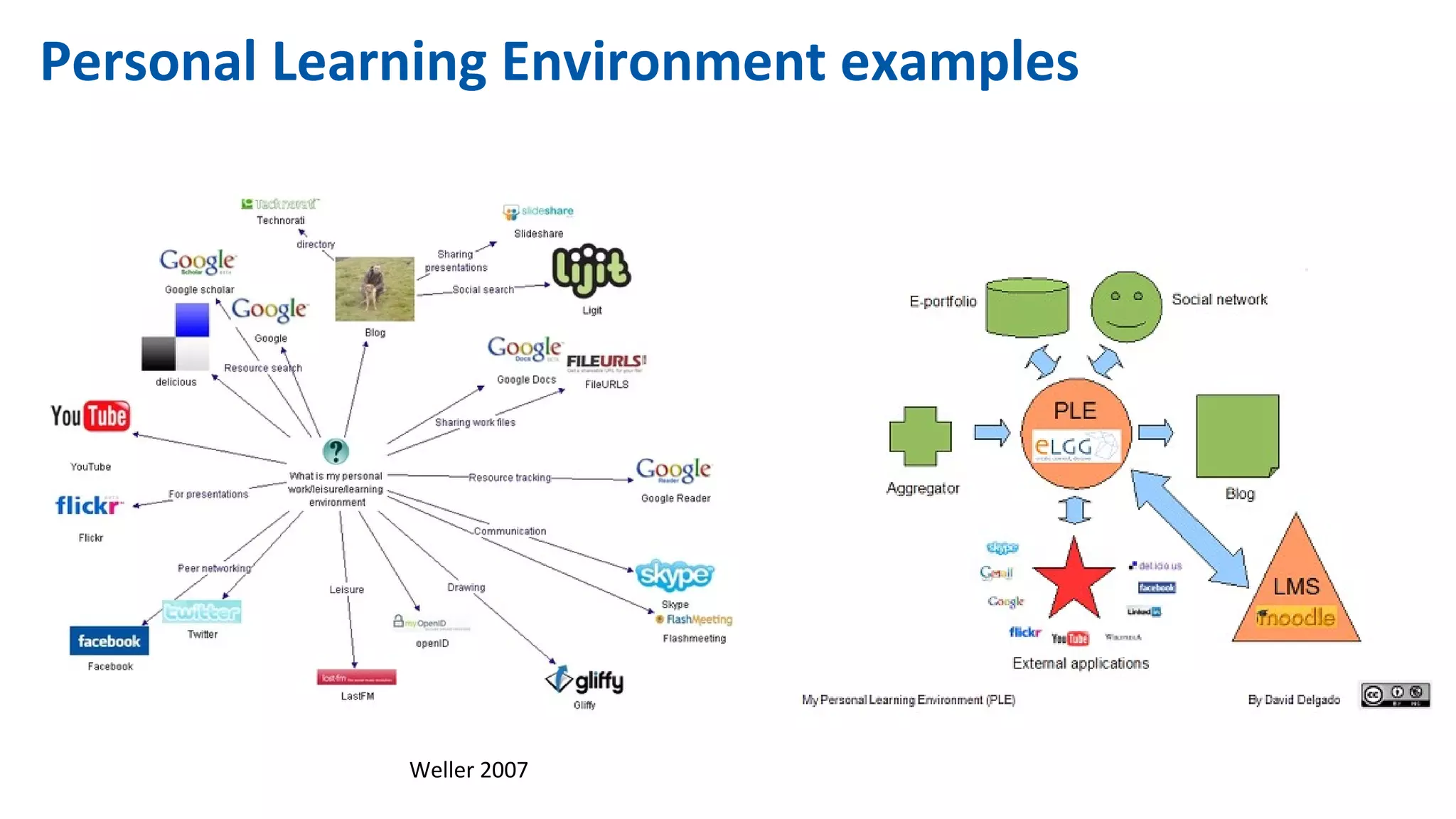
Personal Learning Environment
A Personal Learning Environment (PLE) is a self-directed learning space, a virtual
framework that consists of tools to collect, curate and construct knowledge that is
customized to an individual’s learning goals and interests. (Morrison 2013)
PLE activities (Hiebert 2012):
1.Collecting
2.Reflecting
3.Connecting
4.Publishing
A PLE can be created independently, building and collecting content sources from
the Web, including creating content through blogs, podcasts, Slideshares, etc.
Personal Learning Environment examples
Weller 2007
Personal Learning Network
A person’s PLN is a network of peers, colleagues and experts that relies on social
media and technology to gather and share information, collaborate and create
anywhere at any time.
The purpose of a PLN is personalized and continuous learning.
Communication and connections are made via social platforms or other Web
applications.
Personal Learning Network
PERSONAL: you decide
LEARNING:
NETWORK:
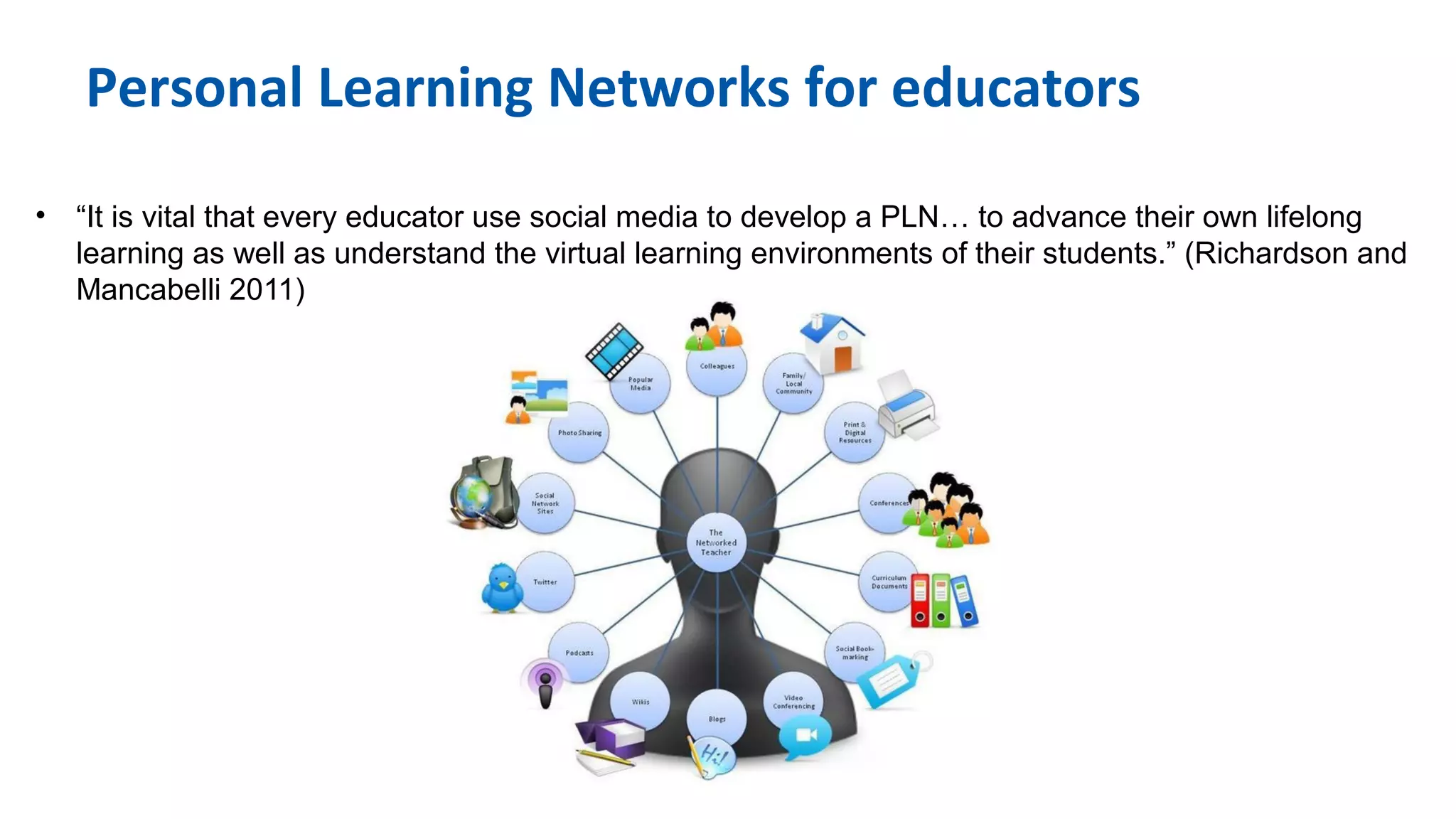
Personal Learning Networks for educators
• “It is vital that every educator use social media to develop a PLN… to advance their own lifelong
learning as well as understand the virtual learning environments of their students.” (Richardson and
Mancabelli 2011)
 
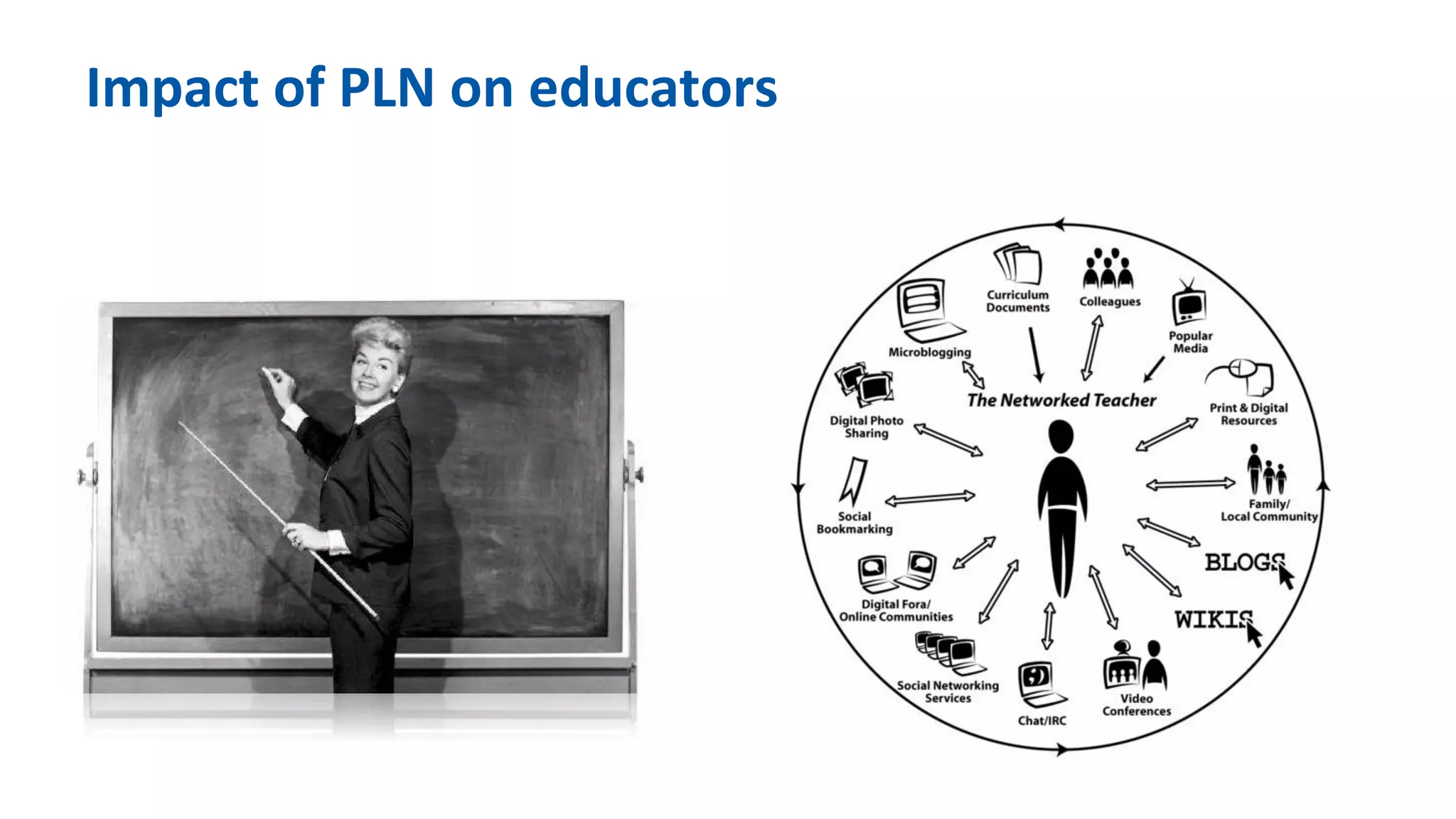
Impact of PLN on educators
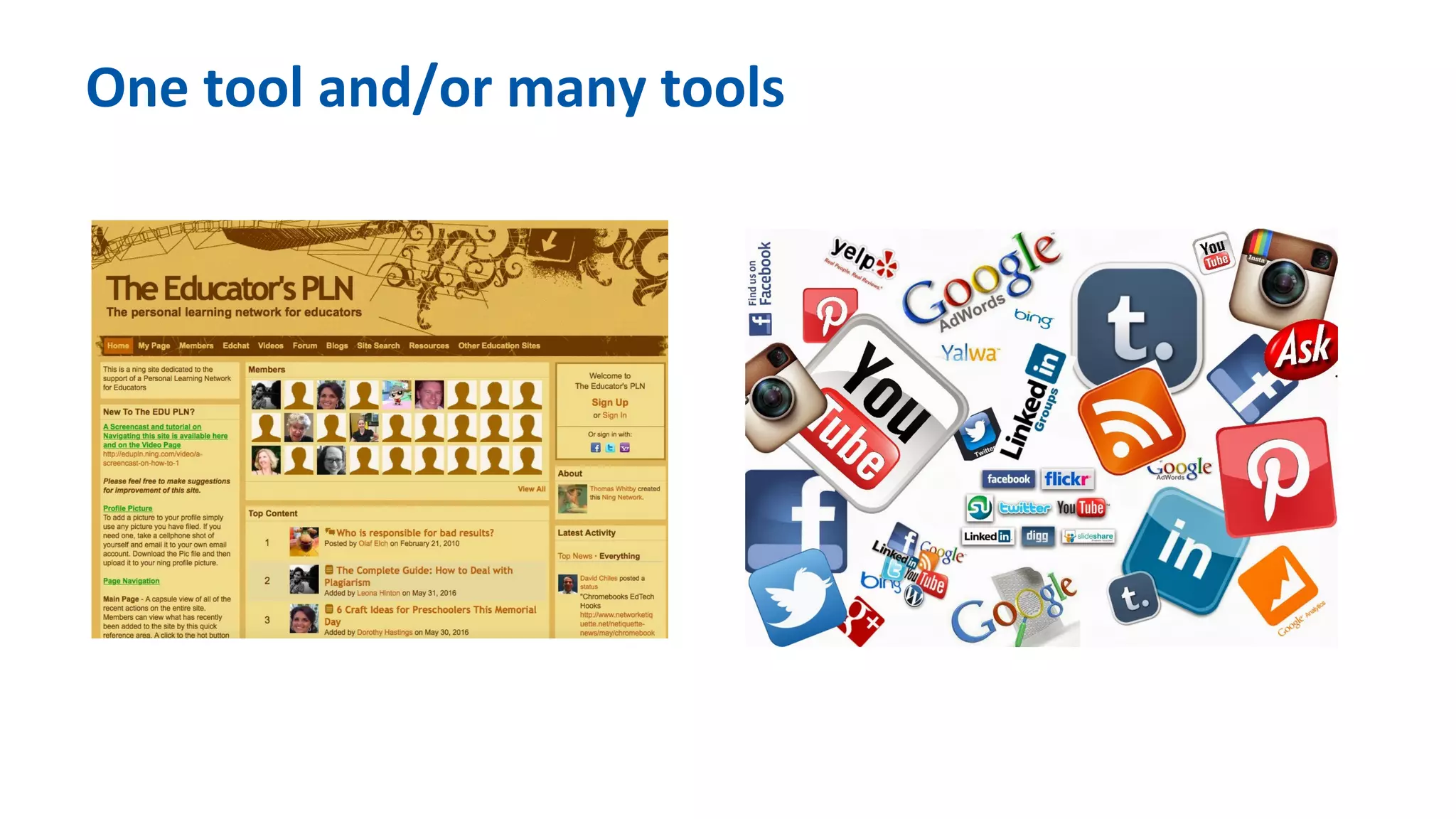
One tool and/or many tools
How to build and boost your PLN
Start up your PLN
• Start a Twitter account that focuses on following educators.
• Build a circle of connected educators on Google+.
• Follow education blogs (read and comment).
• Follow education chats that are specific to your content area.
• Join and participate in education groups on Facebook and LinkedIn.
• Join and collaborate in MOOCs.
• Accept invitations to collaborate.
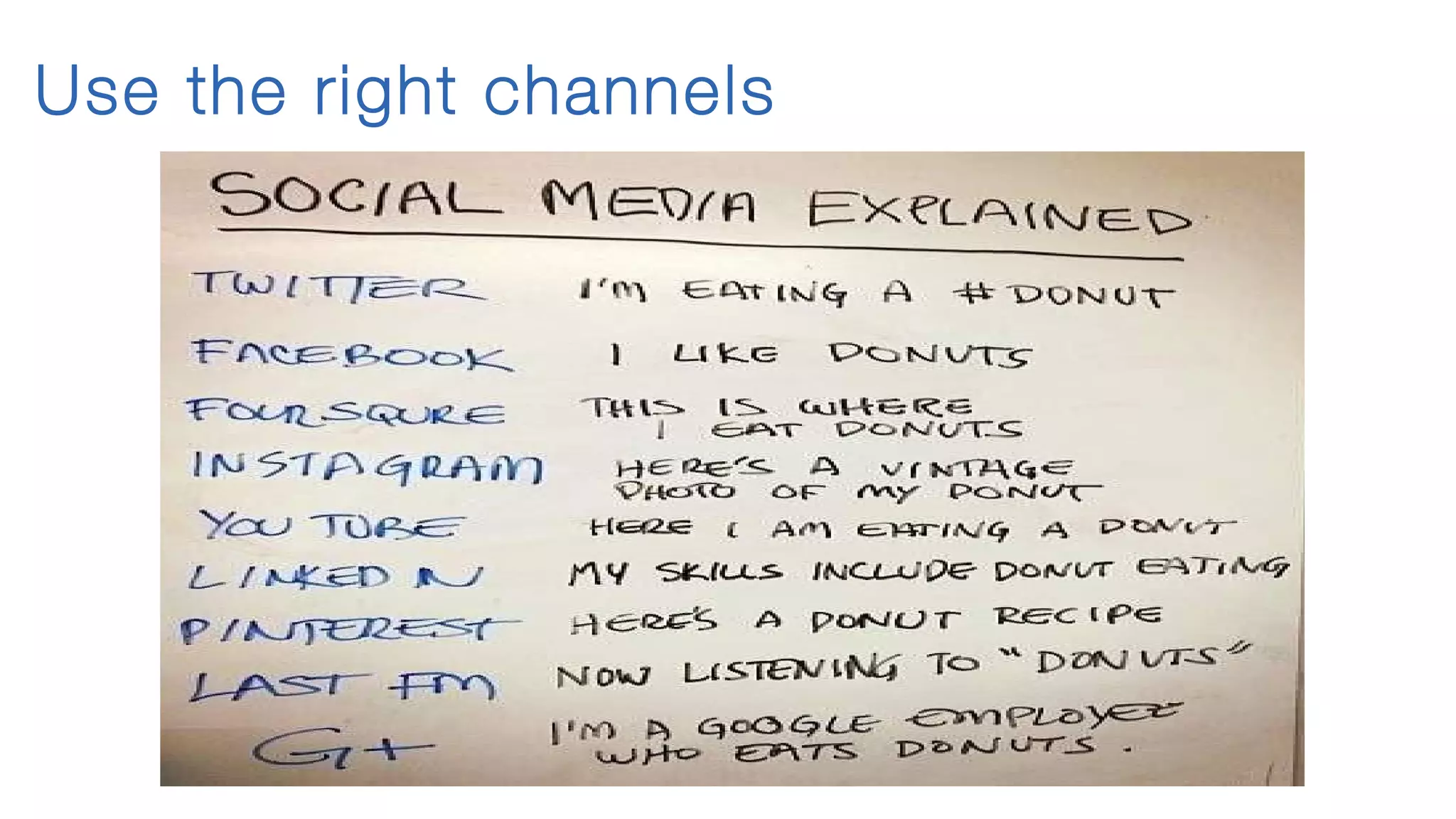
Use the right channels
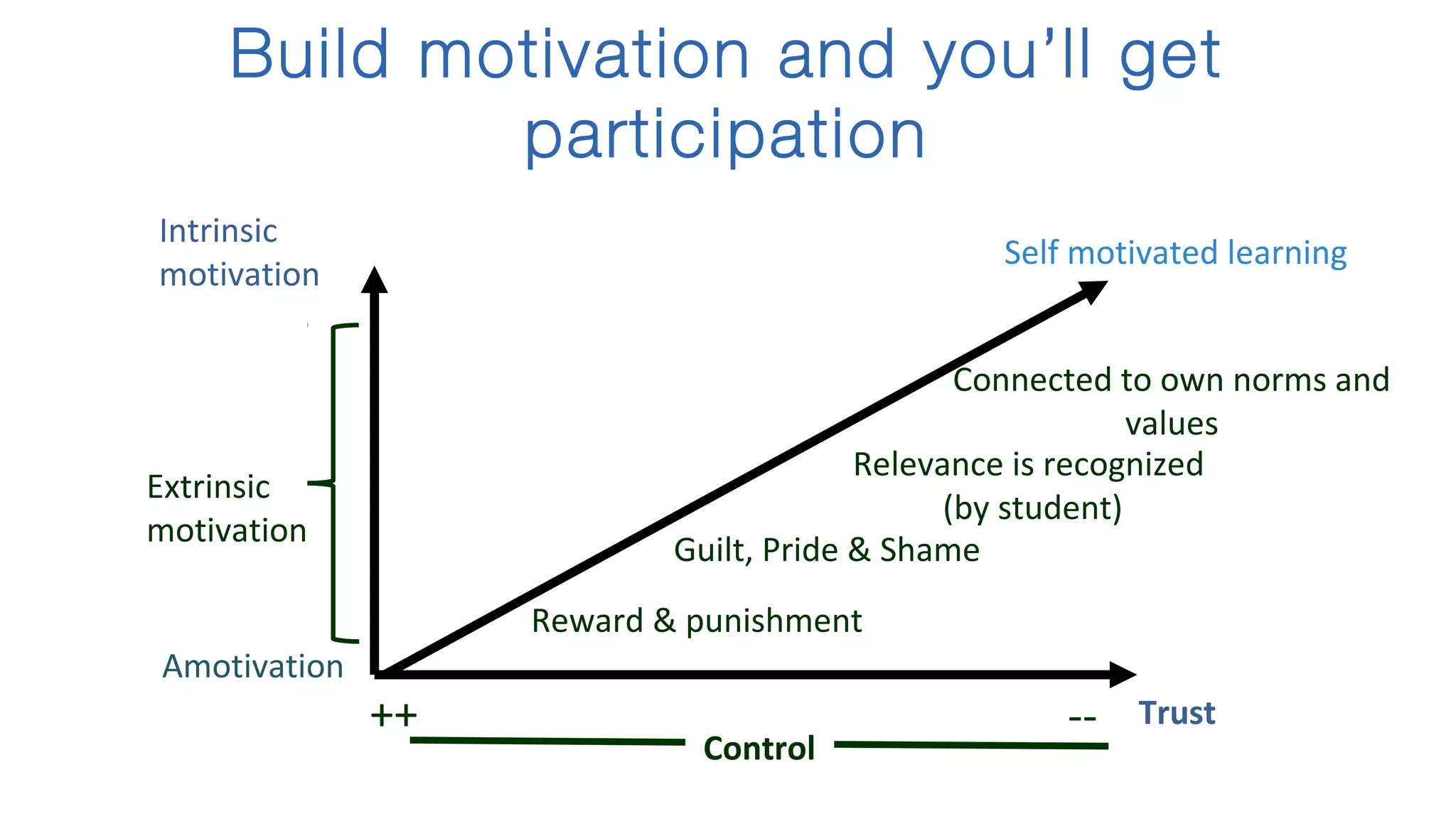
Intrinsic
motivation
Amotivation
Self motivated learning
Reward & punishment
Guilt, Pride & Shame
Relevance is recognized
(by student)
Connected to own norms and
values
Extrinsic
motivation
Trust
Control
Build motivation and you’ll get
participation
++ --
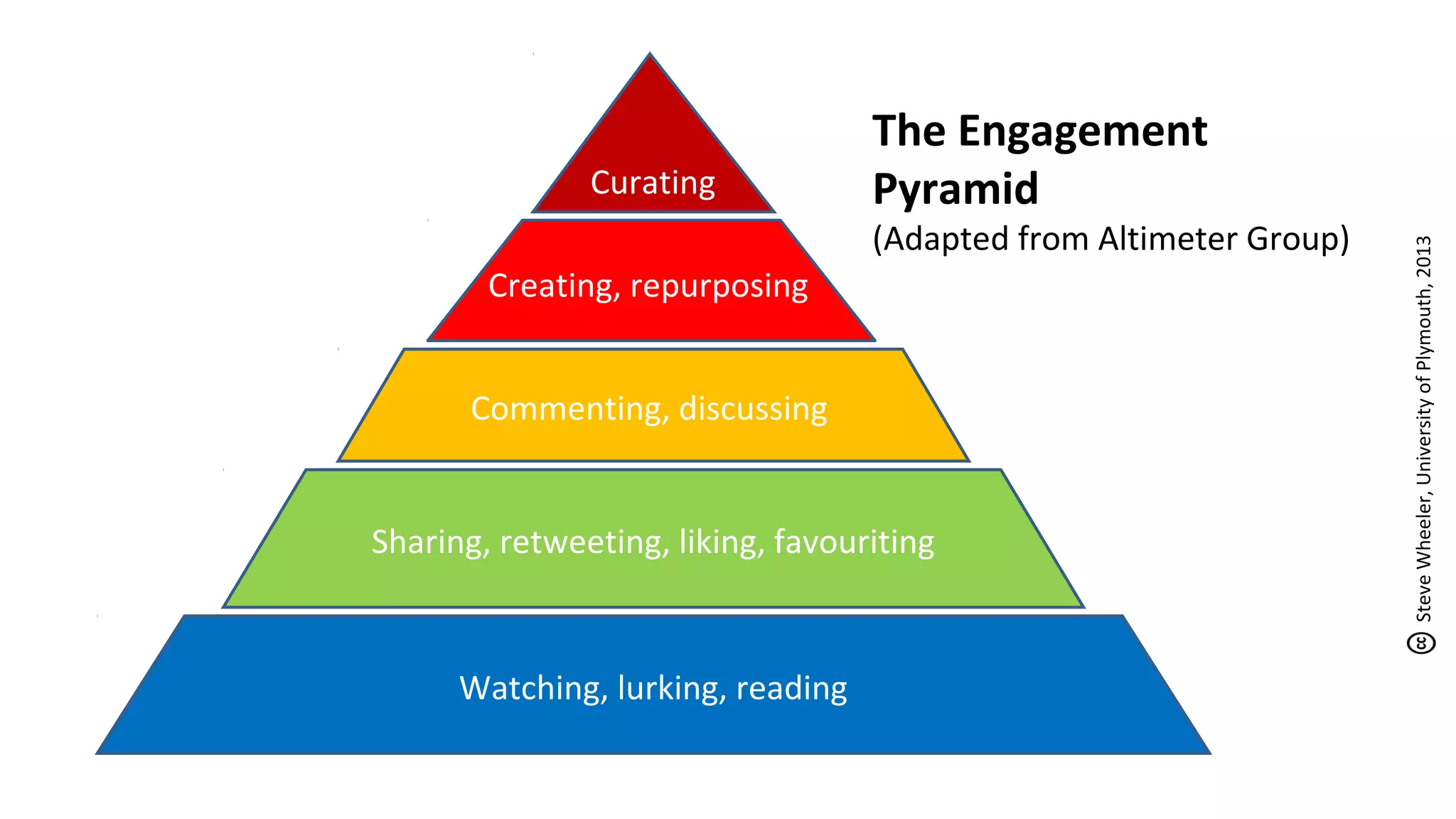
Commenting, discussing
Sharing, retweeting, liking, favouriting
Watching, lurking, reading
Curating
Creating, repurposing
The Engagement
Pyramid
(Adapted from Altimeter Group)
SteveWheeler,UniversityofPlymouth,2013
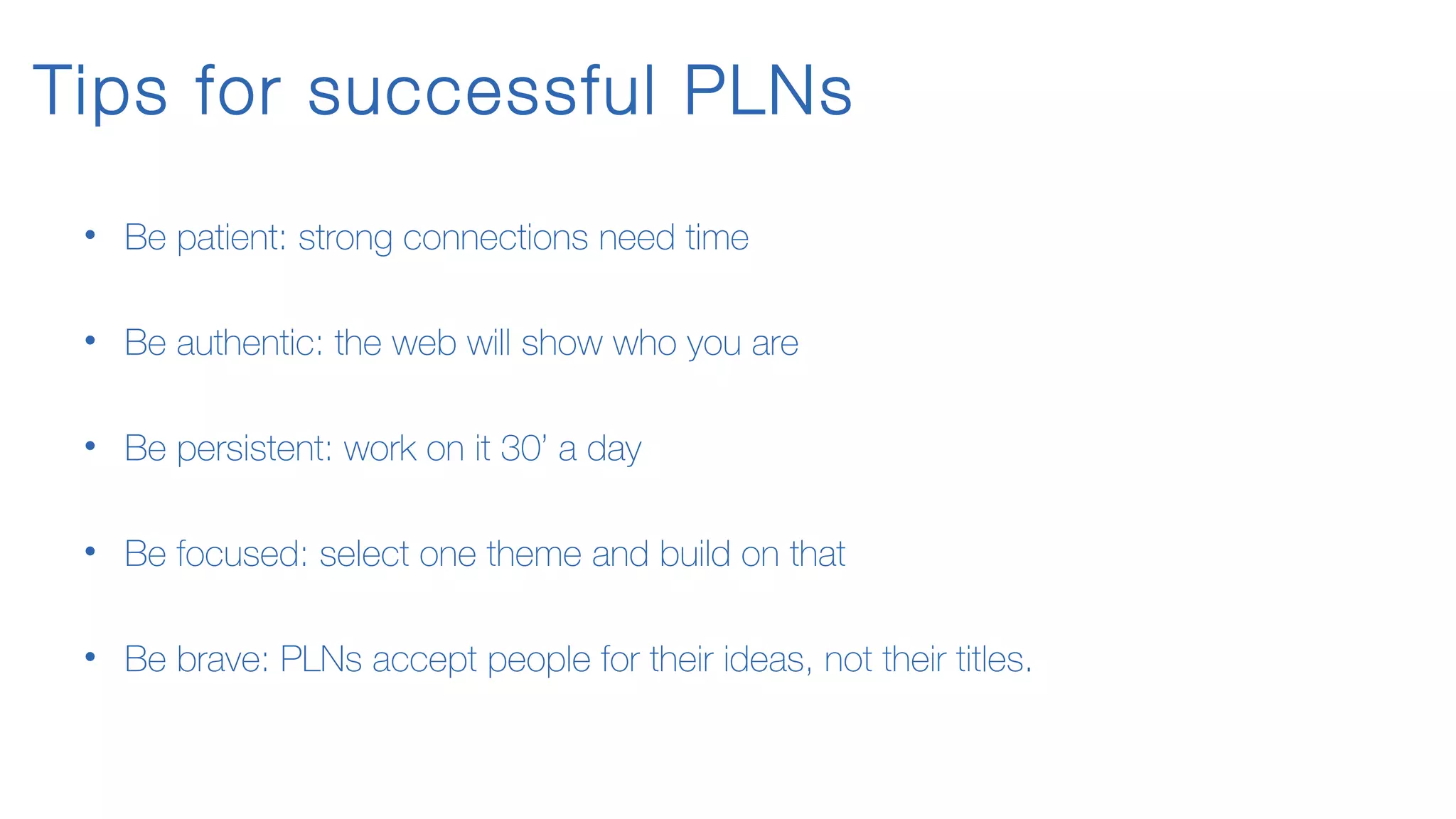
Tips for successful PLNs
• Be patient: strong connections need time
• Be authentic: the web will show who you are
• Be persistent: work on it 30’ a day
• Be focused: select one theme and build on that
• Be brave: PLNs accept people for their ideas, not their titles.

Networked teaching, networked learning, Personal Learning Networks