Fabio Nascimbeni
UNIR iTED
A NEW APPROACH TO
DIGITAL COMPETENCE BUILDING
FOR UNIVERSITY EDUCATORS IN EUROPE
Reunión Vicerrectorado de Transferencia y Tecnología 03/10/2017 2
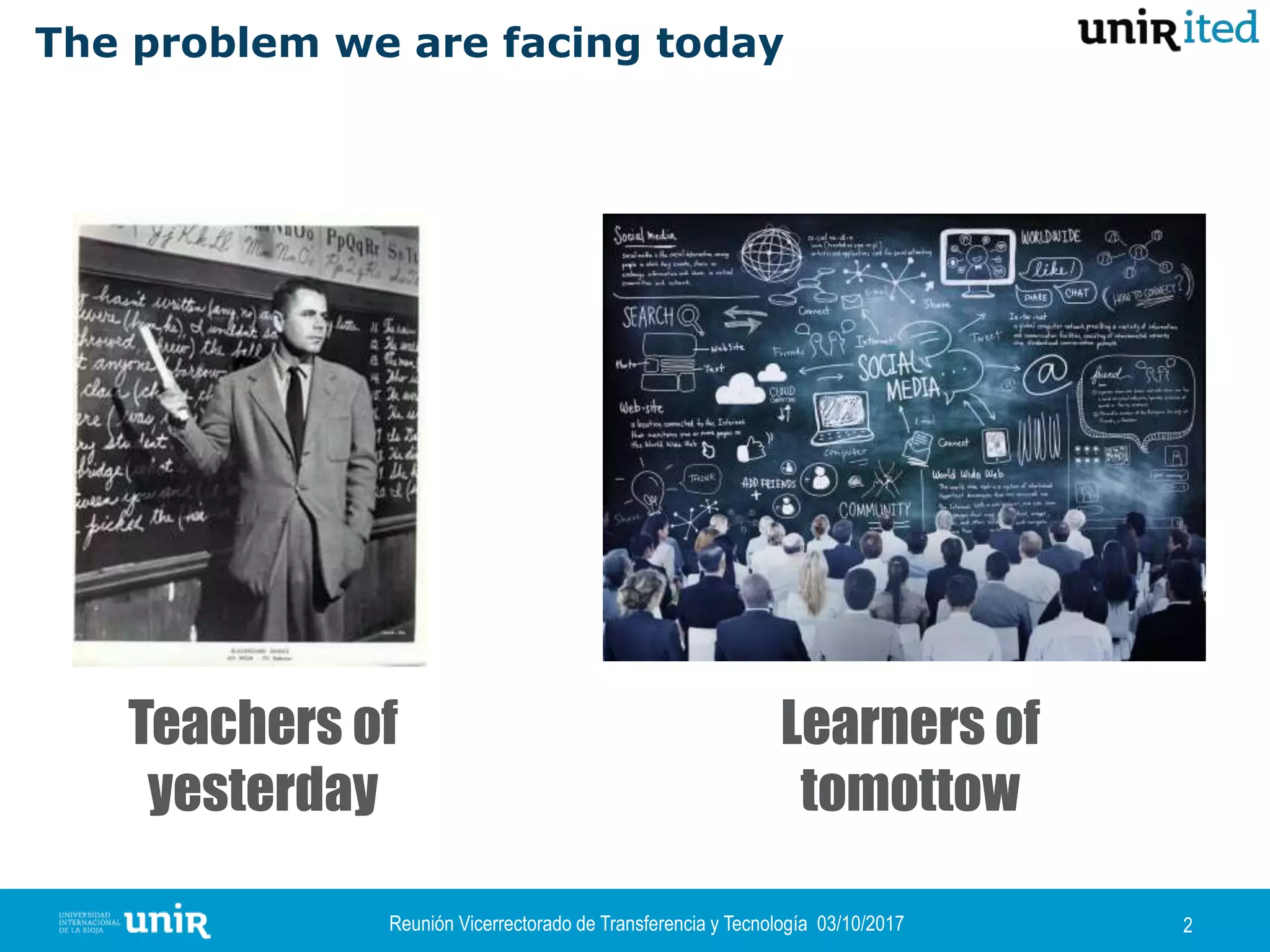
The problem we are facing today
Teachers of
yesterday
Learners of
tomottow
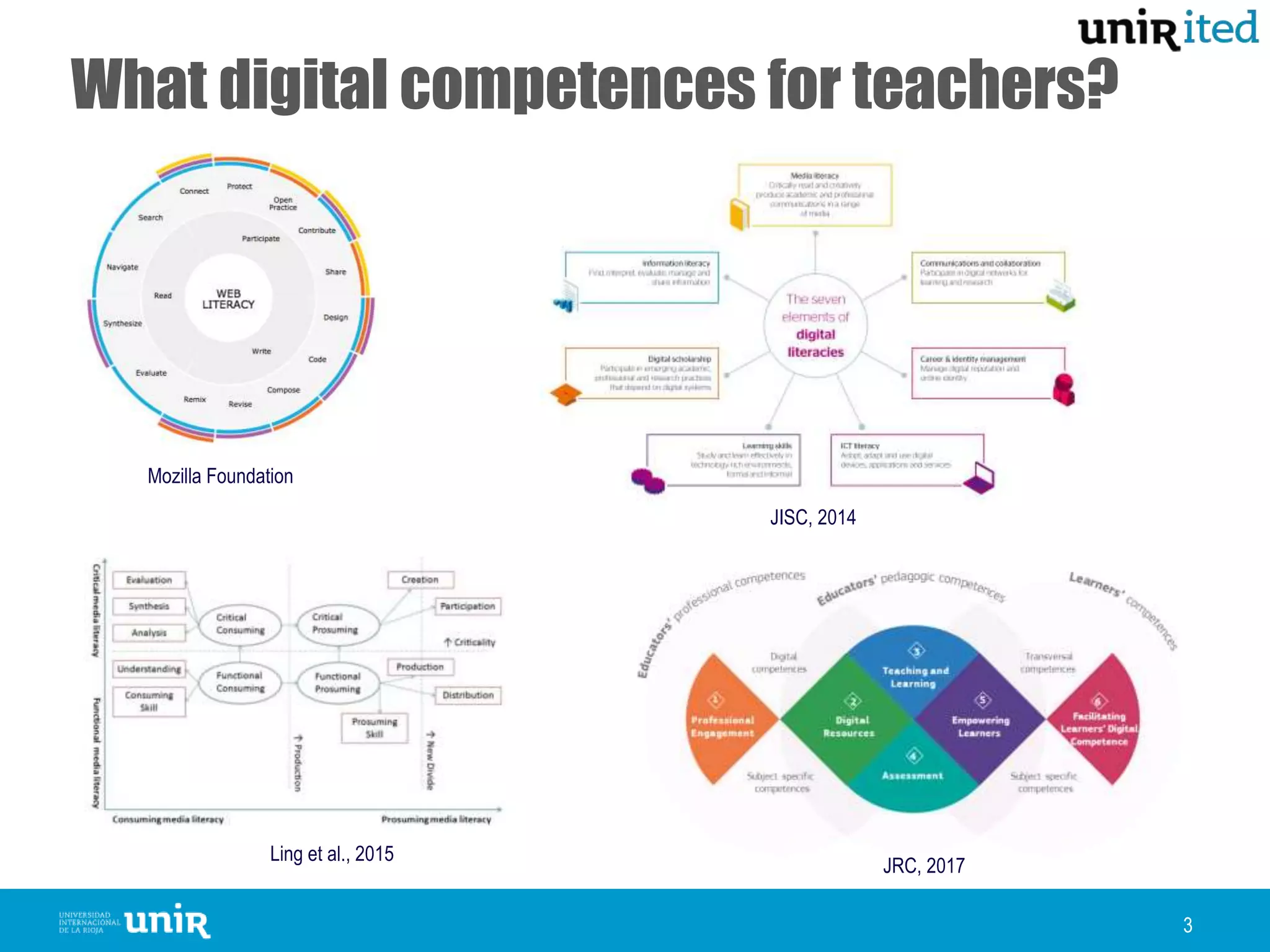
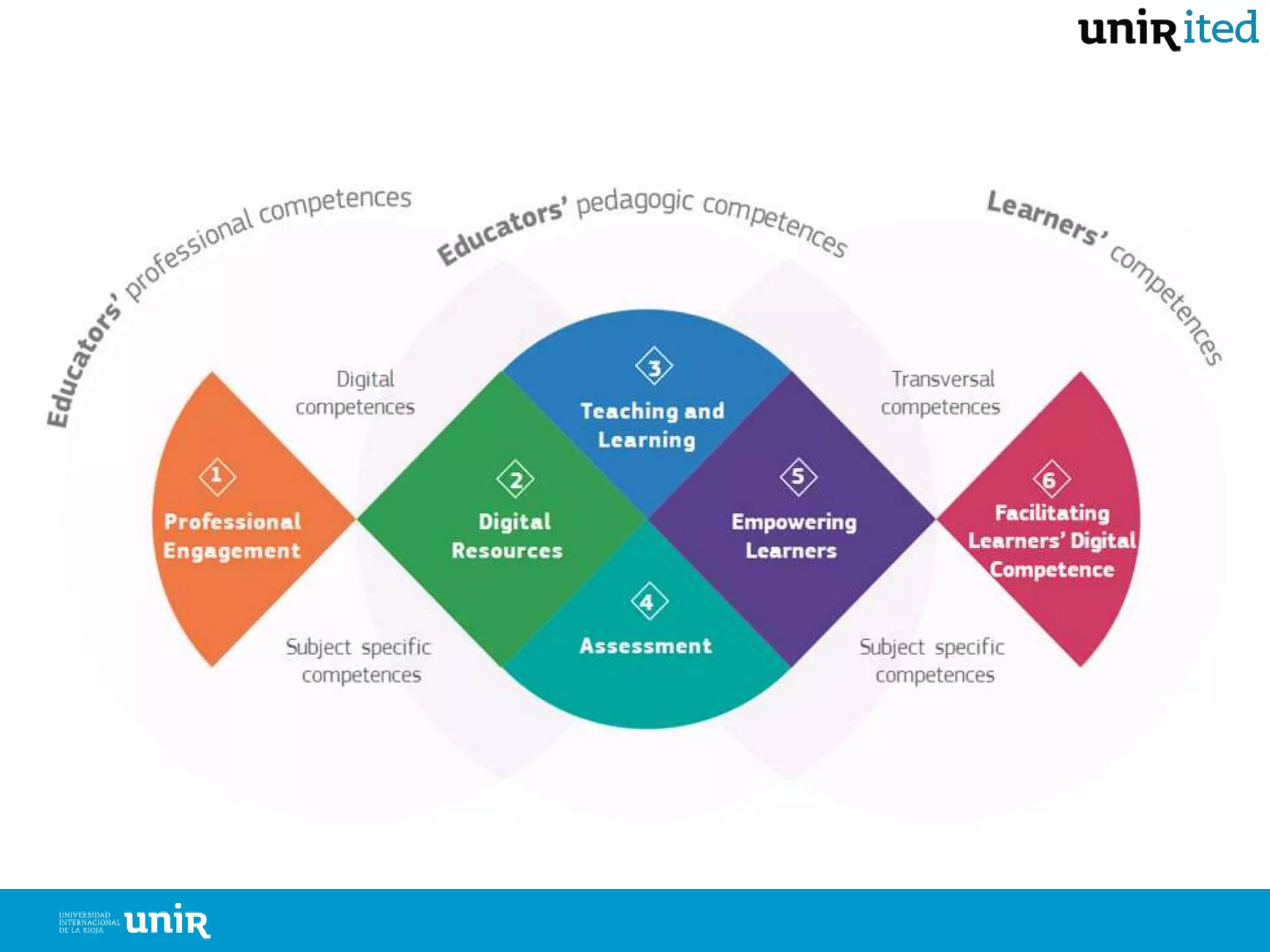
What digital competences for teachers?
3
Ling et al., 2015
Mozilla Foundation
JISC, 2014
JRC, 2017
Reunión Vicerrectorado de Transferencia y Tecnología 03/10/2017 4
How to operationalise this?
Reunión Vicerrectorado de Transferencia y Tecnología 03/10/2017 5
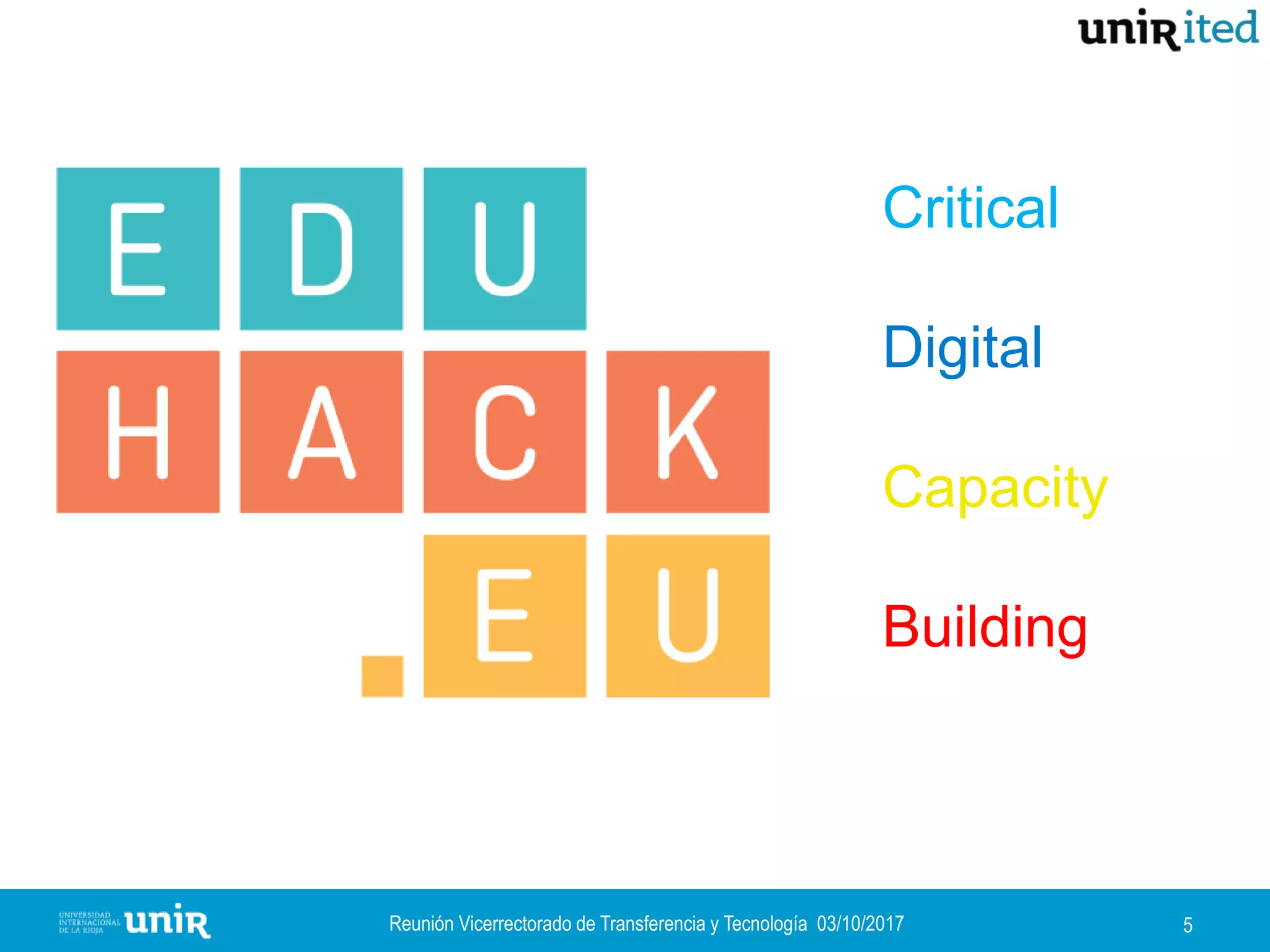
Critical
Digital
Capacity
Building
Reunión Vicerrectorado de Transferencia y Tecnología 03/10/2017 6
EduHack.eu is an initiative supported by Erasmus +
to develop a methodology based on teachers’ EduHackatons,
whereby teaching professionals will learn how to produce
digitally-supported learning experiences.
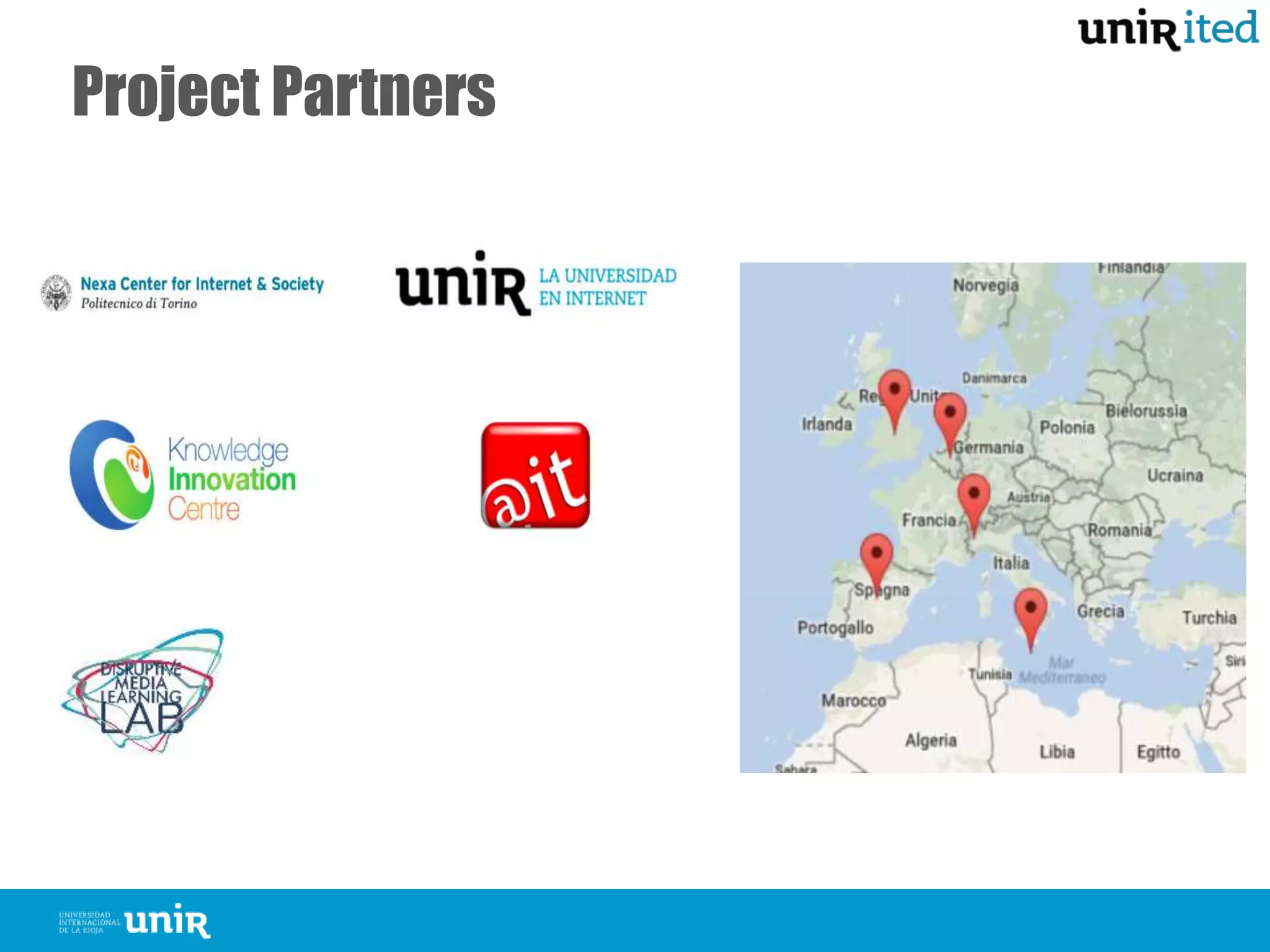
Project Partners
The EduHack approach
8
► Open: leverage on the open web and on open content
► Collaborative: work with peers and foster students collaboration & co-creation
► Active: do, experiment, create (and reflect)
► New literacies: online identity management, intercultural competence, ethical
and privacy issues
Online Course
• Opportunity to interact with an EU level community
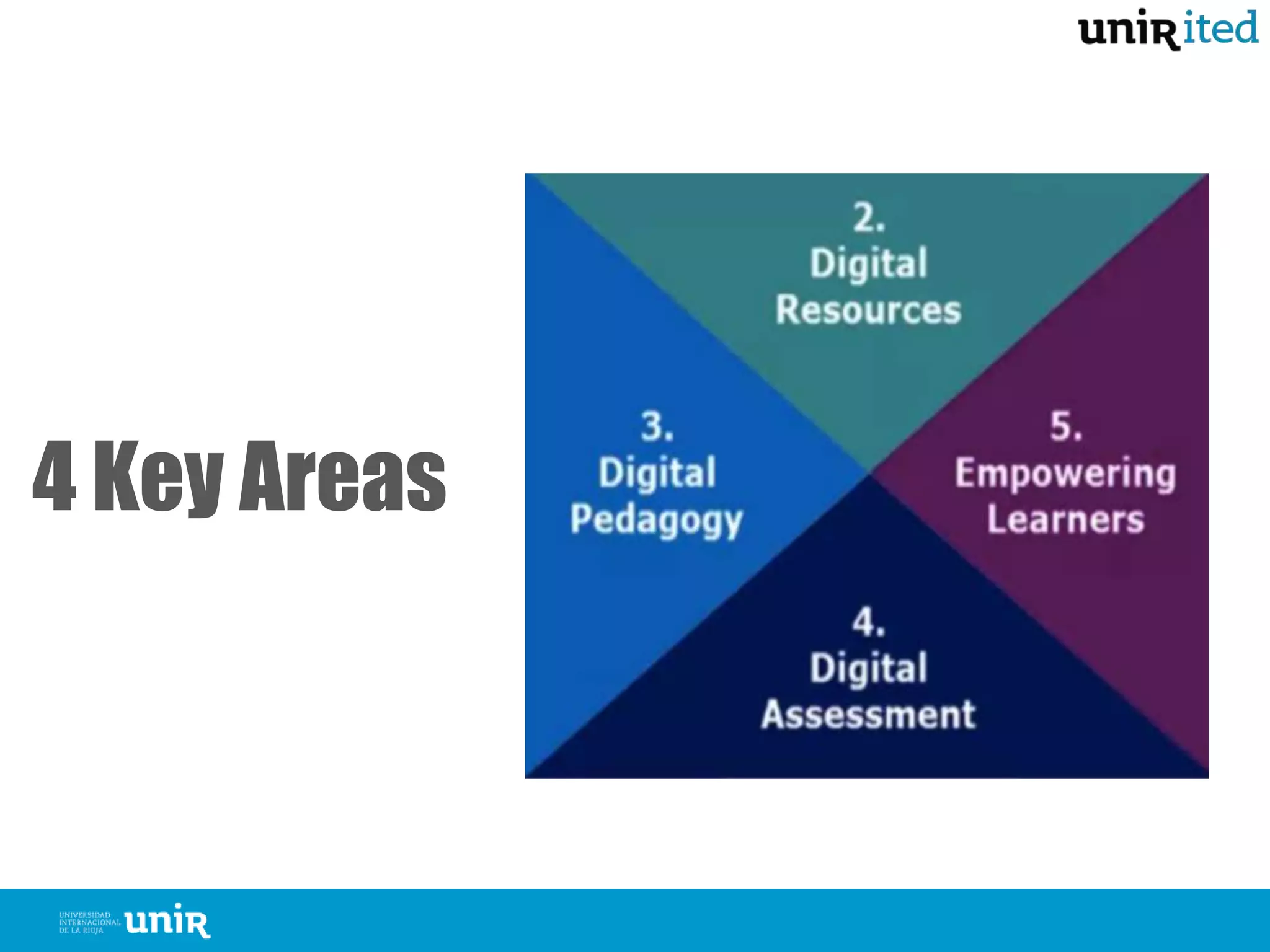
• 4 Key areas, depending on your needs/focus
• 19 activities to explore and build your own path
• Compact workload: around 1 hour each to complete
• Preparation for Eduhackathonfor local, face-to-face activities
4 Key Areas
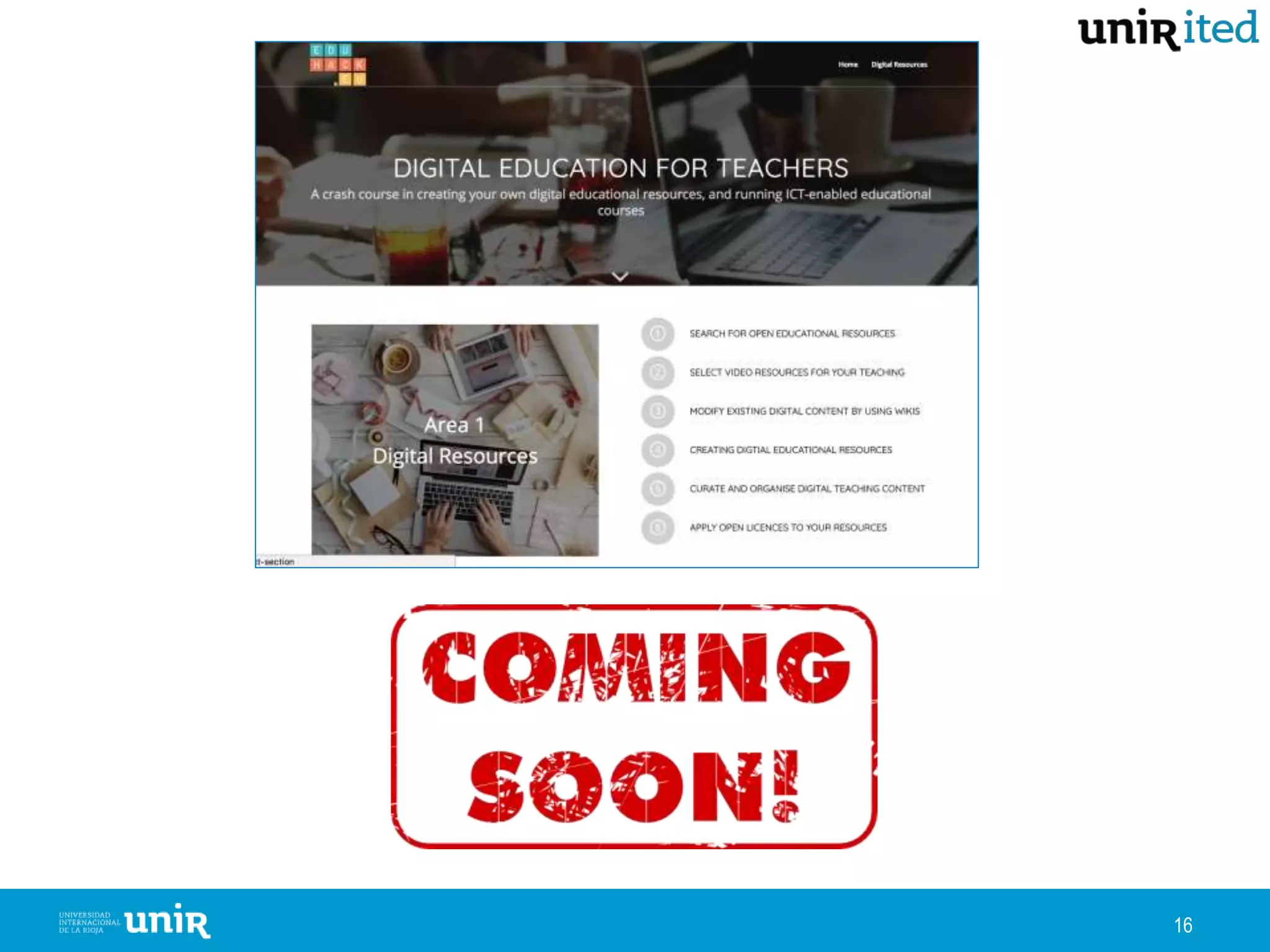
Digital Resources
• Search for Open Education Resources (OER)
• Modify existing digital content by using Wikis
• Create digital educational resources
• Curate and organise digital resource
• Apply open licenses to your resources
Digital Pedagogy
• Design your own eLearning intervention
• Implement ICT-supported collaborative learning
• Guide and support students through e-moderation
• Foster knowledge co-creation among students
• Create and select video resources for your teaching
• Use games to improve learner engagement
Digital Assessment
• Explore digitally supported assessment strategies
• Experiment with different technologies for formative assessment
• Analyse evidence on learning activity, performance and progress
• Use digital technology to provide targeted feedback
Empowering Learners
• Critically evaluate online tools
• Discover the cost of “free” commercial social media platforms
• Appreciate opportunities and risks of personalisation in learning
• Check technical accessibility of platforms and resources
16
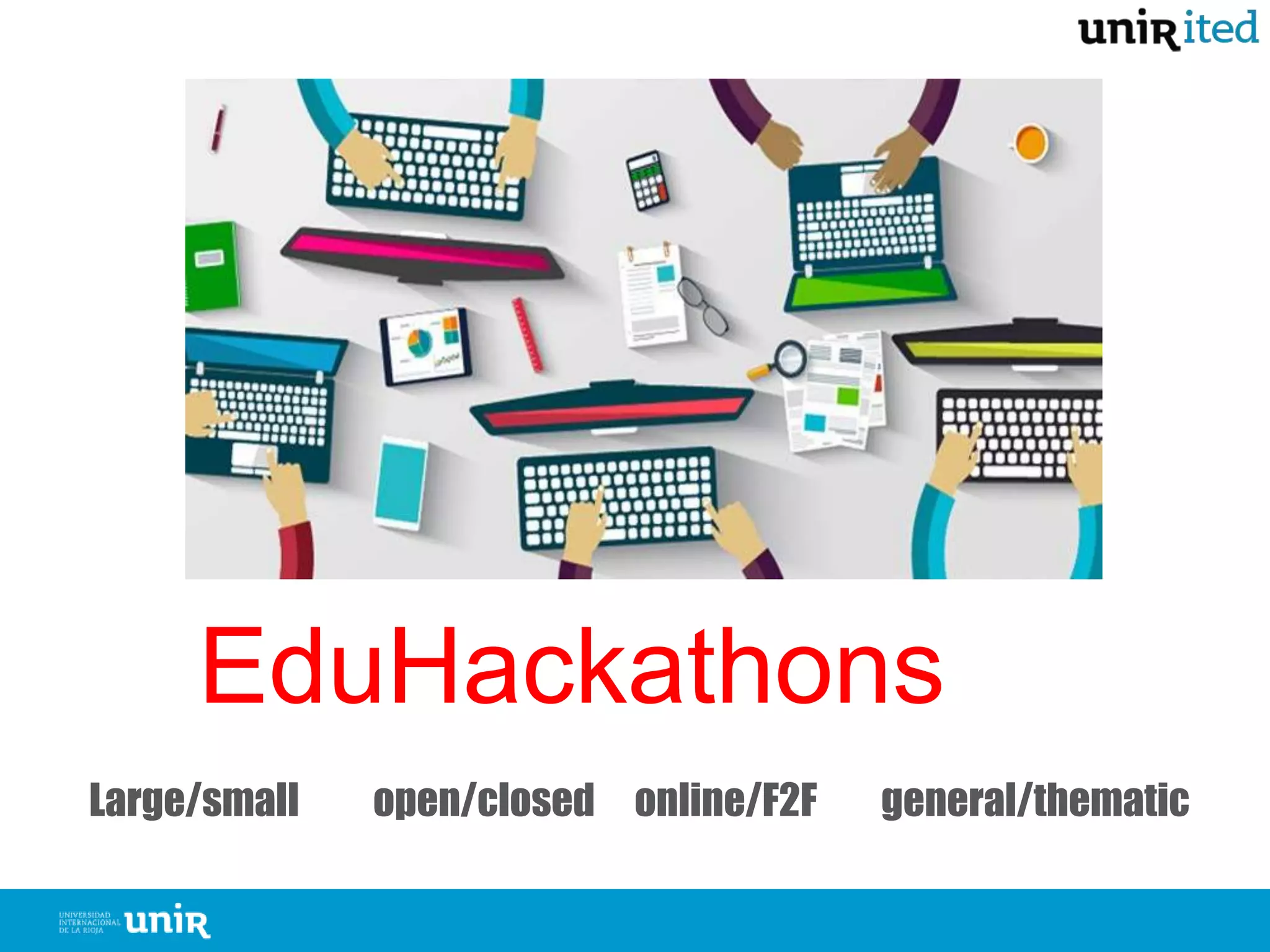
EduHackathons
Large/small open/closed online/F2F general/thematic
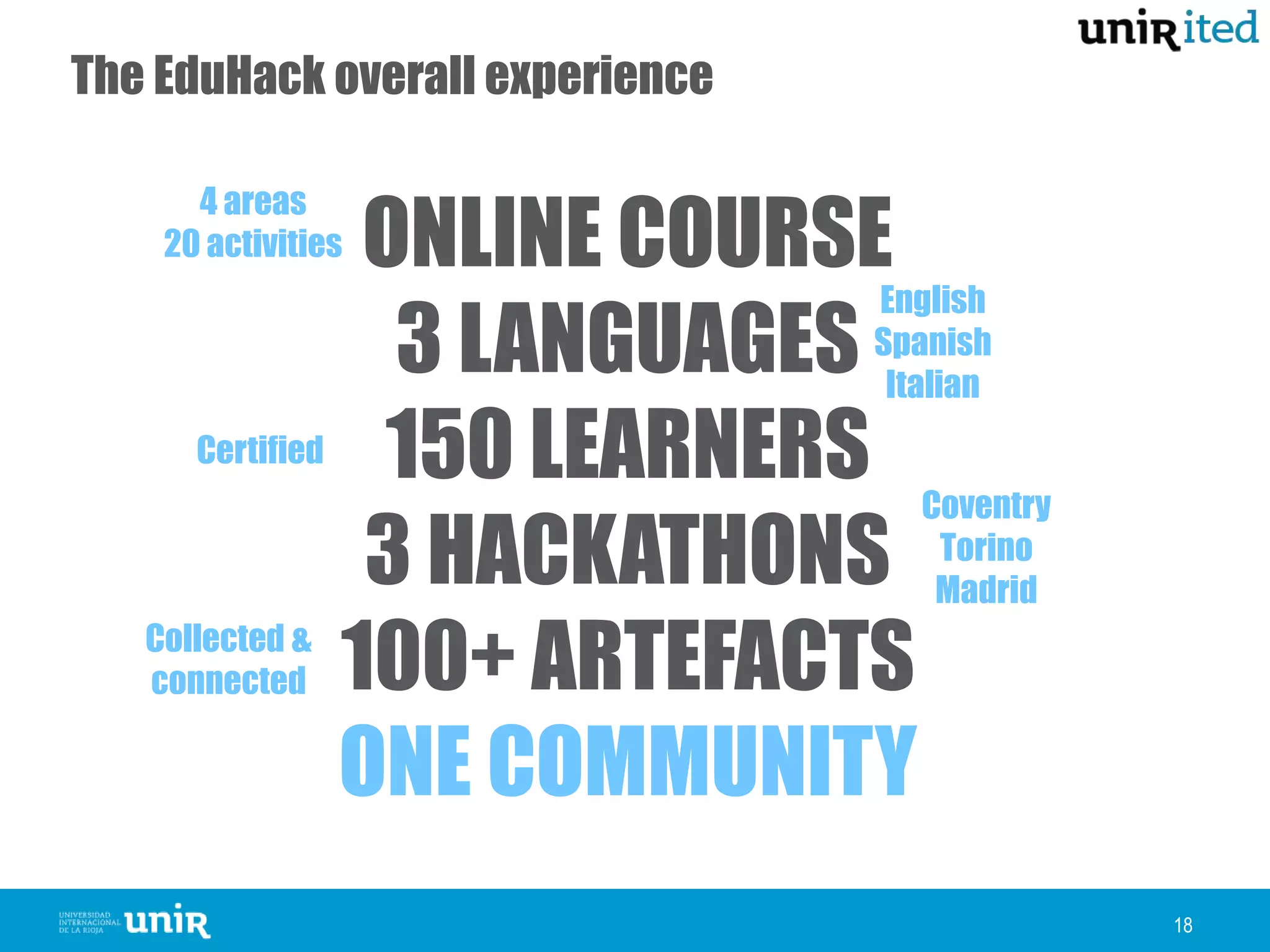
The EduHack overall experience
18
ONLINE COURSE
3 LANGUAGES
150 LEARNERS
3 HACKATHONS
100+ ARTEFACTS
ONE COMMUNITY
English
Spanish
Italian
4 areas
20 activities
Coventry
Torino
Madrid
Certified
Collected &
connected
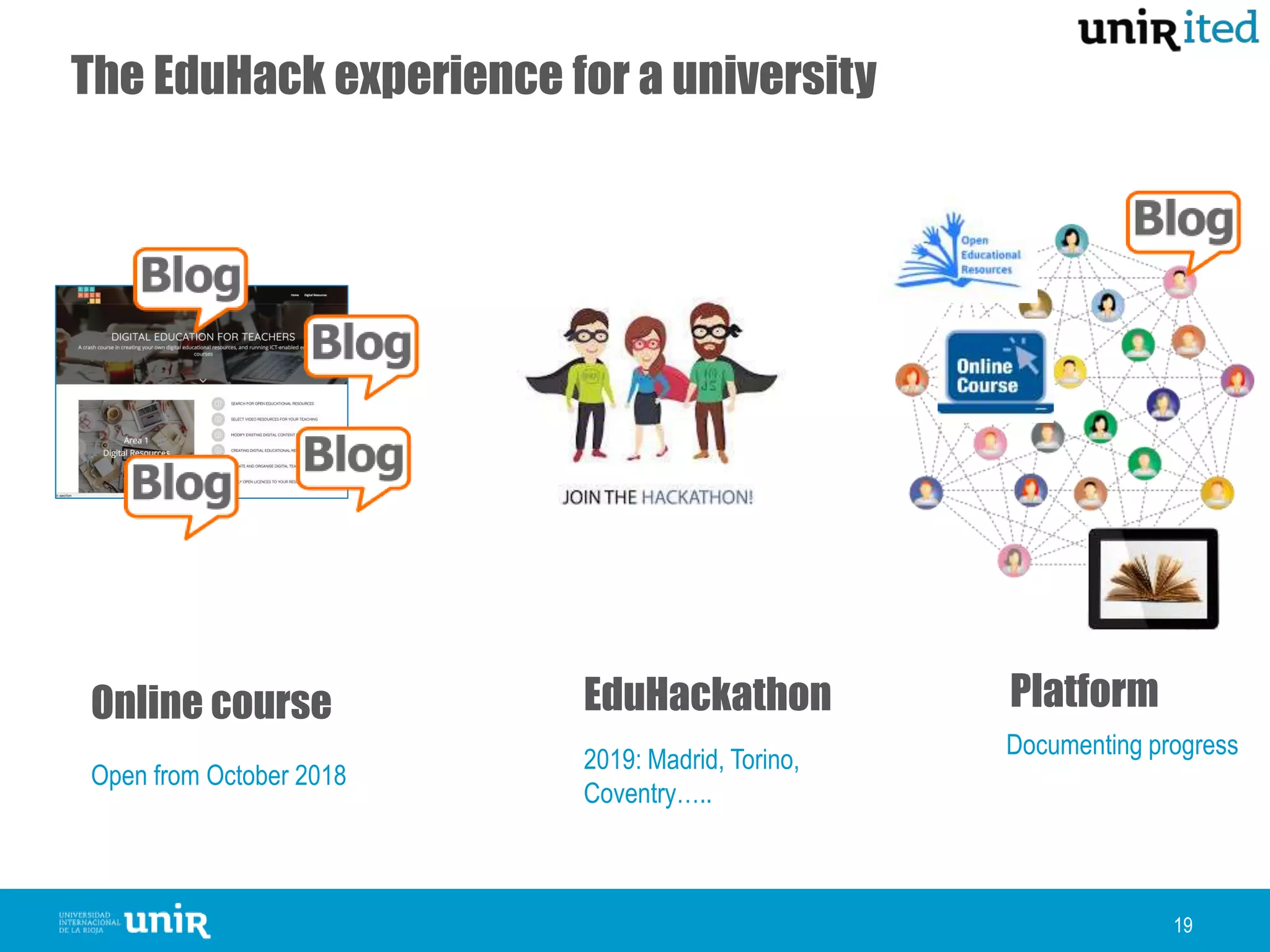
19
Online course PlatformEduHackathon
Open from October 2018
2019: Madrid, Torino,
Coventry…..
Documenting progress
The EduHack experience for a university
What’s in for me?
20
► Help us improve the course
► Take the online course
► Organise a Eduhackathon
► Join the community
www.eduhack.eu

A new approach to digital capacity building for university educators in Europe

  • 1.
    Fabio Nascimbeni UNIR iTED ANEW APPROACH TO DIGITAL COMPETENCE BUILDING FOR UNIVERSITY EDUCATORS IN EUROPE
  • 2.
    Reunión Vicerrectorado deTransferencia y Tecnología 03/10/2017 2 The problem we are facing today Teachers of yesterday Learners of tomottow
  • 3.
    What digital competencesfor teachers? 3 Ling et al., 2015 Mozilla Foundation JISC, 2014 JRC, 2017
  • 4.
    Reunión Vicerrectorado deTransferencia y Tecnología 03/10/2017 4 How to operationalise this?
  • 5.
    Reunión Vicerrectorado deTransferencia y Tecnología 03/10/2017 5 Critical Digital Capacity Building
  • 6.
    Reunión Vicerrectorado deTransferencia y Tecnología 03/10/2017 6 EduHack.eu is an initiative supported by Erasmus + to develop a methodology based on teachers’ EduHackatons, whereby teaching professionals will learn how to produce digitally-supported learning experiences.
  • 7.
  • 8.
    The EduHack approach 8 ►Open: leverage on the open web and on open content ► Collaborative: work with peers and foster students collaboration & co-creation ► Active: do, experiment, create (and reflect) ► New literacies: online identity management, intercultural competence, ethical and privacy issues
  • 9.
    Online Course • Opportunityto interact with an EU level community • 4 Key areas, depending on your needs/focus • 19 activities to explore and build your own path • Compact workload: around 1 hour each to complete • Preparation for Eduhackathonfor local, face-to-face activities
  • 11.
  • 12.
    Digital Resources • Searchfor Open Education Resources (OER) • Modify existing digital content by using Wikis • Create digital educational resources • Curate and organise digital resource • Apply open licenses to your resources
  • 13.
    Digital Pedagogy • Designyour own eLearning intervention • Implement ICT-supported collaborative learning • Guide and support students through e-moderation • Foster knowledge co-creation among students • Create and select video resources for your teaching • Use games to improve learner engagement
  • 14.
    Digital Assessment • Exploredigitally supported assessment strategies • Experiment with different technologies for formative assessment • Analyse evidence on learning activity, performance and progress • Use digital technology to provide targeted feedback
  • 15.
    Empowering Learners • Criticallyevaluate online tools • Discover the cost of “free” commercial social media platforms • Appreciate opportunities and risks of personalisation in learning • Check technical accessibility of platforms and resources
  • 16.
  • 17.
  • 18.
    The EduHack overallexperience 18 ONLINE COURSE 3 LANGUAGES 150 LEARNERS 3 HACKATHONS 100+ ARTEFACTS ONE COMMUNITY English Spanish Italian 4 areas 20 activities Coventry Torino Madrid Certified Collected & connected
  • 19.
    19 Online course PlatformEduHackathon Openfrom October 2018 2019: Madrid, Torino, Coventry….. Documenting progress The EduHack experience for a university
  • 20.
    What’s in forme? 20 ► Help us improve the course ► Take the online course ► Organise a Eduhackathon ► Join the community www.eduhack.eu