Online Community for Teaching
and Professional Development
Terry Anderson, PhD
Professor, Centre for Distance
Education
Do you use Online Communities?
But Do you do you use it for
Professional Development and
to Enhance Student Teaching?
Does Social Networking Improve
Teaching and Learning?
“The author summarized the major
outcome findings of 29 dissertations that
had a specific focus on SM-Education
issues. Of these, only 2 studies reported
any negative views by either students or
faculty on the implementation of SM
platforms for academic purposes. “
Piotrowski, C. (2015). Emerging Research on
Social Media Use in Education: A Study of
Dissertations. Research in Higher Education
Journal, 27.
What is wrong with Current
Professional Development (PD)?
• The overuse of single, one-day, episodic PD
sessions is “intellectually superficial,
disconnected from deep issues of curriculum
and learning, fragmented, and
noncumulative” (Ball & Cohen, 1999, pp. 3–4).
• Doesn’t work!
Uses of Networks for
Professional Development
• A focus/meeting place for special interest
groups
• “social networking tools can be used to garner
collective emotional support and recognition
for one's creative practices”
• Coordinating collaborative projects
Tapping the Wealth of Social Networks for Professional Development
Greenhow, Christine
Learning & Leading with Technology, v36 n8
Microsoft’s Professional learning
Community
• " Professional Learning Communities (PLCs)
provide the support educators need to
continue to grow new teaching skills with their
peers.
• Groups of educators can work and learn
together to improve student achievement
through book study, action research, or
learning a new best practice through PLCs."
https://blogs.msdn.microsoft.com/ukschools/2016/09/30/create-a-profess
An American, Commercial PD service
• Curricula are designed to
enable participation in
academic communities via
online social networking
tools.
• These online
communities provide
opportunities for
collaborative learning,
contact with
external professionals and
involvement in research and
professional activities.
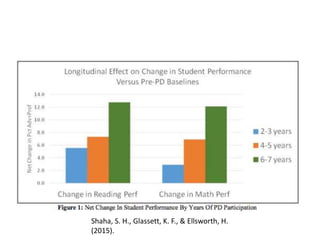
Shaha, S. H., Glassett, K. F., & Ellsworth, H.
(2015).
• “Further, results from a handful of specific
studies establish that the degree of teacher
engagement in PD significantly affects the
amount of improvement experienced in
student performance, contrasting active
participation versus more passive engagement
based principally on video participation”
Shaha, Glassett &, Ellsworth (2015) Long-Term Impact Of On-Demand Professional Developmen
On Student Performance. Journal of International Education Research. 11
http://docplayer.net/4067264-Journal-of-international-education-research-first-quarter-2015-
volume-11-number-1.html
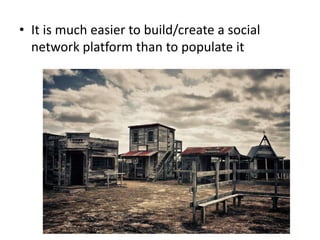
• It is much easier to build/create a social
network platform than to populate it
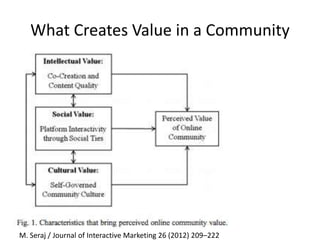
What Creates Value in a Community
M. Seraj / Journal of Interactive Marketing 26 (2012) 209–222
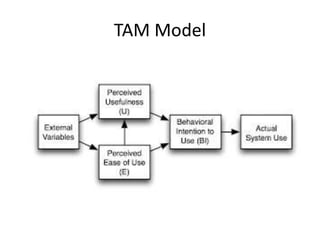
TAM Model
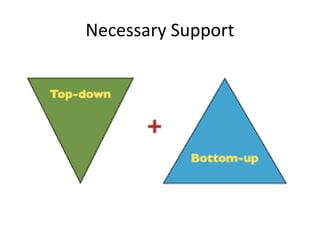
Necessary Support
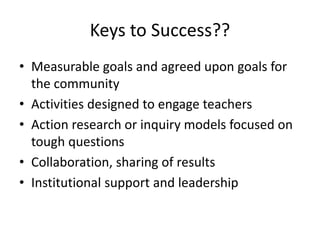
Keys to Success??
• Measurable goals and agreed upon goals for
the community
• Activities designed to engage teachers
• Action research or inquiry models focused on
tough questions
• Collaboration, sharing of results
• Institutional support and leadership
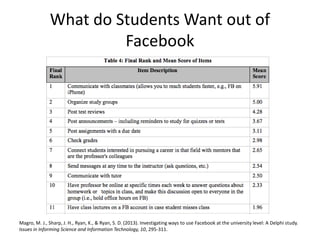
What do Students Want out of
Facebook
Magro, M. J., Sharp, J. H., Ryan, K., & Ryan, S. D. (2013). Investigating ways to use Facebook at the university level: A Delphi study.
Issues in Informing Science and Information Technology, 10, 295-311.
Using Personal Learning
Networks with Students
“these results suggest that the techno-pedagogical design of
instructional sequences strongly affects the respective
communicative and interactive dynamics and determines, to a great
extent, the use that students make of the widgets available in the
iPLE to configure their own PLE.”
Saz, A., Engel, A., & Coll, C. (2016). Introducing a personal
learning environment in higher education. An analysis of
connectivity. Digital Education Review(29), 1-14.
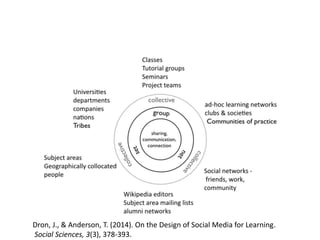
Dron, J., & Anderson, T. (2014). On the Design of Social Media for Learning.
Social Sciences, 3(3), 378-393.
Soft Versus Hard Technologies
• Soft – unfinished, malable, need user
direction, many facetted, complex, effective
• Hard – single purposed, simple to use,
unyielding, efficient
https://landing.athabascau.ca/blog/view/65996/the-neediness-of-soft-technologies
Hardening in networks should mostly be
concerned with reinforcing network ties, alerting
members to relevant activities, simplifying
communication and sharing, and helping people to
structure, make sense of and yet not be
overwhelmed by their networks.” Dron and
Anderson, 2014
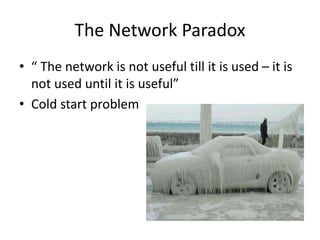
The Network Paradox
• “ The network is not useful till it is used – it is
not used until it is useful”
• Cold start problem
Network Facilitation as Gardening
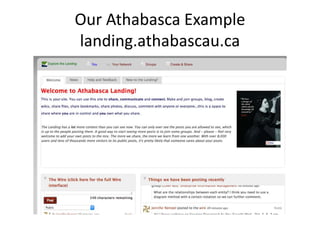
Our Athabasca Example
landing.athabascau.ca
What is the Landing?
• Walled Garden with Windows
• A Private space for AU
• A user controlled creative space
• Boutique social system
• Networking, blogging, photos,
microblogging, polls, calendars,
groups and more
• Differentiating and merging
work, from school, from fun
"He who asks a question is a fool for five minutes;
he who does not ask a question remains a fool forever.”
Chinese Proverb
Terry Anderson terrya@athabascau.ca
Slides at http://hdl.handle.net/2149/2313
Blog: terrya.edublogs.org
Your comments and questions most
welcomed!

Sweden 2016 online community

  • 1.
    Online Community forTeaching and Professional Development Terry Anderson, PhD Professor, Centre for Distance Education
  • 2.
    Do you useOnline Communities?
  • 4.
    But Do youdo you use it for Professional Development and to Enhance Student Teaching?
  • 5.
    Does Social NetworkingImprove Teaching and Learning? “The author summarized the major outcome findings of 29 dissertations that had a specific focus on SM-Education issues. Of these, only 2 studies reported any negative views by either students or faculty on the implementation of SM platforms for academic purposes. “ Piotrowski, C. (2015). Emerging Research on Social Media Use in Education: A Study of Dissertations. Research in Higher Education Journal, 27.
  • 6.
    What is wrongwith Current Professional Development (PD)? • The overuse of single, one-day, episodic PD sessions is “intellectually superficial, disconnected from deep issues of curriculum and learning, fragmented, and noncumulative” (Ball & Cohen, 1999, pp. 3–4). • Doesn’t work!
  • 7.
    Uses of Networksfor Professional Development • A focus/meeting place for special interest groups • “social networking tools can be used to garner collective emotional support and recognition for one's creative practices” • Coordinating collaborative projects Tapping the Wealth of Social Networks for Professional Development Greenhow, Christine Learning & Leading with Technology, v36 n8
  • 8.
    Microsoft’s Professional learning Community •" Professional Learning Communities (PLCs) provide the support educators need to continue to grow new teaching skills with their peers. • Groups of educators can work and learn together to improve student achievement through book study, action research, or learning a new best practice through PLCs."
  • 9.
  • 10.
    An American, CommercialPD service • Curricula are designed to enable participation in academic communities via online social networking tools. • These online communities provide opportunities for collaborative learning, contact with external professionals and involvement in research and professional activities.
  • 11.
    Shaha, S. H.,Glassett, K. F., & Ellsworth, H. (2015).
  • 12.
    • “Further, resultsfrom a handful of specific studies establish that the degree of teacher engagement in PD significantly affects the amount of improvement experienced in student performance, contrasting active participation versus more passive engagement based principally on video participation” Shaha, Glassett &, Ellsworth (2015) Long-Term Impact Of On-Demand Professional Developmen On Student Performance. Journal of International Education Research. 11 http://docplayer.net/4067264-Journal-of-international-education-research-first-quarter-2015- volume-11-number-1.html
  • 13.
    • It ismuch easier to build/create a social network platform than to populate it
  • 14.
    What Creates Valuein a Community M. Seraj / Journal of Interactive Marketing 26 (2012) 209–222
  • 15.
  • 16.
  • 17.
    Keys to Success?? •Measurable goals and agreed upon goals for the community • Activities designed to engage teachers • Action research or inquiry models focused on tough questions • Collaboration, sharing of results • Institutional support and leadership
  • 18.
    What do StudentsWant out of Facebook Magro, M. J., Sharp, J. H., Ryan, K., & Ryan, S. D. (2013). Investigating ways to use Facebook at the university level: A Delphi study. Issues in Informing Science and Information Technology, 10, 295-311.
  • 19.
    Using Personal Learning Networkswith Students “these results suggest that the techno-pedagogical design of instructional sequences strongly affects the respective communicative and interactive dynamics and determines, to a great extent, the use that students make of the widgets available in the iPLE to configure their own PLE.” Saz, A., Engel, A., & Coll, C. (2016). Introducing a personal learning environment in higher education. An analysis of connectivity. Digital Education Review(29), 1-14.
  • 20.
    Dron, J., &Anderson, T. (2014). On the Design of Social Media for Learning. Social Sciences, 3(3), 378-393.
  • 21.
    Soft Versus HardTechnologies • Soft – unfinished, malable, need user direction, many facetted, complex, effective • Hard – single purposed, simple to use, unyielding, efficient https://landing.athabascau.ca/blog/view/65996/the-neediness-of-soft-technologies
  • 22.
    Hardening in networksshould mostly be concerned with reinforcing network ties, alerting members to relevant activities, simplifying communication and sharing, and helping people to structure, make sense of and yet not be overwhelmed by their networks.” Dron and Anderson, 2014
  • 23.
    The Network Paradox •“ The network is not useful till it is used – it is not used until it is useful” • Cold start problem
  • 24.
  • 25.
  • 26.
    What is theLanding? • Walled Garden with Windows • A Private space for AU • A user controlled creative space • Boutique social system • Networking, blogging, photos, microblogging, polls, calendars, groups and more • Differentiating and merging work, from school, from fun
  • 27.
    "He who asksa question is a fool for five minutes; he who does not ask a question remains a fool forever.” Chinese Proverb Terry Anderson terrya@athabascau.ca Slides at http://hdl.handle.net/2149/2313 Blog: terrya.edublogs.org Your comments and questions most welcomed!