Catherine Cronin
#PRAXIS Project webinar  Uruguay  28th May 2018
Image: CC BY subherwal
Open Educational Practices in Higher Ed:
Practical & Critical Approaches
Catherine Cronin
open educator, open resercher
CELT, National University of Ireland, Galway
@catherinecronin  catherinecronin.net
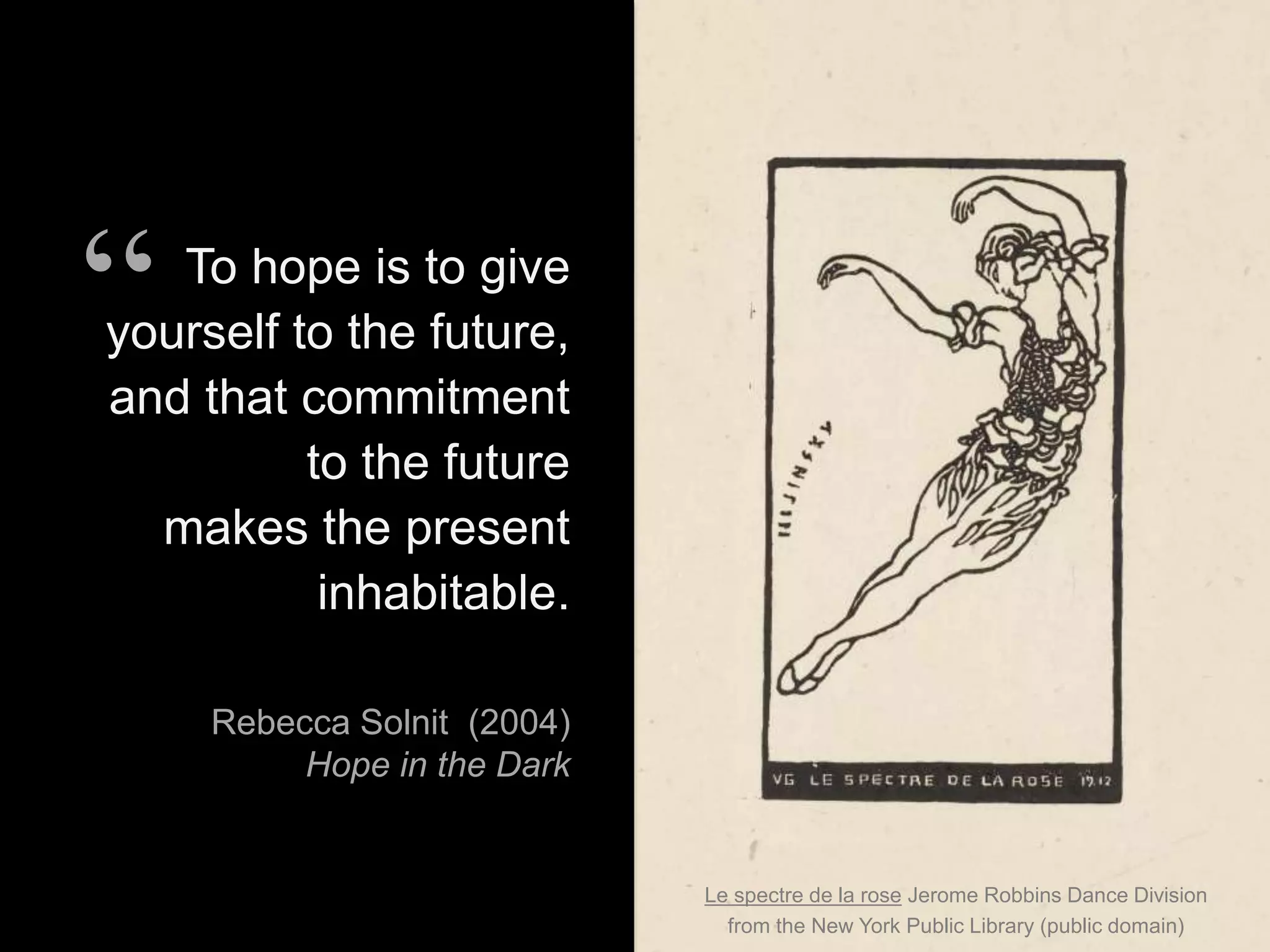
Le spectre de la rose Jerome Robbins Dance Division
from the New York Public Library (public domain)
To hope is to give
yourself to the future,
and that commitment
to the future
makes the present
inhabitable.
Rebecca Solnit (2004)
Hope in the Dark
“
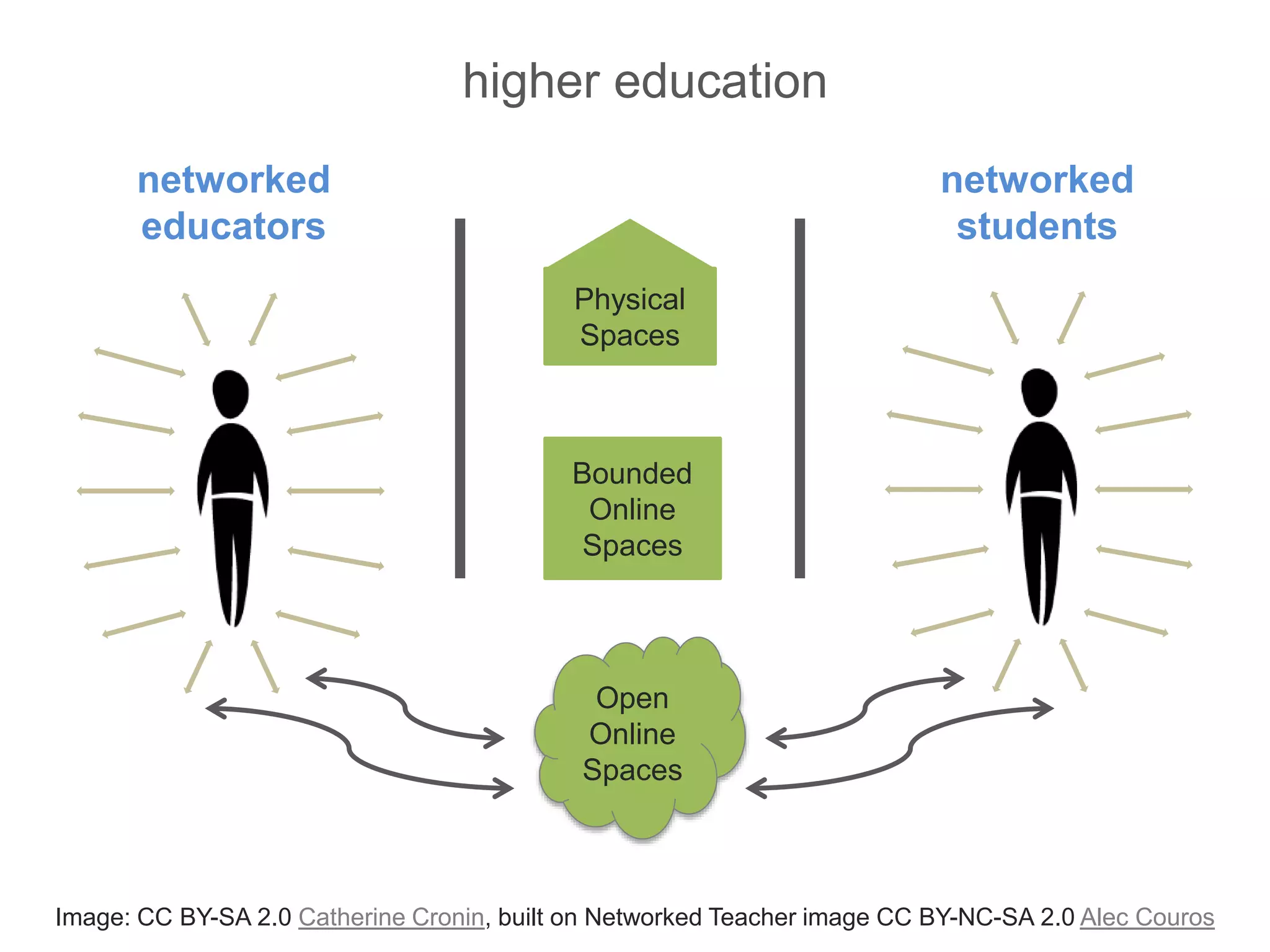
networked
educators
networked
students
Physical
Spaces
Bounded
Online
Spaces
Open
Online
Spaces
Image: CC BY-SA 2.0 Catherine Cronin, built on Networked Teacher image CC BY-NC-SA 2.0 Alec Couros
higher education
pen
Image: CC0 by Nadine Shaabana
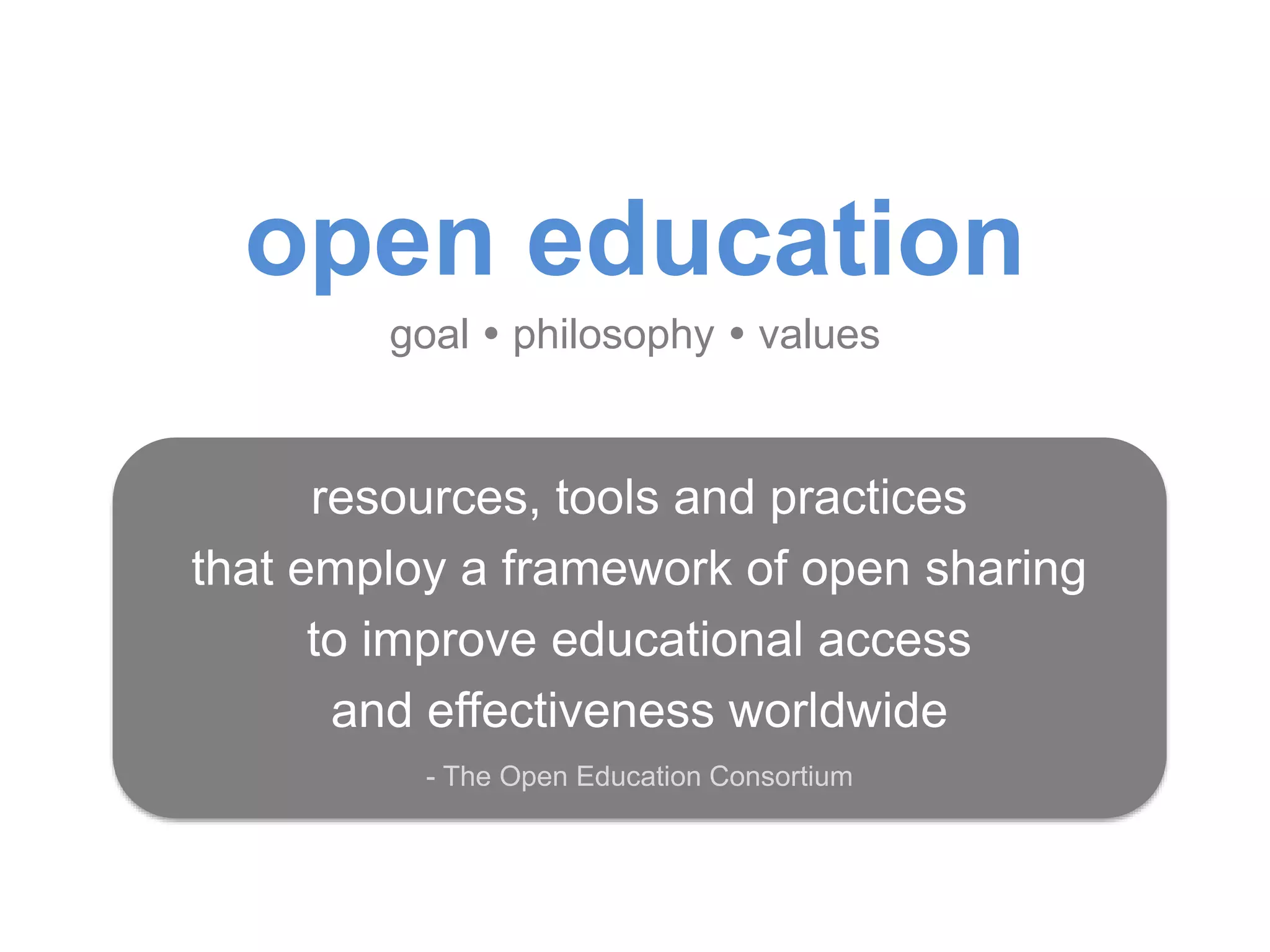
open education
goal  philosophy  values
resources, tools and practices
that employ a framework of open sharing
to improve educational access
and effectiveness worldwide
- The Open Education Consortium
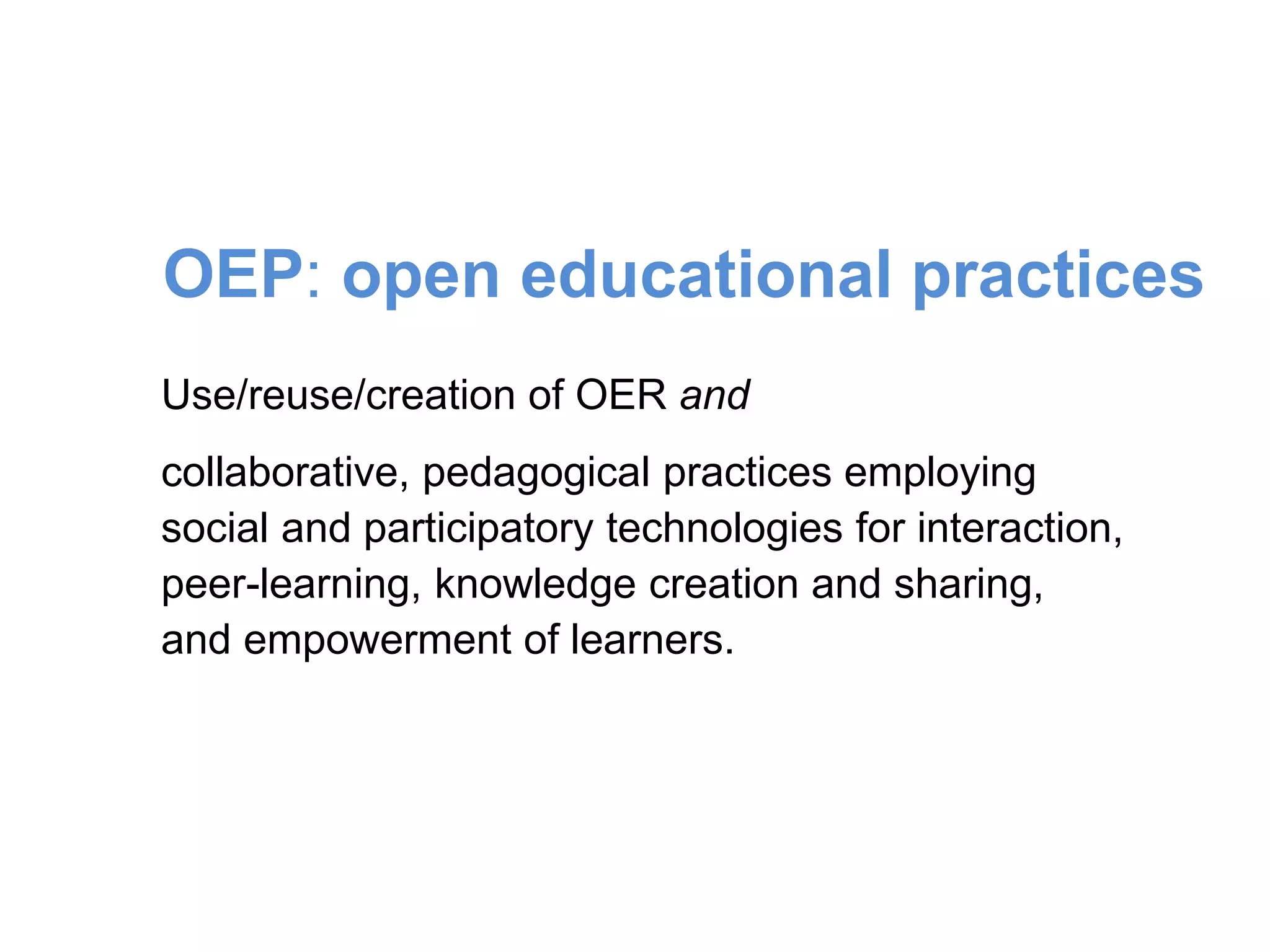
Use/reuse/creation of OER and
collaborative, pedagogical practices employing
social and participatory technologies for interaction,
peer-learning, knowledge creation and sharing,
and empowerment of learners.
OEP: open educational practices
Open education is a tool
for social change.
Santos, A.I., Punie, Y., & Muñoz, J.C. (2016)
Opening up Education: A Support Framework for Higher Education Institutions
“
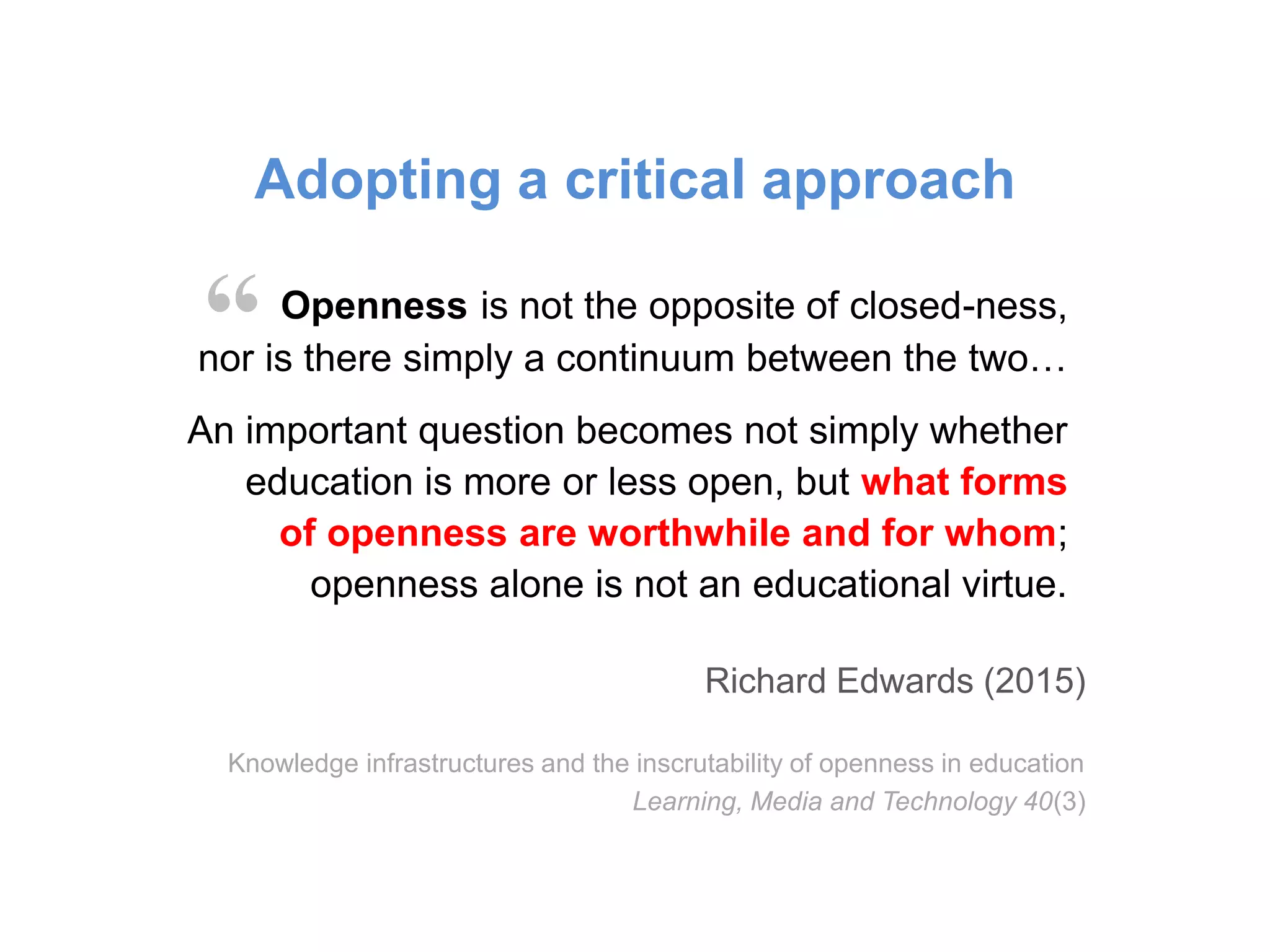
Openness is not the opposite of closed-ness,
nor is there simply a continuum between the two…
An important question becomes not simply whether
education is more or less open, but what forms
of openness are worthwhile and for whom;
openness alone is not an educational virtue.
Richard Edwards (2015)
Knowledge infrastructures and the inscrutability of openness in education
Learning, Media and Technology 40(3)
“
Adopting a critical approach
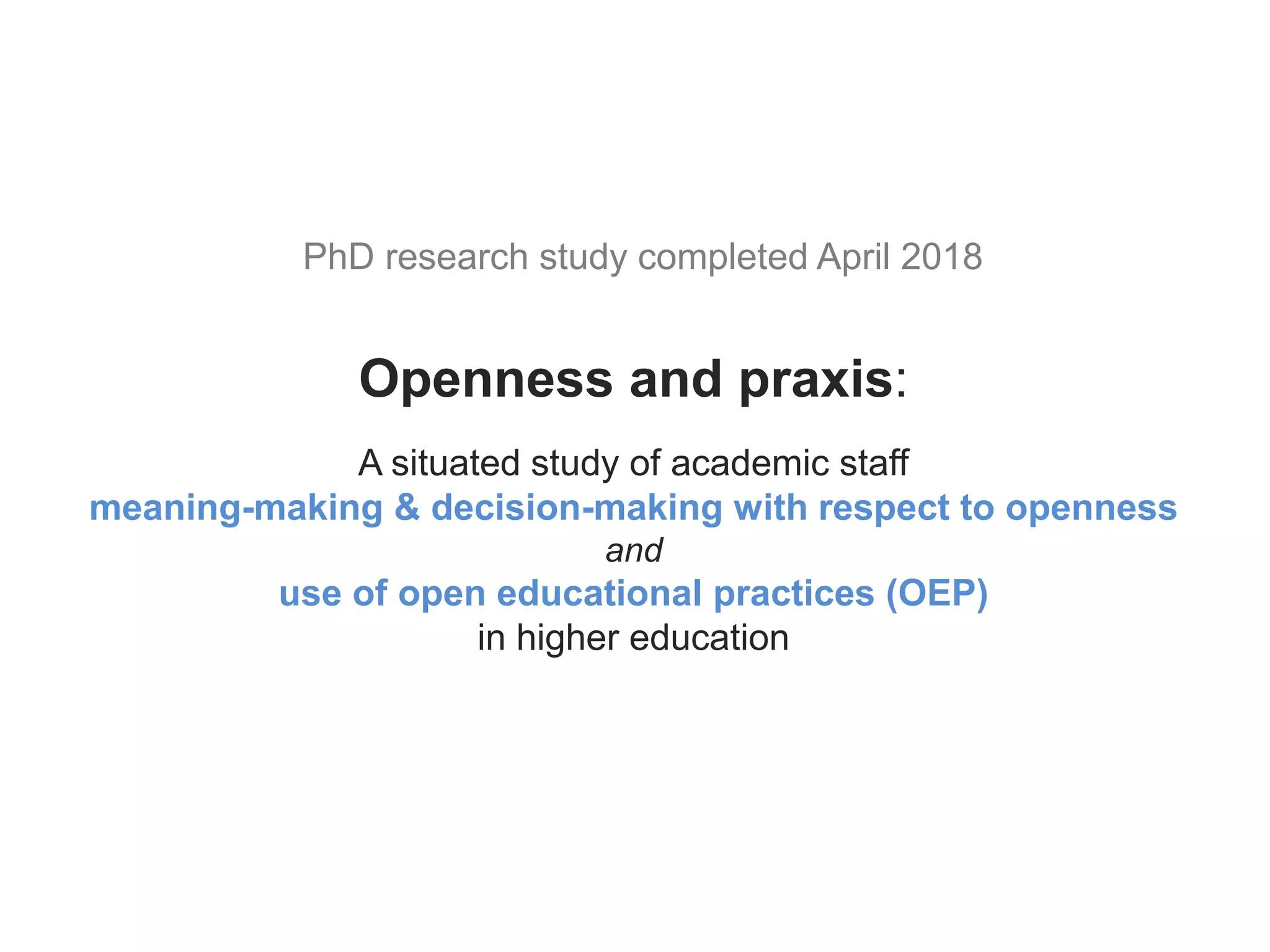
Openness and praxis:
A situated study of academic staff
meaning-making & decision-making with respect to openness
and
use of open educational practices (OEP)
in higher education
PhD research study completed April 2018
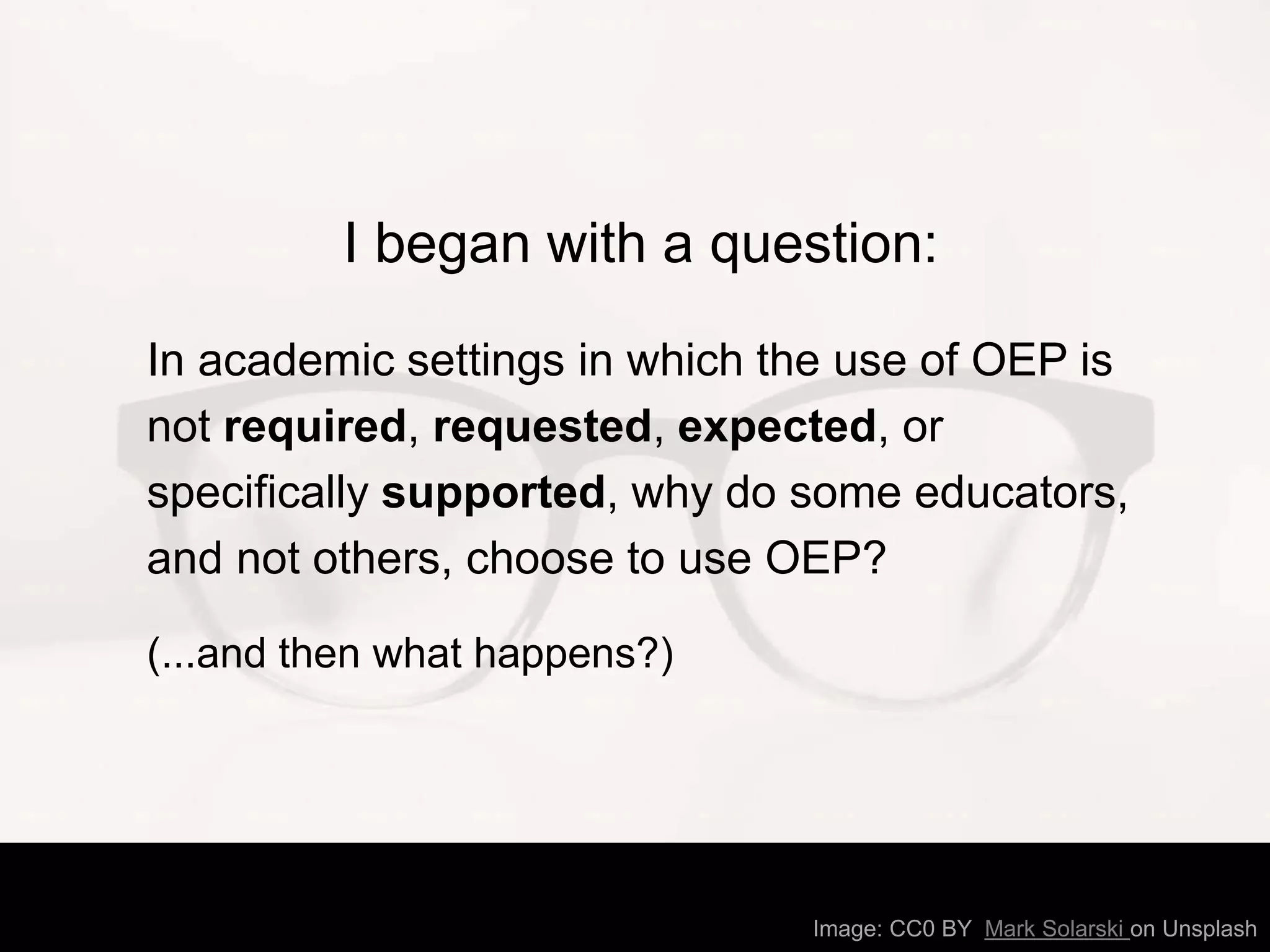
I began with a question:
In academic settings in which the use of OEP is
not required, requested, expected, or
specifically supported, why do some educators,
and not others, choose to use OEP?
(...and then what happens?)
Image: CC0 BY Mark Solarski on Unsplash
Image: CC0 photo by Saksham Gangwar
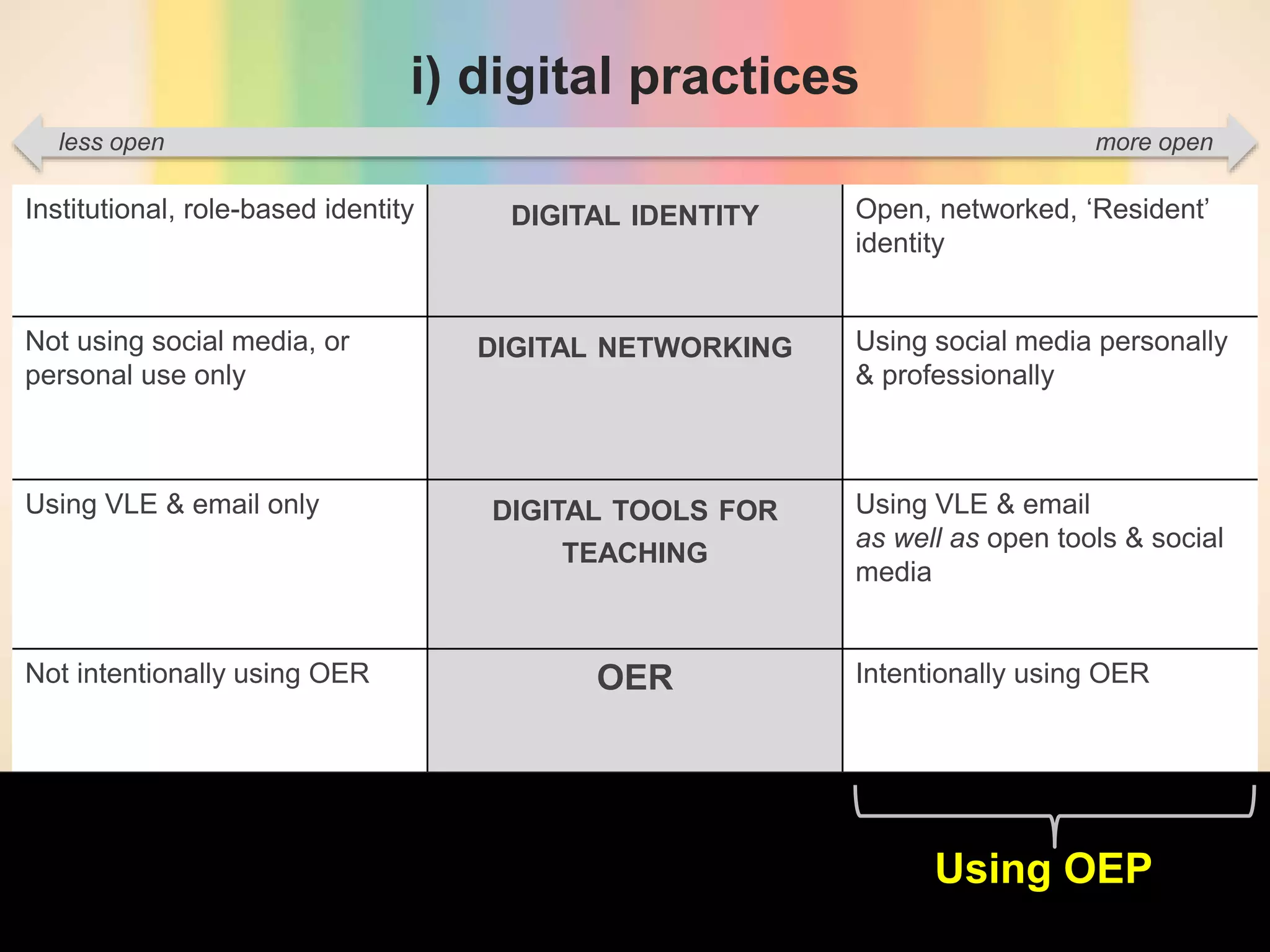
Institutional, role-based identity DIGITAL IDENTITY Open, networked, ‘Resident’
identity
Not using social media, or
personal use only
DIGITAL NETWORKING Using social media personally
& professionally
Using VLE & email only DIGITAL TOOLS FOR
TEACHING
Using VLE & email
as well as open tools & social
media
Not intentionally using OER OER Intentionally using OER
less open more open
i) digital practices
Using OEP
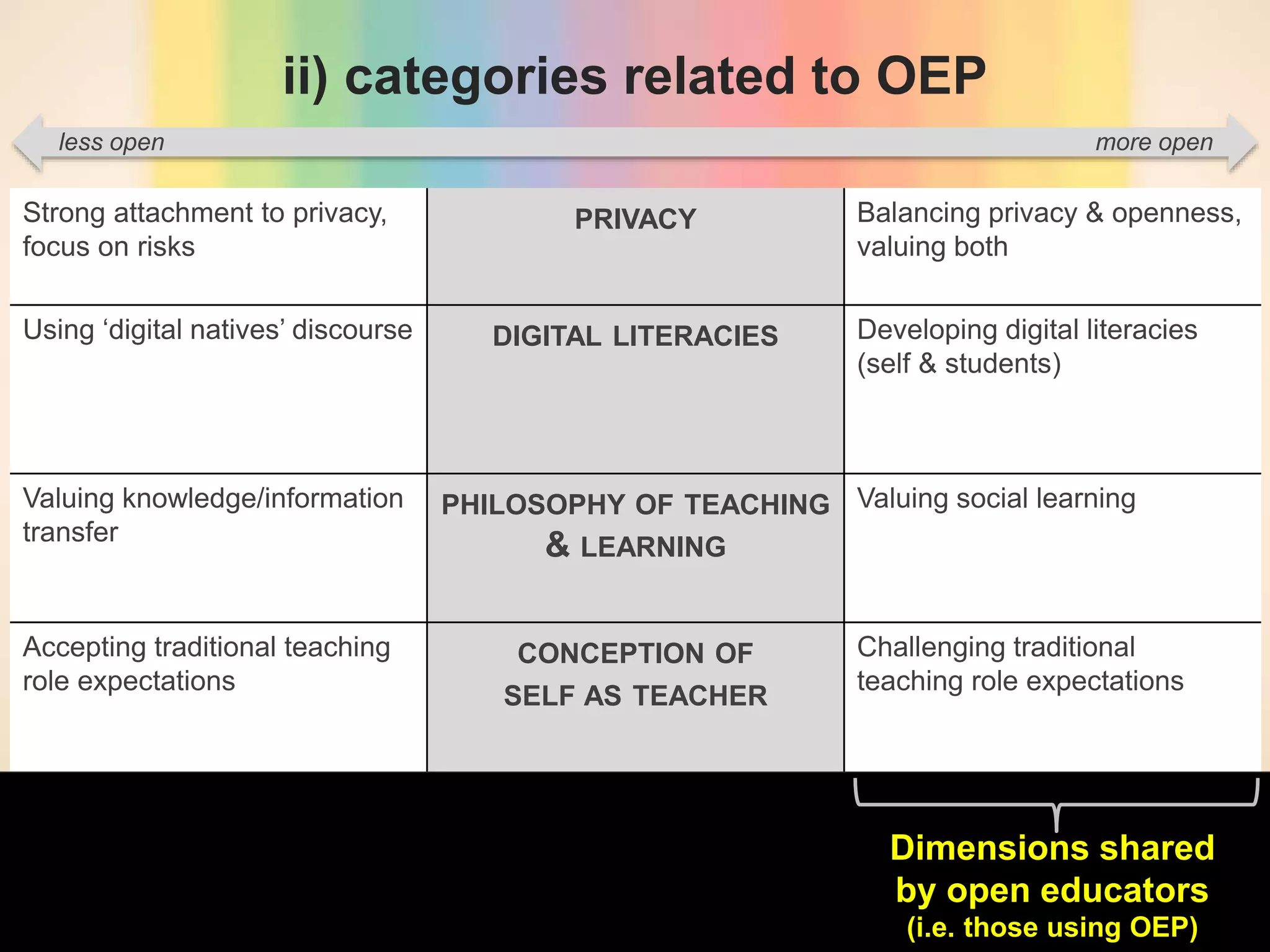
ii) categories related to OEP
Strong attachment to privacy,
focus on risks
PRIVACY Balancing privacy & openness,
valuing both
Using ‘digital natives’ discourse DIGITAL LITERACIES Developing digital literacies
(self & students)
Valuing knowledge/information
transfer
PHILOSOPHY OF TEACHING
& LEARNING
Valuing social learning
Accepting traditional teaching
role expectations
CONCEPTION OF
SELF AS TEACHER
Challenging traditional
teaching role expectations
less open more open
Dimensions shared
by open educators
(i.e. those using OEP)
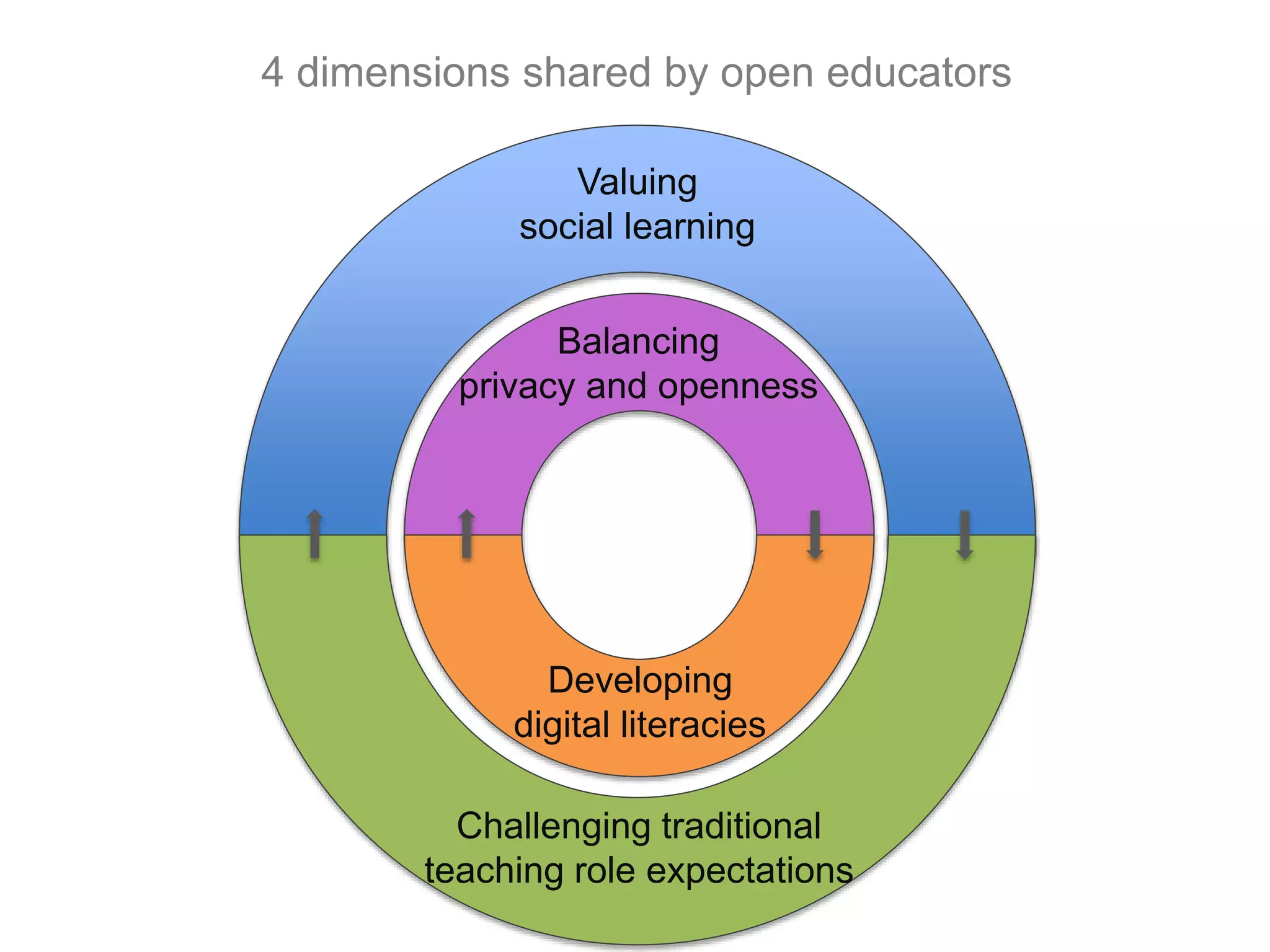
Balancing
privacy and openness
Developing
digital literacies
Valuing
social learning
Challenging traditional
teaching role expectations
4 dimensions shared by open educators
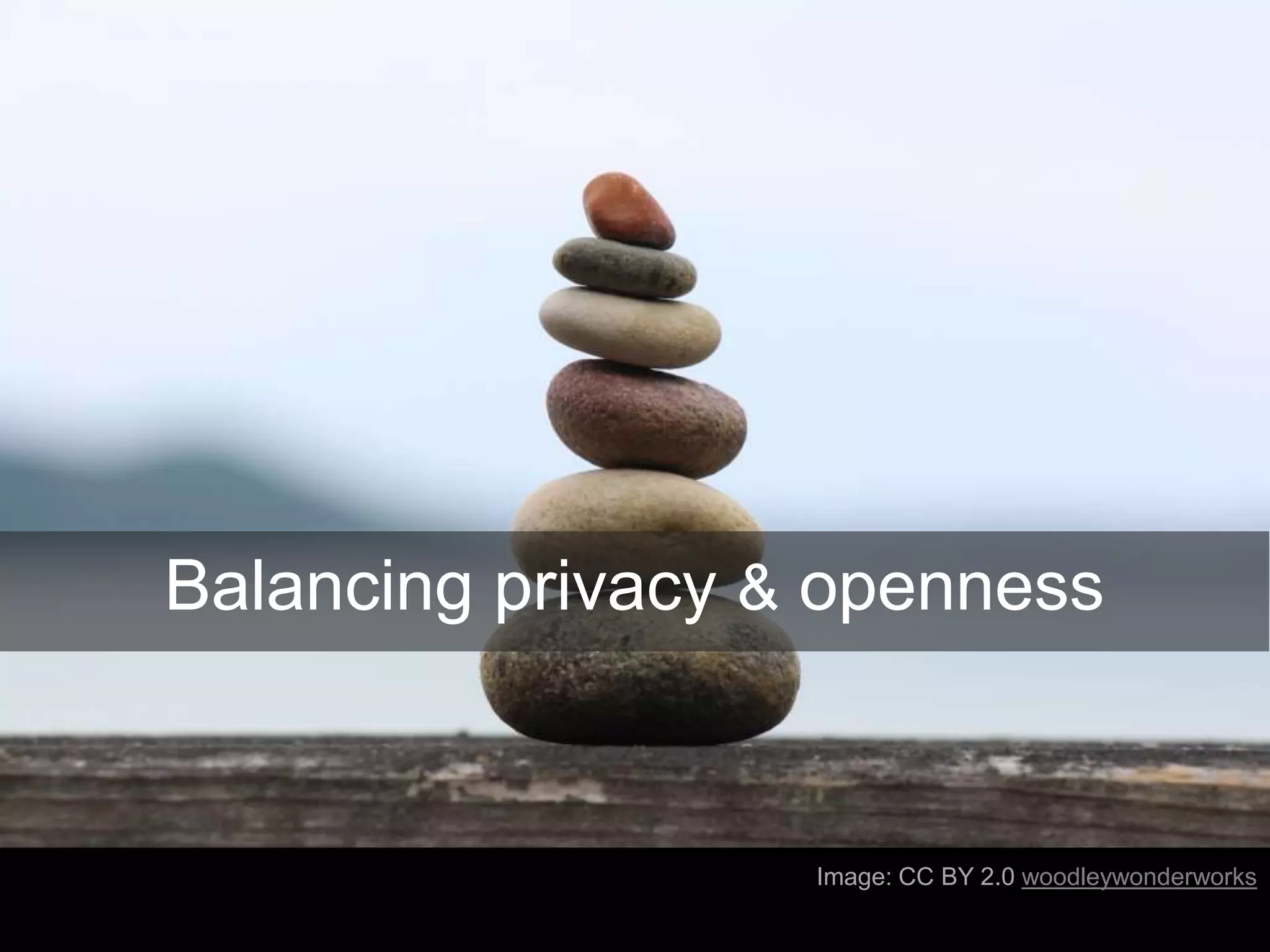
Balancing privacy & openness
Image: CC BY 2.0 woodleywonderworks
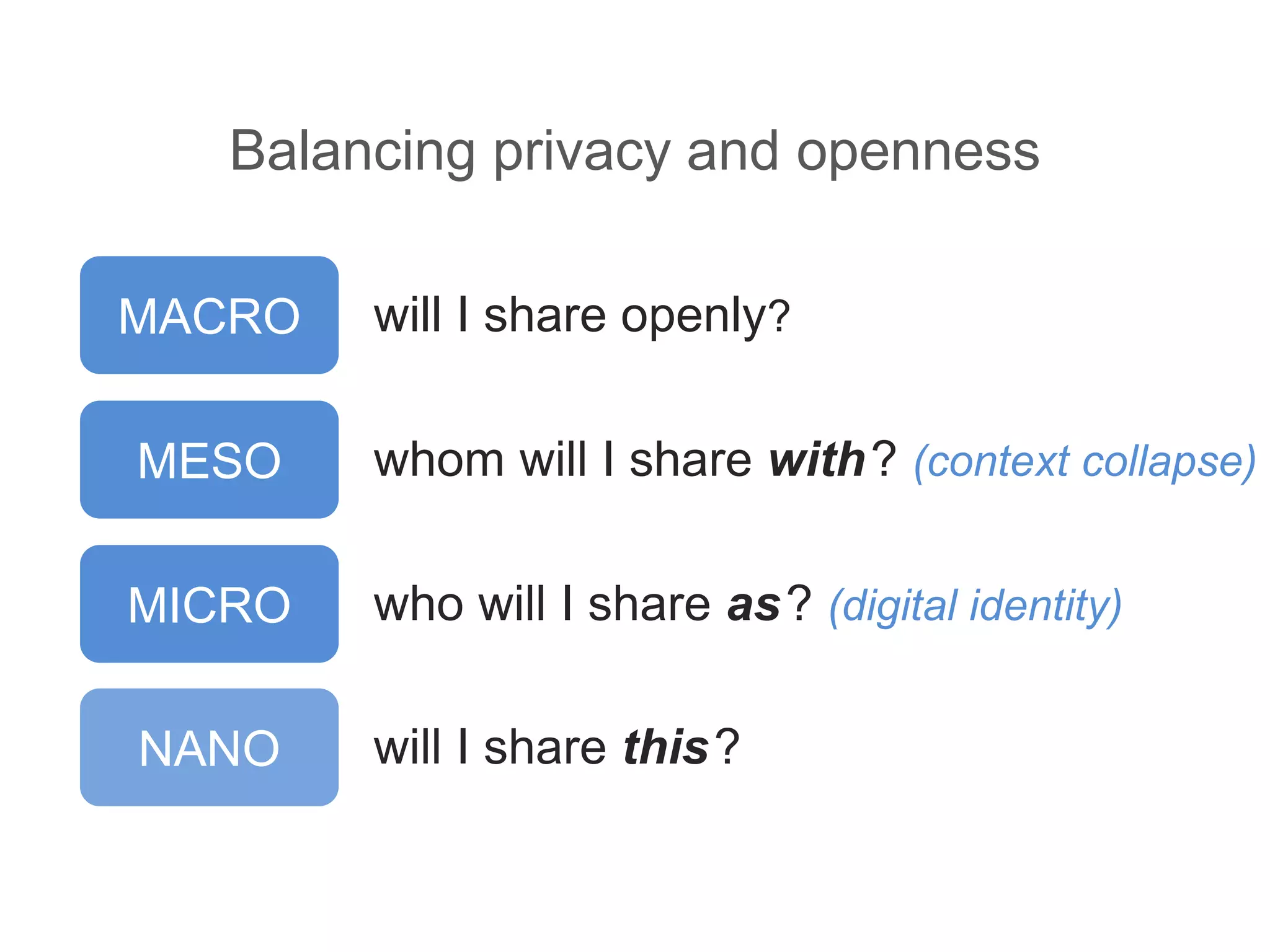
Balancing privacy and openness
will I share openly?
whom will I share with? (context collapse)
who will I share as? (digital identity)
will I share this?
MACRO
MESO
MICRO
NANO
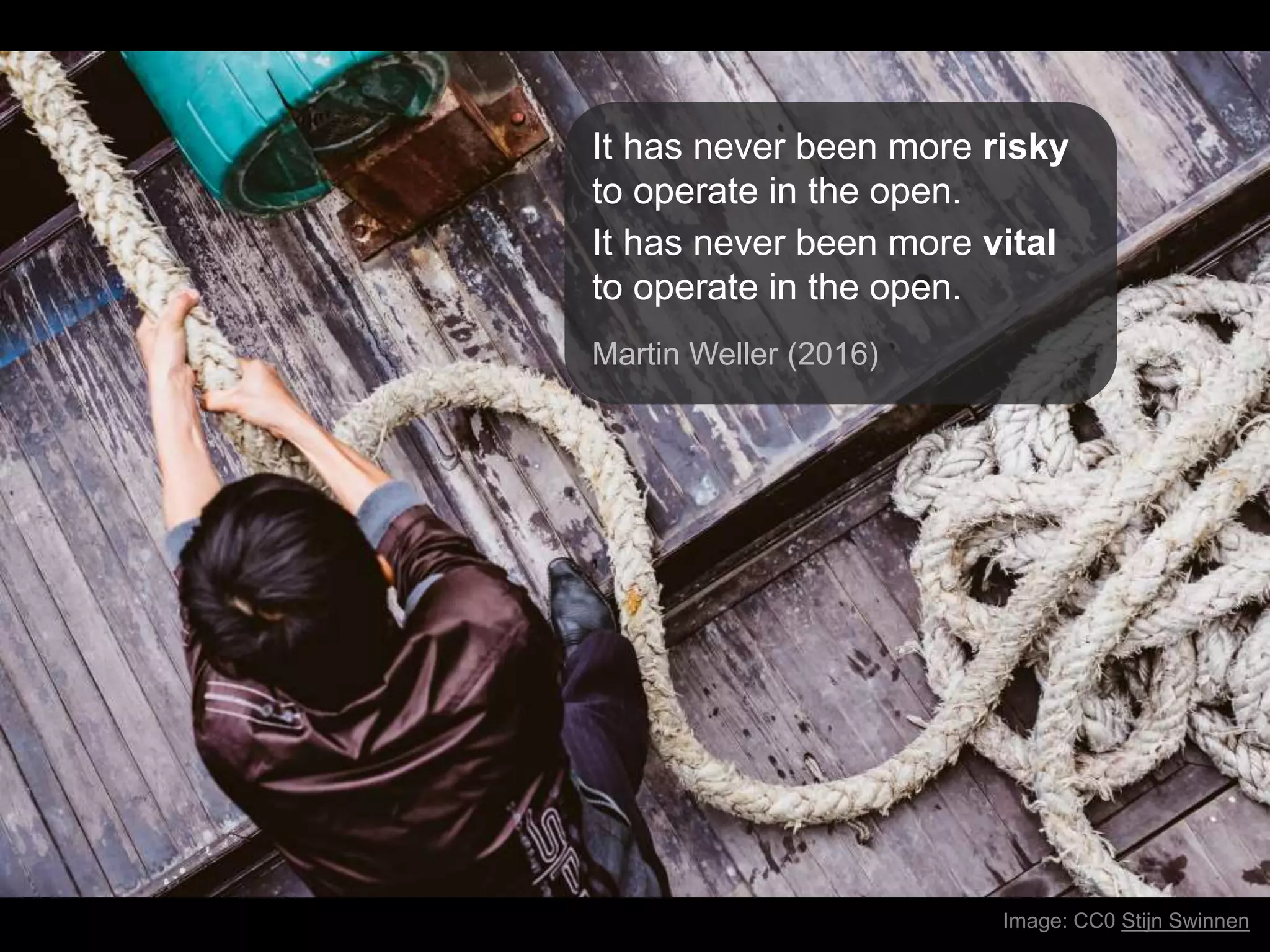
Image: CC0 Stijn Swinnen
It has never been more risky
to operate in the open.
It has never been more vital
to operate in the open.
Martin Weller (2016)
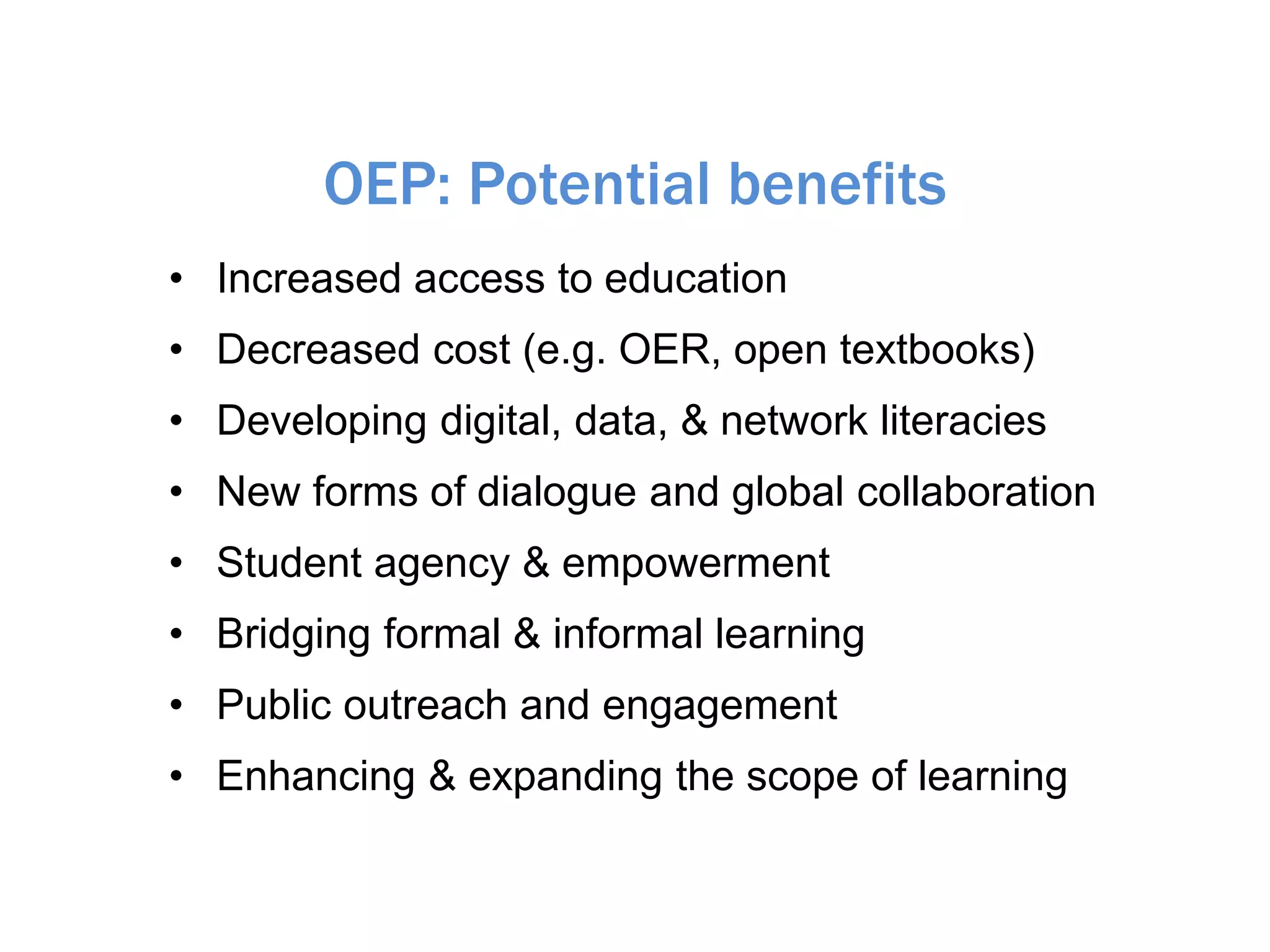
OEP: Potential benefits
• Increased access to education
• Decreased cost (e.g. OER, open textbooks)
• Developing digital, data, & network literacies
• New forms of dialogue and global collaboration
• Student agency & empowerment
• Bridging formal & informal learning
• Public outreach and engagement
• Enhancing & expanding the scope of learning
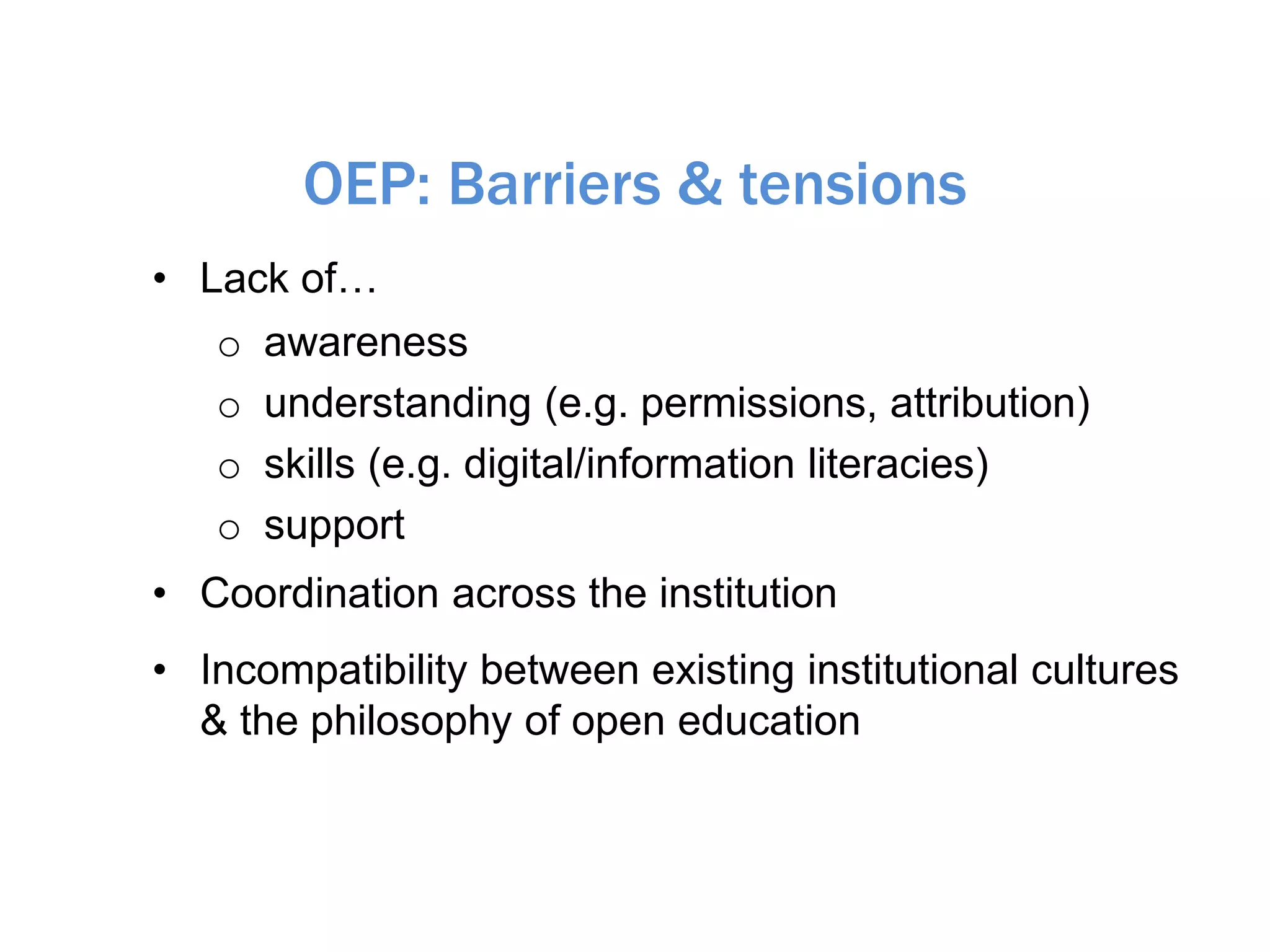
OEP: Barriers & tensions
• Lack of…
o awareness
o understanding (e.g. permissions, attribution)
o skills (e.g. digital/information literacies)
o support
• Coordination across the institution
• Incompatibility between existing institutional cultures
& the philosophy of open education
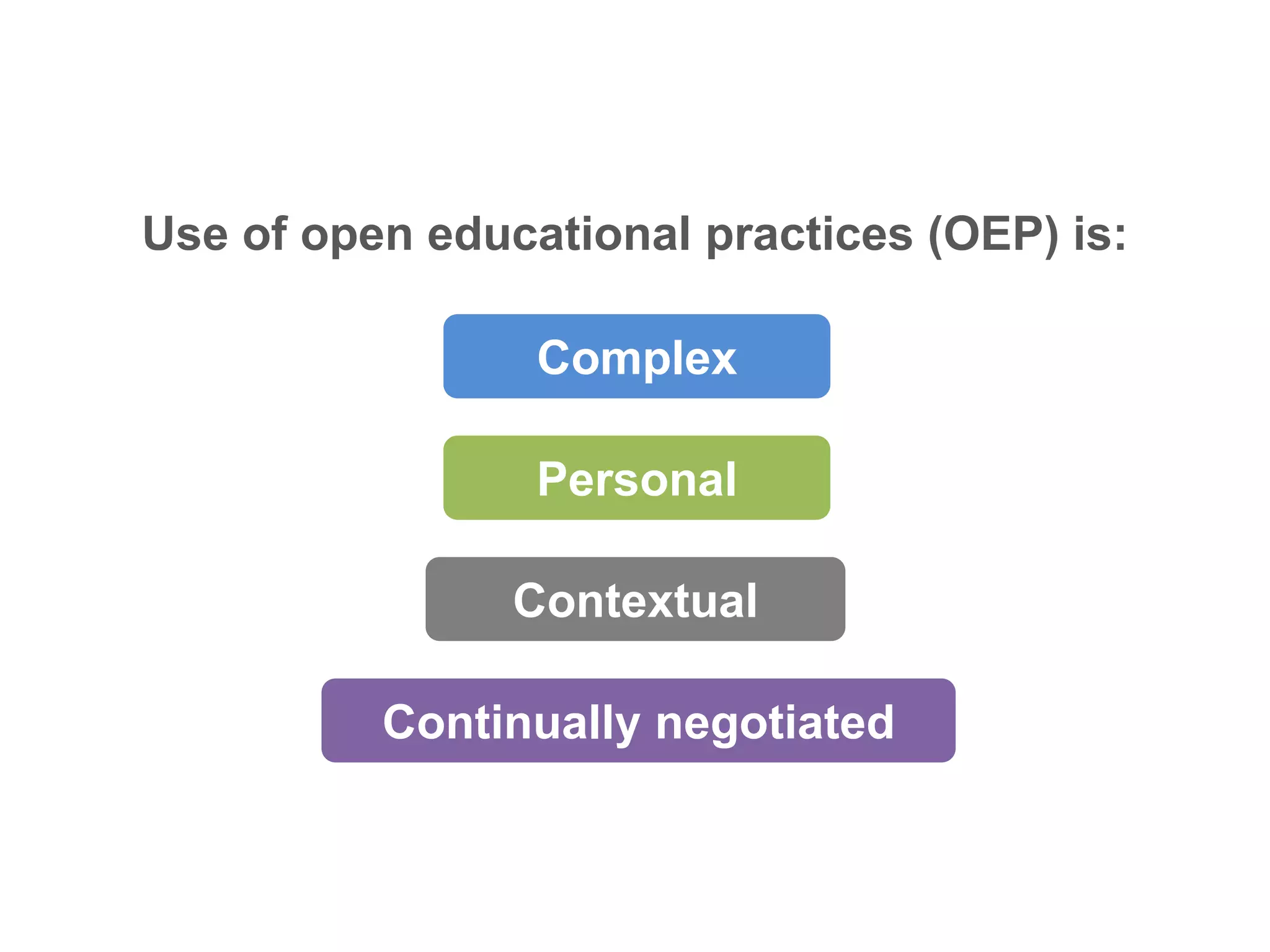
Use of open educational practices (OEP) is:
Complex
Personal
Contextual
Continually negotiated
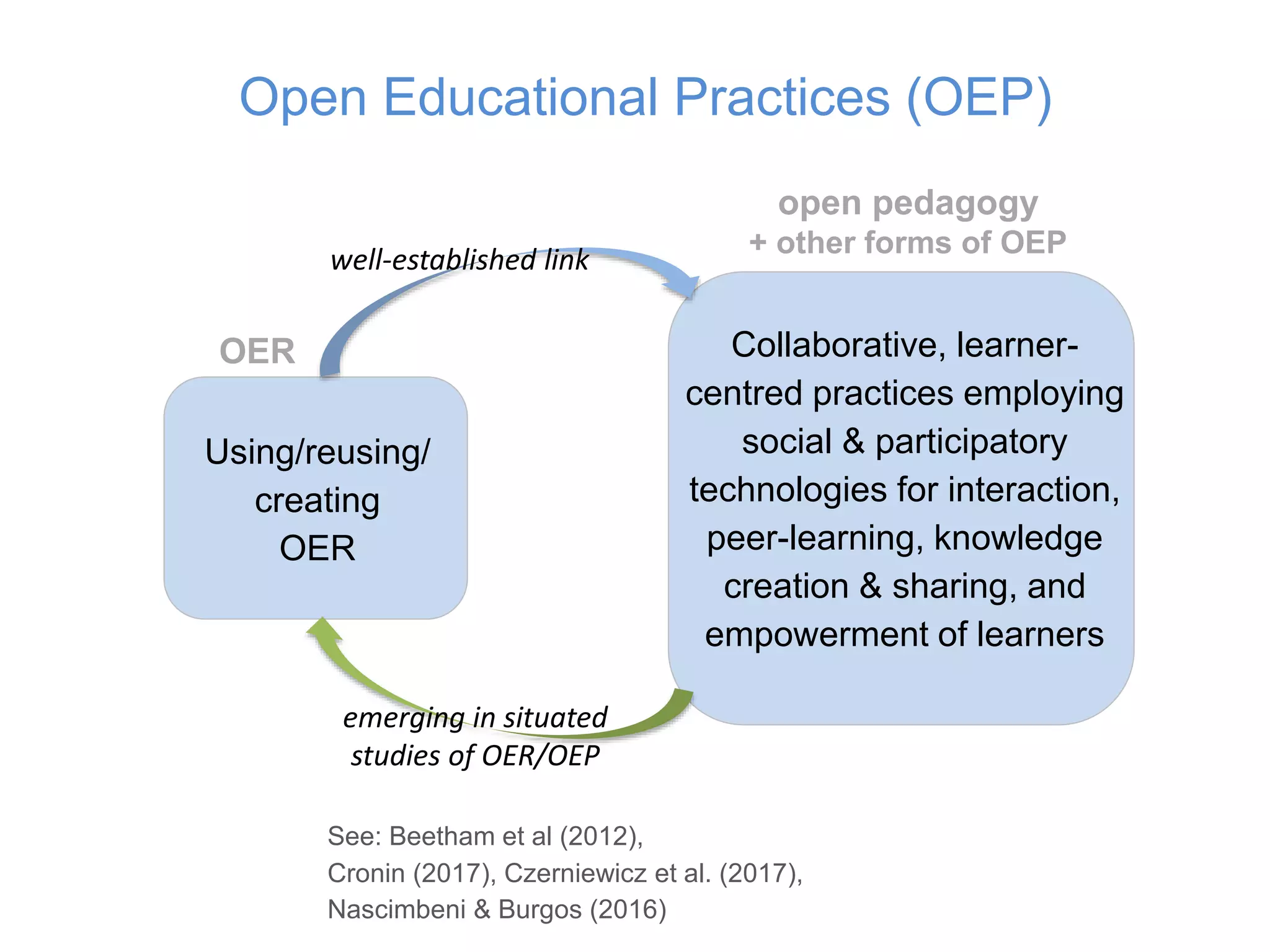
Open Educational Practices (OEP)
Using/reusing/
creating
OER
Collaborative, learner-
centred practices employing
social & participatory
technologies for interaction,
peer-learning, knowledge
creation & sharing, and
empowerment of learners
OER
open pedagogy
+ other forms of OEP
emerging in situated
studies of OER/OEP
well-established link
See: Beetham et al (2012),
Cronin (2017), Czerniewicz et al. (2017),
Nascimbeni & Burgos (2016)
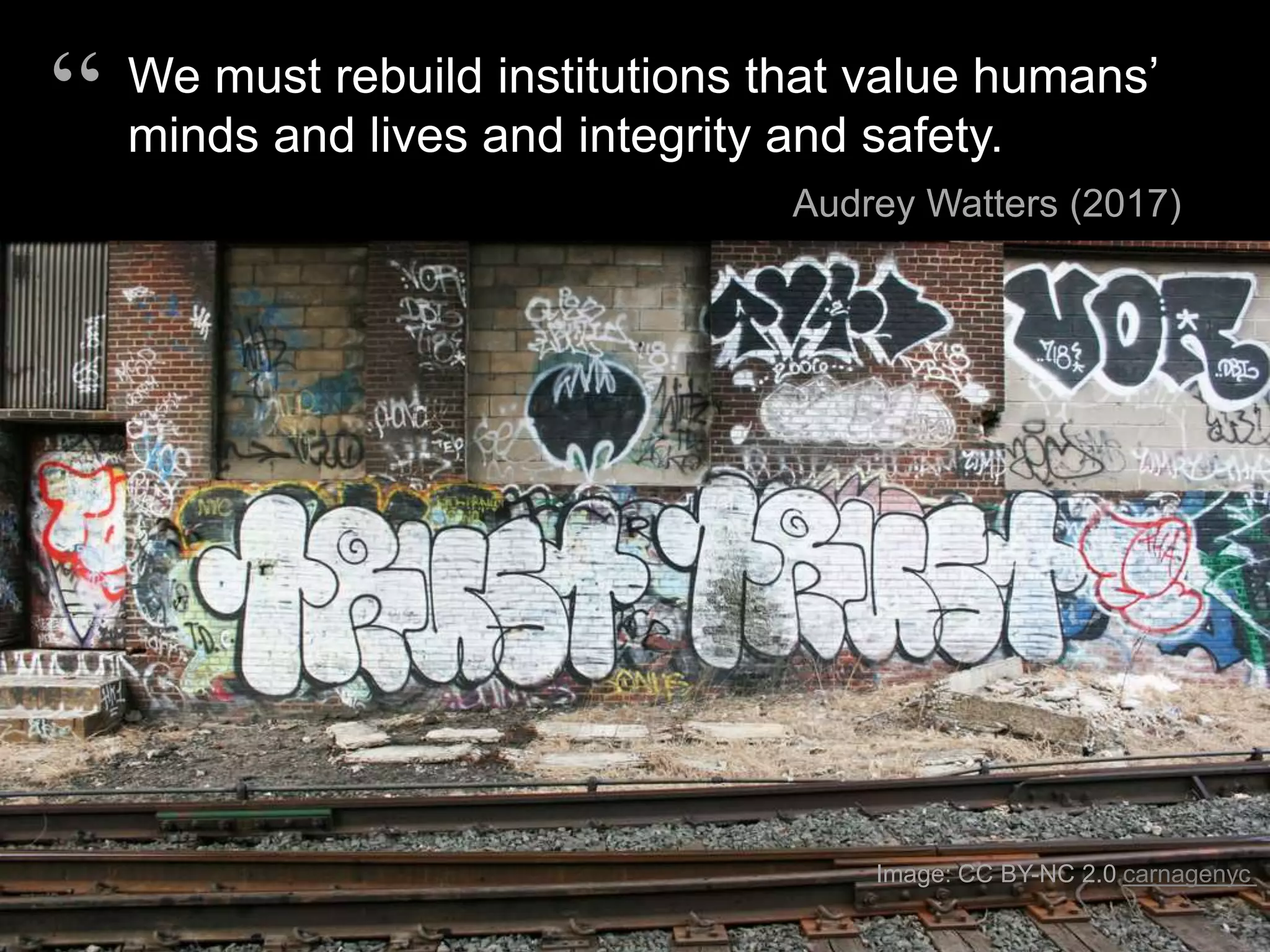
We must rebuild institutions that value humans’
minds and lives and integrity and safety.
Audrey Watters (2017)
“
Image: CC BY-NC 2.0 carnagenyc
Thank You!
Catherine Cronin
@catherinecronin
catherinecronin.net
Le spectre de la rose Jerome Robbins Dance Division
from the New York Public Library (public domain)

Open educational practices (OEP) in higher education: Practical and critical approaches

  • 1.
    Catherine Cronin #PRAXIS Projectwebinar  Uruguay  28th May 2018 Image: CC BY subherwal Open Educational Practices in Higher Ed: Practical & Critical Approaches
  • 2.
    Catherine Cronin open educator,open resercher CELT, National University of Ireland, Galway @catherinecronin  catherinecronin.net
  • 3.
    Le spectre dela rose Jerome Robbins Dance Division from the New York Public Library (public domain) To hope is to give yourself to the future, and that commitment to the future makes the present inhabitable. Rebecca Solnit (2004) Hope in the Dark “
  • 4.
    networked educators networked students Physical Spaces Bounded Online Spaces Open Online Spaces Image: CC BY-SA2.0 Catherine Cronin, built on Networked Teacher image CC BY-NC-SA 2.0 Alec Couros higher education
  • 5.
    pen Image: CC0 byNadine Shaabana
  • 6.
    open education goal philosophy  values resources, tools and practices that employ a framework of open sharing to improve educational access and effectiveness worldwide - The Open Education Consortium
  • 7.
    Use/reuse/creation of OERand collaborative, pedagogical practices employing social and participatory technologies for interaction, peer-learning, knowledge creation and sharing, and empowerment of learners. OEP: open educational practices
  • 8.
    Open education isa tool for social change. Santos, A.I., Punie, Y., & Muñoz, J.C. (2016) Opening up Education: A Support Framework for Higher Education Institutions “
  • 9.
    Openness is notthe opposite of closed-ness, nor is there simply a continuum between the two… An important question becomes not simply whether education is more or less open, but what forms of openness are worthwhile and for whom; openness alone is not an educational virtue. Richard Edwards (2015) Knowledge infrastructures and the inscrutability of openness in education Learning, Media and Technology 40(3) “ Adopting a critical approach
  • 10.
    Openness and praxis: Asituated study of academic staff meaning-making & decision-making with respect to openness and use of open educational practices (OEP) in higher education PhD research study completed April 2018
  • 11.
    I began witha question: In academic settings in which the use of OEP is not required, requested, expected, or specifically supported, why do some educators, and not others, choose to use OEP? (...and then what happens?) Image: CC0 BY Mark Solarski on Unsplash
  • 12.
    Image: CC0 photoby Saksham Gangwar
  • 13.
    Institutional, role-based identityDIGITAL IDENTITY Open, networked, ‘Resident’ identity Not using social media, or personal use only DIGITAL NETWORKING Using social media personally & professionally Using VLE & email only DIGITAL TOOLS FOR TEACHING Using VLE & email as well as open tools & social media Not intentionally using OER OER Intentionally using OER less open more open i) digital practices Using OEP
  • 14.
    ii) categories relatedto OEP Strong attachment to privacy, focus on risks PRIVACY Balancing privacy & openness, valuing both Using ‘digital natives’ discourse DIGITAL LITERACIES Developing digital literacies (self & students) Valuing knowledge/information transfer PHILOSOPHY OF TEACHING & LEARNING Valuing social learning Accepting traditional teaching role expectations CONCEPTION OF SELF AS TEACHER Challenging traditional teaching role expectations less open more open Dimensions shared by open educators (i.e. those using OEP)
  • 15.
    Balancing privacy and openness Developing digitalliteracies Valuing social learning Challenging traditional teaching role expectations 4 dimensions shared by open educators
  • 16.
    Balancing privacy &openness Image: CC BY 2.0 woodleywonderworks
  • 17.
    Balancing privacy andopenness will I share openly? whom will I share with? (context collapse) who will I share as? (digital identity) will I share this? MACRO MESO MICRO NANO
  • 18.
    Image: CC0 StijnSwinnen It has never been more risky to operate in the open. It has never been more vital to operate in the open. Martin Weller (2016)
  • 19.
    OEP: Potential benefits •Increased access to education • Decreased cost (e.g. OER, open textbooks) • Developing digital, data, & network literacies • New forms of dialogue and global collaboration • Student agency & empowerment • Bridging formal & informal learning • Public outreach and engagement • Enhancing & expanding the scope of learning
  • 20.
    OEP: Barriers &tensions • Lack of… o awareness o understanding (e.g. permissions, attribution) o skills (e.g. digital/information literacies) o support • Coordination across the institution • Incompatibility between existing institutional cultures & the philosophy of open education
  • 21.
    Use of openeducational practices (OEP) is: Complex Personal Contextual Continually negotiated
  • 22.
    Open Educational Practices(OEP) Using/reusing/ creating OER Collaborative, learner- centred practices employing social & participatory technologies for interaction, peer-learning, knowledge creation & sharing, and empowerment of learners OER open pedagogy + other forms of OEP emerging in situated studies of OER/OEP well-established link See: Beetham et al (2012), Cronin (2017), Czerniewicz et al. (2017), Nascimbeni & Burgos (2016)
  • 23.
    We must rebuildinstitutions that value humans’ minds and lives and integrity and safety. Audrey Watters (2017) “ Image: CC BY-NC 2.0 carnagenyc
  • 24.
    Thank You! Catherine Cronin @catherinecronin catherinecronin.net Lespectre de la rose Jerome Robbins Dance Division from the New York Public Library (public domain)