Malinka Ivanova, Technical University – Sofia, Bulgaria The 5th International Scientific Conference   eLSE - eLearning and Software for Education,  BUCHAREST, April 09-10, 2009  From Personal Learning Environment Building to Professional Learning Network Forming From Personal Learning Environment Building to Professional Learning Network Forming
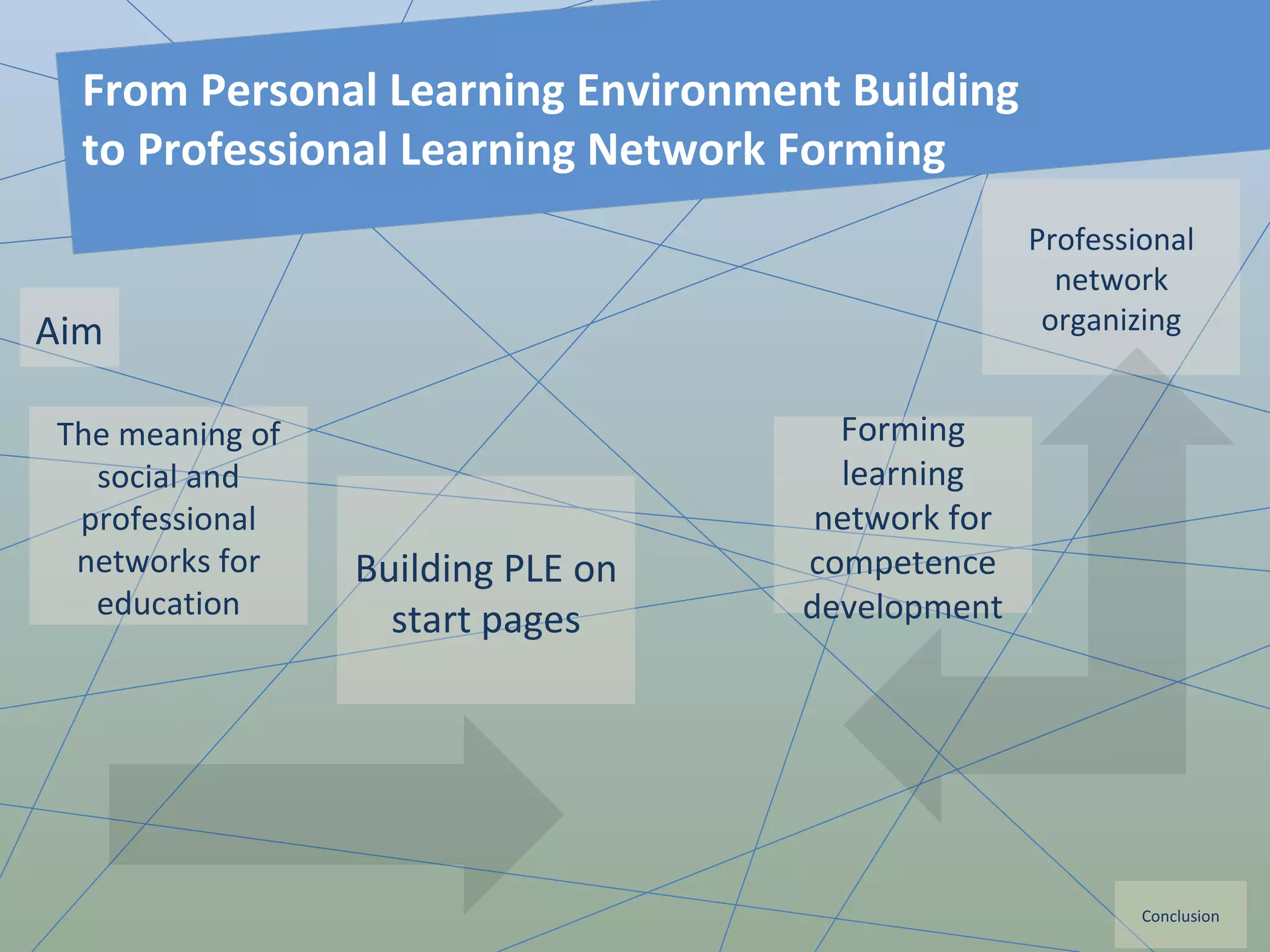
From Personal Learning Environment Building to Professional Learning Network Forming Aim Forming learning network for competence development Professional network organizing The meaning of social and professional networks for education Building PLE on start pages Conclusion
To analyze the experience gained in using of Web 2.0 environment for competence development and for professional network organizing  Aim
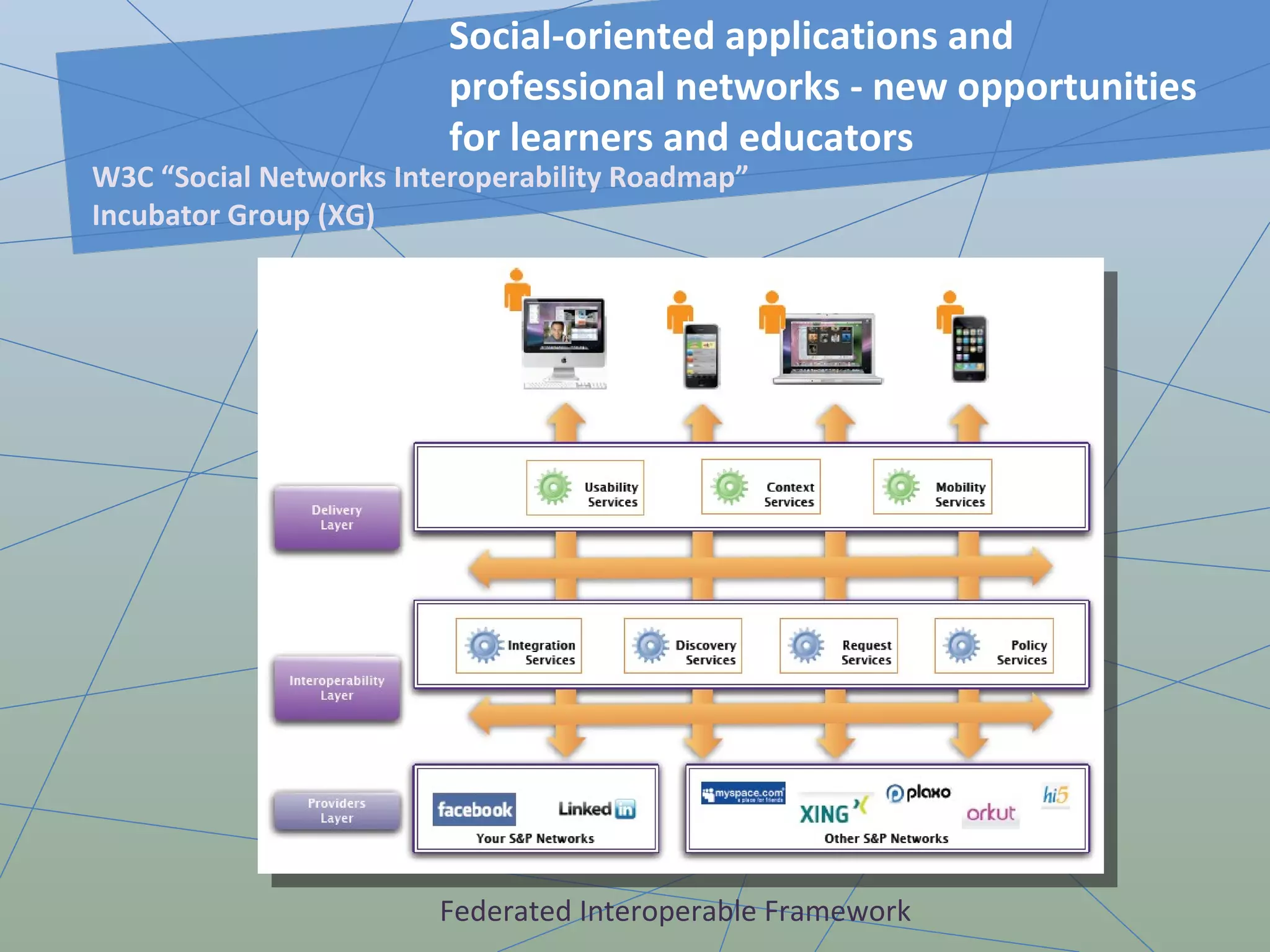
Social-oriented applications and professional networks - new opportunities for learners and educators  W3C “Social Networks Interoperability Roadmap” Incubator Group (XG) Federated Interoperable Framework
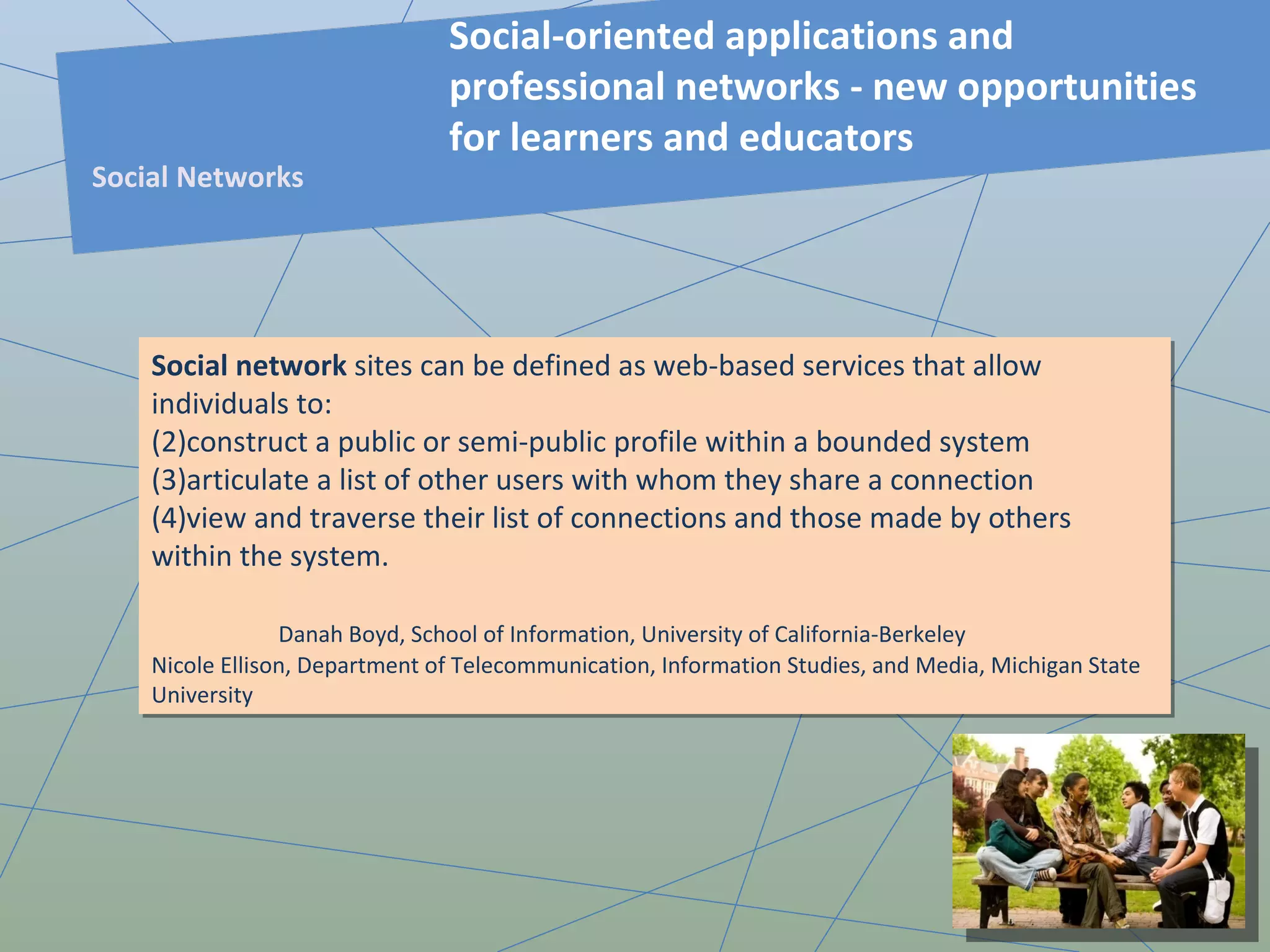
Social network  sites can be defined as web-based services that allow individuals to: construct a public or semi-public profile within a bounded system  articulate a list of other users with whom they share a connection  view and traverse their list of connections and those made by others within the system. Danah Boyd, School of Information, University of California-Berkeley  Nicole Ellison, Department of Telecommunication, Information Studies, and Media, Michigan State University Social-oriented applications and professional networks - new opportunities for learners and educators  Social Networks
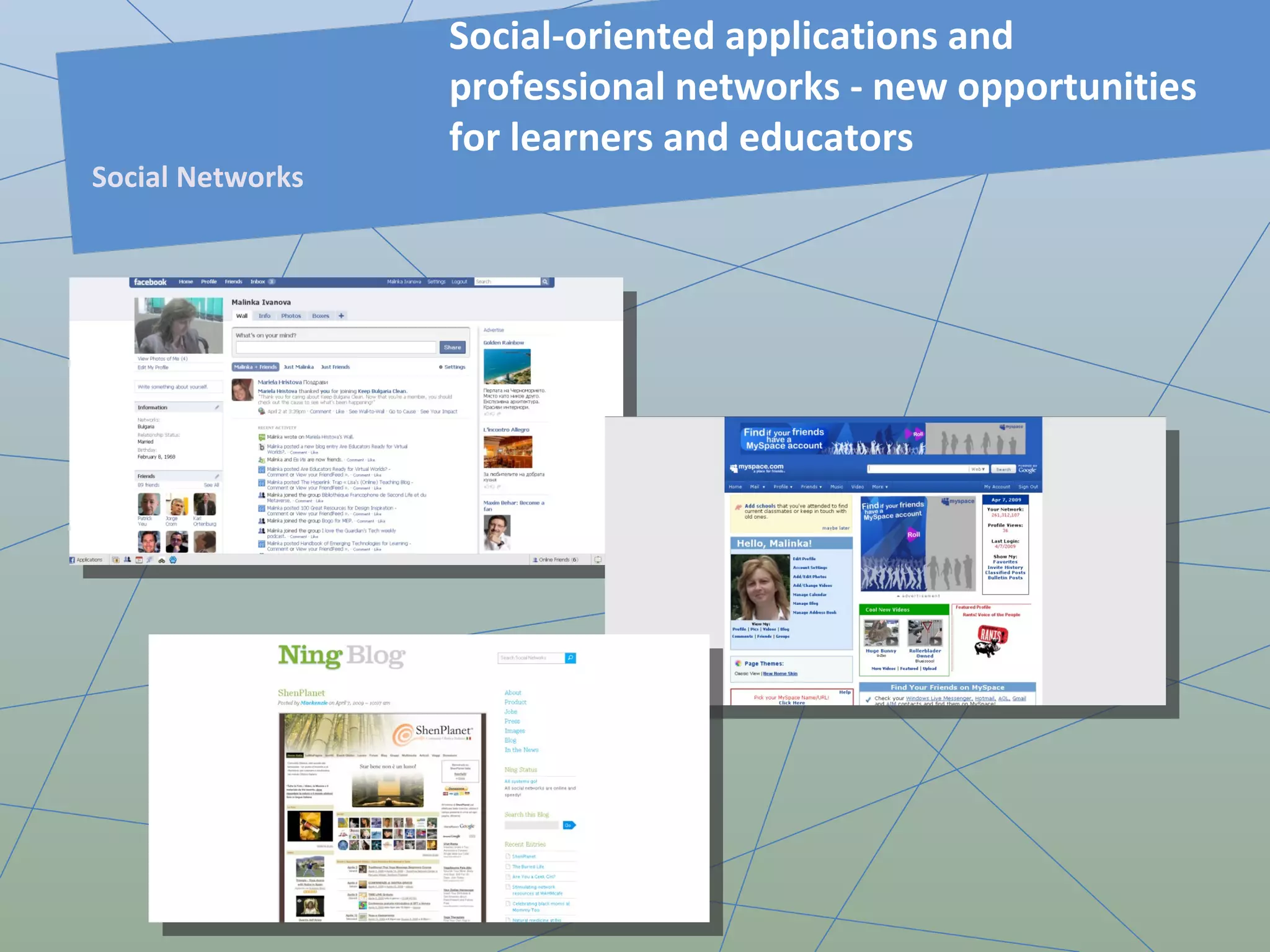
Social-oriented applications and professional networks - new opportunities for learners and educators Social Networks
Professional network  generally refers to a professional network service, a virtual community that it is focused on professional interactions instead of social interactions. Wikipedia Social-oriented applications and professional networks - new opportunities for learners and educators Professional Networks
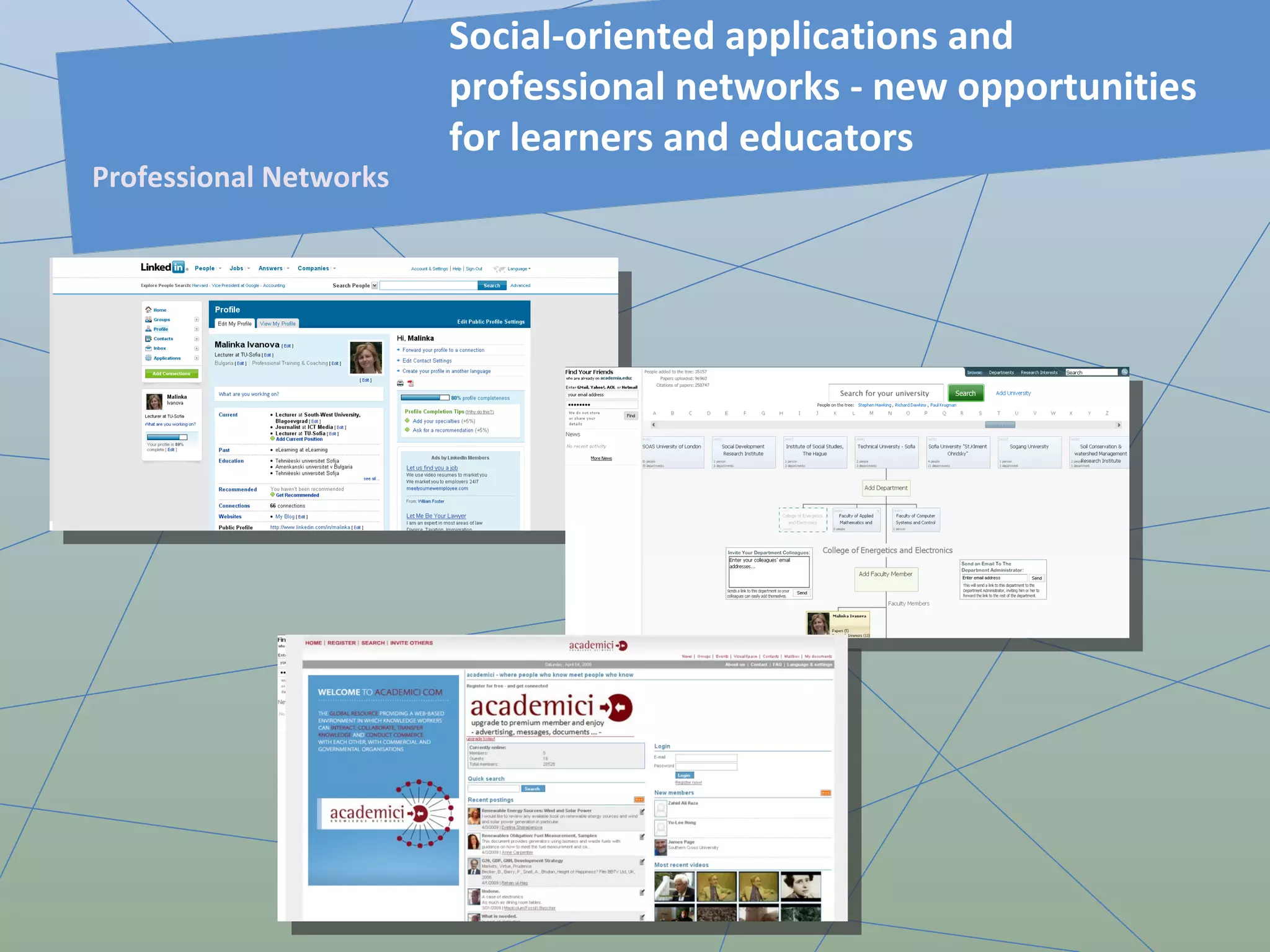
Social-oriented applications and professional networks - new opportunities for learners and educators  Professional Networks
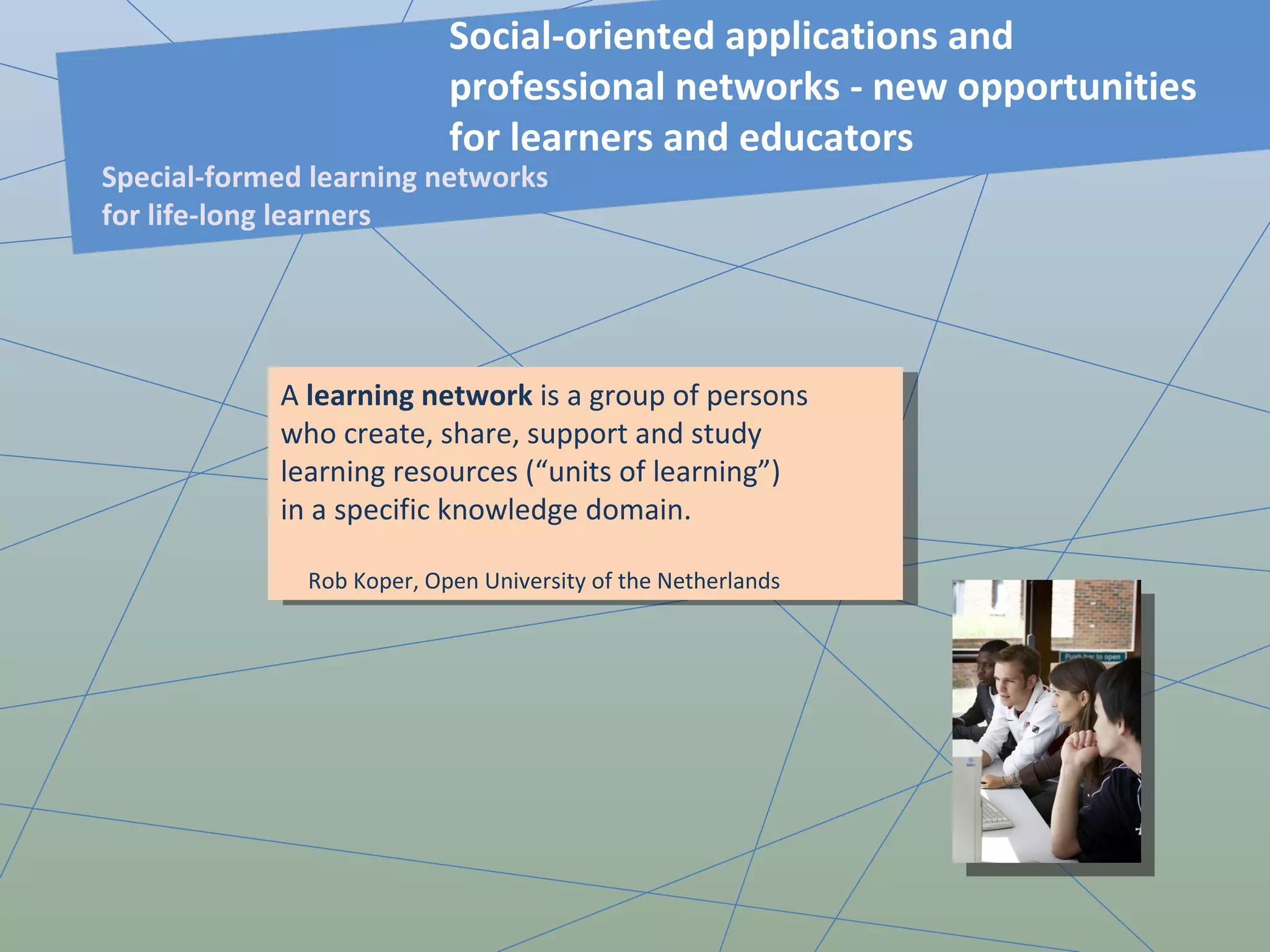
A  learning network  is a group of persons who create, share, support and study learning resources (“units of learning”) in a specific knowledge domain. Rob Koper, Open University of the Netherlands Social-oriented applications and professional networks - new opportunities for learners and educators  Special-formed learning networks for life-long learners
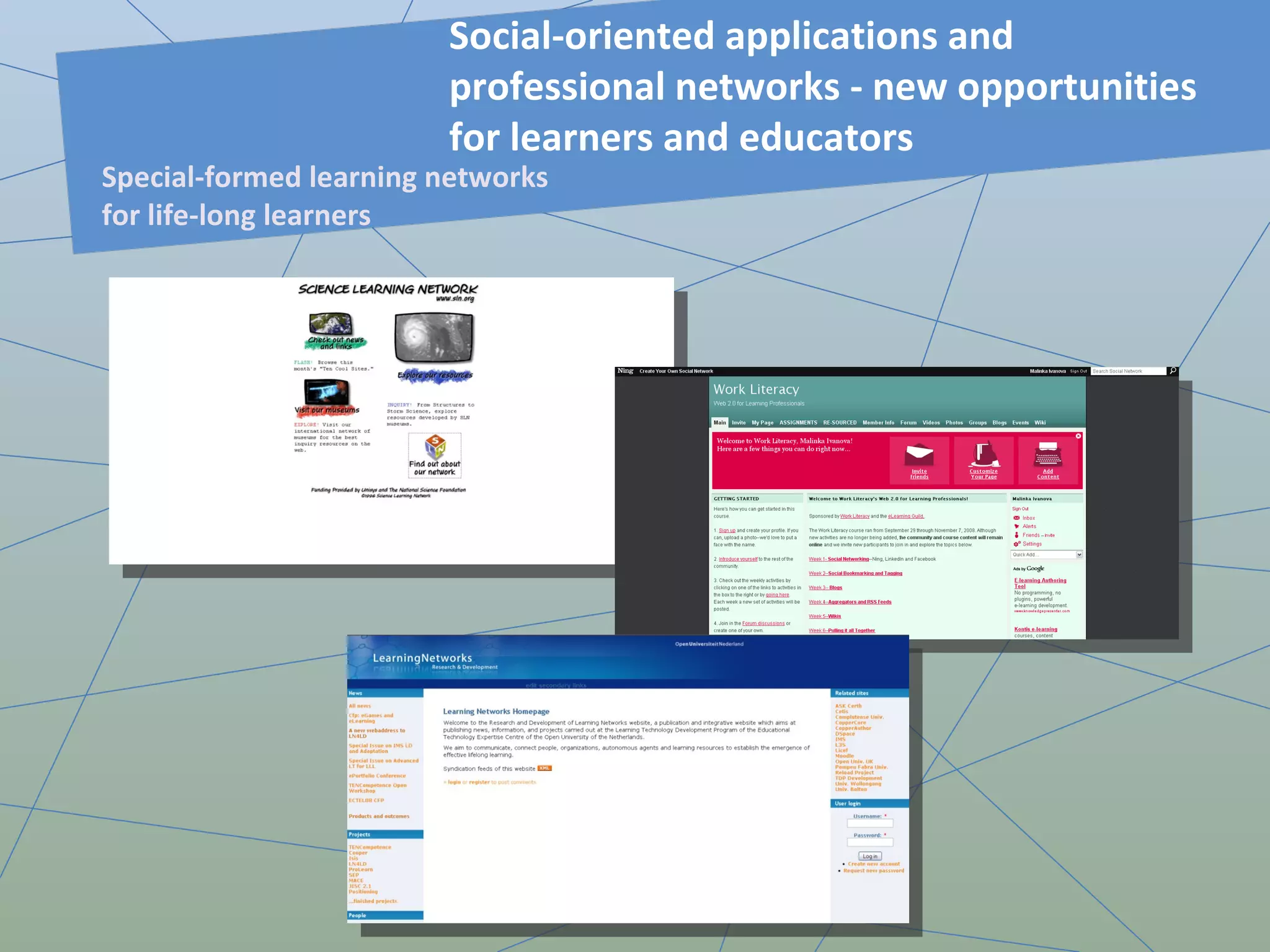
Social-oriented applications and professional networks - new opportunities for learners and educators  Special-formed learning networks for life-long learners
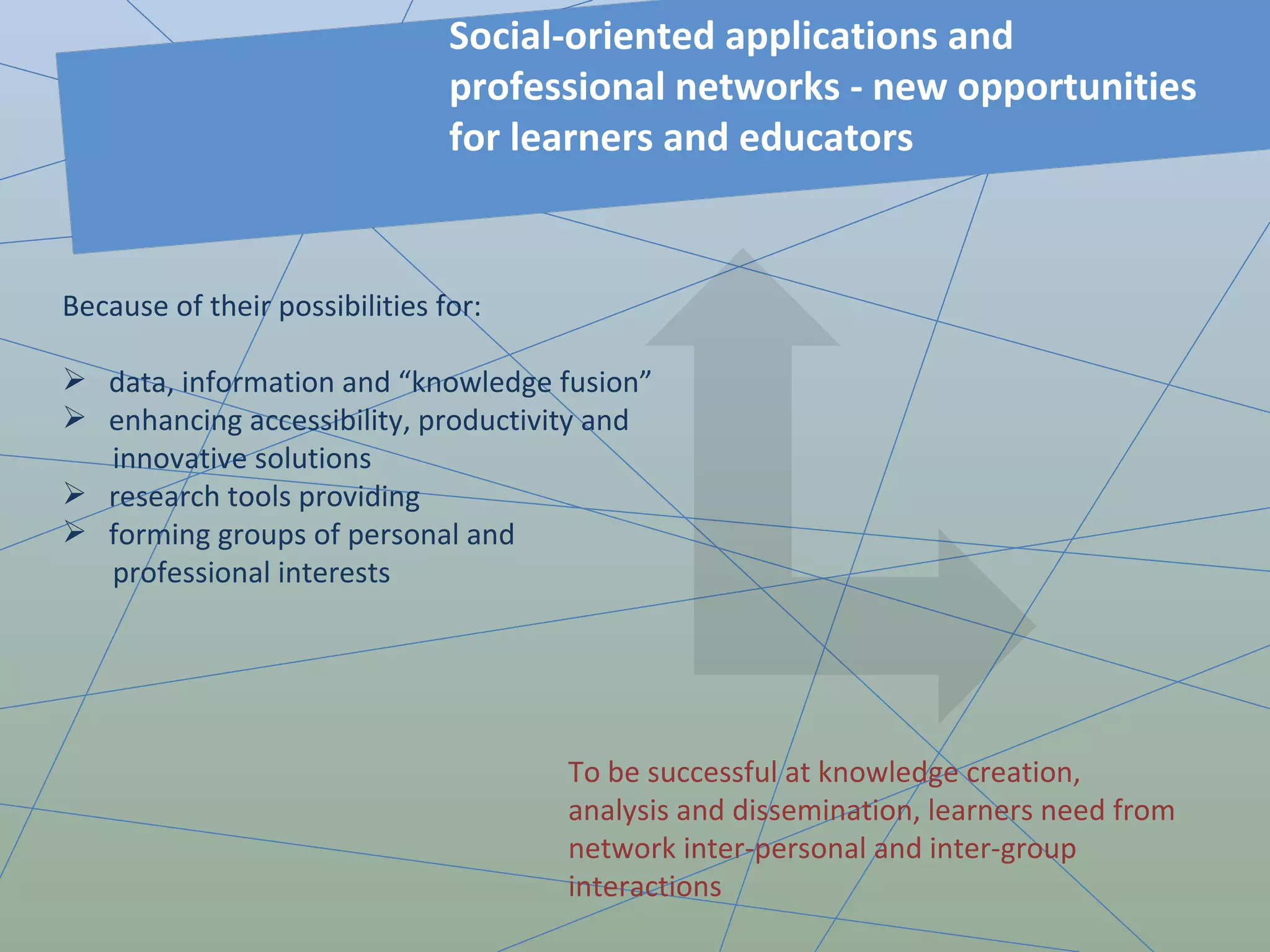
Because of their possibilities for: data, information and “knowledge fusion” enhancing accessibility, productivity and innovative solutions research tools providing forming groups of personal and  professional interests Social-oriented applications and professional networks - new opportunities for learners and educators  To be successful at knowledge creation, analysis and dissemination, learners need from network inter-personal and inter-group interactions
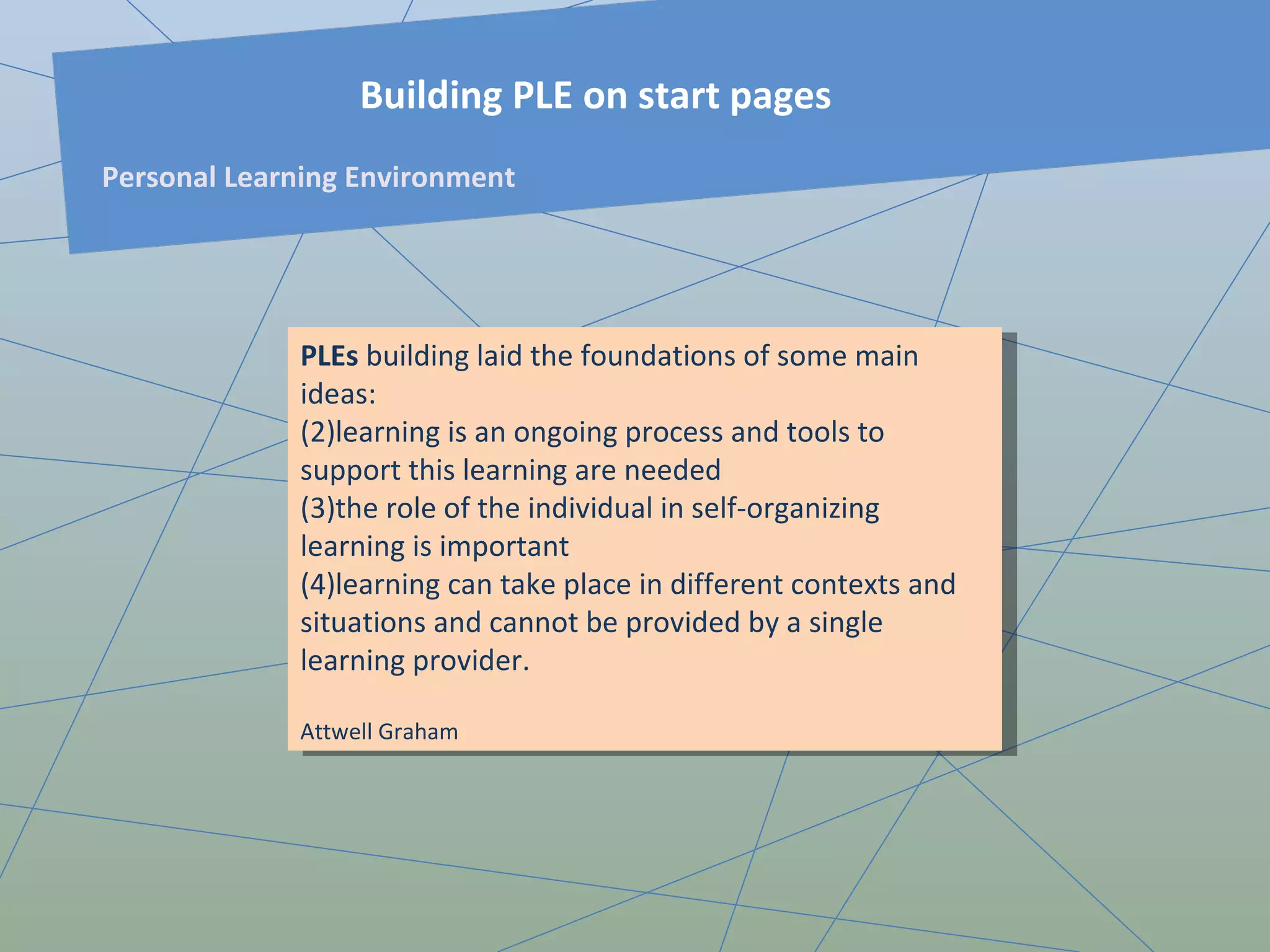
PLEs  building laid the foundations of some main ideas:  learning is an ongoing process and tools to support this learning are needed the role of the individual in self-organizing learning is important learning can take place in different contexts and situations and cannot be provided by a single learning provider. Attwell  Graham Building PLE on start pages Personal Learning Environment
PLE s  are systems that help learners take control of and manage their own learning.  This includes providing support for learners to set their own learning goals, manage their learning;  managing both content and process;  communicate with others in the process of learning and thereby achieve learning goals.  Wikipedia Building PLE on start pages Personal Learning Environment
Web 2.0 applications called “ start pages ” are designed to provide a personalized place on the internet where users can mashup data, information and knowledge available anywhere, anytime, including mobile login. Wikipedia   Building PLE on start pages Start pages
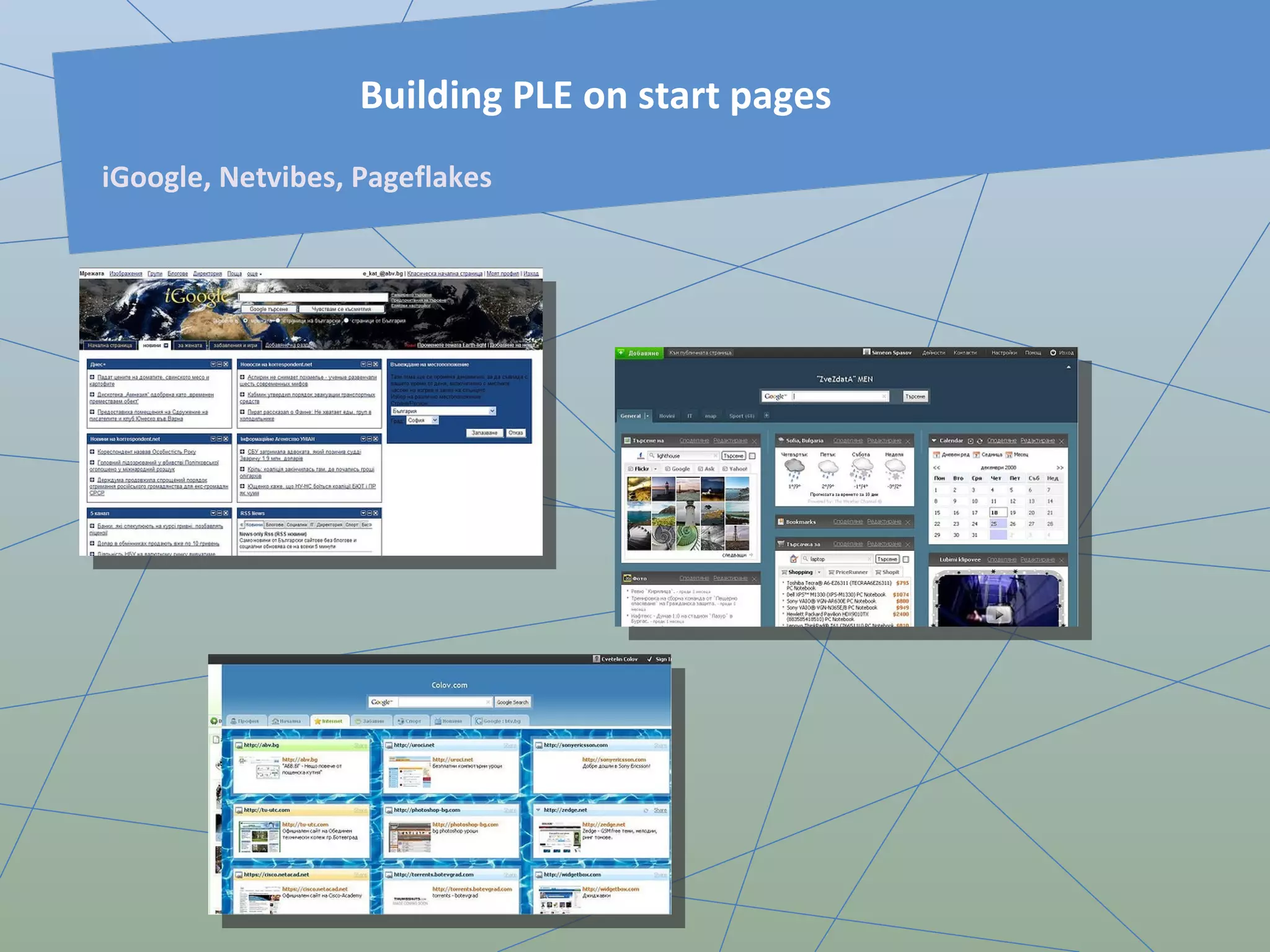
Building PLE on start pages iGoogle, Netvibes, Pageflakes
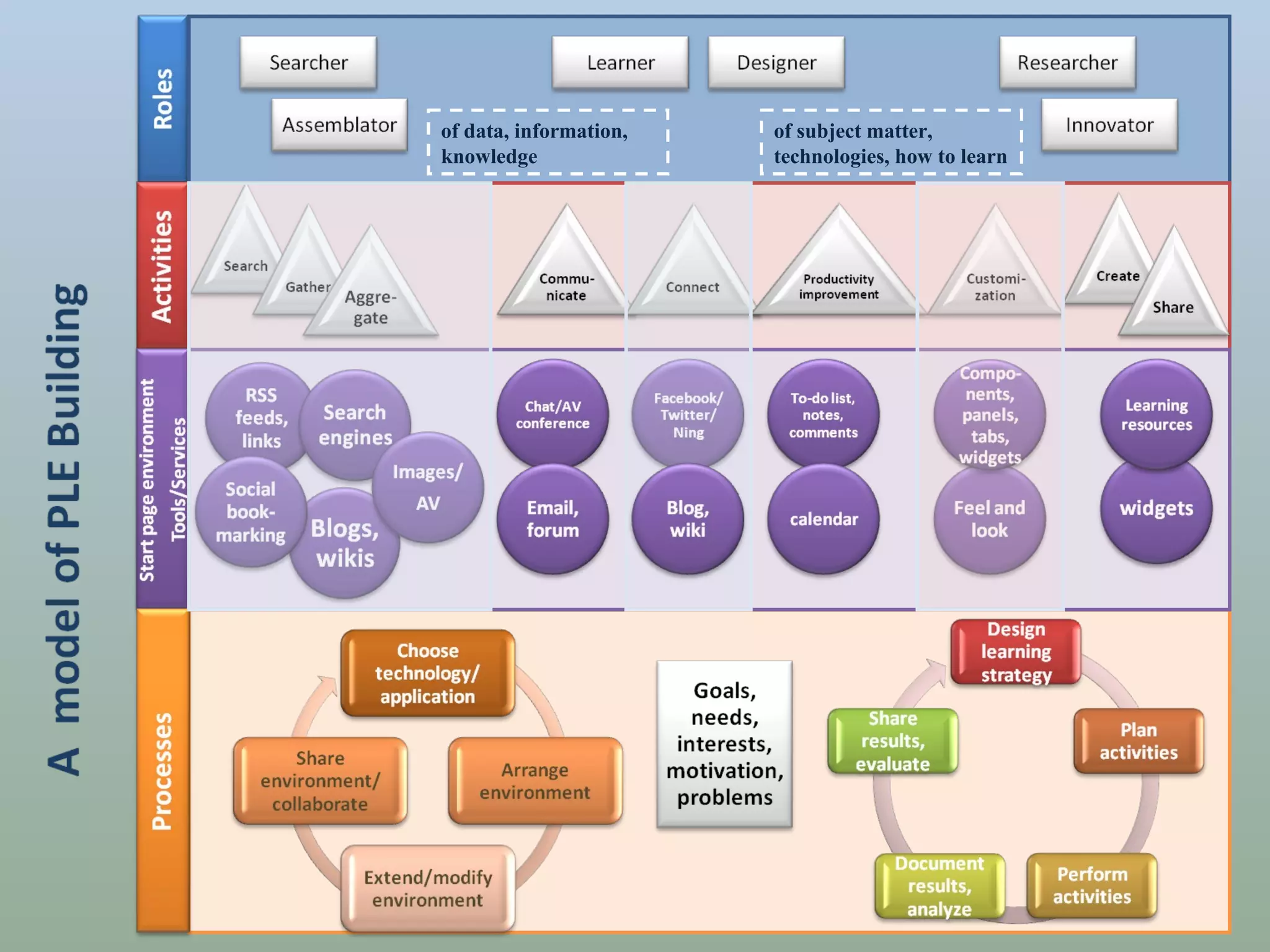
of data, information, knowledge of subject matter, technologies, how to learn
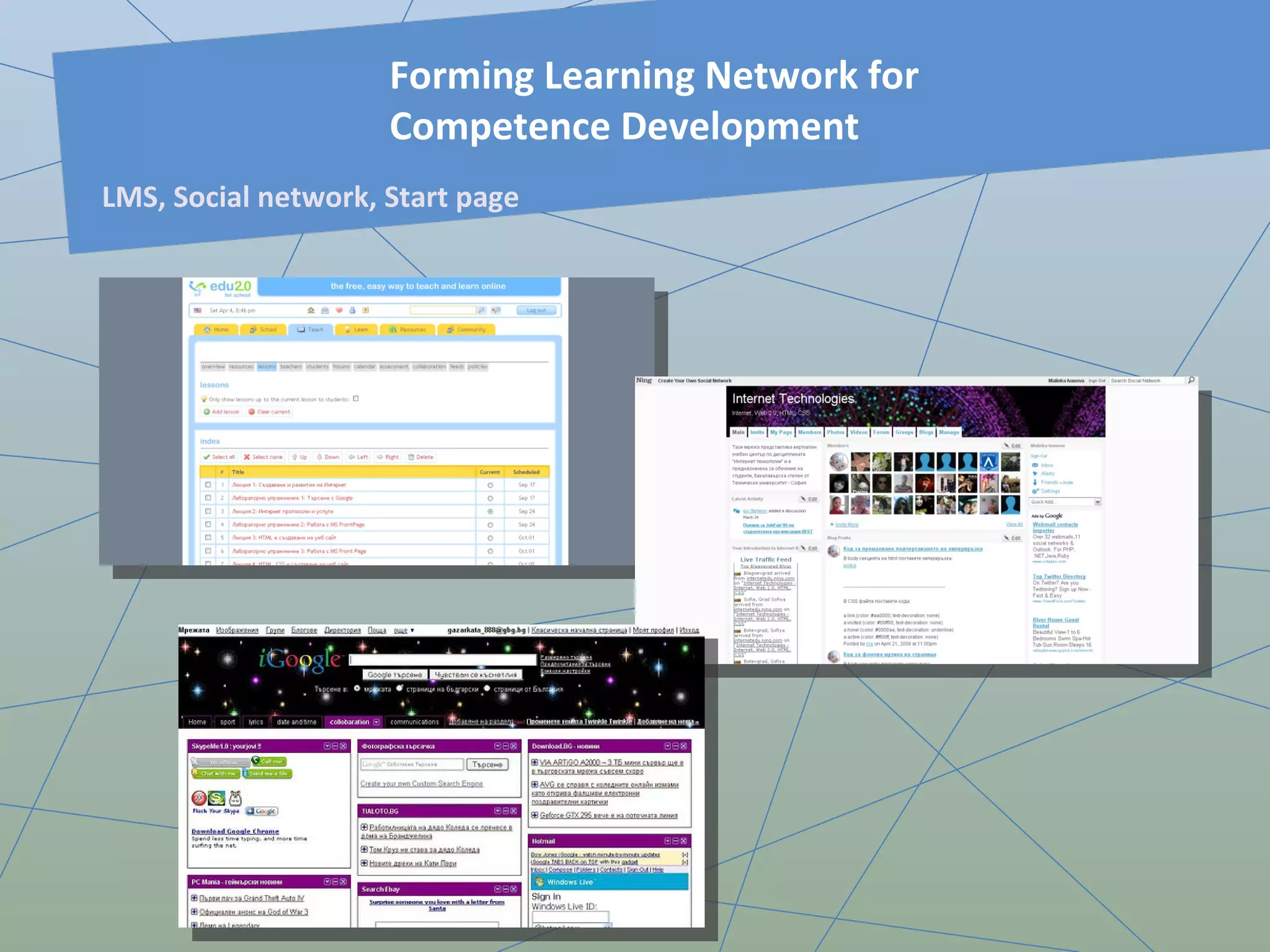
Forming Learning Network for Competence Development LMS, Social network, Start page
Forming the  learning network  of the course  Internet Technologies  is to: provide sustainable value to students, not only during the course, but also after its finishing stimulate them to contribute their knowledge, insights and experiences on a continuous basis Forming Learning Network for Competence Development LMS, Social network, Start page
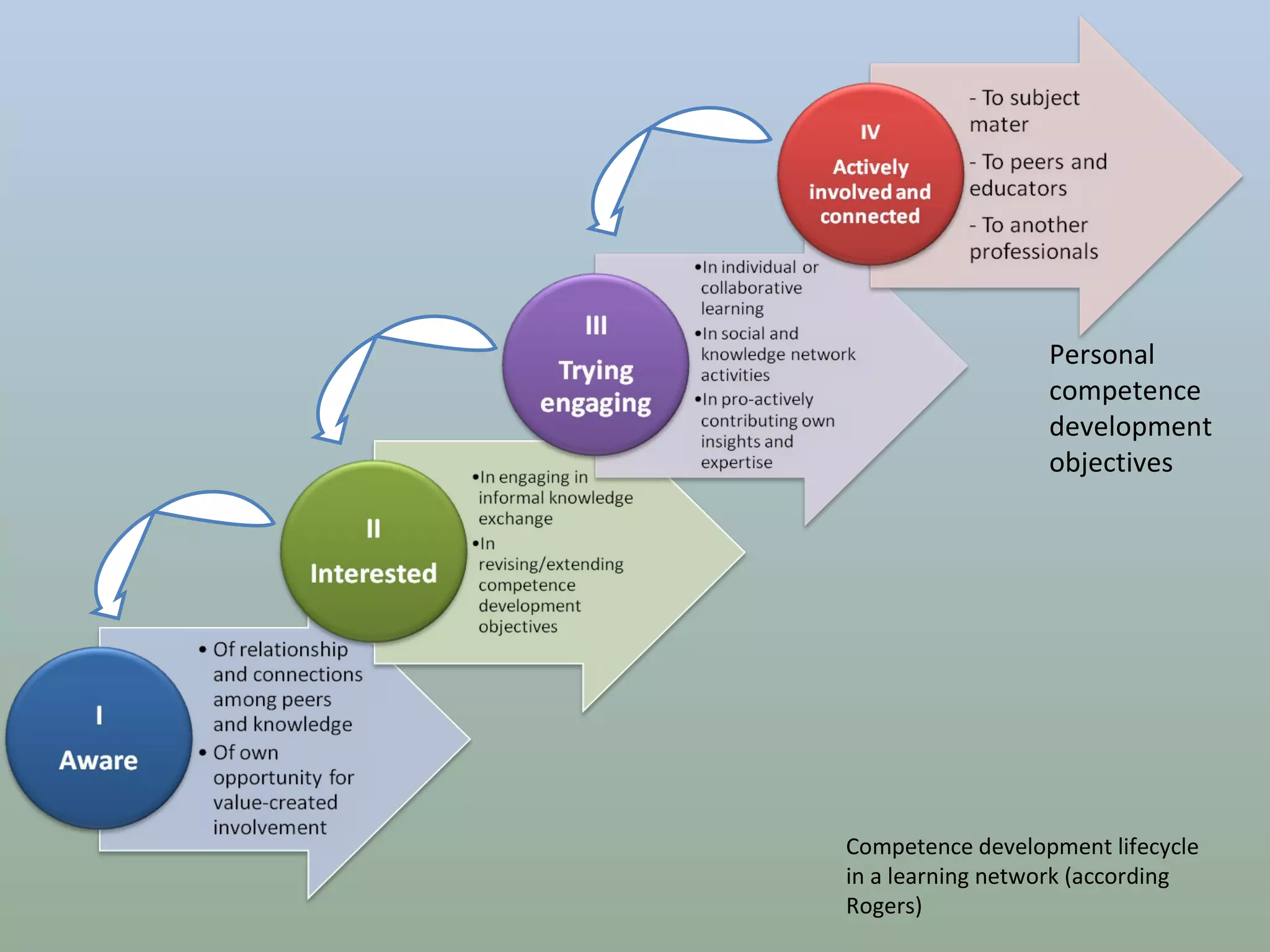
Competence development lifecycle in a learning network (according Rogers) Personal competence development objectives
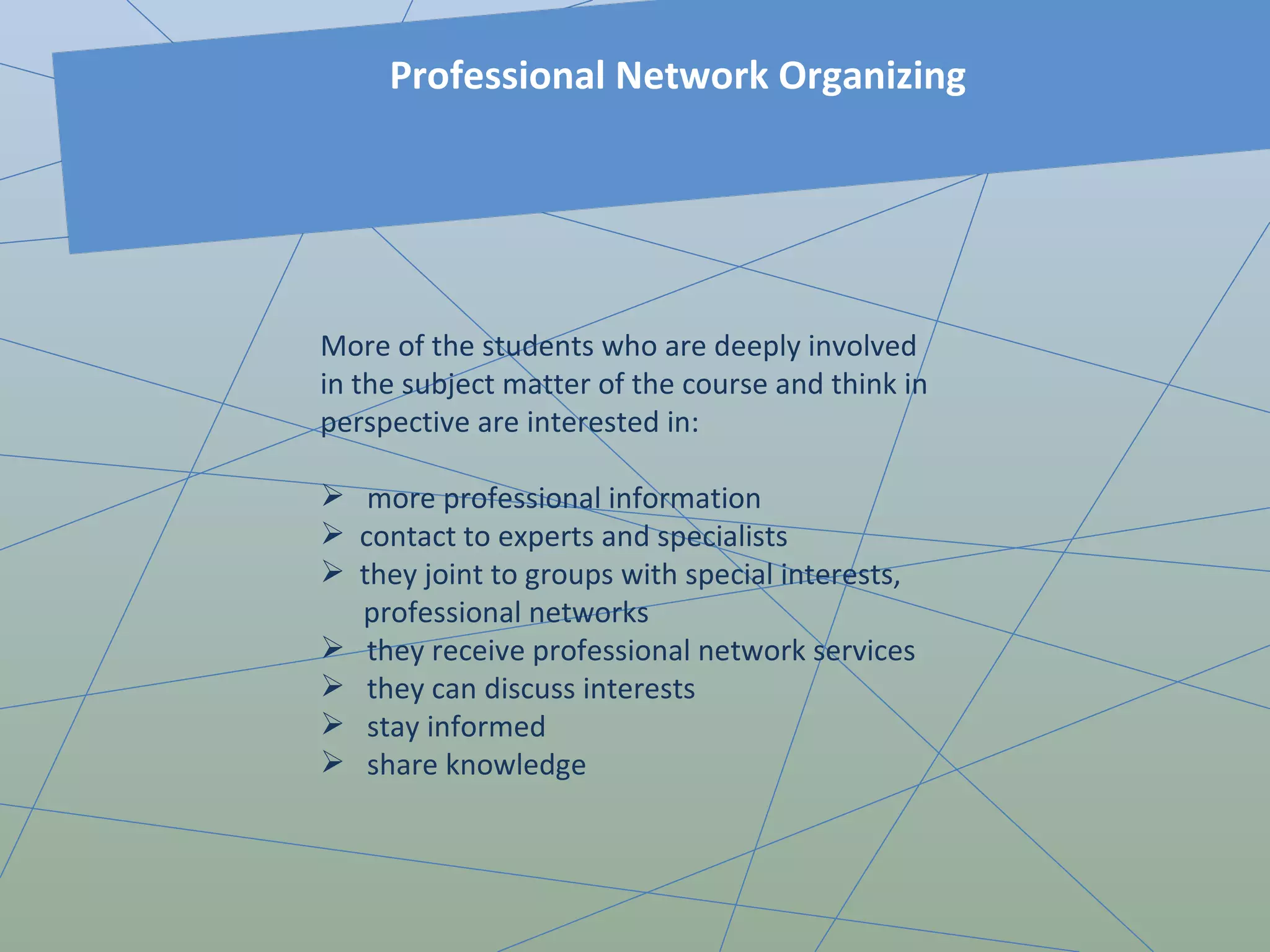
More of the students who are deeply involved in the subject matter of the course and think in perspective are interested in: more professional information contact to experts and specialists they joint to groups with special interests, professional networks  they receive professional network services they can discuss interests stay informed share knowledge Professional Network Organizing
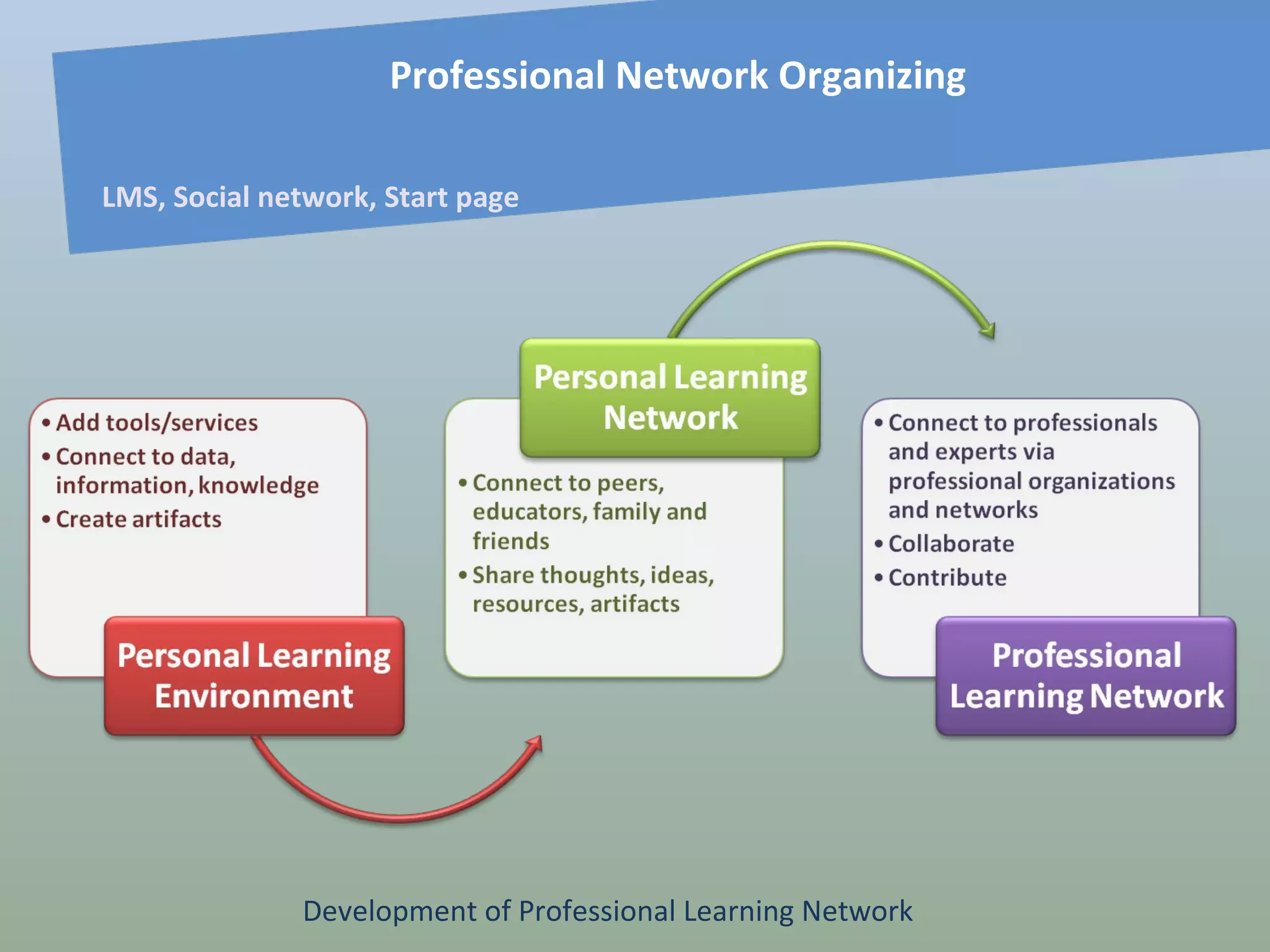
Professional Network Organizing LMS, Social network, Start page Development of Professional Learning Network
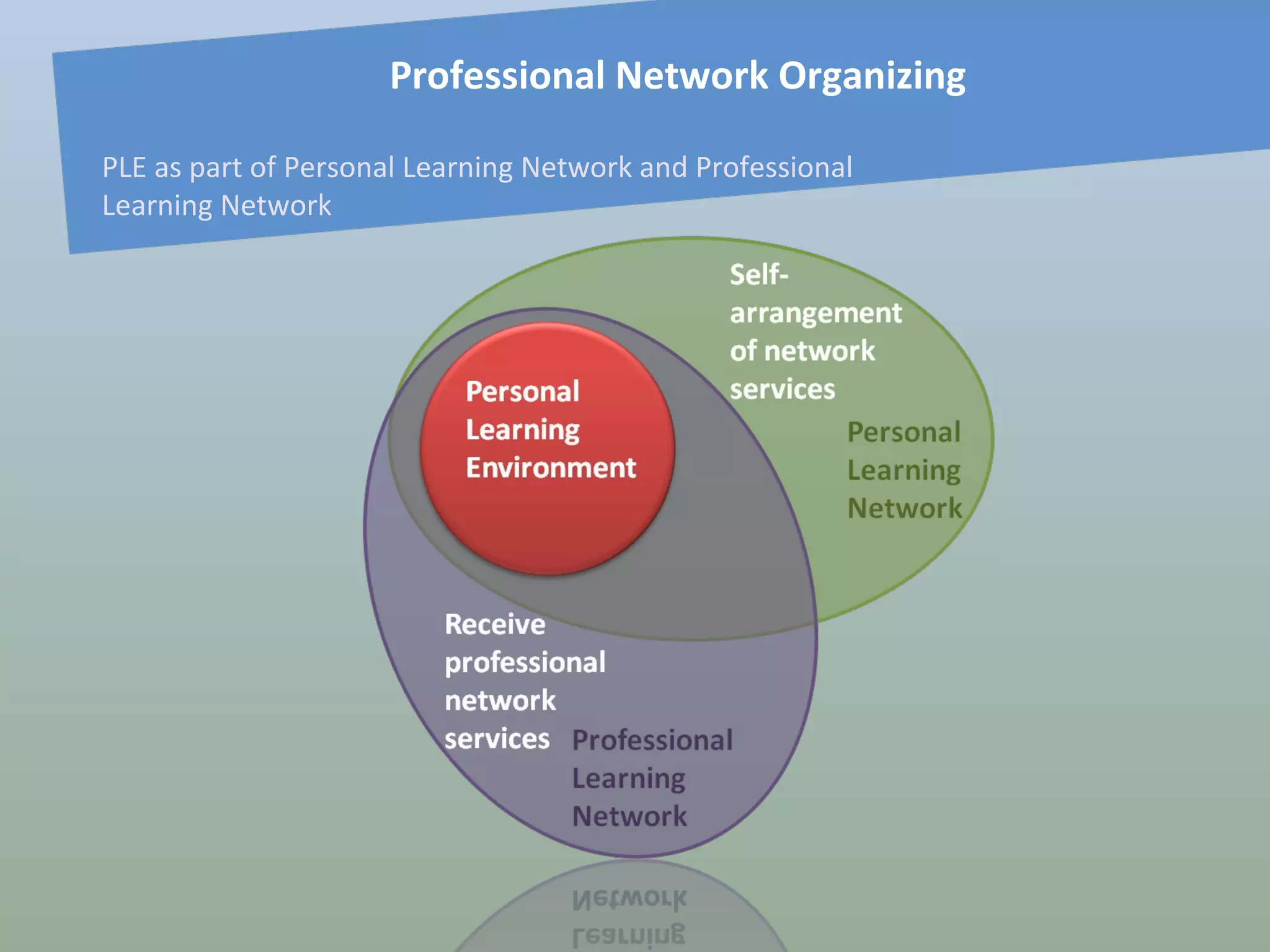
Professional Network Organizing PLE as part of Personal Learning Network and Professional Learning Network
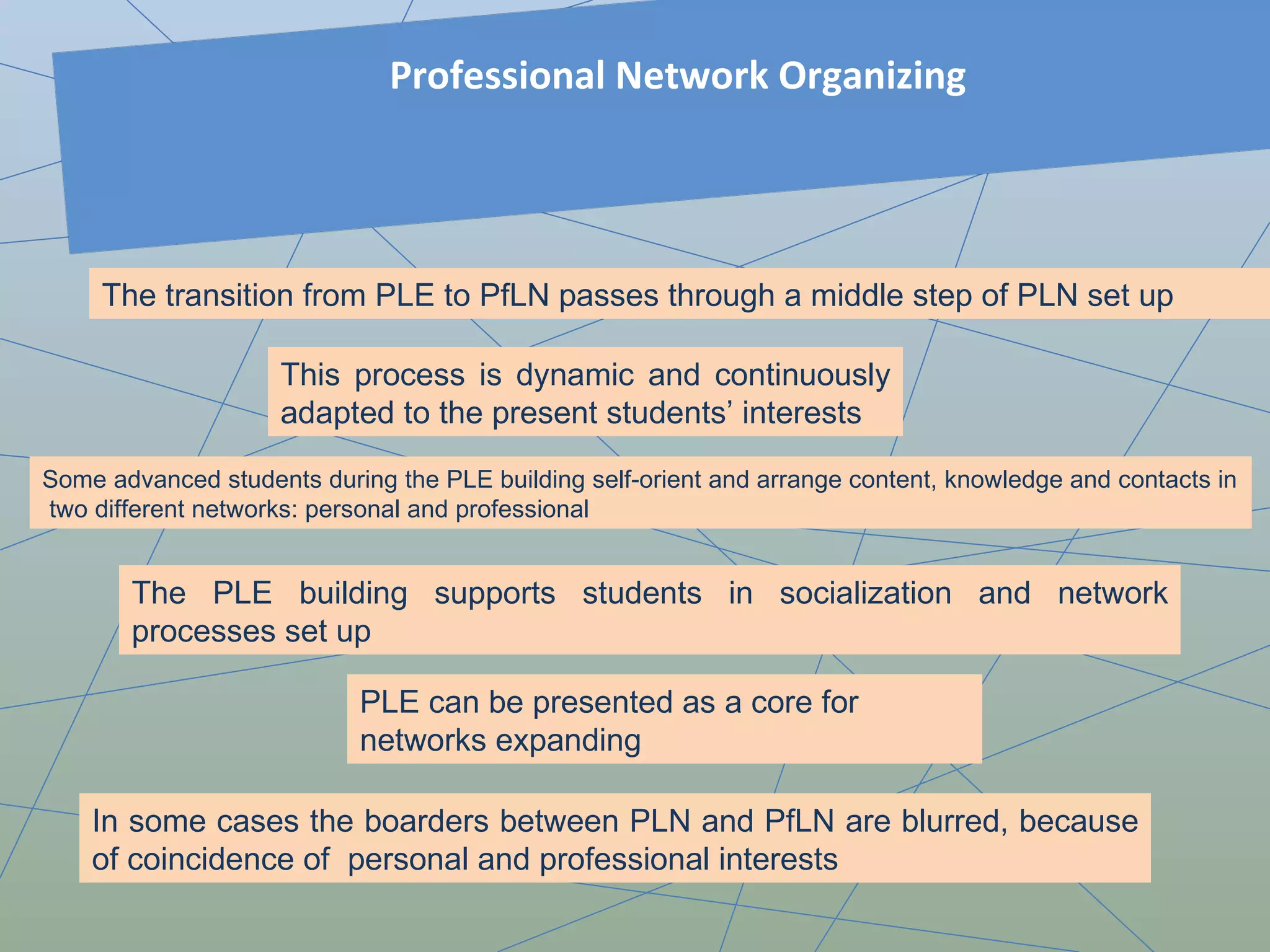
Some advanced students during the PLE building self-orient and arrange content, knowledge and contacts in two different networks: personal and professional The transition from PLE to PfLN passes through a middle step of PLN set up  This process is dynamic and continuously adapted to the present students’ interests In some cases the boarders between PLN and PfLN are blurred, because of coincidence of  personal and professional interests PLE can be presented as a core for networks expanding The PLE building supports students in socialization and network processes set up Professional Network Organizing
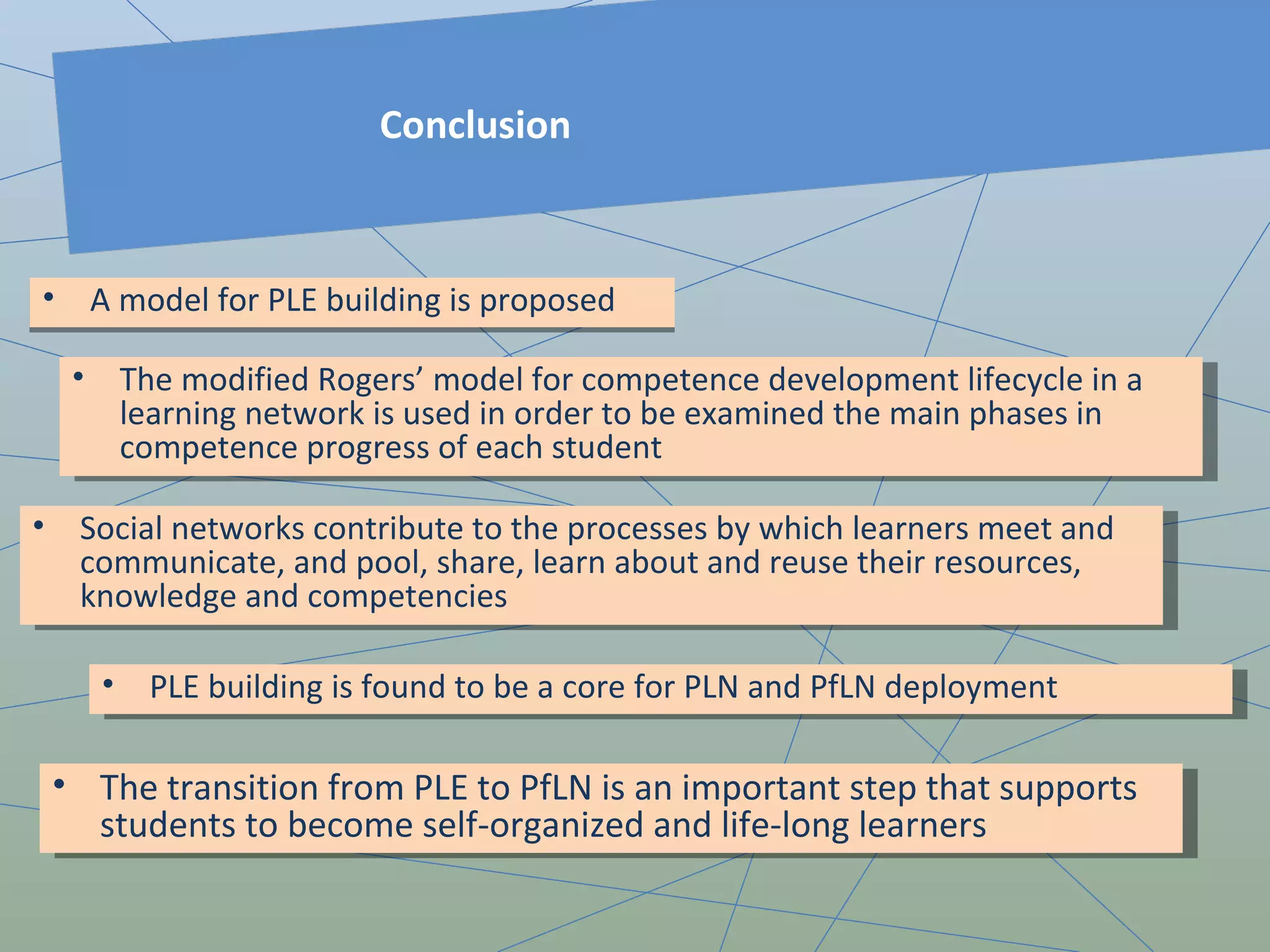
A model for PLE building is proposed Conclusion The modified Rogers’ model for competence development lifecycle in a learning network is used in order to be examined the main phases in competence progress of each student Social networks contribute to the processes by which learners meet and communicate, and pool, share, learn about and reuse their resources, knowledge and competencies PLE building is found to be a core for PLN and PfLN deployment The transition from PLE to PfLN is an important step that supports students to become self-organized and life-long learners

From Personal Learning Environment Building to Professional Learning Network Forming

  • 1.
    Malinka Ivanova, TechnicalUniversity – Sofia, Bulgaria The 5th International Scientific Conference eLSE - eLearning and Software for Education, BUCHAREST, April 09-10, 2009 From Personal Learning Environment Building to Professional Learning Network Forming From Personal Learning Environment Building to Professional Learning Network Forming
  • 2.
    From Personal LearningEnvironment Building to Professional Learning Network Forming Aim Forming learning network for competence development Professional network organizing The meaning of social and professional networks for education Building PLE on start pages Conclusion
  • 3.
    To analyze theexperience gained in using of Web 2.0 environment for competence development and for professional network organizing Aim
  • 4.
    Social-oriented applications andprofessional networks - new opportunities for learners and educators W3C “Social Networks Interoperability Roadmap” Incubator Group (XG) Federated Interoperable Framework
  • 5.
    Social network sites can be defined as web-based services that allow individuals to: construct a public or semi-public profile within a bounded system articulate a list of other users with whom they share a connection view and traverse their list of connections and those made by others within the system. Danah Boyd, School of Information, University of California-Berkeley Nicole Ellison, Department of Telecommunication, Information Studies, and Media, Michigan State University Social-oriented applications and professional networks - new opportunities for learners and educators Social Networks
  • 6.
    Social-oriented applications andprofessional networks - new opportunities for learners and educators Social Networks
  • 7.
    Professional network generally refers to a professional network service, a virtual community that it is focused on professional interactions instead of social interactions. Wikipedia Social-oriented applications and professional networks - new opportunities for learners and educators Professional Networks
  • 8.
    Social-oriented applications andprofessional networks - new opportunities for learners and educators Professional Networks
  • 9.
    A learningnetwork is a group of persons who create, share, support and study learning resources (“units of learning”) in a specific knowledge domain. Rob Koper, Open University of the Netherlands Social-oriented applications and professional networks - new opportunities for learners and educators Special-formed learning networks for life-long learners
  • 10.
    Social-oriented applications andprofessional networks - new opportunities for learners and educators Special-formed learning networks for life-long learners
  • 11.
    Because of theirpossibilities for: data, information and “knowledge fusion” enhancing accessibility, productivity and innovative solutions research tools providing forming groups of personal and professional interests Social-oriented applications and professional networks - new opportunities for learners and educators To be successful at knowledge creation, analysis and dissemination, learners need from network inter-personal and inter-group interactions
  • 12.
    PLEs buildinglaid the foundations of some main ideas: learning is an ongoing process and tools to support this learning are needed the role of the individual in self-organizing learning is important learning can take place in different contexts and situations and cannot be provided by a single learning provider. Attwell Graham Building PLE on start pages Personal Learning Environment
  • 13.
    PLE s are systems that help learners take control of and manage their own learning. This includes providing support for learners to set their own learning goals, manage their learning; managing both content and process; communicate with others in the process of learning and thereby achieve learning goals. Wikipedia Building PLE on start pages Personal Learning Environment
  • 14.
    Web 2.0 applicationscalled “ start pages ” are designed to provide a personalized place on the internet where users can mashup data, information and knowledge available anywhere, anytime, including mobile login. Wikipedia Building PLE on start pages Start pages
  • 15.
    Building PLE onstart pages iGoogle, Netvibes, Pageflakes
  • 16.
    of data, information,knowledge of subject matter, technologies, how to learn
  • 17.
    Forming Learning Networkfor Competence Development LMS, Social network, Start page
  • 18.
    Forming the learning network of the course Internet Technologies is to: provide sustainable value to students, not only during the course, but also after its finishing stimulate them to contribute their knowledge, insights and experiences on a continuous basis Forming Learning Network for Competence Development LMS, Social network, Start page
  • 19.
    Competence development lifecyclein a learning network (according Rogers) Personal competence development objectives
  • 20.
    More of thestudents who are deeply involved in the subject matter of the course and think in perspective are interested in: more professional information contact to experts and specialists they joint to groups with special interests, professional networks they receive professional network services they can discuss interests stay informed share knowledge Professional Network Organizing
  • 21.
    Professional Network OrganizingLMS, Social network, Start page Development of Professional Learning Network
  • 22.
    Professional Network OrganizingPLE as part of Personal Learning Network and Professional Learning Network
  • 23.
    Some advanced studentsduring the PLE building self-orient and arrange content, knowledge and contacts in two different networks: personal and professional The transition from PLE to PfLN passes through a middle step of PLN set up This process is dynamic and continuously adapted to the present students’ interests In some cases the boarders between PLN and PfLN are blurred, because of coincidence of personal and professional interests PLE can be presented as a core for networks expanding The PLE building supports students in socialization and network processes set up Professional Network Organizing
  • 24.
    A model forPLE building is proposed Conclusion The modified Rogers’ model for competence development lifecycle in a learning network is used in order to be examined the main phases in competence progress of each student Social networks contribute to the processes by which learners meet and communicate, and pool, share, learn about and reuse their resources, knowledge and competencies PLE building is found to be a core for PLN and PfLN deployment The transition from PLE to PfLN is an important step that supports students to become self-organized and life-long learners