WORKSHOP FOR ACADEMIC STAFF - #CEL263 & GMIT 
Navigating the Marvellous: considering openness 
Catherine Cronin  @catherinecronin  NUI Galway  Oct/Nov 2014
“I don’t think 
education is about 
centralized instruction 
anymore; rather, it is 
the process [of] 
establishing oneself 
as a node in a broad 
network of distributed 
creativity.” 
– Joi Ito @joi 
Slide: CC-BY-SA catherinecronin Image: CC BY-NC-SA 2.0 yobink
Image: CC BY 2.0 dlofink
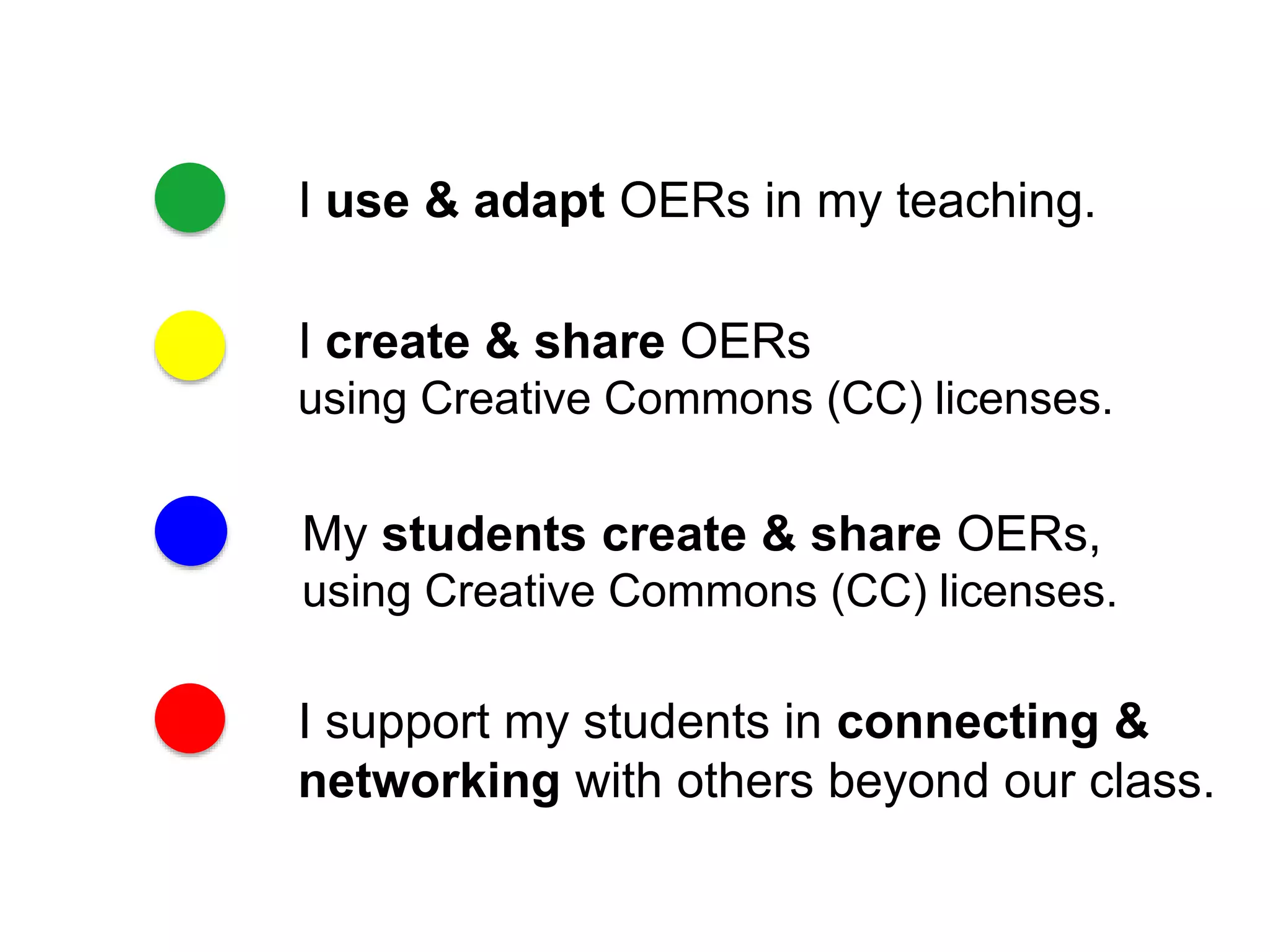
I use & adapt OERs in my teaching. 
I create & share OERs 
using Creative Commons (CC) licenses. 
My students create & share OERs, 
using Creative Commons (CC) licenses. 
I support my students in connecting & 
networking with others beyond our class.
At its best openness is an ethos 
not a license. It's an approach to 
teaching and learning that 
builds a community of learners 
online and off. 
Jim Groom 
@jimgroom 
“
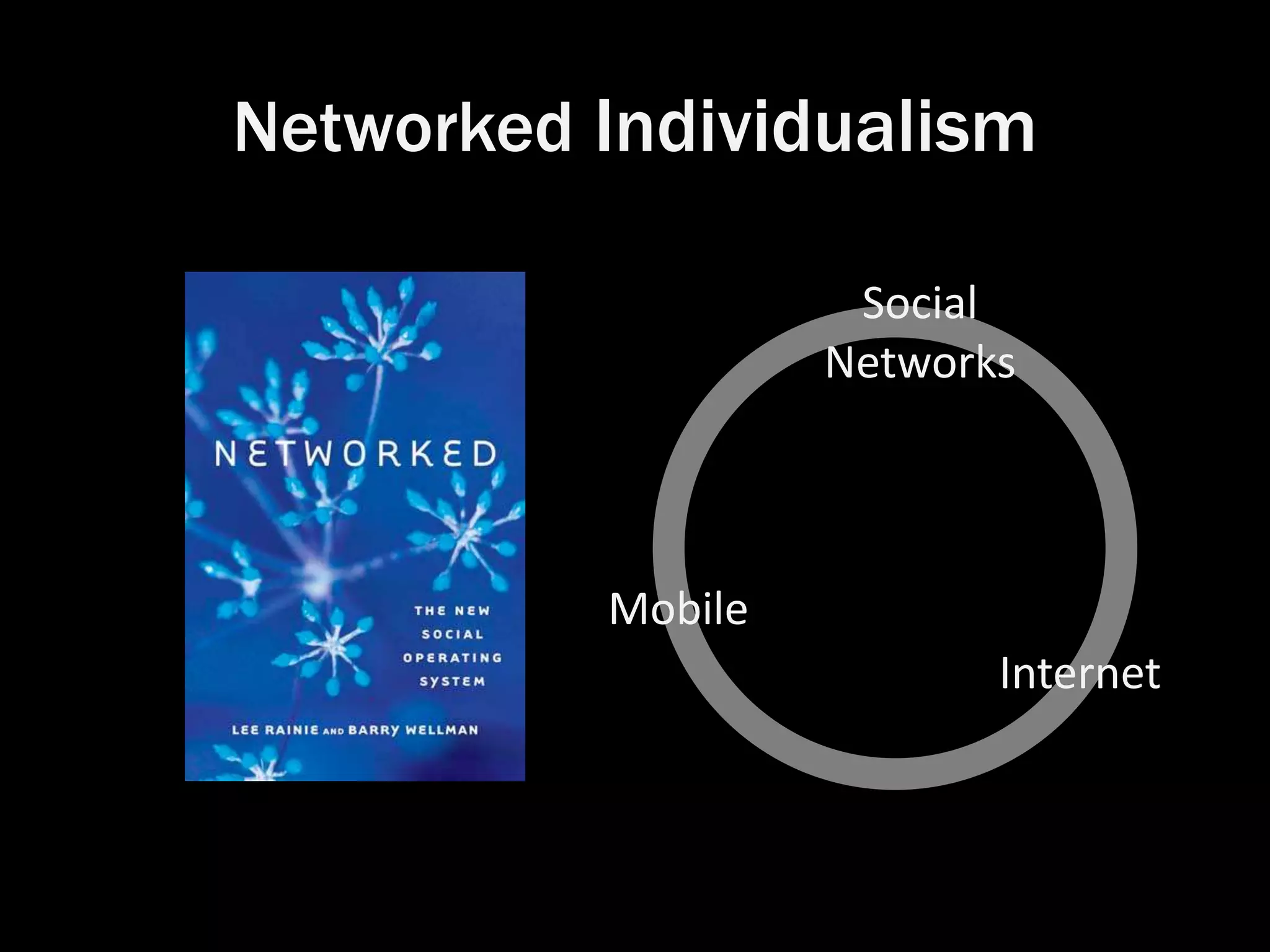
Networked Individualism 
Social 
Networks 
Internet 
Mobile
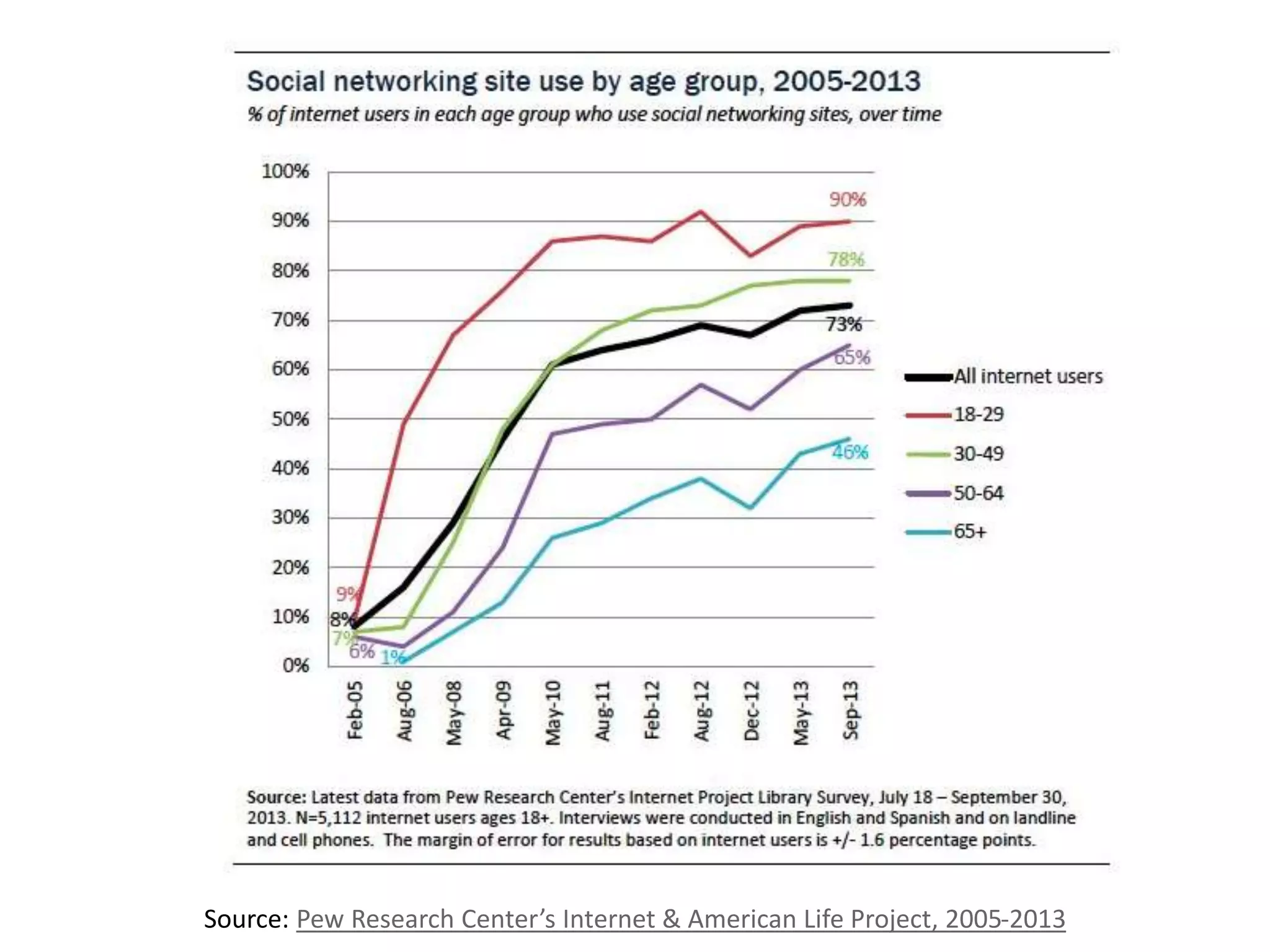
2005 2013 
Source: Pew Research Center’s Internet & American Life Project, 2005-2013
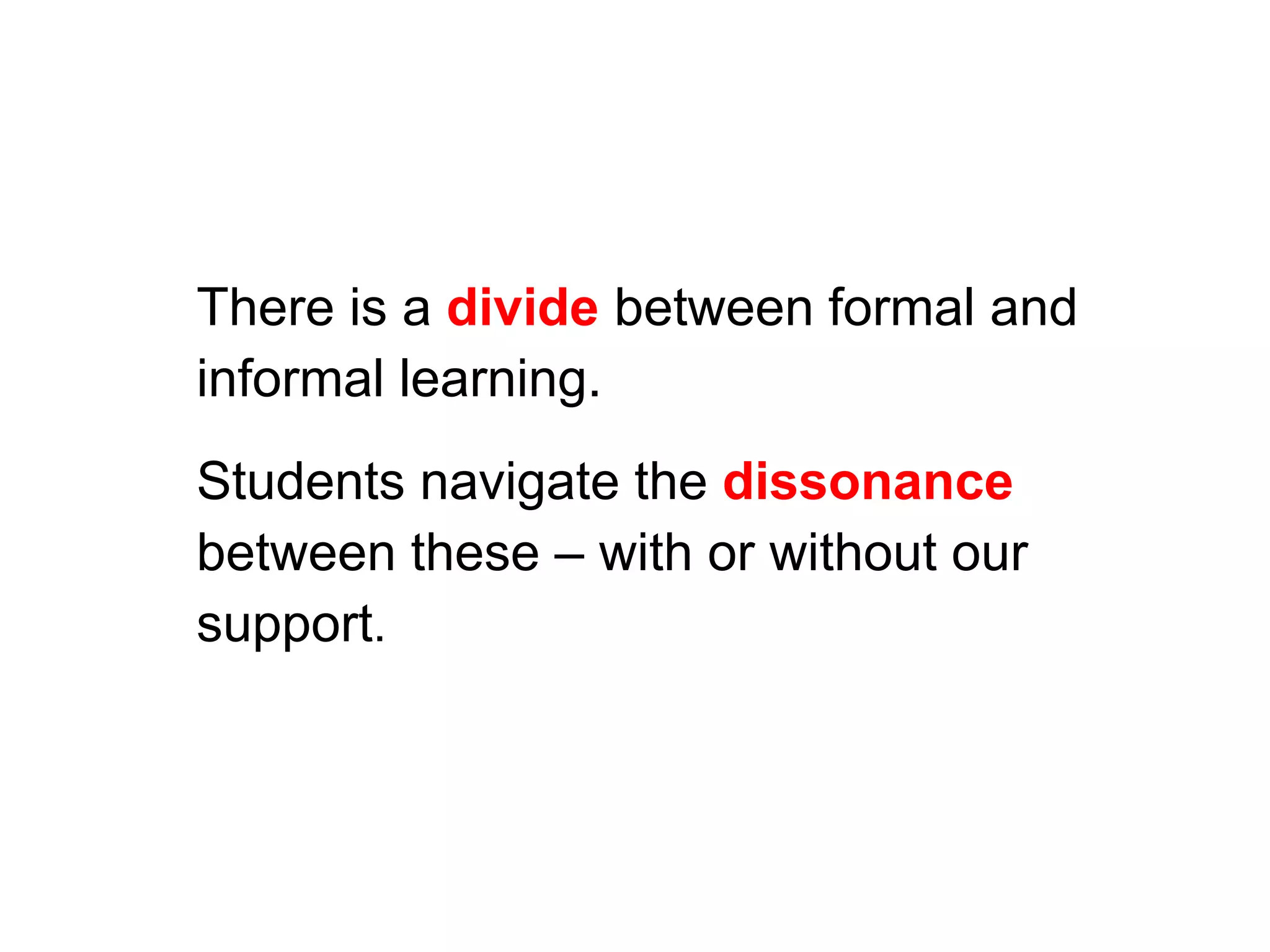
There is a divide between formal and 
informal learning. 
Students navigate the dissonance 
between these – with or without our 
support.
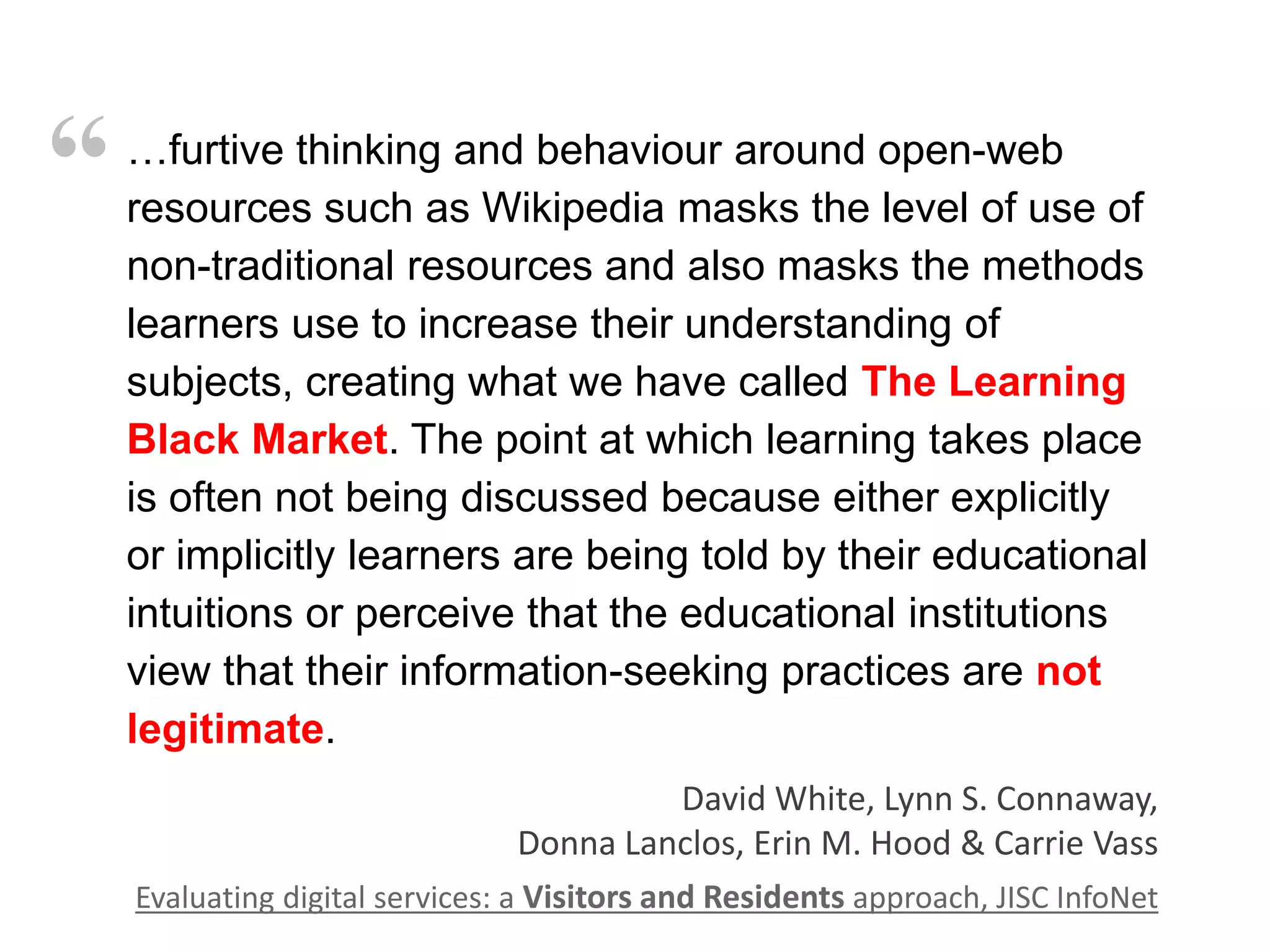
…furtive thinking and behaviour around open-web 
resources such as Wikipedia masks the level of use of 
non-traditional resources and also masks the methods 
learners use to increase their understanding of 
subjects, creating what we have called The Learning 
Black Market. The point at which learning takes place 
is often not being discussed because either explicitly 
or implicitly learners are being told by their educational 
intuitions or perceive that the educational institutions 
view that their information-seeking practices are not 
legitimate. 
David White, Lynn S. Connaway, 
Donna Lanclos, Erin M. Hood & Carrie Vass 
Evaluating digital services: a Visitors and Residents approach, JISC InfoNet 
“
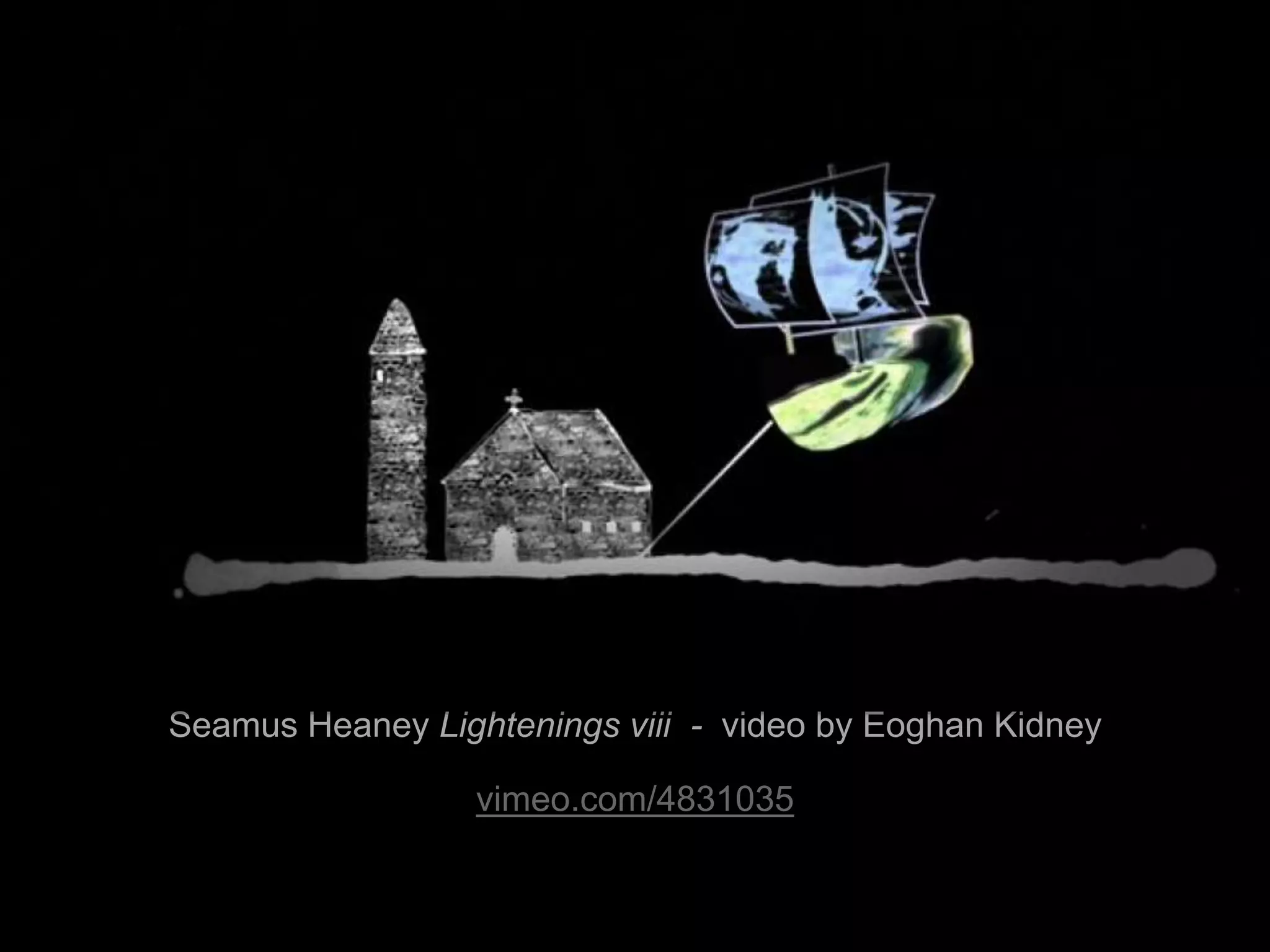
Seamus Heaney Lightenings viii - video by Eoghan Kidney 
vimeo.com/4831035
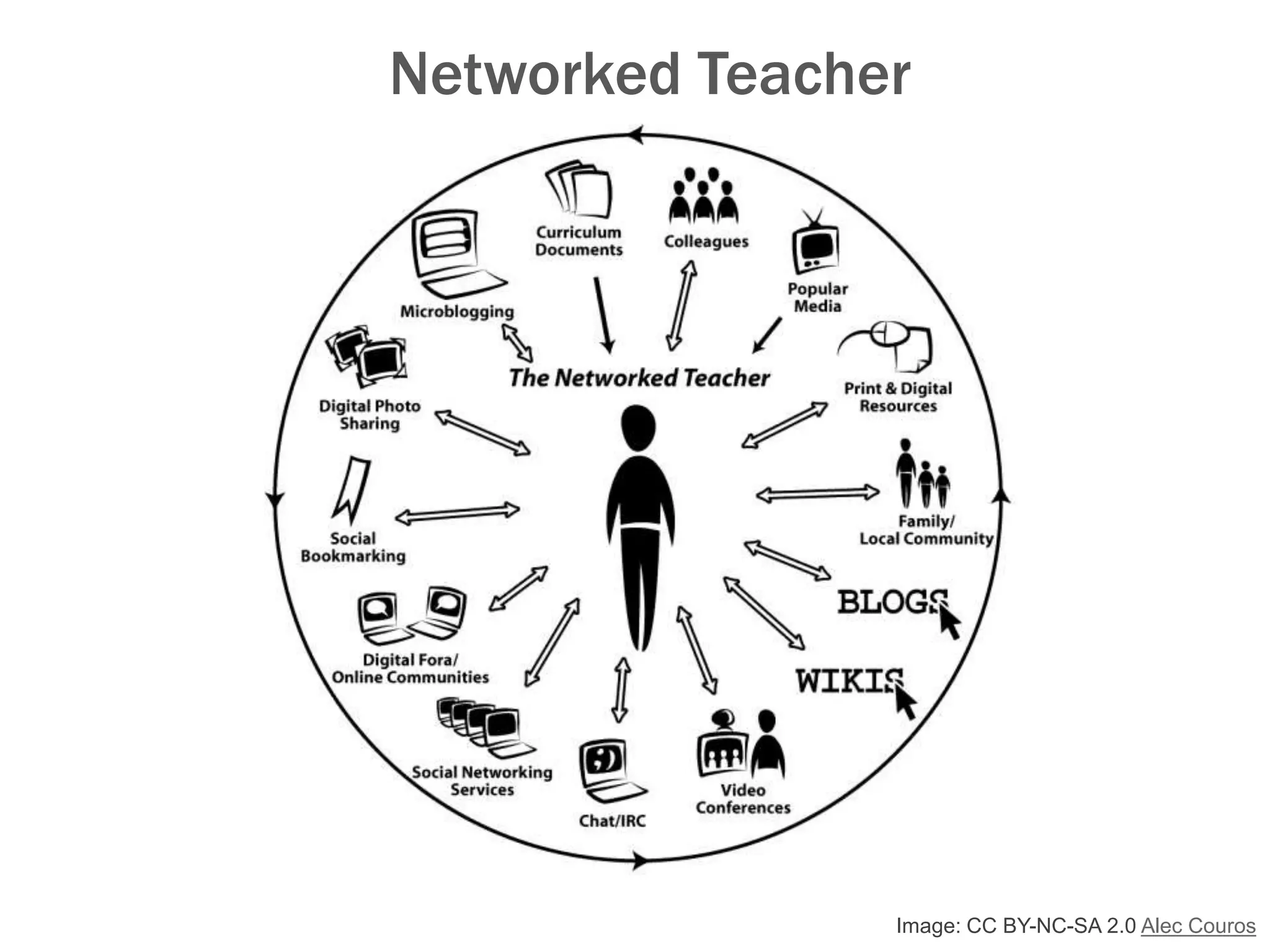
Networked Teacher 
Image: CC BY-NC-SA 2.0 Alec Couros
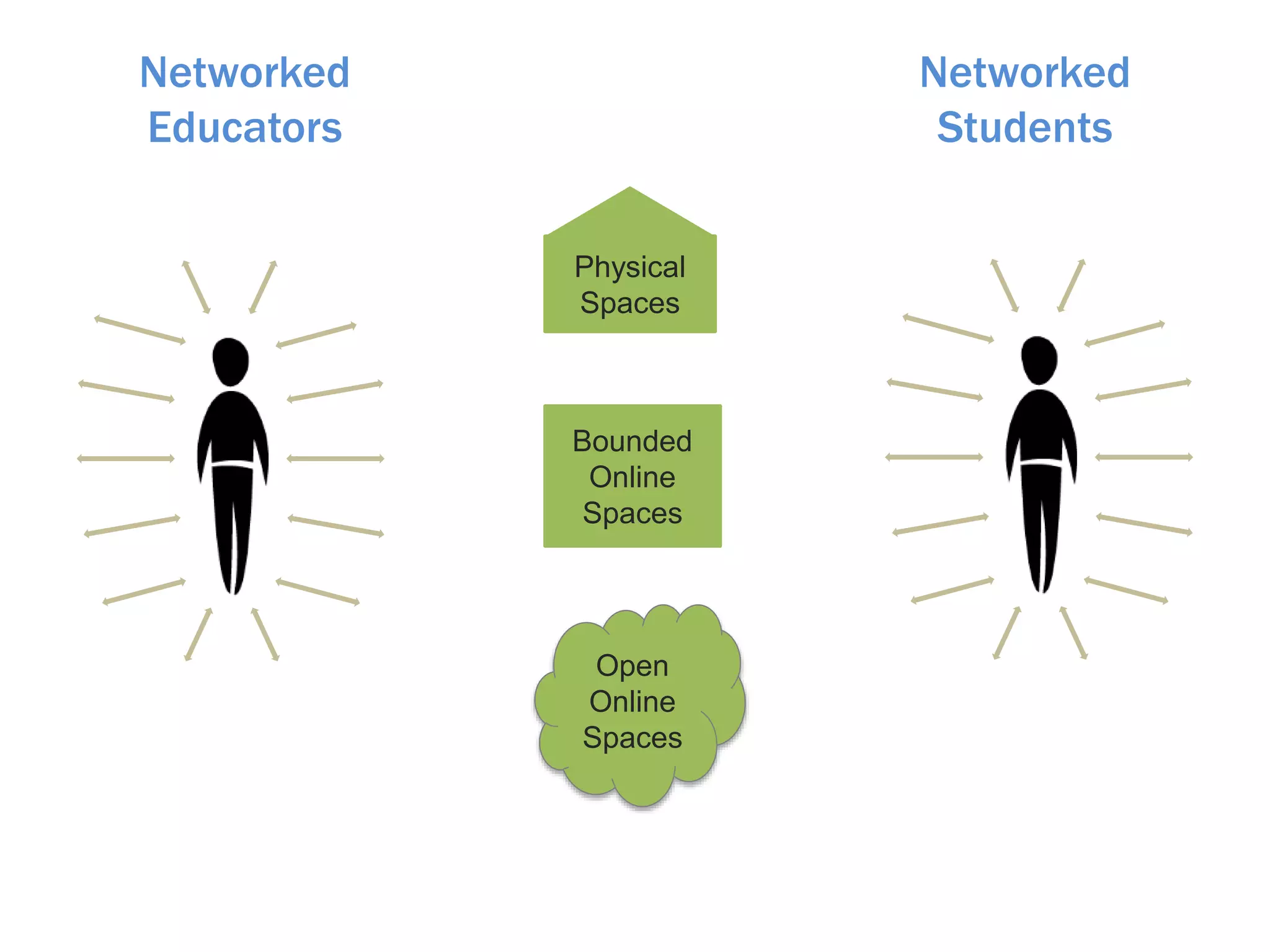
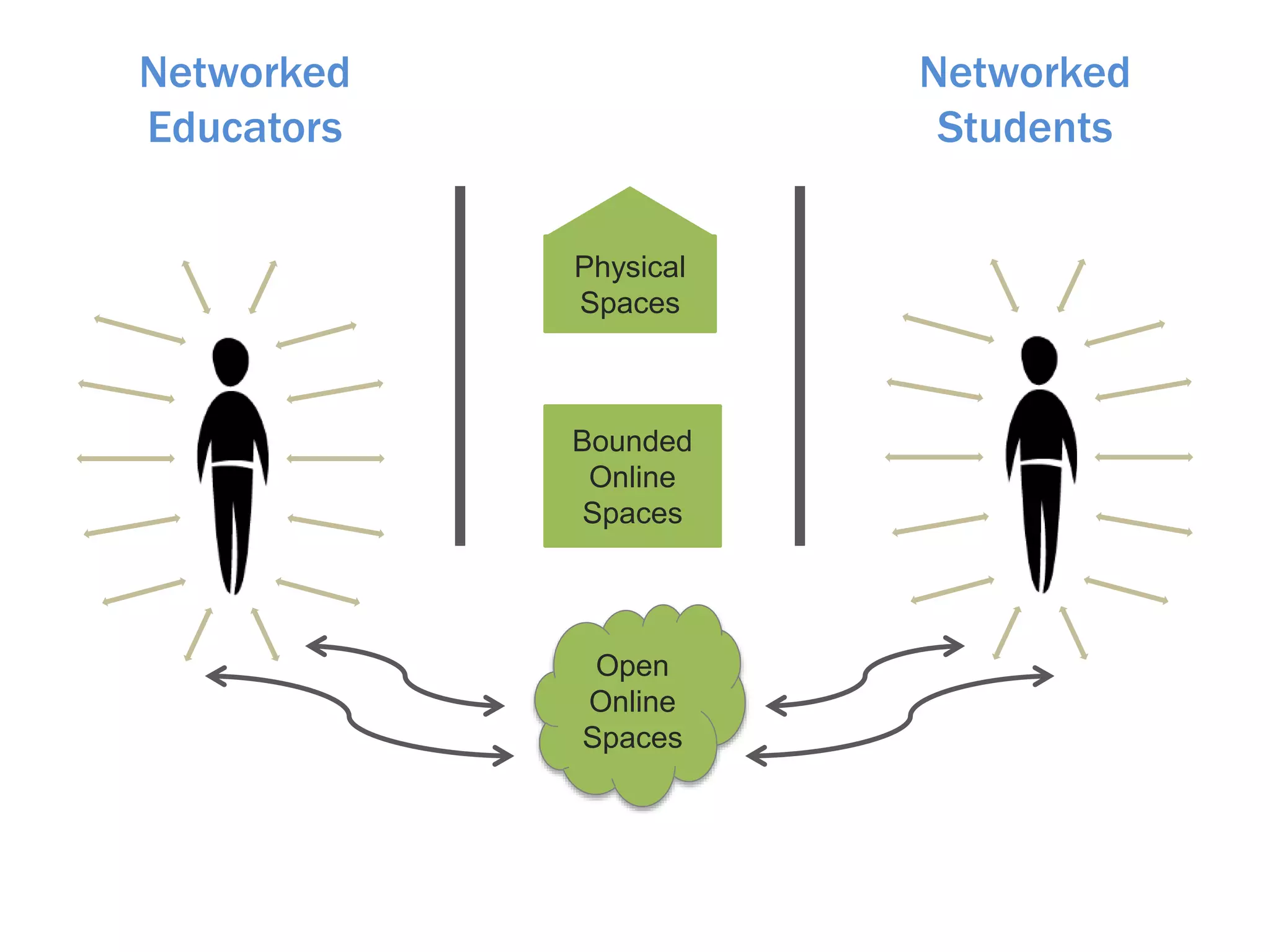
Networked 
Educators 
Networked 
Students 
Physical 
Spaces 
Bounded 
Online 
Spaces 
Open 
Online 
Spaces
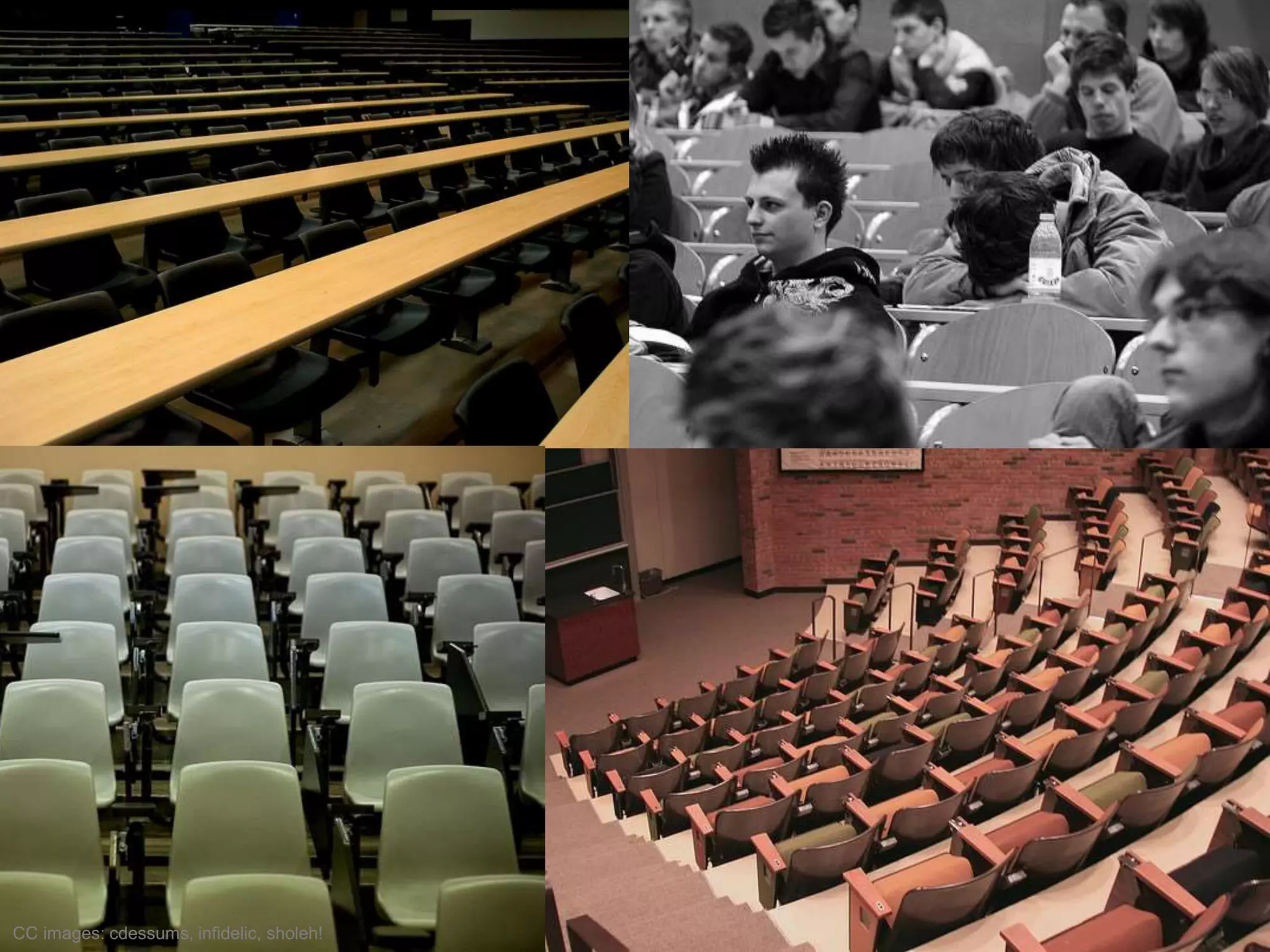
CC images: cdessums, infidelic, sholeh!
Networked 
Educators 
Networked 
Students 
Physical 
Spaces 
Bounded 
Online 
Spaces 
Open 
Online 
Spaces
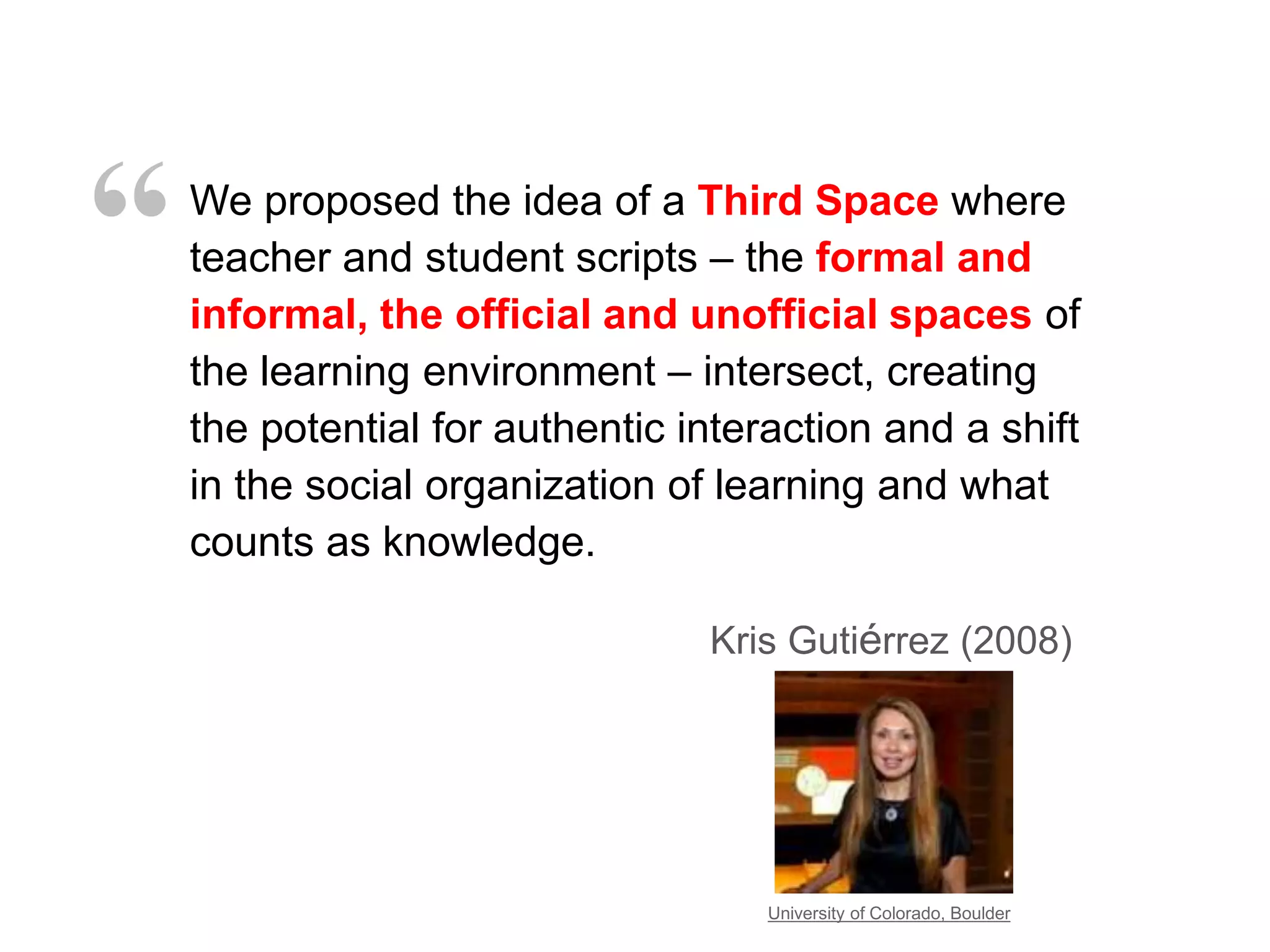
We proposed the idea of a Third Space where 
teacher and student scripts – the formal and 
informal, the official and unofficial spaces of 
the learning environment – intersect, creating 
the potential for authentic interaction and a shift 
in the social organization of learning and what 
counts as knowledge. 
Kris Gutiérrez (2008) 
University of Colorado, Boulder 
“
Open practices give us and our 
students opportunities to cross 
boundaries of geography, culture, 
institution, term, education sector, 
community, and/or power level…
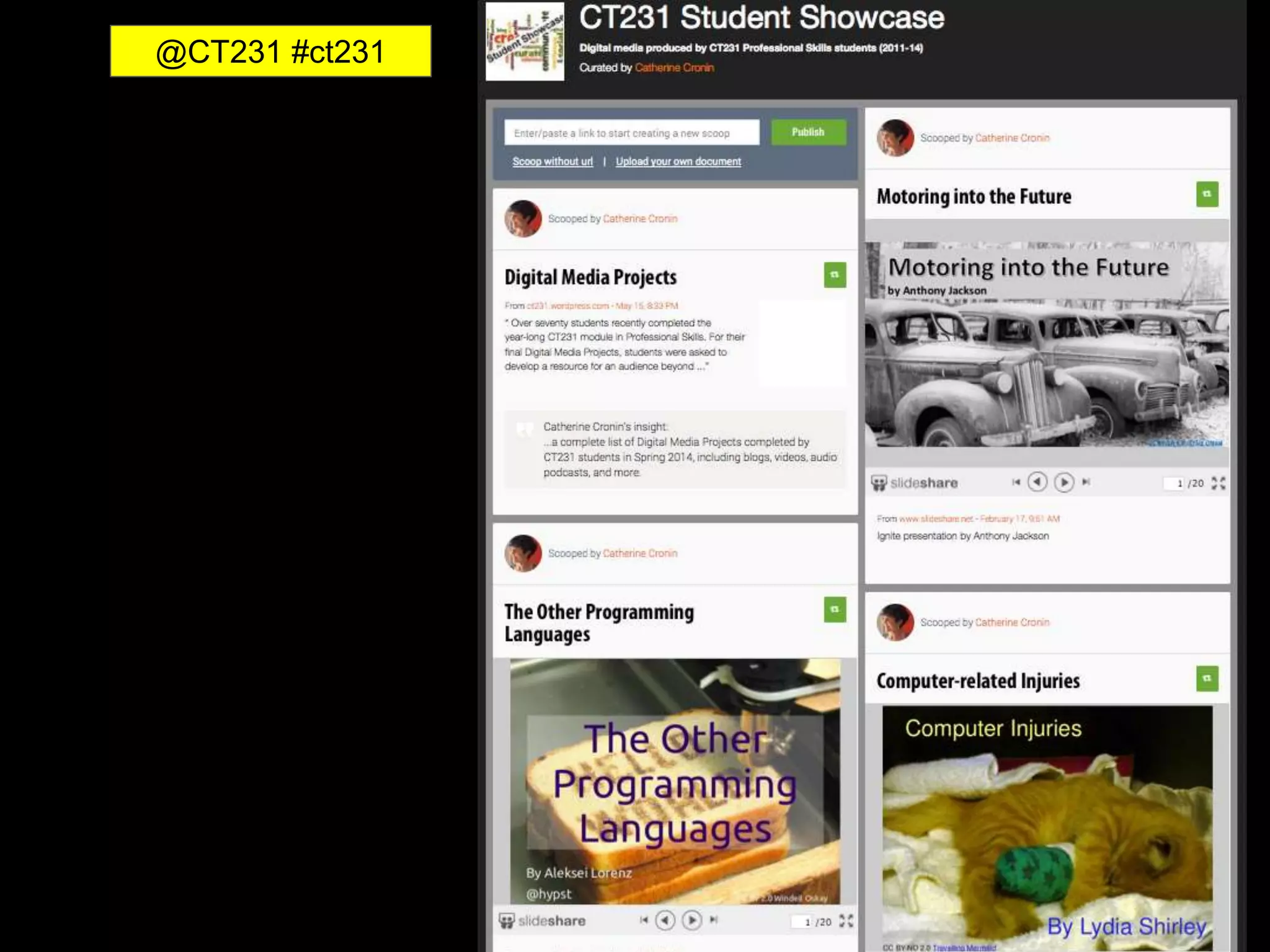
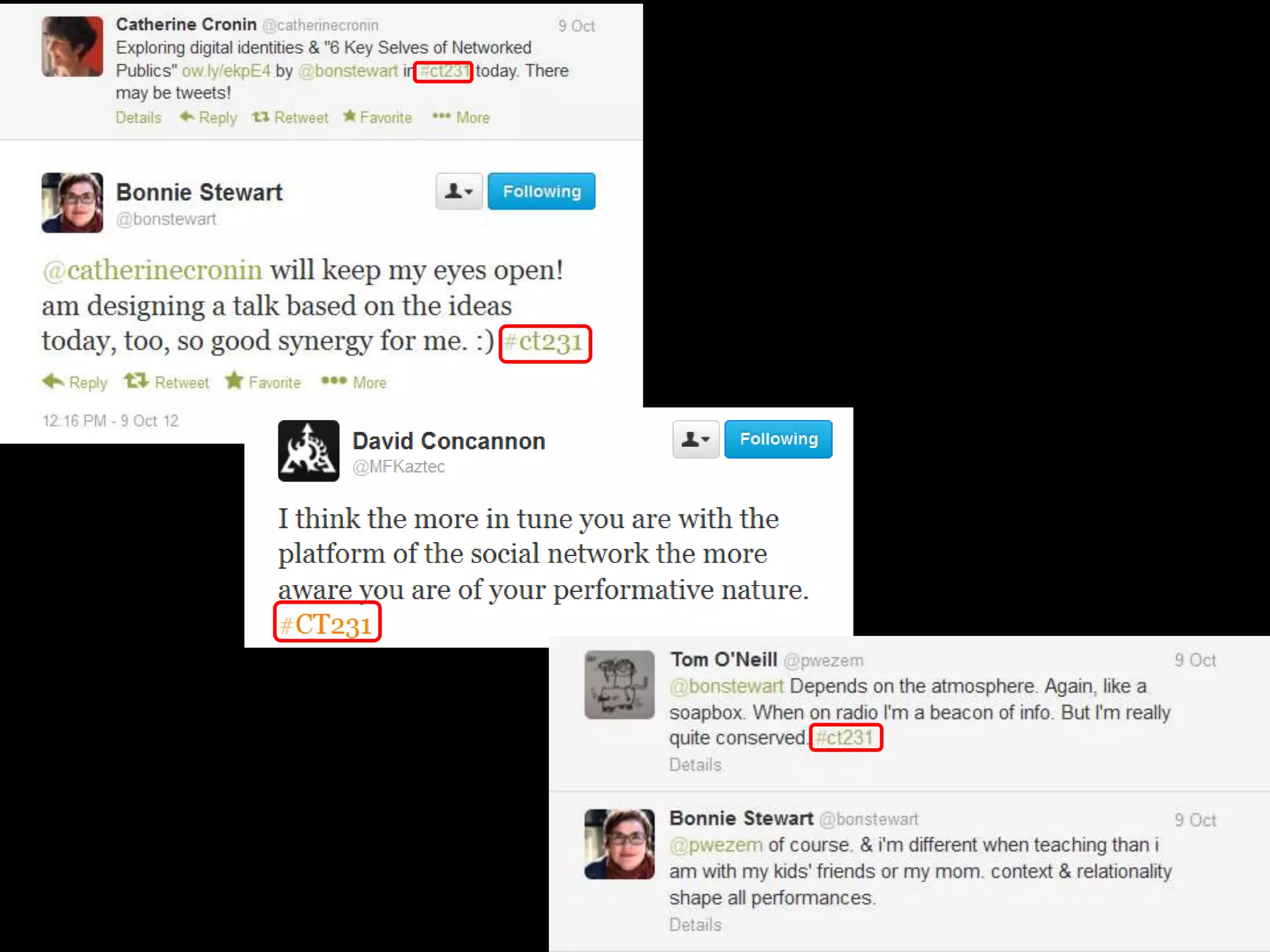
@CT231 #ct231
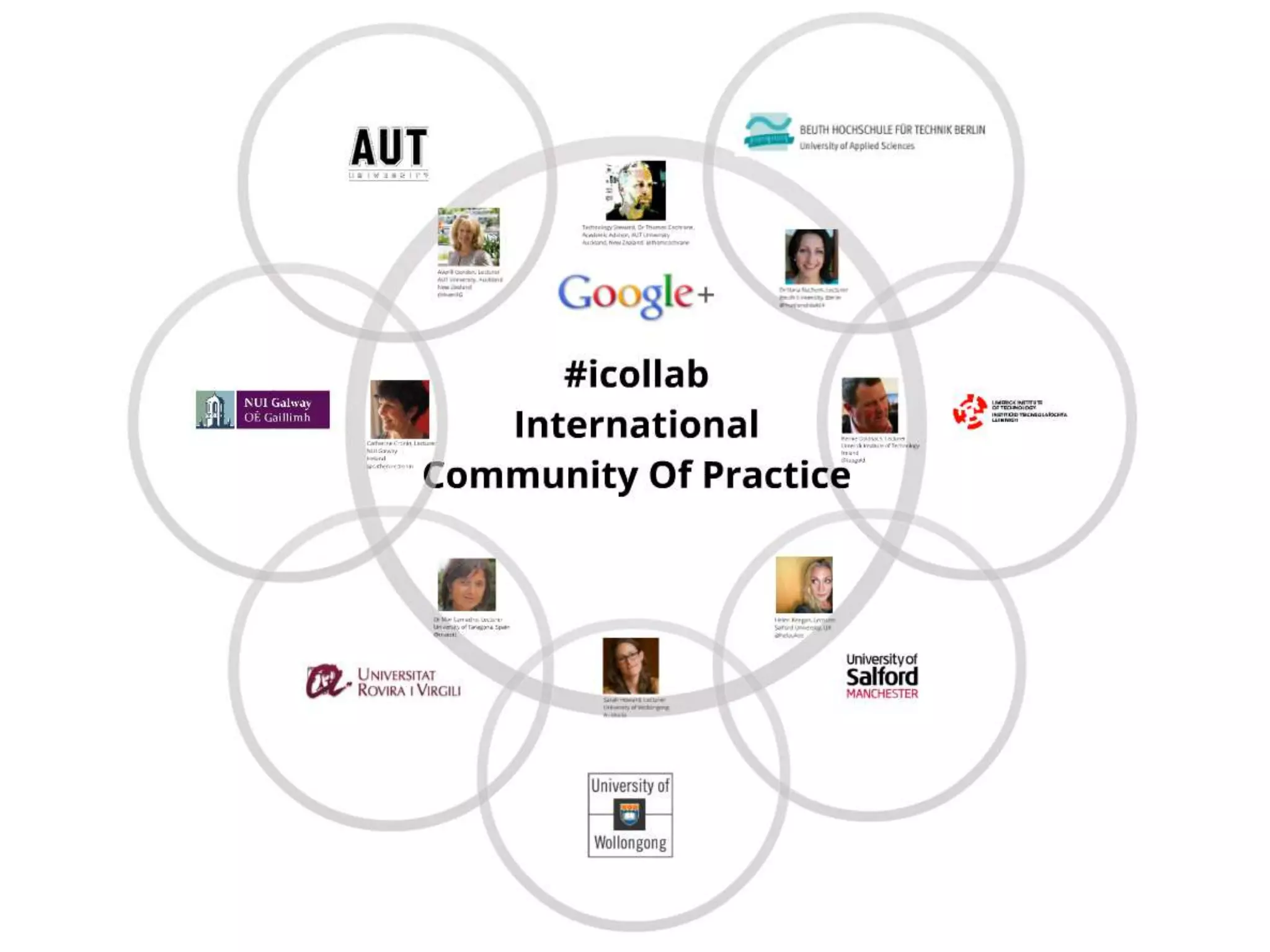
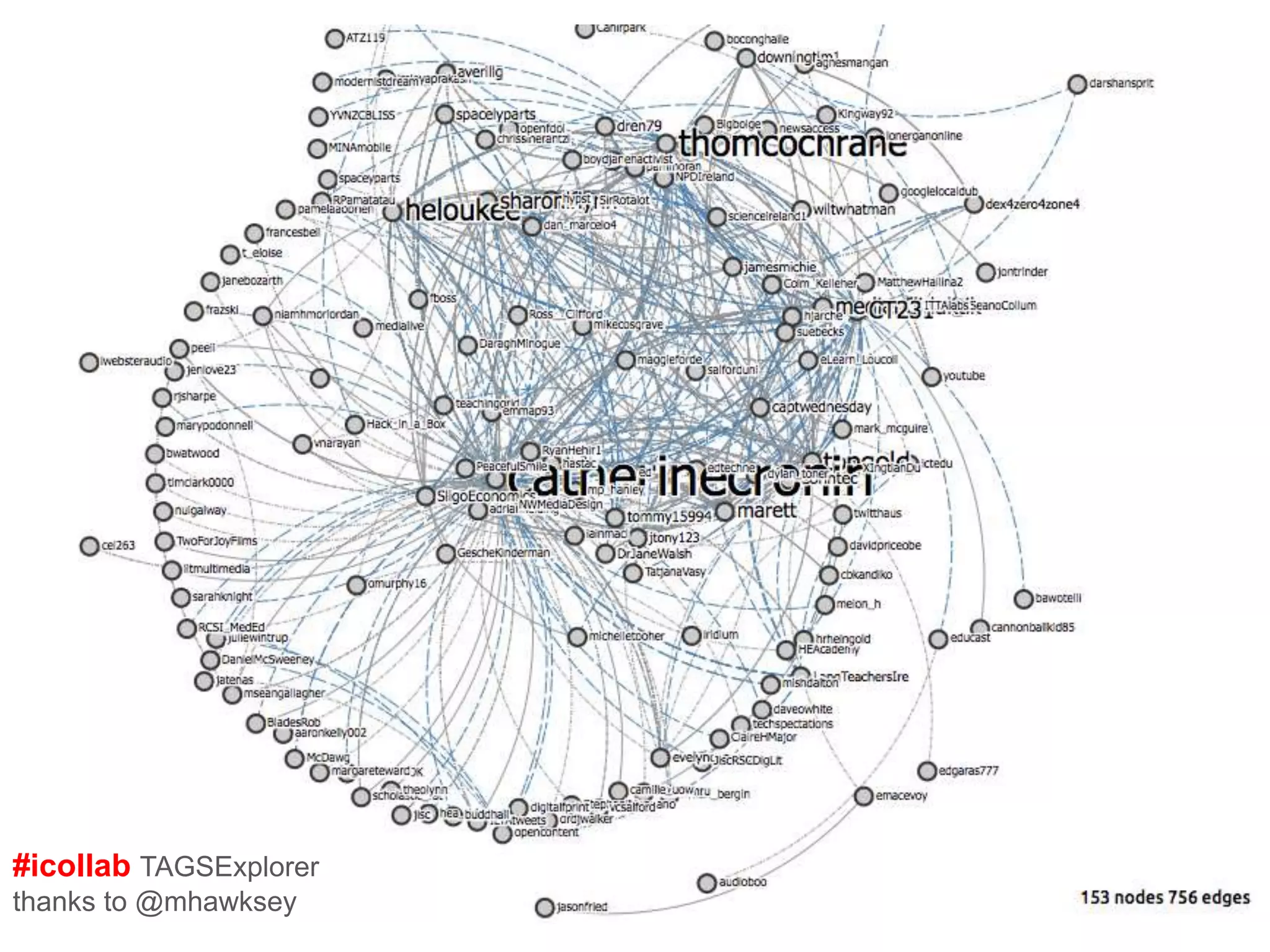
#icollab 
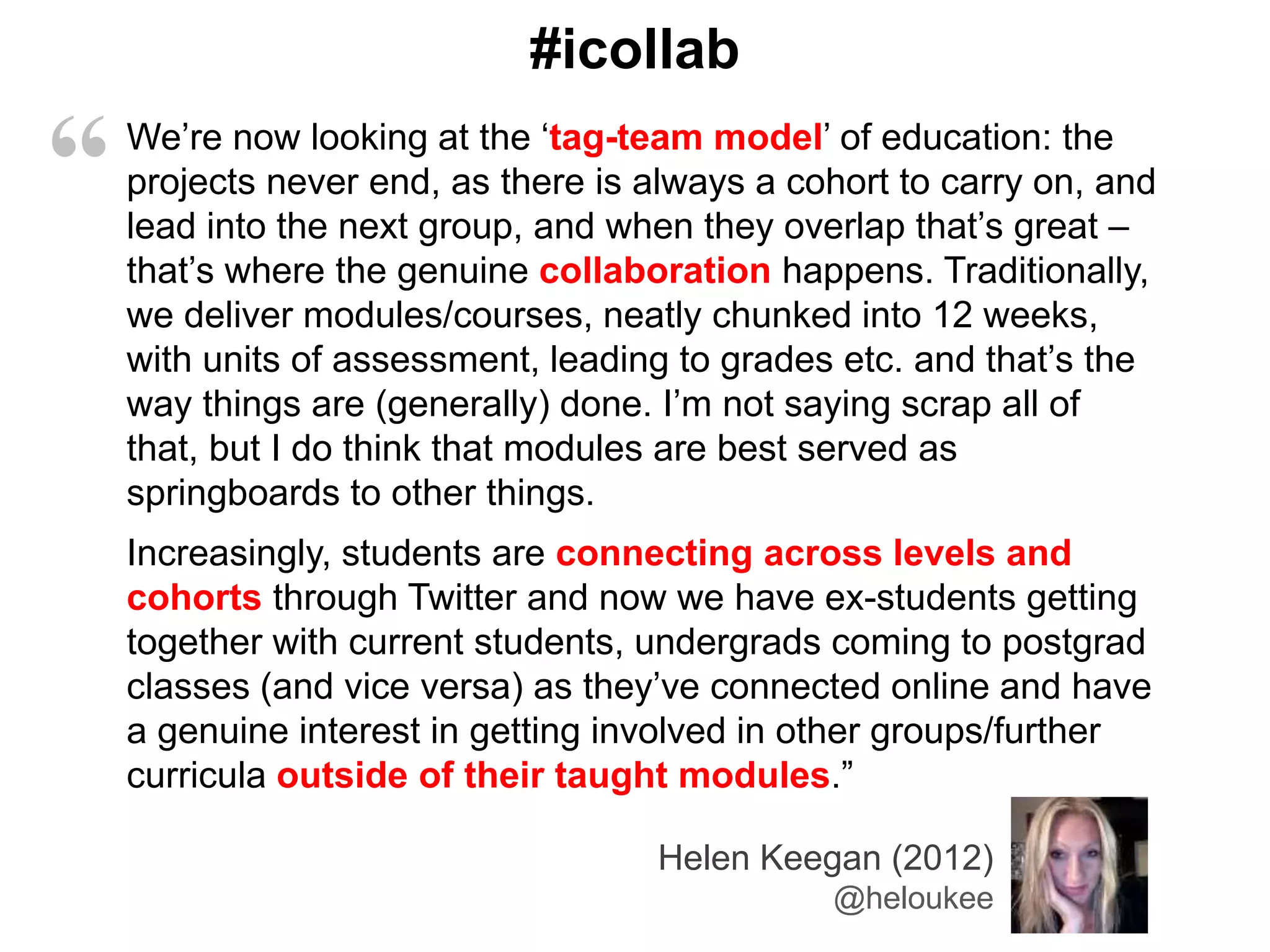
We’re now looking at the ‘tag-team model’ of education: the 
projects never end, as there is always a cohort to carry on, and 
lead into the next group, and when they overlap that’s great – 
that’s where the genuine collaboration happens. Traditionally, 
we deliver modules/courses, neatly chunked into 12 weeks, 
with units of assessment, leading to grades etc. and that’s the 
way things are (generally) done. I’m not saying scrap all of 
that, but I do think that modules are best served as 
springboards to other things. 
Increasingly, students are connecting across levels and 
cohorts through Twitter and now we have ex-students getting 
together with current students, undergrads coming to postgrad 
classes (and vice versa) as they’ve connected online and have 
a genuine interest in getting involved in other groups/further 
curricula outside of their taught modules.” 
Helen Keegan (2012) 
@heloukee 
“
#icollab TAGSExplorer 
thanks to @mhawksey
Individuals, students and educators, 
can be nodes in a network. 
Groups and learning communities 
also can be nodes, e.g. via #hashtags.
#studentvoice 
Openness... 
“ 
I learned a lot more about writing to the public. Before 
this I would have been less likely to express my views to 
a group of people online whereas now I would not have a 
problem in doing so. 
By posting publicly it opened up our world to other 
academics or people who are just interested in the 
topic... I don’t think anyone would have thought that the 
author of one of the works we were researching 
would get involved. 
“
#studentvoice 
Social networks... 
“ 
“ 
Before studying it, I used Facebook and Twitter mainly 
just for keeping in contact with people, but since have 
discovered they both have much more to offer. 
They are places to discover new information and boost 
your knowledge. That both education and socialising can 
be rolled into one.
Learners need to practice and experiment with 
different ways of enacting their identities, and adopt 
subject positions through different social 
technologies and media. 
These opportunities can only be supported by 
academic staff who are themselves engaged in 
digital practices and questioning their own 
relationship with knowledge. 
- Keri Facer & Neil Selwyn (2010)
“We have to build our half of the bridge…” Colum McCann 
Image: CC BY-NC-SA 2.0 Tim Haynes
Thank you! 
Catherine Cronin 
@catherinecronin 
about.me/catherinecronin 
slideshare.net/cicronin 
Image: CC BY 2.0 visualpanic
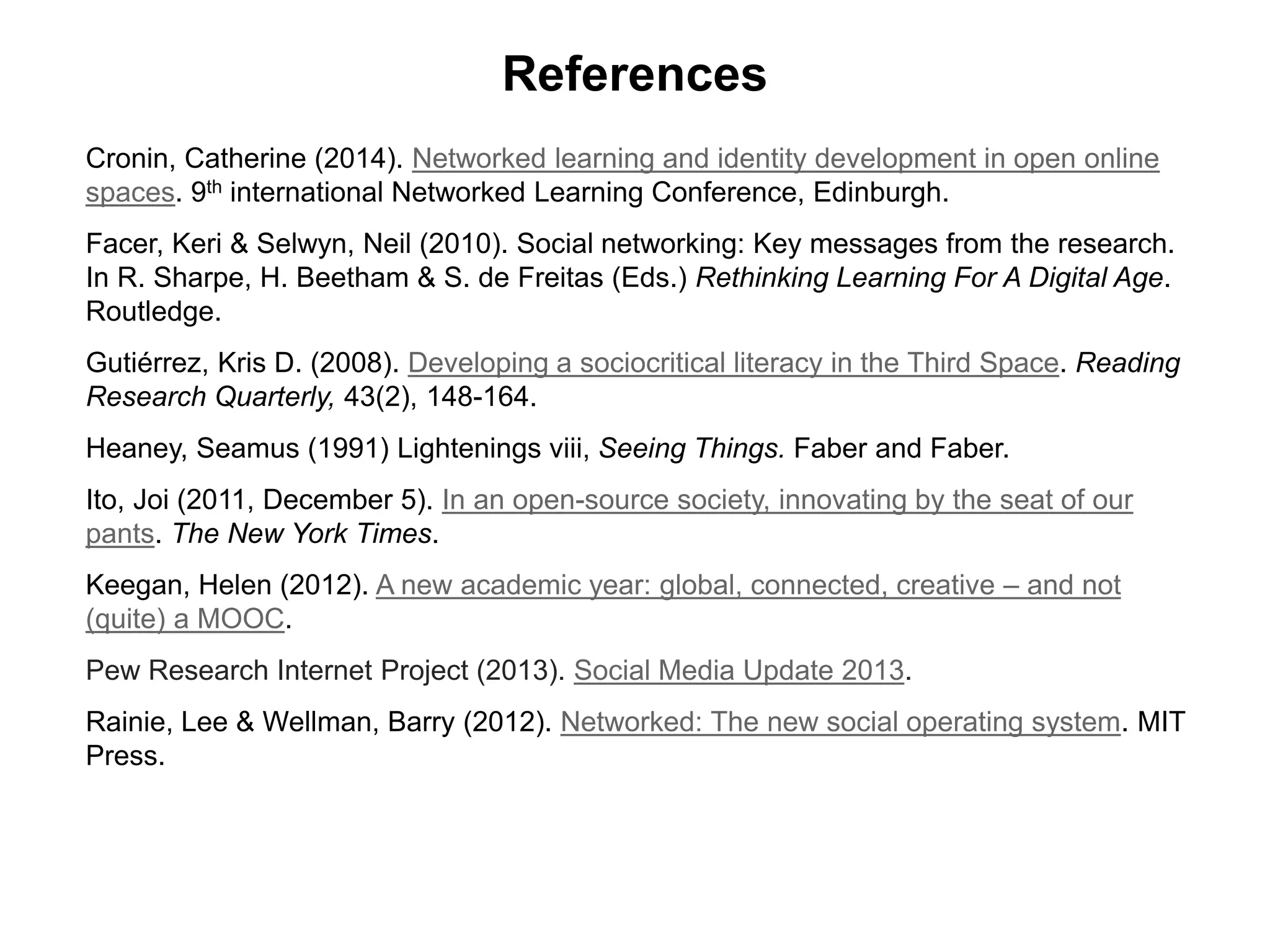
References 
Cronin, Catherine (2014). Networked learning and identity development in open online 
spaces. 9th international Networked Learning Conference, Edinburgh. 
Facer, Keri & Selwyn, Neil (2010). Social networking: Key messages from the research. 
In R. Sharpe, H. Beetham & S. de Freitas (Eds.) Rethinking Learning For A Digital Age. 
Routledge. 
Gutiérrez, Kris D. (2008). Developing a sociocritical literacy in the Third Space. Reading 
Research Quarterly, 43(2), 148-164. 
Heaney, Seamus (1991) Lightenings viii, Seeing Things. Faber and Faber. 
Ito, Joi (2011, December 5). In an open-source society, innovating by the seat of our 
pants. The New York Times. 
Keegan, Helen (2012). A new academic year: global, connected, creative – and not 
(quite) a MOOC. 
Pew Research Internet Project (2013). Social Media Update 2013. 
Rainie, Lee & Wellman, Barry (2012). Networked: The new social operating system. MIT 
Press.

WORKSHOP: Navigating the Marvellous - considering openness

  • 1.
    WORKSHOP FOR ACADEMICSTAFF - #CEL263 & GMIT Navigating the Marvellous: considering openness Catherine Cronin  @catherinecronin  NUI Galway  Oct/Nov 2014
  • 2.
    “I don’t think education is about centralized instruction anymore; rather, it is the process [of] establishing oneself as a node in a broad network of distributed creativity.” – Joi Ito @joi Slide: CC-BY-SA catherinecronin Image: CC BY-NC-SA 2.0 yobink
  • 3.
    Image: CC BY2.0 dlofink
  • 4.
    I use &adapt OERs in my teaching. I create & share OERs using Creative Commons (CC) licenses. My students create & share OERs, using Creative Commons (CC) licenses. I support my students in connecting & networking with others beyond our class.
  • 6.
    At its bestopenness is an ethos not a license. It's an approach to teaching and learning that builds a community of learners online and off. Jim Groom @jimgroom “
  • 7.
    Networked Individualism Social Networks Internet Mobile
  • 8.
    2005 2013 Source:Pew Research Center’s Internet & American Life Project, 2005-2013
  • 9.
    There is adivide between formal and informal learning. Students navigate the dissonance between these – with or without our support.
  • 10.
    …furtive thinking andbehaviour around open-web resources such as Wikipedia masks the level of use of non-traditional resources and also masks the methods learners use to increase their understanding of subjects, creating what we have called The Learning Black Market. The point at which learning takes place is often not being discussed because either explicitly or implicitly learners are being told by their educational intuitions or perceive that the educational institutions view that their information-seeking practices are not legitimate. David White, Lynn S. Connaway, Donna Lanclos, Erin M. Hood & Carrie Vass Evaluating digital services: a Visitors and Residents approach, JISC InfoNet “
  • 11.
    Seamus Heaney Lighteningsviii - video by Eoghan Kidney vimeo.com/4831035
  • 12.
    Networked Teacher Image:CC BY-NC-SA 2.0 Alec Couros
  • 13.
    Networked Educators Networked Students Physical Spaces Bounded Online Spaces Open Online Spaces
  • 14.
    CC images: cdessums,infidelic, sholeh!
  • 15.
    Networked Educators Networked Students Physical Spaces Bounded Online Spaces Open Online Spaces
  • 16.
    We proposed theidea of a Third Space where teacher and student scripts – the formal and informal, the official and unofficial spaces of the learning environment – intersect, creating the potential for authentic interaction and a shift in the social organization of learning and what counts as knowledge. Kris Gutiérrez (2008) University of Colorado, Boulder “
  • 17.
    Open practices giveus and our students opportunities to cross boundaries of geography, culture, institution, term, education sector, community, and/or power level…
  • 19.
  • 22.
    #icollab We’re nowlooking at the ‘tag-team model’ of education: the projects never end, as there is always a cohort to carry on, and lead into the next group, and when they overlap that’s great – that’s where the genuine collaboration happens. Traditionally, we deliver modules/courses, neatly chunked into 12 weeks, with units of assessment, leading to grades etc. and that’s the way things are (generally) done. I’m not saying scrap all of that, but I do think that modules are best served as springboards to other things. Increasingly, students are connecting across levels and cohorts through Twitter and now we have ex-students getting together with current students, undergrads coming to postgrad classes (and vice versa) as they’ve connected online and have a genuine interest in getting involved in other groups/further curricula outside of their taught modules.” Helen Keegan (2012) @heloukee “
  • 23.
  • 24.
    Individuals, students andeducators, can be nodes in a network. Groups and learning communities also can be nodes, e.g. via #hashtags.
  • 25.
    #studentvoice Openness... “ I learned a lot more about writing to the public. Before this I would have been less likely to express my views to a group of people online whereas now I would not have a problem in doing so. By posting publicly it opened up our world to other academics or people who are just interested in the topic... I don’t think anyone would have thought that the author of one of the works we were researching would get involved. “
  • 26.
    #studentvoice Social networks... “ “ Before studying it, I used Facebook and Twitter mainly just for keeping in contact with people, but since have discovered they both have much more to offer. They are places to discover new information and boost your knowledge. That both education and socialising can be rolled into one.
  • 27.
    Learners need topractice and experiment with different ways of enacting their identities, and adopt subject positions through different social technologies and media. These opportunities can only be supported by academic staff who are themselves engaged in digital practices and questioning their own relationship with knowledge. - Keri Facer & Neil Selwyn (2010)
  • 28.
    “We have tobuild our half of the bridge…” Colum McCann Image: CC BY-NC-SA 2.0 Tim Haynes
  • 29.
    Thank you! CatherineCronin @catherinecronin about.me/catherinecronin slideshare.net/cicronin Image: CC BY 2.0 visualpanic
  • 30.
    References Cronin, Catherine(2014). Networked learning and identity development in open online spaces. 9th international Networked Learning Conference, Edinburgh. Facer, Keri & Selwyn, Neil (2010). Social networking: Key messages from the research. In R. Sharpe, H. Beetham & S. de Freitas (Eds.) Rethinking Learning For A Digital Age. Routledge. Gutiérrez, Kris D. (2008). Developing a sociocritical literacy in the Third Space. Reading Research Quarterly, 43(2), 148-164. Heaney, Seamus (1991) Lightenings viii, Seeing Things. Faber and Faber. Ito, Joi (2011, December 5). In an open-source society, innovating by the seat of our pants. The New York Times. Keegan, Helen (2012). A new academic year: global, connected, creative – and not (quite) a MOOC. Pew Research Internet Project (2013). Social Media Update 2013. Rainie, Lee & Wellman, Barry (2012). Networked: The new social operating system. MIT Press.