social networking goes to school
The Educational Network Revolution Has Begun
Presentation by James Hawks   ET 8041
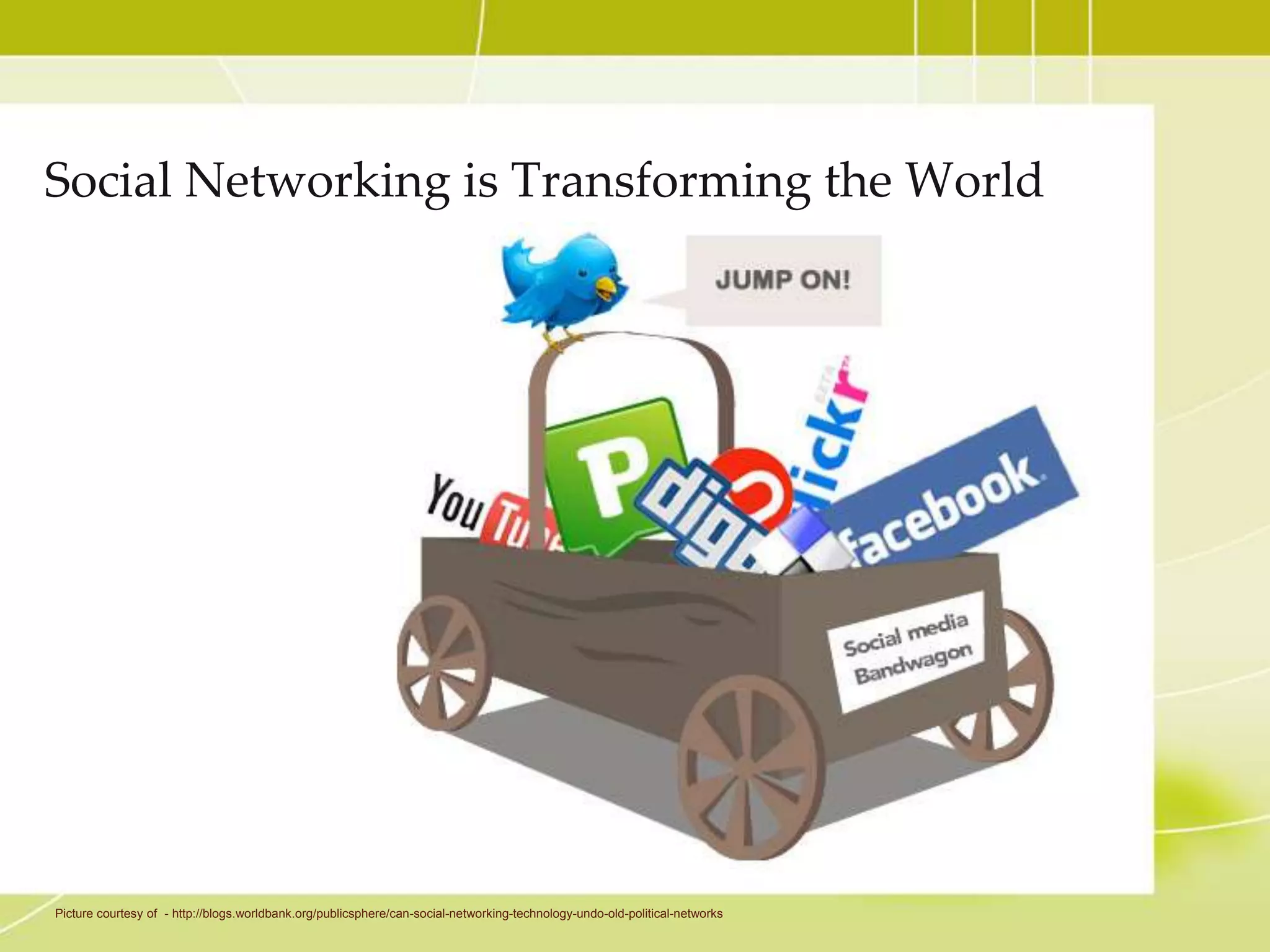
Social Networking is Transforming the World


Picture courtesy of - http://blogs.worldbank.org/publicsphere/can-social-networking-technology-undo-old-political-networks
Will
Richardson

“ No
question
that one of
the reasons
for the
success of
the Obama
campaign
in 2008 was

…. Social
networking
websites”.


(Richardson, 2010)
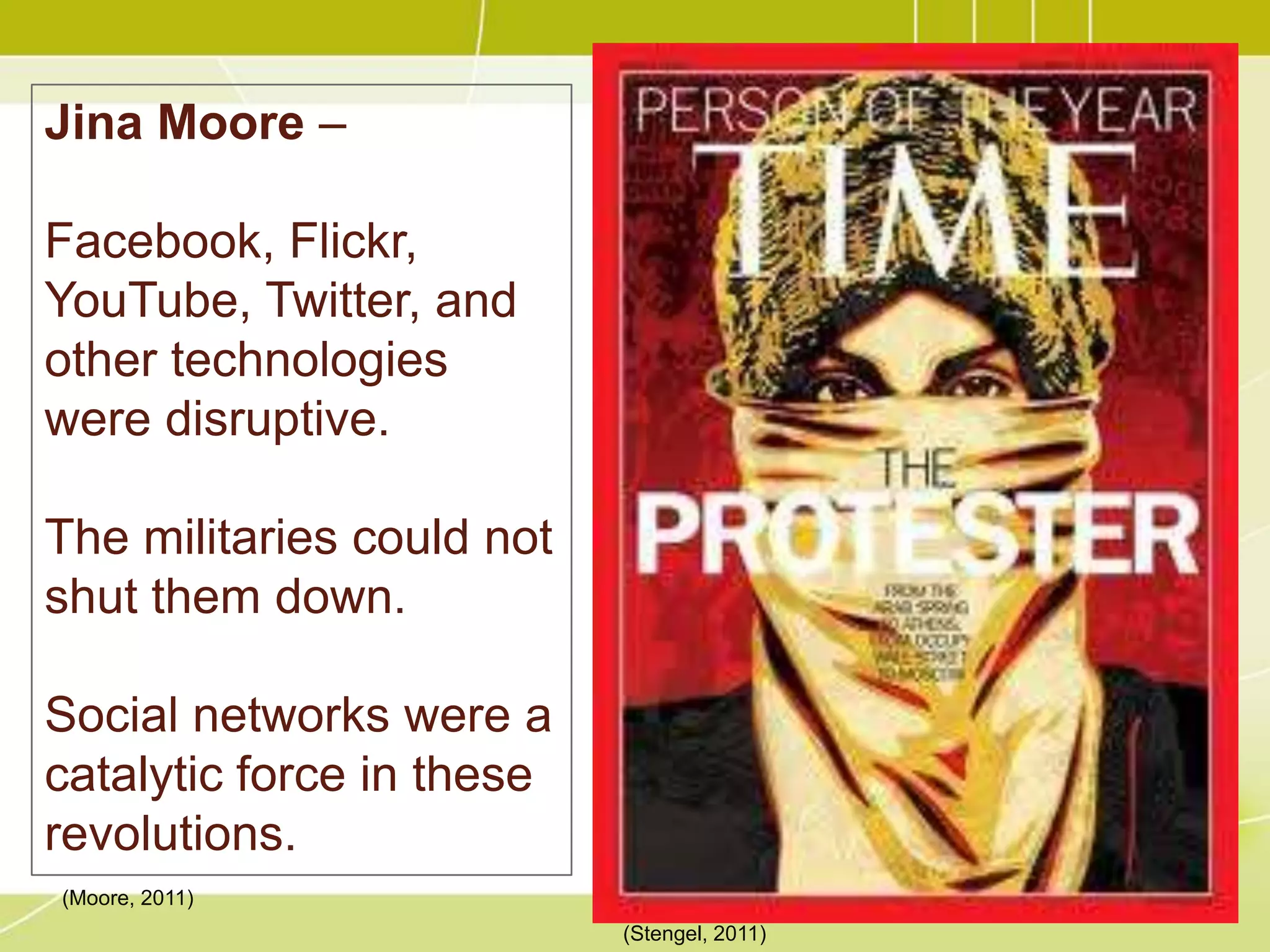
Jina Moore –

Facebook, Flickr,
YouTube, Twitter, and
other technologies
were disruptive.

The militaries could not
shut them down.

Social networks were a
catalytic force in these
revolutions.
(Moore, 2011)
                           (Stengel, 2011)
Social Networks are Finding Their Way Into the Work Place


    Using networks of peers
    o to find common solutions
    o to common concerns
    o in the workplace
     has led to a new and better    Widget for education.

Educational Networking -
the use of social networking technologies for educational purposes.


 (Hargadon, 2007)
I have chosen two
educational networks to
participate in and will
discuss their pedagogical
values and how they will
impact my professional
practice.
THE INTERACTIVE
WHITEBOARD REVOLUTION
a network created by Chris Betcher
The Interactive Whiteboard Revolution
                                                        (Betcher, n.d.)

• Created for educators interested in discussing ideas for teaching
  with interactive technologies.

 I chose this network for

    – Professional Development in the use of Interactive Whiteboards
    – To Be Better Able to Facilitate the Learning of Colleagues
    – To Become Better Skilled at Ongoing Assessments for
      Formative Assessment                     (Solomon & Schrum, 2007)
    – To Discuss Innovative Ways to use Interactive Whiteboards for
      Teaching and Learning and Saving Time
•   How-to Videos

•   Discussions With Other Members

•   Tips for Embedding Interactive Components and Assessments
•   More Adept Teacher and Technology Facilitator

•   A Model for Teaching and Integrating Technology

•   Become a go to Resource for Interactive Whiteboards and

    Professional Development Ideas
CLASSROOM 2.0
a network created by Steve Hargadon
Classroom 2.0
• A social network for those interested in web 2.0, social media, and
  participative technologies in the classroom.        (Hargadon, n.d.)

• It is a free, community-supported network.

   I chose this network because
    – It is supportative of social networking beginners
    – Its focus on assisting with the integration of Web2.0 technologies
       in the classroom
    – It would be a gateway for teachers to learn teaching with
       technology and Web 2.0 tools
Classroom 2.0 Provides
 •   Numerous Forums

 •   Live, Interactive Presentations

 •   Previously Recorded Professional Development
     Web Conferences

 •   And Discussion Groups That Include:

        Blogging
        Calendars
        Collaborative Documents
        Gaming
        Course Management Systems
        RSS & Readers

 •   And an Abundance of Various Other Topics of Interest
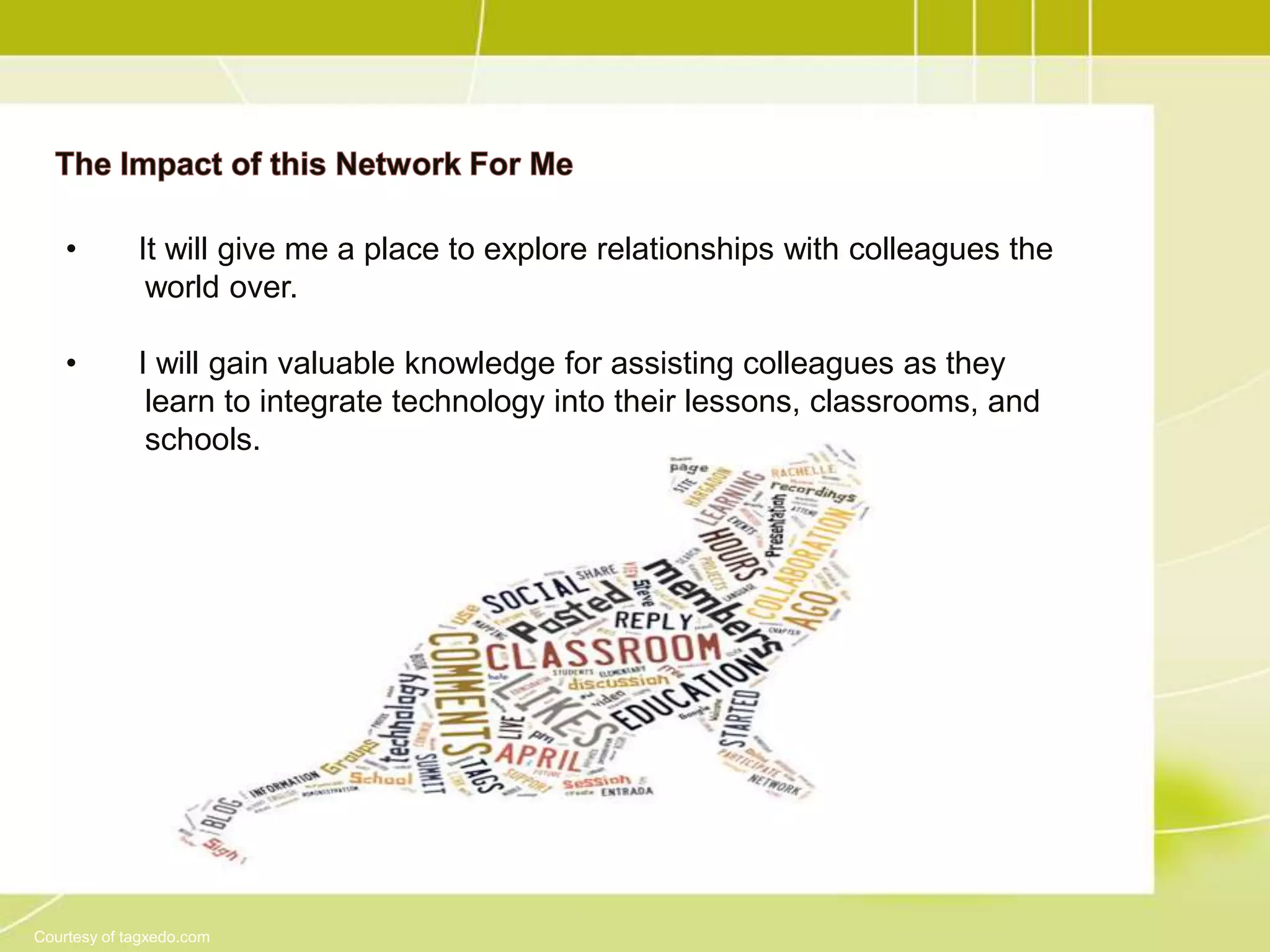
•        It will give me a place to explore relationships with colleagues the
              world over.

    •        I will gain valuable knowledge for assisting colleagues as they
              learn to integrate technology into their lessons, classrooms, and
              schools.


Courtesy of tagxedo.com
Social networking is transforming
 the world and it is transforming
 education. New educational networks
 are beginning to support teachers as
 they collaborate in ways never
 imagined before. Teachers, technology
 facilitators, administrators, and
 educators are taking notice.


Courtesy of Wikipedia
References


Betcher, C. (n.d.). The interactive whiteboard revolution - A place for conversations that promote effective teaching

     with iwbs. The Interactive Whiteboard Revolution. Network. Retrieved April 21, 2012, from

     http://iwbrevolution.ning.com/

Hargadon, S. (2007). Educational Networking - home. Educational Networking. Wiki. Retrieved April 22, 2012,

     from http://www.educationalnetworking.com/

Moore, J. (2011, June 30). Social media: Did twitter and facebook really build a global revolution? The Christian

     Science Monitor. www.csmonitor.com . Retrieved from http://www.csmonitor.com/World/Global-

     Issues/2011/0630/Social-media-Did-Twitter-and-Facebook-really-build-a-global-revolution

Richardson, W. (2010). Blogs, wikis, podcasts, and other powerful web tools for classrooms. Thousand Oaks,

     CA: Corwin Press.

Solomon, G, & Schrum, L. (2007). Web 2.0: New tools, new schools. Eugene, OR: International Society for

    Technology in Education.

Stengel, R. (2011). Time person of the year introduction. Time Magazine, 178(25). Retrieved from

     http://www.time.com/time/specials/packages/article/0,28804,2101745_2102139,00.html

Steve Hargadon. (n.d.). Classroom 2.0. Classroom 2.0. Ning Network. Retrieved April 21, 2012, from

     http://www.classroom20.com/

Edld 5362 week 2 assignment - Social Networking Goes to School

  • 1.
    social networking goesto school The Educational Network Revolution Has Begun Presentation by James Hawks ET 8041
  • 2.
    Social Networking isTransforming the World Picture courtesy of - http://blogs.worldbank.org/publicsphere/can-social-networking-technology-undo-old-political-networks
  • 3.
    Will Richardson “ No question that oneof the reasons for the success of the Obama campaign in 2008 was …. Social networking websites”. (Richardson, 2010)
  • 4.
    Jina Moore – Facebook,Flickr, YouTube, Twitter, and other technologies were disruptive. The militaries could not shut them down. Social networks were a catalytic force in these revolutions. (Moore, 2011) (Stengel, 2011)
  • 5.
    Social Networks areFinding Their Way Into the Work Place Using networks of peers o to find common solutions o to common concerns o in the workplace has led to a new and better Widget for education. Educational Networking - the use of social networking technologies for educational purposes. (Hargadon, 2007)
  • 6.
    I have chosentwo educational networks to participate in and will discuss their pedagogical values and how they will impact my professional practice.
  • 7.
    THE INTERACTIVE WHITEBOARD REVOLUTION anetwork created by Chris Betcher
  • 9.
    The Interactive WhiteboardRevolution (Betcher, n.d.) • Created for educators interested in discussing ideas for teaching with interactive technologies. I chose this network for – Professional Development in the use of Interactive Whiteboards – To Be Better Able to Facilitate the Learning of Colleagues – To Become Better Skilled at Ongoing Assessments for Formative Assessment (Solomon & Schrum, 2007) – To Discuss Innovative Ways to use Interactive Whiteboards for Teaching and Learning and Saving Time
  • 10.
    How-to Videos • Discussions With Other Members • Tips for Embedding Interactive Components and Assessments
  • 11.
    More Adept Teacher and Technology Facilitator • A Model for Teaching and Integrating Technology • Become a go to Resource for Interactive Whiteboards and Professional Development Ideas
  • 12.
    CLASSROOM 2.0 a networkcreated by Steve Hargadon
  • 14.
    Classroom 2.0 • Asocial network for those interested in web 2.0, social media, and participative technologies in the classroom. (Hargadon, n.d.) • It is a free, community-supported network. I chose this network because – It is supportative of social networking beginners – Its focus on assisting with the integration of Web2.0 technologies in the classroom – It would be a gateway for teachers to learn teaching with technology and Web 2.0 tools
  • 15.
    Classroom 2.0 Provides • Numerous Forums • Live, Interactive Presentations • Previously Recorded Professional Development Web Conferences • And Discussion Groups That Include:  Blogging  Calendars  Collaborative Documents  Gaming  Course Management Systems  RSS & Readers • And an Abundance of Various Other Topics of Interest
  • 16.
    It will give me a place to explore relationships with colleagues the world over. • I will gain valuable knowledge for assisting colleagues as they learn to integrate technology into their lessons, classrooms, and schools. Courtesy of tagxedo.com
  • 17.
    Social networking istransforming the world and it is transforming education. New educational networks are beginning to support teachers as they collaborate in ways never imagined before. Teachers, technology facilitators, administrators, and educators are taking notice. Courtesy of Wikipedia
  • 18.
    References Betcher, C. (n.d.).The interactive whiteboard revolution - A place for conversations that promote effective teaching with iwbs. The Interactive Whiteboard Revolution. Network. Retrieved April 21, 2012, from http://iwbrevolution.ning.com/ Hargadon, S. (2007). Educational Networking - home. Educational Networking. Wiki. Retrieved April 22, 2012, from http://www.educationalnetworking.com/ Moore, J. (2011, June 30). Social media: Did twitter and facebook really build a global revolution? The Christian Science Monitor. www.csmonitor.com . Retrieved from http://www.csmonitor.com/World/Global- Issues/2011/0630/Social-media-Did-Twitter-and-Facebook-really-build-a-global-revolution Richardson, W. (2010). Blogs, wikis, podcasts, and other powerful web tools for classrooms. Thousand Oaks, CA: Corwin Press. Solomon, G, & Schrum, L. (2007). Web 2.0: New tools, new schools. Eugene, OR: International Society for Technology in Education. Stengel, R. (2011). Time person of the year introduction. Time Magazine, 178(25). Retrieved from http://www.time.com/time/specials/packages/article/0,28804,2101745_2102139,00.html Steve Hargadon. (n.d.). Classroom 2.0. Classroom 2.0. Ning Network. Retrieved April 21, 2012, from http://www.classroom20.com/

Editor's Notes

  • #2 By James Hawks ET 8041
  • #3 Social networking is transforming the world and it is transforming education. All over the world people are using social networks and collaborating in ways never imagined. The influence of social networks can be seen in politics.
  • #4 Will Richardson (2010), in his book Blogs, Wikis, Podcasts, and Other Powerful Web Tools for Classrooms, stated that it was “no question that one of the reasons for the success of the Obama campaign in 2008 was its understanding of the potentials inherent in the group-forming ability” of social networking websites (Richardson, 2010).
  • #5 Another example of the power of social networking can be seen in the recent use of Twitter and other technologies in several revolutionary movements in the Middle East. Jina Moore points out that Facebook, Flickr, YouTube, Twitter, and other technologies were disruptive. The militaries in various countries could not shut them down. Social networks were a catalytic force in these revolutions (Moore, 2011). Rick Stengel of Time Magazine states, “The protests have marked the rise of a new generation. In Egypt 60% of the population is under the age of 25. Technology mattered, but this was not a technological revolution. Social networks did not cause these movements, but they kept them alive and connected” (Stengel, 2011).
  • #6  Social networking has changed the way many participate in politics, in the way many communicate with family and friends, and is finding its way into the work place. Using networks of peers to find common solutions to common concerns in the workplace has led to a better widget – Educational Networking. “Educational Networkingis the use of social networking technologies for educational purposes” (Hargadon, 2007). I have chosen two educational networks to participate in and will discuss their pedagogical values and how they will impact my professional practice.
  • #7 I have chosen two educational networks to participate in and will discuss their pedagogical values and how they will impact my professional practice.  
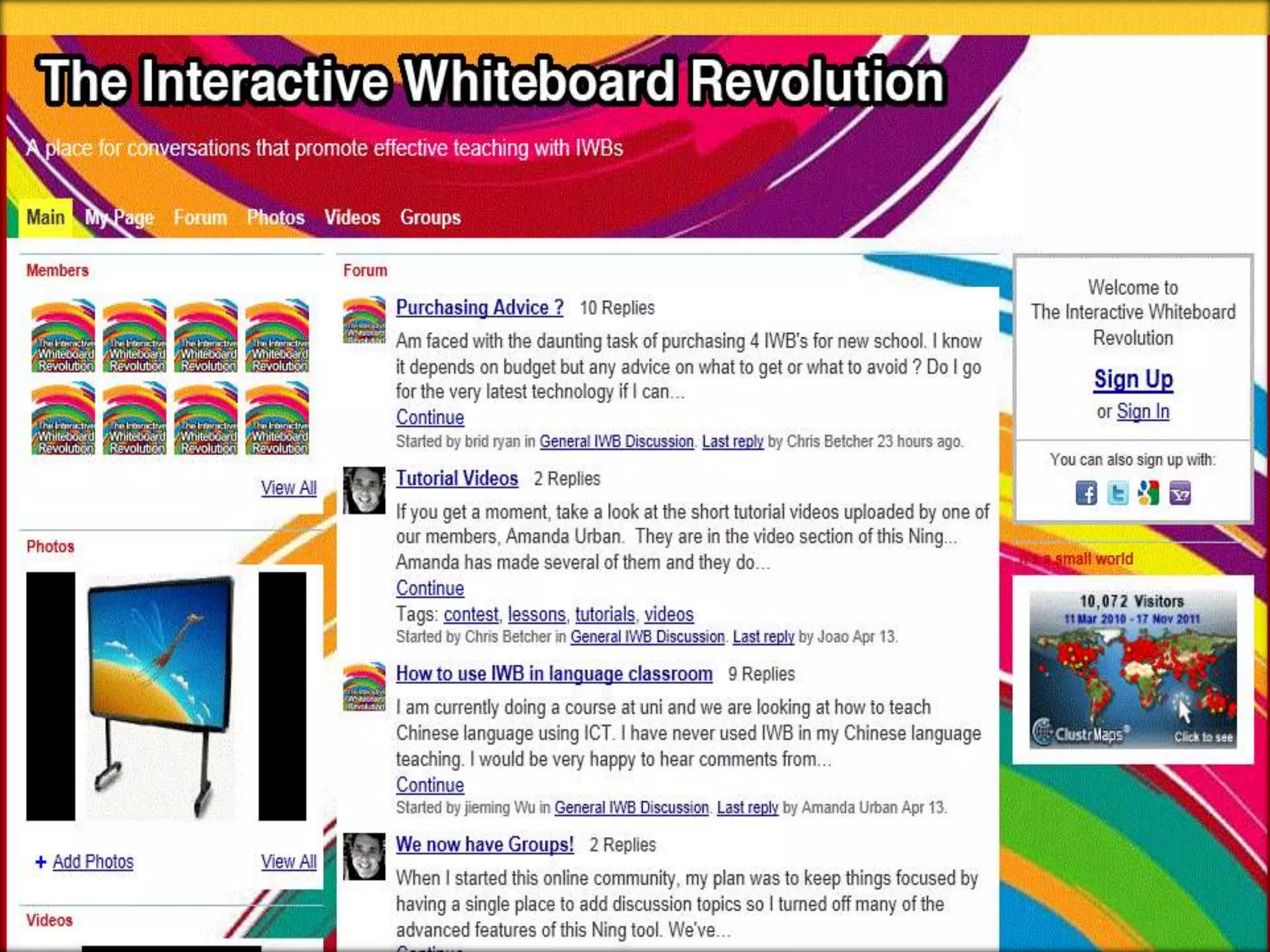
  • #9 This is a screenshot of The Interactive Whiteboard Revolution network powered by Ning. http://iwbrevolution.ning.com/
  • #10  The Interactive Whiteboard Revolution is a network created by Chris Betcher (Betcher, n.d.). He created the site for educators interested in discussing ideas for teaching effectively with interactive technologies. I chose to join this network for my own professional development and to be able to assist other colleagues with learning how to use their whiteboards for interactive teaching. I want become skilled at doing ongoing assessments with the use of technology while students are learning. Solomon & Schrum indicated, in their book Web 2.0 (2007, p. 168), that while teaching one can assess students as they learn. Instead of waiting until the learning is over to assess students, one could embed assessment into the learning activities and use formative evaluation. Further, I chose this network to discuss innovative ways to use of interactive whiteboards for teaching and learning and saving time.
  • #11  In choosing The Interactive Whiteboard Revolution powered by Ning, I would usethis network to review how-to videos, discuss lesson plan flow, discuss tips for embedding interactive components into lessons, and for embedding assessments into lessons.
  • #12 I feel that this network would impact my professional practice by assisting me to be a better teacher and technology facilitator. In addition, I would be able to assist other teachers with their interactive whiteboards, give them suggestions about how to use interactive whiteboards, and help teachers find information or professional development concerning their whiteboards.
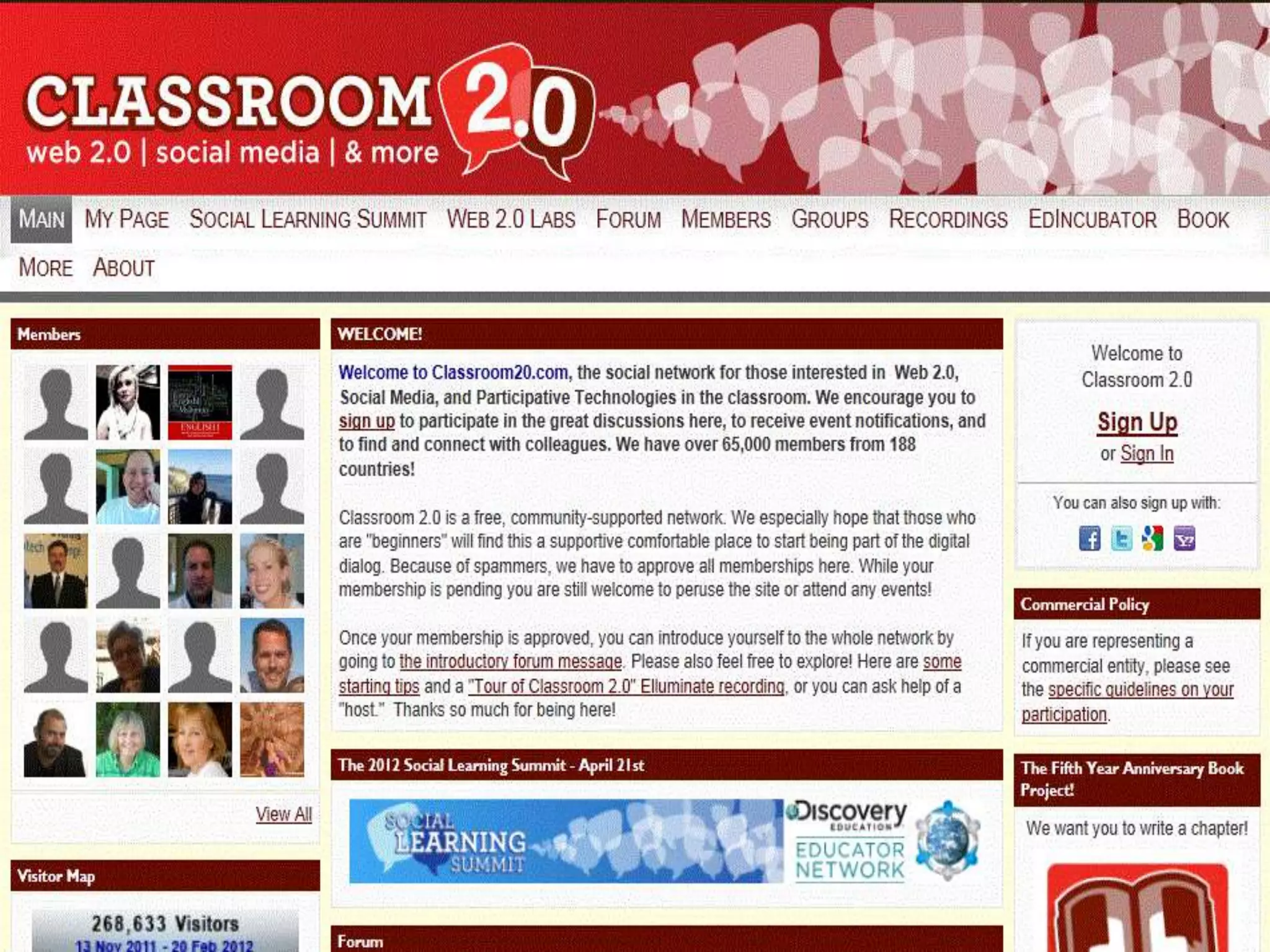
  • #14  Another educational social network that I chose to join was Classroom 2.0. http://www.classroom20.com/
  • #15 Classroom 2.0 is a “social network for those interested in Web 2.0, Social Media, and Participative Technologies in the classroom” (Steve Hargadon, n.d.). It is a free, community-supported network. I chose this network because it purports to be supportive of social networking beginners and focuses on assisting with the integration of Web2.0 technologies in the classroom. I could use this network to introduce teachers to teaching with technology and Web 2.0 tools.
  • #16  I will use Classroom 2.0 to enhance my teaching and to get ideas for helping other teachers and administrators integrate technology into their profession and teaching. The available forums that are featured in this network are numerous. Members discuss different ways these technologies can be used for the benefit of educators. Discussions include: blogging, calendars, collaborative documents, gaming, course management systems, interactive boards, RSS & readers to name a few.
  • #17  I believe that Classroom 2.0 as a social network will impact my teaching by giving me a place to explore new relationships with colleagues the world over and gain knowledge for assisting my colleagues as they learn to integrate technology into their lessons, classrooms, and schools.
  • #18 Social networking is transforming the world and it is transforming education. New educational networks are beginning to support teachers as they collaborate in ways never imagined before. Teachers, technology facilitators, administrators, and educators are taking notice.