Downloaded 2,194 times
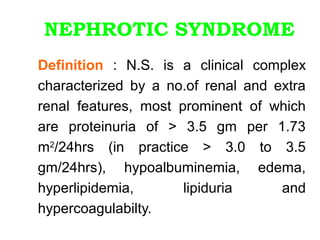
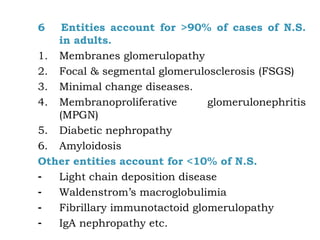

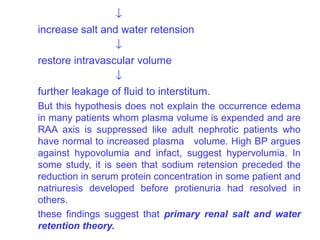
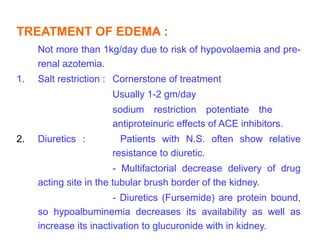
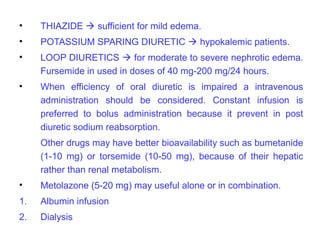
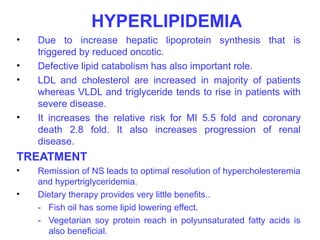
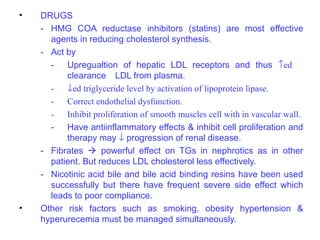
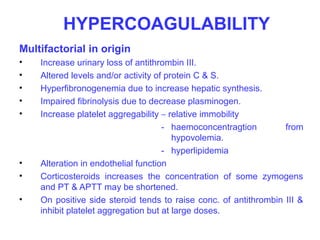
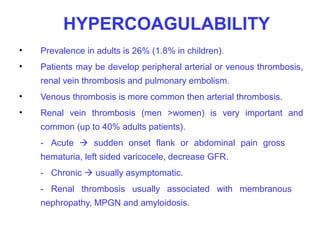
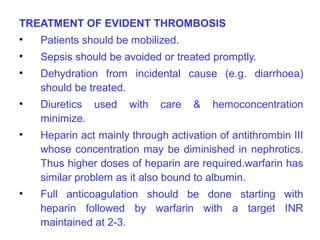
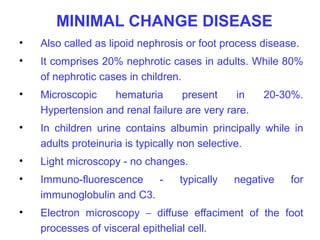
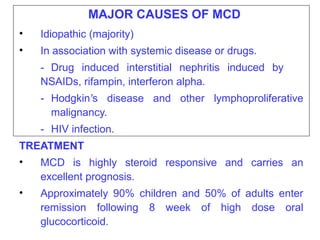
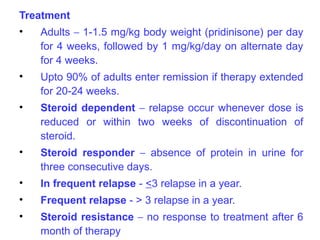
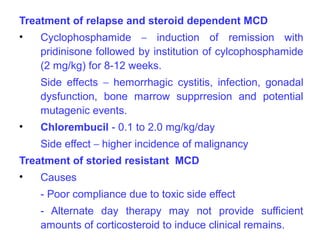
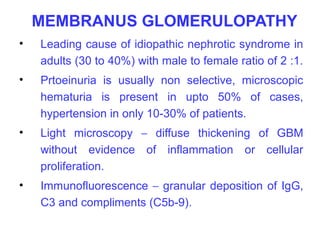

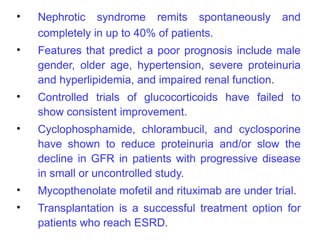
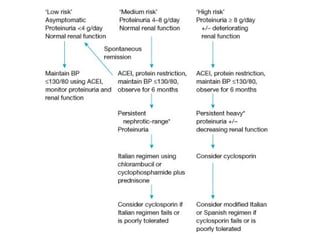
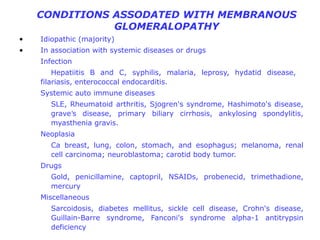
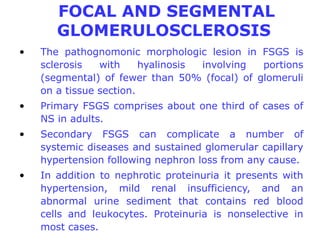
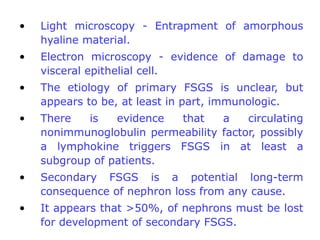
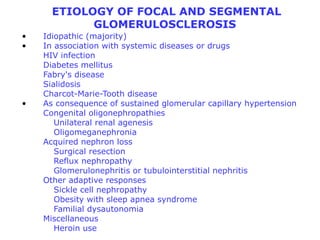
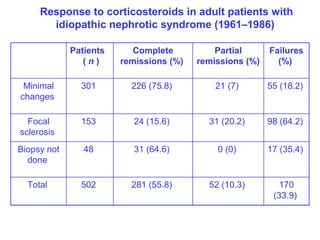
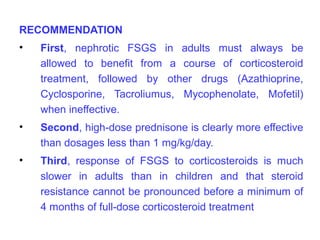
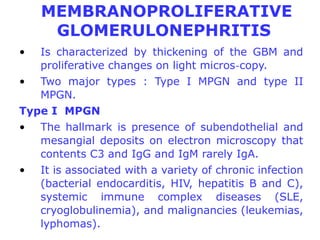
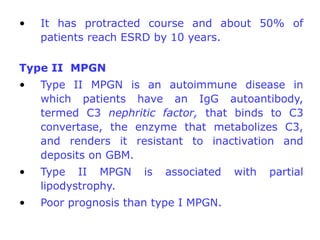


Nephrotic syndrome (NS) in adults is a clinical condition characterized by severe proteinuria, hypoalbuminemia, edema, hyperlipidemia, and hypercoagulability, with six main underlying causes accounting for over 90% of cases. Treatment strategies include reducing proteinuria through medication (such as ACE inhibitors or diuretics), managing edema with sodium restriction and diuretics, and addressing complications like hyperlipidemia and increased infection risk. Membranous glomerulopathy is noted as a leading cause of idiopathic NS in adults, while minimal change disease is highly responsive to steroid treatment.


![CTEV [ clubfoot] DR ARUN LAL ,DR MOHAMED ASHRAF travancore medical college k...](https://cdn.slidesharecdn.com/ss_thumbnails/ctevclubfootdrarunlaldrmohamedashraftravancoremedicalcollegekollamkeralaindia-260208063247-18fc466c-thumbnail.jpg?width=640&height=640&fit=bounds)