NARCOTIC ANALGESICS AND NARCOTIC
ANTAGONISTS
BY
KENCHA SWATHI
ASSISTANT PROFESSOR
DEPT OF PHARMACEUTICAL CHEMISTRY
ADITYA BIPER
BANGALORE
NARCOTIC ANALGESICS
 The drugs interact with opioid receptors in the CNS. The
interactions result in the narcotic pharmacological effects of
analgesia, sedation and cough suppression are called as
narcotic analgesics.
Eg: Morphine sulphate
Codiene
Levorphanol
Diphenoxylate Hydrochloride
Pentazocine
Meperidine Hydrochloride
Loperamide Hydrochloride
Fentanyl citrate
Methadone Hydrochloride
Propoxyphene Hydrochloride
Anilerdine Hydrochloride
OPIOID RECEPTORS
 Opioid receptors are categorised into:
1.Delta opioid receptors(δ)
2.Kappa opioid receptors (k)
3.Mu opioid receptors (μ)
 All the three opioid receptors are located either in the
human brain or spinal cord tissues.
 Each receptor plays a major role in the control,regulation
and management of pain threshold.
 Orphan opioid receptor is the new one.
SAR OF MORPHINE ANALOGUES
 A ring and basic nitrogen are the most important structural features.
 A tertiary amine group is necessary for opioid activity with N-methyl
group displaying good agonistic properties.
 If the N atom contains higher alkyl groups then the compound shows
antagonistic activity.
Eg: Nalorphine & Naltrexone
 If OH group is changed to H group at 3rd position then activity will be
decreased 10 times.
 If OH group is changed to H group at 6th position then activity will be
increased.
 If the double bond between 7th and 8th position is reduced,then the
activity will be increased.
Eg: Oxycodone
 Replacement of OH group with ketone group at 6th position decreases
the narcotic agonistic activity.
Eg: Hydromorphone
Hydrocodone
 Methylation or acetylation of OH group at 3rd position ,activity will be
decreased.
Eg: Codeine
Heroin
 β –OH group at 14th position increases the narcotic agonistic activity.
 Acetylation of 6-OH group will increase the activity.
 Nitrogen containing a -CH₂ -CH₂ -phenyl group ,activity will increase by
10 folds.
MORPHINE SULPHATE
 Uses:1.Analgesic
2.In the treatment of long bone fractures,myocardial infarction.
3.To treat terminal stages of cancer,burn patients,post operative
patients,visceral pains.
4.To treat biliary colic and renal colic pain
5.Used as obstetric analgesia
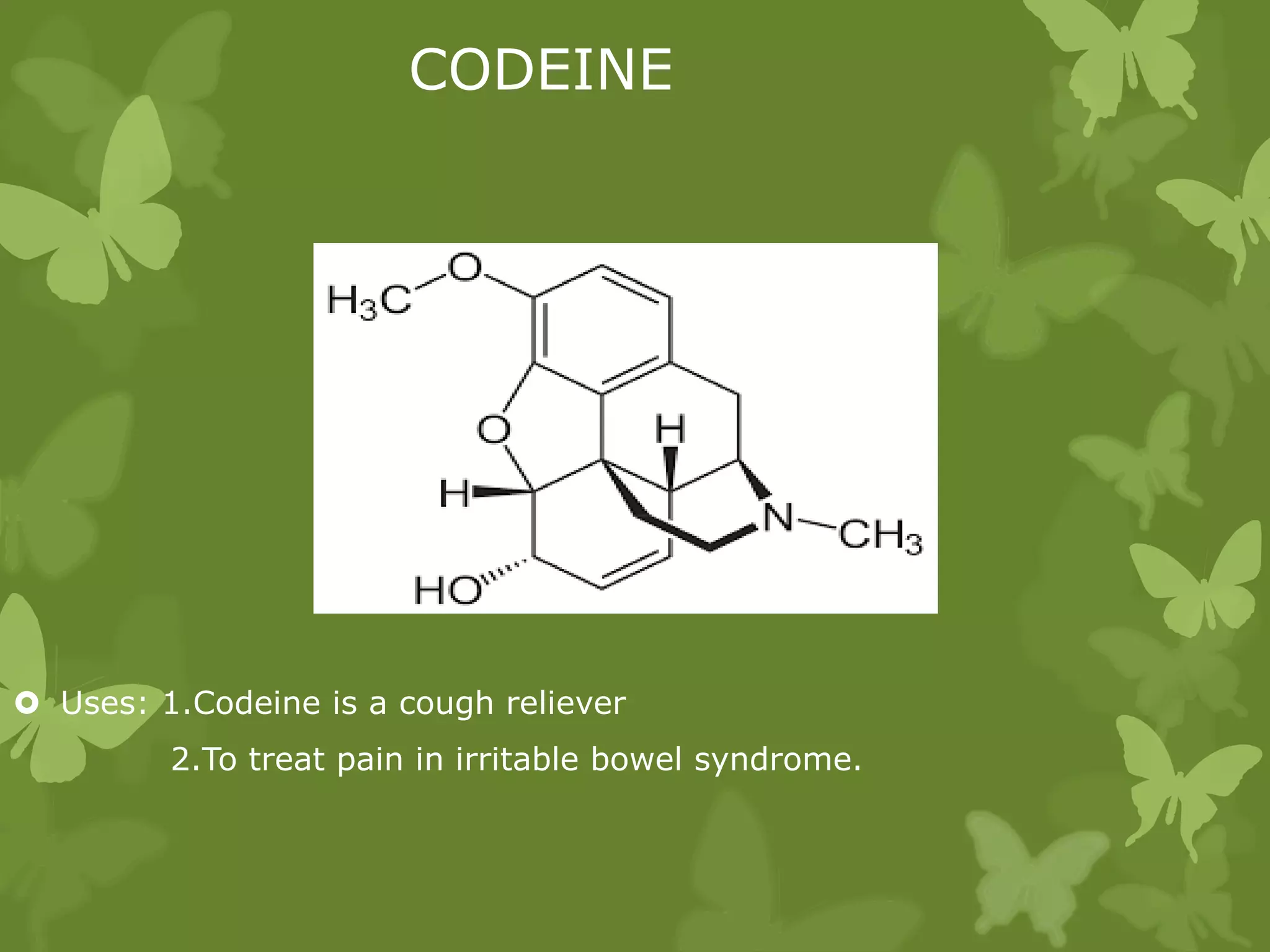
CODEINE
 Uses: 1.Codeine is a cough reliever
2.To treat pain in irritable bowel syndrome.
MEPERIDINE HYDROCHLORIDE
 Uses: 1. Meperidine is commonly used in obstetrics
2.To treat post operative pain
ANILERDINE HYDROCHLORIDE
 Uses: 1.Narcotic agonist
DIPHENOXYLATE HYDROCHLORIDE
 Uses: 1.Narcotic agonist
LOPERAMIDE HYDROCHLORIDE
 Uses:1.To control acute & chronic diarrhoea.
2.To control idiopathic diarrhoea in AIDS
FENTANYL CITRATE
 Uses:1. Used for anaesthesia
2. Hypnotic
3. Local anaesthetic for spinal surgery.
METHADONE HYDROCHLORIDE
 Uses:1.Opioid analgesic
2. To control withdrawal symptoms from heroin & morphine
PROPOXYPHENE HYDROCHLORIDE
 Uses:1.Narcotic agonist
PENTAZOCINE
 Uses:1.Narcotic analgesic
2. To treat cardiac asthma.
3.To treat chronic pain
LEVORPHANOL TARTARATE
 Uses:1.Narcotic agonist
2.To treat severe pain
NARCOTIC ANTAGONISTS
 The drugs which are competitive antagonists that bind to the opioid
receptors with higher affinity than agonists but do not activate the
receptors.
 These drugs effectively blocks the receptor,preventing the body from
responding to opioids and endorphins.
Eg: Nalorphine hydrochloride
Levallorphan tartarate
Naloxone hydrochloride
NALORPHINE HYDROCHLORIDE
 Uses:1.Opioid antagonist
2.Antidote to reverse opioid overdose & drug dependance
LEVALORPHAN TARTARATE
 Uses:1.Opioid antagonist /antidote
NALOXONE HYDROCHLORIDE
 Uses:1.Narcotic antagonist
2.Used to treat respiratory depressant effects of opioid overdoses
SYNTHESIS OF FENTANYL CITRATE
SYNTHESIS OF METHADONE
Narcotic analgesics
Narcotic analgesics

Narcotic analgesics

  • 1.
    NARCOTIC ANALGESICS ANDNARCOTIC ANTAGONISTS BY KENCHA SWATHI ASSISTANT PROFESSOR DEPT OF PHARMACEUTICAL CHEMISTRY ADITYA BIPER BANGALORE
  • 2.
    NARCOTIC ANALGESICS  Thedrugs interact with opioid receptors in the CNS. The interactions result in the narcotic pharmacological effects of analgesia, sedation and cough suppression are called as narcotic analgesics. Eg: Morphine sulphate Codiene Levorphanol Diphenoxylate Hydrochloride Pentazocine Meperidine Hydrochloride Loperamide Hydrochloride Fentanyl citrate Methadone Hydrochloride Propoxyphene Hydrochloride Anilerdine Hydrochloride
  • 3.
    OPIOID RECEPTORS  Opioidreceptors are categorised into: 1.Delta opioid receptors(δ) 2.Kappa opioid receptors (k) 3.Mu opioid receptors (μ)  All the three opioid receptors are located either in the human brain or spinal cord tissues.  Each receptor plays a major role in the control,regulation and management of pain threshold.  Orphan opioid receptor is the new one.
  • 4.
    SAR OF MORPHINEANALOGUES  A ring and basic nitrogen are the most important structural features.  A tertiary amine group is necessary for opioid activity with N-methyl group displaying good agonistic properties.  If the N atom contains higher alkyl groups then the compound shows antagonistic activity. Eg: Nalorphine & Naltrexone  If OH group is changed to H group at 3rd position then activity will be decreased 10 times.  If OH group is changed to H group at 6th position then activity will be increased.
  • 5.
     If thedouble bond between 7th and 8th position is reduced,then the activity will be increased. Eg: Oxycodone  Replacement of OH group with ketone group at 6th position decreases the narcotic agonistic activity. Eg: Hydromorphone Hydrocodone  Methylation or acetylation of OH group at 3rd position ,activity will be decreased. Eg: Codeine Heroin  β –OH group at 14th position increases the narcotic agonistic activity.  Acetylation of 6-OH group will increase the activity.  Nitrogen containing a -CH₂ -CH₂ -phenyl group ,activity will increase by 10 folds.
  • 6.
    MORPHINE SULPHATE  Uses:1.Analgesic 2.Inthe treatment of long bone fractures,myocardial infarction. 3.To treat terminal stages of cancer,burn patients,post operative patients,visceral pains. 4.To treat biliary colic and renal colic pain 5.Used as obstetric analgesia
  • 7.
    CODEINE  Uses: 1.Codeineis a cough reliever 2.To treat pain in irritable bowel syndrome.
  • 8.
    MEPERIDINE HYDROCHLORIDE  Uses:1. Meperidine is commonly used in obstetrics 2.To treat post operative pain
  • 9.
  • 10.
  • 11.
    LOPERAMIDE HYDROCHLORIDE  Uses:1.Tocontrol acute & chronic diarrhoea. 2.To control idiopathic diarrhoea in AIDS
  • 12.
    FENTANYL CITRATE  Uses:1.Used for anaesthesia 2. Hypnotic 3. Local anaesthetic for spinal surgery.
  • 13.
    METHADONE HYDROCHLORIDE  Uses:1.Opioidanalgesic 2. To control withdrawal symptoms from heroin & morphine
  • 14.
  • 15.
    PENTAZOCINE  Uses:1.Narcotic analgesic 2.To treat cardiac asthma. 3.To treat chronic pain
  • 16.
    LEVORPHANOL TARTARATE  Uses:1.Narcoticagonist 2.To treat severe pain
  • 17.
    NARCOTIC ANTAGONISTS  Thedrugs which are competitive antagonists that bind to the opioid receptors with higher affinity than agonists but do not activate the receptors.  These drugs effectively blocks the receptor,preventing the body from responding to opioids and endorphins. Eg: Nalorphine hydrochloride Levallorphan tartarate Naloxone hydrochloride
  • 18.
    NALORPHINE HYDROCHLORIDE  Uses:1.Opioidantagonist 2.Antidote to reverse opioid overdose & drug dependance
  • 19.
  • 20.
    NALOXONE HYDROCHLORIDE  Uses:1.Narcoticantagonist 2.Used to treat respiratory depressant effects of opioid overdoses
  • 21.
  • 22.