NARCOTIC AND NON
NARCOTIC ANALGESIC
• Agents that produce analgesia
• Analgesia – state of relative insensitivity to
pain.
• Capacity to tolerate pain is increased without
loss of consciousness
Classification
• Opioid Analgesic
• Non opioid analgesic
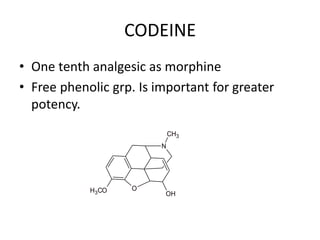
CODEINE
• One tenth analgesic as morphine
• Free phenolic grp. Is important for greater
potency.
H3CO
N
CH3
O
OH
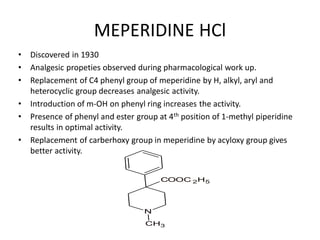
MEPERIDINE HCl
• Discovered in 1930
• Analgesic propeties observed during pharmacological work up.
• Replacement of C4 phenyl group of meperidine by H, alkyl, aryl and
heterocyclic group decreases analgesic activity.
• Introduction of m-OH on phenyl ring increases the activity.
• Presence of phenyl and ester group at 4th position of 1-methyl piperidine
results in optimal activity.
• Replacement of carberhoxy group in meperidine by acyloxy group gives
better activity.
N
COOC 2H5
CH3
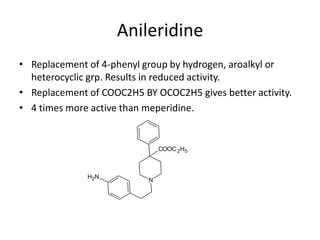
Anileridine
• Replacement of 4-phenyl group by hydrogen, aroalkyl or
heterocyclic grp. Results in reduced activity.
• Replacement of COOC2H5 BY OCOC2H5 gives better activity.
• 4 times more active than meperidine.
N
COOC2H5
N
H2
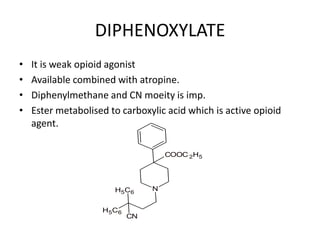
DIPHENOXYLATE
• It is weak opioid agonist
• Available combined with atropine.
• Diphenylmethane and CN moeity is imp.
• Ester metabolised to carboxylic acid which is active opioid
agent.
N
COOC 2H5
H5C6
H5C6
CN
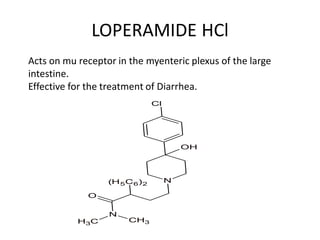
LOPERAMIDE HCl
N
OH
Cl
(H5C6)2
O
N
C
H3
CH3
Acts on mu receptor in the myenteric plexus of the large
intestine.
Effective for the treatment of Diarrhea.
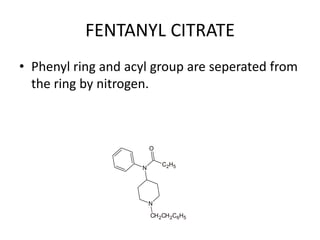
FENTANYL CITRATE
• Phenyl ring and acyl group are seperated from
the ring by nitrogen.
N
O
C2H5
N
CH2CH2C6H5
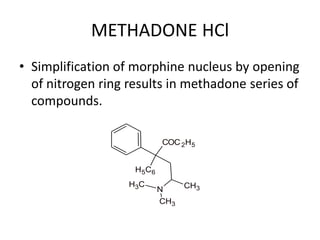
METHADONE HCl
• Simplification of morphine nucleus by opening
of nitrogen ring results in methadone series of
compounds.
COC2H5
H5C6
N
C
H3
CH3
CH3
• Insertion of m-hydroxyl group in one of the
phenyl ring of methadone causes decrease in
analgesic activity.
• Methadone series compounds are more
potent analgesic.
• Replacement of COC2H5 by H will decrease
the activity.
• Removal of any 2 phenyl grp. Decreases the
activity
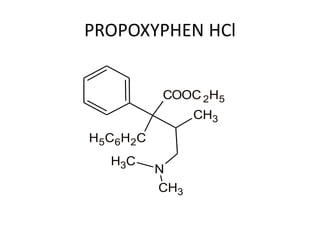
PROPOXYPHEN HCl
COOC2H5
H5C6H2C
N
C
H3
CH3
CH3
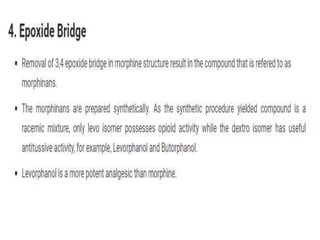
MORPHINANS
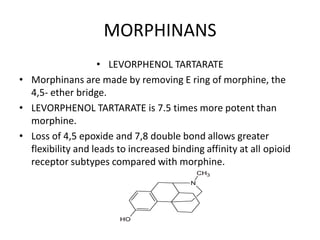
• LEVORPHENOL TARTARATE
• Morphinans are made by removing E ring of morphine, the
4,5- ether bridge.
• LEVORPHENOL TARTARATE is 7.5 times more potent than
morphine.
• Loss of 4,5 epoxide and 7,8 double bond allows greater
flexibility and leads to increased binding affinity at all opioid
receptor subtypes compared with morphine.
O
H
N
CH3
BENZOMORPHANS
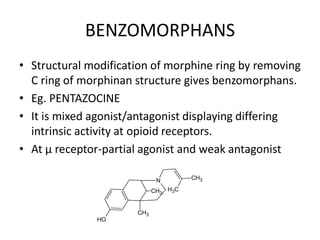
• Structural modification of morphine ring by removing
C ring of morphinan structure gives benzomorphans.
• Eg. PENTAZOCINE
• It is mixed agonist/antagonist displaying differing
intrinsic activity at opioid receptors.
• At μ receptor-partial agonist and weak antagonist
O
H
N
C
H3
CH3
CH3
CH3
NARCOTIC ANTAGONIST
• Blocks effects of narcotics
• Used in the treatment of overdose of narcotic.
• Structurally related to morphine
• Except group attached to nitrogen
• They prevent excessive respiratory depression
caused by administration of morphine
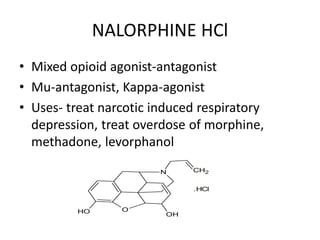
NALORPHINE HCl
• Mixed opioid agonist-antagonist
• Mu-antagonist, Kappa-agonist
• Uses- treat narcotic induced respiratory
depression, treat overdose of morphine,
methadone, levorphanol
O
H
N
O
OH
CH2
.HCl
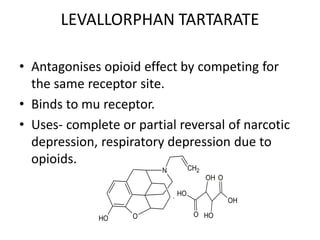
LEVALLORPHAN TARTARATE
• Antagonises opioid effect by competing for
the same receptor site.
• Binds to mu receptor.
• Uses- complete or partial reversal of narcotic
depression, respiratory depression due to
opioids.
O
H
N
O
CH2
O
H
OH
O
O
OH
O
H
.
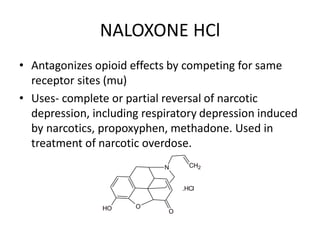
NALOXONE HCl
• Antagonizes opioid effects by competing for same
receptor sites (mu)
• Uses- complete or partial reversal of narcotic
depression, including respiratory depression induced
by narcotics, propoxyphen, methadone. Used in
treatment of narcotic overdose.
O
H
N
O
CH2
O
.HCl

Narcotic and Non Narcotic Analgesic..pdf

  • 1.
  • 2.
    • Agents thatproduce analgesia • Analgesia – state of relative insensitivity to pain. • Capacity to tolerate pain is increased without loss of consciousness
  • 3.
  • 12.
    CODEINE • One tenthanalgesic as morphine • Free phenolic grp. Is important for greater potency. H3CO N CH3 O OH
  • 13.
    MEPERIDINE HCl • Discoveredin 1930 • Analgesic propeties observed during pharmacological work up. • Replacement of C4 phenyl group of meperidine by H, alkyl, aryl and heterocyclic group decreases analgesic activity. • Introduction of m-OH on phenyl ring increases the activity. • Presence of phenyl and ester group at 4th position of 1-methyl piperidine results in optimal activity. • Replacement of carberhoxy group in meperidine by acyloxy group gives better activity. N COOC 2H5 CH3
  • 14.
    Anileridine • Replacement of4-phenyl group by hydrogen, aroalkyl or heterocyclic grp. Results in reduced activity. • Replacement of COOC2H5 BY OCOC2H5 gives better activity. • 4 times more active than meperidine. N COOC2H5 N H2
  • 15.
    DIPHENOXYLATE • It isweak opioid agonist • Available combined with atropine. • Diphenylmethane and CN moeity is imp. • Ester metabolised to carboxylic acid which is active opioid agent. N COOC 2H5 H5C6 H5C6 CN
  • 16.
    LOPERAMIDE HCl N OH Cl (H5C6)2 O N C H3 CH3 Acts onmu receptor in the myenteric plexus of the large intestine. Effective for the treatment of Diarrhea.
  • 17.
    FENTANYL CITRATE • Phenylring and acyl group are seperated from the ring by nitrogen. N O C2H5 N CH2CH2C6H5
  • 18.
    METHADONE HCl • Simplificationof morphine nucleus by opening of nitrogen ring results in methadone series of compounds. COC2H5 H5C6 N C H3 CH3 CH3
  • 19.
    • Insertion ofm-hydroxyl group in one of the phenyl ring of methadone causes decrease in analgesic activity. • Methadone series compounds are more potent analgesic. • Replacement of COC2H5 by H will decrease the activity. • Removal of any 2 phenyl grp. Decreases the activity
  • 20.
  • 21.
    MORPHINANS • LEVORPHENOL TARTARATE •Morphinans are made by removing E ring of morphine, the 4,5- ether bridge. • LEVORPHENOL TARTARATE is 7.5 times more potent than morphine. • Loss of 4,5 epoxide and 7,8 double bond allows greater flexibility and leads to increased binding affinity at all opioid receptor subtypes compared with morphine. O H N CH3
  • 22.
    BENZOMORPHANS • Structural modificationof morphine ring by removing C ring of morphinan structure gives benzomorphans. • Eg. PENTAZOCINE • It is mixed agonist/antagonist displaying differing intrinsic activity at opioid receptors. • At μ receptor-partial agonist and weak antagonist O H N C H3 CH3 CH3 CH3
  • 23.
    NARCOTIC ANTAGONIST • Blockseffects of narcotics • Used in the treatment of overdose of narcotic. • Structurally related to morphine • Except group attached to nitrogen • They prevent excessive respiratory depression caused by administration of morphine
  • 24.
    NALORPHINE HCl • Mixedopioid agonist-antagonist • Mu-antagonist, Kappa-agonist • Uses- treat narcotic induced respiratory depression, treat overdose of morphine, methadone, levorphanol O H N O OH CH2 .HCl
  • 25.
    LEVALLORPHAN TARTARATE • Antagonisesopioid effect by competing for the same receptor site. • Binds to mu receptor. • Uses- complete or partial reversal of narcotic depression, respiratory depression due to opioids. O H N O CH2 O H OH O O OH O H .
  • 26.
    NALOXONE HCl • Antagonizesopioid effects by competing for same receptor sites (mu) • Uses- complete or partial reversal of narcotic depression, including respiratory depression induced by narcotics, propoxyphen, methadone. Used in treatment of narcotic overdose. O H N O CH2 O .HCl