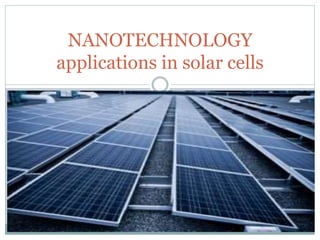
NANOTECHNOLOGY
applications in solar cells
Contents
 What is nanotechnology?
 Working of conventional solar cells
 Infrared plastic solar cell
 Working of plastic solar cell
 Improvements
 Applications
 Advantages
 Limitations
 conclusion
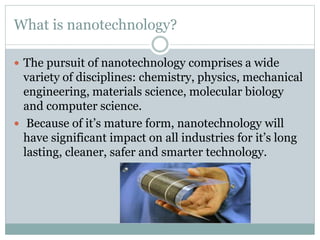
What is nanotechnology?
 The pursuit of nanotechnology comprises a wide
variety of disciplines: chemistry, physics, mechanical
engineering, materials science, molecular biology
and computer science.
 Because of it’s mature form, nanotechnology will
have significant impact on all industries for it’s long
lasting, cleaner, safer and smarter technology.
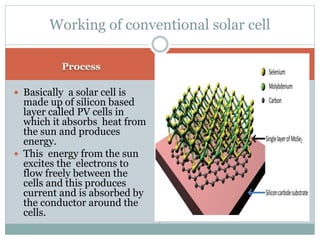
Process
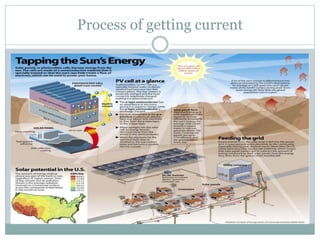
 Basically a solar cell is
made up of silicon based
layer called PV cells in
which it absorbs heat from
the sun and produces
energy.
 This energy from the sun
excites the electrons to
flow freely between the
cells and this produces
current and is absorbed by
the conductor around the
cells.
Working of conventional solar cell
Process of getting current
Infrared plastic solar cell
 Scientists have invented
a plastic solar cell that
can turn the suns power
into electrical energy
even on a cloudy day.
 The new material uses
nanotechnology and
absorbs the infrared part
of the sun’s energy. It
uses the 1st generation
solar cells which absorbs
energy efficiently.
Working of plastic solar cell
 The solar cell consists of
nanorods dispersed in
the cell and present in a
layer between electrodes.
Nanorods are made of
cadmium selenide
having diameter 7 nm
and length 60 nm and is
coated by aluminum and
heat is absorbed by the
cells and are used to
move electrons freely
forming current.
 Solar energy given to
earth is 10000 times
than what we consume
and if we use 1% of it we
can overcome our power.
Improvements
 Some of the obvious improvements include better light
collection and concentration, which already are employed in
commercial solar cells.
 Significant improvements can be made in the plastic,
nanorods mix, too, ideally packing the nanorods closer
together, perpendicular to the electrodes, using minimal
polymer, or even none-the nanorods would transfer their
electrons more directly to the electrode.
 In their first-generation solar cells, the nanorods are jumbled
up in the polymer, leading to losses of current via electron-
hole recombination and thus lower efficiency.
 They also hope to tune the nanorods to absorb different colors
to span the spectrum of sunlight. An eventual solar cell has
three layers each made of nanorods that absorb at different
wavelength.
Applications
 Silicon possesses some nano scale properties. This is being exploited
in the development of a super thin disposable solar panel
poster which could offer the rural dwellers a cheap and an
alternative source of power
 Like paint the compound can also be sprayed onto other
materials and used as portable electricity.
Any chip coated in the material could power cell phone or
other wireless devices.
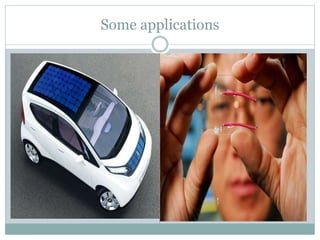
 A hydrogen powered car painted with the film could
potentially convert energy into electricity to continually recharge
the car’s battery.
 One day solar farms consisting of plastic materials could be
rolled across deserts to generate enough clear energy to supply the
entire planet’s power needs.
Advantages
Plastic solar cells are quite a lot useful in the coming future. This is
because of the large number of advantages it has got. Some of the
major advantages are:
 They are considered to be 30% more efficient when compared to
conventional solar cells.
They are more efficient and more practical in application.
 Traditional solar cells are bulky panels. This is very compact.
 Conventional solar cells are only used for large applications
with big budgets. But the plastic solar cells are feasible as they can
be even sewn into fabric- thus having vast applications.
 Flexible, roller processed solar cells have the potential to turn
the sun’s power into a clean, green, consistent source of energy.
Some applications
Limitations
 The biggest problem with this is
cost effectiveness. But that could change with new
material. But chemists have found a way to make
cheap plastic solar cells flexible enough to paint onto
any surface and potentially able to provide electricity
for wearable electronics or other low power devices.
 Relatively shorter life span when continuously
exposed to sunlight.
 Could possibly require higher maintenance and
constant monitoring.
Conclusion
 Plastic solar cells help in exploiting the infrared radiation
from the suns rays. They are more effective when
compared to the conventional solar cell. The major
advantage they enjoy is that they can even work on
cloudy days, which is not possible in the former. They are
more compact and less bulkier.
 Though at present, cost is a major draw back, it is bound
be solved in the future
 As explained earlier, if the solar farms can become a
reality, it could possibly solve the planets problem of
depending too much on the fossil fuels, without a chance
of even polluting the environment.
References
 1. Nanomaterials: Synthesis, Properties and
Applications: Edelstein, A. S., Cammarata, R.
C., Eds.; Institute of Physics Publishing: Bristol and
Philadelphia, 1996.near future as scientists are
working in that direction.
 2. Solar energy-fundamentals, design, modeling,
applications- G.N. Tiwari
THANK YOU

Nanotechnology applications in solar cells

  • 1.
  • 2.
    Contents  What isnanotechnology?  Working of conventional solar cells  Infrared plastic solar cell  Working of plastic solar cell  Improvements  Applications  Advantages  Limitations  conclusion
  • 3.
    What is nanotechnology? The pursuit of nanotechnology comprises a wide variety of disciplines: chemistry, physics, mechanical engineering, materials science, molecular biology and computer science.  Because of it’s mature form, nanotechnology will have significant impact on all industries for it’s long lasting, cleaner, safer and smarter technology.
  • 4.
    Process  Basically asolar cell is made up of silicon based layer called PV cells in which it absorbs heat from the sun and produces energy.  This energy from the sun excites the electrons to flow freely between the cells and this produces current and is absorbed by the conductor around the cells. Working of conventional solar cell
  • 5.
  • 6.
    Infrared plastic solarcell  Scientists have invented a plastic solar cell that can turn the suns power into electrical energy even on a cloudy day.  The new material uses nanotechnology and absorbs the infrared part of the sun’s energy. It uses the 1st generation solar cells which absorbs energy efficiently.
  • 7.
    Working of plasticsolar cell  The solar cell consists of nanorods dispersed in the cell and present in a layer between electrodes. Nanorods are made of cadmium selenide having diameter 7 nm and length 60 nm and is coated by aluminum and heat is absorbed by the cells and are used to move electrons freely forming current.  Solar energy given to earth is 10000 times than what we consume and if we use 1% of it we can overcome our power.
  • 8.
    Improvements  Some ofthe obvious improvements include better light collection and concentration, which already are employed in commercial solar cells.  Significant improvements can be made in the plastic, nanorods mix, too, ideally packing the nanorods closer together, perpendicular to the electrodes, using minimal polymer, or even none-the nanorods would transfer their electrons more directly to the electrode.  In their first-generation solar cells, the nanorods are jumbled up in the polymer, leading to losses of current via electron- hole recombination and thus lower efficiency.  They also hope to tune the nanorods to absorb different colors to span the spectrum of sunlight. An eventual solar cell has three layers each made of nanorods that absorb at different wavelength.
  • 9.
    Applications  Silicon possessessome nano scale properties. This is being exploited in the development of a super thin disposable solar panel poster which could offer the rural dwellers a cheap and an alternative source of power  Like paint the compound can also be sprayed onto other materials and used as portable electricity. Any chip coated in the material could power cell phone or other wireless devices.  A hydrogen powered car painted with the film could potentially convert energy into electricity to continually recharge the car’s battery.  One day solar farms consisting of plastic materials could be rolled across deserts to generate enough clear energy to supply the entire planet’s power needs.
  • 10.
    Advantages Plastic solar cellsare quite a lot useful in the coming future. This is because of the large number of advantages it has got. Some of the major advantages are:  They are considered to be 30% more efficient when compared to conventional solar cells. They are more efficient and more practical in application.  Traditional solar cells are bulky panels. This is very compact.  Conventional solar cells are only used for large applications with big budgets. But the plastic solar cells are feasible as they can be even sewn into fabric- thus having vast applications.  Flexible, roller processed solar cells have the potential to turn the sun’s power into a clean, green, consistent source of energy.
  • 11.
  • 12.
    Limitations  The biggestproblem with this is cost effectiveness. But that could change with new material. But chemists have found a way to make cheap plastic solar cells flexible enough to paint onto any surface and potentially able to provide electricity for wearable electronics or other low power devices.  Relatively shorter life span when continuously exposed to sunlight.  Could possibly require higher maintenance and constant monitoring.
  • 13.
    Conclusion  Plastic solarcells help in exploiting the infrared radiation from the suns rays. They are more effective when compared to the conventional solar cell. The major advantage they enjoy is that they can even work on cloudy days, which is not possible in the former. They are more compact and less bulkier.  Though at present, cost is a major draw back, it is bound be solved in the future  As explained earlier, if the solar farms can become a reality, it could possibly solve the planets problem of depending too much on the fossil fuels, without a chance of even polluting the environment.
  • 14.
    References  1. Nanomaterials:Synthesis, Properties and Applications: Edelstein, A. S., Cammarata, R. C., Eds.; Institute of Physics Publishing: Bristol and Philadelphia, 1996.near future as scientists are working in that direction.  2. Solar energy-fundamentals, design, modeling, applications- G.N. Tiwari
  • 15.