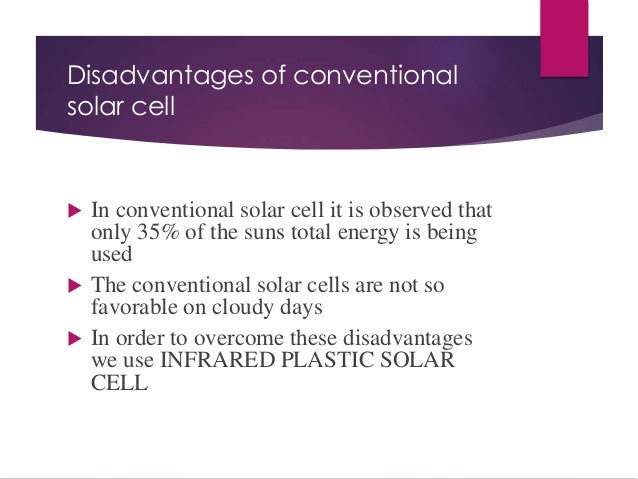
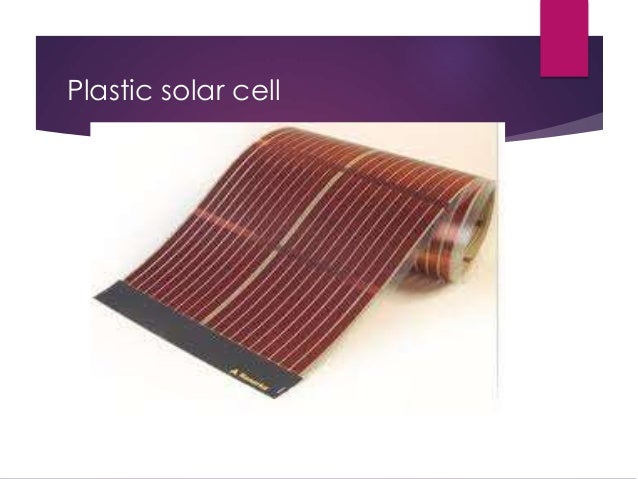
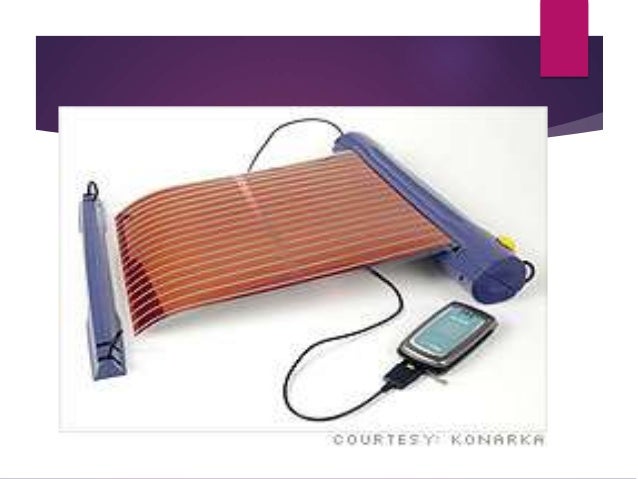
Infrared plastic solar cells have three main advantages over conventional solar cells: 1) They can harness infrared rays and generate electricity even on cloudy days, whereas conventional solar cells only use 35% of the sun's energy; 2) They are more compact and flexible than bulky solar panels; 3) Initial tests show they may be 30% more efficient. These plastic solar cells consist of cadmium selenide nanorods dispersed in a polymer substrate and coated with aluminum electrodes. When light is absorbed, electrons are freed within the nanorods to generate a current between the electrodes. This new technology has applications in thin, disposable solar panels as well as hydrogen vehicles or powering small electronics.