TOPIC- Infrared plastic solar cell
Presented by - Ajit Kumar verma
EN-15
Roll no- 1501421003
Introduction
Solar power
Nanotechnology
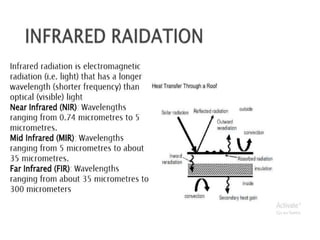
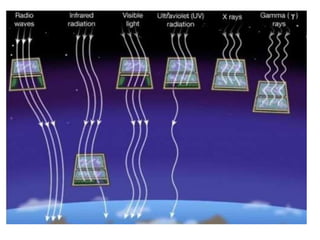
 Infrared
 The solar cell
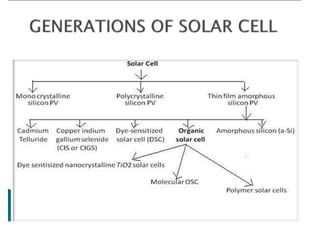
 Types of solar cell
Infrared of plastic solar cell
 Improvement
Comparison
Advantage
Limitation
conclusion
Introduction
• It is intriguing to think of photovoltaic (PV)
elements based on thin plastic films. The
flexibility offered through the chemical
tailoring of desired properties, as well as the
cheap technology
• The mechanical flexibility of plastic materials
is welcome for all PV applications onto curved
surfaces for architectural integration
Solar power
• Solar energy is, simply, energy provided by the sun.
This energy is in the form of solar radiation, which
makes the production of solar electricity possible.
• Electricity can be produced directly from photovoltaic,
PV, cells. (Photovoltaic literally means “light” and
“electric.”) These cells are made from materials which
exhibit the “photovoltaic effect” i.e. when sunshine
hits the PV cell, the photons of light excite the
electrons in the cell and cause them to flow, generating
electricity
Why use solar cell
• Low maintenance, long lasting sources of
energy
• Provides cost-effective power supplies for
people remote from the main electricity grid
• Non-polluting and silent sources of electricity
• Convenient and flexible source of small
amounts of power
• Renewable and sustainable power, as a means
to reduce global warming
Nanotechonology
• Nano-technology is the engineering of
functional systems at the molecular scale
• Offers better built, longer lasting, cleaner,
safer and smarter products for the home, For
medicine and for industries for ages
• we can introduce Nanotechnology that is
Nano-particles into the solar PV cells.
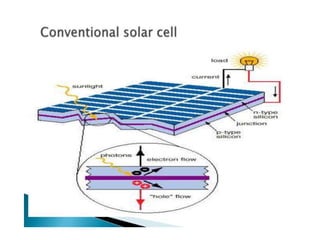
The solar cell
• The most common type of solar cells are photovoltaic
Cells (PV cells)
• Converts sunlight directly into electricity Cells are
made of a semiconductor material (e.g.. silicon)
• Light strikes the PV cell, and a certain portion is
absorbed
• The light energy (in the form of photons) knocks
electrons loose, allowing them to flow freely, forming a
current
• Metal contacts on the top and bottom of PV cell draws
off the current to use externally as power
Working of solar cell
• These are photovoltaic (PV) cells based on
crystalline silicon.
• It absorbs visible sunlight and transferred to
the semiconductor material.
• This energy knocks electrons to flow freely,
which results current.
• Current is drawn from the metal contacts in
PV cell
Types of solar cell
• Amorphous Silicon solar cell
• Bio hybrid solar cell(a-Si)
• Buried contact solar cell
• Cadmium telluride solar cell (CdTe)
• Concentrated PV cell (CVP and HCVP)
• Copper indium gallium selenide solar cells
(CI(G)S)
• Crystalline silicon solar cell (c-Si) Dye-sensitized
solar cell (DSSC)
• Gallium arsenide germanium solar cell (GaAs)
Disadvantage of conventional energy
• In conventional solar cell it is observed that
only 35% of the suns total energy is being
used
• The conventional solar cells are not so
favorable on cloudy days
• In order to overcome these disadvantages we
use INFRARED PLASTIC SOLAR CELL
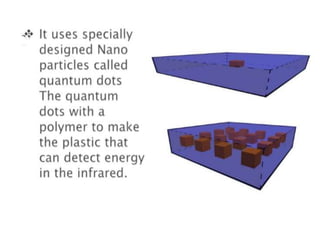
Infrared plastic solar cell
• In conventional solar cell it is observed that
only 35% of the suns total energy is being
used
• The conventional solar cells are not so
favorable on cloudy days
• In order to overcome these disadvantages we
use INFRARED PLASTIC SOLAR CELL
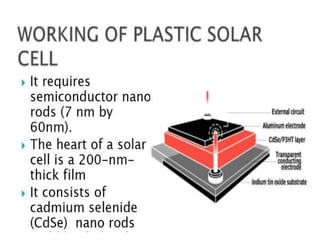
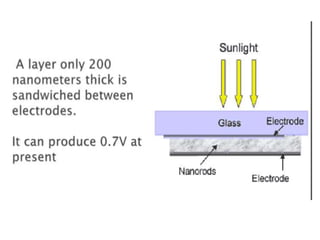
• When Nano rods absorb light they generate
an electron and an electron hole.
• Electron is collected by aluminum electrode.
• The hole is transferred to the plastic and
conveyed to the electrode, creating a current.
Advantages
• They are considered to be 30% more efficient when
compared to conventional solar cells.
• They are more efficient and more practical in application.
• Traditional solar cells are bulky panels. This is very compact.
• Conventional solar cells are only used for large applications
with big budgets. But the plastic solar cells are feasible as
they can be even sewn into fabric- thus having vast
applications.
• Flexible, roller processed solar cells have the potential to
turn the sun’s power into a clean, green, consistent source
of energy
• Hydrogen car painted with the film could
convert solar energy into electricity to
continually recharge the car’s battery.
Limitations
• They are very costly.
• Relatively shorter life span when continuously
exposed to sunlight.
• It requires higher maintenance and constant
monitoring.
Conclusion
• Plastic solar cells help in exploiting the
infrared radiation.
• More effective when compared to
conventional solar cells.
• They can even work on cloudy days.
• Though at present cost is a major drawback, it
can be solved in the near future.
THANKS

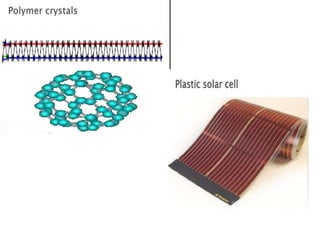
Plastic solar cell

  • 1.
    TOPIC- Infrared plasticsolar cell Presented by - Ajit Kumar verma EN-15 Roll no- 1501421003
  • 2.
    Introduction Solar power Nanotechnology  Infrared The solar cell  Types of solar cell Infrared of plastic solar cell  Improvement Comparison Advantage Limitation conclusion
  • 3.
    Introduction • It isintriguing to think of photovoltaic (PV) elements based on thin plastic films. The flexibility offered through the chemical tailoring of desired properties, as well as the cheap technology • The mechanical flexibility of plastic materials is welcome for all PV applications onto curved surfaces for architectural integration
  • 4.
    Solar power • Solarenergy is, simply, energy provided by the sun. This energy is in the form of solar radiation, which makes the production of solar electricity possible. • Electricity can be produced directly from photovoltaic, PV, cells. (Photovoltaic literally means “light” and “electric.”) These cells are made from materials which exhibit the “photovoltaic effect” i.e. when sunshine hits the PV cell, the photons of light excite the electrons in the cell and cause them to flow, generating electricity
  • 5.
    Why use solarcell • Low maintenance, long lasting sources of energy • Provides cost-effective power supplies for people remote from the main electricity grid • Non-polluting and silent sources of electricity • Convenient and flexible source of small amounts of power • Renewable and sustainable power, as a means to reduce global warming
  • 6.
    Nanotechonology • Nano-technology isthe engineering of functional systems at the molecular scale • Offers better built, longer lasting, cleaner, safer and smarter products for the home, For medicine and for industries for ages • we can introduce Nanotechnology that is Nano-particles into the solar PV cells.
  • 9.
    The solar cell •The most common type of solar cells are photovoltaic Cells (PV cells) • Converts sunlight directly into electricity Cells are made of a semiconductor material (e.g.. silicon) • Light strikes the PV cell, and a certain portion is absorbed • The light energy (in the form of photons) knocks electrons loose, allowing them to flow freely, forming a current • Metal contacts on the top and bottom of PV cell draws off the current to use externally as power
  • 11.
    Working of solarcell • These are photovoltaic (PV) cells based on crystalline silicon. • It absorbs visible sunlight and transferred to the semiconductor material. • This energy knocks electrons to flow freely, which results current. • Current is drawn from the metal contacts in PV cell
  • 12.
    Types of solarcell • Amorphous Silicon solar cell • Bio hybrid solar cell(a-Si) • Buried contact solar cell • Cadmium telluride solar cell (CdTe) • Concentrated PV cell (CVP and HCVP) • Copper indium gallium selenide solar cells (CI(G)S) • Crystalline silicon solar cell (c-Si) Dye-sensitized solar cell (DSSC) • Gallium arsenide germanium solar cell (GaAs)
  • 14.
    Disadvantage of conventionalenergy • In conventional solar cell it is observed that only 35% of the suns total energy is being used • The conventional solar cells are not so favorable on cloudy days • In order to overcome these disadvantages we use INFRARED PLASTIC SOLAR CELL
  • 15.
    Infrared plastic solarcell • In conventional solar cell it is observed that only 35% of the suns total energy is being used • The conventional solar cells are not so favorable on cloudy days • In order to overcome these disadvantages we use INFRARED PLASTIC SOLAR CELL
  • 19.
    • When Nanorods absorb light they generate an electron and an electron hole. • Electron is collected by aluminum electrode. • The hole is transferred to the plastic and conveyed to the electrode, creating a current.
  • 22.
    Advantages • They areconsidered to be 30% more efficient when compared to conventional solar cells. • They are more efficient and more practical in application. • Traditional solar cells are bulky panels. This is very compact. • Conventional solar cells are only used for large applications with big budgets. But the plastic solar cells are feasible as they can be even sewn into fabric- thus having vast applications. • Flexible, roller processed solar cells have the potential to turn the sun’s power into a clean, green, consistent source of energy
  • 23.
    • Hydrogen carpainted with the film could convert solar energy into electricity to continually recharge the car’s battery.
  • 24.
    Limitations • They arevery costly. • Relatively shorter life span when continuously exposed to sunlight. • It requires higher maintenance and constant monitoring.
  • 25.
    Conclusion • Plastic solarcells help in exploiting the infrared radiation. • More effective when compared to conventional solar cells. • They can even work on cloudy days. • Though at present cost is a major drawback, it can be solved in the near future.
  • 26.