NANOBIOTECHNOLOGY
NANOSCIENCE


• Nanosciene
  is the Science
  of Tiny
  Things
Nano:
A prefix that means very,
       very, small.

 • • The word nano is from the Greek word
       The word nano is from the Greek word
   ‘Nanos’ meaning Dwarf. ItItis aaprefix used to
    ‘Nanos’ meaning Dwarf. is prefix used to
     describe "one billionth" of something, or
      describe "one billionth" of something, or

                 0.000000001
                  0.000000001..
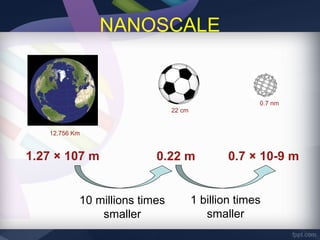
NANOSCALE


                                                     0.7 nm
                               22 cm


   12,756 Km


1.27 × 10⁷ m              0.22 m               0.7 × 10⁻⁹ m


           10 millions times           1 billion times
               smaller                    smaller
NANOTECHNOLOGY
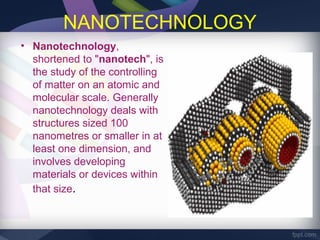
• Nanotechnology,
  shortened to "nanotech", is
  the study of the controlling
  of matter on an atomic and
  molecular scale. Generally
  nanotechnology deals with
  structures sized 100
  nanometres or smaller in at
  least one dimension, and
  involves developing
  materials or devices within
  that size.
• NANOTECHNOLOGY+BIOTECHNOLOGY


     NANOBIOTECHNOLOGY
WHAT IS NANOBIOTECHNOLOGY


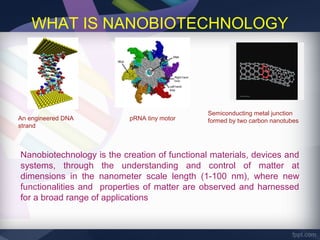
                                               Semiconducting metal junction
An engineered DNA          pRNA tiny motor     formed by two carbon nanotubes
strand


Nanobiotechnology is the creation of functional materials, devices and
systems, through the understanding and control of matter at
dimensions in the nanometer scale length (1-100 nm), where new
functionalities and properties of matter are observed and harnessed
for a broad range of applications
OBJECTIVE OF NANOBIOTECHNOLOGY

• The imaging of native
  biomolecules, biological
  membranes, and tissues.

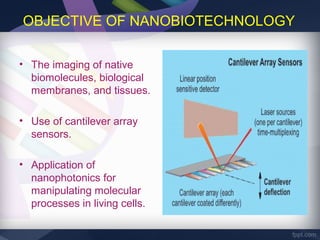
• Use of cantilever array
  sensors.

• Application of
  nanophotonics for
  manipulating molecular
  processes in living cells.
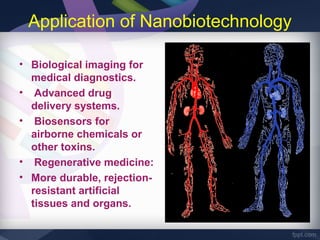
Application of Nanobiotechnology

• Biological imaging for
  medical diagnostics.
• Advanced drug
  delivery systems.
• Biosensors for
  airborne chemicals or
  other toxins.
• Regenerative medicine:
• More durable, rejection-
  resistant artificial
  tissues and organs.
NANOBIOTECHNOLOGY IN CANCER
−To develop cure for
 traditionally incurable
 diseases (e.g. cancer)
 through the utilization of
 nanobiotechnology.
−To provide more effective
 cure with fewer side
 effects by means of
 targeted drug delivery
 systems
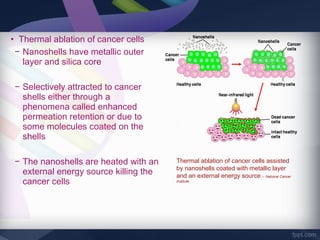
• Thermal ablation of cancer cells
 − Nanoshells have metallic outer
   layer and silica core

 − Selectively attracted to cancer
   shells either through a
   phenomena called enhanced
   permeation retention or due to
   some molecules coated on the
   shells

 − The nanoshells are heated with an    Thermal ablation of cancer cells assisted
                                        by nanoshells coated with metallic layer
   external energy source killing the   and an external energy source – National Cancer
   cancer cells                         Institute
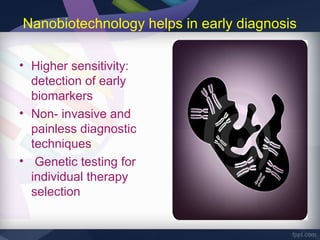
Nanobiotechnology helps in early diagnosis

• Higher sensitivity:
  detection of early
  biomarkers
• Non- invasive and
  painless diagnostic
  techniques
• Genetic testing for
  individual therapy
  selection
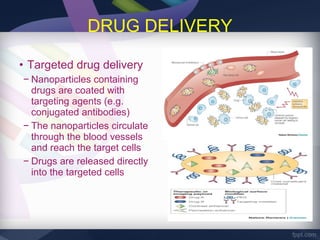
DRUG DELIVERY

• Targeted drug delivery
− Nanoparticles containing
  drugs are coated with
  targeting agents (e.g.
  conjugated antibodies)
− The nanoparticles circulate
  through the blood vessels
  and reach the target cells
− Drugs are released directly
  into the targeted cells
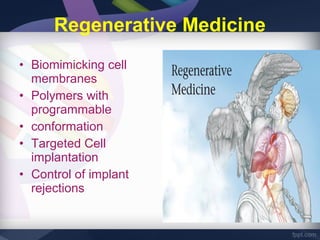
Regenerative Medicine
• Biomimicking cell
  membranes
• Polymers with
  programmable
• conformation
• Targeted Cell
  implantation
• Control of implant
  rejections
CONCERNS OF NANOBIOTECHNOLOGY
• Experts report smaller
  particles are more
  bioactive and toxic. Their
  ability to interact with
  other living systems
  increases because they
  can easily cross the skin,
  lung, and in some cases
  the blood/brain barriers.
  Once inside the body,
  there may be further
  biochemical reactions like
  the creation of free
  radicals that damage
  cells.

Nanobiotechnology BY Neelima Sharma,WCC CHENNAI,neelima.sharma60@gmail.com

  • 1.
  • 2.
    NANOSCIENCE • Nanosciene is the Science of Tiny Things
  • 3.
    Nano: A prefix thatmeans very, very, small. • • The word nano is from the Greek word The word nano is from the Greek word ‘Nanos’ meaning Dwarf. ItItis aaprefix used to ‘Nanos’ meaning Dwarf. is prefix used to describe "one billionth" of something, or describe "one billionth" of something, or 0.000000001 0.000000001..
  • 4.
    NANOSCALE 0.7 nm 22 cm 12,756 Km 1.27 × 10⁷ m 0.22 m 0.7 × 10⁻⁹ m 10 millions times 1 billion times smaller smaller
  • 5.
    NANOTECHNOLOGY • Nanotechnology, shortened to "nanotech", is the study of the controlling of matter on an atomic and molecular scale. Generally nanotechnology deals with structures sized 100 nanometres or smaller in at least one dimension, and involves developing materials or devices within that size.
  • 6.
  • 7.
    WHAT IS NANOBIOTECHNOLOGY Semiconducting metal junction An engineered DNA pRNA tiny motor formed by two carbon nanotubes strand Nanobiotechnology is the creation of functional materials, devices and systems, through the understanding and control of matter at dimensions in the nanometer scale length (1-100 nm), where new functionalities and properties of matter are observed and harnessed for a broad range of applications
  • 8.
    OBJECTIVE OF NANOBIOTECHNOLOGY •The imaging of native biomolecules, biological membranes, and tissues. • Use of cantilever array sensors. • Application of nanophotonics for manipulating molecular processes in living cells.
  • 9.
    Application of Nanobiotechnology •Biological imaging for medical diagnostics. • Advanced drug delivery systems. • Biosensors for airborne chemicals or other toxins. • Regenerative medicine: • More durable, rejection- resistant artificial tissues and organs.
  • 10.
    NANOBIOTECHNOLOGY IN CANCER −Todevelop cure for traditionally incurable diseases (e.g. cancer) through the utilization of nanobiotechnology. −To provide more effective cure with fewer side effects by means of targeted drug delivery systems
  • 11.
    • Thermal ablationof cancer cells − Nanoshells have metallic outer layer and silica core − Selectively attracted to cancer shells either through a phenomena called enhanced permeation retention or due to some molecules coated on the shells − The nanoshells are heated with an Thermal ablation of cancer cells assisted by nanoshells coated with metallic layer external energy source killing the and an external energy source – National Cancer cancer cells Institute
  • 12.
    Nanobiotechnology helps inearly diagnosis • Higher sensitivity: detection of early biomarkers • Non- invasive and painless diagnostic techniques • Genetic testing for individual therapy selection
  • 13.
    DRUG DELIVERY • Targeteddrug delivery − Nanoparticles containing drugs are coated with targeting agents (e.g. conjugated antibodies) − The nanoparticles circulate through the blood vessels and reach the target cells − Drugs are released directly into the targeted cells
  • 14.
    Regenerative Medicine • Biomimickingcell membranes • Polymers with programmable • conformation • Targeted Cell implantation • Control of implant rejections
  • 15.
    CONCERNS OF NANOBIOTECHNOLOGY •Experts report smaller particles are more bioactive and toxic. Their ability to interact with other living systems increases because they can easily cross the skin, lung, and in some cases the blood/brain barriers. Once inside the body, there may be further biochemical reactions like the creation of free radicals that damage cells.