Nanobiotechnology
Application of
By
KAUSHAL KUMAR SAHU
Assistant Professor (Ad Hoc)
Department of Biotechnology
Govt. Digvijay Autonomous P. G. College
Raj-Nandgaon ( C. G. )
 Introduction
 Definition
 History
 Advantages of nanobiotechnology
 Applications of nanobiotechnology
 Drawback of nanobiotechnology
 New features in the nanobiotechnology
 Conclusion
 References
 Nanotechnology is a multidisciplinary field that covers a vast and
diverse array of devices derived from engineering, physics,
chemistry, and biology.
 Nanotechnology has opened up by rapid advances in science and
technology, creating new opportunities for advances in the fields of
medicine, electronics, foods, and the environment.
 2000 Years ago- sulfide Nano crystals used by Greeks and romans to dye
hair.
 1000 years ago- gold Nano particles of different sizes used to produce
different colors in stained glass window.
 1959- “there plenty of room at the bottom” by R. FEYNMAN.
 1974- “Nanotechnology”- Taniguchi uses the term nanotechnology for
the first time.
 1981- IBM develops scanning tunneling microscope.
 1991- Carbon nanotube discovered by S. LIJIMA.
 1999- “Nanomedicine”- 1st nanomedicine book by R. FREITAS.
 2000- “National nanotechnology initiative” launched.
Nanoengineering
Nanobiotechnology
Green nanotechnology
Nanophotonics
Nanoelectronic
Molecolar engineering
Nanoarchitechniques
Material science
Ceramic engineering
BRANCHES OF
NANOTECHNOLOGY
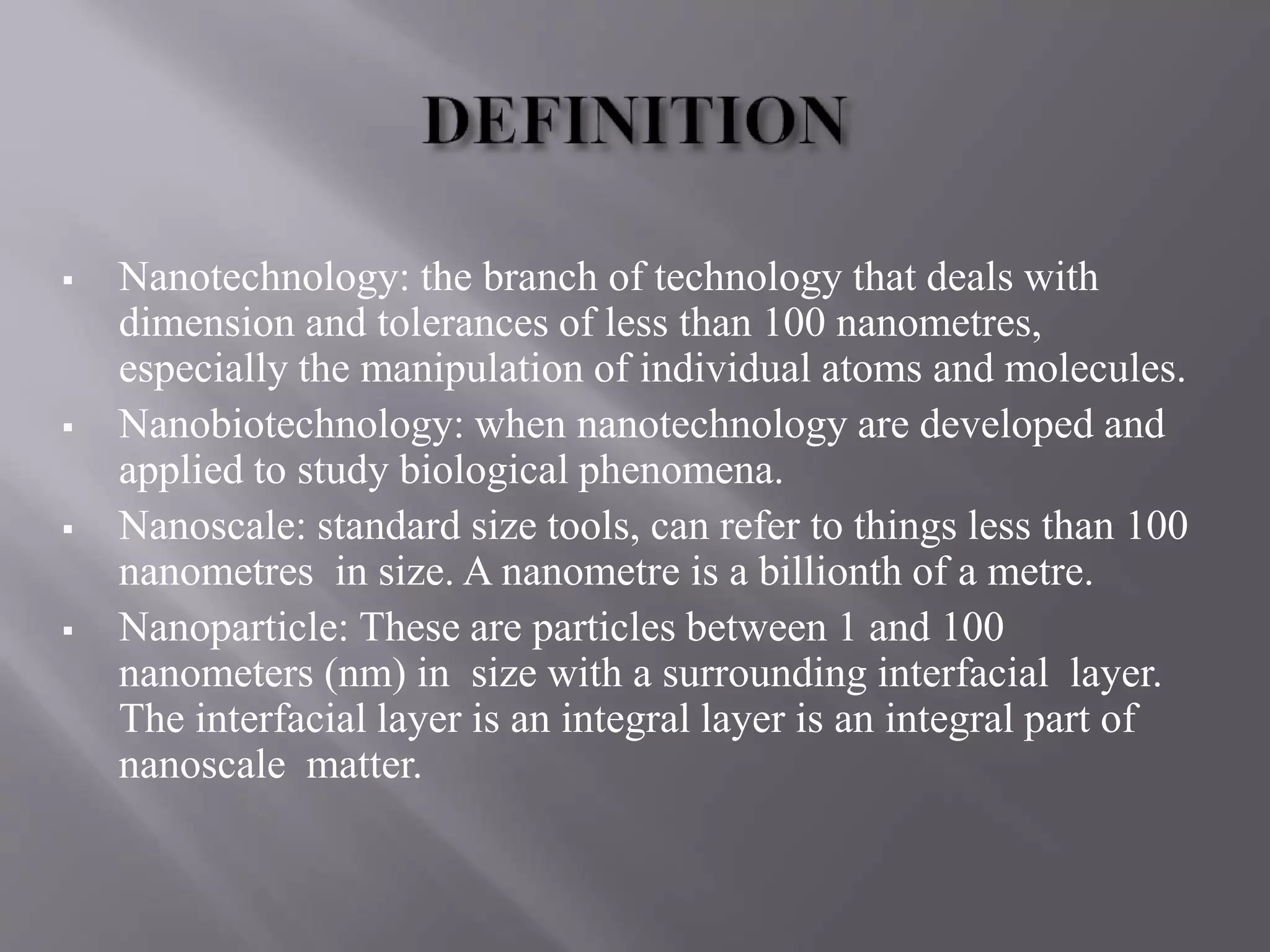
 Nanotechnology: the branch of technology that deals with
dimension and tolerances of less than 100 nanometres,
especially the manipulation of individual atoms and molecules.
 Nanobiotechnology: when nanotechnology are developed and
applied to study biological phenomena.
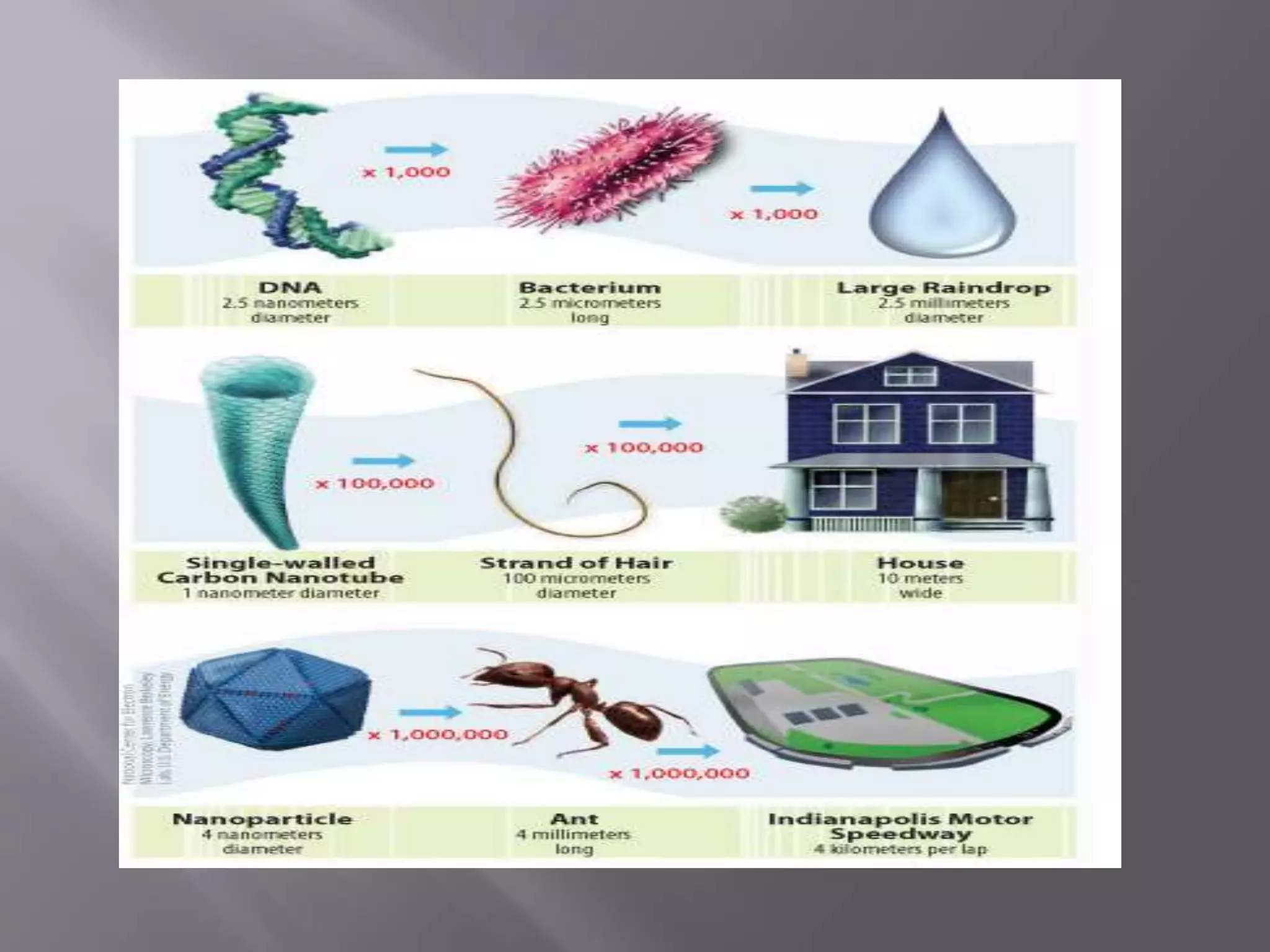
 Nanoscale: standard size tools, can refer to things less than 100
nanometres in size. A nanometre is a billionth of a metre.
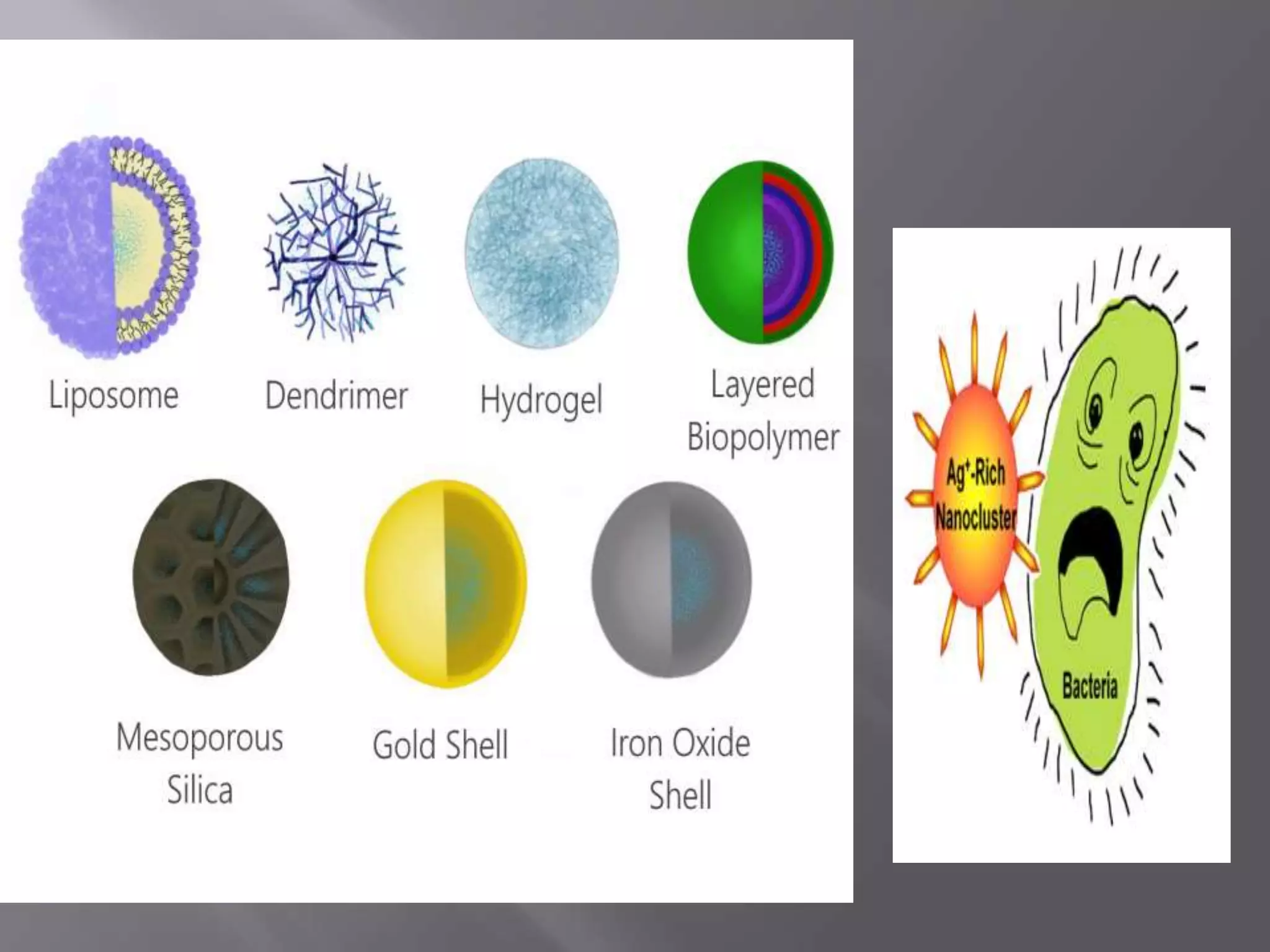
 Nanoparticle: These are particles between 1 and 100
nanometers (nm) in size with a surrounding interfacial layer.
The interfacial layer is an integral layer is an integral part of
nanoscale matter.
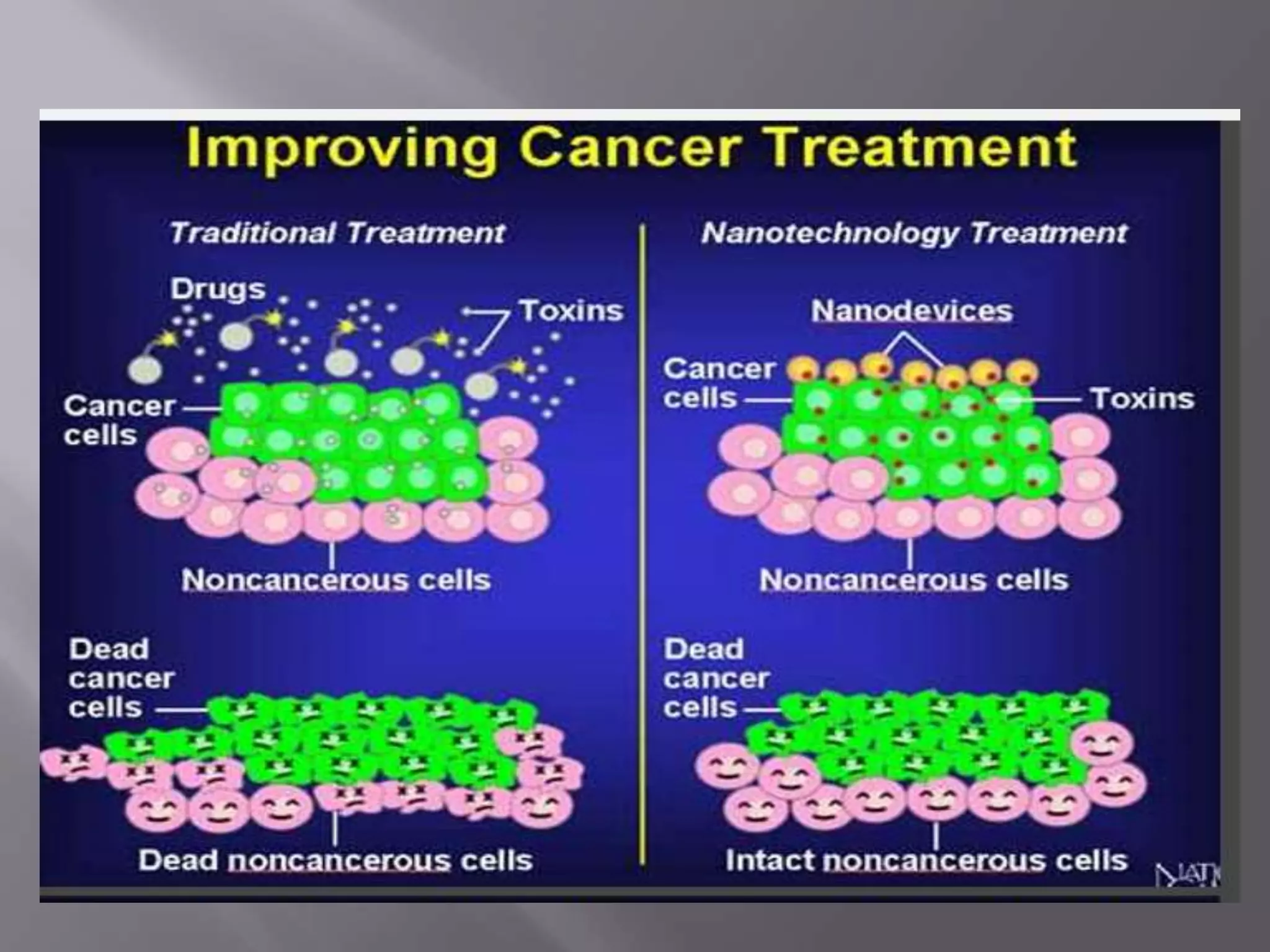
 1.Drug targeting can be achieved by taking advantage of the distinct
pathophysiological features of diseased tissues .
 2. Various nanoproducts can be accumulated at higher concentrations than
normal drugs.
 3. increased vascular permeability coupled with an impaired lymphatic
drainage in tumors improve the effect of the nanosystems in the tumors or
inflamed tissues through better transmission and retention .
 4. Nanosystems have capacity of selective localization in inflammed tissues
 5. Nanoparticles can be effectively used to deliver/transport relevant drugs to
the brain overcoming the presence of blood–brain barrier (meninges).
 6. Drug loading onto nanoparticles modifies cell and tissue distribution and
leads to a more selective delivery of biologically active compounds to
enhance.
.
 Atomic force microscope
 ATPase motor
 Brain machine interface
 Carbon nanotube
 Imaging devices
 Ribosomes as nanomemories
 Nanotechnology is detecting new features in DNA.
 Perhaps the position of active genes plays a crucial role in the
onset of disease. Perhaps movement of genes may also silence
their activity at times.
 These are some new puzzles nanobiotechnology is supposed to
solve in coming years.
 Italian researchers have studied electrical transport properties of
DNA. The DNA base guanosine was used for building an
electronic device, field effect transistor.
 DNA is most effective intelligent glue, can be used to fix or keep
nanoparticles and probes at a particular position in the body.


 Terrorists may misuse the collaboration of nanotechnology
and biotechnology by creating more dangerous biological
weapons.
 They can develop viruses of anthrax, plague, polio etc and
can spread them in human population by using nanoparticles.
 Information available on internet about genetic and physical
makeup of various pathogens and their encapsulation
techniques is going to help them in upcoming future.
 Self replicating intelligent nanorobots are one of the most dramatic
danger for humans.
 The huge robots are not dangerous to us but if we consider them
on nanosize, then just their inhaling during production can be
very harmful and if it have memory and self replication properties
then it will be as harmful as virus.
 Michael crichton the author of Jurassic park, recently wrote a new
thriller, prey.
• The book explores the applications of nanobiotec and the thriller
describes how super small and super smart robots are destroying
earth and humans.
 Nanobiotechnology will provide opportunities for
developing new materials and methods that will enhance our
ability to develop faster, more reliable, and more sensitive
analytical systems.
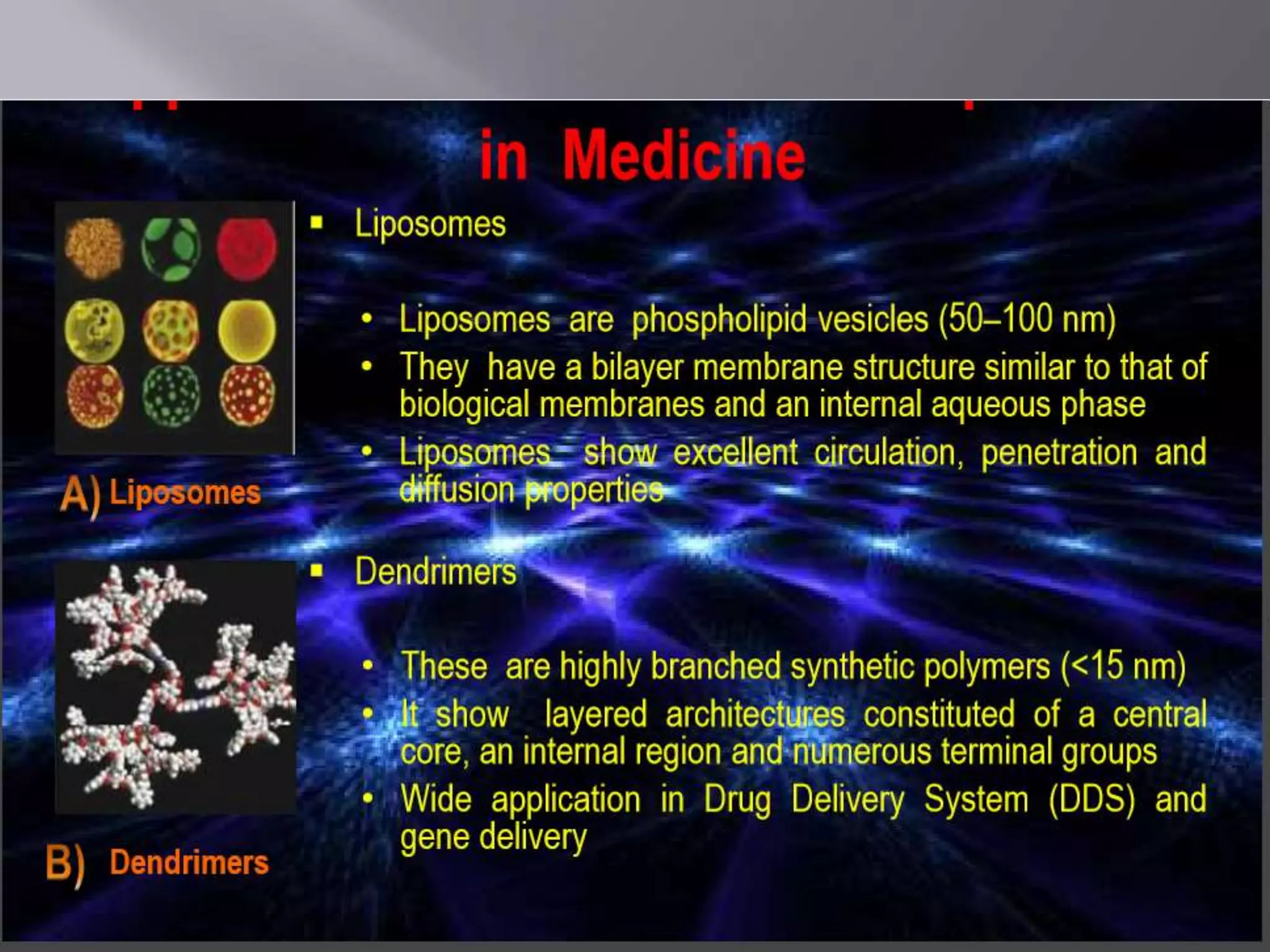
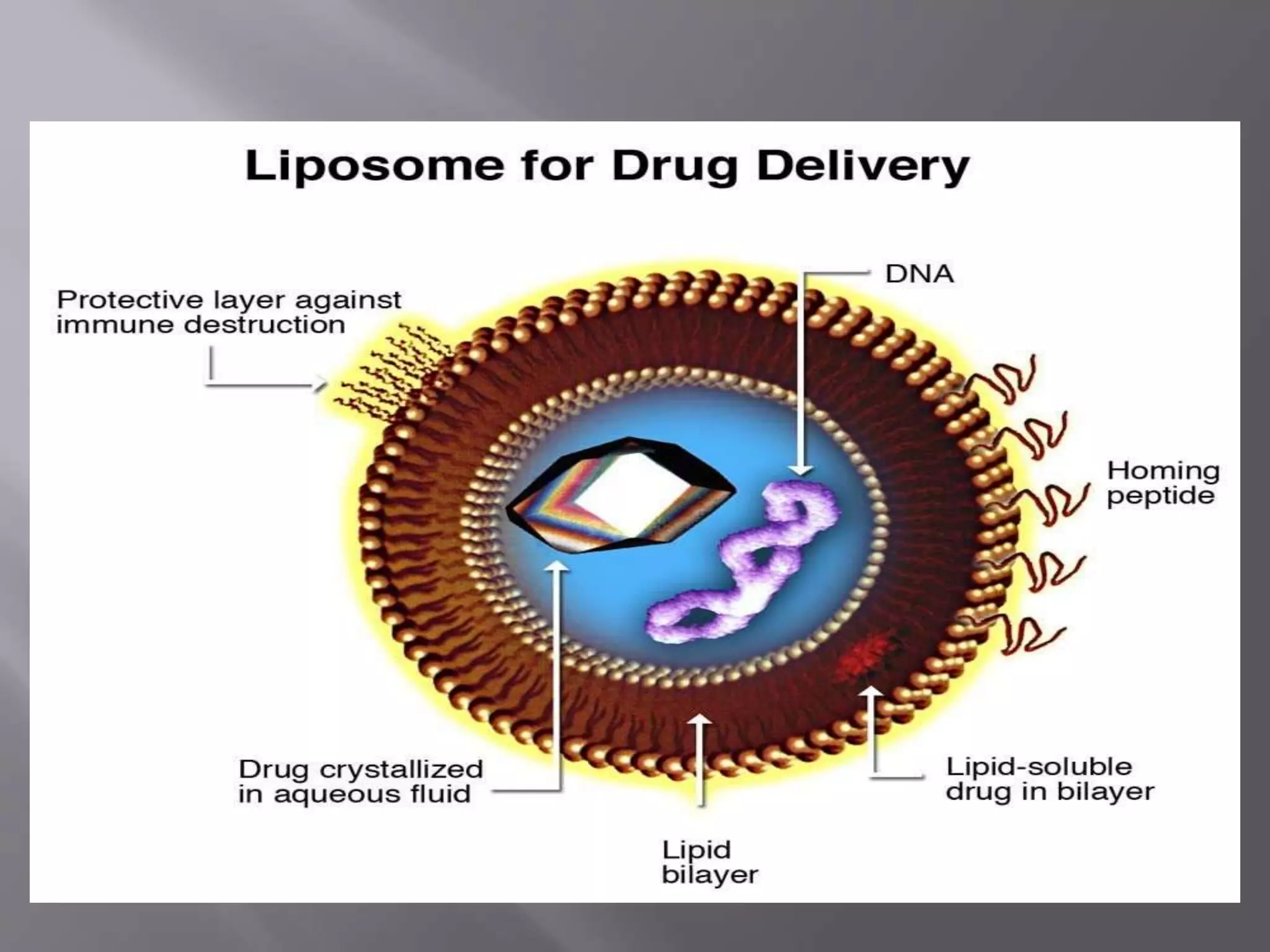
 Nanobiotechnology offers a wide range of uses in medicine.
 Innovations such as drug delivery systems are only the
beginnings of the start of something new.
 Its on us to take nanobiotechnology as a blessing or as a
curse, in both ways it have ability to change the world.
 https://www.researchgate.net/publication/261638569_Biolog
ical_Applications_of_Nanobiotechnology
 https://www.researchgate.net/publication/261638569_Biolog
ical_Applications_of_Nanobiotechnology
 https://jnanobiotechnology.biomedcentral.com/articles/10.11
86/1477-3155-10-31
 http://www.sciencemag.org/careers/2001/02/careers-
nanobiotechnology-nanoscience-biotechnology
 https://www.researchgate.net/publication/261638569_Biolog
ical_Applications_of_Nanobiotechnology

Nanobiotechnology, its application

  • 1.
    Nanobiotechnology Application of By KAUSHAL KUMARSAHU Assistant Professor (Ad Hoc) Department of Biotechnology Govt. Digvijay Autonomous P. G. College Raj-Nandgaon ( C. G. )
  • 2.
     Introduction  Definition History  Advantages of nanobiotechnology  Applications of nanobiotechnology  Drawback of nanobiotechnology  New features in the nanobiotechnology  Conclusion  References
  • 3.
     Nanotechnology isa multidisciplinary field that covers a vast and diverse array of devices derived from engineering, physics, chemistry, and biology.  Nanotechnology has opened up by rapid advances in science and technology, creating new opportunities for advances in the fields of medicine, electronics, foods, and the environment.
  • 4.
     2000 Yearsago- sulfide Nano crystals used by Greeks and romans to dye hair.  1000 years ago- gold Nano particles of different sizes used to produce different colors in stained glass window.  1959- “there plenty of room at the bottom” by R. FEYNMAN.  1974- “Nanotechnology”- Taniguchi uses the term nanotechnology for the first time.  1981- IBM develops scanning tunneling microscope.  1991- Carbon nanotube discovered by S. LIJIMA.  1999- “Nanomedicine”- 1st nanomedicine book by R. FREITAS.  2000- “National nanotechnology initiative” launched.
  • 5.
  • 6.
     Nanotechnology: thebranch of technology that deals with dimension and tolerances of less than 100 nanometres, especially the manipulation of individual atoms and molecules.  Nanobiotechnology: when nanotechnology are developed and applied to study biological phenomena.  Nanoscale: standard size tools, can refer to things less than 100 nanometres in size. A nanometre is a billionth of a metre.  Nanoparticle: These are particles between 1 and 100 nanometers (nm) in size with a surrounding interfacial layer. The interfacial layer is an integral layer is an integral part of nanoscale matter.
  • 9.
     1.Drug targetingcan be achieved by taking advantage of the distinct pathophysiological features of diseased tissues .  2. Various nanoproducts can be accumulated at higher concentrations than normal drugs.  3. increased vascular permeability coupled with an impaired lymphatic drainage in tumors improve the effect of the nanosystems in the tumors or inflamed tissues through better transmission and retention .  4. Nanosystems have capacity of selective localization in inflammed tissues  5. Nanoparticles can be effectively used to deliver/transport relevant drugs to the brain overcoming the presence of blood–brain barrier (meninges).  6. Drug loading onto nanoparticles modifies cell and tissue distribution and leads to a more selective delivery of biologically active compounds to enhance. .
  • 22.
     Atomic forcemicroscope  ATPase motor  Brain machine interface  Carbon nanotube  Imaging devices  Ribosomes as nanomemories
  • 30.
     Nanotechnology isdetecting new features in DNA.  Perhaps the position of active genes plays a crucial role in the onset of disease. Perhaps movement of genes may also silence their activity at times.  These are some new puzzles nanobiotechnology is supposed to solve in coming years.  Italian researchers have studied electrical transport properties of DNA. The DNA base guanosine was used for building an electronic device, field effect transistor.  DNA is most effective intelligent glue, can be used to fix or keep nanoparticles and probes at a particular position in the body.  
  • 31.
     Terrorists maymisuse the collaboration of nanotechnology and biotechnology by creating more dangerous biological weapons.  They can develop viruses of anthrax, plague, polio etc and can spread them in human population by using nanoparticles.  Information available on internet about genetic and physical makeup of various pathogens and their encapsulation techniques is going to help them in upcoming future.
  • 32.
     Self replicatingintelligent nanorobots are one of the most dramatic danger for humans.  The huge robots are not dangerous to us but if we consider them on nanosize, then just their inhaling during production can be very harmful and if it have memory and self replication properties then it will be as harmful as virus.  Michael crichton the author of Jurassic park, recently wrote a new thriller, prey. • The book explores the applications of nanobiotec and the thriller describes how super small and super smart robots are destroying earth and humans.
  • 33.
     Nanobiotechnology willprovide opportunities for developing new materials and methods that will enhance our ability to develop faster, more reliable, and more sensitive analytical systems.  Nanobiotechnology offers a wide range of uses in medicine.  Innovations such as drug delivery systems are only the beginnings of the start of something new.  Its on us to take nanobiotechnology as a blessing or as a curse, in both ways it have ability to change the world.
  • 34.
     https://www.researchgate.net/publication/261638569_Biolog ical_Applications_of_Nanobiotechnology  https://www.researchgate.net/publication/261638569_Biolog ical_Applications_of_Nanobiotechnology https://jnanobiotechnology.biomedcentral.com/articles/10.11 86/1477-3155-10-31  http://www.sciencemag.org/careers/2001/02/careers- nanobiotechnology-nanoscience-biotechnology  https://www.researchgate.net/publication/261638569_Biolog ical_Applications_of_Nanobiotechnology