Downloaded 1,029 times
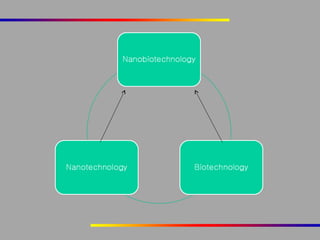
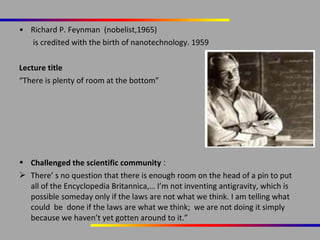
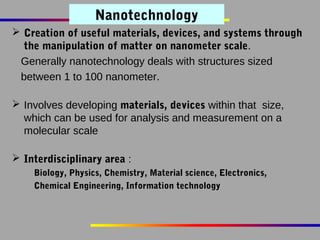
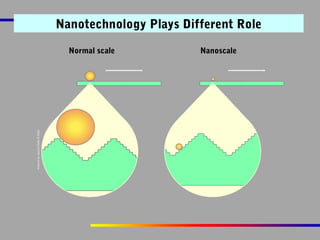
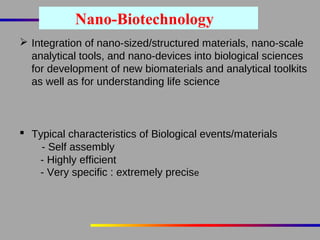
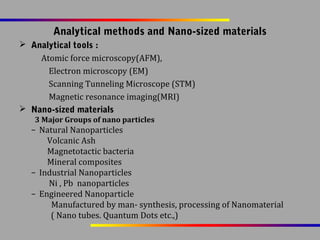
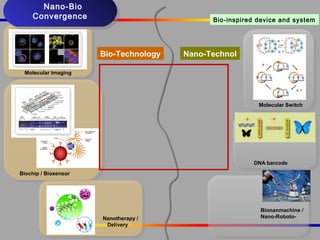
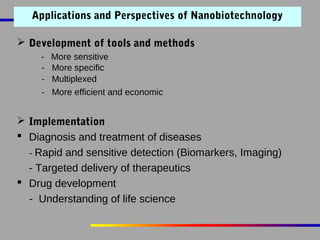
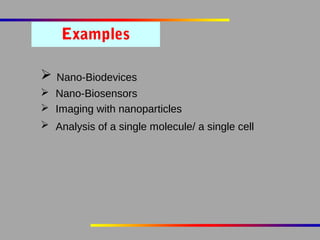
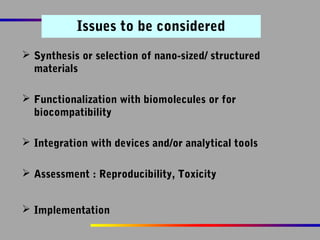
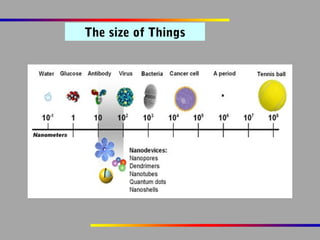
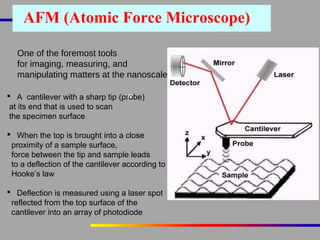
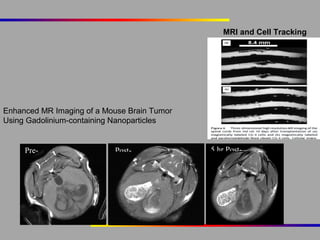
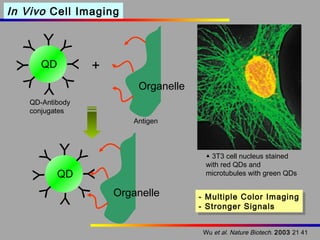
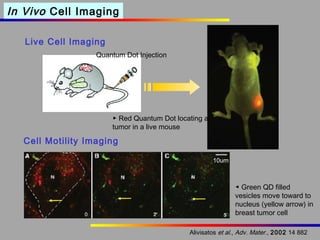
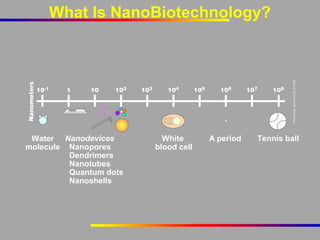
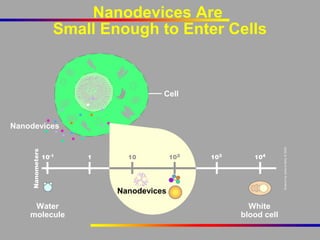
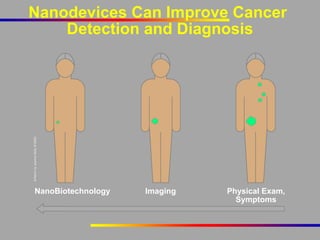
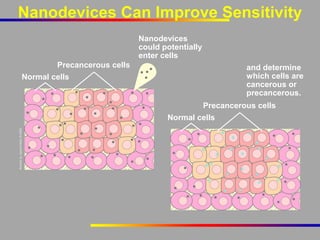
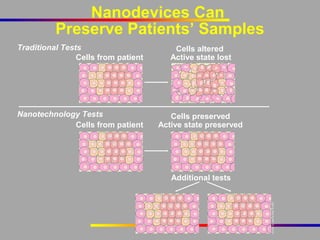
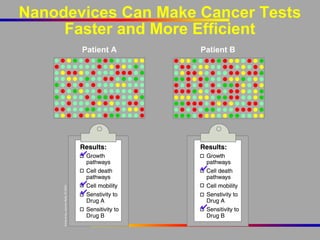
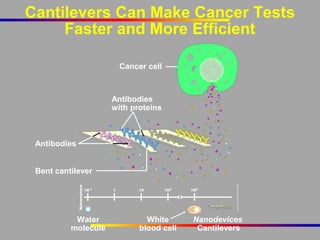
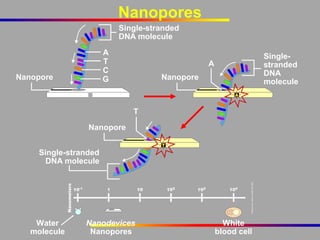
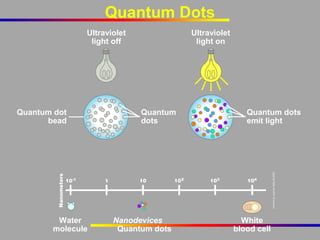
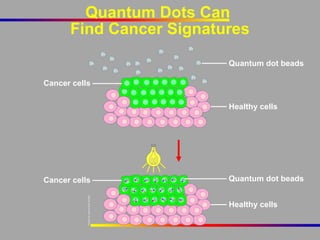
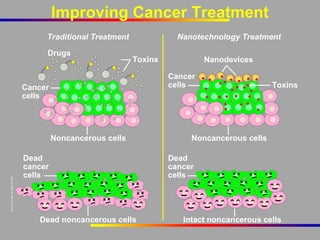
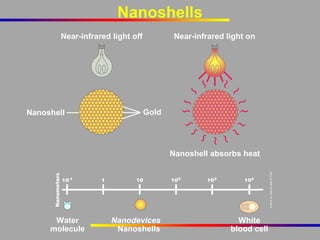
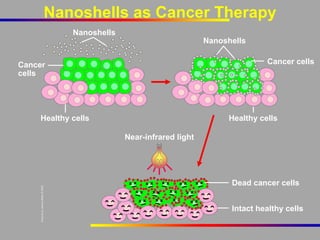
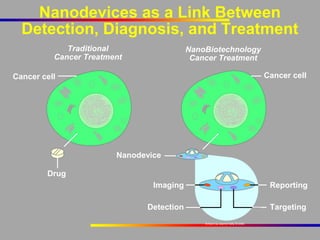
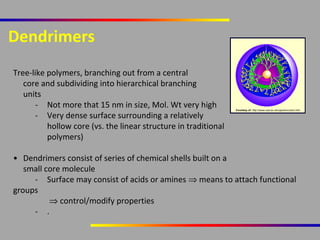
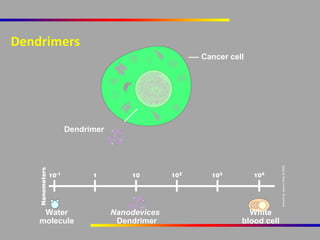
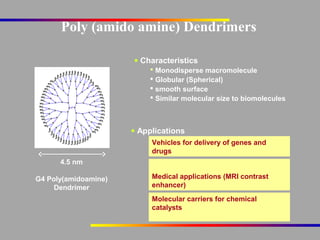
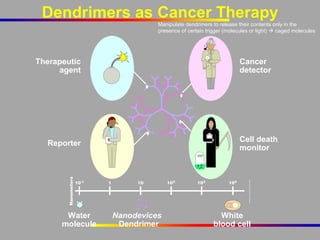
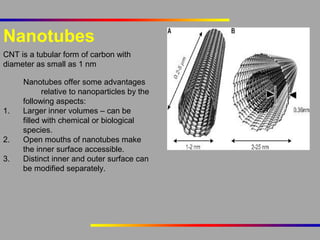
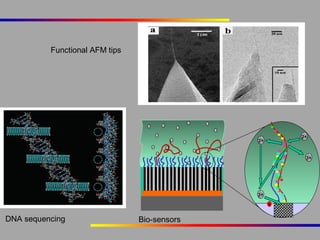
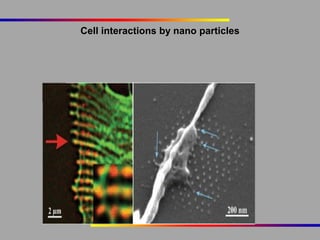
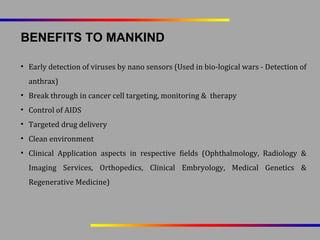


Nanobiotechnology involves the manipulation of matter at the nanoscale (1-100 nanometers) for applications in biology. Key developments include the atomic force microscope in 1980, which enabled imaging at the atomic level. Nanoparticles such as quantum dots have been used for in vivo cell imaging due to their strong fluorescent signals. Nanodevices have the potential to improve cancer detection and diagnosis by entering cells to determine which are cancerous. They may also preserve patient samples and make tests faster. Challenges include assessing the toxicity and biocompatibility of nanomaterials. Overall, nanobiotechnology could lead to new biomaterials and analytical tools with applications in medicine such as targeted drug delivery and disease diagnosis and treatment.


