

Changing ‘passive voice’
sentences into ‘active
voice’ sentences
What is a
passive voice
sentence?
A passive voice sentence
hides the doer of the action and puts the
emphasis on the object.
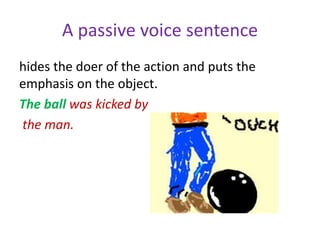
The ball was kicked by
the man.
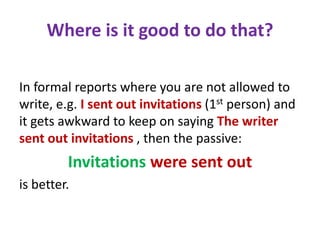
Where is it good to do that?
In formal reports where you are not allowed to
write, e.g. I sent out invitations (1st person) and
it gets awkward to keep on saying The writer
sent out invitations , then the passive:
Invitations were sent out
is better.
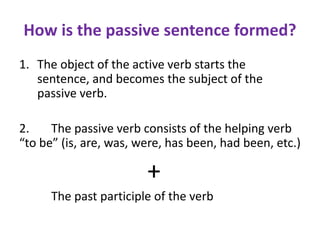
How is the passive sentence formed?
1. The object of the active verb starts the
sentence, and becomes the subject of the
passive verb.
2. The passive verb consists of the helping verb
“to be” (is, are, was, were, has been, had been, etc.)
+
The past participle of the verb
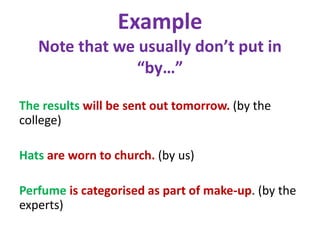
Example
Note that we usually don’t put in
“by…”
The results will be sent out tomorrow. (by the
college)
Hats are worn to church. (by us)
Perfume is categorised as part of make-up. (by the
experts)
Why should we rather
use the active voice
when writing?
It makes our writing
direct and clear and
lively.
How?
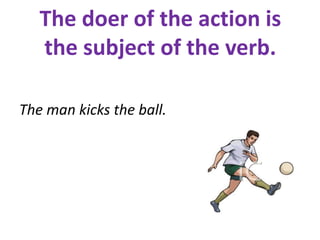
The doer of the action is
the subject of the verb.
The man kicks the ball.
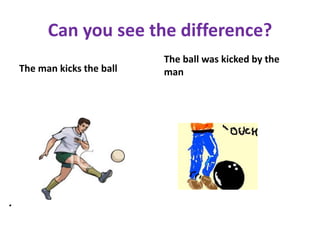
Can you see the difference?
The man kicks the ball
The ball was kicked by the
man
.
OK. If we see we have written a passive
sentence where an active one would have been
better -
How do we change it to
the active?
1. Take away the helping verb “to be”
and turn the past participle into a
verb
2. Bring in a subject.
Hats are worn to church. (by us)
We wear hats to church.
Perfume is categorised as part of make-up. (by the
experts)
The experts categorise perfume as part
of make-up.
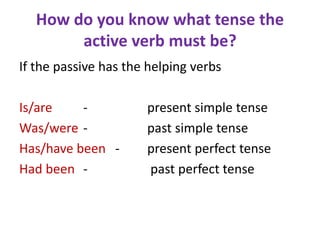
How do you know what tense the
active verb must be?
If the passive has the helping verbs
Is/are - present simple tense
Was/were - past simple tense
Has/have been - present perfect tense
Had been - past perfect tense
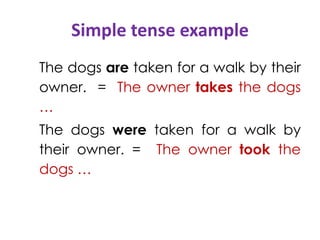
Simple tense example
The dogs are taken for a walk by their
owner. = The owner takes the dogs
…
The dogs were taken for a walk by
their owner. = The owner took the
dogs …
How do you know if the present tense
verb must have an “s” at the end?
If the active verb is in the present
tense and the subject is third person
and singular (he/she/it/Mpho), then
the verb takes an -s on the end.
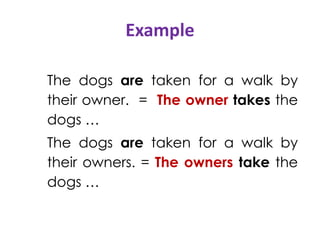
Example
The dogs are taken for a walk by
their owner. = The owner takes the
dogs …
The dogs are taken for a walk by
their owners. = The owners take the
dogs …
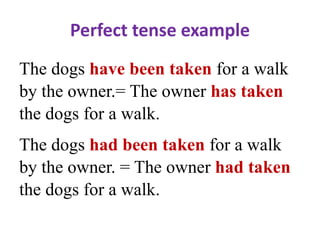
Perfect tense example
The dogs have been taken for a walk
by the owner.= The owner has taken
the dogs for a walk.
The dogs had been taken for a walk
by the owner. = The owner had taken
the dogs for a walk.
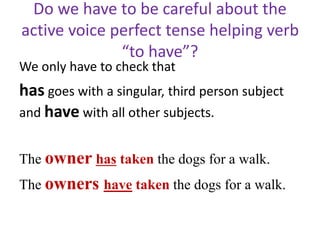
Do we have to be careful about the
active voice perfect tense helping verb
“to have”?
We only have to check that
has goes with a singular, third person subject
and have with all other subjects.
The owner has taken the dogs for a walk.
The owners have taken the dogs for a walk.
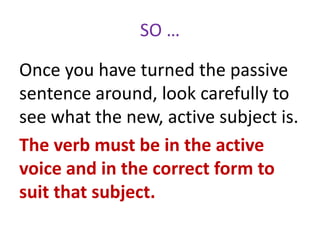
SO …
Once you have turned the passive
sentence around, look carefully to
see what the new, active subject is.
The verb must be in the active
voice and in the correct form to
suit that subject.

N4 Communication & Management Communication - Module 7 passive & active

  • 1.
    Changing ‘passive voice’ sentencesinto ‘active voice’ sentences
  • 2.
    What is a passivevoice sentence?
  • 3.
    A passive voicesentence hides the doer of the action and puts the emphasis on the object. The ball was kicked by the man.
  • 4.
    Where is itgood to do that? In formal reports where you are not allowed to write, e.g. I sent out invitations (1st person) and it gets awkward to keep on saying The writer sent out invitations , then the passive: Invitations were sent out is better.
  • 5.
    How is thepassive sentence formed? 1. The object of the active verb starts the sentence, and becomes the subject of the passive verb. 2. The passive verb consists of the helping verb “to be” (is, are, was, were, has been, had been, etc.) + The past participle of the verb
  • 6.
    Example Note that weusually don’t put in “by…” The results will be sent out tomorrow. (by the college) Hats are worn to church. (by us) Perfume is categorised as part of make-up. (by the experts)
  • 7.
    Why should werather use the active voice when writing?
  • 8.
    It makes ourwriting direct and clear and lively.
  • 9.
  • 10.
    The doer ofthe action is the subject of the verb. The man kicks the ball.
  • 11.
    Can you seethe difference? The man kicks the ball The ball was kicked by the man .
  • 12.
    OK. If wesee we have written a passive sentence where an active one would have been better - How do we change it to the active?
  • 13.
    1. Take awaythe helping verb “to be” and turn the past participle into a verb 2. Bring in a subject. Hats are worn to church. (by us) We wear hats to church. Perfume is categorised as part of make-up. (by the experts) The experts categorise perfume as part of make-up.
  • 14.
    How do youknow what tense the active verb must be? If the passive has the helping verbs Is/are - present simple tense Was/were - past simple tense Has/have been - present perfect tense Had been - past perfect tense
  • 15.
    Simple tense example Thedogs are taken for a walk by their owner. = The owner takes the dogs … The dogs were taken for a walk by their owner. = The owner took the dogs …
  • 16.
    How do youknow if the present tense verb must have an “s” at the end? If the active verb is in the present tense and the subject is third person and singular (he/she/it/Mpho), then the verb takes an -s on the end.
  • 17.
    Example The dogs aretaken for a walk by their owner. = The owner takes the dogs … The dogs are taken for a walk by their owners. = The owners take the dogs …
  • 18.
    Perfect tense example Thedogs have been taken for a walk by the owner.= The owner has taken the dogs for a walk. The dogs had been taken for a walk by the owner. = The owner had taken the dogs for a walk.
  • 19.
    Do we haveto be careful about the active voice perfect tense helping verb “to have”? We only have to check that has goes with a singular, third person subject and have with all other subjects. The owner has taken the dogs for a walk. The owners have taken the dogs for a walk.
  • 20.
    SO … Once youhave turned the passive sentence around, look carefully to see what the new, active subject is. The verb must be in the active voice and in the correct form to suit that subject.